
When it comes to indicator fishing for trout there’s a lot to consider to maximize your approach. Check out this video from Orvis Guide to Fly Fishing for a comprehensive approach to indicator fishing for trout.
2023 F3T Behind the Lens: Cape York

The 2023 F3T is underway – click here to find a local showing and purchase tickets.
Have you ever dreamt of taking a helicopter ride to an untouched flat teeming with Giant trevally? How about driving through the red dirt roads of northern Australia, catching multiple ‘Anak permit in a single day, and achieving the northern Australian grand slam with one of your best buddies? For some, an adventure is incomprehensible. But, thanks to the Aussie Fly Fisher, we get a glimpse into this fly fisher’s utopia. Cape York is filmed & edited by Kane Chenoweth and highlights the adventure of American angler, Dave McCoy, joining Aussie Fly Fisher, Joshua Hutchins, in the wilds of Australia.
For this installment of F3T Behind the Lens, we sat down with the Aussie Fly Fisher himself, Josh Hutchins.
Flylords: What was the inspiration for this film?
Josh: The initial inspiration for the film was to bring an American to Australia for an experience unique to northern Australia. Cape York is a very iconic part of the North. It’s a very wild and remote place. And, there’s a lot of diversity in it. The east side of Cape York is primarily known for the Great Barrier Reef—the beautiful clear and sandy cayes, atolls, and reef systems along that side. But, the west side is made up of river systems, estuaries, and species diversity as well.Â
Aussie Fly Fisher has been taking clients to this area for a while, primarily due to the draw for the ‘Anak permit fishery. This film was a chance to highlight that fishery, but also highlight the various other fisheries within this area.

Flylords: Traveling to Cape York seems like a feat upon itself. Tell us what it takes to travel to Cape York?
Josh: What we did for the film was slightly out of the normal. The lodge we have in Cape York is on the west side. So, when the average person comes to visit, they usually fly into Sydney, connect to Cairns, then hop on a short flight to Weipa. And we basically go fishing from there.
However, in terms of the film we wanted to switch it up and access the east side with the helicopter. Since the east side of Cape York is dependent on wind conditions, this was a bit of a logistical beast. We only had a couple days where the wind wasn’t blowing, so we had a short window to make that section of the trip happen.Â

Flylords: Have you considered offering guided trips via helicopter? GT fishing by helicopter sounds like a wild experience.
Josh: We’ve definitely talked about the helicopter thing, but it would only be able to happen during the three to four months where the wind isn’t blowing. For a large part of the year Cape York receives a South East trade wind that renders the east side unfishable. But, for the three to four months when the wind isn’t blowing, it’s one of the most magical places on Earth.
Beyond the seasonal window, you would also have to judge the daily weather before committing to a full day with a helicopter. But, if the weather is looking nice on a given day, you could jump in a helicopter and do some crazy things.

Flylords: What is your favorite species to target on this trip?
Josh: For most of our season, the jewel of the crown is the permit. That’s what most folks travel for. But, one of my favorite things is a giant trevally in shallow water. I think that’s a really cool fish. Particularly if you’re wading on a shallow flat, knee-deep in the water, with a large GT swimming along—maybe even with its back out of the water. I know a permit is probably a trickier fish to catch, but I just love the aggression of a GT eat. We connect with a lot of permit every year, so for me to have an opportunity with a shallow GT, that doesn’t happen as often.

Flylords: The film highlights some of the classic Australian species that might give viewers the heebee-jeebees. Is there anything people need to worry about when visiting a place like Cape York?
Josh: We may have built up the “Austalianisms” a bit. Even though we may play up the idea that everything will kill you in Australia, it’s not completely true. Our goal was to showcase a wild area, full of species diversity, and put that in the eyes of an American coming to visit. This diversity included its fair share of snakes and crocodiles, but that’s all just a part of what makes this place so special.

Flylords: In the film you found a school of permit that seemed “easy” to catch. An easy permit sounds like an oxymoron. Were they really easy to catch?
Josh: That day I think we hooked 12, landed 9, and lost 3. And the 3 that we lost were because they were smaller fish and I tried to near-pull them in. For that situation, as long as you could have laid out a reasonable cast, I would consider those fish as an easy permit scenario. It’s not always like that every day.
That particular scenario was a sequence that you don’t get to do in filming too often. In fact, Kane was filming on the boat, then he was on the shore with a long lens, then he was on the shore with a drone… We would catch one, then we would say “Let’s put you over here and catch another one. Then we’ll put you over here and catch another one.” Then at the end of it, Kane, who has never caught a permit, caught one! He gets back on the boat and says “I’ve got one more angle.” And I said “no no no”. You’re going to catch a permit.” Within 10 minutes, we got him a permit.

Flylords: What do you hope audiences take away from this film?
Josh: Part of my mission being an Australian fly fisherman, and being lucky to see a lot of places around the world, is to express to the world what these places are like. If you grow up in an area and only know that area, you could perceive that to be fantastic, you could perceive that to be average, or you could perceive it to be whatever if it’s the only thing you’ve ever seen. I believe that Australia has incredible fisheries, and I believe that, historically, there hasn’t been much international knowledge about Australian fishing.
So, part of my overall mission is for people to know what’s offered in Australia. And for Cape York, I want people to see this film and think that this looks like a fantastic place to go. I’d love to go and do that at some point in my life.

Flylords: What’s next for the Aussie Fly Fisher?
Josh: I’ve got a pretty busy year as a guide. People are traveling more again, so we’ve got more American guests coming our way this year. I’m challenging myself to tail 100 permit. But, if I end up tailing 50, I’d be happy. I guess you have to set some outlandish goals.
And, when I’m not guiding, I’ll be spending time with the family. I’ve got three little boys and they’re starting to enjoy their fishing. I’m really enjoying taking them out.
As for filmmaking, you can count on more Aussie Fly Fisher films on the way.

Thank you Josh Hutchins for taking the time to talk about Cape York. If you’re interested in checking out trips like the one featured in the film, or many others around the globe, check out the Aussie Fly Fisher website.
Follow along with the film tour @flyfishingfilmtour on Instagram.
Buy your tickets to the 2023 Fly Fishing Film Tour HERE!
Video of the Week: The Hunt for Giant Lake Nipigon Brook Trout with The New Fly Fisher

In this Video of the Week, we catch up with Jeff Parks from The New Fly Fisher in their most recent short film targeting brook trout on Lake Nipigon. With the help of Tyler Dunn the crew explores this world-famous lake and its monster brook trout. “The New Fly Fisher is designed to be a truly educational and instructional experience. Our total focus is to help all anglers, whether veteran or novice, learn more about fly fishing. From Destinations to Fly Fishing Tips & Techniques, this channel will help you learn more about fly fishing. Our goal is always the same: to be your ultimate source for all things fly fishing!”
Back in 2020 Three of our favorite content producers joined forces to expand their content distribution and bring their already high-production-value even higher. We’re huge fans of everything Tim Flagler, the Jensens, and the New Fly Fisher produce. Make sure to check out their content for all of your Fly Fishing needs.
Check out these epic articles as well!
Video of the Week: “The Denver South Platte Slush Slam” with Tom Rosenbauer
Tightline Productions, Jensen Fly Fishing and the New Fly Fisher Merge
Far Bank Proudly Announces Season 2 Of Its Acclaimed Fly Fishing Educational Video Series

From Far Bank:
Far Bank is excited to announce the launch of the second season of its “Far Bank Fly Fishing School†video series. The series continues to be hosted by Far Bank’s Education and Engagement Manager, and well-known fly casting instructor, Simon Gawesworth.Â
Season 2 consists of 6 episodes concentrating on the intermediate level fly fisher and digs deep into the nuances and subtleties of the topics covered. Each video in this series has been written and filmed with the singular goal of helping anglers get better at fly fishing for trout in a river– whether learning essential new casts that open up more water to the angler, learning to read the river and find fish, or mastering the essential fly fishing skills needed to be a successful river angler.
Simon’s laid-back, relaxed, and personable teaching technique makes it easy to connect with him, and the highly informative on-the-water tips, techniques, and in-depth studio analysis result in an exceptionally well-produced, highly entertaining, and informative educational video series that is a joy to watch. Fly fishers of all abilities and experiences will greatly benefit from watching this Far Bank Fly Fishing School series.
Episode 7: “How To Fish A Dry Fly†Episode 10: “How To Fish Soft Hacklesâ€
Episode 8: “How To Fish Streamers†Episode 11: “Essential River Castsâ€
Episode 9: “How To Fish Nymphs†Episode 12: “Fly Fishing In Small Creeksâ€
Check out the complete series from Far Bank by clicking HERE.
Check out the articles below:
About Far Bank:
“We are anglers and adventurers with a shared mission to deliver outstanding products and extraordinary experiences to our vibrant fly fishing community through our brands (Sage Fly Fishing, Redington, RIO Products, and Fly Water Travel), education, and conservation initiatives. For more information about Far Bank please visit www.farbank.com.”
Everything You Need to Know About Float Fishing

Fly fishing from a drift boat or a raft, or “float fishingâ€, might look like a challenging proposition, but with the right guide and the right approach, it’s a great way to chase trout or even bass in big water that’s just too deep or too fast to wade.

Float fishing is also a great way to cover a lot of water and give anglers better opportunities to tie into more fish. Drift boats, for non-motorized craft, are fairly maneuverable, and good guides with a lot of experience can put fly anglers in ideal situations to be successful. Rafts, too, can be excellent fly-fishing crafts, and, under the right guidance, they can take anglers on waters no other craft can reasonably navigate. Rafts are great for heavy water — they’re able to navigate rapids and chew up river miles when the water is fast.Â
That said, there are some general rules to follow, both for the anglers on board and for the pilot of the craft who takes the oars. And there are some unwritten guidelines all on board should follow — boat etiquette if you will. These helpful little suggestions can keep everyone in sync, prevent tangled lines or stray flies from hooking earlobes or hats, and up the chances of a productive outing for everyone involved.Â

This article is made possible by our friends at onWater. onWater is an excellent tool for anyone who enjoys spending time on the water, and offers users a plethora of tools such as real-time water data, public and private property borders, boat ramp info, and much much more. To learn more about onWater, click HERE.

Disclaimer: There has been a constant back and forth in regard to proper terminology, and what the term “float fishing” actually implies. Yes, for most conventional anglers, “float fishing” often refers to the method of fishing which involves suspending a bait in mid-water underneath a float, meaning that anglers are constantly watching the float waiting for it to dip under the surface when a fish takes the bait (via: British Sea Fishing). However, our definition of float fishing is in reference to the aforementioned association, which has become more than common vernacular within the fly fishing community.
Float Fishing – Before you Go:Â
No, you can’t just show up and go and hope everything goes off without a hitch. Boaters and anglers need to iron out a few details first, and take others into account to ensure the trip is done safely, and, hopefully, successfully.Â
For instance, before the trailer is even attached to the truck, those organizing the trip need to know a few things. Everyone involved needs to know the “plan of attack†for the trip — what the weather might be like when the trip gets underway, what the river might hold in store for them, and any regulations they need to plan for.Â

Planning a Float Fishing Trip:
- Everyone needs to know the weather forecast and plan for it. If it’s going to be clear an sunny, floppy hats and sunscreen might trump a waterproof puffy jacket. Rain and wind? Bring the necessary equipment and stay safe in the elements.
 When does the float start? Everyone should either know when the boat will shove off from the put-in, or be there when it does. It’s rude to make others wait, and, on some floats, timing is very important.
- What does the river look like in real-time. Using flow data from onWater, most boaters can get up-to-date information on river flows and river conditions. This should give those organizing the float-fishing trip an idea of what certain river features — like rapids, side channels, or irrigation diversions — will look like when they’re encountered on the trip.Â
- Finally, everybody aboard needs to know the rules of the river, which can include everything from the need to haul out waste (yes, especially that waste) to making sure any needed permits are purchased and valid to simple safety rules, like making sure there are enough life preservers on board for each passenger.
For all of this information and more right at your fingertips, check out the onWater app, HERE.

Important Gear for Float Fishing:
The crew heading out for the day (or days) on the water also needs to make sure they’re equipped with the appropriate gear, both for fishing and to make sure everyone gets through the day safely. Consider the following:

- Everyone on the trip should have some familiarity with the craft, be it a drift boat or raft. From a fishing perspective, they work similarly, but the person behind the oars is always in charge.
- For most drift-boat or raft trips down American rivers, from the Delaware to the Henry’s Fork, fly gear is pretty straightforward. A moderate-action 9-foot, 5-weight rod with a corresponding reel and line is kind of the “universal†setup. Some anglers go heavier — up to a 7-weight — if they’re going to cast big streamers or big dry flies. Depending on the time of year, anglers might consider a sinking line or, at the very least, a sink-tip line, to help get the fly down. But, generally speaking, a floating line is the standard.Â

- On every river trip, safety gear is important. Obviously, life preservers are a must, but a good first-aid kit comes in handy more than most might believe. And extra oar, particularly on raft trips that might push over Class III or bigger rapids, is a good idea.Â
- Never leave home without good rain gear — even if it’s just a light shell that can stuff into a dry bag. On cold-water floats, waders, and wading boots are a good idea, particularly in the shoulder months when the weather is less predictable.Â
- Finally, make sure everyone brings enough to eat and drink — even for a short float. Water is important, but, especially during colder months when the body is expending calories just to stay warm, good energy bars or snacks to replenish spent fuel are important, too. It’s always nice to have a few cold beers in the cooler, alongside the water and energy drinks, and fresh fruit is almost always a good idea, too.Â

Positions During Float Fishing
Behind the Oars
The maestro of the float fishing symphony is the man or woman on the oars in the middle of the craft. It takes some practice to row drift boats and rafts, particularly with anglers both fore and aft. But it’s not rocket science. The oarsman/oarswoman should know and follow some basic rules, all while working to position the boat so both anglers on board can get solid opportunities to cast over good holding water or directly to rising fish.

The captain of the boat is responsible for the safety of his or her passengers, first and foremost. This means that downstream obstacles must be identified well ahead of time, and steps must be taken to avoid them at all costs. Throw in the fact that the oars person is also being counted on to position anglers for their best possible cast, keep an eye out for rising or working fish, and read the approaching water, and the guide behind the oars needs to be a master at multitasking.
For new rowers or first-time drift-boat or raft captains, it can be overwhelming. But just like anything else, practice makes perfect. And, there are some tools that can shorten, or at least help flatten, the learning curve. Knowing the river you’re floating is perhaps the best way to achieve competency behind the oars. But we don’t always fish in familiar water. That’s where seeking a bit of help from outside sources comes in. A conversation at the local fly shop is a good idea, as is a bit of polite Q&A with fellow rowers at any river put-in.Â
Regardless of how you get to know a river, here are some basic guidelines to follow if you’re going to take the oars on any stretch of water

- Keep dangerous obstacles in front of you. Point the bow of the boat at things like rocks, downed trees, or fast-water sections — it’s much easier to maneuver around these obstacles when you can back-row and steer the boat with the obstacles in your line of sight.
- Generally speaking, when rowing anglers downriver, communicate with your passengers using the dependable “clock†system. The bow of the boat is 12 o’clock. To the left a few degrees is 11, then 10 and finally 9. To the right a few degrees is 1 o’clock, then 2 and finally 3. Don’t worry about 8 o’clock or 4 o’clock — those “time slots†are in the rearview mirror, and you don’t want anglers cast behind the boat.Â
- When you can, position the boat at a 45-degree angle to the bank (or to the target of the lead angler’s cast), and instruct the angler to cast at an angle, but ahead of the boat. Instruct the angler in the stern of the boat to cast at the same angle — the rear angler will have a longer cast to make, so it often makes sense to have the stronger caster in the back of the boat. This angle gives you the best chance to avoid obstacles that are more common closer to the banks where the fish will likely be holding.

- Keep an eye on the river at all times. You’re looking for two things: rising fish and upcoming obstacles you’ll need to avoid.Â
- You’re in charge. Don’t be afraid to coach anglers on their casts (or remind them of the need to cast ahead of the boat — this prevents the two casters from getting tangled up with each other). When you approach obstacles, remember … safety first. Communicate with your anglers. For instance, you might say, “Hey guys, let’s sit down while I push us through this rapid.â€Â
- Generally speaking, you want the boat to travel at the speed of the river, or just a hair slower. This means you’ll need to backpaddle. A lot. But this gives your anglers the best shots at quality drifts and increases their chance at success.
Float Fishing From the Front of the Boat
The front of a drift boat or a raft is the prime casting location. Not only will anglers in the bow have the first cast at quality holding water, they’ll also be closer to the target and able to pull off a shorter, more accurate cast. But riding in the front of the boat has its responsibilities. Here are a few of them:

- Listen to the person rowing the boat. They’re watching for obstacles and they’re watching for rising fish, quality holding water, etc. Your job is to pay attention to what they’re saying.Â
- Follow the 45- and 90-degree rule. Generally speaking, you want to be casting ahead of the boat in order to give yourself the best possible drift. When your fly is at 90 degrees to the boat (3 o’clock), lift your line and recast.Â
- Don’t cast at fish behind you. First, you had your shot. Now, it’s the angler in the stern who gets a chance. Second, you’ll increase the likelihood of getting tangled up with your fishing partner. When this happens everything comes to a standstill.Â

- Lock into the knee locks, which are common on drift boats and often present on rafts. If you’re in a raft without a standing frame, you’re better off casting from a sitting position. This ensures two things: first, you’ll be safer should the boat hit some unseen underwater structure. Second, you’ll force yourself to look ahead to where you should be casting.Â
Float Fishing From the Back of the Boat
Congratulations. Your guide has likely put you in the back of the boat because he or she has identified you as the better caster. Or, you might just weigh less — often, guides will put heavier anglers in the front of the boat to keep the craft’s nose from rising too high and impeding both vision and maneuverability. But let’s just assume you’re the stronger cast of the two anglers in the boat. What does this mean for you?

- First, you’ll likely have to cast a bit farther than your fishing buddy in the bow. But don’t fret — good guides are good behind the oars. Even your longer cast should be doable.Â

- Since you can see both the guide and the angler in the front of the boat, you are responsible for the “timing†of the symphony. Generally speaking, you want to be casting on a timer that’s opposite of that of your partner. When your partner is casting, you want your fly in or on the water. It’s not a huge tragedy to be on the same casting clock as your fishing buddy, but since he or she can’t see you and they don’t know when you’re casting, this just takes a bit of chance out of the equation and cuts down on the tangles.Â
- You need to listen to the guide. He or she will be primarily communicating with the lead angler, but the instructions are for you, too. For instance, “You’ve got a riser at 1 o’clock,†means you, too, need to be ready to hit that target. Your buddy’s fly might drift by the target unmolested — be ready to put your fly on target once the lead fly is lifted off the water.Â
- Just like the lead angler, it’s much safer if you’re either locked into the knee locks or casting from a seated position. If you choose to do the latter, just let your guide and your fellow angler know.Â
Know your role
Regardless of where you are in the drift boat or raft, safety should always be top-of-mind. Know where the lifejackets are stowed and be ready to reach one should your guide ask you to do so. When you stow gear in the boat, always keep the maneuverability of the guide in mind. You don’t want to plop your vest or boat bag at the feet of the rower, for instance. And, if you’re in a raft, you’ll likely want to keep your gear in a dry bag, and keep it securely stowed.

Key Take Aways for Float Fishing:
Finally, it’s all about communication. Don’t be afraid to ask questions of the guide about everything from where to cast to when to cast, and don’t be afraid to let your fellow angler know what you’re doing. For instance, if you’re switching things up and putting on a streamer while the fly fisher in the bow is sticking with a dry fly, let both the guide and your fishing partner know you’re out of commission for a bit. Then, when you start fishing again, let them know that, too.Â

In time, these little tips and rules will become second nature, and you’ll start to enjoy the benefits of fishing from a drift boat or a raft. It can be a very effective way to cover water, handle bigger rivers, and put anglers in the best position to catch fish.Â
Thank you to onWater for making this article possible, and for being an essential tool for us on all of our float fishing trips and more. To learn more about the onWater app, as well as all of the tools it offers, Click HERE.

Float Fishing for Beginners – 10 Tips for Fly Fishing from a Raft or Drift Boat
Quick Tips – Building a Rod, Nymph Rigs, and Fish Handling

Welcome to Quick Tips! A new series presented by Redington where we ask some friends their quick tips to teach anyone new they take out on the water. We were all beginners at some point and all of us are always learning new tips and tricks! Whether it is your first time out, or you have been fishing for 20 years, we hope you can take these tips and use them yourself or help a friend out you might be introducing to fly fishing.
To those who don’t know me, my name is MacKenna Stang, most know me as Mack on the Fly! I am a Redington ambassador, still living in my home state of Colorado. Growing up in the Rocky Mountains, I’ve always been drawn to the outdoors. I started fishing with my dad at a young age, but found my true passion for fly fishing over the last 10 years. I hope you find these tips useful, as they are ones my dad passed on to me!

Tip 1: Easy Rod Set-Up
Start with the tip – looping the fly line to get it through your guides

Building out the Redington Wrangler


Instead of starting with the bottom piece of your rod and working your way up, start with the top pieces and work your way down. It makes it easier to line up your guides and will prevent you from reaching awkwardly to set up the whole rod. Once set up, pull off enough line from your reel so you’re able to pinch and loop it through your guides. This will prevent you from dropping your line as you pull it through your rod.
Tip 2: Nymph Rig Hack


Make changing rigs and adding weight easier with a barrel swivel.Â

Using a swivel on your nymph rig is a great way to hold your split shot in place and makes it easier to adjust the length of your rig on the go. It also offers a little extra weight to get down to those stubborn fish. To start, tie the swivel 4-6ft down on your leader. Then tie 16-20 inches of tippet off of it to your first fly. Adjust as needed while on the water.Â
Tip 3: Proper Fish HandlingÂ
Keep ’em Wet!Â

Before your first cast, start by pinching the barbs down on your flies. Once the fish is in the net, keep it wet as much as possible. Get your hands wet before removing the fly from the fish’s mouth. If the fish is very active, flip them upside down and use forceps to help you remove the fly safely. Put the fish back in the net/water before taking a quick picture and releasing it!
What are some of your quick tips you always use on the water? Let us know below!

If you are looking for a quick way to get out on the water and test out these tips yourself, check out Redington’s new Wrangler Kits! They all come “ready to fish” with rod, reel, line, and leader. Check them out HERE!
The Ultimate Fly Fishing Gift Guide

Disclosure: The article may contain affiliate links that may result in a commission at no additional cost to the reader.Â
The Ultimate Fly Fishing Gift Guide 2023
Buying gifts for anglers can be a tricky task. Whether you’re a participant, or someone not quite familiar with the sport, picking the perfect gift is often an intimidating and sometimes stressful endeavor as each angler possesses a unique taste. That being said, we here at Flylords wanted to take the guesswork out of the process and deliver to you the ultimate fly fishing gift guide for 2023.
How to choose (for non-anglers)
When it comes to finding a gift for the angler in your life, it feels like there are a million options to choose from. So, when trying to find the perfect gift to give, focus on the person you’re buying for, not an exact item or brand. If they are someone who never seems to be outside of an airport terminal, focus on a gift that embodies travel such as a backpack, or rain jacket. If they’re more of a weekend warrior, consider smaller gifts like a water bottle built to last, or a cool hoodie. By matching the lifestyle of the person you’re buying for, as opposed to their estimated taste, you’re far more likely to find the perfect present they didn’t even know they needed. (But just in case, it never hurts to save the receipt)

Finally, remember that sometimes it’s better to think little! Whether it’s a holiday, or just a token of gratitude, sometimes its a hat, shirt, or replacement tool that ends up being the gift that means the most. Not everyone needs something big and flashy. Plenty of times, just the simple reminder of knowing you care is more than enough.
Contents
Quick and Easy gifts
Gifts Under $100
Gifts $100-300
Gifts $300 and Over
Handmade & Personalized Gifts
Gift Cards & Memberships
Quick and Easy Gifts
1. BUFF CoolNet UV Neckwear Andrea Larko Tarpon Steel

BUFF is known for their versatile headwear, which can be worn in a variety of ways to provide protection and comfort during outdoor activities. The colorful and intricate patterns depict different fish in a vibrant and eye-catching way. The design is printed on high-quality CoolNet UV fabric, which is lightweight, moisture-wicking, quick-drying, and made from recycled plastic water bottles, making it ideal for outdoor use. Be sure to check out the new BUFF Andrea Larko Tarpon Steel BUFF and the new BUFF Spring-Summer collection, a great piece for the next time you’re out on the water.Â

2. Seager Whitewater Nylon Mesh Snapback Black Hat

The Seager Whitewater Nylon Mesh Hat is a stylish and functional hat designed for long days on the water, mountain rivers, and desert heat. The hat is made from high-quality materials, including a 50% ripstop nylon and 50% mesh that is both durable and comfortable. It also features a pre-curved visor, which helps to shield your eyes from the sun and reduce glare while fishing. If you’re a non-angler, this is a great gift to give for any of your fishy friends. Offered in three different colors.
3. Tacky Pescador Mag Pad Fly Box

Fly anglers always need new fly boxes, and if you’re a non-angler, this is a perfect gift to give a loved one. The Tacky Pescador Magpad Fly Box is a popular and innovative fly storage solution designed for anglers who want to keep their flies organized, protected, and easily accessible. One thing we love about Tacky Fly Boxes is that they come in a variety of shapes and sizes, and the Tacky Pescador Magpad Fly Box is a great addition for any angler that fishes a lot of different types of water, and flies. If you fish bigger terrestrial dry flies, streamers, smaller dries, nymphs, squirmy wormies, or are into the #24 midges, this box has you covered.
4. Fishpond Largemouth PIOPOD

Are you doing your part to keep wild places free of trash? Check out the Fishpond Largemouth PIOPOD. This system is your dumpster while out on the water. If you went through multiple leaders, large amounts of tippet, have trash from a granola bar, or see some trash on the riverbank, simply throw your micro trash into the PIOPOD and throw it in the garbage later. Here at Flylords, conservation is our mission, and making sure we keep our surroundings clean of trash is important. Do your part, throw a Fishpond Largemouth PIOPOD onto your pack and leave no trace.
5. Flylords Field Issue HatÂ

Have you seen our merch line? Maybe you should take a look at it… Here at Flylords we take fashion to the next level. Introducing the new Field Issue Hat, offered in two different colors, green and tan. Take a look at our full store by clicking HERE.Â
6. Airflo Premium Fluorocarbon Tippet

If you want the ultimate in stealth, strength and knotability, then look no further than the Airflo Premium Fluorocarbon Tippet. Manufactured in Japan to precise specifications, this low visibility, 100% fluorocarbon tippet not only exhibits incredible tensile strength and superior abrasion resistance, but also knots easily for consistent, reliable performance. If you or a loved one needs new tippet, be sure to check out the Airflo Premium Fluorocarbon tippet.
7. Oros Strike Indicators

You can never have enough of strike indicators when you’re trout fishing. Introducing the Oros Strike Indicators, this design allows a clean set up for rigging your indicator on your leader without kinking. So, if you get into fish that are rising, you won’t have to worry about straightening your leader, nor have to experience a damaged leader before rigging up dry flies. The reason why we love the Oros indicators is because you can adjust them to the appropriate water depth without fully taking them off, simply loosen the two halves and slide them up or down your leader for the appropriate water depth. We also love these indicators because you can mix and match the different colors if there is bad glare. Take a look at the Oros indicators, unless you prefer throwing meat or claim to be a dry fly purist.
8. Rumpl Original Puffy Blanket

The Rumpl Original Puffy Blanket is a durable, versatile, and high-performing blanket that is perfect for a wide range of outdoor activities and environments. Its puffy design, synthetic insulation, and water-repellent coating make it a great choice for staying warm and comfortable in cold and damp conditions, while its stylish design and snap loops make it easy to use and transport. This is a great piece to give a non-angler, to keep in your car or truck for the next campfire you and friends have after a day of fishing.
9. onWater Fly Fishing App

Don’t use a hunting app to go fishing… The onWater App gives you exclusive access to different fishing locations, public fishing spots, and the best part: when you don’t have service, you can download maps directly to your phone so you know exactly where you are. You’re floating? No sweat. Don’t come across a hefty rapid without proper direction, the onWater App will notify you, giving you time to prepare and read your line before entering big waves trains and technical rapids. The onWater App offers an annual subscription of $39.99, giving you great access to accurate and interactive fishing maps, local fly shops, real-time weather data, and all the tools you need to get out on the water. If you’re interested in the onWater App, be sure to check out our “behind the brand†article by clicking HERE.
Gifts under $100
10. YETI Yonder Water Bottle

If you need a new water bottle, and are concerned about weight, especially if you’re backpacking, check out the all-new YETI Yonder Plastic Water Bottle. This bottle was strategically engineered to be lightweight, shatter resistant, and made to be durable. The Yonder is made of safe BPA-free materials, and is completely leakproof. One thing we love about the YETI bottles is the cap, on the Yonder, the cap is a two-piece system, simply untwist the cap and take a sip from the controlled spout, just like the ramblers.Â
11. Arcade Ranger Belt

One of the standout features of the Arcade Ranger Belt is its versatility. It is perfect for a wide range of outdoor activities, including hiking, fishing, camping, and more. The belt is designed to be lightweight and low-profile, so it won’t weigh you down or get in the way during your adventures. Arcade belts are a great addition to add to your waders; add one in your bag for your next adventure on the water.
12. SIMMS Neoprene Flyweight Fishing Sock

The SIMMS Neoprene Flyweight Fishing sock features a 2.5mm neoprene construction that provides excellent insulation and protection against cold water. It is also designed with a built-in gravel guard that keeps debris out of your boots and helps prevent wear and tear on the sock.The wading sock is also designed with a snug and comfortable fit, ensuring that the sock stays in place and doesn’t bunch up. In the summertime, the SIMMS Neoprene Flyweight Fishing sock is a great piece to have during hot days on the water, leaving you comfortable without the need of waders.
13. Loon Outdoors Trout Plier

A new product for 2023, Loon Outdoors released the “Trout Plier.†No need for the bulky saltwater plier when fishing for trout, Loon has created this piece for freshwater fisherman. One of the standout features of the Loon Outdoors Trout Plier is its versatility. It can be used for a wide range of tasks, including removing hooks, crimping, and cutting lines. The Trout Plier is also designed with a built-in cutter that can handle both mono and fluorocarbon tippet and leader material. This product is particularly who needs to quickly and efficiently change out their flies or leaders. One thing we love about this product is that it comes with a holster, making them easy to store on a pack, belt, or a pair of shorts.
14. Free Fly Apparel Bamboo Lightweight Hoodie

Who doesn’t want another sun hoodie? The Free Fly Bamboo Lightweight Hoodie features a blend of bamboo and polyester fabric that provides excellent moisture-wicking properties, keeping you cool and dry during hot and humid weather conditions. The bamboo fabric is also naturally odor-resistant, making it a great choice for extended wear. One of the exceptional features of the Free Fly Bamboo Lightweight Hoodie is its eco-friendly construction. The bamboo fabric is sustainable and requires less water and chemicals to produce compared to traditional cotton fabrics. If you are looking at buying a new sun hoodie to add to your wardrobe, be sure to look into the Free Fly Bamboo Lightweight hoodie, it’s very comfortable and controls the nasty stench once you get off the water, and is made with eco-friendly materials.
15. Olukai ‘Ohana Flip Flop

The Olukai ‘Ohana Flip Flop features a durable and water-resistant synthetic leather strap with a quick-drying jersey knit lining. This ensures that the sandal stays comfortable and dry, even in wet conditions. The sandal also features a compression-molded EVA midsole that provides excellent support and cushioning for the feet. Here at Flylords, we love the ‘Ohana Flip Flop in the summer, a classic we wear when fishing for small-stream brook trout after a day in the office.
16. SpinRx Pulley System

If you’re a raft or drift boat owner and don’t have a pulley system attached to your anchor, look no further than the SpinRx pulley system. The SpinRx pulley system was designed out of necessity, ultimately eliminating anchor rope twisting while providing 2 to 1 mechanical lifting advantage of a pulley system. The SpinRx is made in Bozeman, Montana with the highest quality aerospace grade aluminum and hard anodized for corrosion protection and wear. If you’re tired of pulling all that rope up from the last spot you anchored, check out the SpinRx pulley system.
17. Grundens SIDEREAL Pant

The Grundens SIDEREAL Pant features a blend of Econyl recycled fabrics, which provides excellent breathability and quick-drying properties. One thing we love about this pant is Grundens goal of recycling fishing nets into apparel. This pant is ideal for outdoor activities in warm weather, as it keeps the wearer cool and comfortable. If you or a loved one needs a new set of wet wading pants, or a pair for your next salt flats outing, look no further than the stylish Grundens SIDEREAL pants, offered in 2 different colors “Anchor” and “Golden Brown.”
Gifts $100-300
18. Umpqua ZS2 Wader Tote

Tired of river sediment and mud getting all over your car after fishing? The Umpqua ZS2 Wader Tote offers a durable and water-resistant fabric that provides excellent protection for waders during transport and storage. The tote also includes a large main compartment that can accommodate a pair of waders, as well as other gear such as boots and jackets. The tote includes a built-in changing mat, which provides a clean and dry surface for anglers to change into or out of their waders. The changing mat can be easily removed for cleaning or washing. One thing we love about the Umpqua ZS2 Wader Tote is that you don’t have to risk stepping on the ground with the included changing mat, leaving your neoprene wader booties in great condition.
19. Grundens Sea Knit Boat Shoe

The Grundens Sea Knit Boat Shoe features a durable and breathable knit upper, which provides excellent comfort and ventilation during hot weather. The upper part of the shoe also includes water-repellent technology, which helps to keep the shoe dry during wet conditions. The shoe also offers a slip-on design, making it easy and convenient to put on and take off. The insole provides excellent shock absorption, which helps to reduce fatigue and discomfort during long periods of standing or walking on sandy salt flats. The shoe also features a non-slip rubber outsole, which provides excellent traction on wet surfaces, making it ideal for use on rafts, drift boats, or skiffs. This is a great shoe for wet wading rivers, wearing it on the boat, or taking them into the saltwater for your next salt trip.Â
20. YETI LoadOut GoBox 15

Here at Flylords we have always loved the YETI LoadOut GoBox 30, and were very excited to put the new 15 model to the test. The boxes are tough, reliable, built for bad weather, and will be the last box you buy to organize your fishing gear for the boat, leave in your vehicle, and put to the test while traveling. After using the 15 model, we love using this for our weekend float trips. Specifically we organize our phones, wallets, car keys (we forget to give the shuttle driver), cameras, and all of the gear we like to keep dry. The YETI LoadOut GoBox 15 is a great addition for anyone that needs a reliable box to store gear. To check out the full gear review, click HERE.
21. Airflo Superflo 2.0 Kelly Galloup Nymph Indicator Fly Line

Time to mend your line. The Airflo Superflo 2.0 Kelly Galloup Nymph Indicator fly line is a high-performance weight forward floating line designed for fly anglers who demand the best from their gear. The line developed by Kelly Galloup, features a unique design that reduces surface friction, allowing the fly line to shoot through the guides with ease. This design also helps to reduce tangling and improve accuracy, making it easier for anglers to cast their flies precisely. This design is made for turning over the heaviest rigs, which is essential when for nymph fishing. The taper also helps to transfer energy smoothly from the fly rod to the line, making casting easier and more efficient. The outer coating of the line is made from a tough and durable PVC free material that is resistant to abrasions and other types of damage. If you need to get a new fly line this season, be sure to check out the Airflo Superflo 2.0 Kelly Galloup Nymph Indicator fly line.
22. Loon Outdoors Complete Fly Tying Tool KitÂ
 Getting into fly tying? Check out this fly tying kit Loon Outdoors put together. If you’re just starting off on the vice this is a great kit to get you tying in seconds. In this kit you’ll find ten different tools, all you ever need and more. One thing we like about this kit is that it comes in a hard case. Once you’re down twisting some flies up, put them away neatly and take them onto your next adventure.
23. Orvis PRO Approach Salt

The Orvis Pro Approach Salt boot is a high-performance wading boot designed specifically for saltwater fly fishing; however, they do offer the same model in a freshwater boot (click here for the Orvis Pro Approach Hiker). The Pro Approach Salt boot features a durable and protective design that is perfect for fishing in challenging saltwater environments. It is made from a tough and abrasion-resistant synthetic material that provides excellent protection against rocks, coral, and other hazards that are commonly encountered while wading in saltwater. If you’re going on a saltwater trip, look into the new Orvis Pro Approach Salt boot.Â
24. Costa Corbina Pro Polarized Sunglasses

The Corbina Pro sunglasses from Costa are a classic and stylish design that is both functional and fashionable. They are available in a variety of frame and lens colors, allowing wearers to choose the option that best suits their personal style and needs. One of the best features from Costa sunglasses is their polarized lenses. The lenses are made from high-quality Costa 580G glass or 580P polycarbonate material and feature a polarized coating that helps to reduce glare and enhance clarity. This makes them ideal for fly fishing or other activities where glare can be a problem.
 25. SIMMS Dry Creek Z Hip Pack

The SIMMS Dry Creek Z Hip Pack is a high-quality and versatile fishing pack that is designed to keep your gear dry and organized while on the water. It is made from a rugged and water-resistant fabric that provides excellent protection against rain, splashes, and other forms of moisture. One key feature we really like that SIMMS has added onto this hip pack is the Hypalon lash points for attaching a fly rod or a piece of outerwear. If you need a new fishing pack, look into the SIMMS Dry Creek Z Hip Pack.
Gifts $300 and Over
26. Riversmith SwiftCast Fly Rod Holder

Finally, say goodbye to the DIY PVC rod tubes for your raft and hello to a safer way to transport your fly rod when going out for weekend float trips. Riversmith introduced the all-new Swiftcast Fly Rod Holder specially designed for safe fly rod transportation on rafts. One thing we really like about this product is that it is universally designed for any raft, and you can add up to four Swiftcast Fly Rod Holders together. The Swiftcast has an elastic cord that you can cinch down on your reel seat–so no need to worry about losing a rod when going through bigger rapids. If you’re interested in the all new Swiftcast Fly Rod Holder, check out our article HERE.
27. GoPro Hero 11 Black

If you’re looking to spice up your photography on the water, look no further than the GoPro HERO 11 Black. This camera is a perfect addition to add into your fishing pack, it is completely waterproof up to 33 feet, shoots 5.3K60 + 2.7K240 video with megapixel stills from video. The best thing about this camera is how tough it is. Don’t drop your expensive DSLR, mirrorless camera, or phone into the water ever again with the GoPro HERO 11 Black camera.
28. Patagonia River Salt Wading Boot

Patagonia collaborated with Danner boots to craft a collection of these boots, the foot tractor that consists of cleats on the bottom of the sole, the river salt, and the foot tractor sticky rubber. Each boot is made from a high-density, scratch-resistant synthetic leather material that is designed to withstand harsh conditions.Â
Additionally, the Patagonia River Salt boot is reinforced with a Vibram rubber sole for added protection against rocks and other hazards. This boot is made both for freshwater and saltwater, so–don’t be fooled if you’re a spey or trout fisherman and see that it’s a “salt†boot. Here at Flylords we love the Patagonia X Danner boots, they are great quality, they’re comfortable, and they are stylish. Be sure to check out the Patagonia River Salt Wading Boots, we primarily use them in freshwater and they are built to last.Â
29. Turtlebox Audio Gen 2 Speaker

The Turtlebox Audio Gen 2 Speaker is a high-performance, portable speaker designed for outdoor use. The speaker is housed in a durable, waterproof case that can withstand exposure to water, dust, and extreme temperatures. Additionally, the speaker is shock-resistant and can withstand impacts and drops. The Turtlebox Audio Gen 2 Speaker is also designed to deliver powerful, high-quality sound. Not only does the speaker have great sound, the battery life is incredible. This speaker is fully rechargeable and provides up to 50 hours of continuous playback time, so users can enjoy music all day without having to worry about running out of power. We love this speaker for evening campfires, enjoying tunes floating down the river (quietly), and for its durability.
30. Ross Reels Evolution LTX Matte Olive Reel

If you’re in the market for a new reel to add onto a new rod, check out the new Ross Reels Evolution LTX reel in the “olive green” color way. As the Evolution series is defined as the “modern trout reel” and has had a long history of sticking pigs, the team over at Ross has engineered this design to the next level. The Evolution LTX drag is four times stronger than its older brothers, while retaining the sound and feel that made the Evolution lineup iconic. Not only does this reel fit local freshwater needs, it has the amplitude to take on saltwater fish like Redfish, Bonefish, and Snook. Be sure to take a look at the all new Ross Evolution LTX in the new “olive green” color way, offered in light 3/4 weight models up to 7/8 weight models for larger freshwater fish or saltwater.
31. Sea Run Cases – Riffle Gear Case

The Sea Run Riffle Gear Case is a high-quality storage case designed for anglers to keep their gear organized and protected while traveling, or even on the water. One of the key components of the Sea Run Riffle Gear Case is its water resistant construction. The case is made from a tough, water resistant, patented double-wall composite that will protect gear from moisture and rain, ensuring that it stays dry in wet conditions, and safe from impact. One component we love about the Sea Run Riffle Gear Case, is that it is TSA-compliant for travel, having three combination locks to keep your gear safe and secure. The case is designed to hold a variety of fishing gear, up to three fly rods (4 piece – 11 foot), including fly boxes, leaders, tippet spools, and other accessories. This case is perfect to help keep gear organized and easy to access when traveling, or out on the water.Â
32. SIMMSÂ Freestone Wader – Stockingfoot

As many know, the freestone collection has been a staple to Simms’ wader offering for the last 20 years, and has been marketed as their most “accessible” pair of waders. Sitting at the lowest price point within Simms’ catalog, the all-new freestone collection is offered in two different color variations: smoke, and the brand new, “midnight” color way. As the freestone wader doesn’t offer the bells and whistles like their older brothers, the G3, G4, and G4Z, they certainly aim to highlight unique personalities. The Simms freestone wader is made of 4-layer Toray QuadraLam Upper & Lower, and comes with dual rear belt loops with a 38mm stretch elastic wading belt. Not only does the freestone have the same attributes of their older brothers (the G series), it also offers a built in Tippet Tender Pocket, giving you easy access to the gear you need. Here at Flylords, we are huge fans of the Simms wader line, given their durability attributes, you can never go wrong with a pair of Simms waders, especially the all-new Simms freestone wader.
33. Sage SALT R8 Fly Rod

The Sage SALT R8 Fly Rod is a high-performance fishing rod designed for saltwater fly fishing. It is built to handle the unique challenges of fishing in saltwater conditions, including wind, waves, and powerful fish. The rod is designed to provide a quick, powerful cast that can cut through wind and deliver a fly accurately to a target. This fast action also allows anglers to quickly retrieve line and set the hook when a fish strikes. The Sage SALT R8 Fly Rod is also designed for maximum sensitivity and control. The rod is built with Sage’s new R8 graphite technology, which improves the rod’s overall sensitivity and helps anglers feel even the slightest movements of a fish. This sensitivity also allows anglers to maintain better control over their fly and detect subtle changes in the water and conditions. Sage also has their freshwater R8 fly rods, be sure to check out the collection of the Sage SALT R8 and the freshwater version HERE.
34. NRS Slipstream Raft 139

If you are an angler looking to tackle new challenges, interested in float fishing, and don’t want to go through the hassle of building a fly fishing raft on your own; check out the new NRS Slipstream Raft 139. This packaged deal consists of everything you need to get out on the water and float. The NRS Slipstream Raft in the 13 foot 9†model is offered in either a standard or deluxe package. One thing we specifically love about the Slipstream series from NRS is the design. One of the most annoying parts of float fishing is getting your line caught on D-Rings, valves, and other hazards. NRS has eliminated a lot of these components, and have deliberately placed these points so you don’t end up catching your line in the fishiest water. If you’re interested in float fishing, and want a sweet new raft, check out the full rundown of the NRS Slipstream raft by clicking HERE.
Handmade & Personalized Gifts
35. Sight Line Provisions Cuff Trout 2.0 Brown Bracelet

Looking at spicing up your jewelry box or want to give someone a thoughtful handmade gift? Sight Line Provisions offers a lot of different pieces to keep you in fashion. One of our favorites here at Flylords are the Sight Line Provisions bracelets. In this model, we introduce to you the Sight Line Provisions Cuff Trout 2.0 Brown bracelet. This piece is made from the best quality leather and stainless steal. One thing we love about Sight Line Provisions is the attention to detail. Each product is thoughtfully made and comes out looking great. Be sure to check out Sight Line Provisions, and especially the Cuff Trout 2.0 brown bracelet.
36. Benchmade 317-1 Weekender Knife

The Benchmade 317-1 Weekender Knife is a high-quality folding knife designed for everyday use and outdoor activities. The knife offers two, stainless steel blades designed to hold sharp edges and resist corrosion, and a bottle opener. The biggest component we love about this knife is that it consists of multiple blades, and a bottle opener, so if you don’t have a twist off, take your Benchmade 317-1 Weekender Knife out and pop that cap off.
37. Cody Richardson Trout Art

Spice up your fly tying room with one of Cody Richardson’s custom license plate fish sculptures. These jaw-dropping displays are completely custom made, so while yours may look similar to others, they will never be completely identical. Pick one up today through the link above!
38. Abel Reels – Rove

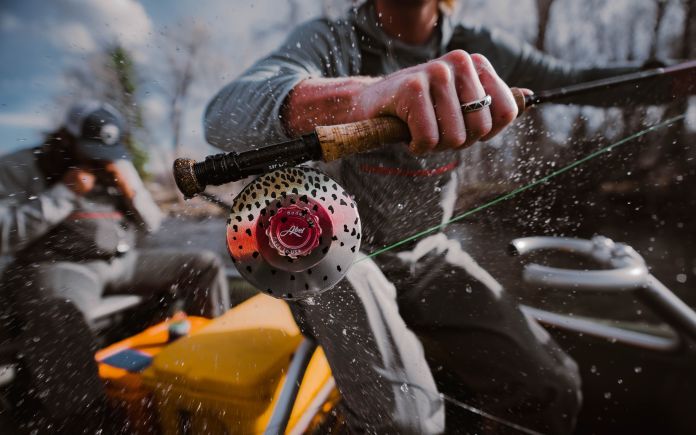
One reel to rule them all. Hit the water with an all-new, customized Rove reel from Abel Reels. Abel enables any of their reels to be customized with a hand-painted finish that can be modified to incorporate over 89 different designs! Show someone you truly know them with the unique gift that will distinguish them from anyone on the water. The Abel Rove Reel is available in light 4-6 weight models and up to 12+ weight models for the saltwater angler.
Gift Cards & Memberships
39. Trout Unlimited Membership
 Not all gifts have to come in boxes with ribbons. If you’re struggling to find the right gift for the guy who has it all, consider giving the gift of giving back. With over 300,000 members across the country, Trout Unlimited is a non-profit organization that is responsible for the preservation of some of the most important trout waters in the US. Coming in at only $35, this is not only one of the most affordable gifts you can give, but one of the most meaningful.
40. Fly Shop Gift Card

Still can’t decide what to get the angler in your life? With the complexity of the fly-fishing market, we can’t blame you. Instead of losing sleep over it, just google your local fly shop’s website and look for a gift card option.Â
Back To Top ↑ |
https://theflylords.com/2019/06/12/15-fly-fishing-gifts-your-dad-will-love-this-fathers-day/
https://theflylords.com/2018/12/03/flylords-holiday-gift-guide-2018/
Reel of the Week: Alta River Salmon Will Make Your Reel Scream

A note from Keith Rose Innes:
“It was time to test the new Shilton SL7 Spey Reel, and by luck or destiny, it all worked out. The first ever river the Spey was fished was the Alta River in Norway, home to the world’s largest Atlantic Salmon.
The lengthy runs from these powerful adversaries were met with a smooth response.
A 30-minute fight edited into 30 seconds while hooked up to a 30-pound Atlantic salmon. A trip I have dreamed about for over 30 years.
Breathtaking scenery and incredible people. There is an overwhelming feeling of being extremely privileged to experience this majestic river and community.”
Reel of the Week from Keith Rose Innes, be sure to check out his Instagram Page and fishing adventures @keithroseinnesflyfishing.
Check out the articles below:
Fly Fishing The Cocos: Bones & More

This March, I was lucky enough to join the “Blokes’ Week” in the Hello Backing Lodge on the Cocos (Keeling) Islands, organized by Nick Lorenzo. It was a fantastic experience, and since the islands are not very well known, I put together some information about them. If you want to learn more, don’t hesitate to get in touch with me by clicking here.Â
The Cocos Islands


This unspoiled paradise lies in Australia’s azure waters of the Indian Ocean, situated approximately 2750km northwest of Perth, Western Australia, and 900km from Christmas Island (not Kiribati, but the one in the Indian Ocean). The Cocos Islands are a group of coral islands that form two atolls. Only two of the 27 islands are inhabited. These islands offer excellent snorkeling, kitesurfing, diving, bird watching, and spectacular fly fishing. The only way to get there is a flight from Perth operated by Virgin Australia. There are flights twice a week, Tuesdays and Fridays. It takes about 5 hours to get there from Perth. Some flights are direct, and some have a stopover on Christmas Island.

To ensure that the Cocos Islands’ fish, crustaceans, and shellfish stocks are managed sustainably, the Department has developed a set of island-specific recreational fishing management arrangements. These have been developed following consultation with the on-island community members over several years and recognize community views and concerns for the sustainability of fish, crustacean, and shellfish stocks.
Weather & Season

On your visit to our tropical Island, you can expect warm days and balmy evenings all year round. There are two main seasons. Trade wind season begins in May/June, and the calmer doldrum season from November to May. No matter what the season, you will always experience temperate weather. With a minimum evening temperature rarely dropping below 24°C and water temperature consistently above 26°C. Humidity is relatively high – 70%-80%, so you won’t need to pack winter clothes. A light rain jacket can be handy, but these rains usually don’t take long and can be refreshing. The average annual rainfall is approximately 2000mm.
Most fish are residential, so fishing is good all year round. Strong wind can be a problem, so we prefer to fish from the start of November to the end of March. That’s also the period when Hello Backing Lodge is operating.
Give the Dog a Bone

Bonefish paradise – that’s the right word for the population of these silver bullets. They’re everywhere. There is no chance you will leave these islands without catching a few bones.

On a good day, 20-30 fish per angler is typical, with the average size being around 40-50cm. Some trophy fish around 70cm are caught regularly, and we saw a few fish in even larger sizes.
Trevally and Co.

There is a solid population of Giant Trevally (Carnax Ignobilis) – locally known as “Gwanies,” in the reefs around the islands. Sometimes you can see them on the flats while Bonefishing. My mate Angus was able to hook up on one of these gangsters on his 9wt and a Bonefish shrimp – on the last cast of the trip! It was a spectacular eat and wonderful to watch. There are also some other remarkable trevally species on the flats in good size – Bluefin Trevally (Caranx Melampygus) or Blue Trevally (Carangoides Ferdau).
Crab Eaters

Permit (Trachinotus Blocchi) is a common fish on some Cocos flats. We had multiple encounters with those elusive fish. We managed to get some of them to eat; however, we could not land any. Triggerfish are also possible to catch, usually around the spectacular Blue Holes. Both main Triggerfish species, Yellow Margin and Titan, and the more petite Picasso are present on the Cocos Islands.
Something More

Cocos has even more to offer. With some luck, you can encounter the king of the ocean – the Sailfish. The fastest fish in the world will put your skills and gear to a tough test. You can find Maori Wrasse. Plenty of Bumphead Parrotfish (Bolbometopon Muricatum) are around, providing you with many shots at these magnificent creatures. Some people say they eat flies; some say they don’t – so it’s up to you to make your own opinion. In addition to the “Bumpy,” other parrotfish can be found occasionally. Milkfish are commonly sighted when wading the flats for Bonefish. I didn’t see them eating but just swimming around.
Gear

Big fish require strong equipment; it is always better to play fish hard and land them as quickly as possible. The odd reef sharks can be around, and you don’t want your fish to be “sharked.”

For Bonefish, I recommend a 9wt rod. You can quickly hook your new personal best or even the Bonefish of a lifetime – so you better be ready. A good saltwater reel with a smooth drag and 200+ meters of backing is essential. Play them hard and let them return to their local waters. Traditional floating lines work well, but floating lines with clear intermediate tips give you some extra stealth and depth. The Cocos Bones are generally not leader shy, so you can use anything in the 16-25lbs range. The “big fish – big flies” rule works well on Cocos. Sizes 2 and 4 are the most common. Spawning shrimp and mantis patterns, but also the timeless Crazy Charlie, catch plenty of Bonefish. Pack flies in different weights for different depths. When chasing Permit, Triggers, or Bumphead, you can use the same setup but use stronger tippet and add a few crab patterns to your box.

GTs and Sailfish demand a good 12wt, substantial drag on your reel, and enough backing. Make sure your loops are strong. Brush flies, Flatwings, or poppers in black, purple, or tan tied on 80lbs tippet are the choice for most anglers.

For the surf line, consider intermediate lines and a stripping basket. Intermediate lines help to cut through the waves and minimize dragging the line back to shore. I used a 10wt line with an intermediate head and a floating running line, followed by 30-60lb tippet and various deceivers, brush flies, Clouser Minnows, and poppers. If I had to choose a single rod for all species, it would be a 10wt with a clear intermediate tip line.

Without a doubt, this was my best saltwater trip to date. I landed countless Bonefish and good numbers of Trevally, Pompano, and other reef fish. Two trophy Bonefish around 70cm were the pinnacle of the trip. I managed to hook a nice GT and a Permit but lost both of them. That’s why it’s called fishing, not catching, eh? Overall, a great week with good blokes. A picture is worth a thousand words – so enjoy.
If you’re interested in fly fishing The Cocos Islands, message Martin here, or send him an email at martin.flyfishingcz@gmail.com. Huge shoutout to the “Blokes” @angus_line, @paris_sienna_, @indepthangler_josh, @nicksfly, @hnorto, @billy_jay_cyrus, and the hospitality at @hello_backing_flyfishing.Â
Check out the articles below:
Angler Story of the Week: Stand Up Paddle Board Fishing for Cobia

A note from Nils Schweizer:
“So I’m pretty novice to fly fishing, my brother Noah got me into it about a year ago, and after a very frustrating beginning, I’m now hooked! I love the challenge, and anything you catch is much more rewarding on the fly.
The most adrenaline I’ve felt from fishing was when I caught a cobia in the ocean from a stand-up paddle board a few years back. Since then, I have always wanted to do it again, and now with the fly, I felt that would be the ultimate! So this year, when I heard from a friend that they were off the beach behind my parent’s house, I had Noah tie me up a fly for cobia, and I went out to try my luck.

After paddling around for about 2 hours and a few close calls with rays, I was about to give up when I spotted what I thought was a shark in the distance. For some excitement, I figured I’d make a cast at the shark, and as he got closer to the fly, my heart dropped; it was a cobia! I gave it one twitch, and it was on! After about a 15-minute battle, I got it close to the board and thought it was ready to land; it was not! I got him on the board, and he went nuts! I tried holding him down, but he was too powerful; he broke my rod, knocked my paddle off the board, and got back into the water, but he was still hooked. With my rod broken and my paddle floating away, I wasn’t sure what to do.
I tried hand-lining him in, but it was impossible to grab him without a net. I got back to my paddle, and as I attempted to paddle while fighting the fish, I saw a boat flying toward me. I waved my paddle to let them know I needed help, and it happened to be my good friend Tupat with his buddy Rob! I couldn’t believe my eyes, perfect timing! I got into their boat and slowly hand-lined him up. After a few attempts with the net, we got him in the boat, and I was elated!
It’s incredible how much emotion fishing can bring out of you when it all comes together. Big thanks to Tupat and Rob for showing up when they did and my brother for tying the magic fly! It was a crazy experience that I will never forget!”
Angler Story of the Week from Nils Schweizer, be sure to check Nils out on Instagram @nilsers.Â
Check out the articles below:
Flavor on the Fly: Pan-Fried Cobia over Potato & Red Pepper Hash with Lemon Butter Sauce
