Home Blog Page 48

The Sheepy Tournament 2023—Louisiana Guide Community Concerned Over Redfish

A sheepshead fly fishing tournament in the Louisiana Bayou sounds straightforward right? Kind of. For 11 years now, the Louisiana guiding community has put on The Sheepy Tournament to have some fun after their fall and winter redfish seasons and try to accomplish this crazy idea of catching sheepshead on the fly.

After spending three days with the hardcore fly fishing community just outside of New Orleans, LA, one thing is for certain—they love their fishery. Well, two other things, they also know how to throw a party and feed the masses.

The Sheepy is clearly focused on trying to catch sheepshead on the fly, an exceedingly difficult task in and of itself, but throughout many conversations with guides and dedicated anglers another theme emerged: the Bayou is changing and so are its fisheries. Before we dive into those discussions, let’s talk about this borderline insane sheepshead on the fly fishery.

Sheepshead Fly Fishing

Often labeled the “Cajun Permit,” sheepshead are notoriously spooky, difficult to feed, and even harder for hooks to find a good hold. Throw in 6” of visibility of churned up marsh water and sightfishing, let along hooking one, sheepshead is one of the most unique and difficult fisheries I’ve been involved in. But there are anglers who have honed their craft and become quite effective at targeting sheepshead on the fly.

A likely sheepshead bank line

During the tournament, we were throwing 10s (when it was blowing 30-40 kts, that was…fun), but 8 weights are the norm. We used floating lines with a short leader, tapered down to 16#, but you could get away with 20# because of clarity–or lack thereof. Quick gear plug—the Orvis Helios3 8wt Blackout was an absolute weapon for this type of fishing. The 8’4” fly rod was a great tool for the quick and short presentations that made up most of our sheepshead shots and handled the bulldogging sheepshead without a hitch. For flies, we were throwing small crab patterns on size 4 hooks, which successfully connected to the minimal amount of hookable real estate of a sheepshead.

The M.O. for sheepshead fly fishing is to crawl along marsh banks and look for sheepshead—not as easy as it sounds. Sometimes these fish will show themselves clearly, finning out of the water or nose-down fervently tailing. Those are your best shots. However, you’ll also find more fish hiding barely in sight and cast at shadows in the dirty water. Those fish are obviously much harder to feed and hook. Most shots we had were under 20 feet, and you needed to drop that fly perfectly. With permit, you hear most Keys guides use a hula-hoop as the tolerance to place your fly. For sheepshead, however, that fly placement tolerance shrinks to a frisbee sized landing zone.

“Sheepshead are an incredibly technical fish, and very,very challenging on the fly. The challenge only adds to the hunt!” -Captain Ron Ratliff

All in all, sheepshead will test your sight-fishing prowess and fly fishing abilities, and I understand why so many fly anglers in the Bayou love targeting them.

The Sheepy

The tournament itself is a blast. We had two great days of chasing sheeps on the fly and plenty of great food and times throughout. The Sheepy has grown since the first tournament, and now attracts guides and anglers from all over the Gulf of Mexico, Southeast, and, well, all over. Our good friend Kayla Lockhart, a Pacific Northwesterner, even made it down. “This was my first Sheepy tournament experience (and apparently I lucked out with a day of good weather based on previous years),” said Kayla. “I would argue that The Sheepy is equal parts tournament and tradition where good friends gather to share good food, good conversation and good times! I already look forward to next year!”


View this post on Instagram


A post shared by Kayla Lockhart (@kayla__lockhart)

Kayla’s sentiment was shared by pretty much anyone we spoke to. The Sheepy commissioner and host, Mile LaRose looks forward to this weekend every year, saying “The Sheepy is a great way for both weekend warriors and guides to come together and enjoy our fishery without any drama on either side.”

“We pride our tournament in not taking the fishing too seriously. Although we are all competitive, we also all realize we are just there to have a good time, and it’s more about the camaraderie than the fishing. But all of this could not be possible without a healthy fishery. We are very fortunate that Louisiana has a vast ecosystem to support so many great fisheries. But we still have work to do with pushing for conservation to ensure that our fisheries are still healthy for years to come.”

Captain Miles LaRose depends on healthy fisheries more than most. He owns and operates both his guide service, Shallow South, and his new fly shop, Skiff Supply. Those businesses rely on healthy fisheries and the tourism industry that has grown out of Louisiana’s redfish.

A Changing Marsh and a Fishery in need of Conservation

Southern Louisiana is without a doubt a sportsman paradise, but that is rapidly changing.  Fishing in Louisiana is arguably best known for chasing bull reds in the shallow marshes–tuna 100 miles into the Gulf of Mexico is certainly a popular pursuit, as well. Focussing on the inshore fishery, however, Louisiana’s marsh and wetland habitats have been disappearing for decades and continue to do so. Take this statistic, for example, “Land loss in parts of Louisiana is occurring at a rate equivalent to one football field every 100 minutes.” Marsh and wetlands loss is a complex problem attributable to man-made attempts to control the Mississippi River’s floodplain and climate change’s sea level rise.


View this post on Instagram


A post shared by Ron Ratliff (@ronratliffs_marshdawn)

In addition, the Louisiana Bayou’s maquis target, redfish, is in trouble, and management change is drastically needed. According to the Louisiana Department of Fish and Wildlife and a recently released stock assessment, red drum–aka redfish–are not overfished, but the species is subject to overfishing. Too many red drum are being killed. This issue is further challenged by some of the worst recruitment estimates in recent history. Anglers are killing too many redfish, and the stock isn’t reproducing like it historically has–management action is needed to end overfishing and avoid the stock becoming overfished.

Captain Bailey Short of Southern Flats depends on these fish year in and year out. “The recent Stock Assessment on redfish showed a glaring need to change the way we regulate the harvesting of the species,” said Bailey. “Redfish are tough as nails and resilient as hell. These fish are simply too valuable to recklessly harvest and deserve to be given a shot to rebound to the prolific levels we all have known in the past.”

Because of the ongoing recruitment challenges and long-lived characteristic of redfish, substantial reductions in the fishery are needed to rebuild the stock. The reduction to harvest that LDWF is recommending is 35% which rebuilds by 2050, whereas a 65% reduction would rebuild the fishery in the quickest amount of time by 2031. Reductions are always tough pills to swallow, but in the world of fisheries management there is a management philosophy starting to take hold along our coasts–precautionary management. In layman’s terms, this usually means more risk-averse regulations to ensure long-term abundant and healthy fish stocks. In the case of Louisiana redfish, it means biting the bullet in the near term to rebuild this world-class, destination fishery for the long-term.

Captain Ron Ratliff has been fishing southern Louisiana his whole life and now owns MashDawn Guide Service. “Redfish are one of the most overlooked sportfish throughout many states,” Said Capt. Ron. “With the added pressure of so many more people on the water, more regulation is needed to protect the future of this amazing sportfish. The biggest issue with Louisiana regulations is the state being reactionary and not proactive.”

Capt. Bailey with a nice Bull Redfish

Captain Ty Hibbs has become a vocal advocate for conservation in his community and is hoping to leave his mark on recovering redfish.”While many in the conservation-minded guide community that I talked with want to enact tighter regulations to protect their fishery, the broader Louisiana fishing community presents some deep rooted challenges.”

LDWF is now in the process of developing new potential regulations, but be sure to take a look at their resources now if you’re interested. “A conservation mindset is needed now more than ever here in South Louisiana,” said Captain Ty Hibbs of Louisiana Sightfishing. “Redfish are far too valuable to this state to only be caught once. I’d love nothing more than to be fishing with my son one day and say, ‘This is better than it was ten years ago.’ I’m sick of talking about ‘the good old days’ stories. It’s about time we wake up and make the future the thing to talk about. This place was named ‘The Sportsman’s Paradise’ for a reason. I don’t ever want to hear about the day it became less.”

Also, the American Saltwater Guides Association has created a survey to better understand the economic importance of Louisiana’s redfish charter/for-hire industry and have a positive influence on the upcoming regulation change process–if you’ve ever fished for Louisiana redfish, take a couple of minutes to complete this brief survey!

Capt. Bailey Short left me with a fitting closing thought: “Our Marsh and the fish in it provide soul touching experiences for everyone from born and raised locals to people who have been around the world fishing and come here for the first time. We do not want to lose that quality.

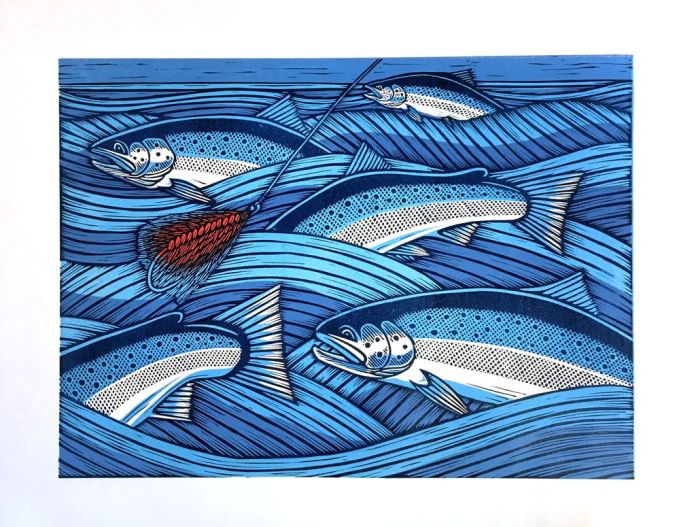
Artist Spotlight: Tyler Hackett

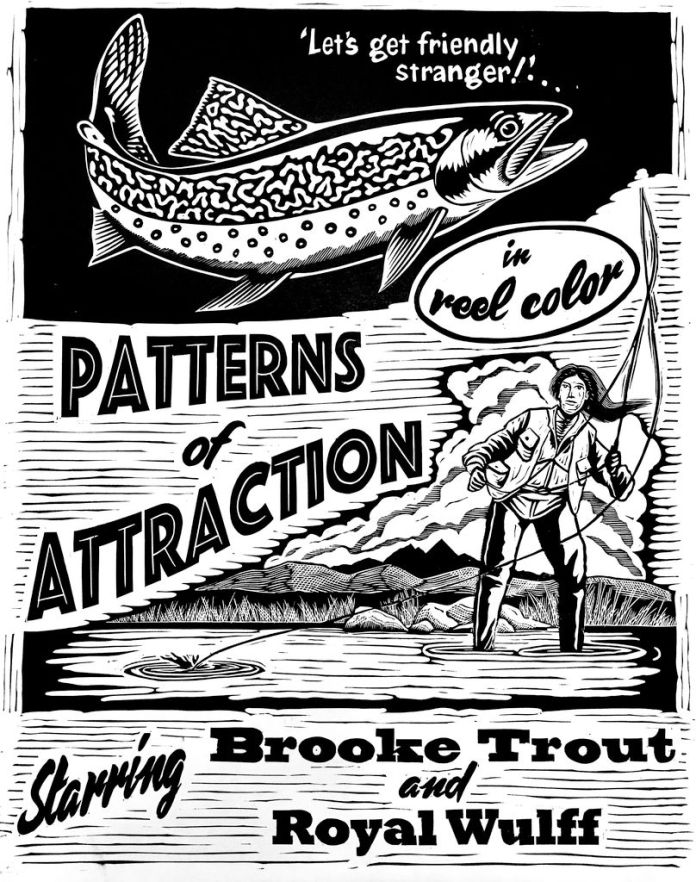
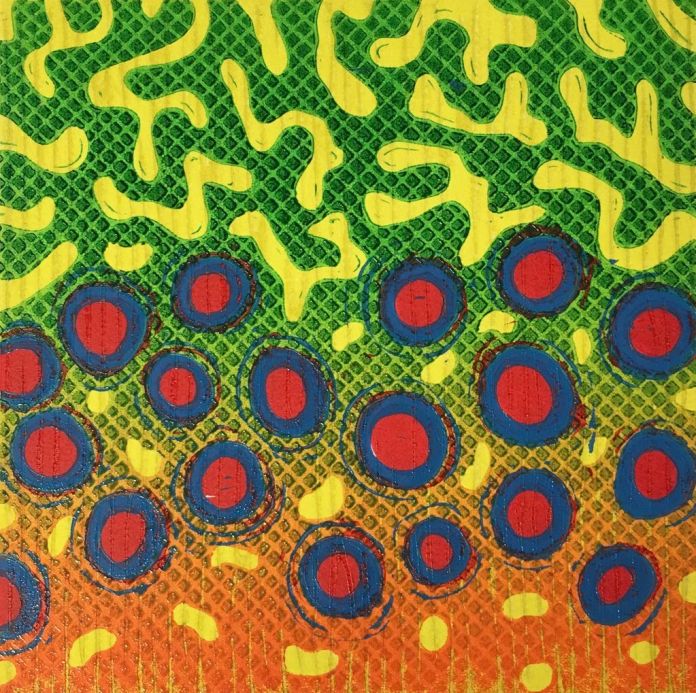
Tyler Hackett, a printmaker from Salt Lake City, UT, creates incredible printed images inspired by fishing experiences and vintage illustrations. Learn more about Tyler, his background, and his artwork below!

Flylords: When did you first develop an interest in art and the outdoors?

Tyler: I was born and raised in Salt Lake City, Utah. I have lived here most of my life, but have also spent time living in Washington, Alaska, and Colorado. As far back as I can remember I have always been interested in art. In grade school, I would get in trouble for drawing on my desk, and my love for drawing and creating images has continued ever since.

Image Courtesy of Tyler Hackett

My love of rivers, streams, and the outdoors first came about when I was a young kid. Growing up in a place where the mountains and streams were only a short drive away gave me opportunities to discover my love for the outdoors and fly fishing. Before I knew what fly fishing was, I would take every opportunity to try and coax the trout in my home streams and lakes to bite the hook at the end of my line.

Flylords: What role does fishing play in your life?

Tyler: My first experience with learning to fish was with my father. It mostly involved fishing with worms and other bait. A good friend who grew up fly fishing introduced me to it later in my life. One of the most important ways that time on the water is important in my life is that it allows me to connect with our natural world and disconnect from everyday 9-5 life.  When I am on the water, I find that time slows down and forgetting about the stresses of daily life is effortless.

Image Courtesy of Tyler Hackett

Flylords: What drew you to printmaking as your preferred form of artwork?

Tyler: When I was in college working on a fine arts degree, I never envisioned printmaking would become my focus. However, while I was working on a BFA in painting, I would also take printmaking classes. I viewed those printmaking classes as something I was doing just for fun. I was drawn to the tradition and history behind printmaking and the methodical work method printed images require.

Image Courtesy of Tyler Hackett

Flylords: What led you to start your own printmaking business?

Tyler: I didn’t set out to start a printmaking business, and my success with printmaking continues to surprise me. When I was focused on being a painter, I never would have considered drawing, painting, or printing fish-related art. One day a good friend asked for a piece of fishing-related art for him to give as a gift, and I made him a woodcut print of a rainbow trout.

Image Courtesy of Tyler Hackett

I was happy with the finished piece but considered it a one-off. My friend immediately suggested I make more and show others through social media. I was immediately blown away by the interest and support I received from the fly-fishing community and my work has progressed from there.

Flylords: Where does your inspiration for your work come from?

Tyler: Inspiration for my work comes from life experience on the water, photographs, and vintage illustrations. As a young, artistically inclined kid I loved flipping through fishing magazines and catalogs. I was drawn to and inspired by the hand-drawn and painted illustrations in those magazines. I am still inspired by those magazine illustrations because of the time, effort, and skill that artists would put into a magazine cover.

Image Courtesy of Tyler Hackett

Flylords: How would you describe your style as an artist?

Tyler: I have a tough time describing my style because it isn’t something I spend a ton of time thinking about. I would say my style is bold, unique, and playful. I try to keep the work I make fresh and fun and am not afraid of mixing things up or stepping outside my comfort zone.

Image Courtesy of Tyler Hackett

Flylords: Ten percent of your sale proceeds go to conservation efforts. What organizations do you donate to and why?

Tyler: Fishing and spending time in the outdoors enhance my life, so I donate proceeds from my sales and make in-kind donations to organizations that work to preserve and improve the outdoor spaces that so many of us enjoy. Some of the organizations I donate to are Casting for Recovery, Utah Stream Access Coalition, Trout Unlimited, Friends of the Gallatin, and Wildfish.org.

Image Courtesy of Tyler Hackett

Flylords: What similarities do you see between refining your craft as an artist and honing your skills as a fisherman?

Tyler: There are so many similarities between my skills as an artist and as a fisherman. Printmaking is very process-driven and it takes time, patience, and attention to detail to create a finished print. In my experience, developing and maintaining fishing skills requires those same qualities.

Image Courtesy of Tyler Hackett

Flylords: How can folks get in touch with you about purchasing art and commissioning pieces?

Tyler: First, I’d like to thank all the readers for taking the time to learn a bit about me and my work. The best way to get in touch with me with questions or inquire about a purchase or commission is via email at wanderingbluelines@gmail.com, or via direct message on Instagram.

Image Courtesy of Tyler Hackett

Photo Essay: The Fish of Providence Atoll

A note from Cullan Ashby:

Providence Atoll

“I wouldn’t even know where to start. I often find myself asking the same question over and over again while guiding out at some of these incredible destinations.”

“Imagine what this place would have been like 100 years ago?” That is Providence Atoll. 

“A vast flats expansion as far as the eye can see, untouched, unspoiled and wild, seriously wild.”


Photo Essay from Cullan Ashby, find him on Instagram at @cullanashby. Be sure to see his feature in the film “Farquhar” as well as @alphonsefishingco.

Check out the articles below:

What is a Bumphead Parrotfish? [And Tips to Catch Them]

Christiaan Pretorius’ Top 5 Species to Target in the Seychelles

Top 13 Underrated Saltwater Species to Target on Fly

Reel of the Week: Voracious Chilean Brown Trout

A note from Sebastian:

“Trout are impressive hunters, they are voracious and can catch dragonflies flying out of the water. Especially the eager brown trout down here in Chile, they are notoriously aggressive.”

Reel of the Week from Sebastian at @cincorioslodge. Video footage from Juan Gacitua Garrido, @jgacitua.cl.

Check out the articles below:

Chasing Chilean Brown Trout

Fly Fishing the Spring Creeks of Chile

2023 F3T Behind the Lens: Steve’s Red

The 2023 F3T is underway – click here to find a local showing and purchase tickets.

It’s that time of year again. F3T or The Fly Fishing Film Festival. We hope you are able to attend one of the shows and experience these awesome films with your local fly-fishing community. So how about a little behind-the-scenes of these awesome films? Steve’s Red is quite frankly about Steve (Hobo Steve) Tygielski’s first attempt to catch a bull redfish. With the help of Dorsal Outdoors and his best friend Adam Hudson, they embark on a rather DIY attempt to get Steve on his first redfish. Adam and Steve have their own fly company called Blue Line Fly Co. With their knowledge on the vice plus their will to put the pieces together they embark on a mission about more than just catching redfish. 

FLYLORDS: Steve congrats on your first bull red. Did it live up to the hype? What did you learn from your first trip chasing redfish?

Adam & Steve: “Lived up to the hype plus more! I see why people travel from all over the country to chase these fish. Hands down they are the most fun saltwater fish! The biggest takeaway was how humbling the casting was, how much more goes into fishing spots like wind and tides, and how much fun it is!”  

Image Courtesy: Adam Hudson

FLYLORDS: Have you guys used the bass boat as a flats boat before?

Adam & Steve: “We Never have. In trying to shoot this film we had a few connections for borrowing/renting a skiff and none panned out. So we had no option but the glitter boat. We knew the area pretty well and figured it would work fine!” 

Image Courtesy: Adam Hudson

FLYLORDS: What was the filming timeline like? Did you guys have an idea of what you wanted or a vision? Or did the film naturally unfold?

Adam & Steve: “We had an idea for the film, truthfully fishing was tougher than we expected but Steve got it done in the end! So it was a little bit of both.” 

Image Courtesy: Adam Hudson

FLYLORDS: Steve in as few words as possible what exactly does the “Bayou state of mind” entail and does it help with not trout setting?

Adam & Steve: “Daiquiris. Somehow how they affect your muscles to make you forget muscle memory. Trout setting is a muscle memory thing for most people, so if you’re trout setting try having a few Daiquiris.” 

Image Courtesy: Adam Hudson

FLYLORDS: If you have a message that you are trying to convey through this short movie. What would that message be?

Adam & Steve: “Get out there and try something new. Does it matter if you don’t have the exact right gear? No. Use what you have and so do something fun.” 

Image Courtesy: Adam Hudson

FLYLORDS: What sparked the creation of this film?

Adam & Steve: “Adam from BlueLineCo. Has been R&D’ing the redfish patterns that we are currently releasing. Steve and Adam have had 2 failed redfishing trips in the past (due to weather) so Steve had never caught a Redfish. We felt it was wrong for Steve to own a company that sold redfish flies having never caught one himself.” 

Image Courtesy: Adam Hudson

FLYLORDS: Is there a particular shot or scene in the film that is your absolute favorite compared to the rest? 

Adam & Steve: “Our favorite scene in the film is the downtown New Orleans scene. Too many films and videographers take themselves too seriously. We’re here to make it fun for folks who are watching.”

Image Courtesy: Adam Hudson

FLYLORDS: Is there anyone you want to thank for helping you with this film and bringing this story to life?  

Adam & Steve: “We couldn’t have made this film without the Dorsal Outdoors crew, huge shoutout to them for putting up with the BLC guys in the swamp.” 

Image Courtesy: Adam Hudson

FLYLORDS: Lastly, what’s next for Blue Line Co?

Adam & Steve: “We are going to continue making new redfish patterns and producing quality flies! Aside we do have some cool film projects and hope to be back in the F3T next year!” 

Image Courtesy: Adam Hudson

Extras: 

FLYLORDS: What was the pattern from BLC that you guys found most effective on your trip? 

Adam & Steve: “The Mobile Leprechaun. I seriously can’t explain to you why that fly works so well, but it is one of our favorite patterns of all time.” Check it out here.

Image Courtesy: Adam Hudson

FLYLORDS: With the Daiquiri’s flowing, Steve what was the first post-Redfish drink?

Adam & Steve: “Red Beer of course. Red Beers + Redfish = A match made in heaven”

Image Courtesy: Adam Hudson

From their original fly patterns to their own unique take on fly fishing and the industry Adam and Steve of the Blue Line Co just do things a little differently. If you aren’t already make sure to follow their adventures and projects here: @Bluelineco. And of course, check out their incredible fly patterns here: Bluelineflies.com as well. Also, don’t forget to buy tickets for the @flyfishingfilmtour so you can see this film and the 10 others that made the cut! 

Check out these other rad articles as well!

2023 F3T Behind the Lens: The Belt Buckle

Video of the Week: Project Isuzu with Blue Line Co.

Video of the Week: Sailboat Diaries Episode 2

Far From Home: Ep. 6 The Nubian Flats

From the banks of meandering rivers to vast open landscapes baked in sunlight and trodden by only hooves and talons, the best fisherman’s tales come from adventures had far from home. Join us as we explore one of the most remote fishing destinations in the world: The Nubian Flats. On a mothership exploring endless flats in the Red Sea, The Flylords crew joins African Waters to put the new Sage SALT R8 rod to the test. Here, you have an opportunity out of any salt water anglers dreams. Some of the best opportunities for triggerfish in the world, and on top of that the chance to offer a fly to giant trevally.  Explore the energy, beauty, and endless horizon that is a place so far from home…

three anglers standing on a sandbar in the nubian flats

How This Episode Came to Be:

After taking the Sage R8 CORE with us on our last far from home adventure, we immediately returned to the drawing board to discuss the next “Far From Home” episode. After 5 episodes of our original series, which focuses on fulfilling angler-fantasies about fishing far away lands and becoming immersed in new cultures. We were looking to find episode 6.

Learn more about the SALT R8 HERE

With the news of the new Sage SALT R8, we immediately stated to riff off flats destinations where we could put this rod to the ultimate test. We all came to the consensus that there was no other species more capable of putting a rod through the ringer than the GT. After a few phone calls with the Keith Clover from African Waters we were set on heading to the Nubian Flats for a two week expedition.

About The Nubian Flats: 

The Nubian Flats are a one of a kind fishing destination. Getting there is an adventure in itself. After a handful of flights, you arrive in the Port of Sudan where the crew from African Waters greets you to transport you to the live-aboard which is your home for the next one or two weeks.

The Felicidad II live-aboard vessel for the Nubian Flats.

Until recently, fly fishing in Sudan had not been considered viable due to political unrest in neighboring Southern Sudan. Despite its reputation, Sudan is a safe and inviting place to travel and has been the center of an exploding scuba diving industry for years. Following in the footsteps of the scuba industry, fly fishers soon discovered a rich and rugged flats ecosystem full of exotic species including incredible numbers of triggerfish, giant trevally, bluefin trevally, as well as the occasional bonefish and permit.

The nature of the fishery makes a live-aboard option perfectly suited for the needs of fly anglers visiting the Nubian Flats. Anglers stay on board the Felicidad II, a 98-foot schooner which was renovated in the summer of 2009. The guide team is comprised of all South Africans with the exception of one Italian, all are incredibly passionate about the fishery and the species you are chasing on The Nubian Flats. As you push off from port, adventure and excitement awaits beyond the horizon, moving us closer to what we anticipate in this special slice of the world…

The Fishing: 

The Nubian Flats are immersive and rugged. From jagged coral and crashing waves to white sand and tailing shrimp diggers, this place is the adventure hungry wade anglers dream.

TRIGGERS

The pinnacle islands that make up the southern portion of the Red Sea offer some of the most prolific triggerfish populations on the planet. Titan, yellow margin, and picasso triggerfish prowl a maze of coral bommies and turtle grass flats in search of crustaceans. You can find them doing headstands in a euphoric daze getting rolled by waves as they blissfully munch on their sweet crunchy snacks.

Scanning the flat searching for triggers.

Targeting triggerfish requires stealth, accuracy and finesse above all else. The tackle required is minimal. A handful of small tan flexo crabs and spawning shrimp patterns in different weights, a 12’ 16lb fluorocarbon leader and an 8wt SALT R8 rod is all you need to wrestle with these bipolar aliens.

Fly selection for triggers – learn more about the SALT R8 HERE.

When approaching the water, a good strategy is to walk the shoreline. Unlike most saltwater fisheries, the Red Sea doesn’t experience tides. With that, there’s no telling when fish will flood onto a flat. Minimizing presence and using an elevated shoreline to your advantage are the main reasons to keep out of the water when scouting. Once you’ve spotted a trigger, which could be cruising, or actively feeding, it’s important to take your time, set up and make the first shot count. These fish can be in very shallow water and are extremely sensitive to predation from the sky, so making a sidearm cast low to the water and ensuring your fly lands softly are paramount. Assuming everything went to plan and the fly landed in the right spot, just let it sink in front of the fish (mimicing a fleeing crab/shrimp trying to burrow into the sand for safety) and the cat and mouse game begins. 

Doubling up on one of the trickiest fish on the flats.

Little twitch, little twitch, long strip, pause and BOOM he decides your fly looks real enough to eat. The best piece of advice here is KEEP MOVING IT. Triggers will often pick up a fly several times before finally committing to eating it. Contrary to almost every other saltwater scenario, the worst thing you can do is strip set when you feel the fish eat. You’re waiting for a specific moment, the fish will eventually pick up your fly and turn. Once he turns, just hold tension in your line – this will set the hook into the fleshy corner of the trigger’s mouth, and slowly lift your rod. Game on.

Sometimes you have to get creative to fetch the fish out of the coral.

Now you just need to navigate the screaming runs and dirty plays the fish makes as he tries to bury himself in the bommies, every fight is different but these things will pull out every dirty trick in the book. They’re a beautiful, strong, frustrating headache of a target species but once you get one to commit addiction sets in.

GEETS

There are countless species prowling the flats alongside the triggers, but only one king, the giant trevally. Golden eyes, war paint down their backs and a face that screams “come at me, I f&%king dare you.” The giant trevally is the heavyweight in these waters and trust me, they know it.

GT require maximum pulling power from your rod – learn more about the SALT R8 HERE.

“A lot of people use the phrase “fighting a fish” but this is one of the few scenarios where the cliche runs true. This is hand to hand combat…”

The tackle is simple, and serious. 12wt SALT R8 rod, floating line with a heavy head for quick shots, and 7-9’ of 100-150lb leader. Flies need to be lightweight and easy to cast. You need something that catches the attention of a killing machine having a bad day, so black, blurple, and red flies are all good choices as they provide maximum contrast in the water.

The majority of fish are found prowling the steep coral drop offs that shelter each island, waiting for a smaller fish to make the wrong move and end up in the kill zone. The guides have adopted bait and switch techniques to bring these pelagic beasts into fly range. It’s a coordinated effort between three people. In the center of the lineup you have someone with a spin rod and a hookless plug, the GT Ice Cream. To his left and right there are fly anglers, this is you, with enough line stripped off their 12wts for a 60-80’ shot.

The guide with the spin rod will launch his plug into the blue water beyond the reef edge and start burning it back. The plug aggressively skips across the surface, full of fear. A wake starts building behind it until the geets back breaks the waters surface in an explosive show of dominance as it hunts the plastic dummy down. The spin angler will tease the fish into fly range exponentially speeding up his retrieve. This is where your time comes in, hold that 12wt tight because once you make that shot all bets are off. The goal is to replace the plug with your fly, so it’s imperative to land just in front of or better yet on top of the plug. Once the fly is in the water the plug gets pulled out and the testosterone fuled geet wants nothing more than to kill something. It’s usually the first strip. A wall of water met with a surge of energy turns the fly line into a guitar string. A couple hard strip sets to seat the hook in the geets mouth and it’s time for a ride. 

A lot of people use the phrase “fighting a fish” but this is one of the few scenarios where the cliche runs true. This is hand to hand combat. You need to put your whole back into this thing. A hardtailed, pissed off, chunk of muscle is on the other end of the line and it’s going to do everything it can to win. Lock the drag down and plant your feet hard. Hooking and fighting a big GT is a uniquely humbling and frankly, sweaty, experience. You’ll be winded by the end and war cries will echo through your eardrums for a good while. If you like adrenaline, this is the fish for you.

The Takeaway: 

It’s adventures like these you never forget. Opportunities to travel to faraway lands and fish for unpressured, monstrous fish is a privilege not many anglers encounter. We acknowledge this, and carry these stories to you as a homage to the time spent in paradise. However, from an experiential perspective, the fishing was only the tip of the iceberg. To share two weeks on a mothership with a group of anglers, all from different backgrounds united around the love of adventure was an experience we wish everyone in the world could possess.

The passion expressed amongst all the guides and staff who do so much with such thoughtful simplicity is a subtle reminder of why we fish. It’s more about having these experiences, and who you’re having them with, than anything else. That’s what “Far from Home” is truly about, and we hope it resonates in this piece.
Feel free to check out more from the “Far from Home” series HERE.

To learn more about African Waters, click HERE. Thank you to Sage and Fly Water Travel for making this trip possible. To learn more about the new SALT R8, click HERE.

Far From Home: Ep. 5 Patagonia

Behind The Scenes of the Sage SALT R8

Changing Currents: Conservation > College Rivalries

In 2014, Costa spearheaded the TU Costa 5 Rivers Program to create fishing clubs on college campuses across the country to engage with the next generation of anglers. Today, there are 75 clubs with more than 2,500 members nationwide.

TU Costa 5 Rivers Vision: To create the most empowered, educated, and engaged generation of conservation-minded college fly anglers in history.

TU Costa 5 Rivers Values: Conservation, education, stewardship, community, fun, respect, inclusivity, growth, engagement, and leadership.

In the fly fishing world, one highly effective community building strategy is to bring a bunch of college anglers together in a little mountain town for a weekend of camping, fall fishing, good food, and small amounts of type 2 fun. 5 Rivers strives to do just that by hosting regional rendezvous events each year. At the 2022 Rocky Mountain Rendezvous, students from the Colorado State and CU Boulder 5 Rivers clubs gathered near Steamboat Springs to catch some fish, hang out with other club members, and learn more about TU’s mission.
The students rolled up their sleeves for a service project led by Ian Wilson, TU’s White and Yampa Rivers Project Manager, and spent a few hours conducting maintenance on a habitat restoration project below Stagecoach reservoir. They also visited a restoration project completed by the Yampa Valley Fly Fishers, and learned about the impact of TU’s grassroots conservation efforts in Colorado. After earning some good fish karma, they headed off to fish the Yampa and were rewarded with plenty of dry fly eats and feisty fish. While fishing, students packed out several bags of trash in an effort to leave the Yampa better than they found it. This event would not have been possible without support from Costa Sunglasses, Simms Fishing Products, and YETI Coolers, as well as Ian Wilson, the Yampa Valley Fly Fishers, and Maddie Brenneman.
We were excited to talk to an amazing student from each of these schools programs, Parker Cahill and Sofia Vakhutinsky,  and ask them about their experience at the Rendezvous and TU Costa 5 Rivers.

Flylords: Would you tell me a bit about yourselves and how you got involved with 5 Rivers?

Parker Cahill Pictured on the left.

Parker Cahill: My name is Parker Cahill, I am a Colorado native and have been fly fishing all around the state since I was 12 years old. I am currently attending Colorado State University and am set to graduate in May 2023 with a Landscape Architecture degree. I joined the CSU FFC my freshman year and just recently got more involved with 5 Rivers. The rendezvous was my first big experience with 5 Rivers. It has been an awesome platform to connect with all sorts of fishy people.

Sofia pictured hard at work on the restoration project.

Sofia Vakhutinsky: I’m a senior at the University of Colorado Boulder studying Economics and Geography. I’m originally from Boston and only started fly fishing a year and a half ago. After joining the CU Fly Fishing Club I fell in love with fly fishing, and got involved with all things 5 rivers through the club.

Flylords: What is your position at your club? How have you seen the club evolve?

Sofia: I am currently the Vice President of the club. From my relatively little experience, I would say the club was already well established, however, I think the club has become a lot more organized and inclusive as we have started to host more beginner-friendly events and trips.

Parker: I never held any executive positions within the club but was an active member for all 4 years of my college experience. Personally, I think the club has grown to be a more welcoming place that people can come to no matter their experience level. The ability to have people from all different backgrounds and different home waters is something that is evolving within the club.

Flylords: Tell us about your time at the rendezvous – what did you do? Who was there?

Sofia: I had a great time at the rendezvous. It was in a beautiful place and it was awesome to be able to meet some of the 5 Rivers people that we correspond with. A lot of the CSU fly fishing club members showed up as well, which was awesome to see, especially since we were there to clean up a section of a stream and do some trail maintenance. We got the work done efficiently so we were able to just fish the rest of the day. We also had dinner with everyone as a group that night which was a great time to share stories of the day.
Parker: My time at the rendezvous was one of the highlights of my college career. The ability to be surrounded by people you wouldn’t typically hangout with that have the same passions as you was awesome. Fly fishing, conservation work, hanging out by a campfire with fishy people, and good food just about sum up the trip. The rendezvous brought everyone together and allowed us to further connect with our own clubs. The combination of fishing and conservation work was another great feature of the trip. We had multiple opportunities to meet with leaders within the industry to further our knowledge on the critical issues faced today. We met with Ian Wilson from Trout Unlimited who led our conservation efforts for the weekend and got to interact with various other members from the community that had a vested interest in stream restoration/conservation. In addition, everyone left with some new items from the sponsors Yeti, Costa and Simms and I was lucky enough to win a Yeti Cooler.

Flylords: CSU and CU have a pretty big rivalry, Does this show on the water when the clubs get together?

Parker: A rivalry is a rivalry at the end of the day. There definitely was a competitive aspect to the weekend, but it was all in good fun. Friendly banter, and competitions were had. We had a couple competitions throughout the weekend, and from what I recall CSU won all of them… Most fish competitions and greatest club attendance were the main events. At the end of the day, we all sat by the same campfire and exchanged fishing spots near each other’s home waters, and set the rivalry aside.

Sofia: Although CSU and CU do have a pretty big rivalry, when we’re on the water together, everyone is just there to have a good time, and it’s really interesting to be able to talk to other people that are just as passionate about fly fishing as we are. Although there is a tasteful hint of slander sometimes, particularly this year it was more about whose football team sucked the most as both schools had pretty terrible seasons.

Flylords: Is there anything your club does that is interesting and unique?

Parker: I think our club is good about having events for anyone and everyone. There are multiple opportunities for people to get out on the river whether it’s the all women trip, the beginners trip led by club members or river cleanups, there really is something for everyone. In addition, we are proud to be one of 3 recipients of the TU5Rivers community grant fund. We have implemented a program titled “Take Kids Fishin’ ” that partners with the local Boys and Girls Club, to teach the kids everything about fly fishing and engages them in conservation efforts.

Sofia: I don’t have experience with any other college clubs aside from CSU, but I would say our club tries to be as beginner friendly as possible. We get so many people not from CO who want to experience the outdoors which gives us the opportunity to provide that through fly fishing. We also try to collaborate a lot with our local fly shops and give back to the community when we can.

Flylords: How have you grown from being a part of the club?

Sofia: I have definitely become a better angler, which is to be expected, but I’ve also gained confidence in my ability to help others, even when I’m not the most knowledgeable officer or member of the club. My involvement with 5 Rivers also strengthened my leadership skills, and learned that being really good at fly fishing is one thing, but showing up and being ready to help people or just help organize events really makes a difference in how people are experiencing or perceiving being part of the club.

Sofia: The club has allowed me to meet people with the same passions as me and provides me with an outlet to do what I love with some pretty awesome people. Interacting with other members has also grown my passions and reminds me why we do what we love.

Thank you to Costa Sunglasses for their dedication to the next generation of anglers and conservationists. These opportunities for students like Sofia and Parker would not be possible without their full  support of TU Costa 5 Rivers since it’s inception in 2014.

Changing Currents: How College Students are Changing Fly Fishing

TU Costa 5 Rivers: Learn More!

Angler Story of the Week: A Steelhead Story & Tips with Capt. Lael Johnson

A note from Capt. Lael Johnson:

“When I make a cast, there is always a fish I think about that might be in this run, bucket, or tail out. The fish I’m thinking about looks like this, and the hope that he’s out there keeps me going, rain, sleet, snow, or hail looking for the perfect fish. It’s tough to find an unmarked, large chrome steelhead with no scars from seals or nets, and this fish was flawless, and it fought with all of its size and strength.

He ate right above a large root ball next to some fast water and gave me the fight of my career. I just got a 15-foot rod, and @islanderreels set me up with an MR3 that had been turned into a fly reel to balance the rod. I wanted to break the rod in, and I would have been happy with a six-pounder, but this is the first fish that setup found. With a steelhead this size matched with a fast water speed, I needed everything this rod and reel had to get that fish into the net. You don’t need a 10wt flag pole to fish for steelhead, but if you’re chasing something like this, it’s good to be prepared.

Thankful we got a season for an opportunity to have something like this happen!”

Tips & Tight Line Tricks

Where do I fish?

Photo By Ben Matthews

Locate places in the river where the water is at a slower speed than all other surrounding water. Make sure you are capable of fishing this type of water where there is little room for the fish to pass you without seeing your fly. Doing so requires understanding water speed and the bottom’s characteristics while also getting your fly to swing within three feet of the bottom. Of course, this needs to be matched with the proper cast, sink tip, fly size, and overall presentation to get your line to come tight. At best, for those new to the sport, at least your not casting in “wish and a prayer water” where the fish can pass you without even seeing your fly. Good luck, and keep swinging!

The grab? What do I do?

Photo by Ben Matthews

There are many ways to react after the grab, and I’m not going to tell you every possibility; there are a bunch. What I do want to put in your mind is this….

You went through all this work of traveling, searching, casting, and possibly poor weather. If the fish wants the fly, Don’t take it away from him! If you are confident enough to strike, ensure you are setting the hook against the full weight of the fish, and after that, let them run! Steelhead are trout, but don’t treat them like that; no trout sets as soon as the line comes tight.

Captain, we are ready for landing

Photo by Ben Matthews

Landing a fish is when you get a chance to lock in that experience with a photo, and there is a best practice when getting the job done by tailing a fish or putting it in the net.

  1.  Don’t drag a fish on any rocks or bank it to make this moment happen, do this right, and try to stay deep so if the fish jumps or rolls, it won’t hit its head.
  2. Keep your rod low and bent toward your buddy or landing spot, not straight up in the air. Keeping the rod down and aimed at your target gives you control in the fight.
  3. If you are going for the tail yourself or have help, if the fish is not ready, let them go for another run. Dont exhaust the fish, but there is no need to try when they are spicy and not prepared, that’s the moment you might pull a hook and see them swim away.
  4. Be ready for the photo, and care about the fish more than your memory!

Angler Story of the Week from Captain Lael Johnson, be sure to follow him on Instagram at @flygyde. Johnson is the founder of the FYSH Foundation, a non profit organization “helping others find peace through fishing and the enjoyment of the outdoors.”

Check out the articles below:

Costa Behind the Guides: Lael Paul Johnson

5 O’Clock on the Water: How to Make the ‘Liquid Smoke’ Cocktail With Lael Paul Johnson

Professional Surfing and Fly Fishing: Finding A Balance

Growing up in South Carolina, I was lucky to have some incredible coastal environments to explore. This led me to pursue professional surfing, which resulted in countless hours in the water exploring the world’s most beautiful coastlines. Surfing has been my life since I was born. My father owns a surf shop and makes surfboards and my brother taught me everything I know. Surfing has given me some amazing opportunities and I am incredibly grateful for the sponsors and family members who give me unwavering support. I’ve been able to make so many friends, learn life lessons I wouldn’t have learned doing anything else, and travel to countless incredible destinations.

Recently, wherever my travels take me, there is one thing that always ends up in my surfboard bag: a fly rod. When I travel around the world to compete in surfing competitions, I bring my fly rod almost everywhere I go. Whether I’m in the crystal-clear waters of the Caribbean, out in the middle of the Pacific Ocean in Hawaii, or just along the east coast of the US, I am always on the lookout for a spot to escape with my fly rod.

Cam Richards with a tarpon on the flats.

Combining Passions

Bringing a fly rod with me wasn’t always common practice. I recently discovered fly fishing down in Florida with some of my good buddies! We have always thrown conventional, but decided it was time to make our life even more complicated. After countless casts stuck in the mangroves, missing hook sets, and getting my fly line stuck on anything it can find, I am finally confident enough to try my hand in any fishery I find myself in. 

Cam surfing off the coast of Panama.

Most of my surfing trips are in tropical places, so odds are I’ll be fishing off the beach or on a reef flat. I find myself targeting anything from bonefish to big tarpon in the surf! When it comes to the gear I travel with, I usually just bring my Redington Predator 8wt and the Grande Reel 7/8/9 with 8wt flats line. I have found this setup gives me the best opportunity to travel with only one setup and be able to handle most of the fish I find myself casting to.

Cam brings his 8wt Predator Rod and Grande Reel on all his trips. 

It was a challenge to juggle both activities, but I loved the sense of excitement and adventure that came from combining my two passions. I believe it’s the feeling of starting from scratch and learning new things that have me so hooked! It has a sense of connection to the natural world that is difficult to put into words, but that fills me with a deep sense of satisfaction and joy. 

Surfing has become muscle memory and I’m hoping to find the best waves possible. When I am out surfing, instead of looking for the next wave I’m trying to see a big tarpon roll, or instead of looking on a map for a good surf break, I’m looking for a good flat or small canal. Before I go to each place I’m always looking for fishing reports nearby and any hints I can get to try and catch a fish in the area I’m visiting. Luckily, I have found that a large portion of my surfing research applies to my fishing research. This is where I really nerd out. 

Nerding Out on Wind and Tides

Understanding the winds and tides can make the difference between a great surf session and a frustrating one. Wind can either create favorable or unfavorable conditions for surfing, depending on the direction and strength of the wind. Onshore winds can create choppy and uneven waves, while offshore winds can groom and organize waves. Surfers also need to pay attention to the tides, which can impact the size, shape, and speed of the waves. A high tide can create larger and more powerful waves, while a low tide can cause waves to break closer to shore and create a shallow and frustrating wave.

Similarly, for fly fishing, understanding the winds and tides is very important. The wind can affect the casting and accuracy of the fly, making it difficult to get the fly to the desired location. Strong winds can also create ripples on the surface of the water so you can’t see fish.

Understanding the tides is also important as it affects the movement and feeding patterns of the fish. Certain fish may be in one spot at certain times of the tide, such as during a rising or falling tide, and this information can help me choose the best time and location for fishing.

A lot of people look at my job as a surfer, and they only see the good side. But what people don’t see is that at the end of the day, it’s still a job and there will always be speed bumps. There’s a lot of stress in this game of surfing, whether it’s competing or traveling around the world and getting completely skunked, trying to keep your sponsors happy, etc. All of that can take a toll on you mentally and physically. And that’s where my love for fly fishing comes in. All that stress goes away. When you’re staring at a tailing redfish with a fly rod in your hand all your other problems go out the door. I think that’s why I gravitate towards it, it’s my escape from my surfing bubble. 

If you would like to dial in your own saltwater travel set up, make sure to check them out from Redington!

Cam Richards is a professional surfer and Redington ambassador traveling across the world finding ways to connect these two passions. Follow along with his adventures on his Instagram HERE.

All photos are from Layne Stratton.

Our Favorite Stories from Female Anglers

The Best Saltwater Fly Reels, and How to Find Yours

Europe’s First Wild River National Park Announced in Albania

We woke up to some stellar news surrounding freeing rivers across the globe from derelict or useless dams: the permanent protection of the Vjosa River in Albania.

Several years ago, a proposed dam on the Vjosa River in Albania made international headlines as Patagonia and other partner NGOs gathered to protest the damming of Europe’s last undammed river. After years of lobbying the Albanian government and fighting against the dam builders, the Albanian government made history this week when they declared the river to be a “Wild River National Park”. This designation will protect the river from future impoundments and hopefully increase tourism to the region.

To learn more about this new Park, check out this article from the Guardian!


View this post on Instagram


A post shared by Patagonia Europe (@patagoniaeurope)

“Vjosa is a symbol of human history and also a very important part of the history of our country,” said Albania’s tourism and environment minister. “Maybe Albania does not have the power to change the world, but it can create successful models of protecting biodiversity and natural assets, and we are proud to announce the creation of this first national park on one of the last wild rivers in Europe.”

To read more about this new Park, check out this article from the Guardian!