Home Blog Page 35

Broder Tips: Trout By Seasons

Welcome to “Broder Tips” brought to you by Broder Fly Fishing! Over the next five months, we will immerse ourselves in the captivating world of fly fishing and provide you with valuable tips and tricks to enhance your fishing success. Whether you’re a seasoned angler with years of experience or a newcomer to the sport, we’ve got you covered.

Each month, we will present a new article focusing on a relevant topic for the current season. Be sure to explore our first article, “Trout By Seasons,” where we share insightful tips and tricks on identifying optimal fishing spots during spring, summer, fall, and winter! Check out the reel below!

As anglers, we often face the dilemma of choosing the right flies, determining the appropriate tippet and leader sizes, and often sticking to the patterns that have proven successful for us. In this article, we will delve into the essence of fly fishing and explore strategies for targeting trout in various seasons with inspiration from the reel above. Whether you’re casting blue-winged olive patterns into gentle currents or presenting grasshoppers in the riffles along the bank, the insightful tips and tricks from Broder Fly Fishing are here to guide you in locating the prime holding spots for fish throughout the year!

Spring

Summer

Fall

Winter

Spring

Let’s begin with the transition season of Spring. During early spring, water temperatures are still cold but gradually rising, and hatches become more frequent. Fish tend to be most active in the warmer parts of the day due to the cold water. Expect them to seek out warmer, slower sections of water where they can conserve energy. Look for deeper pools with abundant food sources. As spring progresses toward summer in May and June, fish become increasingly active and start transitioning to their summer habitats as bug hatches become more common.

Summer

Late Spring into Summer marks a change in trout behavior as the water temperature warms. Consequently, you’ll need to adjust your fishing timing accordingly. Trout are more active in the early morning and evening when it’s cooler. During these active hours, you’re likely to find them in highly oxygenated areas that are rich in food, such as riffle tailouts or along the edges of eddies. In the heat of the day when the sun is high, they may retreat to deeper waters or seek out shaded spots like undercut banks. Larger bugs and terrestrials become more prevalent, and fish become opportunistic in pursuit of substantial meals.

Fall

Photo by Dylan Brown (@dylan.h.brown)

Fall can be the most challenging season to predict trout behavior due to variable weather and hatches. The water is typically low and clear, and fish have experienced an entire season of angling pressure. Exercise stealth when approaching the water during this time. As the water cools, the fish’s need for food decreases. However, it doesn’t mean that fishing opportunities diminish. In many places, fall offers an exceptional period of hatches, and streamer fishing becomes incredibly rewarding. Fish remain well-fed from the summer months and actively seek larger meals before the slower winter period. Keep in mind that brown trout may begin their spawning activities during this time, so avoid areas with spawning fish and adhere to local regulations.

Winter

Photo by Jesse Packwood (@jessepackwood)

Winter brings cold temperatures and even colder water, driving trout to seek warmer areas and conserve energy. While trout activity slows down during winter, they still need to feed regularly, presenting ample opportunities for anglers. Look for deeper and slower sections of water where fish are likely to reside during these colder months. On warm sunny days, activity may increase during the middle of the day, as long as there is no snowmelt that causes water temperatures to drop and hampers fishing. Streamers can still be effective in winter, but consider retrieving them more slowly, as fish are less inclined to chase aggressively.

Each season offers something unique, along with great opportunities to catch trout. Familiarize yourself with your local waters and study the behavior of fish there. Adapt your fishing locations based on the season, and you’ll increase your chances of landing more fish!

Stay tuned for applications of “Broder Tips,” a monthly article from Chris Solfelt at Broder Fly Fishing. Be sure to check out their website by clicking HERE. 

Check out the articles below:

Fishing Ethics: Float Fishing

Fishing Etiquette: Tips for Handling Big Fish

Reel of the Week: In Depth Fly Casting With Mathias Lilleheim

A note from Mathias Lilleheim (@mathiaslilleheim):

“I posted a series of casts from a day of pike fishing, which eventually turned into filming as the pike lost their appeal after a couple of hours. My fishing buddy, @rustiefly, and I managed to catch a few small ones, although Vebjørn’s 4-kilogram catch surpassed mine by a significant margin.”

“As the day drew to a close, we were blessed with perfect lighting and an ideal backdrop for capturing the fly line (and fly) on film. We decided to use the yellow fly I had been using throughout the day for filming purposes. We attached a 4-gram tungsten bead at the front, making the 20 cm fly weigh a total of 8.5 grams. To add to the challenge, we included a vibro-tail, which made casting even more difficult for an inexperienced pike fly fisher and caster like myself.”

“Flies of this weight tend to induce a “tuck-effect” slack during the transitions between strokes, which, combined with gravity, causes the fly to dangerously approach the surface. One solution to this issue is to improve the timing of these transitions, thereby avoiding the aforementioned slack that results in the fly touching the water. I personally need to work on my timing, as I tend to be slightly late in my transitions. Others have been experimenting with a “Belgian” approach, employing a more horizontally oriented back cast that redirects the slack caused by the tuck-effect sideways rather than downward.”

Mathias’ General Fly Casting Approach

“A fly rod operates on the principle of being approximately 80% lever and 20% spring, which can vary depending on different rod and line combinations as well as casting styles. Consequently, loading the rod is no longer the primary factor. Instead, the distance the rod tip travels while maintaining contact with the line becomes crucial due to the lever-like nature of the rod.”

“The equation Force * Distance = Work done (line speed) illustrates that increasing the distance of the rod tip allows us to achieve necessary line speed with less force. That’s why I personally prefer using longer strokes compared to other fly fishers. By doing so, I can relax more and focus on presentation, as I always strive to exert the minimum force required to handle a fishing situation effectively.”

“The purpose of the rod bending is to facilitate straighter rod tip paths and produce more efficient loops. It is important to maintain a relaxed grip and employ patient wrist actions, avoiding stiffness in the wrists. This approach assists in initiating a fly casting stroke with an effective translation phase, wherein the rod is moved in the stroke direction with minimal changes in angle. During this phase, I aim to achieve contact with a straight line, enabling optimal effectiveness during the rotation phase. When concluding the rotation phase, I utilize my patient wrist movement to complete the rotation, but I avoid abruptly stopping the rod. Instead, I describe it as a “non-stop” or controlled deceleration of the rod’s speed, culminating in a gentle “dampening” at the very end, allowing the rod to naturally turn over. This technique can be observed in most of my videos, particularly those filmed from the side. In reality, a rod doesn’t necessarily need to be stopped at all; it will take care of this on its own. This can be observed in the videos where I showcase “MORPHED” loops, permitting the rod to drop low at the end of a stroke.”

“Regarding the double haul, its purpose is not to increase rod loading but to directly enhance line speed. Proper tracking is another crucial aspect, often challenging for many fly fishers. I have a “secret” exercise that proves to be effective in addressing this issue.”

“Ultimately, I always emphasize the development of a personal style, disregarding the notion that one must cast exactly like the “experts” to succeed. However, it is essential that your personal style aligns with the principles of fly casting physics rather than relying on outdated myths, as there are a few of those floating around. I have highlighted a few of the most significant physics-based approaches that one should consider when establishing a personal style within the text.”

Reel of the Week from Mathias Lilleheim. Lilleheim has been teaching fly casting for over forty years in Europe. Be sure to check out his Instagram @mathiaslilleheim.

Check out the articles below:

15 Year Old Maxine McCormick Is a Fly Casting Phenom

Kayla Lockhart’s Quick Fly Fishing Tips

Recycle Old Fly Lines with Airflo’s Zero Waste Boxâ„¢ Recycling Program

Airflo not only makes the best fly lines on the planet but they are also leading the charge to reduce our impact on the environment. They have recently launched a one-of-a-kind recycling program where anglers can easily recycle old fly lines at their local fly shops. We caught up with Mayfly Outdoors CEO Jeff Wagner and Mayfly Outdoors Director of Marketing Ty Cyphers to learn more about Airflo’s Zero Waste Boxâ„¢ program.

Flylords: Tell us a little bit about the recycling program you have introduced. Where did the idea originate from?

Jeff Wagner: We know that plastics, especially single-use and limited-life plastics are an issue. We also know that these make the best materials for many fishing applications. Where this is true, circularity through recycling is the best way to keep these plastics out of the environment and landfills. If we do this, the plastics end up having many more lives and might even show up again for anglers.
The challenge was that no recycling program had been identified for fly lines, and no one had taken that risk and responsibility. In fact, the reason no one has done this yet is that it is not economically viable, meaning it costs more to recycle plastic fly lines and spools than to buy new raw materials. However, it is the right thing to do, the responsible thing to do given that we produce fly fishing products. We have the responsibility to protect our environment; the wild places that we venture to in order to follow our passion for fly fishing. So, to us, it doesn’t matter if it is not economically viable, it is the right thing to do. It aligns with our values as a company and as a B-Corp.
We believe fly fishing consumers and retailers will feel the same. We believe they share the same values and will support the program through recycling. We believe that they will help us close this loop and support circularity.

Ty Cyphers: As anglers, buying fly lines, leaders and tippet is part of everything you need to be successful in catching fish. As these products are used and enjoyed, they eventually reach the end of their useful life and it’s time to buy more. We asked the same questions as everyone else, do I just throw this away? It seems like it could be reused in some way. Other plastics can be recycled, why not this one?

Also as a manufacturer of fly lines, we know the plastics involved in fishing products are complex so regular recycling methods don’t quite work the same. This triggered us to begin looking for a better way for consumers to dispose of their used fly lines and plastic fishing materials like leaders and tippet.

TerraCycle emerged as a partner already focused on answering the questions we had and many other industries have, providing a solution that responsibly manages the waste stream, keeping plastic fly lines and spools out of the environment and landfills, and doing something useful with the recycled output. From there, we have been off to the races working with the TerraCycle team to put a plan into action through their Zero Waste Box program.

Flylords: Walk us through the process of how someone can participate in this program.

Jeff Wagner: First, go to your fly shop and encourage them to participate. If a shop sells Airflo products it costs them nothing and there is no reason not to participate. Then bring your local shop your used plastic fly lines and spools. That is it! The fly shop will send TerraCycle the pre-paid box at no cost to them. TerraCycle will then sort and recycle with other similar plastics. Eventually, you will see them show up again…maybe as a plastic bench near your favorite trout stream!

Ty Cyphers: Consumers can start by visiting our website and following the steps on our Airflo Recycling page to first find a participating location. Next, check the list of eligible materials to make sure what you bring in can and will be recycled. Then, bring them in to drop in the Airflo Zero Waste Box.

If your local fly shop hasn’t signed up to be part of the recycling program, encourage them to contact Airflo and get signed up. Dealer registration is easy as well!

Flylords: Why is this program important to Mayfly Outdoors and Airflo?

Jeff Wagner: The simplest answer is that it is who we are and what we do. It embodies our values. We know that we have to consume in order to pursue outdoor activities but that doesn’t mean it needs to have a negative impact. It is our responsibility to provide a pathway for end users to recycle these products, regardless of manufacturer. We believe fly fishers and anglers in general share this value. We are excited to offer this to all retailers, regardless of their affiliation with Airflo. And while we believe that our lines do have less impact on the environment than others it is no less important. Additionally, this program allows for the recycling of fluorocarbon, nylon, tippet, leaders, backing, plastic spools, and more. 

Ty Cyphers: This program is important to both Mayfly Outdoors and Airflo because doing business that benefits people, communities, and the planet is part of its core as a certified B Corp.

Airflo has made fly lines out of Polyurethane rather than PVC since its beginning because poly is more environmentally friendly in a fishing environment and poly provides a number of performance benefits over PVC.

By creating a recycling program for used fly lines and other plastic fishing waste, Airflo is continuing its efforts in providing not only a product that lasts longer and is better for the planet but also an end-of-life option that encourages recycling, when there wasn’t that option before.

Flylords: Why should anglers care about recycling old fly lines?

Jeff Wagner: We should care about limiting our impact on the environment as much as possible. There is no way to have zero impact but we can work to reduce it. This step is easy and simple and has no cost to retailers and anglers. The better question is why wouldn’t they participate?!?!

Ty Cyphers: Anglers should care about recycling used plastic fly lines and spools because it is a waste stream we are directly connected to. It’s within our control to make sure the products we use and continue buying don’t hit a dead end at the end of their life. We can ensure the plastics go on to be used in other useful ways through TerraCycle’s processing channels. The parking lot, the side of the river bank, or the landfill don’t have to be the last resting place of our fishing plastics.

For the same reason we catch and release to continue the cycle of fishing, we should also use our fly lines and recycle them to continue the product life cycle and keep the areas we enjoy clean for future generations.

Flylords: What does TerraCycle do with the recycled fly line? Is it downcycled?

Ty Cyphers: No, the lines are not downcycled. That implies new products made from recycled plastic are of lesser value than the original product.

When TerraCycle receives a Zero Waste Boxes full of used plastic fly lines and spools, they sort, clean, size-reduced, melt and reformat the material into pellets, flakes, or a powder format that can be used by manufacturers to create new products. TerraCycle has a full shop on its website called TerraCycle Made which lists products made from similar recycled plastics that have been collected.

We also plan on working with TerraCycle to take the plastics we collect and have them potentially reused in new fishing products or in other capacities that benefit end-users of natural areas. There are tons of options for meaningful reuse!

Flylords: What if your local fly shop doesn’t have the “Airflo Zero Waste Boxes™”?

Jeff Wagner: Encourage them to participate! If they sell Airflo it is free and easy. Send us an email at orders@airflousa.com.

Ty: If your shop doesn’t have a Zero Waste Box, please let them know about our program and ask them to get in touch with us either by giving us a call or going through our website. Our Recycling Program page has a link to information on how shops can get signed up.

Flylords: Anything else you want to add about Terracycle?

Ty: I would add just a few comments on the good work TerraCycle is doing. Their mission is Eliminating the Idea of Waste®. Until working with TerraCycle, I didn’t realize that even complex trash is technically recyclable. The issue is many materials aren’t profitable to recycle which creates the waste issues we face.

TerraCycle’s model of collaboration and innovation is a great step in finding ways to inspire recycling where options didn’t seem possible before. Fly lines and spools are great examples of challenging wastes that can now be recycled through our partnership with TerraCycle.

Flylords: Any other exciting news you can share from Airflo? Any exciting new products?

Ty: We’ve got a number of things in the works but we are really excited about our new award-winning saltwater lines in the Superflo Ridge 2.0 Flats Universal and Tactical Tapers. Both lines won Fly Fisherman’s Gear Guide Award for Best New Saltwater Lines. The 9’ Universal clear tip and 12’ Tactical clear tip allow for stealthy presentations and are combined with our Superflo and Ridge Tech features for clean and accurate casts.

We also have new tippet available in both premium nylon 50 and 100-meter spools as well as premium fluorocarbon in 30-meter spools. Both the nylon and fluorocarbon come in sizes 1X-7X with three half sizes in 4.5X, 5.5X, and 6.5X.

Each spool has a color-coded band to make finding the right size faster and easier. They clip together allowing you to customize your stack and keep them organized. The innovative band is also designed to prevent line damage as you take tippet off the spool. This is a great new addition with a ton of positive reactions in the short time it’s been available. Check out the Tippet HERE.


Thank you to Ty and Jeff for taking the time to answer the interview questions. Be sure to find more information online HERE about the recycling program. If you want your fly shop to participate in the program, give us a call at 970-249-0606 or email at orders@airflousa.com. 

Gear Review: Airflo Superflo Ridge 2.0 Power Taper Fly Line

Airflo Releases First Fully Recycled Fly Line Spools


BREAKING: Bridge Collapse Sends Train, Hazardous Cargo into Yellowstone River

Early yesterday morning (Saturday June 25th), Twin Bridges in between Reed Point and Columbus, MT collapsed sending a portions of a freight train into the Yellowstone River. According to reporting, the train was carrying hazardous materials, including molten asphalt and sulfur. State officials are currently on site assessing next steps. Portions of the river are now closed, and Yellowstone County officials instituted emergency measures at water treatment plants and are advising local residents to conserve water.

Recent rainfall produced high river flows–potentially contributing to the bridge’s collapse but also compounding potential clean up, mitigation efforts. This is a developing story, and we will continue to update as more information becomes available.

This event comes almost one year, exactly, after historic runoff caused incredibly destructive flooding throughout Montana’s Yellowstone River Basin.

Cover picture from @MontanaFWP.

Reel of the Week: Fleeing From A Cuban Waterspout

A note from Jay Beyer (@jaybeyerimaging):

In the ocean, an “ocean tornado” is typically referred to a waterspout, it is characterized by a funnel-shaped cloud that extends downward from a cumuliform cloud or a cumulonimbus cloud. Waterspouts are typically weaker than tornadoes that form over land but can still pose a risk to boats and ships in the immediate vicinity. Check out the video from Jay Beyer fishing in Cuba and fleeing from the nasty weather!

Reel of the Week from Jay Beyer, check out Jay’s Instagram @jaybeyerimaging. 

Check out the articles below:

Cuba: Garden of Queens

Far From Home: Ep. 6 The Nubian Flats

Angler Story of the Week: Risers In Banana Lake

A note from Jerome Saunders:

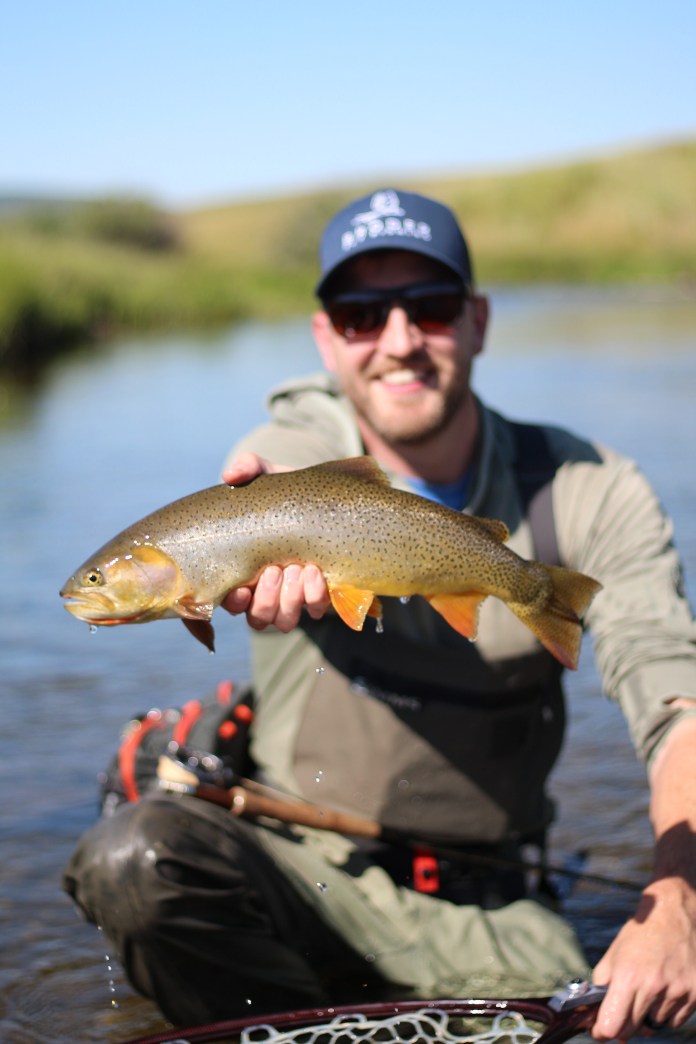
“Banana trout, golden trout, yellow trout, golden nugget… A beloved child is known by many names, just like these trout. And here’s why!”

“Taking a break from guiding, I indulged in a day of fishing, and this particular day was no exception. The plan was to fish at Banana lake and try my luck with dry fly fishing. Employing a stealthy approach, utilizing long leaders and small flies, often proves successful. The lake was serene that day, teeming with bugs and risers. After exploring the lake for a while, I spotted a fish rising far out. Swiftly, I pulled line out of the reel and prepared for the cast. Despite reaching the area with just a bare minimum of 30 meters, it proved sufficient. A massive head emerged from the water, and I set the hook, leading to an intense battle of long runs. It was nerve-wracking with a 0.15mm tippet, but it held up, and this is the remarkable fish I caught!”

“On a tranquil lake, amidst rising trout and swarming midges, the key to success on this particular day was employing long leaders and small flies, coupled with a stealthy approach. It was this winning combination that allowed me to outsmart this truly colossal trout. This experience perfectly encapsulates what Banana lake is all about!”

Angler Story of the Week from Jerome Saunders, be sure to check out his Instagram @saunders.flyfishing. 

Check out the articles below:

Angler Story of the Week: Fly Fishing The Tungufljot River in Iceland

Banana Trout in the Realm of the Vikings

Video of the Week: Streamer Fishing in New Zealand with Trout Hunting NZ

0

In this Video of the Week, we head over to New Zealand to catch up with Gareth Bayliss of Trout Hunting NZ. Gian and Gareth head over to one of their favorite rivers to throw streamers for some monster rainbow and brown trout this time. Streamer fishing is a very prevalent tactic for us here in the US but is still a very new concept in New Zealand. In the past, Gareth has used an assortment of gamechanger flies but in this video, they lose his last gamechanger and tie on the one and only Sex Dungeon. Probably one of the most well-known but most effective streamer patterns. So sit down and enjoy as the Kiwis get a taste of what Kelly Galloups’ sex dungeon can accomplish on aggressive New Zealand trout.

Gareth Bayliss is Trout Hunting NZ he is a YouTuber, Creator & Fly Fishing Guide in New Zealand. From south island adventures to breaking down his local waters Gareth is always searching for his next adventure and fish. Make sure to follow along with his adventures here: @Trouthuntingnz

Check out these Epic articles as well!

Video of the Week: 72 hours in the Uintas with Wild Fly Productions

Video of the Week: Fishing the “Best High Country Lake” with Trippin on Trout

Video of the Week: “The Best Float Trip Ever”

2023 Behind the Lens: Wading for Change

The 2023 F3T is underway – click here to find a local showing and purchase tickets.

Next up in the 2023 F3T Behind the Lens, we head to Jackson Hole, Wyoming, and beyond to follow along with angler Jr. Rodriguez and his journey into the sport of fly fishing. By juxtaposing Jr’s origins in Houston, Texas, and his current home in Jackson Hole, Wyoming, we share his journey of learning to love the outdoors and what it can be like to participate in outdoor sports in Western mountain towns as a person of color. Flylords was lucky enough to catch up with filmmaker Sofía Jaramillo and star of the film Jr. Rodriguez, to learn more about what went into the making of this film. Check out the full interview below.

Flylords: Tell us about yourselves. 

Jr: My name is Jr and I’m a first generation mestizo bilingual bicultural filmmaker, photographer, and BIPOC activist. My work focuses on the intersectional relationship between nature and people with projects that empower communities to tell their own stories.

Sofía: Hello! I am a Colombian-American National Geographic photographer, explorer and filmmaker based in the Tetons. My mission is to uplift and tell the stories of BIPOC+ athletes in film and photography and to tell the stories I wished I’d seen as a kid. I first got my start in storytelling working at newspapers and as a freelance photojournalist. Now I work as a Director and Executive Producer in filmmaking. 

Flylords: How did this film turn from an idea to a reality?

Jr: Sofia and I were looking to work on a film together because we liked working on photo projects together. We thought of a motorcycle multimedia trip to all of the classic spots around Jackson Hole and Yellowstone since we lived in Jackson, WY. As we interviewed I kept mentioning my family and Galveston, Texas and a spring-fed lake called The Reef (got cut) and it kind of snowballed that we needed to show where I actually learned to fish and why I fish.

Sofía: This project first started out as a way for Jr and me to collaborate on a piece about Jr using his motorcycle to fish and learn about the GYE. It was supposed to be a two-minute piece. We sent a pitch to Orvis and they expressed interest in it being a short film.. We had never made a short film before but we decided to seize the opportunity!

Flylords: What does “Believing is Power” mean to you? 

Jr: Creer es poder, is my family’s mantra and it’s where I find a lot of bandwidth. When I’m down I just need to look back at all that my family has accomplished because they believed that they would thrive in Texas and that was enough to keep them going (they still going).


Flylords: What was your most memorable moment in the production of the film? 

Jr: When we were filming in Houston one of my brothers said, “Oh we just a paycheck to you now?”. He was joking but we use jokes to tell the truth and it really hit because he was implying that I haven’t been home in so long. (There’s also no money in short films) Back when I worked at the environmental organization here in Jackson Hole there was not a lot of opportunity to visit family but now that I’m freelance I see them more frequently. The other reason this hit is because he explicitly pointed to intention and brought it to the forefront. I keep this in the front of my mind in all my work. 

Sofía: The most memorable moments in filming were probably our very first days of filming when Mason Trinca joined us in Jackson and we went out on the Teton River. There were just some really peaceful and scenic moments that we all experienced together. There were some beautiful sunsets and lots of wildlife and it was just out on the river. I also caught a fish (included in the film) during those days! 

Flylords: What was the biggest challenge in the production of this film? 

Jr: We all have a myriad of stories but narrowing down to a single thread for audiences was difficult. I wanted so many more family members to shine because I am a reflection of them. If I’m funny, it’s because of my dad. If I’m kind and can see the bigger picture, that’s my mom. If I won’t back down, that’s my oldest sister. The list goes on ans on how I’m just a mirror for my family. Also, funding was a big issue. 

Sofía: One of the biggest challenges from a directing standpoint was finding funding. Prior to 2020, there was little interest from brands in this story. After the murder of George Floyd all of a sudden, we got a lot of calls and emails back to support the film. It was bittersweet and that moment definitely stuck with us through the process. That experience is what drove us to create the Wading for Change BIPOC+ Filmmaker’s grant. 

Flylords: Were there any difficulties around filming, was there was bad lighting, weather, fishing conditions, etc.?

Jr: Of course, there’s bad lighting, bad weather, and bad fishing conditions. We had to make due because we had selected dates and those were the dates we had with Mason and Faith. We had to adjust a few times but luckily my family was pretty flexible and we planned according to the weather even with hurricane season in Houston. The fish knew we were filming because they were quite shy during our shoot days in Jackson Hole. We went to all my spots, spots even Sofia had seen hog after hog and when it came time to shoot, nothing.

Sofía: Haha what Jr said. There was a lot of pressure to catch a fish and the fish were not excited to be on camera. Luckily on our last day of filming after sunset, just as blue hour hit, Jr caught a beautiful fish. 

Flylords: What message are you hoping viewers walk away with?

Jr: We all go outdoors for a purpose consciously or unconsciously, something gets filled by being outside. I go outside to reconcile the “querencia” to be with my family and bring my community. As I keep experiencing the outdoors, I witness that there need to be changes so my family and community can feel empowered. I’ll never be able to make it the safest space possible and still changes need to be made, that’s why I keep diversifying every sport I can from trail running to mountain climbing to skiing. Are viewers creating the most inclusive outdoor space possible? If not, why? I hope viewers don’t put me in a box because if you put me in a box then you’re likely putting everyone you meet outdoors in a box. I’m not just an angler, I’m a filmmaker, a climber, a photographer, a runner, a conservationist, a skier, an environmentalist…

Flylords: If you wanted to give another BIPOC angler, one piece of advice what would it be? 

Jr: We know it was never about the fish and you may feel alone but we’re out here! You’ll work and work and work and you’ll still run into those people that will question, belittle, test, and patronize what you’re doing. Don’t let that one person affect you, easier said than done I know. For every one of them, you’re likely affecting a multitude of people positively without even knowing it! Even during a Mountains of Color fishing outing with a film panelist, we had a verbal exchange: 1 person trying to belittle four grown-ass black and brown adults. We all had our strategies, some chose to ignore, some chose to engage, some tried to educate, y an unos les Valio. After, we all were flabbergasted but we chose to refocus on the joy we were experiencing learning to fly fish together. We could have been skiing, climbing, mountain biking, mountaineering, free diving, pickleballing, name it, the same thing could have happened and it does, and still, no one can take the joy you experience away from you. 

Flylords: It’s our understanding you have just released a BIPOC film grant, can you tell us a little bit more about that? 

Jr: Sofia and I partnered with Fat Tire and 5Point Film Festival to create The Wading For Change –  BIPOC Filmmaker’s Grant. It is intended to create more access for filmmakers and photographers of color to share stories that increase representation in nature with a $20,000 grant. 

“As the Wading For Change production team consists of all creatives of color, we know firsthand the barriers to entry and difficulties of working in the creative industry. We want to address those barriers by encouraging other BIPOC creatives and creating opportunities.”

We’re actually getting ready to announce the winner next month! There were so many applications pointing to an obvious need so if people want to donate to this effort contact myself and Sofia. 

Flylords: Anything else you want to add or anyone you want to thank for helping this film come to life?

Jr: So many people helped make this film a reality from grandma playing Loteria to Luz and Peter jumping in for the boat scenes to all the film funders to family members sitting through emotional interviews! So many people in my life that kept me going behind the scenes from my family, my two besties Ryanne and Wren (only Ryanne made it in with the shot of Machu Picchu), my Jackson BIPOC crew, Hillary and the Scarpa SAMI program, and Vanessa for helping process film release. Mason for believing in this from the very beginning and seeing through the end by coming all the way to the Houston premiere. Faith’s guidance through the process with poise and grace even when we would freak out. Chris Cresci for building a thread with emotion, relief, and resolution with two directors. Jeff Yellen for creating a crisp sound environment. Zachary Hetlage for correlating emotion with beautiful film color. Taylor and Megan for scaling the film project and the grant. And obviously, Sofia herself, put so much pressure on herself because we are besties and wanted to stay true to who we are during and after the creation of this film!!

Sofía: I second everything that Jr said. There were so many people that worked behind the scenes to make this film happen. Jr’s family did a lot of producing and planning for our visit to Texas. Our good friends, Wade Dunstan and Sheena, pitched in early in the process and gave us advice on how to get funding and put our pitch deck together. Faith Briggs was a HUGE reason this film got to where it did and without her mentorship and help I don’t know if it would have gotten done. We’re super grateful for her work as a team member and in the filmmaking community.

Special thanks to Sofía Jaramillo and Jr. Rodriguez for taking the time for an interview. Be sure to follow along with Wading For Change on their Instagram at @wadingforchangefilm. Stay tuned for more iterations of the Fly Fishing Film Tour, F3T Behind the Lens series by clicking here.

The 2023 F3T is underway – click here to find a local showing and purchase tickets.

2023 Behind the Lens: “After You’ve Gone”

2023 F3T Behind the Lens: The Belt Buckle


Team Flylords 25 On The Fly Competition Recap

Check out Team Flylords full angler story from the weekend, learn more about the 25 On The Fly Team Challenges, and the full interview with Davis James and Blake Katchur, the organizers of the event below!

Team Flylords: Mile High 25 On The Fly Angler Story

25 On The Fly Team Challenges

Interview with the Founders of 25 On The Fly: Davis James & Blake Katchur

Learn more & Register for Lonestar (TX) 25 On The Fly

Team Flylords Mile High 25 On The Fly Experience

Photos captured from by Davis James (@davisjameslens)

As soon as Zane and I figured out we were competing in this year’s 8th annual Mile High 25 On the Fly presented by Orvis Fly Fishing, we were fired up and ready to tackle catching various species all over Colorado. We were very fortunate to drive around the Orvis Fly Fishing truck all over the state with an NRS (Northwest River Supplies) Slipstream Raft strapped on the top.

Little did we know 25 different fish species can be targeted in the Colorado high country, the eastern plains, and the Colorado front range. The competition involved a lot of planning, precisely our route and how we could get from point A to point B the easiest. Our biggest challenge while planning this competition was where to start. Zane and I call ourselves trout fishermen, so planning our locations to fish in Denver and the eastern plains required a bit of research and intel from warm-water fishermen. Not only did this involve some searching on the web, but the OnWater app helped our experience in terms of local fly shops, saving our locations, and giving us directions to the sites we were trying to fish.

The competition was greeted with the Captain’s Meeting located at Anglers All in Littleton, Colorado. We chatted with a few other teams, enjoyed some Barbecue, and drank a few cold beers. The event was full of motivated minds and support from Anglers All; teams could get 15% off anything in the fly shop. Each employee of Angler’s All was ready to help, communicate some intel, and were very friendly in deciding which gear to grab before the guns fired off at 6 am on Saturday. Not only was the support from Anglers All a great way to help all the teams. Additionally, Riversmith rented out their signature River Quivers for teams to use during the competition. Riversmith helped teams mount River Quivers onto their cars at the Captain’s Meeting at Anglers All and supported the crew they sent off, Rick Mikesell and Aj Mcguire. Big shoutout to Jeff Perry, Delaney Chapman, and Jimmy Juliana for their unconditional help through this process at Anglers All!

Our tactics for this event were to first start with the cold water species. Zane and I primarily fish in the high country, so we decided to target trout first and rank up some points in the cold water. This process required a catch-video-release method with the forefront mission to keep fish wet using the Cinebody app, involving a control bracelet that needed to be captured on video to gain points for our team. The rules: you can fish anywhere in Colorado, with no private water, and only using flies and fly rods. The points you accumulate for the event are based on ease of species; for example, a tiger musky was worth 500 points total, and a trout or bass was worth 100. Pick the water you want to fish; some locations with harder-to-target species might work out if you spend more time and get lucky! Some veteran teams only fished for more challenging species worth more significant points. Zane and I posted our videos of our caught species and competed in some of the team challenges (check them out below)! Be sure to check out the complete list of rules by clicking HERE.

As we caught a variety of trout all over the high country of Colorado, we quickly learned that picking one area with the most trout species would have been a better tactic. On the first day, we drove around 500 miles in the Orvis truck. Little did we know, this bad*** rig had massage chairs for the driver and the passenger, giving us maximum recovery time while driving to other locations. Once we ventured higher in elevation on Saturday, we were greeted with heavy rain that turned into wet and heavy snow near timberline, which was quite the experience for Father’s Day weekend.

On the first day, we caught cutthroat trout, golden and cutthroat trout hybrids, tiger trout, brook trout, and brown trout. Unfortunately, our mission to catch the golden trout did not count because it was a strain of cutthroat, which was a bit problematic with our timeframe. We did get pretty unlucky with some of the higher point-based species, lake trout, whitefish, and suckers, for our first day.

As soon as we got closer to the front range after the day concluded and ran out of time to post video submissions of our catches on Saturday, we got a bite to eat and recovered moving into Sunday. Our minds were refreshed from the little sleep we managed to get, and our inspiration was to try to catch a few of the more prominent species higher up on the points list. This involved targeting pike, carp, and other warmer-water species like walleye, carp, and wipers. The result: no pike, no carp, and the phrase most fisherman use; “that’s what we call fishing.” It was great to run into other teams around the state and see how they were doing, which gave Zane and me a little room for a breather and try adding a few more species to the board.

After the competition concluded on Sunday at 3 pm, we commenced at Odell Brewing at Sloan’s Lake in Denver. Gratefully, Zane, myself, and the other teams enjoyed the first beers on the house while we waited for all the results to come in. We ate pizza, talked to other teams and their experiences, and had a great time reminiscing on the weekend.

Mile High 25 On The Fly Team Challenges

Not only were teams trying to catch all 25 different species, but there were also team challenges presented by sponsors of the event. For example, we had six different team challenges to complete that counted as points. Check out some of the challenges that were on the table:

Orvis #momentsofTHRILL – The Orvis Moments of Thrill challenge was all about the amazing moments that punctuated the weekend. This included high-fives, hugs, yells of joy, and even a big fish or species lost heartbreak. This challenge was for the first team to submit and was worth 15 points!

Fulling Mill 2 Fly Challenge – Once we got to the Captain’s Meeting at Anglers All on Thursday, we got our team Swag Bags. Each swag bag contained a fly cup with a streamer and a dry fly from Fulling Mill. The team with the most Fulling Mill 2 Fly Catches will win a pair of loaded fly boxes and hats. The first video submitted was worth 15 points, which Zane caught a nice cutthroat trout on and gave us a few additional points.
Denver Trout Unlimited Fill A Net – The Denver Trout Unlimited Fill A Net challenge was a great challenge for all teams to collect trash they found on the waters they fished. Zane and I collected two full boat nets full of trash, making us feel good about some locations where we didn’t catch fish. The team with the most participation was awarded 15 points added for their team.
Fly Lords Best Story – And shall we mention the Flylords Best Story? The Flylords best story consisted of teams posting a video to their Instagram, tagging @25onthefly, @anglersall @orvisflyfishing, and @flylords. Zane and I were very excited to announce the Rush n’ Scuds some Flylords merchandise from their video submission of them snowboarding into some water they were fishing,

Interview about 25 On The Fly

After Zane and I’s weekend competing against 37 different teams, we were able to catch up with Davis James and Blake Katchur that talked to us a little more about 25 On The Fly, how it all started, efforts for conservation, and the upcoming event in Texas, the Lonestar 25 On The Fly! Check out the interview below!

Flylords: Tell us a little more about 25 On the Fly and how it came to fruition.

Blake & Davis: The event came about over a happy hour conversation between staff and customers at Anglers All Fly Shop. The idea was to create an event to bridge the gap between pre and post runoff. The goal was to create a tournament which would challenge anglers to step outside of the trout focused comfort zone; thus, the Mile High 25 was born. Over the years, it’s evolved and grown beyond the doors of Anglers All, and now in its 8th year, has morphed into a fly fishing scavenger hunt designed for anglers of all types to enjoy.

Flylords: The challenge itself is tough, two days to try and catch-video-release 25 different species on the fly. What is the best part of the event?

Blake & Davis: Without a doubt, the best part of the event is engaging with the participants before, during, and after the event. It’s the community of fly fishing obsessed anglers that keeps us hosting this event. For many, this is a gathering to look forward to all year. The planning, pre-fishing, and event itself has been etched in stone on the calendar for many as an opportunity to spend a long weekend road tripping around Colorado with their best fishing buddy, fly rods in tow! That first cold beer though…comes in a close second! Shoutout to Anglers All for kickstarting the event, and Odell Brewing for wrapping it up!

Flylords: There were a variety of veteran teams that returned back to this year’s 8th Annual Mile High 25 on the fly, what’s so special about the teams that return and why do you think they come back?

Blake & Davis: It’s an even blend of camaraderie and the challenge of the event itself. One team told me this year that this event has become a way to celebrate their friendship and spend time together after one team-mate had a previous medical condition that nearly took his life. Honestly, thinking about that still brings goosebumps up and down my spine. 

Flylords: This year, a portion of the entry fees goes back to Denver Trout Unlimited. What are they doing with this money?

Blake & Davis: Denver Trout Unlimited is working around the clock to improve the water quality and access to Denver’s South Platte River. From water quality assessments, fighting for mandatory water release days, and implementing future use and design plans, DTU is working for us all to ensure that our Home Water in Denver has a future. In September, they are hosting the Carp Slam, which is their primary funding initiative for their efforts. Learn more here: https://carpslam.org/

Flylords: 25 On the Fly isn’t all about raking points up per species. There are a lot of team challenges that don’t involve catching fish; what was the importance of these team challenges?

Blake & Davis: These team challenges are a fun way to engage in the event for anglers of all skill levels. We like to think it levels the playing field a little and showcases how fun fly fishing for cold AND warm-water species can be! Our favorite is the “Pack it out” challenge, where we award points to teams that take a little time away from fishing to pack out trash found on the banks, beaches, and watersheds across Colorado.

Flylords: Later this fall is the Lonestar 25 On the Fly event in Texas. Tell us a little more about this event and how people can sign up.

Blake & Davis: This event will be nearly identical aside from the actual species list. Hosted by the Dallas area Orvis stores, the species list will be a mix-up of fresh and saltwater species and we anticipate a strong turnout from the Texas fly fishing community. To learn more and sign up, and visit: 25onthefly.com

Flylords: Will 25 on the Fly return to the Mile High City in 2024, or will there be other events around the nation?

Blake & Davis: We are turning the page to the planning stage for the 2024 Mile High 25 On the Fly! For 2023 the Lone Star 25 On The Fly in Texas will wrap up our season but we have a few ideas in the think tank that we will share soon! Keep an eye on upcoming events and announcements via IG @25onthefly.

Big thanks to Davis James and Blake Katchur for the time for the interview, alongside Orvis Fly Fishing and Anglers All for their support to kick off the 8th Annual Mile High 25 On The Fly. Shoutout to all the sponsors of the event for making it happen and giving out incredible prizes for the leaders, and the teams that worked hard to complete their team challenges: @denvertroutunlimited @flylords @nrsfishing @odellbrewingsloans @riversmith @gopro @fulling_mill @onwaterapp. Photos by Davis James @davisjameslens.

If you’re interested in competing in the Lonestar (TX) 25 On The Fly, learn more here. Register for the event by clicking here.

Check out the articles below:

2023 Official Results from the 8th Annual Mile High 25 On The Fly

Flylords Original Series: Fly Shop Tour – ALL EPISODES NOW LIVE!

NOAA Announces Substantial Investments into Habitat Restoration, Fish Passage

Earlier this month, the National Oceanic and Atmospheric Administration announced substantial investments into habitat restoration and improving fisheries management. This funding comes out of the Inflation Reduction Act that was signed into law August 2022. Early on, this law was labeled “transformational” and “historic” by many in the conservation community, but specific details on how various Agencies would spend these millions of dollars. NOAA’s IRA spend plan took nearly 10 months to materialize, but the investments for our fisheries and habitats are pivotal and stand to produce incredible benefits.

“TU’s ongoing partnership with NOAA is helping us recover critical populations of salmon, steelhead, and trout and build resilience against the growing impacts of climate change for fish and communities,” said Chris Wood, president and CEO of Trout Unlimited, which received $20 million in NOAA funding last year. “This work is improving fish passage, but also helping rural communities by providing family-wage jobs, improving water quality, and helping prevent road failures and flood damage.”

NOAA received some $3.3 billion from the IRA, but this June announcement included specific spending plans. Below are some key top lines from the announcement:

  • Habitat Restoration and Fish Passage ($484 million): “Fish passage projects that restore access to healthy habitat for migratory fish. Habitat restoration projects that support fisheries and protected resources while also strengthening the resilience of coastal ecosystems and communities. Capacity building and on-the-ground restoration projects that advance the coastal habitat restoration priorities of tribes and underserved communities”
  • $145 million for data acquisition and monitoring: fisheries management is only as good as the science–this funding will improve NOAA’s scientific capabilities and thus fisheries management.
  • Climate, Ecosystems and Fisheries Initiative ($40 million): “Development of ocean ecosystem predictions in preparing for climate-driven problems. How those predictions extend to coastal communities and economies. Projected impacts. How coastal communities will use these predictions to increase resilience and the viability of their fisheries.”

Throughout the country, fisheries face many threats. Yet, they are resilient and will thrive when given the chance–investments like these will go a long way to helping all our fisheries from coast to coast!

Cover picture from NOAA.