In this Week’s Video of the Week, we catch up with our good friend Rory Taylor and Jeff Harwin, owner of Park City Fly Fishing Company, in their newest short film Meats + Eats. We met Rory on our Fly Shop Tour tour last year when he cooked for our event at Fly Fish Food. He’s a Traeger Grills Rep with a serious passion for cooking outdoors and fly fishing. If you like both things we highly recommend you follow him @tubbysurfs. In this outing, the guys hop in the FlyCrafts and float a great stretch of river looking for fish on top. The dry fly fishing was superior and the steak dinner afterward looked even better.
“Park City Fly Fishing Company guides have over 40 years of experience guiding in the Park City area and throughout Utah. Within 30-minute drive of Park City, there is one of the widest selections of world-class trout fisheries in the world.”
“Sometimes you just have to set the hook and ask questions later…
This is exactly how I found myself in this sticky situation. Taking a risk is what fly fishing is all about. But, throwing your rod into the water while a fish is still on the end of your line is just insane.
It’s moments like these as a modern day angler I’m always striving to seek for. The rush of fishing in places no one dears too. Trying to catch a fish in place that are nearly impossible to fish too. At the end of the day for me it’s about the journey and not so much the destination.”
We were supposed to go to the Montebello islands but the forecast was too bad so we decided to explore some islands around Karratha. We loaded up two boats and left in a group of 6 people.
The first day was pretty slow and we only landed a few fish. We spent the night around the campfire enjoying barbecue food followed by sleeping on the beach. We decide to go further north the second day and found huge flats. We were looking for permit and goldens when Johannes and I hopped off the boat. A few minutes later, Tyson hooked a big GT from the boat so I run back to help him. We landed that fish, took some cool pictures and released it.
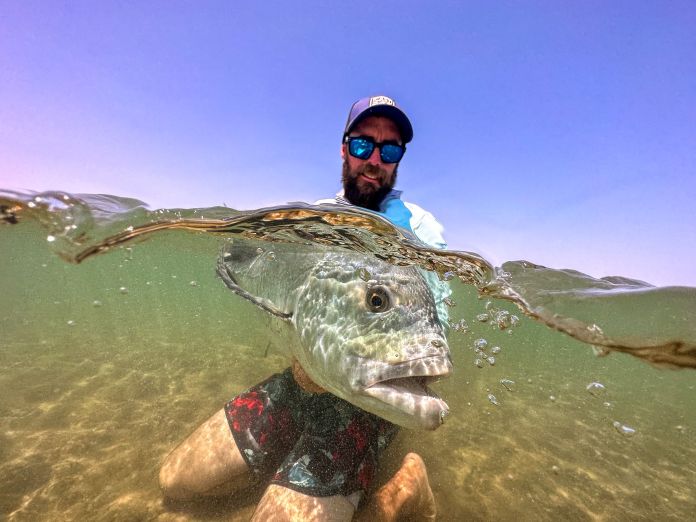
We continued looking for permit, however, Tyson mentioned it would be handy to get a few 12 weight rods together just in case GT appeared out of nowhere. I was thinking there is no chance but I took off my billfish fly, attached 60lb tippet with a white flat wing fly on 5/0 hook and started to pull out some line. Less than 15 minutes later, another big GT appeared out of nowhere. I grabbed my rod, waited for the right moment and placed my cast. It was a bit too far and there was no sign of interest. I recasted, and boom, straightaway I had hooked into the GT. The fish took off with more than 100 meters of the backing peeled off the reel and finally I stopped it. I fought the fish within 20 minutes.  Everyone knows it’s not easy managing line, and everything going on with a GT attached to the end of the leader. It wasn’t easy–my fly line wrapped around the engine but we made it! I’m still over the moon. What’s the chances this happens on flats? Both fish estimated around 25kg. Happy days in Pilbara!
Big thanks to my mates: Tyson @tysonpalmer_ for landing my fish, Johannes @finsoutflies for the video and pictures and also to Cranky @crank81 and his partner Kirsten @couldyoupleasehold for their hospitality and local knowledges. Last and not least to Les @westozflies for the company and fun times. What a bunch of legends.Â
This is it, the moment we’ve been waiting for. The line is tight, and the battle has begun. Who will give in first—man or fish? The anticipation is high, and the energy is tense, until suddenly the line is not. The defeat immediately washes over one’s body as the realization of loss settles in. It’s disappointing the first time, frustrating the second, but when a fish is lost for the third time without an ounce of success in between, it’s utterly devastating.
Ten nights in the woods, over thirty hours on the road, our hair caked with dirt, our skin tacky with a layer of perpetual sweat, and our egos yearning for success.
A multi-state fly fishing trip was not the leisurely retreat we once envisioned. We knew we would be tested and pushed beyond our comfort zones, and for that, we were prepared. Even so, the trials and tribulations we encountered on this trip exceeded our expectations.
After a week on the rivers with only three fish to show for it, our patience waned. During the latter half of the trip, we decided to bring along a guide, Logan Wilson, who opened our eyes to the profound knowledge necessary for a successful day on the water. As two novice fishermen, we did not account for the nuances of fly fishing that make it a uniquely challenging sport: the variation in casting techniques, the intuitive reading of the current, and the importance of choosing the right fly for specific conditions.
We embarked on this adventure with the blind belief that after a few days of self-education, we would attain the status of master fly fishermen with an abundance of fish under our belts. This was not the case. The mission was to learn how to fish, but through the process of failing, we learned a lot about ourselves.
Despite catching a minimal number of fish, the trip as a whole was highly successful. We were able to fully immerse ourselves in nature and reconnect with parts of our identity that we had been missing. Although fishing is an individual sport, many aspects of this adventure required us to work as a team: choosing locations, setting up camp, learning the craft, sharing road time, and working toward a common goal.
It was transformative to step back into a team mindset; it challenged us in ways that are familiar but distant to us now. For nearly two decades, during our time as football players, being a part of a team was second nature, but since stepping away from the game, that part of us has become less innate. We had forgotten the patience and persistence it took to overcome obstacles as a unit, especially when individually, we were exhausted, frustrated, and at times, completely fed up. To thrive on this journey, we had to remain intentional in our pursuit and remind ourselves how to be good teammates.
In regard to the challenges we endured, the main one was presented by the simple fact that a ten-day fishing trip across five states was seriously unfeasible. Any chance of falling into a groove in a new location was constantly interrupted by the need to move on to the next destination. We were never able to effectively settle into a flow, considering we weren’t stationary for more than two days at a time. The difficulty of trying to familiarize ourselves with each component of the sport was amplified by the overarching complications prevalent in every new, unique environment we inhabited.
With this, we were reminded of our days on the field and were reintroduced to a characteristic that is universal among all athletes: the ability to adapt. Regardless of the sport, athletes are constantly in new locations, facing unpredictable opponents or other uncontrollable variables. This ever-changing trip reminded us that the ability to tackle any new situation is deeply ingrained in us as collegiate and professional football players.
Of the five states on the trip—Colorado, Wyoming, Montana, Idaho, and Utah—Montana, despite being the holy grail for many fishermen, was a remarkably tough stop. One of the primary rivers we fished was incredibly crowded with tourists and amateurs like ourselves. In recent years, the state has gained popularity, so finding a serene, private oasis isn’t as practical as it once was, which also translated to less than ideal camping conditions. This was the reality in Utah as well. Due to weather concerns, we unfortunately had to rush through Wyoming, depriving it of a fair evaluation. With one of us being local to Colorado, we were already familiar with the rivers, but with no significant, positive impact. All things considered, the state we treasured most was Idaho.
We arrived during an explosion of amber and gold; the scenery was exquisite. The mornings were crisp and fresh, followed by a blanket of afternoon warmth. Everything fell perfectly into place here. Positioned in the middle of a meadow, surrounded by a shield of changing trees, we found an optimal place to set up. When we ventured into town, we discovered the best fly shops of the trip and were welcomed by a community of fishermen we had yet to find in the states prior. Others were more than willing to provide us with insights into where they’d found success and even connected us with a highly recommended guide in the area. Not only did we catch the most fish here, but we also felt the most camaraderie and alignment with our environment.
Upon reflection, this experience was not necessarily what we had hoped for but was exactly what we needed. We were confronted with several hurdles we had to tackle as a team, unleashing a dormant part of our minds and opening us to positive new techniques for handling personal challenges in our day-to-day lives and careers. Our network expanded with the friendships we built along the way. We found peace and re-centering in breathtaking autumn landscapes, and although we didn’t leave the trip as master fishermen, we were able to win the battle against a few fish.
Cam and Harrison also collaborated with the Theodore Roosevelt Conservation Partnership and Noah Davis, be sure to check out their conservation piece, “Montana State of Mind” as they witnessed the intensity of Big Sky fly fishing culture and learned about the conservation efforts that make these adventures possible. Check it out by clicking here. Cam and Harrison would like to thank Mossy Oak, Yakoda Supply, Emerger Fly Fishing, Peak Refuel, and Gunner Kennels. Be sure to follow Cam & Harrison on Instagram @_killacam and @harrison.creed.Â
There is not a single brook, river, or stream left in Germany that has not been influenced by man. Flowing waters serve various functions in the majority of the Federal Republic of Germany: as transport routes, energy sources, drainage for agriculture, and catchment basins for wastewater from industry and households.
Photo courtesy of T. Seufert.
Straightened, degraded, over-fertilized, and polluted—these are the primary characteristics of most of Germany’s flowing waters. Perhaps this is one of the main reasons why numerous German fly fishers have developed a penchant for (long-distance) travel. Clear, cold, alpine salmonid waters, tropical seas, and wild, untamed salmon rivers on the Russian continent—these are the dreams of many anglers, including Germans.
As I now attempt, alongside my colleagues, to reintroduce the Atlantic (Rhine) salmon (Salmo salar) to Germany, a species considered extinct for over 30 years, this project often feels like a Sisyphean task. But that’s another story and just the prelude to what happened to us this fall during our fieldwork.
Photo courtesy of T. Seufert.
Recently, a few weeks ago, my team and I embarked on a search for naturally spawned juveniles of Atlantic salmon in a small tributary of the Rhine River. We conduct this routine electrofishing survey every fall, and in most cases, we come up empty. However, this time, we caught a fish that amazed us even more than a juvenile salmon could have. In my colleague’s net was an 8-inch female brown trout with a strange “belly decoration” around her body. It turned out to be a part of a plastic bottle cap, as used for commercial soft drinks. The ring had embedded itself deeply into the fish’s flesh, resulting in an ugly open wound that was visible both ventrally and dorsally when my colleague carefully removed it.
The question arose whether we should release the animal or not. We decided to release the lively-looking salmonid. The female had clearly spawned, and we wanted to give her a chance to mate. The cool water temperatures in the fall would certainly mitigate any risk of infection to the wound.
Photo courtesy of T. Seufert.
When I shared the corresponding video of the incident on Instagram, I received an overwhelming response. Outrage, sympathy, sadness, and anger were among the emotions expressed. “Pictures from the oceans are the only way to know something like this.” I agree; I feel the same way. But it made me wonder when some people from Europe and the USA told me they had experienced the same thing. The probability of such an incident is certainly low, and the frequency of detection puts this insignificance into perspective. For me, the image of the trout in a plastic corset is symbolic, striking, and drastic, but it only scratches the surface of what is happening to our flowing waters. Microplastics in massive quantities are entering small streams and rivers, ultimately ending up in the sea. Wastewater from industry and households consistently contains new cocktails of chemicals, fertilizers, and medicines.
Agriculture with its fertilizers and pesticides must not be excluded from this equation. What should we do? Despair? Close our eyes? Say, “There’s nothing we can do about it anyway!” So we travel far and wide, contributing to climate change that might ultimately devastate the last salmonid populations in Germany. Many trout have adapted to moderately polluted waters, but the excessively high water temperatures we’ve recorded in recent summers are unsustainable for these animals. Ecology operates like clockwork; remove a cog, and something changes inevitably.
Photo courtesy of T. Seufert.
So, what’s the solution? Speaking as a German for Germany and its fishermen and women, my analysis can likely apply to numerous countries in Europe or perhaps even overseas. It’s not enough to wrap ourselves in Patagonia clothing or sign online petitions for water protection. Discussions on social media are futile. Hashtags like #naturelover are mere lip service, not advocacy. The key is to start locally and on a small scale, to become active in your own environment. Build support, persuade local politicians, educate, seek consensus, and above all, be patient. Changes in people’s actions and thinking often take time, and while climate change may not afford us that luxury, we won’t change minds by force.
We can find fantastic fishing opportunities in Germany, not just in Bavaria’s clear and cold flowing waters but also north of the Alps. However, it seems that a community of fly fishers has partly written off their own country in search of the “fish of a lifetime” in other areas. This needs to be reevaluated. It’s not too late to reform environmental policy, break lobbying efforts, and adopt a holistic and sustainable approach to water, wastewater, and agriculture, as well as land use.
Photo courtesy of T. Seufert.
The unfortunate female trout can be a symbol, but the much larger issue may be overshadowed by economic greed. We can take action at our doorstep with patience, understanding, love, and one keyword that should guide us toward a sustainable future: renunciation.
The global mission to eradicate plastic waste should be embraced by all, particularly us fly fishermen committed to preserving the waters we cherish. Some eco-friendly alternatives to plastic include:
Exploring a new city or just wanting to experience your backyard in a different way? Urban fly fishing is hot right now, and for good reason. There’s new species to catch, new spots to discover and plenty of room to be creative with it. You can land colossal carp or hook some burly bass probably not too far from where you call home. These are our thoughts on why this type of fly fishing is well worth your time. Plus, we provide our top-nine picks for the USA’s best urban fly fishing cities.
What is Urban Fly Fishing?
Whatever you make it. Lakes, streams, canals, ponds – the world is your oyster when you live in or around a concrete jungle. The opportunities can be endless to land a fish on the fly if you know where to look. Brush up on your backyard smarts, talk to some people, look at google maps to pick the right spots to find fish – but that’s half the fun! All it takes to go on your Urban fishing adventure is a little flexibility, resourcefulness, patience and willingness.
Why Should I Bother?
A reality of fishing is spending a lot of time in the car heading to the water. Urban fly fishing can challenge that, though. Only the bravest and most committed anglers have the grit and determination that’s required to walk past picnickers, Sunday joggers, and bustling construction sites with a rigged fly rod. If you’re an urban angler, you’re cooler than most.
So many cities have more bodies of water than you’d ever imagine, and most are filled with fish. Finding those gems is the name of the game, and chances are, the fishing pressure is nonexistent.
Perhaps one of the biggest benefits to urban angling is watching your skills improve. By targeting new-to-you species on diverse bodies of water, your casting techniques, fly selection, and presentation will all benefit from the challenges you pursue. The better you get at creeping up on cruising carp, the more trout you’ll catch on those gin-clear water days.
How Do I Find Urban Fishing Spots?
The perfect recipe is to be creative, resourceful, and patient. It’s likely you drive past fishable water on your work commute, or walk your dog around a local lake that’s teeming with bass and panfish. The only way to know how good the fishing is, or isn’t, is by wetting a fly. Urban fly fishing is a game of exploration and adventure, so don’t get discouraged if your first few outings don’t produce much.
When it comes to locating water, we’re fans of the aerial approach. Fire up that laptop, grab a beer, and let the scouting begin. Using Google Maps, OnWater or any satellite mapping program is an excellent way to find local water, figure out your access points, and get stoked on the unknown of a new urban fishing mission. It’s important to remember that when choosing your destination, be sure to consider public access and private property. Yeah, it might look like a gold mine, but trespassing to hit that bass pond is never a good idea (trust us on that).
The onWater App in use: Finding alternate routes around private land.
Where Should I go to Urban Fish?
We’re glad you asked.
Here are the top cities in the US that are making our top spots for urban fly fishing:Â
NOTE: It’s essential to be aware of local regulations and any specific rules or permits required for different fishing locations. Obtain any necessary permits and practice catch and release to help maintain the health of local fisheries.Â
1. Seattle, Washington
Photo by Kevin Cass
Puget Sound serves as the ultimate playground for anglers in this city. With a network of rivers flowing into its waters and a plethora of urban lakes and ponds scattered throughout Seattle, this place easily claims the title of the top US city for urban fly-fishing opportunities. Their rivers are home to a variety of trout and salmon species, from steelhead to cutthroats—you name it, they’re there. Seattles lakes and ponds are also stocked with trout, bass, and panfish, guaranteeing year-round opportunities for fly fishing. Depending on the season, it’s game time for Coho, Chinook, Pink Salmon, and more. With numerous public beaches at our disposal, you can catch Coho, Pink Salmon, Sea-run Cutthroat trout, and more, depending on the time of year.
2. Charleston, South Carolina
Charleston is a no-brainer hot-spot for urban fly fishing. Sitting along the coast, it has a ton of saltwater fly fishing opportunities for species like redfish, as well as inshore gamefish in estuaries, tidal creeks and salt marshes. With the city’s mild climate, it makes it an idyllic place to always be on the move and on the lookout for your next best-kept secret fishing spot. Whether you prefer inshore saltwater fly fishing, freshwater angling in urban ponds, or exploring nearby rivers, this city has a diverse range of fly fishing opportunities to suit different angling interests.
3. Bozeman, Montana
Bozeman boasts a plethora of renowned fly fishing destinations that encircle the city. Here, you’ll find a lifetime’s worth of fly fishing opportunities waiting to be explored. The city is extremely close to the heavy hitters: the Madison, the Gallatin, and the Yellowstone River, along with a multitude of smaller streams and spring creeks. The region’s trout populations are diverse: Rainbows, browns, cutthroats, brook trout – you name it, it’s around Bozeman. Did we mention the coveted native Yellowstone cutthroat trout is around here too? Even within the city’s downtown, there are accessible spots abound. Whether you’re seeking world-class fly fishing within the city limits or just a short drive away, Bozeman has it all.
4. Denver, Colorado
Photo: Jakob Burleson
Besides being the gateway to the Rockies, Denver is home to some excellent urban fishing. Most notably, the South Platte River runs right through downtown and offers anglers a chance to hook into carp, smallmouth and largemouth bass, bluegill, suckers, catfish, and walleye, with the occasional rainbow trout mixed in.
The South Platte River, where you never know what you might catch. Photo: Jakob Burleson.
5. Austin, Texas
Photo: Stuart Seeger Flickr Creative Commons.
Streams, creeks, rivers, lakes, and ponds – Austin is an urban angler’s paradise. With the Colorado River running right through town, and countless others streams and tributaries scattered throughout the city, largemouth and Guadalupe bass are never too far away. Not to mention the catfish, panfish, and carp, and alligator gar scattered throughout the city’s lakes and ponds.
Portsmouth is a great meet-in-the-middle city for urban fly fishing in New England.The Piscataqua River and Great Bay are teeming with striped bass and bluefish. With easy access to the coast and a bunch of ponds and reservoirs close to the city, you can balance your urban adventures with thrilling fly fishing escapades.
7. New York City, NY
Photo by Joel Ruby
Ah, the Big Apple. On any given day, you could spend it going to a plethora of museums, bars, restaurants, plays, (cheering on marathoners as of yesterday) OR, better yet, take to the streets to indulge in something a little more… unique to the city that never sleeps. Urban fishing is abound in the concrete jungle. Fishing here means fishing for everything from brook trout on Long Island to stripers in the lower Hudson River. Plus, there are numerous city ponds and lakes stocked full of bass and panfish. If you’re looking for something a bit saltier, head over to Jamaica Bay for fluke and bluefish. If you’re already fishing here and feeling creative, tell us, do the rats also run the NYC waters, or do you? (Try this pattern and let us know!)
Photo by Jordan McCall
8. Grand Rapids, Michigan
The fly fishing community is strong here, making Grand Rapids is a great place to be an angler. The Grand River, after which the city is named, flows through downtown Grand Rapids and is home to smallmouth bass, walleye, and steelhead during their runs. There are several parks and access points along the Grand River make it easy to get on the water. You can also explore nearby lakes and ponds, or even venture to the Muskegon River or Lake Michigan for more fishing opportunities. Either way, you won’t be missing out if you keep your rod close and your maps out!
9. Nashville, Tennessee
Nashville is a vibrant city that boasts accessible waters, year round fishing and diverse fish species. The Cumberland River, which flows right through the city, is known for housing trout, bass, catfish and more. The access points and parks along the river make it super easy to get into the water without straying far from the city.Â
10. Reno, Nevada
A man fly fishing in the Truckee River in downtown Reno. Image: RSCVA
The Truckee River flows right through downtown Reno and makes it a prime spot for fly fishing. It’s known for its trout populations, including rainbow and brown trout, and since Reno has a relatively mild climate, you can be pretty comfortable casting out there year-round. There’s also a lot of parks and access points along the river, making it easy to take a minute from the city and explore. Along with the Truckee, you can explore nearby lakes and ponds, as well as venture to other waters in the region for additional fishing opportunities.
Warm water translates to lower oxygen levels, a crucial consideration for freshwater anglers. During the summer, trout anglers face the challenge of rising water temperatures, often prompting them to fish early in the day or in the cooler evenings. This July, an incident emphasized the significance of this issue, particularly in Nova Scotia with Atlantic Salmon on the Wrights River.
The well-being of these fish depends on various factors, including water flows and the time of the season. A recent study in Nova Scotia sheds light on the potential benefits of cooling down rivers to safeguard fish populations in the face of climate change.
While both trout and salmon can endure higher temperatures for brief periods, their survival rates decline when water temperatures exceed 68 degrees Fahrenheit (20 degrees Celsius), especially when accompanied by reduced water flows, mishandling, and pulling them out of the water for an extended period of time.
Earlier this summer along Nova Scotia’s Wrights River, an area known for significant sun exposure, decreased water flows and exceptionally high temperatures compelled Atlantic salmon to seek deeper waters, find shaded spots, and avoid direct sunlight. Just like humans, these fish exhibit their own version of “air conditioning” by seeking relief from the heat.
Well, one area on the Wrights River had a sign of relief for the salmon. It was created by humans, “pumping cold water from a nearby well into the overheated stream. Cold-loving fish, like Atlantic salmon, flocked into this stretch or water in droves,” said Time Magazine’s Alejandro De La Garza.
Researchers designed the configuration as a component of an experiment aimed at evaluating a potential solution to assist Atlantic salmon in coping with the challenges of elevated water temperatures brought about by climate change. Freshwater rivers and streams, such as the Wrights, play a pivotal role in sustaining salmon populations. These waterways serve as the primary environment where young Atlantic salmon undergo their early life stages before embarking on their journey to the ocean. Additionally, they serve as the crucial sites where adult salmon return to spawn.
The concept underlying the experiments conducted this past summer, unveiled during a meeting of the Geological Society of America on October 17, revolves around the exploration of the potential for establishing artificial thermal sanctuaries along riverbanks, aimed at enhancing the survival of Atlantic salmon. The research has not yet been published.
Be sure to check out the full-article from Time Magazine and Alejandro De La Garza by clicking here. Stay tuned to see the full study.Â
In this week’s “How to Tie†video feature, Pat Dorsey with The Blue Quill Angler ties one of his signature patterns, the Mercury Blood Midge.
Learn About This Fly:
Difficulty: Easy
Midges are on a trout’s diet year-round and should always be in both your dry and nymph boxes. These small insects become increasingly more effective in colder temperatures when other hatches slowdown, which is why you see many anglers using midge nymphs in the winter. Dropping down in tippet sizes is wise when fishing these patterns, so make sure you go to the river with plenty of 5x and 6x. The Mercury Blood Midge is a midge nymph tied by renowned guide and fly tyer, Pat Dorsey, and should be in every angler’s nymph box.
Using only three materials to make the body and profile allows tyers of any skill level to quickly master this pattern. When it comes to working with smaller sizes, take your time to make sure proportions and body segmentation are accurate. Little things can go a long way in tying and taking the extra second to rewrap a misplaced step is a good habit to get into. Drop down in thread sizes to avoid crowding the head of the Mercury Blood Midge and you’ll save yourself from a lot of frustrations.
Often winter fishing involves the use of a strike indicator, which is an effective way to fish nymphs this time of year. Tight line nymphing will also produce, and using this pattern above an anchor fly with a tag is a fantastic way to change it up. Midges simply put get fish to eat. Tie on the Mercury Blood Midge this season, thank Pat Dorsey, and watch your productivity increase on the water.
Down a long and winding pothole-covered road, nestled amongst a series of Mangrove-enveloped channels and towering palm trees on the Southern tip of Belize, lays a place where fisherman’s tales finally turn to truth, and the wails of battles, won or lost, are complemented by the hiss of a cold Belekin being cracked open. It’s there, at the Caribbean water’s edge, where one will find Blue Bonefish Lodge.
Last December, we traded in our waders and winter coats for shorts and flats booties with our heading set to the Southern Hemisphere. There, we paid a visit to our friends at Blue Bonefish Lodge, in hopes of getting a taste of everything this unique location had to offer. In this Lodge Spotlight activation, we’ll be looking back on our time spent exploring the Belizean flats, and showcasing just what makes this place so special.
About Blue Bonefish Lodge:Â
Blue Bonefish Lodge is situated on an island just Northeast of Belize City, at the Southern point of Ambergris Caye, and overlooks the crystal waters of the Caribbean at the very edge of Belize. The lodge itself is owned and operated by Chris and Mary Leeman, alongside an array of personable and attentive staff, and embodies everything a tropical getaway should. The lodge’s location makes it a mecca for all kinds of fishing, including fly, conventional, and even spearfishing. It also holds a robust population of popular saltwater game fish such as Permit, Bonefish, Jack, Tarpon, and many more.
Blue Bonefish Lodge’s location also lends itself to many more exciting experiences outside of fishing! Being just a few miles from the small city of San Pedro, visitors can enjoy a nice night savoring some local cuisine and experiencing a taste of Belizean culture. Additionally, the lodge itself sits on the edge of the second-largest barrier reef in the world, making it a premier spot for snorkeling and ecotourism. Additionally, if you or someone in your party is less interested in fishing and more focused on relaxing, the lodge offers plenty of options within a few feet of the front door: On-site massages, paddle boarding, a hot tub, and a cabana stocked full of beverages and food.
Upon Arrival:Â
When the plane doors finally opened and we piled onto the tarmac, the humid tropical air immediately enveloped us, letting us know right away that our boots and jeans would not be welcomed in this climate. This was no longer the dry, cold Colorado winter we had been acclimating to over the last two and a half months – this was another world. As we filed through customs and collected our bags full of fishing rods and camera gear, we made our way up to the airport bar to wait out the two hour connection over some Belekins (my very first, as a matter of fact). After a healthy indulgence in some airport fried chicken and a touching conversation with an elderly lady waiting for her son to land, we made our way back to the tarmac to board our next flight in a small puddle-jumper headed to San Pedro.
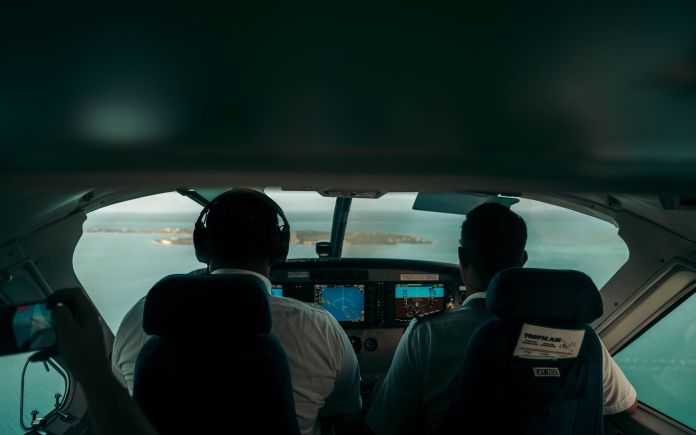
Our short 35 minute plane ride gave us the opportunity to take in the beauty of the Caribbean’s rich blue water as we passed overhead. The crystal blue water was striking, and as we watched small fishing vessels and mangrove islands pass through our line of sight, our imaginations ran wild with the possibilities that lay beneath us.
As the plane touched down in the tiny city of San Pedro, we filed out and made our way to the street exit. The airport was no bigger than your run-of-the-mill DMV, but luckily, much friendlier faces sat behind the desks. As we exited the building, we were met by two taxi drivers that the lodge had sent to pick us up. After some warm welcomes, we crammed our bags into the vans and jumped in the back seats, eager to finally see the lodge in person. As we made our way down the road, the paved streets eventually turned to gravel, and the vans bounced in and out of crater-like potholes with a familiar ease. Shortly, we pulled up to a small gate and a sign that read: “Blue Bonefish Lodge”.
Immediately after pulling in, the lodge staff was there to greet us, collecting our bags from the trunk and carrying them up to our rooms in the main lodge area before we even stepped out of the van. As we greeted our hosts, we all immediately grew enamored with the marvelous landscape that was surrounding us.
On the horizon, a beautiful tropical sunset was unfolding over the ocean, which was now only a few yards from where we were standing. The lodge stood tall and overlooked a hot tub and a cabana. To the left, past a fleet of golf carts, was the newest addition to the property: The Villa. Placed perfectly between the two structures, it featured a long dock stretching into the ocean bay with several Panga boats parked along the walkway, leading to a hut with a palm roof and a hammock underneath.
Inside the lodge was just as beautiful. As we made our way in, we were directed to the dining area, which doubled as a living room and social area. Multiple long wooden tables were set in preparation for the wonderful meal currently being crafted, the smell of which had already captured the desire of our empty stomachs. Our rooms were located right through doors located to the left and right of the dining area. Each room had a bed, neatly made and decorated with flower pedals, a full bathroom, and direct access to a deck that spanned across the entirety of the building. In addition to our rooms, there were also the villas, which were decorated with teak interiors and tile flooring, each with a private balcony that over looked the Caribbean Sea.
While the amenities were nice and we were excited to enjoy some downtime, our true interest lay in what was swimming around beyond the dock… but for now, it was time for dinner, a beer, and some sleep. Tomorrow would come soon enough.
The Fishing at Blue Bonefish Lodge:Â
Pursuing Permit
As the sun slowly unfolded over the placid seascape, we rose to the clanking of silverware and the smell of fresh empanadas and coffee being laid out just on the other side of our door in the dining area. After enjoying a nice breakfast made up of melted cheese and ambitious planning for the days to come, we headed back to our quarters, collected our things, and made our way down to the docks.
Waiting for us at the docks was a group of 3 guides, their boats, a collection of rods, flies, and coolers that implied we were in for a fun day in the sun. After a few excited introductions, there was little time wasted before we loaded into the boats and zipped off to different corners of the nearest flat in pursuit of what everyone had come here for… the almighty permit.
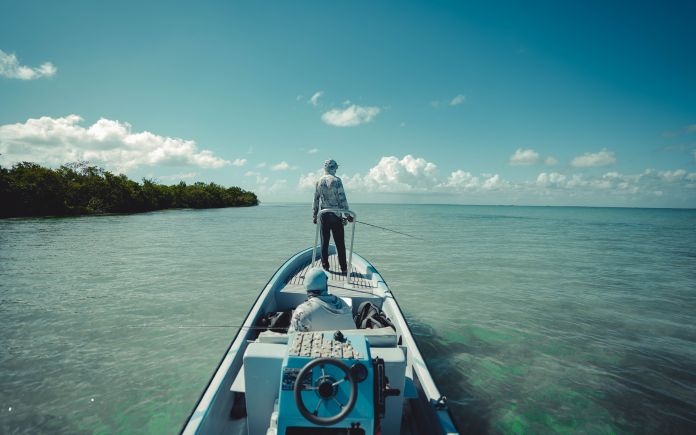
As the Panga planed over the calm salt flat, the silhouettes of other boats on the hunt were barely distinguishable from the islands of mangroves that lined the bay. Aboard our boat, we had two anglers, a guide, and ourselves. As we shot past floating patches of sargassum and idle seagulls, bobbing in the wakes, waiting for their next meal to be spooked into action by the boat, the horizon began to give way to a long corridor of vegetation. All was quiet besides the sound of the motor chugging away and the wind beating at our clothes. Like the locker room before a championship game, all parties were busy in silent preparation.
In one smooth motion, the guide killed the motor and jumped up to the poling platform, his eyes fixed on the shallow water ahead. One of the anglers reached for his rod, a 9-weight with a small blue crab pattern fly tied to the end of a long leader. As he stepped up to the bow of the boat, he made a quick scan and carefully began pulling line from his reel, letting it pile at his feet. The guide began to push the boat forward with his pole, and began to unload all the info he had about the area we were fishing. The ritual had begun.
It hadn’t been 30 minutes until we heard the first call come from behind us as the guide began to rotate the boat ever so slightly to expose the starboard side. “A ray…”, was all he muttered. His voice was calm and collected, but we could all feel the electricity in the air. “Let’s see…” he continued. “I don’t see – OH. Permit. Permit behind the ray. Two permit,” he explained. 50 feet ahead of us, a large black shadow was moving toward the boat. “Okay. Get ready,” the guide instructed. The angler adjusted his weight and prepared to cast. “Now. Go – GO!” The angler took one, two false casts and laid down the line directly in front of the fish. The fly landed hard and a small shadow darted out from underneath what was now visibly the stingray kicking up sand. “One’s still there. Recast”, the guide exclaimed, now readjusting the boat. Now at only 40 or so feet to his strong side, the angler laid down another cast.
He stripped line in slowly. “Slow. Slow,” instructed the guide, calmly. “Okay! Strip! Stripstripstripstripstri-set! Got him!” The rod bowed as fly line began to dance around the angler’s feet. In seconds, the line had vanished from the bow of the boat as it was ripped from the screaming reel, further and further away into the sea. Cheers rang out as we watched the battle unfold. After what felt like hours, but was really only a few seconds, the run began to slow. The drag slowly started grabbing hold of the line and we all watched in anticipation as the angler lifted his rod, and began to reel. But as soon as it had stopped, the fish began to run once again, making a fool of the technology on the other end its pierced lip. This same process occurred again, instilling what seemed like a futile sense of hope among us spectators. As the guide barked instructions, the same dance occurred over and over again. Finally, the opponent began to tire. Hoisting the weight of the animal, the angler dragged him to the side of the boat where he made one last run, before being brought back to the hands of his captors.
The battle was over. Throwing his rod to the side, the angler leaped from the boat into the water, just as excited as a child on Christmas day, ready to open his present. Gripping the permit by the strong forked tail and his belly, the angler hoisted the fish out of the water for display – and boy, it was impressive. The size of a serving dish, the fish’s vibrant skin gleamed in the tropical sun. Quickly, the guide plucked the small crab fly from the fish’s mouth and tossed it into the boat. Slowly, the angler lowered the fish back into the water, and within moments, the permit’s tail began to kick and the fish glided out of the angler’s hands back into the depths where he had been plucked from. A few high-fives and hugs were exchanged before loading back into the boat. As saltwater spilled onto the floor from the angler’s boots, we all chuckled and cheered, ready to bid farewell to the experience and eager to encounter the next.
Busting Bonefish
Over the next few hours and days, six more permit were landed, with many more missed or lost. However amazing permit are, one doesn’t travel to such a diverse fishery to spend all their time targeting a single species (well, at least not us). On the same afternoon of the wild permit fiasco, we all reconvened to push deeper into the brush in pursuit of the fish whose name and image were plastered on the very signage of the lodge, itself: Bonefish.
As our convoy pushed deeper into the channels running through the mangroves, each boat split into a different section, separated by only ten or so yards of brush – each of our push poles still visible as they crested the top of the leafy walls. With one angler stationed at the front of the bow, now toting an 8-weight with a crazy charlie tied onto the end of a homemade leader, the pursuit from earlier continued – but in a far different fashion.
The Bonefish, nicknamed “the Grey Ghost,” lives up to its nickname. Working the flats in small pods, these creatures are not only fast, but virtually invisible to the untrained eye. Due to their smaller size and ability to sense oncoming danger just from the change in pressure around them, these fish make for one heck of a hunt. Spotting them takes honed focus, and one is more likely to see their shadow before they see the actual fish. The key to finding these fish, is watching for irregular movement on the sand.
A bird’s eye view of a pod of Bonefish.
Suddenly, 30 feet to our right, a pod spooks out from underneath a mangrove. A group of about ten fish dart out from cover and away from our course. It happened in the blink of an eye. As we watched the fish swim off, our angler had realigned his focus to the left of the boat. “There’s one,” he exclaimed, pointing 45 degrees ahead of us with his rod. Without further words being exchanged, the guide pivoted the boat, making the most minor adjustment to give our angler his best cast. From the distance, a tiny shadow darted towards us. The angler made a short 30-foot cast. Unlike the permit, the second the Bonefish saw the shrimp fly enter his level of the water column, he raced towards it and attacked.
With a hard strip, the line shot tight. Immediately realizing his mistake, the fish reared and turned a hard 90 degrees and began to race away from us. This fish, considering its size, displayed impressive speed, zipping sporadically across our section of the flat, as it fought to free itself from the fly. With each turn, the fish sent previously invisible Bonefish scurrying for cover in their attempt to escape their captured companion.
A typical Bonefish at Blue Bonefish Lodge. However, they have been known to grow much bigger, and ones double in size are caught regularly.
After a fair fight, our angler was able to reel him in and bring him to the side of the boat. The fish probably weighed around two to three pounds, a fairly average specimen for the area. Even up close, the translucent scales and pale, bluish coloring made the fish seem invisible in mid-air. Its body was remarkably rigid, and its tail, tapering down from its fins to a strong, forked shape, resembled that of an underwater torpedo—a marvel of nature, perfectly crafted for survival in shark-infested waters.
As we lowered the fish back into the water, it immediately took off back into the shaded cover of the mangroves. Without missing a beat, our angler, clearly fulfilled, passed the rod off to the next participant and made his way to the cooler for a Coke. As the day rolled on, quite a few more Bonefish were hooked, landed, and released – including a few from our team. Soon enough, we were headed back to the lodge, spirits high and bellies growling, ready to see what the rest of the evening had in store. It had been a good day.
Tracking Tarpon:Â
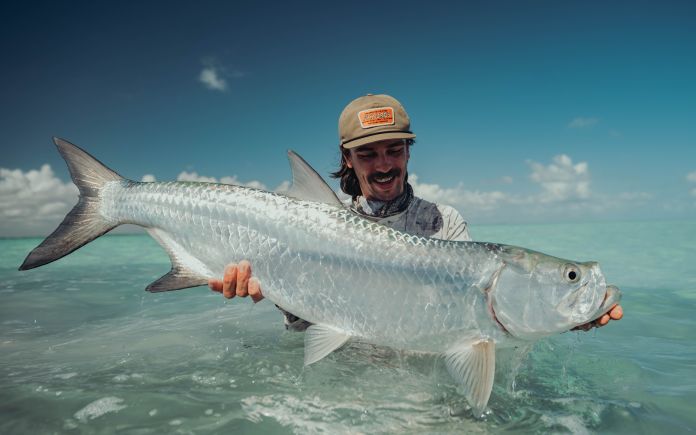
It was our third day of fishing when we decided to deviate from our normal routine. With plenty of permit and Bonefish in the bag shared amongst all of the anglers we’d been following, it was time for something different. The lodge isn’t necessarily known for Tarpon, but when our guide, David, mentioned he knew of a flat that was only a 30-minute boat ride away, and was coveted as a common feeding ground for some residential tarpon, all we asked was “When do you want us at the dock?”
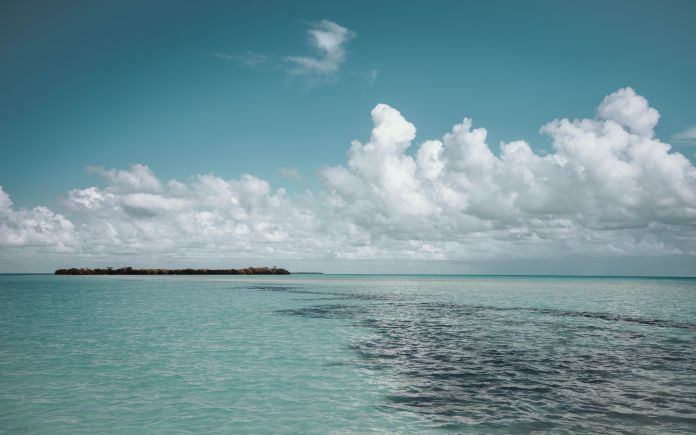
As we raced past the mangrove islands we had explored days prior, the dotted horizon gave way to an expansive plane of shimmering blue, accompanied only by an aggregation of towering storm clouds accumulating in the distance. Suddenly, the guide cut the engine. From there, we slowly drifted overtop rows of coral, giving way to deep blue channels of water.
Max, our angler, digging through his fly box emerged with a large white feather changer that shook in the light headwinds as we made our way into position. He tied it onto the end of some 16 pound leader and made his way to the bow of the boat as David simultaneously climbed back onto the poling tower. As we pushed forward, we scanned each pocket of blue for shadows and any hint of movement that might indicate the presence of life. All was quiet… but it wouldn’t be for long.
After about an hour had passed, Max pointed out onto the horizon. David confirmed he saw it too and began to pole us closer. The shadows were barely distinguishable to our untrained eyes, but Max and David knew what they were looking at.
A group of two juvenile Tarpon were making their way across our bow at about 70 yards. Left to right. Max began to strip out more line from his reel as David began our approach. 60 yards. 50. With the slightest turn of the boat, Max began to cast. With a single heavy haul, he shot the line directly towards their position, laying the fluffy white fly out 8 feet in front of the predator’s path. He waited a beat, then began a slow strip. “He sees it”, David confirmed. As Max continued to strip, the fish followed. Another strip. Another. The fly’s path was continuous and uninterrupted as Max slowly brought it towards the boat. Suddenly, the line went tight.
With a violent strip, Max ripped the line past his hip, followed quickly by another in an attempt to lodge the hook into the bony mouth of the Tarpon. The line vibrated, then began to fly. As it danced around us, we all began to scream with excitement, realizing we were finally in the fight. 30 yards ahead of us, the water erupted into a culmination of spray and silver. As the mighty beast launched itself into the air, it shook its head violently, like a bull lassoed around the horns. But, as soon as it started, the chaos was over. As the fish came crashing down into the ocean, the fly line went slack and we watched as the shadows darted off into oblivion. The young Tarpon had shaken the fly and had no plans of sticking around longer than it took to do so.
As our cheers turned into sighs, David assured us with his voice still shaking with excitement, “Don’t worry. There will be more,” and he would not be made a liar. After only 20 minutes, he called down to the bow, “Max, you see that?” Max pointed his rod tip straight ahead in confirmation. Just like before, the two began the first steps of their dance – and with one well-placed, 40-foot cast, Max had found yet another partner to tango.
This time, the eat was almost immediate. Max slammed his fly into the fish, and held tight as the line ripped off the water to form a direct connection with the target. The two were entangled, and despite the fish’s best efforts, Max had no intention of losing this one. The fish jumped. Once. Twice. Three times. Each time, Max lunged his rod tip toward the watery explosions, allowing the fish room to play. In a display of violent refinement, the fish raced through the open water, attempting to break the line with all its might.
The fight waged on for a mere 20 minutes before it was over. As we watched the exasperated mass of muscle and fervor pulled towards the boat, David jumped down from his station and grabbed at the leader. He missed his first grab, but on the second attempt, secured it in his blistered hands. From there, both boys leaped from the boat into the mucky water in order to grab the thrashing beast.
For its size, the Tarpon had put up one hell of a fight. Even once in David’s hand, it gave one last spiteful tale slap which slammed our guide in the chin, almost knocking his glasses clean off his face. But there was no use fighting further… this time. We had won.
As we watched the fish swim off, the clouds above us rapidly morphed into a torrent of rain and thunder. Eagerly, we packed our things up and began a run back to the lodge. Upon returning, we headed towards the beer fridge in the cabana, eager to enjoy the splendors of our victory and share the story that had unfolded.
Food at Blue Bonefish Lodge:
Something Blue Bonefish Lodge does incredibly well is food. Unlike many fishing lodges, the focus of mealtime isn’t simply to impress its guests with fancy ingredients and elegant methods of presenting a steak and wine. While these things do hold value, the mission of the Blue Bonefish’s kitchen staff, all of which are local residents of the island, is to bring Belize to its guests on a platter. In the words of Mary Leeman, one of the owners of the lodge, “We don’t want to bring the US to Blue Bonefish, we want to make sure San Pedro and Belize stay right here.”
From slow-cooked chicken seasoned in local herbs, spices, and a meticulously concocted broth, to seared snapper served alongside fresh vegetables and potatoes, the food at Blue Bonefish Lodge delivers the same warm and fuzzy elements of a home-cooked meal, each dish with its own background and story. Accompanied by a boozy punch and good company, the meals enjoyed at Blue Bonefish Lodge act as a catalyst for stories of wins and losses had on the water; many from the days prior, but even more drawn from the rich histories each guest seated at the table brings from their time on this blue planet.
Other Things to Do at Blue Bonefish Lodge
One thing that makes Blue Bonefish Lodge stand out is the abundance of activities to enjoy around the area besides fishing. Whether fishing’s just not quite your thing, or you’re looking to give your casting arm a break for the day, there’s no shortage of adventures to be had.
Snorkeling
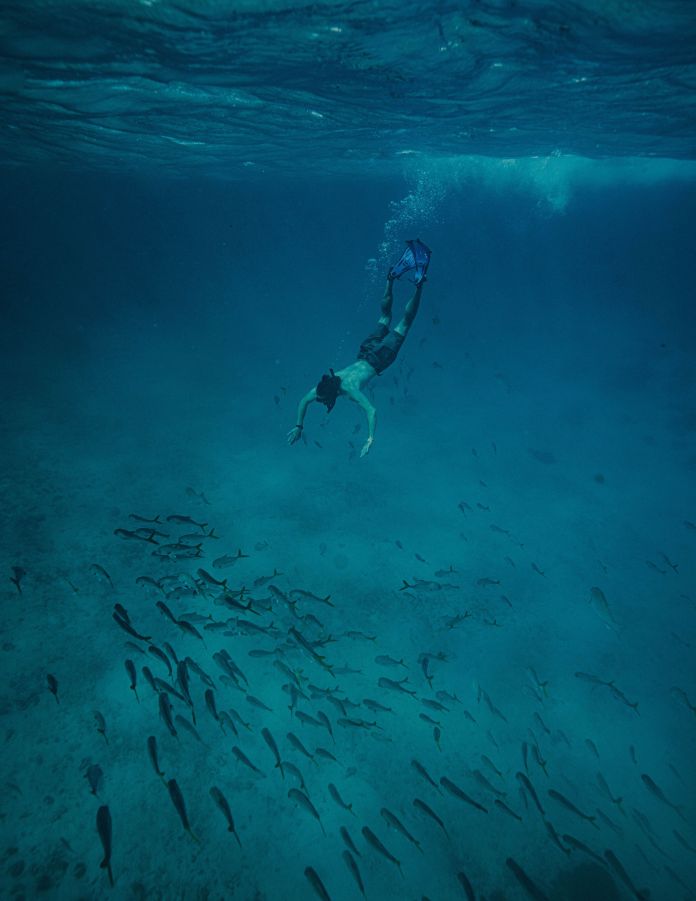
With Belize being a teeming mecca of life, abundant in all forms of fauna and flora, the “ecotourism” to be found in the Caribbean is second to none. One offering BBFL provides directly is snorkeling. However, with the lodge being located just across from one of the largest barrier reefs in the world, this endeavor is far from your typical dip off a commercial hotel beach.
If swimming with sharks interests you, look no further. Accompanied by BBFL’s own snorkel guides, we had the opportunity to dive into the confines of the reef and swim among the hundreds of different fish species that make Belize worthy of its nickname: the “Jewel.” Powered only by flippers and our legs, we got up close and personal with nurse sharks, parrotfish, jacks, stingrays, sea turtles, Permit (it was a unique experience to interact with such an incredible species on their terms), and many more. These creatures inhabit a complex ecosystem that further exemplifies what makes this fishery such a one-of-a-kind opportunity to visit. We were profoundly grateful for the chance to see what lived beneath our fishing boats, which allowed us to resurface with a newfound appreciation for the unseen life that exists on a day-to-day basis.
Spear Fishing:Â
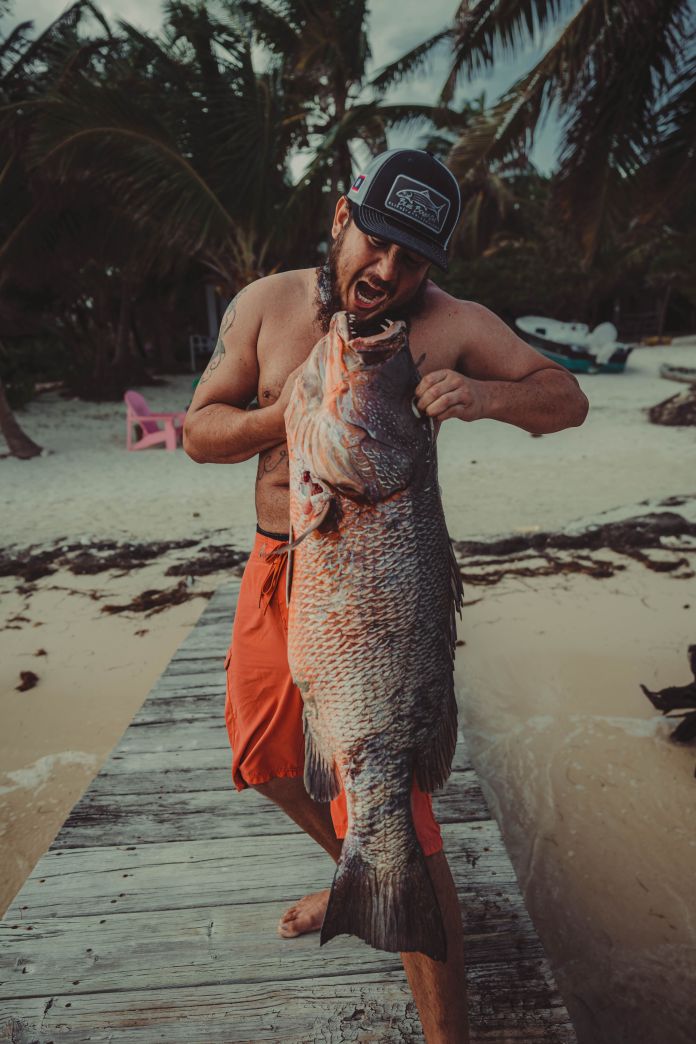
Furthermore, if you’re looking to take the underwater experience to the next level, and don’t QUITE want to leave the fishing behind, these guides also offer a taste of their own culture by allowing guests to try out a different sort of fishing, done with a spear and a rubber band. Proving to be a much more challenging feat than it appears to be on television, the opportunity to procure one’s own food from the underwater grocery store that is the reef was one we won’t forget.
Making our way around the perimeter of the sub-surface jungle, we hunted for spiny lobster and snapper, hoping to bring a few back to the docks for dinner. After some missed shots and a humbling experience, we finally managed to get the hang of the dance that is the simultaneous action of “swim and shoot.” We brought a few lobsters, a barracuda, and, of course, some conch to the boat. However, these captures paled in comparison to the massive Cubera snapper that our guide managed to shoot not once but twice, and brought it aboard.
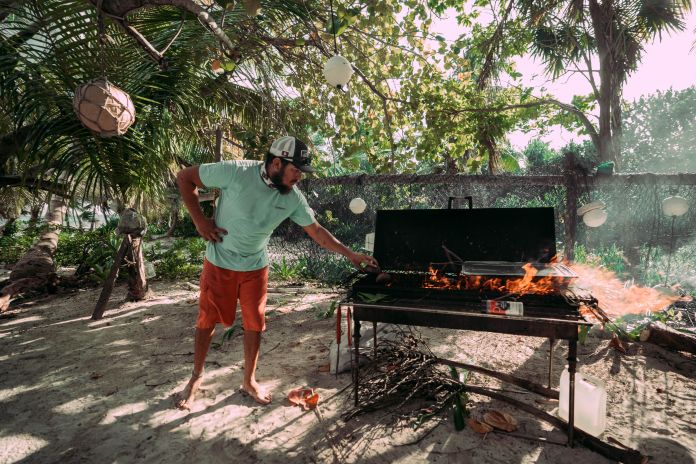
With our well full, we jetted back to the beaches where we filleted the fish, fed the scraps to some hopeful frigates, and enjoyed one of the freshest meals of fish and conch salad we’ve ever had as we watched the beautiful Belizean sun settle into the horizon for the night.
Exploring San Pedro:
One thing that stands out about Blue Bonefish Lodge is not only its proximity to San Pedro, which is just a mile up the road, but its accessibility to the city. Oftentimes, when it comes to premiere lodges, guests are confined to the lodge property and encouraged to stay close and amongst themselves. However, with Blue Bonefish, it’s the opposite. The culture around the lodge is focused on making sure people experience all that Belize has to offer.
Just outside the main lodge, guests can find a fleet of golf carts just waiting to be utilized for exploration. There are no check-out procedures, it’s just get in and go. This makes it super easy to explore the surrounding areas, and encourages travelers to do more than just hang around the lodge all day.
Just minutes up the road is a classic fly shop, owned and operated by Blue Bonefish Lodge themselves, that carries everything from flies to rods and reels, and any gear you might need to have a successful fly fishing trip in Belize if you don’t want to borrow the gear the lodge has on hand. From there, guests can continue up the road, into the small city of San Pedro…
The city itself is teaming with sights, sounds, and smells that entice a full cultural emersion. Whether it’s dock-side eateries, shops, fruit stands, or nightclubs – there is always something to do in San Pedro. Additionally, the city is an extremely welcoming and friendly place for tourists. Not once on our travels did we ever feel like we weren’t safe or unwelcome. Tourism plays a significant role in the Belizean economy, and an appreciation of this, combined with the relaxed island lifestyle, benefits both tourists and locals. If you plan to visit Blue Bonefish Lodge, we recommend setting aside at least an evening to explore the surrounding areas.
Relaxing at the Lodge:Â
If you’re not looking to fish or explore, Blue Bonefish Lodge is also an ideal location to go full vacation mode. Underneath the cabana, there are always drinks and food readily available, and you can also watch any sports game on any given day. If you’re in search of a spa day, the hot tub, located right in the middle of the property, is open and running all day and night. On-site masseuses are also readily available to provide a relaxing hot stone treatment, right at the edge of the dock as you listen to the sounds of the ocean. Amongst the hustle and bustle of the world around us, the staff at Blue Bonefish pride themselves on aiding guests in the ultimate pursuit of slowing down…
The element our team aimed to explore when we arrived on the island was of course, the fly fishing. However, what we left with was a far greater appreciation for the dedication and hard work every member of Blue Bonefish Lodge has put into curating a once-in-a-lifetime experience for its guests, and staff alike. To limit this experience to just fishing, while it was some of the best saltwater fly fishing we’ve experienced in a long time, would be a disservice to a place that is so abundant in opportunity and rich with culture. From relaxing underneath the warm starry nights to the days spent sandwiched between water as blue as the sky above, the spirit of Belize seems to find a way to simply melt your troubles away.
Whether you’re chasing Permits into the open ocean or leisurely paddling around the bay on one of the lodge’s paddle boards, we’ll say this: the trip is worth it, no matter where you’re coming from. To experience an abundant, diverse, and healthy fishery such as this is a rarity these days. In so many places, we hear the same song: “You should have been here yesterday.” However, due to the conservation efforts of the lodge, as well as the natural blessing of its location, one can expect to hear, instead: “We can’t wait for you to get here.”
For anyone looking to learn more about Blue Bonefish Lodge, or Book a trip, you can do so, HERE. Thank you to Blue Bonefish Lodge for hosting us for such an unbelievable week and hospitality. We look forward to seeing you all again, soon!