Home Blog Page 54

Simms New Watershed Waders are Now Available for Purchase

0

Simms Fishing Products, based out of Bozemen Montana has just oficcially released their new “Watershed” Waders, which will be sold to raise money for restoration of areas devastated by the Yellowstone Flood back in the Spring of 2022.

From Simms Fishing Products: 

In association with Montana Freshwater Partners, Simms Fishing Products is excited to launch the all-new Simms Watershed Stockingfoot Wader – a wader designed to lend financial aid to the Yellowstone ecosystem in response to the devastating floods that occurred in the spring of 2022. In early June of 2022, a combination of an unusual atmospheric rain event and warm overnight temperatures coincided with Montana’s peak runoff, resulting in a devastating 500-year flood event. Due to the catastrophic flood, all five entrances to Yellowstone National Park closed, thousands of park visitors were evacuated, bridges, houses and roadways were completely swept away leaving millions of dollars in damages behind, and years of rejuvenation ahead.

Check out the new waders, HERE.

To the residents of southwest Montana, the Yellowstone River is not only a vital economic resource, it’s an ecosystem that’s essential to their way of life.

Regarding the damage and destruction, Simms immediately leaned into their longstanding heritage of making waders and embarked on a partnership project conceived to generate significant funding support towards a campaign designed to revitalize the iconic Yellowstone ecosystem.

Available now, the all-new Simms Watershed Stockingfoot Wader is patterned after Simms’ multi-award winning G3 Guide Stockingfoot Wader and utilizes excess GORE-TEX® Pro Shell fabric in a 3-layer upper and 4-layer lower portion of the wader. This lightweight fabric is breathable, durable, waterproof and offers an unhindered range of motion. Featuring an oversized stretch-woven zippered chest pocket and a microfleece lined, zippered, pass-through handwarmer pocket, the wader also comes equipped with adjustable suspenders with opposing buckles that allow for a waist-high conversion. For mobility and durability, Simms has incorporated their patented front and back leg seams. To round out the feature set, the wader includes integrated gravel guards and anatomically correct left and right stockingfeet with an antimicrobial finish.

Available in eight sizes, Simms Watershed Stockingfoot Waders are available now in limited quantities and can be purchased for $599.95 at www.simmsfishing.com and also through Simms’ vast retail network. Through Watershed sales, Simms will make a $50,000 contribution to the Yellowstone River Stewardship Campaign, a campaign developed to engage the community, out of state visitors, and business to give back to projects that support the overall health and vitality of the Yellowstone River. The $50,000 will be in addition to the $10,000 contribution Simms made in November of last year when they announced the partnership with Montana Freshwater Partners.

The total contribution will go through a fund that’s been established through Montana Freshwater Partners, a 501c3 non-profit organization based in Livingston, Montana. Funds earned through this campaign will be invested in conservation and restoration projects that will improve water quality, fish habitat, late season flows and floodplain connectivity. Allocation of Simms’ contribution will go towards priority based, on-the-ground projects implemented collaboratively with local nonprofit organizations such as Montana Freshwater Partners, Upper Yellowstone Watershed Group, Park County Environmental Council, Trout Unlimited and others working in partnership with the Department of natural Resources, Natural Resource Conservation Service, Montana Fish Wildlife and Parks, Custer Gallatin National Forest and Bureau of Land Management.

Simms Gives Back to the Yellowstone

Interview with Yellowstone Guide: Sean Jansen #fliesforfloodrelief

Angler Story of the Week: Dorado & Mice

A note from Felix Auterio:

“In deep or shallow waters, golden dorado are always alert hunting for their next victim. In this case, we have the opportunity to fish with a lot of mice even on sunny days. What we have to consider is our surroundings, making sure we are clever with how we read the water and where we want to fish. Golden dorado can be found in rapids, big rivers, or near obstructions like logs and brush. 

The best way to fish for golden dorado here in Argentina is when you search for them with a top-water mouse fly on the end of your leader. Sometimes, the dorado will crush it, making it one of the most exhilarating eats you’ll ever witness fly fishing.

Searching for these fish is one thing, but casting a top-water mouse to a hungry golden dorado is something we specialize in. Dorado should be on your bucket list, with possibilities of getting a 3 pounder or a 20 plus pound golden dorado here in Argentina.

Tips from Felix:

If you’re looking at trying to tie this fly, check out the following tying recipe Felix sent us:

If you’re wondering where to start, be sure to check out the InTheRiffle MouseRat – Deer Mouse Fly Tutorial on YouTube.

Angler Story of the Week from Felix Auterio of the Don Joaquin River Lodge, be sure to check out their Instagram @donjoaquinriverlodge.

Check out the articles below:

Lodge Spotlight: Don Joaquin River Lodge, Argentina

Fly Fishing Destination Video of the Week: Fly Fishing Dorado in the Upper Paraná River

Video of the Week: Ramble on with Brad Leone: Episode 1

In this Video of the Week, we catch up with Huckberry and their longtime friend, the legend himself Brad Leone. For those who don’t know who Brad is, Brad is a professional chef and YouTube personality with a love for the outdoors, unique stories, & fresh local food. In their new series, Ramble On “experimental chef and our longtime friend Brad Leone sets out to find the unique people, makers, and traditions that paint a complete portrait of lesser-known locales.” In this episode Brad and the team are in Sheridan, Wyoming chasing native cutthroat, “old school watering holes”, and the surrounding area’s history.

Huckberry is a men’s western outdoor brand. The idea for Huckberry was born on an old rickety chairlift in-between cranking out spreadsheets for 90 hours each week at their day jobs. “We chose the name Huckberry because we both loved Mark Twain’s Adventures of Huckleberry Finn and thought Huckberry was the perfect totem for the spirit of adventure we wanted our brand to embody. More practically speaking, Huckberry.com was available on GoDaddy for $9.98 and Huckleberry.com was not.”

Check out these epic articles as well!

Flylords Original Series: Fly Shop Tour – ALL EPISODES NOW LIVE!

Video of the Week: Why you need to go Backpacking by TightLoops

Video of the Week: Golden Dorado “The Treasure of the Parana” by Fly Fish Food

Confessions of a Conspiratorial Salmon Fisherman

Long-time trout-obsessed fly fisherman Rasmus Ovesen, had an experience on the Norwegian salmon river, Gaula, that bears evidence to the fact that it is entirely possible to convert even the most stubborn unbeliever.

In July of 2020, during summer and a fishing season rather untypical due to the onslaught of the corona pandemic, I was presented with a unique opportunity to try and break a lifelong curse: to catch a Norwegian salmon on a fly rod. 

With international airline traffic in a state of paralysis and travel restrictions in place, I’d reluctantly had to cancel several highly anticipated trips abroad. With trout in mind, and instead had decided, in a rather defeatist mood, to turn my attention towards the fishing possibilities in my new home country, Norway. However, if the reverse of the dubious corona medal was that foreign fisheries were suddenly off-limits for my wanderlust soul, the obverse side was that Norway, correspondingly, was now off-limits for foreign salmon fishermen. 

Now that upper-class fly fishermen no longer hoarded an all-manner of overly hyped salmon rivers with superior purchasing power, exciting new possibilities were up for grabs across Norway.

Salmon have always seemed to me a bit of a phantom fish. A non-existing fish species invented and marketed by unscrupulous Norwegian profiteers who have long since been in the business of emptying the pockets of visiting Danish fishermen with sausage fingers and blank, naive eyes under gaudy beer hats. 

I know because I once was one of them. Stupid as I was, it took me at least nine Norwegian salmon trips with the local fishing club before it finally dawned on me that Norwegian salmon don’t exist. By then, the body of hardcore empirical data was too overwhelming and significant to be ignored. 

Salmon Fishing Trauma

The salmon fishing traumas of my childhood and upbringing, and the sense of shameful naivety, have remained with me ever since. Even though, as an adult, I’ve (somewhat shell-chocked by puzzlement) happened to debunk my myths about the fabricated existence of salmon by landing solid amounts of shiny bright specimens in Iceland. However, doing so hasn’t changed my abject perspective on Norway, and it certainly hasn’t altered the fact that I’m a complete novice in fly fishing for salmon.

I’ve always felt incredibly inferior and small around Norwegian salmon fishermen, like a nervous and paranoid outsider who can’t seem to understand an internal joke. Constantly on guard, suspicious, and attentive to laughter behind my back. Nevertheless, in a moment of dazed apathy, I was persuaded to spend three days on the River Gaula’s NFC-beats at the beginning of July along with my colleague Tom Roger Bekkeli, who belongs to the Norwegian band of self-proclaimed “salmon” fishermen. 

Funny enough, once I decided to pull the trigger and make this happen, my excitement grew every day before we departed. I welcome the gonzo-journalistic opportunity to probe and investigate. I envisioned two potential scenarios, of which the latter invariably strikes me as the most favorable and, not least, probable. Either we will catch fish, which, despite the involved undermining of my life-long conspiracy theories – I’m embarrassed to admit, kind of appeals to the scorned and under-stimulated salmon fisherman inside me. Or we will catch absolutely nothing, which will put me in a unique position to reveal the delusions of one of my fellow friends and blatantly expose the treacherous and dirty business of the Norwegian salmon industry through him.

The Gaula

The River Gaula meanders majestically downstream. Spellbound by its rocky course at the bottom of the lush green Gauldal Valley, just southeast of Trondheim in the County of Trøndelag. Its transient and iridescent water masses sparkle underneath the sun and sporadically flood through a torn, lead-grey cloud cover. Lightly strained from trying to cut through the gushing drone of the river, the birds chirped in the crowns of the trees. The smell of fresh, rain-laden sediments under well-worn wading boots clinged in the air.

We’ve followed a densely vegetated path and are now situated on the banks of the Gaula River upstream from Støren in a spot. The fierce spring flooding in May has tapered off, exposing an extensive plateau of fist-sized abraded granite rocks. A long run with deep water and steady current stretches to a big bend further downstream, where a shallow neck accelerates the water. Not even the most myopic disbeliever would find it challenging to figure out where all the phantom fish will likely be lined up. 

Tom, naturally, insists that I do the initial sweep of the beat. And even though, deep within, I know that he is busy and entirely focused on setting up just the right equipment for this particular beat, with the right line, a carefully adapted tapered leader, and a weight-balanced fly in just the right color nuance to make it pop discretely in the water. I can’t help but feel like his eyes are firmly fixated on me, patiently waiting for me to hook myself in the neck while casting, trip, and fall on snot-slick rocks. Or in some other way, show my true colors as the insecure and fraudulent amateur I am. But I have no intentions of granting him that pleasure…

I plan to fish the whole run with my light single-handed fly rod to send a series of impressively long casts towards the opposite bank and stretch my leader delicately across the water while resolutely wading downstream one careful step at a time. Conscious about not disturbing the water with a disproportionate amount of casts, thereby providing Tom with a legitimate excuse when his turn is finally up, he fishes the whole run without inducing any strikes. No one will blame me for having spooked any phantom fish today!

Taking A Breather

I take a deep and reverent breath, a bit like you do when turning the first page of a brick-like novel, and psychologically mobilize for the mechanical work task ahead of me. I’ve done this on numerous occasions throughout the years on more or less obscure and unknown salmon rivers in southern Norway. I anticipated the workload with the same lukewarm and measured enthusiasm as an athlete attending a training camp.

The first cast lands at the top of the run, below a steep, tree-clad bank, and the steady current quickly forms a big bend in the line that propels and accelerates the fly cross-current until it eventually reaches the slack water immediately downstream. This is textbook salmon fishing, I think to myself, but then suddenly self-aware and conscious of my thoughtlessness – quickly rid myself of the sentiment. Suppose salmon fishermen have some sacred scripture or holy book. In that case, I suspect that it was written by some self-absolving L. Ron Hubbard-like person more preoccupied with dividend and commercial mysticism than immersion and altruism, someone more into fiction than facts.

I move further downstream, recast the line at an angle, swing the fly across the fleeting water masses, and forcefully repeat. Soon I find myself in a familiar trance-like state in which my perception of time and consciousness of self gradually evaporates. I succumb to the subtle tactless pulse of the river. Everything flows, and I give in to whatever moves me. 

The Tug

Then suddenly, the impossible happens. Amidst my apathetic reveries, like lightning from clear skies, a violent pull transmits through the line, and something big and silvery thrashes around on the surface. It feels like an electrical shock, like a highly tangible – almost paralyzingly physical sign from a higher power. It branches through every neuro-fiber in my body so abruptly that I completely melt down. My reaction, predictably enough, is to lift the rod like an overly excited trout fisherman, a victim of the unconscious memory of his muscles. The result is just as predictable, I effectively yank the fly out of the fable fish’s jaws and am left stunned and disillusioned, like a child that has just burnt his hand on a candle.

I do what most other fly fishermen would have done if they’d just made a fool of themselves; I turn around to see if anyone has been watching. Unfortunately, “someone” has. Tom, ostensibly, has been keeping a keen eye on me. He sits on the bank with his arms spread wide to each side, a face full of surprise and a yawningly open mouth, which – at closer inspection – looks as if it’s protruding into his cheeks, forming a poorly suppressed smirk.

I’m burning up with intense shame. I’ve done exactly what I wasn’t supposed to do: I’ve made a complete and utter fool out of myself. Furthermore, I’ve just discredited my thesis – involuntarily and unsuspecting. The choking episode is the realization of a monumental humiliation, which amply underlines my stubborn misconceptions and then, by now, painfully obvious shortcomings of my talents as a salmon fisherman. Worst of all, I have just wasted a golden chance to catch my first-ever Norwegian salmon!

The Moment of Truth

I continue fishing with trembling nerves and a dawning determination. A few casts later, the unthinkable repeats itself. The line comes tight. I let the fish turn with the fly in its jaws and wait until I feel the total weight of the fish before I slowly lift the fly rod. Contact is established, and Tom comes rushing with the landing net while I use my fly rod to apply maximum side pressure on the fish. From here on, it’s all routine work!

Endless minutes pass, and I’ve now battled the fish close to shore, where Tom awaits with the net. The miracle is within reach, and I’m about to burst at the seams with excitement. But then, without further notice, the fish mobilizes all of its remaining power reserves in one last run, writhing its 10 – 11 chrome kilos off the hook and leaving me shattered on the bank of the river, like some poor sod at the gates of heaven, barred from entering.

When Tom’s turn is finally up, he immediately hooks into an unblemished salmon in the vicinity of 12 kilos. I am sure: the Norwegian salmon gods are out to get me – maliciously vengeful and sadistic as they are. They’ve conspired and planned for this moment to emphatically punish this disbelieving screw-up of a salmon heathen. They mean to inflict as much pain and suffering on me, and they’re just waiting for me to collapse under the weight of my despair. They won’t be satisfied until I withdraw, disgraced and dishonored. 

I dutifully shoot pictures of Tom and his beautiful catch before the release. I feel like a photojournalist at the frontline, painstakingly occupied with documenting the fish. Even though it hurt a little bit, I’m mostly happy for Tom. Despite the brutal character of the humiliating lesson I’ve just been given, a dawning understanding and newfound confidence and belief has perspired. Norwegian salmon do exist. They can be lured into striking, and now that I’ve seen them, I’m finally ready to believe in them.

The Last Chance

I contritely sweep through the beat one last time. The fly stops in the middle of the river. I feed the loop between my hand and the reel out through the rod guides. All of the slack is eliminated, and a deep pull propagates through the fly line and into the fly rod, which I lift triumphantly. Oh, that pull! The slow-motion suddenness of it, the blunt brutality of the awakening, the immediate release of dopamine and adrenaline, the spiritual overtures.  

Rasmus with his first-ever Norwegian salmon on the Gaula.

I’m connected once again. This time, however, the connection is inseverable. The fish bursts free of the water, cartwheels manically downstream, and thrashes abruptly about – but to no avail. As if my fly rod were a magic wand, it exerts an invisible and unrelenting magnetism on the fish. Despite all the raw muscle power the fish has gained during a year of frenzied feeding out to sea, it slowly but surely succumbs to the overwhelming pull. Eventually, it surrenders and comes subserviently to the shore and the awaiting embrace of the landing net and its cobweb of knotless mesh. My year-long curse has been shattered!Kneeling devoutly in the shallows, I admire the heartbreakingly beautiful salmon I’ve just landed, the elusive and ethereal embodiment of a life-long dream. It’s a hen in the vicinity of 8 kilos, strikingly gorgeous and so laden with meaning and importance that I’m rendered speechless and on the verge of crying.

When I surrender the fish back into the river, I’m like a trembling newly converted in church – dizzy with religious euphoria. By exposing my deceit, I’ve reached true enlightenment and joined the ranks of all the fanatically religious salmon fishermen out there. Finally!

“Men who know are secure, and men who don’t know believe in luck.” – L Ron Hubbard

River Gaula History

Salmon fishing has long-standing traditions on the River Gaula. Historical documents are a testament to the fact that salmon were fished here as early as the 1400s. It wasn’t until 1825 when the British lords ascended on the river with greenheart fly rods, silk lines, and neatly tied traditional salmon flies that recreational fishing for salmon became a stable activity throughout the summer months here.

The River Gaula originates in the Kjølifjellet-area on the border between Tydal and Holtålen. After joining forces with the Rugla tributary, it flows to the northwest via Gauldalen in Trøndelag towards the Trondheim Fjord. The river is some 153 kilometers long, and salmon run the lower 120 kilometers in addition to many different tributaries. However, the area around Rognes and Støren and even further down towards Lundamo are considered, by many, to be prime fly fishing water.

The salmon runs start in mid to late May and intensify throughout June and July. The peak season is from the middle of June until the end of July, especially the last few weeks of July can provide hectic fishing for big chromers. 

Norwegian Fly Fisher’s Club (NFC) is the single biggest leaseholder on the River Gaula, and they administer rods on a series of productive beats exclusively available to fly fishermen. Furthermore, NFC offers full board lodging at Rogstadmoen Lodge. Additional information is available on NFC’s website, click HERE to visit the NFC website. 

Angler story from Rasmus Ovesen, follow Rasmus on Instagram @rasmus_ovesen. Be sure to check out the Norwegian Fly Fisher’s Club @norwegianflyfishersclub. 

Check out the articles below:

Fly Fishing The Gaula River in Norway

Why You Need to Fly Fish Norway

150th Anniversary Hardy Reel Up For Grabs!

Want to get your hands on a 150th Anniversary Hardy “Princess” Reel? Check out this giveaway from our friends at Angling Trade.

From Angling Trade:

Flyfishingjobs.com is trying to gather important information about how online shopping behaviors have evolved in the last few years since the pandemic. We know users spend a lot more time on their phones and computers researching and evaluating product offerings, but we don’t have a ton of visibility around where this is happening online and for what classes of products. We’d love to find out a little more from our loyal subscribers.

Everyone who fills out our Fly-fishing Survey will be entered to win a 150th Anniversary Hardy “Princess” Reel, valued @ $499 USD. We’ll gather emails during the survey, and if you happen to win through a random selection, we’ll reach to set up address delivery etc. The survey giveaway will begin at 12:00 am (midnight) Mountain Standard time on 2/01/23 and end at 11:59 pm Mountain Standard time on 3/01/23.

Anyone looking for more detailed contest rules/info can find them here.

A little more about the Hardy reel…

150th Anniversary Hardy Lightweight Reel (“Princess,” 5-6 weight)

“When we looked through Hardy’s history to find the best tackle to commemorate our 150th anniversary, it was quickly agreed that the Lightweight series in the 1970 edition was the correct choice to reisssue. The full range is being reissued with a nickel silver double screw line guide, raised spindle casing and a collectable leather reel bag. The line guard is marked with an engraved commemorative dating of 1872-2022.”

Find the survey HERE.

Gear Review: Hardy Ultralite X Fly Rod

Hardy Releases Aydon Rod Series

Everything You Need to Know about Stillwater Fly Fishing

0

Disclosure: The article may contain affiliate links that may result in a commission at no additional cost to the reader.

Fly fishing in ponds, lakes, and reservoirs can be intimidating to anglers who focus more on moving water. But, most fly-fishers have everything they need to tackle stillwater fly fishing. They just have to change their mindset a bit and devote some time to this productive discipline. Here, we’ll coach you up on how to approach stillwater fisheries with confidence. We’ll offer some tips on everything from the gear you’ll need to the techniques you can employ to help you enjoy stillwater fly fishing for lake lunkers, from bass to trout and everything in between. 

cutthroat trout in a lake

This piece is brought to you by our friends at Uncharted Supply Co. Over the last year, we’ve had the chance to test out their new, “Rapid Raft‘, and can easily say it’s one of our favorite tools that we’ll never leave home without. Packing down to just a few pounds and smaller than a loaf of bread, you can bring this raft anywhere, whether it’s your favorite local pond to those tight-quartered, high-mountain lakes. If you’re someone who’s looking to explore more water and find more fish, check out this ultralight pack raft, HERE.
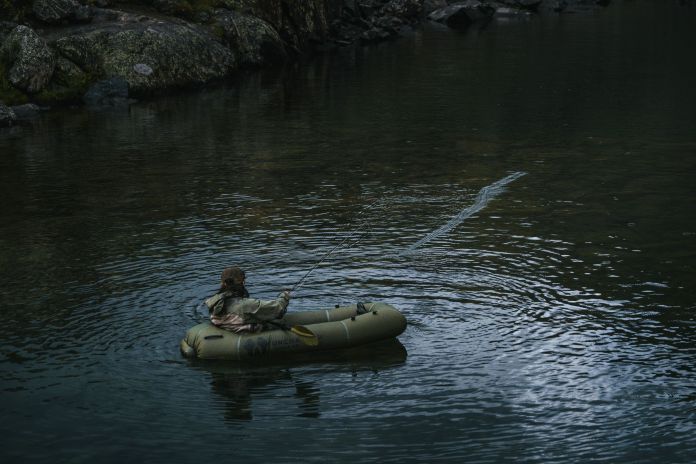
the rapid raft on stillwater

Contents

Why choose stillwater fly fishing?

If you’re a dedicated fly angler and you have honed your skills in moving water, you may not understand the appeal of stillwater fly fishing. That’s OK. Honestly, it’s not for everyone. But for anglers who like to tackle new challenges and learn new disciplines within the fly fishing realm, stillwater fishing is a great way to get into fish and, in many cases, really big fish. 

really big cutthroat trout caught in stillwater

What’s more, stillwater fly fishing can keep you on the water, even when it’s miserably hot. High summer in trout country, when rivers are often too warm to safely fish, can be a great time to try stillwater fishing. High-elevation lakes and reservoirs can offer excellent fishing when valley-floor rivers and streams are tepid and challenging for trout. 

And it’s not just about trout. Even in traditional trout country, many lower-elevation lakes and reservoirs are coming into their prime during the warm months of the year, and it’s a great time to try fly fishing in lakes and ponds for everything from bass and panfish to pike and carp. Simply put, stillwater fly fishing gives anglers the chance to fish through the “dog days,” extend their seasons, increase the diversity of their fishing and learn valuable angling tools that can help their overall fly fishing game. 

Preparation for lakes, ponds, and reservoirs

First things first. It’s important that you know a little bit about the body of water you’re going to try and fish first. Start by doing a little internet sleuthing. Read blog posts or message-board entries from anglers who’ve been there before you. Take a good look at the pond, lake, or reservoir you’re hoping to fish online. You can learn a lot about a body of water just by spending an hour or so online.

preparing to fish a lake

Using the information you’ve gathered, you should be able to make relatively informed decisions on what gear you’ll need, what flies you might want to tie before you go and what time of day you want to fish. If you’re targeting a high-mountain lake full of wild and native cutthroat trout, you’ll know how long the hike is. You’ll know if you’ll be able to fish the lake from shore or if you’ll need to acquire a float tube or a boat of some sort.

Do your research before you hit the water. You’ll be much more informed and you’ll likely enjoy better fishing. 

Flies for stillwater fly fishing

Flies for ponds, lakes, and reservoirs don’t look all that different from flies you might take to the river with you. Stillwater fish move throughout the water column over the course of a normal day, and, depending on the time of year, you may cast everything from dry flies to heavy streamers to tiny midges that just drift in the lake. 

casting flies onto some stillwater

Streamers

Generally speaking, though, stillwater fishing for trout, pike and panfish is, first and foremost, a streamer game. Many stillwater anglers will start with traditional weighted streamer patterns (often using a sinking or a sink-tip line, depending on the time of day or the time of year) and begin searching for fish around likely structure (think rocks, submerged wood or, if you’re fishing a warm-water impoundment, consider casting around docks and piers). Sure-fire streamers that ought to be in every stillwater angler’s fly box include old stand-bys, like Woolly Buggers, Slumpbusters, Zonkers, Clousers, and the like. Colors will vary (again, do some research and go to school on what other anglers have used successfully before you), as well as size and weight, but a good start is to include flies in brown, black, olive, chartreuse, and white. Don’t be shy with flash or UV-reactive materials.  

a box of leech ffies

Poppers and Gurglers

Fishing topwater flies for predatory fish is the pinnacle of the fly fishing craft. And, when fishing lakes or ponds, it pays to have a few poppers or gurglers in your fly box. These flies move water and look and act like struggling prey. Fishing poppers and gurglers is particularly enjoyable when you’re going after bass, panfish or pike (with pike, you’ll need heavy bite tippet — at least 30-pound test line or even pliable wire). It’s a visual game and you want your fly to look vulnerable so it’ll entice a strike. These topwater chaos flies can be anything from green and yellow to red and white, with multiple combinations included. For gurglers, consider adding rubber legs and some flash.

Dry flies

Yes, stillwater fish will hit drifting dry flies, depending on the time of year and the time of day. On many Rocky Mountain reservoirs, there are epic mayfly and caddis hatches that bing big, heavy-shouldered trout to the surface. For instance, on Yellowstone Lake in Yellowstone National Park, a recovering population of native Yellowstone cutthroat trout dependably chases everything from March Browns and Green Drakes to caddis flies and spruce moths over the course of a fishing season. On Hebgen Lake in southwest Montana, the lake’s famed chironomid hatch occurs in May and into June and even July in cooler years.

tying on a dry fly

And, of course, it’s easy to tell when to tie on a dry fly. If you start to see rises and noses pushing through the surface film, the time is right to ditch the deep streamer and the sink-tip line and change over to a floating line and a match-the-hatch dry fly pattern. Pay attention, too, to the bugs on the water. If they’re struggling in the surface film, trout are likely going to key in on emerging bugs, not the insects that are seamlessly escaping their watery shucks and flying off to start the reproductive cycle all over again. Later in a hatch, watch for the spinner fall, and this is when you’ll see big fish coming to the top to go after mayflies. 

Match the hatch as best you can, but consider a few solid patterns that will likely put you in the right entomological neighborhood. A good stand-by for lake-hatching mayflies is the dependable old Adams in sizes 12-18. It’s an attractor that doesn’t look like anything in particular, but possesses just enough “bugginess” to get frequent looks. Other patterns? Green Drakes are good early-summer patterns in trout country. Pale Morning Duns are dependable in high summer. a box of dry flies

But it’s not just a mayfly game. Trout will key in on damselfly larvae, and if they can find an adult damsel stuck in the surface film, they’ll go get it. So tie a few extended-body patterns in electric blue and light green. You won’t be disappointed. 

Finally, toward the end of summer, make sure your fly box has a decent selection of terrestrial bugs — mid-sized Chernobyls, Fat Alberts and the like. Terrestrial flies are important patterns on just about any pond or lake. Bass and panfish, like sunfish and crappie, will also hit hopper and ant patterns. Don’t leave home without them. 

Nymphs

Yes, lake-dwelling fish eat aquatic insect larvae. Mayfly nymphs, caddis nymphs and damselfly nymphs are common in lakes all over the country, and trout likely earn most of their meals chasing these underwater bugs around. But don’t forget chironomid nymphs. These insects are vital to a trout’s diet in ponds and lakes, particularly those with mud bottoms and some depth. Also, don’t leave home without a few weighted San Juan Worm patterns — worms are natural food items in lakes, and there’s absolutely nothing wrong with using flies that imitate natural prey. We’ll get to how to fish these flies in a bit.

tying on a nymph fly  

Gear and equipment for stillwater fly fishing

Rods, lines, etc.

During the heat of the day, trout are going to be deeper in the water column, so your fly should be weighted, and you should likely consider a sink-tip or full-sink fly line that will help your fly get down into the strike zone. With that in mind, it pays to have a fly rod able to handle some heft. While you can likely get by with a “standard” 9-foot, 5-weight fly rod, you might consider sizing up a bit, just so your rod can better handle a sinking or sink-tip line as well as a heavy fly. 

Fishing a 6 weight rod on a reservoir

Ask any avid lake angler who goes deep for trout, pike and bass in the summer. When you’re throwing flies that feel like wet diapers after a few dunks in the lake, you need a rod with some backbone. It’s not a crime to go after big lake fish with a 6- or 7-weight fly rod. And, if you’re in a boat, you can tote along more than one rod. You might fish your 7-weight and throw streamers most of the day, but then switch to a lighter 5-weight when the evening hatch starts. 

Waders/boots/rain gear

Your fishing setup is just part of your gear outfit for tackling stillwater. If you’re fishing from shore or wading in the shallows, you might need waders (particularly in high-country lakes and ponds). You’ll definitely need dependable wading boots or footwear you can trust when it’s wet. These will very likely be different from the footwear you wore on the hike in — you don’t want to be walking down a mountain in the dark in wet footwear. And don’t leave home without a rain jacket, particularly if you’re fishing high-mountain lakes where summer squalls can brew up with a moment’s notice. 

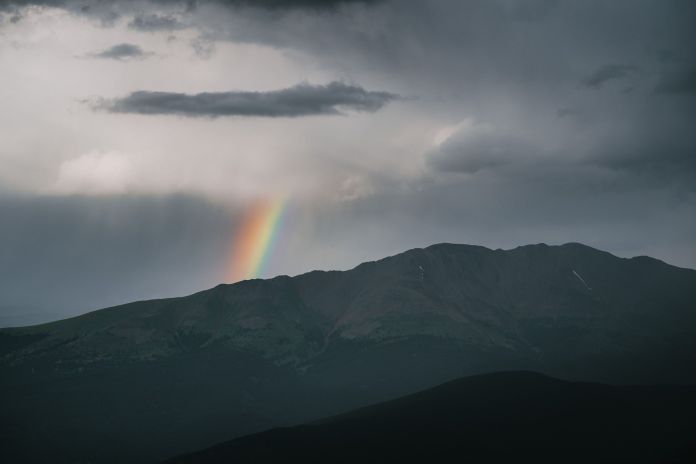
photo of a rainbow and incoming rain

Boats, Rafts, and Belly Boats/ Duckies.

While not absolutely essential, the difference you might find between being able to explore the entire body of water you’re targeting, as opposed to being confined to shore, will most likely be night and day. Luckily, there is no shortage of different vessels you can use to explore, and they come in all different shapes, sizes, and price points.

Boats: 

fish out of a drift boat

This category will encompass the greatest diversity of vessels among the 3 categories highlighted. This includes anything from your typical motor boat such as any bass boat, deck boat, or even a pontoon, to smaller vessels such as dories, canoes, and kayaks. The real differentiating factors between which boat is best all comes down to what your environment looks like, and how much change you have rattling around in your pocket. If you’re fishing massive reservoirs with big, multi-lane boat ramps, and can afford something with some bells and whistles, something with trolling capabilities and an outboard motor certainly won’t hurt. However, those types of boats take a lot of maintenance and time to deal with. If you’re looking at smaller lakes and ponds, a human-powered vessel, such as a canoe or kayak, will certainly bring you back to the good ‘ole days and doesn’t require much upkeep or $$ on permitting and maintenance.

Rafts: 

When it comes to fly fishing stillwater, there is no reason you can’t use your river raft that you’ve been running down your local river all Summer. Note, if you’re planning on doing this, mobility will be limited and you’ll most likely be at the mercy of the wind. We’d recommend making a few modifications, such as attaching a trolling motor, adding a longer anchor rope, and doing some serious research on where you’re going to be fishing beforehand. If you’re planning on doing some hiking into your body of water, be it a pond or high alpine lake, there are also pack rafts. Pack rafts can be a venturing angler’s best tool, and can act as a versatile tool to get you into places no one has ever fished before. If you’re considering one of these, we recommend taking a look at the Rapid Raft, by Uncharted Supply. This raft packs down to the size of a loaf of bread and weighs in at just a few pounds – making it easy to stow inside, or onto, any backpack. Click HERE, to learn more about this amazing pack raft. You can also read about our personal experiences with the Rapid Raft, here.

Pictured above: The Rapid Raft set up process. The Rapid Raft is small enough to hook onto, or fit, in any hiking/ fishing pack. Just roll open, inflate, and get on the water. Full setup time: around 2-3 minutes.

Belly Boats/Duckies: 

If you’ve ever seen someone cruising around a lake or reservoir in a belly boat, the look of it can oftentimes warrant a chuckle. However, these boats can be extremely effective on small/ medium size bodies of water. These vessels require the angler to slip into them up to their stomachs, hence the name, and use their legs to propel them. This is often accomplished much more effectively with a pair of flippers. This tried and true method is a great way for anglers to get around a lake or pond, with minimal commitment to a larger vessel like a boat.

floating in a belly boat

Other items you’ll need for stillwater fly fishing.

Fishing stillwater is a reactive endeavor — you’ll need to respond to what’s going on around you, perhaps even more than you would on your typical trip to the river. With that in mind, and if you can make room in your pack, consider the following items:

Techniques for fly fishing stillwater

The techniques you’ll employ while fishing lakes will be different than those you use on moving water. And they’ll depend largely on what you’re fishing for, and what flies you’re using
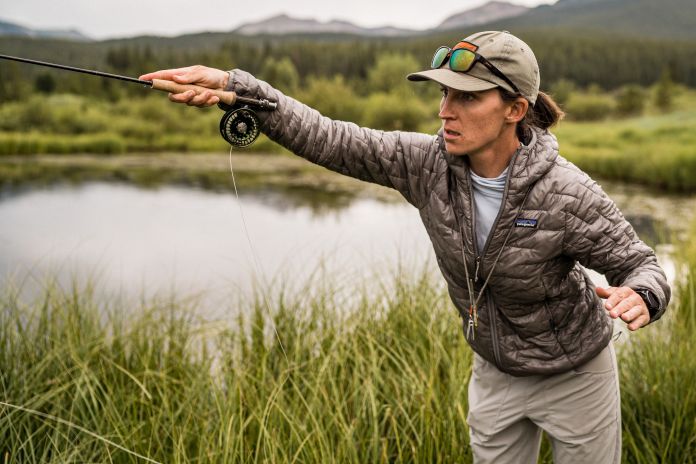
casting into a pond

Casting

The standard stillwater cast is one that’s designed to help anglers cover as much water as possible. If you can double-haul, you’ll be able to throw more line and your flies will find themselves in front of more fish. Whether you’re fishing from shore or from the confines of a float tube or a raft, you’ll be better served if you can throw 50 or more feet of line (yes, even sink-tip, or sinking line). Don’t have this ability yet? Practice. It’s important, particularly for your streamer and dry-fly game. 

Stripping

The strip will be different based on a number of factors, like the fish you’re targeting, the fly you’re using, the time of day and the time of year. 

As a rule of thumb, the deeper you fish, the slower your strip should be. This is true for almost any lake-dwelling fish, from pike to trout and from bass to sunfish. Deeper water is colder water and some fish, like lake trout or pike, seek out the cooler end of the thermocline. Lake-dwelling trout will be deeper during the warmest times of the year and the warmest times of the day. During ice out and the spring and fall “shoulder seasons” you won’t need to go as deep. But the strip should still be quite slow. You’ll want your fly to kind of “crawl” along or near the bottom.

stripping in some fly line


Bass and sunfish will hover around the first layer of cooler water, but they’ll also be more willing to come up for food, particularly if they’re around structure. Consider a faster strip with some random pauses when casting around rocks, weed beds, docks or piers. 

If you’re fishing a lake or a pond with a healthy population of damselflies or dragonflies, you’ll likely want to strip a little faster and use the larval version of these bugs — for damsels, consider a size 12 olive green Woolly Bugger. Go a little bigger — size 8-12 — for dragonfly nymphs. 

Surface bugs, like poppers and gurglers need more aggressive action. The idea is to move water and make the fly look like something big and meaty stuck struggling in the water. Random jerks and strips will serve you well if fish are in the mood to chase bigger flies. These flies work well around weed beds and lily pads and near obvious structure, like submerged wood and around snags and clusters of rocks. 

looking for fish near structure

Nymphing

Yes, you can absolutely fish nymphs to lake-dwelling fish, particularly trout. And you can use different methods to deliver flies to the fish. First, you’ll need a longer leader than you might normally use. Start with a leader that’s at least 15 feet long and, if necessary, add tippet to make it longer. 

catching a fish on a nymph

One of the best nymphing methods to use on lakes and ponds is to suspend nymphs over the feeding zone under a strike indicator or even a bobber. Some anglers simply suspend a multi-nymph rig under a high-floating attractor dry fly, like Chubby Chernobyl or a Fat Albert. This can be deadly with chironomids, midges, and worm patterns under the indicator or indicator fly, but it also works with more traditional mayfly and caddis fly nymph patterns. 

Nymphing tends to work well during the shoulder seasons of spring and fall, when fish are active, but not active all day long. Honestly, it’s not the most exciting fishing, but if you hit the fish when they’re on the feed, it can offer some really good fishing for larger trout. This probably isn’t a method to consider for bass or pike, but it does work well for bluegill and crappie when water temperatures are a bit on the cold side. 

What are you fishing for and when?

Stillwater fishing can be good most of the year. Obviously, if you live in real trout country or pike, many of the lakes and ponds you might fish in the summer will be frozen over and inaccessible (unless you’re an ice fisher!) during the colder months. But open water doesn’t lend itself to a universal approach. Stillwater fishing success depends a lot on the season, the time of day, and even the weather. It also depends on what you’re chasing.

a fish looking for nymphs

Pike, bass, and panfish

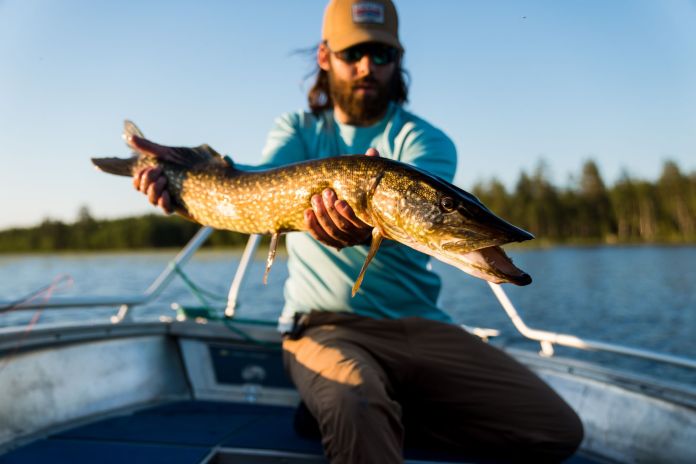
Pike tend to be very active right after the ice comes off lakes and reservoirs, and they congregate around decaying weed beds and over structure. If you’re fishing for pike in the Lower 48, your best months for pike are likely late March through May and into early June. Once the days start to get longer and the water warms, pike tend to go deeper. If you’re fishing for pike in  boreal lake country of Canada, prime time is from ice out to about the first week of July. They’ll become active again in late August and September when water cools.
a pike caught on the fly

Bass and panfish are spring spawners, and they start to get active when water temperatures push into the 60s. In more northern climates, that can be as late as June. Farther south, they’ll start to get active as early as March or April. These fish will stay in accessible waters most of the summer. They’ll tend to be more active early in the day and again in the evening. 

a small mouth bass on the fly

Trout

The best time to chase trout in stillwater impoundments around the country is at ice out. It’s also a great time to “walk and stalk” cruising trout that push into the shallows. Trout are opportunists. They search of baitfish and aquatic insects as soon as there’s open water. Ice-out fishing can be wonderful for fly fishers who like to sight-cast to fish.

a trout caugh on stillwater

As the water warms, trout will go deeper and hold around structure. Just like other game fish, they’ll be more active early in the day and again later in the evenings. In the fall, before lakes and ponds freeze, trout will again be shallow and working hard to put on weight for the winter, when the prey base becomes more limited. 

Be patient

Stillwater fly fishing is rarely a fast-paced endeavor. Often, you have to move around a lot to find fish. Sometimes, you need the discipline to let cruising fish come to you. If you’re shorebound, consider the time of year. Fish will be closer to the banks in the spring and fall. If you’re in a float tube, raft, kayak, or boat, you can employ different techniques to reach deeper-holding fish. Even then, there’s no guarantee you’ll get into fish every time. 

waiting patiently for a rise

But, if you’re patient and pay attention to what’s going on around you, you can enjoy success on stillwater fisheries. 

Structure is your friend

No matter what time of year you’re fishing stillwaters, make sure you’re able to identify structures in the water. Predatory fish hold in cover. Most are ambush predators that wait from cover and attack prey without having to expend too much energy. 

For trout, look for rocks and submerged wood. Bass and panfish like docks and piers, but will hold in the weeds or under lily pads in the absence of more obvious cover. Pike are the ultimate ambush predator. They can go from zero to a mouthful of ducklings in nanoseconds. They tend to seek out weed beds, lily pads, and rock piles. They’ll also hold under docks and piers, just like bass and sunfish. 

No matter what you’re after, what time of year you fish, or what time of day you find yourself fishing, structure should be top-of-mind. 

birds eye view of fishing a structure

Why choose stillwater fly fishing?

Stillwater fly fishing may not be for everybody. But for anglers who want to expand their fishing repertoire and extend their seasons, going after fish in lakes, ponds and reservoirs is worth the effort. But, just like anything else, it requires a bit of patience, and there is a learning curve. The more you do it, the better you’ll get at it.

releasing a trout

Thanks to Uncharted Supply for sponsoring this article. The Rapid Raft is a great little watercraft that can give you the ability to move around stillwater impoundments. Shop for your Rapid Raft, HERE. 

Gear Review: Uncharted Supply Co. Rapid Raft

Volcanic Crater Lake Fly Fishing [Plus Stillwater Fishing Tips]

Reel of the Week: Retrieving A Fly Out of the Tree

A note from Joseph Evans:

“My best buddy @funky_fly_guy and I were fishing for some aggressive winter rainbows with streamers. Bradley had snagged, than lost fly after fly in a short time span. Therefore when we re-tied yet again, Bradley had a fish take his fly and on the hook set, it came flying out of the air into a tree behind us.

I was certain we wouldn’t lose yet another fly, so I began climbing the tree. Bradley started videoing because I was hanging upside down, and a gut feeling of disaster existed. Sure enough, the tree was dead as could be and the large branch broke. I fell right into a pile of brush and more deadwood that actually cushioned my fall. We dug through every branch and didn’t end up finding the fly…”

Be sure to check out Joseph Evans (@idaaflyy) and Bradley Funkhouser (@funky_fly_guy) on Instagram. 

Check out the articles below:

The 10 Best Snacks You Should Bring on the Water

A Complete Guide to Fly Fishing Idaho

The Sport Fishing Championship’s Florida Tarpon Tournament Postponed Due To Guides and Orgs’ Opposition

In today’s media, content-driven world, fame and money can often get the best of folks and cloud their judgment on doing what’s best for their fisheries. In our world of fly fishing, it’s always a difficult balance, because some of that same media exposure CAN be good–whether it be education of best fish-handling practices, learning to appreciate and protect your home waters, or even recruiting new anglers into the sport of fly fishing in hopes that they will someday become strong and engaged advocated for conservation. That is what we at Flylords have always sought to accomplish.

However, we recently saw the flip-side of that dilemma down in Florida, when the Sport Fishing Championship announced a live-streamed tarpon tournament series in Islamorada, Punta Gorda, and Sarasota. There were several functional problems with this endeavor that ultimately destined the postponement of the SFC tarpon tournament series.


View this post on Instagram


A post shared by Lower Keys Guides (@lowerkeysguides)

“This series was flawed from the beginning,” said Capt. Benny Blanco. “Tarpon were selected, because they sell, not because the fishery is healthy. In fact, the tarpon fishery has been in decline for over a decade. The locations were selected because they sell, not because the habitat and watershed can withstand additional pressure and attention. Live streaming was selected, because it sells. However, live streaming is terrible for the resource, the guide community, and the sport.”

Captains Benny Blanco and Brandon Cyr know how to protect their tarpon fisheries!

South Florida tarpon fishing is the pinnacle of inshore saltwater fishing, so it makes sense why SFC chose it. However, there was minimal concern, initially, for the health of the resource, which is why the tournament series was met with such fierce opposition.

The flats guides of South Florida know their flats fisheries more than anyone and understand how pressure affects the ecosystem. They know where you can run on plane and where you can’t run. They act as stewards of these ever-so delicate flats and are sure to let newcomers know when they’re harming these ecosystems. Unfortunately, they were never given the opportunity to share their immense local knowledge. The local guiding communities found out about the SFC tournament series at the announcement, which only added more fuel to the fire.

Fortunately, the guide community throughout much of Florida knows a thing or two about mobilizing to protect their home waters that they love and depend on. Take the Senate Bill 2508 issue last year, as an example. Guides from across the state canceled charters and caravanned up to the Florida State House with Captains for Clean Water to successfully kill the bill and maintain progress towards Everglades restoration.

Well that same energy was tapped to oppose the SFC tarpon tournament series. Guides, local organizations like the Lower Keys Guides Association and the Florida Keys Guides Association, and others immediately made their opposition public and adamant. They even met with the SFC organizers themselves to share their perspective. Fortunately, it worked–SFC announced they would be postponing the tournament series.

Capt. Rob Fordyce made an important distinction between the storied fishing tournaments in the Florida Keys. “The same local guides that are fishing Keys waters everyday are the same 25 guides who are participating in the traditional tournaments and have for decades,” said Fordyce. “Over the years we have adapted the tournament rules around what the fishery can handle.”

Capt. Rob Fordyce

“This new attempt to bring in a televised, for-profit tournament, with 30 non local anglers, additional camera boats, all the buddies that are helping with scouting because it’s all about a cash prize, is something our resource can’t handle. Because of the very non specific rules of this tournament, the mishandling of fish is a concern, all while being filmed and showing the world how “Not to do it”! Also, at the end of the day, the traditional, established tournament donate the money to The Guides Trust Fund, BTT, Scholarships for locals, etc..”

Capt. Benny Blanco closed out his thoughts with words of caution and advice. “This should serve as a caution to other fisheries across the country. New tournaments should undergo a general litmus test… Is the target fishery healthy? Is the resource (habitat, water, and community) healthy enough to withstand additional pressures? Is the media coverage a benefit to the fishery and/or angling community? The resource should always come first… the tournaments should benefit the resource and/or community.”

Sage words from one of the fiercest stewards we’ve come across. We all have an impact on the resources we love and benefit from. That’s why conservation and advocacy are so important today. The numbers of anglers on the water in not likely to decrease, and their efficiency isn’t either–that’s a whole other issue. You’ve gotta do what you can to protect what you’ve got and fight to make it better that you found it. To the light tackle and fly fishing guides of South Florida: great work and keep it up–y’all serve as tremendous examples to the rest of the fishing community.

How to Tie: The Hohbo Spey

0

Disclosure: The article may contain affiliate links that may result in a commission at no additional cost to the reader.

In this week’s “How to Tie” video feature, The Portland Fly Shop ties an intruder style steelhead fly that might just get you that grab this winter, the Hohbo Spey.

Learn About This Fly:

Difficulty: Intermediate

Winter for most fly anglers means warm homes and days spent on the vise. Steelheaders are not exactly the typically fly fishing crew though, and the tug that fuels them often does not allow for breaks due to undesirable weather. Cold weather offers slightly more challenging conditions, but this does not compare to their crippling addiction. Blue and black are staple colors in steelhead flies and the Hohbo Spey is another tool in the box for these tricky anadromous trophies.

Many steelhead spey flies have difficult dubbing loops comprised of several materials. This can be intimidating for tyers, as loops are tedious and frustrating at times to create. Luckily, the Hohbo Spey only includes a simple one dub loop, which can be substituted with the normal dubbing technique. The wrapped marabou on this pattern will create a pulsating motion in the water and plenty of life even when swung and kept directly downstream.

As stated earlier, this pattern is meant to be swung. Working a run properly in order to not spook fish is key to the swing, and patience is vital. Enjoy the cast, the scenery, and understand that steelheading is not a numbers game. Quality is the center of this fishing and the Hohbo Spey will get you one step closer to hooking a winter trophy.

Ingredients:

Now you know how to tie the Hohbo Spey !

Video and ingredients courtesy of The Portland Fly Shop.

Video of the Week: 72 hours in the Uintas with Wild Fly Productions

In this Week’s episode of Video of the Week, we catch up with the Wild Fly Crew as they ride side by side through the Uintas in search of native cutthroat trout. From dodging storms and eating moose steaks at camp this is an adventure you won’t want to miss. So sit back and enjoy as Scottie, Adam, Will, & Colby explore and experience the raw beauty of the Uinta mountains.

Scottie and the team have explored and given so much to the fly fishing community through their storytelling and the filming of these amazing adventures. To further support their efforts make sure you follow their adventures here: @wildflyproductions.

Check out these killer articles as well.

Video of the Week: A Week in Alaska with Wild Fly Productions

Video of the Week: Sailboat Diaries Episode 2

Video of the Week: Why you need to go Backpacking by TightLoops