Home Blog Page 87

Different Fish, Different Places: Canals in the Desert

0
Introducing “Different Fish, Different Places,” from the canals to the flats, there’s a growing community of fly anglers taking advantage of the amazingly unique fisheries close to home. The first chapter takes us to Phoenix, Arizona with Kris Bare of the AZ Fly Shop and Derek Rivchin of Lo Water Guide Service to experience fly fishing in a region where temperatures commonly soar to over 100° Fahrenheit, where they are in pursuit of one species, the carp!

Arizona Carp

While some may overlook Arizona carp, Kris and Derek have begun to actively pursue them by poling and walking the canals around their hometown of Phoenix, Arizona. We asked them a few questions to learn a little more.

What made you fall in love with carp fishing? 

Kris Bare (AZ Fly Shop):  I don’t know if “fall in love” is the right term. I saw some carp at a local pond one day while I was bass fishing. So I decided to target them…..I learned quickly that it was extremely difficult and I started to become obsessed with the game…trying to figure everything out. How to not spook them. How to get them to eat. How to keep them from breaking you off. All of it. I fell in love with the challenge. Carp fishing itself drives me crazy most times!

Derek Rivchin (Lo Water Guide Service): The accessibility, their smartness, and their power are why I fell in love with carp. 

What is your setup for carping? 

Kris: My Winston Air Salt 9ft 6wt is my go-to for the canals and most of the ponds. I fish it with a Taylor Series 1 with a SA Amplitude Smooth Bonefish. In these cases, I am usually using Trout Hunter 10ft 3x trout leaders and tippet.

Scott Sector 9ft 8wt does double duty as my flats rod and my “big water” carp rod. I have a Ross Evolution Salt R spooled with a Rio Elite Flats Pro for these situations I tie my own leaders 10ft stepped down from 50lb fluorocarbon to 12lb 

And last but not least is my small water small fish rod. A Marcoflyrods 5 piece 7ft 4wt fiberglass CTS blank. For a reel, I have a Sage Trout with a SA Amplitude trout line. For leaders on this rod, I go with the TroutHunter 10ft 4x leader but I cut about 2 feet off the tippet end and replace it with 4x fluorocarbon.

Derek: St Croix Imperial 6wt Salt. 3d fly reel “el hefe”. WF Scientific Angler AirCel line. 9’ 10# mono scientific angler salt leader. 2-3’ 0x fluoro SA tippet.

Why do you think anglers overlook urban fisheries?

Kris: I think there are a lot of reasons. People don’t know that it is even possible to target some of these fish with a fly rod. 

Urban fisheries have a uniqueness to them not everyone can appreciate….not everyone likes electric scooters and shopping carts as structure. 

Speaking of carp in specific, people don’t know how incredibly challenging it is. I have had guys come into the shop and when I mention carp fishing they say. “Oh, I’m not fishing for them…I could catch all the carp I want in the canal behind my house. I want to fish for trout.”

Derek: It’s easy to look past the concrete jungle and into the wild scenic mountains. But there is a very unique adventure lying in our backyards and it’s 5 mins away with the biggest fish you may ever catch. You’ll spend more time fishing and less time driving and you may even learn a new skill.

What does “Different Fish, In Different Places” mean to you? 

Kris: Honestly when I personally hear Different Fish in Different Places it makes me think of exotic fish in the rainforest or something. What we do in our urban fisheries has become very normal to me now… What I really hope is that other people see how awesome these fisheries are and take advantage of them more. Spread out the pressure on all of our fish a little more especially in these hot months of summer.

Derek: Different fish in different places means the process of scouting new fish in new places and putting a fly in front of a fish that has probably never seen a fly. There’s nothing like it when it all comes together.

Thank you to Kris and Derek for taking the time to sit down with us! If you are interested in pursuing “Different Fish, In Different Places” continue to follow along with this amazing series Loon Outdoors is putting together. It is far from over!

Urban Fly Fishing & The World’s 9 Best Cities to Fly Fish

Fishing Tips: Carp on The Fly

Interview with the Guides: Past 2020 Colorado Wildfires

Past 2020 Colorado Wildfires

After a record-breaking 2020 summer with new fly-fisherman, Covid-19 disrupted the start to many fly shops and guide services around the world. However, fly-fishing being an outdoor recreational sport, many people took this opportunity to get outside and learn the beauty of fly fishing with it respectfully being a safer-outdoor sport.

In the fall of 2020 Colorado got hit hard with numerous wildfires; a true detrimental component to add to Covid-19, where drought conditions throughout the state are one of the biggest components leading to the start of wildfires. Within the drought, Colorado locals have feared wildfires were going to be one of the biggest threats within the state-wide drought issue. In the fall of 2020, there were three wildfires: Cameron Peak, East Troublesome, and the Pine Gulch Fire that burned a grand total of 541,732 acres. These three fires, burning consecutively on record represent Colorado’s Largest three fires by acreage in state history.

Photo by Rob Stout @thefishingdj from @northparkanglers

While these fires burned precious forest and wilderness areas, they have left a trace–altering river ecosystems, increasing water temperatures, and ultimately leading to river  sedimentation. Various Fly Shop Owners and Guides across Colorado have learned to adjust on the fly with weather conditions, and clients canceling trips the morning of. However, Jeff Ehlert of Winter Park Flyfisher & Grand County Fishing Company, alongside Scott Graham of North Park Anglers, never estimated the strength of these wildfires—burning thousands of acres across permitted public and private blue ribbon trout water.

Flylords: How did the East Troublesome, Mullen, and Cameron Peak fires effect your business?

Ehlert: “Initially, we had trips cancelled from the East Troublesome, and few from the Williams Fork fire. But a larger impact came with degraded water quality during the following summer.”


Graham: “Besides road closures, forest closures, and the terrible smoke, the East Troublesome, and Cameron Peak fires did not have any severe impact on North Park Anglers. The fires that did have the biggest effect on our company were the Beaver Creek and the Mullen fire. The most significant direct impact we could gauge was the closure of the national forest, shutting down access to miles of rivers and lakes that we fish regularly.”

Flylords: Are the Colorado, North Platte, and Poudre Rivers in recovery mode from the fires? What have you witnessed?

Ehlert: “Yes they are and will recover, but it will take time. These fires were needed at some point to clear out all of the deadfall that has been building up for the past 20 years.”

Graham: “Currently, we have not seen any issues with the North Platte or any of its tributaries as a fishery. The fish seem to be healthy and the aquatic bug life also seems to be in great shape. However, we have not had a big runoff or any big rains that may cause serious erosion. There are new trees that are continually falling into the river which causes concerns for safety while floating and wade fishing. We have seen the river turn black a few times; but it seems to clear up quickly and the sediment doesn’t seem to be pilling up in any one spot.” These fires were very different from each other and the direct impacts won’t be measurable for years to come. The Beaver Creek and Mullen fires along the North Platte seem to have been healthy fires along the drainages that we fish. The grasses are coming back thick, and there aren’t too many moon-shaped burn areas. However, we have been in such a drought that it’s very hard to tell. If we were to get a significant snowpack and or big rain, I think there could be some significant erosion issues that could be catastrophic to the fisheries.”

Photo Captured by Rob Stout @thefishingdj from @northparkanglers

Flylords: What are the effects of the river ecology and entomology from these catastrophic fires?

Ehlert: “If you had asked me last fall, I would have told you that I feared that our invertebrate numbers were going to decline this year, but after spending time on the river this spring I feel that the caddis hatch and BWO hatch has been better this year than in the past few years. I do still expect there to be a lot of sediment in the river anytime we have heavy rains this summer, but I am more optimistic about the health of the Colorado River this year.”

Photo Courtesy of the Grand County Sheriff’s Office.

Graham: “So far, we haven’t seen many problems from an ecology or entomology standpoint directly correlated from the fires.”

Flylords: What do you think will happen with the local rivers in Grand, Jackson, and Larimer Counties in the next few years? Is the fishery at risk?

Ehlert: “The fires do add a sediment load to the rivers in the years following the fires, but that is not the risk that most threatens our rivers. Excessive dewatering of our rivers is what puts these rivers at risk. The Colorado River is consistently listed in the top 3 most endangered rivers in our country with the front range taking 60% of it’s flows over the continental divide creating high temperatures. In 2021, the Fraser river (A tributary
to the Colorado River) was flowing at 360 CFS on the same day that the Colorado was flowing at 320 CFS. The Colorado River really did not experience any true flushing flows in 2021 which every healthy river needs to remain.”

Graham: “Not being a biologist I cannot really speak upon this. Overall, I think fires are healthy, although each of these was human-caused; it was only a matter of time before something cause them to light up.”

Photo by Rob Stout, North Park Anglers.

Flylords: Have you altered your business or did you have to because of the fire?

Ehlert: “We have not altered our business other than having to cancel trips due to high turbidity when we had heavy rains last summer. We occasionally had to cancel trips for the same reason in years prior to the fires, but this occurred less frequently in prior years.”

Photo Courtesy of the Grand County Sheriff’s Office.

Flylords: Tell us more about yourself, the company you own, and what guided trips you have available for all levels of anglers.

Jeff Ehlert, Owner of Winter Park Flyfisher with a healthy brown trout.

Ehlert: “My name is Jeff Ehlert, I am originally from Montana, and been guiding float and wade fishing trips here in Colorado and South Central Wyoming since 2004. In 2007, we opened our fly shop to complement our outfitting business. Our shop, Winter Park Flyfisher is located on the banks of the Fraser River. We offer the largest fly selection in our region and an extensive fly tying section. We hope you’ll stop in if you find yourself near the headwaters of the Colorado River. We love hearing your fish stories and are happy to point you toward the best fishing in Grand County.”

Scott Graham, Owner of North Park Anglers.

Graham: “My name is Scott Graham. I am a Colorado Native, and been working for North Park Anglers since 2003. North Park Anglers is the premier outfitter and Fly Shop in Walden, Colorado.”

Interested in booking with Winter Park Flyfisher or North Park Anglers?

Click here to book with Winter Park Flyfisher or call (970) 726-5231

To book with North Park Anglers please call (970) 723-4215

Article from Winter Park Flyfisher guide and Intern of Flylords Magazine Nelson Oxley, give him a follow on Instagram at @nelson_oxley.

Check out the article below:

Fire and Fish: How a Wildfire Alters River Ecosystems

Reel of the Week: Float Fishing Fails

A note from TJ & Gatlin:

“We put in the river on a familiar stretch not knowing a large tree had recently fallen, blocking the entire river but a small gab just wide enough to fit the drift boat. We came around the corner, having seconds to react to the situation. We were prepared and before we knew it the boat was on its side and everyone was struggling to get out of the strong river current. It gave us quite the scare but we count all our blessings that day. Everyone was okay and the boat came right out undamaged with a crane truck!”

Check out the raft flip below from @ben_kowalewsk:


To advance your knowledge on float fishing check out the article below:

Float Fishing for Beginners – 10 Tips for Fly Fishing from a Raft or Drift Boat

10 Tips for Trout Fishing

0

The sun is slowly rising over the trees as a warm breeze radiates through the open window of our car. The aroma is nostalgic, a sweet summer scent leftover from last evening’s rain. As we crest the final hill and descend into our favorite trouting grounds, I let out a sigh of relief. I feel at home, and with no other cars in sight, my husband and I have already won.

Kate Sherin Sunrise

As we unload our things from the car and stuff our gear into our packs, my attention drifts to a dancing insect above my head. The mayfly hatch is on. Their brown bodies and slightly white wings are a stark contrast as it lands on my bright red rod tube. A grin creeps over my face as I think to myself, I have the perfect fly in my box.

As we turn to head off down the trail for the long hike into the river, I jerk to a stop. “Did we lock the car?” I dig the key out of my backpack, hitting the button to check; not once but three times… a habit of mine.

We rush along the trail anxious to reach the river. Looking down at my feet I notice a large patch of wild wintergreen. Reaching down, I pick a few leaves and rub them between my fingers.​​ A sweet minty aroma fills the air. Wintergreen has traditionally been used to make tea, relieve headaches, and calm the mind and body. As if on cue, I’m reminded to slow down and enjoy my surroundings. It is, however, all a part of the journey and the charm of the day.

Tip #1: Carry a Thermometer

I always carry a thermometer with me and check water temperatures before fishing, especially when we get into the warmer months. Know your temperature thresholds for trout and stick to your ethics when it reaches that limit. I usually put away my rod above 18 C or 66 F. If you still have the itch to fish, target a warm water species like bass.

Tip #2: Match The Hatch

Take a minute to observe the river, look for insects, and flip over rocks. Specific patterns don’t usually matter but be mindful of the size and color of any insects you find and pick something as close as you can from your box. If you want to really nerd out, pick up a book on Entomology (the study of insects). You can really go down the rabbit hole, but it just adds an extra layer of interest.

Don’t get frustrated! trout fishing is a game and you have to crack the code. When you are filling your fly boxes, it is good practice to carry three of each pattern. The worst thing to happen is to finally break the code, and immediately lose the fly in a tree on your next cast… speaking from experience here… For more information see our other post on matching the hatch!

Tip #3: Observe Fish Behavior

If you are seeing fish rise, pay attention to their behavior. If they are porpoising and you are seeing their backs, they are likely taking something just below the water. If you can see their mouths, they are taking the fly off the surface. I will sometimes fish the same pattern, differently. For example, I might start by fishing my stonefly dry and suddenly notice a difference in their behavior and switch it up and fish it just under the surface with a tight line.

Tip #4: Fish Appropriate Gear

Fish gear that is appropriate to the area and species you are targeting. If you are fishing in a location with larger fish, make sure you are using a suitable rod weight. This will let you land the fish quickly, so you aren’t playing it to exhaustion. There are no prizes for the lightest gear in trout fishing. Match your fly size to your leader diameter. Trout can be extremely leader shy and the last thing you want is to be fishing a size 18 dry fly with an 8lb tippet. For the Streamer buff, it’s the opposite. You will want to have a heavier leader to turn over a bigger, heavier fly.

Tip #5: Be Stealthy

Think Matrix stealth. Trout are spooky. Try to sneak up to your spot quietly, and try not to splash too much when wading. Keep your casts off the water; aerial false cast to avoid splashing and “lining” the fish. Stand with your back to the Sun, if possible, especially in clear water to avoid being seen by the fish. Just because you can’t see them, doesn’t mean they can’t see you.

Tip #6: Practice Proper Fish handling

Always wet your hands before handling your fish. Barbless hooks make for a quicker and easier release. I usually pinch mine in the vice while tying. Use a knotless net whenever possible. This makes for easy hook removal while keeping the fish wet. It also comes in handy if you want to grab a quick photo of the fish. When taking a photo, try to keep your aquatic friend in the water. Quick pic and release are all you need and with all the waterproof camera phones these days, some of my favorite shots are of fish being held in the water.

Tip #7: Know Your River Etiquette

This one is important. Know the rules of the area you are fishing, written and unwritten. Be respectful of others. Silence shares no secrets, the best way to learn is to be polite and courteous to other anglers, engage with them and listen. There’s nothing better than meeting someone who has been fishing a specific area for years and is willing to pass on a few secrets. Share the river. Give others space, the river is for everyone. This includes others you may meet who may not be partaking in fishing.

Tip #8: Don’t Be Afraid To Hike

This tip could tie in with the last one. If you aren’t keen to fish shoulder to shoulder, don’t be afraid to hike to beat the crowds and explore a little further off the beaten path. When you go out make sure you have a pack that can hold all your gear but is sleek enough to not interfere with your fishing. My favorite is the TOPO Designs River Bag.

It’s all in the name of adventure after all. Just make sure you remember how to get back.

Tip #9: Know Your Invasives

Know the native species in your area and report any invasive fish you encounter.

Be mindful of the possibility of spreading invasive species through your gear. If you wear felt-wading boots, make sure to thoroughly clean them before your next fishing adventure in a new location.

Tip #10: HAVE FUN!

Remember, we all fish because it’s fun. Experience doesn’t dictate your passion. Get out, explore, and learn as you go. It’s not about how many fish you catch but the memories you collect. Join a river association or conservation group. It feels good to give back to the river or area you regularly fish.

We hope these tips help you have a better trout fishing experience. It is important to remember the last tip because whether you get skunked or not, it’s the small moments that make any fishing adventure worthwhile.

Thank you to TOPO Designs for making this educational piece possible through The New Outdoor! Go check out what The New Outdoor is all about HERE.

5 Tips For Taking Out First Time Anglers

Summer Salar: Atlantic Salmon in Nova Scotia


Fishing Tips: Dead Drifting

You know what they say, the best fly is the one fished with a good presentation. Check out this video from Troutbitten to learn more about the dead drift, and to improve your presentation.

5 O’Clock on the Water: Making a Dark and Stormy with Brandon Cyr

You’ve always heard the phrase, “It’s 5 O’Clock somewhere”, but as we all know, it’s always 5 O’clock on the water. Whether you’re celebrating the catch of a lifetime or drowning your sorrows about losing one, there’s nothing quite as satisfying as kicking your feet up and enjoying a refreshing cocktail after a long day on the water.

making the cocktail

For this series, we’ve teamed up with YETI to sit down with some of our mutual fishing friends and get the lowdown on their go-to celebratory beverage. In this installment, we met up with legendary Florida Keys guide: Brandon Cyr to see how he makes his signature, incredibly simple and delicious, “Dark and Stormy” cocktail.

Who is Brandon Cyr? 

Brandon Cyr is the name that’s echoed across the bludgeoned lips of the permit and tarpon that have dared to swim near the southern tip of Florida. Mr. Cyr, a 4th generation Floridian, was born in the shadow of a charter captain, and since the age of 6 has had a rod in his hands and big fish on his mind. Nowadays, Brandon is best known for his uncanny ability to seek out, and place a fly in the mouths of some of the most challenging fish on the planet to target with a fly rod.

brandon Cyr

If you’ve been lucky enough to be an angler or client on the bow of his skiff, you can attest to the raw passion that he brings to his pursuits. Pushing the envelope with a level of tenacity similar to that of an athlete in the NBA or the NFL, Brandon permanently altered the state of the game in the Florida Keys fishery.

While you’ll most commonly find Brandon in the gym, on the water, or teaching his newborn daughter the ways of the sport of fly-fishing; after a long day, he enjoys kicking back and tying some flies for the days ahead, all while enjoying an ice-cold “Dark and Stormy” cocktail.

brandon on a tarpon

How to make your own, “Dark and Stormy” – Brandon’s style:

Ingredients: 

  • Rum of your choice (Here, we’ll be using Frigate Reserve: A popular choice by another legendary saltwater angler, and YETI ambassador: Flip Pallot).

  • Ice

  • Ginger Beer

  • Key Limes

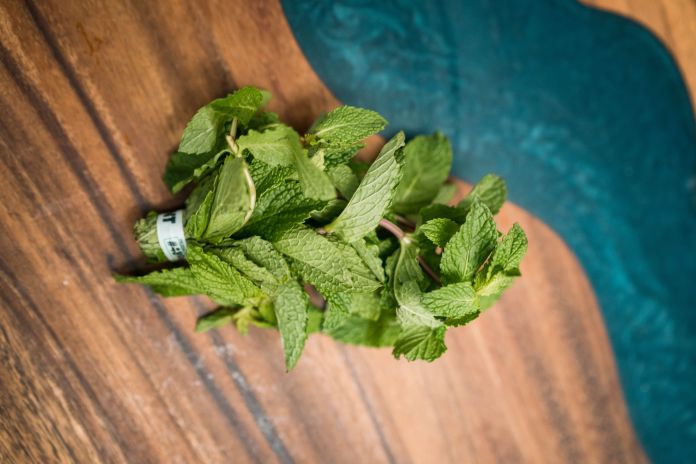
  • Mint

  • (Bonus): A chilled mug to beat the Florida Heat.

ingredients

Step 1: 

Fill your mug up 3 quarters full with ice. Remember to not fill it too high so that you don’t have room for your other ingredients. Also remember, your ice is going to melt, and depending on how strong you want your final product, this will dilute the second half of the drink (for some this may be a positive, for some, less so).

mug full of ice

Step 2: 

Pour in your rum. However much rum you wish to apply to the drink itself is up to you. For a nice clean taste, we recommend around a shot to a shot and a half, but it’s all going to depend on which kind of rum you’re using and what kind of day you’ve had. Always remember to pour responsibly.

rum pour
Check out the newest in YETI drinkware HERE

Step 3: 

Add your ginger beer. We recommend pouring enough so that it’s just pushing above the ice with the rum. In terms of which brand to use, that’s of course up to you. Just pick something you’d enjoy without the rum first. This is your carbonator.

ginger beer pour

Step 4: 

Squeeze in your limes. Being in the Keys, we felt it only appropriate to use Key Limes for Brandon’s Dark and Stormy. However, you can of course use whatever you have easiest accessible. Just make sure they’re ripe and juicy.

key limes

Step 5:

After you’ve squeezed around 2-3 limes, feel free to just drop them into the drink. They’ll add a little dash of extra flavor and aroma that ties the drink together. Once you’ve done that, give your concoction a little stir. A traditional cocktail stirring spoon is recommended, but feel free to use any household item you have laying around (make sure to wash your hands if you’re stirring with your fingers – especially when serving guests 😉

Step 6:

Add your garnish of mint. Depending on how aromatic you want your beverage, drop 2-3 mint leaves on top of the ice. Once done this, give it one last swirl to mix all those flavors together.

mint

Step 7: 

Pour into your favorite cup and enjoy. Whether you’re drinking alone or with friends, remember to savor the fruits of your labors and take a second to reflect on the day. A great activity that compliments a “Dark and Stormy” is a session behind the vice, serving as a reminder of what’s ahead…

cocktail with mint
Cocktail best served in a chilled Rambler Lowball

Symbolic of Brandon’s place of birth and a keystone to his lineage: future and past, the Dark and Stormy is an excellent representation of Fishing in the Florida keys in both a literal and figurative sense. While sometimes dark and stormy skies will command the water below your bow, there’s something sweet to the bitter nature of the place. Whether you’re an avid saltwater angler, or you’ve never stepped a foot in the sand, this cocktail recipe is a great concoction to relax with after a long day of doing what we love. To make sure you can keep doing just that, always remember to drink responsibly.

Thank you to Brandon Cyr for dedicating a day with us on the water, and showing us around his beautiful home waters. Also, thank you to YETI for keeping our cups full and our cocktails cold. If you enjoyed this piece, be on the lookout for more just like it down the line. Cheers!

yeti cooler
Check out the new and improved YETI M30 HERE

Costa Sunglasses Releases “On Flats & Family – The Cyr Brothers”

Costa Behind the Guides: Brandon Cyr


Bahamian Dreaming

After years of hearing stories, I finally arrived at this turquoise-gin wasteland home to the eighth fastest fish in the ocean, and, honestly, I didn’t know what to expect. I’m at the Bahamian Airport with all the gear I need, ready to play.

Did I bring too much? Did I under-pack? You’d think after reading endless forums, websites, and articles that’d I’d have everything I need to succeed—the only question now is, “Where do I start?”

I’d come from the Mountains of Wyoming to a place that was wholly unfamiliar to me, but with plenty of high hopes for catching the bonefish of a lifetime. But, ultimately being more at home catching cutthroats and browns, I was at the mercy of my Bahamian guides, who I was eager to meet.

Coming to an island like this one with no expectations creates a lot of excitement. But, knowing that Hurricane Dorian had decimated the island in 2019 I was expecting to see a community recovering from destruction, and was hopeful to see the reconstruction and hear the locals’ opinion on the state of things.

Sydney, our lodge host at Little Abaco Bonefish Lodge, said that COVID had crushed their business more than any hurricane-force winds could have: “You can rebuild from a hurricane with others coming in to help; COVID just drowns you because there’s no money coming in from anywhere to keep these family-owned lodges alive,” Sydney told me.

Anglers keep these lodges alive along with ecotourism on the island, both bent on seeing the gray ghost in its natural habitat.

We feed money into tourism and, in turn, that money aids conservation.

Admittedly, I was there for the bonefish, but it felt good to be approaching my pursuit while knowing that trips like this one are part of this island community’s recovery process.

And, I was ready to do my part, angling-wise. I came fully equipped with a slew of rods, reels, flies, and camera gear. My go-to on this trip was an eight-weight Midnight Special from Moonshine Rods, which paired perfectly with the new 7/9 ROVE Reel from Abel, spooled with an eight-weight Airflo Ridge 2.0 Flats Tactical Taper.

If I blew my chance at a bonefish, it wouldn’t be for a lack of gear.

I’d fished saltwater before, so I vaguely knew what to expect from the “beginner” fish in the fabled Caribbean Grand Slam—spooky, fast, and ready for one hell of a fight. They lived up to their reputation.

These fish were just as fun as I expected them to be, putting in a long run into my backing on the initial hookup, easing up for a quick reel to the boat before taking off again at full speed.

Getting bonefish like these to the boat was something I’d looked forward to for a long time, and seeing them up close, with their iridescent scales glistening and changing color in the Caribbean sun is something I’ll never forget.

Abel ROVE Reel roping in the bonefish.

Having a reel with a strong, smooth drag made all the difference on those initial runs, and the ROVE Reel performed flawlessly, with no slip-ups, and made landing fish after fish a breeze.

From mutton and mangrove snapper to the fastest fish on the flats, I found that my eight-weight handled fish phenomenally, but having a ten-weight on the boat would be a good idea if you’re targeting some of the larger species.

Ultimately, this trip was an eye-opener for me, from both an angling perspective and a human perspective.

There were still houses using candles for light, nearly three years after Dorian hit. Regardless, the spirits of the locals were not dampened, and they’re continuing the effort to restore the island of Abaco to its original, glorious state.

My time with Sydney, his wife Keeta, our guides Greg and Dominik, and the rest of my group was filled with laughs both on and off the water.

I’ll have those memories, formed on the Caribbean waters with a cold Kalik in hand, for years to come.

Article and photos from Dan Towsley. You can follow along with Dan on Instagram at @dtowsley.

Airflo Behind the Lines: Jeff Legutki

8 Tips: Bonefish On The Fly


British Columbia Moves Forward with Plan to End Open-Net Salmon Farming By 2025

Today we’ve got some exciting news surrounding the removal of open-net salmon farms in British Columbian waters. Check out the Instagram post from Watershed Watch British Columbia below for more details!


View this post on Instagram


A post shared by @watershedwatchbc

From Watershed Watch BC:

[On June 22nd] the government took steps toward keeping their promise to remove open-net pen salmon farms from B.C. waters by 2025. The announcement stated they will not be renewing the Discovery Island licenses and limiting all other salmon farm licenses to two years, which signaled that open-net salmon farming in B.C. is coming to an end. However, this decision does little to protect wild salmon outside the Discovery Islands over the next two years. Wild salmon runs remain at risk until the last salmon farm comes out of the ocean.

“Not renewing factory fish farms licenses in the Discovery Islands is the only way to protect wild salmon from parasites and diseases,” says Stan Proboszcz, Watershed Watch Salmon Society science advisor. “Government needs to finish the job, province-wide, in order to protect wild salmon.”

With salmon so close to the brink of collapse, we will keep working to ensure this transition happens smoothly and swiftly.

Read the full details: https://watershedwatch.ca/media-releases/conservationists-pleased-government-has-begun-salmon-farm-transition-but-impacts-on-wild-salmon-will-continue-until-fish-farms-out/

Angler Story of the Week: The Fishing DJ

If you have ever been fishing in Walden, Colorado you have probably stopped by North Park Anglers. When walking into the shop or meeting your guide for the day, you have probably noticed guide Rob Stout with 600 tungsten flies on the top of his hat… Whether they’re articulated thin mints, chironomids, or homemade fresh-of-the-vice @thefishingdj flies, it’s very hard to notice what kind of hat Rob is wearing, and how many flies he really has on it.

Photo from @thefishingdj

 A note from Rob Stout:

“I got onto the water at about 7:30 in the morning, and fished all day with only a few fish to the net. Around 7:30 that night, my buddy came out and talked me into staying out a couple more hours. He stuck a good brown in his first few casts, and I got a good cutbow about an hour later. We were getting consistent enough action that we stuck it out into the dark, and at about 10:30pm it finally payed off with a big fat colored up brown! Definitely was well worth being exhausted at work the next day!”

@thefishingdj with a mean late-night brown.

You can find @thefishingdj in Walden, Colorado either working at North Park Anglers, or on a drift boat deep at night trying to catch trophy sized trout on the fly. 

Video of the Week: “Guided by Passion” with Geneviève Lavoie by Hooke

In this Video of the Week, we catch up with Hooke in their most recent film following Geneviève Lavoie and Juliette Larocque in their newest series “Guided by Passion”. Genevieve is an author and founder of the survival blog, “La Vivaliste“. She encourages women not to be afraid to challenge themselves on a spiritual and physical level. Self-taught, she specializes in plant knowledge, tracking, and living in all possible situations. Watch her complete adventure with Juliette on their latest expedition, where they exchange knowledge and learn about the fauna and flora of the Outaouais.

“Born on the banks of the Restigouche River in 2012, Hooké is a Quebec brand whose mission is to promote outdoor living, sustainable fishing, and conscious hunting. Through our photos, videos and design, we share our vision that inspires a growing community of adventure enthusiasts to explore, protect and better understand nature and its fragility. Our products, manufactured in an ecological and responsible way, combine comfort, style, and quality to meet the needs of this community that shares our passion for the outdoors and its way of life.”

Check out these epic articles as well!

Fly Fishing the Island of Socotra

FULL FILM: “3 Sheets” Now Available to Stream

How to Embrace Busy Rivers: Dan “Rooster” Leavens