Tragically, Hurricane Ian came up north towards Florida’s Gulf Coast this week. The Hurricane has impacted local counties, Charlotte, Collier, DeSoto, Hardee, Hillsborough, Lee, Manatee, Pinellas and Sarasota. While these communities are in a state of recovery, it’s important to get people the supplies and support they need. In this case, how can people help support Floridians, local guides, fly shops, and anglers? The fly fishing community has already stepped up and started fundraisers and relief programs for people to donate:
How to donate:
Captains for Clean Water
Captains for Clean Water is currently setting up drop-off sites to collect supplies for relief efforts. If you live locally, check out the Captains for Clean Water’s post below for requested supplies:
Josh Mills is running a program #fliesforian. Mills has organized relief programs as well as fundraisers for past disasters like the Oregon fires, Australian wildfires, and has contributed to programs like the Wild Steelhead Coalition. This is a great program to raise money for the people that have been involved in the Hurricane by using the hashtag #fliesforian.Â
How to support and join #fliesforian:
Determine your offer (whether this is a dozen of your favorite hand-tied flies, gift cards, guide trips, or cash donation in support of the relief)
Host the auction on your Instagram page, opening bid and auction end date
Tell us your “why” supporting this cause
Include the tag #fliesforian in your post and description
Designate @igfa_official or appropriate charity of your choice.
Let’s face it, if you’re going to fly fish, you’re going to eventually run into the “W.” Simply uttering the full name could flip the switch and turn your day into a challenge. Check out these tips from Tom Rosenbauer from the Orvis Guide to Fly Fishing.
“This was one of those special days, the water was glassy, the wind was calm, and the sun was out. A day you don’t normally see on such big water. We sent the drone up to look around and saw a giant school of Smallmouth Bass swimming around. These are those Smallmouth you show all of your buddies pictures on your phone… We were not prepared to try and catch fish in that shallow of water, we tried but couldn’t fool these fish. With the water being at most 2 feet deep, and having a different approach we would have had some success catching these fish; but that’s what makes everything worthwhile, learning how these fish think and studying their movement.”
This Week’s Reel of the Week segment from Brian Eavey, check out his Instagram @brianeavey_photo. Check out Brian’s photography on his website here.Â
In this series, BUFF and Flylords have partnered to highlight some outstanding members of the greater-angling community who are taking action to drive change, in their communities, and throughout the world. In highlighting these unique individuals through the lens of their own struggle, perseverance, and passion; we aim to share the stories of these anglers as they push to inspire activism in their communities, as well as in future generations. This is, “Anglers Driving Change”.
In this episode, we’ll be highlighting, non-profit leader, creative, and conservationist: Chad Brown.
About Chad Brown:
Chad Brown is most notably known for his work in the non-profit sector, specifically as the leader of two major non-profit organizations; Soul River Inc. and Love is King, which both target underrepresented communities and focus on teaching new, important life skills, by getting them involved in the outdoors.  However, there is much more to Chad Brown than what meets the eye.
Chad and his service dog, Axe.
In 1990, Chad enlisted in the United States Navy, serving in operations such as Desert Storm, Desert Shield, and Operation Restore Hope – Somalia. During his deployment, Chad also spent a brief period in Antarctica, which was his first, but certainly not last, visit to the frozen tundra. Upon discharge, Chad went on to earn a Master of Science in Communication Design from Pratt Institute in NYC and began working in the design world in the city.
However, even with his success, Chad found himself slipping silently into a depressive state, as he became consumed by a battle with PTSD. Eventually, after months of fighting, he found himself homeless and trapped in a state of addiction to the very medications which were meant to help him overcome his illness. It wasn’t long before he was driven to make an unsuccessful attempt to take his own life. It was then, in the aftermath of his brush with fate, that he discovered fly-fishing.
Learn more at BUFFUSA.com.
Through the sport of fly fishing and a reignited appreciation for life and exploration, Chad put his life on a new path. By seeking solace in the outdoors, Chad planned to utilize the lessons learned from the hardships he had endured and made it his mission to share those lessons with others. In finding an outlet through teaching and with the aim to inspire others through art (check out his photography portfolio, HERE.) and the outdoors, Chad launched his first non-profit organization: Soul River Inc. in 2010.
Soul River Inc primarily focuses on pairing Veterans and inner-city youth, to teach kids lessons that “can’t be found in a classroomâ€, primarily through fishing. The program is an excellent outlet for Veterans to pass on their skills to the next generation, and for kids, who may not have previously had access to it, to find mentorship in the outdoor space.
As Soul River Inc. grew, Chad also pursued his passion in the creative space. In making a name for himself as a notable storyteller through photo and video, Chad, to this day, continues to create films and art around marginalized voices, both through the lens of humanity and race, as well as ecological and cultural conservation. In 2020, Chad founded his second non-profit, Love is King.
Chad mid-meeting, dusccing an upcoming deployment for Soul River Inc.
Love is King focuses on promoting leadership amongst BIPOC communities in the outdoor space, specifically through the ROAM program. “Roam (Rapid Ongoing Advance Missions) is to provide an opportunity for BIPOC leaders to step into the realm of public land and freshwater conservation efforts and disrupt the historical system that allowed BIPOC voices of not being invited to government spaces where the decisions were made about land and wildlife and indigenous conservation policies.â€
Today, Chad Brown, and his canine partner in crime, Axe, can be found anywhere from his office in Portland, OR, to the Arctic Tundra creating his next film. Chad spends much of his time, nowadays, traveling to deliver speeches on his initiatives, and inspire others to practice “living through loveâ€, spreading the word of peace and equality.
From Chad Brown on, “Who is Chad Brown?â€
Chad:
“I think I’m still trying to figure out who I am”.
“I lead two non-profit organizations, I’m a business owner, and entrepreneur. Â I’m also a creative professional, wear a couple of hats in that space as a photographer and filmmaker. Â I also tend to straddle my creativity and use that as a way of navigating in the business world as an entrepreneur. I think one of the biggest things about myself and how I navigate the business of doing what I do for a living is I like to step into more unconventional spaces, or if that’s not available, create my own unconventional space. which allows me to be more creative and be more unique in what I’m trying to accomplish as far as business goes. I find that traditional spaces are great. And there’s a purpose for them, but it’s very, very hard for me to navigate them sometimes.
Chad on location for the filming of: “Anglers Driving Change: Chad Brown”.
Especially, as an African American in the space of business, “traditional” is, is a very hard barrier that prevents me from doing what I need to do. But when I’m in a creative space, it allows me to create a unique platform. That puts me in a position to where not only I can execute my ideas that ties to my organizations, and our new business concepts, but it also allows me to create new relationships within that creative space of business. I think I’m more of a creative behind the scenes of trying to figure out new ways and explore new concepts, around bringing people together to change lives. [For Instance] engaging newbies into the sport of fly-fishing and dismantling and breaking down the barriers of financial barriers, making that available for folks who maybe can’t afford to get in that sport. I want to create change and stepping into a creative space allows me to create change by breaking barriers down, and dismantling ignorance, racism, bias, and bigotry.
What I do, really allows me to blow that up, and get down to the skeleton of humanity and of who we are. I have bones, just like you have bones, you bleed just like I bleed. That’s the fundamental of the tapestry or the creativity that I am tying into my efforts. I’m trying to be creating that space where everybody feels unique and heard. As an angler, where sometimes I tend to not really identify myself as an angler, and I identify more as a vessel, basically, to merge people into new spaces. Green spaces within a conservation spaceâ€.
To learn more about Chad Brown and his current initiatives, you can find his websites at www.soulriverinc.org, and www.loveisking.org, you can also find his full portfolio of photo and video work at Chado Creative.
Thank you to BUFF for making “Anglers Driving Change” possible. Check them out HERE, to continue to support initiatives driving change.
This is one headline we were stoked to share as soon as it hit our newsfeeds: the first Greenback cutthroat trout have been documented spawning since the beginning of the restoration work began. This important event marks a milestone in the restoration efforts that have been ongoing for decades.
Colorado Parks and Wildlife were excited to share the good news coming out of Bear Creek saying, “While we will continue to stock greenback trout from our hatcheries, the fact that they are now successfully reproducing in the wild is exciting for the future of this species,†an official said on Friday. “This is a huge wildlife conservation success story and a testament to the world-class wildlife agency Coloradans have in Colorado Parks and Wildlife. Colorado’s ecological diversity strengthens our community, supports our anglers, and our thriving outdoor recreation economy. CPW’s staff and our partner agencies have worked for more than a decade to restore this beloved state fish, and today’s news truly highlights the success of the work.â€
You can read more about the exciting discovery, here from CPR.org!
Learn more about the ongoing conservation efforts, here!
When it comes to fly fishing and the outdoor industry, constant innovation and ingenuity are synonymous with the spirit of sport. News of the next rod or wader release from our favorite big names in the game is often met with widespread excitement and attention. However, the hundreds of small companies that our favorite big brands started out as, often times get overlooked when bringing their ideas to the market. So, in an effort to support, what we believe is, the foundation of the fly industry, Flylords is looking to bring a spotlight to the little guys. Here, we’ll highlight the up-and-comers in the industry we hope to see in every angler’s local fly-shop one day.
In this Small Business Spotlight feature, we’re ditching our Gore-tex and dipping our toes into a new solution for those who are looking for a comfortable, and practical wet wading solution for those chilly late-season days, or just keeping comfortable when taking a walk through your local tailwater. Here, we present: Backcountry Skinz.
Background:
As our favorite creeks, rivers, and ponds become more and more crowded, the emphasis on exploring beyond the highway pull-off has become a much more prominent theme in today’s age of fly fishing. Whether you’re up late, spending hours pouring over the smallest traces of blue lines on a map, or have secured the time to send a multi-day trip into the mountains that most only consider a “scenic backdrop”, those who crave adventure understand: it’s all about being out there.
When it comes to the subject of exploration, brothers Mike and Kelly Reaume know a little something about what it means to take the road less traveled. Mike and Kelly, founders of Backcountry Skinz, are based out of Calgary, Alberta in Canada. These boys cut their teeth on getting off the beaten path, in pursuit of the prodigious Bull Trout the Northern Rockies are so well known for.
Co-founder of Backcountryskinz, Kelly – with a stud Bull Trout
It’s out of these excursions that Backcountry Skinz was born. When it comes to getting out into the backcountry, every last bit of space you have is precious, and carrying around bulky waders can be extremely limiting. Not to mention, when covering miles of water stretched over mountainous topography, the lack of breathability and cumbersome nature of your modern wader, will oftentimes leave even the most trained angler overheated and unhappy in the hot Canadian Summer months. This is where Backcountry Skinz offers their solution.
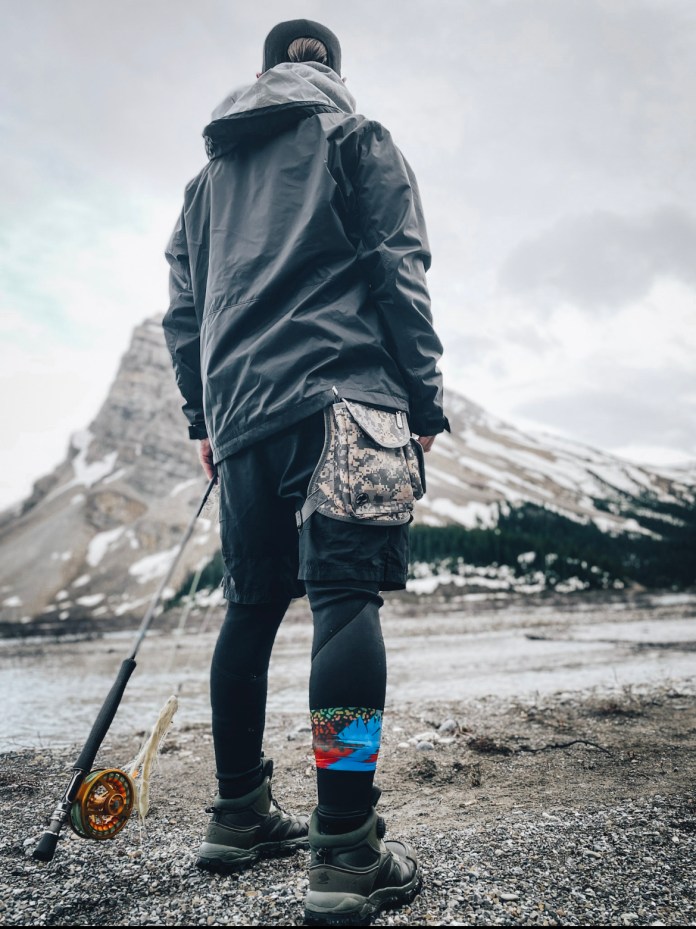
Backcountry Skinz Neoprene pant is the warm-weather solution for cold-water situations. Designed to be extremely flexible and easily packable, they are focused on being a quintessential kit component for the wet wading enthusiast who’s looking for a little extra protection and comfort when exploring new water…
Our Experience with Backcountry Skinz:
While designed with the backcountry angler in mind, Backcountry Skinz aren’t just for those anglers pushing deep into the unknown. As we found, they are also a fantastic solution for any cold water fishery, such as your local tailwaters in the summer. In the heat of last August, we had the chance to slip into some Skinz and head out for an evening of wet wading and dry fly fishing. Here’s what we concluded:
As most Western anglers can attest to, Summertime fishing in Colorado and surrounding states can be defined as: “Wet Wading Season”. As temps in the West quickly rise over the course of the summer months, waders are often left hanging in the garage or stuffed far into the back of the truck until the later fall months come back around. However, what many people underestimate, is that although the summer air might turn your waders into a sauna: the water running through high elevation streams, as well as the dams of tailwaters, will turn bare limbs to popsicles.
You know the feeling. As you make your way down to the water, the warm summer air is quickly replaced by a heavy chill. As you take your first step into the tailwater you’ve fished countless times before, the water bites at your bare skin and delivers an unwelcoming surge of frigid water to your blood. As you progress upstream, slowly, your legs grow numb and your blood circulation to your legs and toes slows.
We all handle temperature fluctuation differently, but most would be lying if they weren’t to say this sensation wasn’t a pain in the butt (or legs) when trying to fish – at minimum. For those with poor circulation to start, or who just possess a lower pain tolerance, it can sometimes lead to a good day being cut short, or worse. With this in mind, we were eager to try these Backcountry Neoprene pants out on the very waters we experienced the aforementioned situation countless times before.
Canadian Mountain lakes are not an inviting place for cold legs…
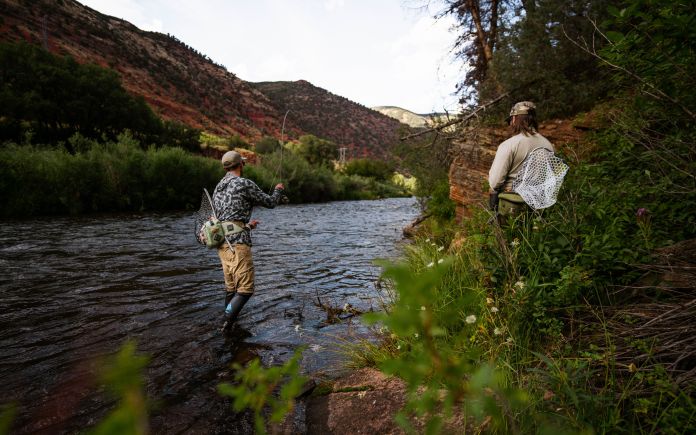
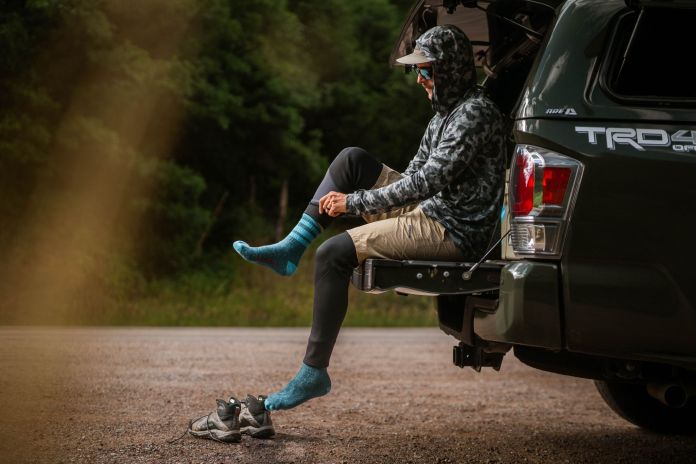
Slipping the pants on was easy. Once on, we pulled up a pair of our normal wading shorts, and then slipped into our wading socks and boots – just as we normally would when wet wading. As we made our way down to the small river access opening, we pushed through branches and briers with ease, forgoing the usual slash and gash of our shins and ankles that we normally experienced when pushing through to the river. Immediately upon arrival, a flourishing caddis hatch invited fish into the air, and us anglers, into the flowing current to make a carefully positioned cast.
As we cautiously entered the water, what was usually a bone-chilling submersion of flesh, was replaced by the welcoming cool flush that surrounded our boots and neoprene pants. Insulated and happy, it took just a few casts before we had fish in the net. As we worked up the stream, the Backcountry Skinz pants kept our legs feeling fresh and ready to work the water until dark. Without worrying about getting in and out of the water to refresh numb joints, the only thing we had to focus on was feeding flies to fish, and keeping bugs out of our mouths amidst laughter.
The beauty of Backcountry Skinz, in our opinion, is its simple design. For any surfers or free divers out there, time spent in cold water is pretty much synonymous with the use of neoprene in order to keep warm and comfortable. Kelly and Mike from Backcountry Skinz didn’t have to reinvent the wheel, but instead, they turned the gear trusted by almost all other cold-water athletes/ recreationists, and designed a product that is built specifically to suit anglers.
We are extremely satisfied with our experiences using Backcountry Skinz, and have turned them into permanent residents of the inside our packs when it comes to any trips involving hiking, cold water, or most times: both. Additionally, we would be remiss to mention, Backcountry Skinz are NOT just a wet wading solution. When the snow finally begins to fall, and it’s time to layer up under the waders, we can assure you we’ll be replacing our puffy pants with Backcountry Skinz pants. These are the perfect insulating layer for those long days wading in frigid temps whether you’re fishing for Salmon in New York or Bull Trout in Alberta. Also, Duck Hunters who aren’t using neoprene waders, you can thank us later…
Interview:
We also had the pleasure of chatting with the co-founder of Backcountry Skinz, KellyReaume, to learn a little more about the brand’s history and the mission moving forward.Â
Flylords: Tell us about Backcountry Skinz (location, inspiration, mission, etc.)
Kelly: Backcountry Skinz is a small, e-commerce, brand based out of Calgary Alberta Canada. The company was founded to unite mountain enthusiasts that have a deep passion for the wild and that seek to push their limits. We take the same approach in our product design. What sets us apart from other brands is we live the backcountry life which led to us recognizing the gaps in some performance gear, and we filled them with designs that integrate versatility, durability, affordability, and style.
We not only wanted to build some kick-ass affordable gear to help people feel lighter and more comfortable, but also produce some unique content that gets people stoked to call their friends, pack their coolers, and head outdoors. It’s all built for the people – because we are the people.
working on some R&D in some less than desirable conditions…
Flylords: How did the Brand come to be? What did the very beginning look like? Â
Kelly: Mike and I are two brothers that are wet-wading diehards who love chasing char deep in the backcountry. Chasing char in the mountains is such a euphoric experience but such a gnarly one at the same time.
With that said, over the years in pursuit of chasing char in the deep trenches of the backcountry we have tested a lot of gear. Waders are essential under certain weather conditions, but any time we could avoid them we would for a couple of reasons: we always seemed to put holes in them, they felt heavy and hot over long hikes in, and they can be sketchy crossing rivers and paddling, and they’re pricey. With the mountains having unpredictable weather and cold rivers the majority of the fishing season, a lot of the wet wading pant options don’t give much protection or insulation and don’t feel comfortable as an underlayer with waders.
Mike and I started wearing our compression pants from the gym when we were fishing in the hot summer months, and they actually worked great. They were super comfortable, gave some protection (from bushes and bugs), provided some insulation in the cold water, and worked well as an underlayer in our waders. We loved the versatility. We also noticed on social media that many others were doing the same (wearing gym clothes fishing), from New Zealand, Montana, and on the flats. So, we set out to bridge some gaps and dedicate a brand specializing in technical compression gear for fishing and adventure watersports. We felt we went out and built the ultimate in-between pant, a wet wading pant that pushes like waders and additional modified compression gear to help anglers feel lighter, more comfortable, and versatile out in the wild.
Flylords: What are some of the major steps that had to be taken to get the brand where it is today? Were there any notable moments that greatly impacted growth?
Kelly: There was a lot that went into building our brand; from graphic design, testing of materials, funding, and finding distributors who could bring our designs to life. Â The amazing thing about fishing is we have formed so many relationships that once we decided to go for it, we had so much support from many friends that had many skills to offer and wanted to not only help us but saw our envisioned products to be beneficial to them. A notable person is a local tattoo artist, Ben Burlock, a fishy dude who helped us a lot with our logo and graphic design.
Flylords: What were some of Backcountry Skinz biggest struggles in establishing itself off the bat?
Kelly: Building a brand during covid was not an easy task, from congested ports to economic uncertainty. We set timely goals and deadlines, but they were hard to meet, and timing is everything in business. We also took a year off from social media to build content for our launch this past May, so we had lots of dust on our algorithms; it took some time to build an outreach to have our voices heard. Social media is such a different place than it used to be when you could build organically, now it’s kind of a ‘pay-to-play’ sort of deal which is hard when you are a small business trying to start out.
Flylords: What do you feel are some of the best applications for your product? What are some ways you’ve seen them be used that you initially wouldn’t have thought of?
Kelly: The awesome thing is that our gear is so versatile it can be used in a lot of applications specifically with fishing: wading in rivers, lakes, or the flats, and a great base layer for bibs and waders during really cold weather conditions.  With the current popularity of paddleboard fishing and kayak fishing, we thought it was perfect timing to market compression gear built with materials for the water, so we’ve been targeting that scene as well. Another perk to note with compression materials is that it’s designed to support muscles as well as improve joint stability which in turn reduces soreness after a long day of hiking and wading.  This will help you get a couple more ‘lasts cast(s)’ in.
And some applications we noticed that people also bought our gear for is: wake surfing, sea-dooing, hiking, and some environmental biologists like wearing our neoprene pants so they don’t get shocked in the water.
Flylords: What are some of the primary objectives for Backcountry Skinz moving forward?
Kelly: Some primary objectives are: expanding our products into retail stores, especially overseas into some dealers in New Zealand, where we think our gear would be highly beneficial, and to start marketing heavily for the flats as well as over on this side of the pond as base layers for waders during the winter.
Overall, we are looking to keep progressing and modifying our gear in order to help people out in the wild, and hope to establish ourselves as a leader in technical compression gear for fishing and the mountains. We hope that people will think of our “Z†logo as the Nike check of fishing and the mountains.
Flylords: What are some of the challenges you all faced when starting up a brand in the fly-fishing industry specifically?
Kelly: It’s crazy how your mind plays all sorts of tricks on you when you are starting a business in fly fishing, trying to figure out how people are going to react to such a unique idea that has not been attempted.  We are basically asking people to put aside how they’ve always done things and try something new, which can be very difficult. Overall so far, we’ve had a lot of positive feedback from locals messaging us directly, cheering us on, and consumers saying “finally†and “this makes sense†about how our gear has helped them. Also, positive feedback around how affordable it is compared to a lot of wading options in the industry. Fly fishing has done so many wonderful things for Mike and I; we have created so many friendships and have so many amazing memories, it’s crazy to watch how supportive people can be in this industry and how a small idea can inspire and bring people together. Now our goal is to give back to the industry.
Flylords: What would be some advice you would give to someone running a small business in the fly-fishing industry?
Kelly: Firstly, if you have a unique idea, why not try and run with it?  You live once. With technology advancing as rapidly as it is and the access to so much information at the click of a button it’s probably easier than ever to try and start a small business. I’m a firm believer in following your dreams. Another thing is that it’s a lengthy process, so you must have a lot of patience and persistence (which isn’t always easy). And lastly, put the time in to learn new skills because the more skills you learn such as: video editing, web design,, etc. (these things are expensive to pay someone to do), the more money you can save for products and inventory and as a bonus you get to feel more in control of your company.
Flylords: Anything on the horizon you can give us a sneak peek of?
Kelly: We are working on a modified neoprene wading sock, building a 1.0 neoprene pant that’s a thinner version of our 2.0 pant for more predictable warmer weather conditions, fitted women’s neoprene pants, some new cool camo designs and brown trout designs, and modified polyester gear for the saltwater scene (i.e., polyester hoodies to go with our polyester pants).  Hopefully, further down the road, we’ll have the capacity to get into technical wading shoes.
If you’d like to learn more about Backcountry Skinz, you can check out their website, HERE. You can also find them on Instagram, HERE. We would like to thank all the small businesses of the fly-fishing space that make this industry so special.
“Wait! I want to slide off on the boat!†I called as my dad readied to tip the old boulder boat off the trailer and into the icy waters of the River. “Okay, hurry and hop in!†My dad called back. I climbed into the boat and waved good-bye to my mom as she watched us spill into the water.Â
Honestly, sliding in a boat from off the back of a trailer is a little more scary than it looks, but a lot of fun. I hate to compare the wonderful world of nature to a ride at an amusement park, but falling off the back of a trailer riding a drift boat is kind of like a mini jolt of when the roller coaster starts to take off. My dad chuckled at me as I shook off my surprise and settled into the seat. I rotated my seat to slightly face my dad.Â
“Don’t mock me.†I playfully scorned. My dad’s chuckle died off and he gestured to the oars. “I’ve been thinking, Mij. You’re old enough to have the strength to start rowing me down. What do ya say? Ya wanna row your old man down the River?†he offered, releasing the oars from his hold.Â
I’d actually tried rowing before but it had been on the lake. I couldn’t coordinate my strength very well when I tried it, but the experience wasn’t horrible. By the end I was able to make a smooth, straight power stroke. I figured I’d give it another shot.Â
“Sure. Why not? But you’ll take over if we get in any trouble, right?†I asked. My dad nodded. “Of course. I’ll guide you through it all, don’t worry,†he assured me. I nodded and we switched seats. I gripped the long oar handles in my palms and took a deep breath. At first, I was having some trouble, but it actually didn’t take long for me to coordinate my right and left arms. I was doing it! I was rowing! I was pretty confident in myself…until we approached a more technical rapid. “Do you wanna take over?†I asked my dad, but he shook his head.Â
“You can do it,†he assured me, “I’ll even walk you through it.†I nodded shakily, and re-positioned my grip on the oars.Â
“Okay, first, you’re gonna point the boat left,†my dad instructed. I swung the boat to point left and looked to him for further direction.Â
“Okay good, now just wait a moment,†he directed. I tensed, mentally preparing myself. The rapid was known as “Mother-in-Law†for its infamous need for perfect precision… Like a mother in law… Or so I’ve heard. The rapid was a series of moderate waves leading into a hallway between a large rock that was known for eating rafts (including the seat tube that was currently attached to it) and a flat rock wall that exited through a few more larger waves. The rapid was nerve-racking enough with someone as experienced as my dad – who rows better than he walks.
Seriously, he never touches a rock, but can’t go a week without stubbing his toes – thank you Simms for the closed-toed sandals, I salute you for keeping him out of a wheelchair. The thought of me, a first-timer, doing this was absolutely terrifying.Â
I took a breath and held it as I progressed the first wave. I huffed as I steered the boat into the watery hallway of rock and mountain. I stood up to urge the left oar forward in order to avoid the rock wall, but felt my feet slip out from under me as I did so. I quickly pushed my right oar forward so that the boat faced straight before my rump slammed into the foot pedal for the anchor. I yelped as my head whipped back, colliding lightly against my cushioned seat. I scrambled back up to grab the oars but quickly realized I had made the perfect stroke to ride through the waves. Breathing heavily, I turned to my dad for a response. We both burst out laughing both at my fall and in excitement that I had just nailed one of the hardest rapids on the River’s first section.Â
“Hey!†An older voice called from another boat to the side of us. My dad and I turned to see an old man in fishing gear and a fishing rod in his hand give me a thumbs up. “You can have any boy you want now. That was awesome.†My dad and I looked at each other and burst out in laughter again. I turned back to the man and gave him a thumbs up. “Thanks man!†I called. He winked at me as I got a hold of the oars again.Â
My dad decided I was good enough at rowing for him to flyfish while I commanded our miniature ship. “Hey, Dad, how old were you when you started rowing?†I asked as I turned the boat on an angle so I could see ahead of me better.Â
“Oh, I was probably about 12 when Grandpa started having me row him down,†he replied while making a cast. He chuckled a little like he had remembered a memory of when he was young… Which he had. “You know, when I was getting started, one of the oars hit a rock underneath the water and it swung the boat in a 180 and knocked Aunt Miranda off the boat.†He said, laughing as he told it.Â
“Wait, really? That’s super funny,†I commented, laughing myself.Â
“Oh, and this other time we had Aunt Ellie in the front of the boat, Grandpa rowing the boat – I was on the floor – and we went through Bridge Rapid when the water was super high and we hit a big wave that sent Aunt Ellie over my head and into Grandpa, and out the back of the boat he went,†Dad doubled over laughing as he finished, making me laugh too. He told me a few other fishing stories, including a time he and his Grandpa Harold caught a seagull by accident – a bird I didn’t even know lived around here – before he told me to pull over on the shore. I did so with a few powerful strokes and put the anchor down. “Let’s fish for a minute, yeah?†my dad said, drawing a wide smile from my face.Â
“Yes!†I gushed, jumping out of the boat and grabbing a fishing rod.Â
My dad and I walked far upstream, away from our boat before we picked a spot. I found a rock by the bank and cast the rod. Up. Pause. Forward. Wait. We watched the fly as it bobbed downstream, looking to catch a fish’s eye. It didn’t. I tried once more to no avail. Stripping up the fly so it wouldn’t hook any rocks, my dad and I walked upstream until we found a spot we thought might be good. I repeated the previous tactics as I settled on a rock by the flowing water. Sighing in disappointment as I was met with the same result as a few minutes ago, my dad set his hand on my shoulder. “Hey, don’t be discouraged, you’re doing everything just right. Let’s try again more upstream, and then we’ve probably got to go.†I nodded and smiled, letting him know I believed his words. We walked upstream a few more yards and stopped in a good spot where the fast water swirled with slow pockets.
I cast on the edge of the fast water and watched the fly as it quickly rode the seam. I nearly cast it again when the fly went under the water and I knew it had entered the trout’s mouth. I hoisted the rod upwards and laughed joyfully as my assumptions were correct. I had a big old fish on.Â
“Did you get one?†Dad asked, perking up.Â
“Yep! And he’s a big one too, holy cow!†I exclaimed, using my hips to steady the rod since my weak wrists couldn’t do it themselves. I stepped over the uneven rocks as I followed the big fish downstream. I was not gonna lose this big boy. I nearly tripped, but I kept the focus I wasn’t using on the fish on my feet placement. I fought him for the longest time, the big guy not wanting to give up. Jerking the rod right, I added side pressure, and led the fish towards the shore. Finally, we got him in a rock forest with micro pools weaving in and out of rocks for him to breathe in. He was a huge, thick lug of a fish, but a beautiful brown trout. The fish was a German/Lochleven mix, sort of a mutt. His true beauty was found in his imperfection. I tried to get my hand around his body to hold him up for a quick video and to release him properly, but the big brown was too thick for me to wrap my hand around. My hand didn’t fit around the fish! I chuckled frustratedly and waited as my dad showed me how to hold him: with a thumb and forefinger gripped tightly around the tail, and the other cupping its body like a cushioned porch swing in my grandma’s backyard. It took me a few tries to get it right, but when I did, the video turned out great and I’d say it was a successful release. My dad and I high-fived our wet hands and laughed joyously together.Â
“Awesome job, Mij, that was great!†he said excitedly.Â
I nodded vigorously, “Thanks! That was awesome, he was so big!†I exclaimed, horribly estimating the size of the fish with my hands.Â
My dad laughed at my feeble attempt and checked his phone. “Oh, we better go, Mom’ll be waiting for us if we stick around any longer.â€Â
I nodded and we attentively raced back to the boat. We both jumped in, this time Dad taking over the oars performing his version of a rower’s power walk.Â
We were just a few minutes late to the ramp, but fortunately we were able to slide right in. I jumped out onto the ramp and pulled the boat so that it was secured against the concrete and greeted my mom halfway up the ramp.
“Hey,†she waved, “how was it?†I stopped a few feet away from her and nodded. “It was pretty good, I caught a huge fish and Dad had me row,†I said, holding my hands on my hips. Mom looked surprised.“Really? Wow, that’s awesome,†she congratulated.Â
Dad nodded, coming up behind me. “Yep. She did pretty well,†Dad said.“She even fell on her butt, huh?â€Â
I elbowed him in the stomach and he shook my shoulder, chuckling and pulling me in close. “Yeah, but she did catch a big brown trout! Sucker was huge, wasn’t he?â€Â
I nodded.“Heck yeah! He was so thick, I couldn’t even get my hand around him!†I exclaimed. Mom laughed and put her hands on her hips.“That sounds like fun. Why don’t you tell me on the way home?â€
Article written by Mij Feathersby, courtesy of Ryan Kelley @greenriverflyfisher. Journaling daily walks around the Flaming Gorge National Recreation Area. Faith, Family, and getting kids outside.
“Simon Furniss from Scotland; who has been a return guest on the Ã…røy for some years now, had been fishing with me for the afternoon session down at the home pool. I was hoping for a fresh liced salmon on the tide for him as we continued swinging big flies on a sink tip.
Once the tide had reached its peak, we made a last ditch effort to find a fish holding in the fast water at the top of pump pool, before they make their way up the river. He managed to reach the holding spot after a few casts and as the line started to swing a big fish smashed his fly at the bottom of the pool.
We tried coaxing the fish across the current, but unfortunately she got the better of us and got snagged on the sløgaard, (wooden barriers that break the current). In 2017 Simon lost a big fish, and I wasn’t going to let this one get away without a fair fight, so I jumped into the river to try and free the line. Luckily the fish was sitting in the seam of the current and didn’t move. We managed to get the line out and the rest is history. A stunning 23lb Atlantic that was released to fight another day.
The Årøy sport fishing history dates back to 1840, and has been through nine generations in the Munthe family. The river was made popular in the 1890’s by an Irish sport fisherman, Wilfred Kennedy who subdued a monster 68 lb fish in the prawn pool.
Subsequently many famous travelling anglers made a pilgrimage to this hallowed place in the 1900’s, from the likes of Charles Ritz, who wrote “A Flyfishers’ Life†which the river is featured in the chapter: “The platforms of despair.”
L.R Hardy made a commercial film in the 1930’s to test the Hardy range of rods and reels. And rumors of Coco Channel visiting the river with dukes and lords from England in the 1920’s.
With the river only a mile long, it soon gathered a reputation for anglers to challenge their skills against the strong current and massive salmon that still return to this day.”
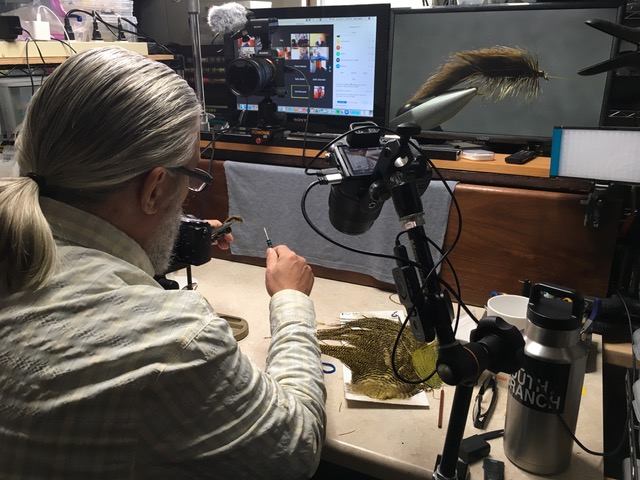
In this week’s “How to Tie” video feature, Cheech with Fly Fish Food ties a streamer pattern perfect for the fall season, the Complex Twist Bugger (Blacked-Out).
Learn About This Fly:
Difficulty: Easy
Streamer season is officially upon us! We can finally rejoice at cool water temperatures and those quality fish feeding once again. As those pre-spawn fish become more aggressive, they will show themselves and inhale streamers that invade their space. This time of year consistently produces larger fish that can boast some stunning coloration. With the blacked-out Complex Twist Bugger, you will effectively be able to target aggressive predatory fish this fall and potentially fool the fish of the season.
For a streamer pattern, this fly is relatively simple and friendly for tyers of all skill levels. Some Woolly Bugger variations implement dubbing loops, which normally make flies a bit more complicated and intimidating to tie. The blacked-out Complex Twist Bugger does not use a dubbing loop but rather spinning schlappen and flash chenille, which is far harder to mess up. Pairing this body with a bruiser blend junior dubbing head allows for great movement and water to be pushed with every strip.
Fishing this fly with a poly leader or sink tip line will help get it down in deep pools, but for shallow water a floating line is completely acceptable. The cone head will allow this fly to sink regardless of line, therefore it is not a make or break. A 6 or 7wt rod will give you the backbone to throw these larger streamer patterns in any conditions and are highly recommended. The blacked-out Complex Twist Bugger is a streamer that should be fished with the utmost confidence this fall season.
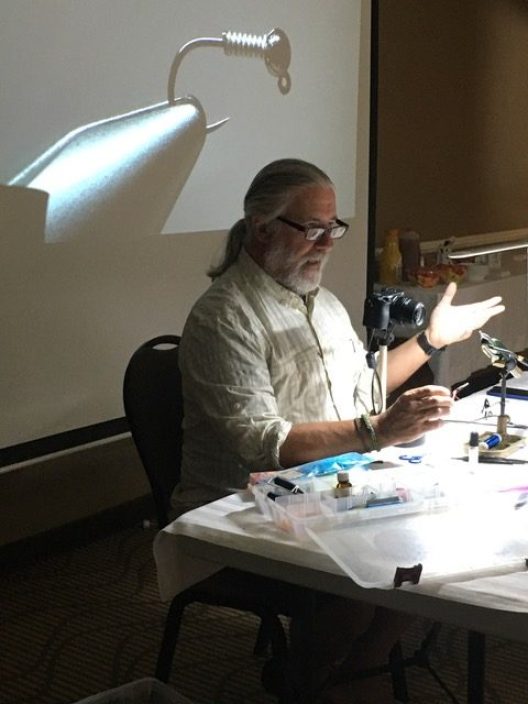
Tim Flagler is a legendary fly tyer, YouTube content creator, presenter, guide, and instructor. His work on the Tightline Video YouTube channel is how many of us have found his company, Tightline Productions, but his influence in the industry goes far beyond the digital world. Tim is a wealth of knowledge when it comes to techniques and tips and it was a pleasure getting the chance to pick his brain about just what gets his creative juices flowing.Â
Flylords: Let’s start off with a little bit about yourself, who is Tim Flagler?Â
Tim: My wife Joan & I are the owners of a video production company called Tightline Productions. In the past, we have done a wide variety of video work, but in recent years have focused more and more on fly tying and the fly fishing industry as a whole. I started fly fishing and tying flies while in college in the early 80s.
Flylords: Is there a favorite fly that comes to your mind?Â
Tim: Yes, it’s a pattern I developed about six years ago, called the Evil Olive that’s based on Spencer Higa’s SOS, with a few key variations. The reason I really like it is that it has worked for me pretty much throughout the year and just about wherever I go. I may have caught more fish on it than any other single pattern.
Flylords: What gets your creative juices flowing? How are new flies born? Where do you start? How do you choose materials? Etc…?
Tim: That’s a great question. For me, inspiration comes from two very different things. The first is that I do regular stream sampling and shoot close-up videos of the naturals in a series of fish tanks. This allows me to see details and behaviors that I feel are very important in fly design. The other source of inspiration is a number of fly tying materials that have been around for centuries: Hungarian Partridge, Wood Duck, Brahma Hen, Peacock Herl, Pine Squirrel, and Hackle, to name a few. These can be mixed and matched in so many different ways and I like experimenting with unique combinations of some or all of them.
Flylords: In terms of all the gear out there involved in the fly tying process, what’s one piece of equipment you could never live without?
Tim: A quality vise. I tie with a lot of thread tension and, to me, there’s nothing worse or more dangerous than a vise that doesn’t totally secure a hook. I’ve been a Regal guy for years.
Flylords: Which part do you enjoy more: Fishing the flies, or tying them?
Tim: Honestly, it depends on the day. There are times when I’m extremely excited and motivated to tie, and others when I simply have to get on the water, no matter what.
Flylords: Why did you start tying on YouTube? Has that impacted your passion for tying as a whole?Â
Tim: Tying on YouTube was kind of a happy accident but over time I came to realize just how effective video was for teaching people how to tie flies. I learned to tie from books and magazines, which are ok, but fly tying is a very dynamic thing and, when done correctly, video can capture nearly every detail and nuance. My true passion has now kind of drifted from tying flies for myself to teaching others how to tie.
Flylords: What is the process of creating a fly and then selling it? When do you know that it’s ready for production?Â
Tim: I’m constantly tweaking patterns, shooting videos of how they look and behave underwater in the environment where they’ll be fished, making sure they’re durable and of course, that they catch fish. I’ll also strip anything that isn’t absolutely essential off a pattern. I don’t like extras if they don’t have something significant to contribute to the pattern. I know a fly’s ready for production when I’ve gone at least a few months of fishing it effectively without wanting to make any changes to it. I feel very fortunate that Fulling Mill carries some of my favorites.
Flylords: Do you have any advice for anyone looking to get started fly tying? Tips or tricks?Â
Tim: I’m obviously biased here, but YouTube has a wealth of tying videos. Pick a video tier that ties patterns that you’re interested in and plan to use, and follow them. Do watch videos of the same pattern but from different video tiers to find the techniques that work well for you, the tier. I’m liable to catch some flak here, but I really believe that there is no right or wrong way to tie a fly. Again, it’s what works best for you. Probably the biggest actual tying tip I can give anybody is to be able to see your work well. This requires good, quality light and, for many of us, some type of magnification.
Flylords: How valuable do you think a resource like YouTube is for teaching people how to tie/fly fish? Have you found any downsides?Â
Tim: The only downside that I see to YouTube videos is that just because you’ve watched the video doesn’t mean you can actually tie the fly. You really need to sit down and crank out a few on your own.
Flylords: How do you keep finding ways to be creative on the vise?Â
Tim: Instagram is really good for this. There are some exceptional tiers out there tying pretty wild and inventive stuff. Many of them also happen to be excellent photographers. It’s a great place to pick up new ideas.
Flylords: What is next for Tim Flagler?Â
Tim: The next big thing for Tim Flagler and Tightline Productions is a series on fly fishing tips and techniques, not just fly tying. It’s just a whole slew of things that I’ve picked up from others over the years or developed myself.
Thank you to Tim and his wife Joan for making the time in his busy schedule to answer these questions! It was a genuine pleasure being able to converse with such down-to-Earth, passionate people. Be sure to check out Tim’s work on YouTube and his website!