Home Blog Page 69

Fishing Ethics: Navigating National Parks

Welcome back for the third installation of the Fishing Ethics Series brought to you by Fat Tire… This time around we are focusing on ethically Navigating National Parks.

Whether it’s the towering peaks of Grand Teton National Park (NP), the wild salmon runs of Katmai NP, or the teeming biodiversity of Everglades NP, these places are some of the most special places on Earth. Since National Parks are the most popular of our nation’s public lands, they are also the form of public land that needs the most responsible visitors in order to maintain their value for years to come.

Next time you visit one of the 400+ national parks in the US make sure to take some of these tips with you. Our Nation’s public lands need responsible recreators like yourself!

The Basics

Have a Plan

Planning for your National Park adventure is key to a safe and enjoyable trip. Make sure to visit the park’s website on nps.gov before you go to check current park conditions, facility operations, and weather. You can also check the park’s social media for the latest park information.

Two people hiking in the alpine

Reservation System

As National Parks become more popular places for people to visit, more parks will continue to require reservations in order to access the park. Make sure that you plan ahead and reserve everything you need to. Sometimes there are reservations to get into the park, additional reservations to access popular subsections of the park, and other reservations for camping and backpacking sites. Many times, the reservations are set to occur in waves depending on the reservation (e.g., 6 months out, 2 months out, 4 days out, and the night of).

Rocky Mountain National Park Timed Entry - Recreation.gov

Visit the NPS Visitor’s Center

When entering National Parks it’s always a good idea to stop at one of the visitor’s centers. Visitor’s centers are literally created to help people like me and you make the most of our time in the park. Whether you need to ask a Park Ranger a question, obtain a backing permit, or buy a stuffed moose in the gift shop, the visitor’s center should be your go-to spot. It’s also a great place for quick pitstops if you need to fill up on water or access wifi.
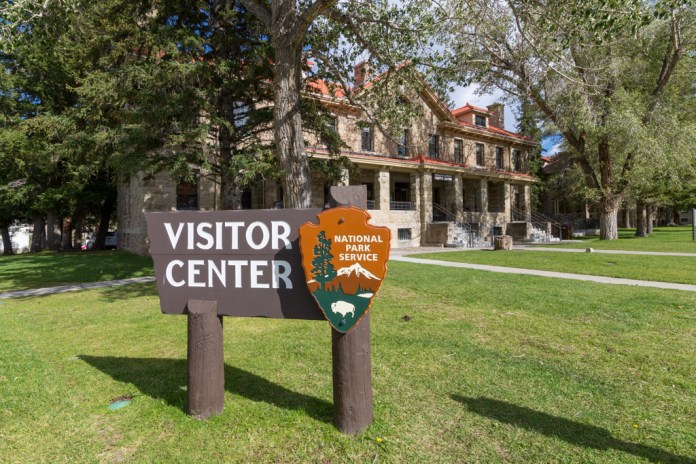
National Park Visitor's Center Sign

Play It Safe and Know Your Limits

Whatever recreational activity you choose to take part in, it’s always important to reduce the chance of needing to be rescued. By playing it safe and mitigating risk, you’re helping to ensure that first responders and park employees have adequate resources. Rescues in national parks add pressure to local healthcare systems and emergency resources. Know your limits and play it safe.

Two people hiking over a bridge

Don’t Get Too Close to Wildlife

National Parks are known for having incredible biodiversity and some of the most well-known megafauna species including bison, grizzlies, wolves, elk, and many others. While these animals are beautiful, it is important to keep your distance when appreciating them. Check out the NPS infographic below on distance recommendations for different wildlife species.

Above all else… please, please do NOT feed the wildlife. It can have serious repercussions for you, but more likely; the animal.

Hikers taking a picture of an elk

Courtesy of the NPS
Wildlife, NPS, Fishing Etiquette, National Parks

Bring a SAT Phone

Satellite devices are a great tool to have if you plan on traveling into the backcountry. When you’re miles from cell service these devices allow you to contact others and emergency services if needed. But remember, take the time to familiarize yourself with these devices before you hit the backcountry. These tools are only useful if you’re prepared to use them. The Garmin InReach Mini is a great option.

Person with a SAT phone

Leave it as You Found it

National Parks are filled with beautiful natural and cultural resources. It is important that these resources stay where they are in an effort to preserve the nature of these places. Whether it’s an elk antler laying on the ground, or an old historic relic, please leave these resources in their place.

Vandalized aspens
Not only is the image above an example of defacement, and a crime: but it’s downright disrespectful and harmful to the tree and the greater ecosystem. If you really want to memorialize you and your significant other’s trip, take a picture… it’ll last longer.

Limit Your Impact

Whether you’re thinking about carving your initials into an aspen tree, or cutting off trail on a popular hike, remember that you don’t want to do anything that will leave a negative impact on the landscape.

Sign that reads shortcutting causes severe erosion please stay on trail

Pack It Out

When you’re ready to leave a park, make sure to pack out your garbage. We all know not litter items like bottles and cans, but even something as small as your fishing leader and tippet pieces are important to keep track of. Fluorocarbon line can take up to 4,000 years to decompose in nature. Remember, pack it in, pack it out.

Person holding a fly fishing leader

Build an Inclusive Outdoors

National parks belong to all of us. Be an active part in making the outdoors safe and welcoming for everyone.

The health and safety of ourselves and others rely on all of us being welcoming and supportive. No matter where you’re exploring, we share in the responsibility to make sure everyone is able to experience parks safely. Visit Recreate Responsibly to learn more about how we can build a more equitable outdoors.

People on a hiking trail

Keep Your Distance From Other Visitors

Once you get to the park, make sure to give others plenty of room so we can all enjoy the park to its fullest potential. National Parks can get crowded, but it’s common courtesy to give people as much space as you can.

Two people walking next to a river

Content Collection

When you’re out there collecting pictures and videos of your experience, make sure to show responsible recreation in action, and behind the scenes. Don’t lower your standards to get that “gramable” pic.

When it comes to drones, they CANNOT be used in National Parks or Wilderness areas (which can be administered by a variety of federal agencies such as the Forest Service and Bureau of Land Management).

For commercial photography, check the regulations of the park you’re visiting, as they may vary.

Two cutthroat trout

Drinking in National Parks

Exactly where you can drink alcohol in a national park will vary depending on which particular park you’re visiting. In most parks, you’re safe to drink legally at campgrounds and in public-use areas. With that being said, it’s always a good idea to double-check that there aren’t any specific rules against it.

Also, it’s always best to avoid bringing in glass bottles… Stick to cans!

Person opening a fat tire beer
It’s never a bad time to enjoy a cold Fat Tire, but make sure you’re being just as, if not more, respectful and conscientious than you would be anywhere else. Also, always remember to pack out your cans!

The 10 Essentials of Navigating National Parks:

One quick way to assure yourself that you’re ready to explore in the great outdoors is to make sure you have “the 10 essentials.” This list changes depending on who you ask, but these are the 10 that the NPS recommends:

  1. Navigation (Map, compass, and GPS system) – Navigation systems are used when planning your route before your trip, and when you need help orienting yourself in your surroundings during your activity. Know how to use a map as well as your compass or GPS unit before going out.
  2. Sun protection (Sunglasses, sunscreen, and hat) – Sun protection is necessary to protect your skin and eyes against harsh UV rays that are responsible for sunburns and skin cancer. Consider using sunglasses, sunscreen, and hats. Sun-protection clothing such as pants and long sleeve shirts can also help minimize your exposure to the sun.
  3. Insulation (Jacket, hat, gloves, rain shell, and thermal underwear) – Nature is unpredictable, so it’s important to be prepared for sudden changes in weather conditions. Pack an extra layer of clothing that would keep you comfy in the most extreme conditions you could encounter.
  4. Illumination (Flashlight, lanterns, and headlamp) – Whether or not you think you’re going to need it, it’s always a good idea to carry some form of light. Headlamps are the preferred light source because they are hands-free. Be sure to pack extra batteries.
  5. First Aid – First aid kits may not seem completely necessary until that moment where a small mishap makes you wish you had it with you.
  6. Fire (Lighter or Matches) – As much as you would like to believe in your ability to create a fire with two sticks, having a lighter or matches is important.
  7. Repair kit and tools (Knife, etc.) – Some people like to bring the whole tool box with them, but others just bring along a knife. Make sure you’ve got what you need.
  8. Shelter (Tent/Bivy/Emergency Shelter)- Carrying a tent with you may not always be the most realistic option. In many situations, an emergency blanket will suffice in case you need to spend an unexpected night in the sticks.
  9. Nutrition (SNACKS) – On top of whatever snacks you’re bringing for the outing it’s important to have a stash of high-calorie snacks at the ready in case your adventure extends for longer than expected.
  10. Hydration (filter/purifier, water container) – There’s three things you need when it comes to water: 1) drinkable water on you, 2) a container to store extra water, and 3) a filter/purifier to collect more water.

Are Pets Allowed?

Pets are allowed in some developed areas, on many trails and campgrounds, and in some lodging facilities depending on the park you’re visiting. Each park is different, so it is worth doing some research before you bring your pet on the trip. Oh and remember, even though some wildlife isn’t afraid of interacting with humans, don’t treat them like your pet.

Chipmunk

Fishing in National Parks

Visit a local fly shop

If there are fishing opportunities in the park you’re visiting, chances are there’s a fly shop in town. Make sure to stop by on your way through town to talk to a guide, buy some flies, and get the lay of the land. This is probably the best thing you can do to help maximize your time on the water and to support the local fishery.

Small dry fly in someone's hand

Buy a Fishing License

This goes without saying. You always need a fishing license before you fish in any location (even if you’re just fishing a single day, or a couple of hours). Remember, the money you spend on a license goes straight into the funding necessary to manage and maintain the fisheries that you are interested in. If that’s not enough of a reason for you to buy a license, it’s worth noting that since National Parks are so heavily visited, these lands also have some of the highest levels of enforcement (i.e., there’s a good chance a ranger is going to ask to see a license).

Person holding a cutthroat trout

Research Harvest Regulations Ahead of Your Visit

Depending on where you’re traveling, fishing regulations will vary widely. Even within National Parks, there may be some localized areas where harvesting regulations are different than the rest of the park. Remember it is a privilege to harvest a fish. If you’re planning to keep a fish, it should be a calculated effort where you know the exact species, size, and the number of fish that you’re allowed to collect.

Cutthroat trout upside down

Camping

Reservation Vs. First Come First Serve

Reservation campgrounds require that you reserve the campsite days, weeks, or even months in advance. Similar to making reservations for park entrances, reservations are usually set to occur in waves depending on the reservation (e.g., 6 months out, 2 months out, 4 days out, and the night of). Most National Parks utilize a reservation system for camping because they are in such high demand, but there are some situations where campsites are first come first serve.

When claiming a first come first serve site it’s always a good idea to pitch the tent and/or open up a couple of chairs to signal that the site is taken.

Fat tire beer and a sandwich in the alpine

Backcountry Camping Regulations

Not all National Parks offer backcountry camping opportunities, and the ones that do, often vary in their regulations. For example, some parks require applying for permits months in advance, while others simply require a permit the day of. Wherever you’re going, make sure to do your research ahead of time.

Two people hiking

Bear Safe

If your campsite is equipped with a permanent food locker, use it. Also, make sure to show your gratitude by not leaving trash, or anything, inside when you leave. Keep it clean! It also never hurts to keep a can of Bear spray around just in case.

Food storage locker rules

Be respectful of your neighbors

Unless you are backpacking in the backcountry, a lot of National Park camping occurs in fairly crowded areas. Make sure to give people their space. The best rule when camping in tight quarters is to follow the golden rule: treat others the way you would like to be treated.

beer brats over the fire

Fire management

Before you start a fire it’s always best to check if there is a fire ban in your area. As you’re handling the fire you should always consider Smoky Bear’s classic saying, “only you can prevent wildfires.”  Make sure that fire is completely out before you hit the hay or leave your site.

Person putting out a fire with water

Poop with a plan

Many National Park campsites have bathrooms within walking distance of your campsite, so make sure to use them. In the case that you’re away from a designated bathroom and you must poop in the woods, it’s good to have a plan. A part of any proper 10 essentials bag is everything you need to poop in the woods responsibly: a trowel, toilet paper, and hand sanitizer. For more information on this, check out this great video from REI.

Shovel and a roll of toilet paper in the woods
This shovel can be broken down into 4 pieces and stored in almost any pack or bag.

That is all for National Park Ethics! Stay tuned for the next installation of the Fishing Ethics Series brought to you by Fat Tire. Next time we’ll be hitting the water in search of a meal… a responsibly harvested meal.

Two people cheersing beers

Cover art: Sam Hawkins

Fishing Ethics: Float Fishing

Fishing Etiquette: Wildfires and Water

Reel of the Week: Barrancoso River Monsters

A note from Pablo Saracco:

“Mike and I were filming and fly fishing the Barrancoso River, the world famous stretch off of Jurassic Lake located in southern Argentina. In November it’s pretty usual to find a lot of fish in the river, eager to take buoyant surface flies. Even when they usually aren’t feeding on adult insects, it is quite possible for them to go up for a big attractor fly, in this case, we fished a big attractor dropper nymph. This was Mike’s first time fishing the Barrancoso River, something he will always remember. He couldn’t believe it when after a few short casts, a monster rainbow came up slowly and took the fly right in front of him. That day we had the chance to fish and film a lot of takes like this to a number of pure “jurassic” fish. We both fished with dry flies and nymph patterns all day; something that what all of us who love fly fish call “heaven” when you see a monster physically eat your fly…”

This week’s Reel of the Week from Pablo Saracco fishing southern Argentina’s Estancia Laguna Verde, find him on Instagram @pablosaracco. 

Check out the articles below:

Far From Home Ep. 4: Jurassic Lake

Gear Review: YETI Crossroads Backpack

Contest: 2022 Flylords Pumpkin Carving Competition

2

We’re back for lucky number 7 of the Annual Flylords Pumpkin Carving Contest!

This year we’re kicking off our 7th annual Pumpkin Carving Contest! We ran this contest the last couple of years and had some fantastic submissions, and we want to see what you all can do this spooky season. We’ve got some incredible prizes lined up to giveaway to the coolest pumpkins submitted. The contest ends at Midnight, EST, on Oct. 30th, 2022!

Prizes: 

Flylords – $100 Flylords Store Gift Card

Costa Sunglasses – Pair of shades of Winner’s Choice

Orvis – Orvis Fishing Pack

Airflo Fly Fishing – Line of Winner’s Choice

Searun Cases – Riffle Case

Click Here to See Last Year’s Submissions!

Previous submission by @crh_onthefly

How to Enter:

To Enter, post your carving on Instagram using #FlylordsPumpkin2022 and tag and follow the following accounts in your caption:

Previous Entries:

From @UnderwaterTrout:


View this post on Instagram


A post shared by Erik Moncada (@underwatertrout) on

From @MorganStum:


View this post on Instagram


A post shared by Morgan Stum (@morganstum) on

From @AdamMSchuett:


View this post on Instagram


A post shared by Adam Schuett (@adammschuett) on

From @DirtyBillsGuideSVC:


View this post on Instagram


A post shared by Mike Deyo (@dirtybillsguidesvc) on

From @Brayden_El-Bakri:


View this post on Instagram


A post shared by Brayden El-Bakri (@brayden_elbakri) on

From @Joz_FlyFishingGod:


View this post on Instagram


A post shared by Jozeph Krompacky (@joz_flyfishingod) on

From: @TheBonnieFly


View this post on Instagram


A post shared by Dr. Brandon Finnorn (@thebonniefly) on

From ShannahLynn3


View this post on Instagram


A post shared by Shannah 🌺 (@shannahlynn3) on

From Morgan Stum


View this post on Instagram


A post shared by Morgan Stum (@morganstum) on

From James Olson


View this post on Instagram


A post shared by James Olson (@gumbyxdaddy) on

From @Upper_Left_Angler 


View this post on Instagram


A post shared by Guide: Jacob “J.P. ” Pratt (@upper_left_angler) on

As submissions roll in we will be sharing the latest entries here, so stay tuned!

Different Fish, Different Places: The Deep South

In the next installment of “Different fish, Different Places” we head to Bass country.

Most people in the continental United States have undeniable access to bass fishing right in their backyards. Whether it is in a pond or a local river, the bass is America’s fish. Join us with Adam from Blue Line Fly Co. as we explore some South East Bassin’!

Flylords: Did you ever get funny looks throwing flies at smallies on your home waters?

Adam: Absolutely! Any time I pass people on the river they will question what I’m doing. And generally, they don’t think it’s for bass, usually, they think I’m trying to catch bream/panfish.

FL: Why do you love smallmouth so much?

Adam: They fight hard and you get a lot of visual eats. I love watching smallmouth hunt their prey. Plus some can be very pretty fish when they color up.

FL: Do you think the bass can handle more fishing pressure?

Adam: I personally think smallmouth handle fishing pressure worse than trout. We’ve had quite a few rivers ruined in our area by kayak rental locations. Between pressure and the amount of trash in the river in throes areas we stay away. The best smallmouth rivers we have found are remote. Not sure if that’s as true about areas with more catch and release fly fishermen or not. But it certainly is true here.

FL: How many flies have you done R&D on for smallies?

Adam: Oh, hundreds of R&D patterns have been tested. We’re constantly developing new patterns and tons of Blue Line Co flies get tested that you never even hear about. But I feel like I learn something from each fly that doesn’t work. Whether it’s profile, color combo, or movement in the water. It’s all a puzzle that when it comes together can either work great and make it to market or flop and be another fly in the reject bin.

FL: What is your usual setup for smallmouth fishing?

Adam: I use a 7 wt (or an 8 wt for bigger and deeper water) with a heavy sink tip fly line.
7’s are better for the finesse and casting up under trees and around logs, but the 8’s sometimes handle flies easier and handle the heavier sink tips we use. Plus the bigger fish we find will put up a huge fight even on an 8 wt, you’re not over gunned. I am not in the masses as I typically will steer toward softer and slower action rods whereas the industry is headed toward stiffer faster rods.

FL: What is your Fly Tying Set Up?

Adam: I use a dyna king or a renzetti vice. Both have pros and cons and I don’t like either for just 1 function. Wish there was a vice brand I could find that did it all, but just like rods, there isn’t.
I have been using a bunch of the loon tools since they came out. I love the scissors and their UV cure and lights have been the best I’ve found. I’ve been teaching to tie with the tying tool kit and it’s the best kit on the market.

FL: What’s next for BlueLineCo?

Adam: BlueLineCo was based on helping people get out on the water in their local fisheries. We started out helping anglers in communities where there weren’t fly shops or resources. We want to continue that trend with other fisheries throughout the country and continue to make quality products for folks. Hopefully, this leads to a more enjoyable time on the water.

Thank you to Adam from BlueLineCo for taking us behind the scenes! If you want to check out the rest of the Different Fish in Different Places series head over to LOON’s Youtube channel.

Different Fish, Different Places: Canals in the Desert


Guide Rigs: John Irwin

John Irwin is a full-time fishing guide and dad out of the Charleston, South Carolina area. Fully in tune with his local fisheries, John has been at it day in and day out for over 20 years. With over two decades under his belt, John is an expert at his craft and has dialed in his fishery and rig because of it.

John Irwin in his guide rig

After a day around his farm on Wadmalaw Island and out in the marsh searching for redfish. We sat down with John to ask him all about his life as a guide and the gear that keeps him going.

Flylords: Can you tell us a little about yourself? Your Guide Service? 

John: I am originally from here in the South. Other than a stint out west, this has been the place I call home for most of my life.

I started my business here in the Charleston area in 2001. Mostly fly at first but have progressed into other things. I have two boats, a Hells Bay Professional and a Jones Brothers Cape Fisherman.

I do a little bit in the marsh and a little bit off the beach. Keeps everything fresh and being able to do both really helps with having some variety. Our fishery offers a wide range of great fishing.

Flylords: What was your journey to becoming a guide? 

John: It started for me in Montana in 1993. In the Big Sky/ West Yellowstone area. Guiding for mostly East Slope Anglers from 1993-1999. I was young and hungry, guiding as many days as I could during the season.


I ended up guiding on the east coast out of luck, a funny situation. I had to drive back home to go on a trip with some friends. Young and out of money, I never made it back to the West since what I had available to me in the South East was almost unbeatable. I have been going ever since.

Flylords: What is your favorite season to be out on the water in the low country? 

John: With so much to offer it’s really hard to nail it down to one season. They all offer their own unique opportunities. I will say fall and early winter are hard to beat if you are poling the skiff around. The weather is more consistent and milder.

I have found over my time guiding the marsh that the fish become happier and more willing to eat as the water temperatures start to cool off. In the fall and early winter, the cooling of the air and water combine to create an ideal environment. You have more days where you are constantly finding happy fish all over the marsh. When the fish are happy, I am happier since it makes my job more fun!

Flylords: How do you stay organized during the season? 

John: I’m fortunate to have a really nice area at the end of our barn. Most everything lives there. It’s a nice-conditioned space, away from the elements. The outdoors are hard on gear here and need to keep things as dry and clean as possible.

When I am on the move, the DECKED system has helped tremulously with the day-in and day-out needs. Wheel bearings, jump boxes, trailer parts, tools, and a variety of other things are required to keep things up and going. If you are prepared and organized there’s not much you can’t overcome if you are prepared. Using the DECKED tool boxes I am able to grab exactly what I need in any situation out of my drawers and get back to work.

John Irwin's guide rig

Flylords: What conservation issues are you passionate about? Are there any organizations you see making a difference in your fishery? 

John: Water quality is at the forefront these days. With the development and rapidly expanding population the toll on the resource is definitely noticed. For us locally, the Charleston Waterkeeper is doing an outstanding job of holding the right ones accountable for the impact they are having on the environment. If someone was not paying attention to these things there would be a lot of problems with our water. In turn, without someone watching out for our water quality, we simply would lose the fishery.

Additionally, practicing ethical catch-and-release practices is more important than ever. Let’s face it, we cannot continue to harvest saltwater fish as we have done in the past. Especially from a charter perspective. A picture of a bunch of dead fish in a cooler on Instagram really gets old. In the end, it’s up to us as individuals and not up to the legislation. We can make better decisions and have a bigger impact.

Flylords: Tell me a little bit about your Rig! 

John: I would like to say I have a fancy rig but that’s not the case. I drive a 2013 Toyota Tundra that has been a total workhorse. My tundra is what gets my boats and all my gear to and from the water every day. Something different on the coast compared to when I was out west is the salt is pretty tough on the rigs around here and definitely work them hard. I have a DECKED drawer system in the bed of my Tundra to protect my gear from those outside factors. Anything I am using has to be able to withstand the elements.

My daily driver outside of guiding is a 1973 Scout which I just had rebuilt. When I was guiding in Montana I had one that I bought from a rancher in Belgrade for under $1000. I drove it the whole time I was in Montana and ended up trading it for a Subaru to drive back home to South Carolina. Ever since then, I have been wanting to reunite with one. I am glad I finally found one to have again.

Flylords: Why did you choose a DECKED system for your truck? 

John: The old truck box doesn’t even come close! The organization and the number of things you can carry are unbelievable. I think we all know how valuable our outdoor gear and tools can get. Your ability to secure those valuables is super important to me.

I travel a lot for hunting season. As I am switching from hunting to fishing, it is nice to be able to dedicate a drawer to switch between the two. I know whether I am leaving my truck at a boat ramp or a trailhead all my gear will be safe both by using the DECKED drawer locks and locking my tailgate.

Flylords: What’s next for John? 

John: I’m currently the caretaker at a 600-acre farm just south of Charleston on Wadmalaw Island. It’s been great for our family and still provides me the ability to run my guide business and dove into a bit of a new adventure. We live here at the farm and I can fish right out of the house most days. It’s really a dream come true. I plan on doing that for as long as they will let me.

Thank you to John for showing us around his stomping grounds for a day! If you are looking to be as dialed as John on and off the water make sure to check out DECKED for all of your truck organizational needs!

Guide Rigs: Lacey Kelly

Guide Rigs: Matt Mendes

Yellow Dog Fly Fishing Buys Legendary Bozeman Fly Shop

0

Yellow Dog Fly Fishing is jumping into the retail world, with the acquisition of Fins & Feathers in Bozeman, Montana. Fins & Feathers is the second shop in Bozeman to sell to a well-known fishing brand, following the sale of The River’s Edge fly shop to Simms Fishing earlier this year. You can learn more about Yellow Dog’s new retail project in the press release below!

From Yellow Dog Fly Fishing:

YELLOW DOG FLYFISHING ADVENTURES EXPANDS OPERATIONS TO INCLUDE RETAIL: WILL ACQUIRE BOZEMAN-BASED FLY SHOP, “FINS & FEATHERS”

Yellow Dog Flyfishing Adventures – a Bozeman-based travel company specializing in fly-fishing vacation packages and worldwide travel, has announced the acquisition of local fly shop, Fins & Feathers. Yellow Dog will assume ownership on November 1, with retail operations and fly shop offerings continuing at the current location in Four Corners, eight miles west of Bozeman.

Founded in 2000, Yellow Dog is a specialty booking company focused on providing the best fly-fishing and travel experiences in the world. With both freshwater and saltwater destinations, Yellow Dog sends anglers to more than 240 different lodge and outfitting destinations in 36 countries. The decision to expand company services and diversify offerings into retail sales was largely driven by a desire to better serve and prepare traveling clients.

“Yellow Dog has always put our customers first,” said company founder and CEO Jim Klug. “The one gap in our service offerings has been the ability to ensure customers have the proper flies, equipment, and apparel for every destination we offer – be it close to home – or halfway around the world. By acquiring Fins & Feathers, we can now pair specific gear and equipment with the most relevant information for our entire line-up of locations. We believe this acquisition will complete the circle for the overall Yellow Dog customer experience.” Klug adds that the expansion and diversification will better protect Yellow Dog customers, staff, and the overall business from future uncontrollable disruptions, like those the company experienced during the recent pandemic.

Toby Swank, owner and founder of Fins and Feathers of Bozeman says, “We are excited to be joining the team at Yellow Dog and helping them with continuing to evolve as one of the premier brands in fly fishing. Our Bozeman-based businesses have worked closely over the years to engage the local fly-fishing community while finding creative ways to add value to our shared customer’s fly-fishing experiences. This is the next step in that process, and we are thrilled to be a part of the Yellow Dog family. Like Fins & Feathers, Yellow Dog was founded and created in Bozeman, and they have been a part of the local scene for more than two decades. This is the perfect fit, and one which will benefit our customers, employees, and the fly-fishing industry as a whole.”

Fins & Feathers first opened their doors in late 2000, with the simple mission of sharing their expertise and passion for fly fishing with local and traveling anglers alike. The Orvis Company was the first major manufacturer to partner with Fins & Feathers and provided the opportunity to differentiate the emerging shop brand from the other, well-established Bozeman fly shops at the time. Since first opening, Fins & Feathers has been under the same leadership and ownership–longer than any other fly-fishing retailer in Bozeman. The shop currently carries Bozeman’s largest and most complete selection of flies, fly rods, fly reels, fly lines, waders, wading boots, and fly tying supplies. Product lines available in the shop include Simms, Sage, Scott, Skwala, Hardy, Orvis, Patagonia, Scientific Anglers, Umpqua, Hatch, Ross, G. Loomis, Waterworks-Lamson, Fishpond, Abel, and Thomas & Thomas, among many others.

In early November, Fins & Feathers fly shop will be re-branded as Yellow Dog Outfitters. Klug notes that while a new look, new name, and new signage will be in place by mid-November, the shop will continue to focus on servicing the Bozeman market while gradually introducing expanded online solutions. The initial and primary goal is to maintain the authentic, friendly service and the professionalism Fins & Feathers has been known for over the past 23 years.

On whether Yellow Dog Outfitters will offer in-house guide and outfitting services on area waters, Yellow Dog co-owner Ian Davis is quick to clarify that the shop will focus solely on providing retail solutions and information. “We have no desire to push more commercial boats onto area rivers,” Davis said. “Instead, we will refer guide business and area booking inquiries to several existing Montana outfitters and guides we have known, worked with, and supported for years.” Swank will maintain his outfitting licenses and regional guide operations, and upon closing, Fins and Feathers Guide Service will continue to operate as a separate entity.

Moving forward, the staff at Fins & Feathers will remain in place, and the brick-and-mortar location at Four Corners will maintain operations as before. By combining the two businesses, Yellow Dog will employ between 40 to 50 people between the Four Corners retail location and the downtown Bozeman travel office.

Angler Story of the Week: Oswego Fall Salmon

A note from Simeon Myers:

“The 5AM alarm brought me out of a deep sleep like an air raid siren blaring inside my skull. After a quick inventory, I headed off to the river to meet the boys. A quick exchange of hand shakes and wry smiles, we all knew what we were here for. Salmon season was in full swing (pun intended) and it was time for our annual meet up at #DouglasSalmonCamp. A quick rig-up in the parking lot under head lamps, and we made our way to the water. The flows had been bumped the night before and the river was raging. After a quick assessment of our desired crossing, we wisely opted to head downstream and take the long way around, which was still on the dicey side.”
“Hook-ups began immediately at daybreak, with John Isola putting the first fish in the net. While the fishing was slightly on the slow side for most of the day, the quick witted company more than made up for it. Stream side coffee, jerky, beautiful views, and plenty of laughs with fishy friends fueled our souls and gave our bodies the energy needed to cover miles of water in search of fish.”

Tips

“Switch it up. While mindless repetition can definitely yield some results on the Salmon River, constant adaptability is what leads to the greatest success, particularly on slower days. Sometimes a slight shift, a few steps to left or right, can be all it takes to get that fly in the pocket exactly where it needs to be. Changing flies and presentation often, adjusting weight for different flows, and using as little weight as possible will lead to more quality hook-ups. This will significantly improve the odds of landing fish, while losing far fewer flies. Employing these tactics will also give an angler a much better chance at catching the much sought-after trout that move through the system.”
This week’s Angler Story of the Week from Simeon Myers, follow him on instagram @troutsongs. Photos from @john_isola on the Douglaston Salmon Run in Oswego County New York. Be sure to follow @douglasflyfishing for more content from Simeon and Salmon River updates. 

Check out the articles below:

The Voice of the Salmon River

Making the Transition: Getting Ready for Salmon River Steelhead

Fishing Tips: How to Get Your Flies Deeper

0

A lot of success comes from being able to gauge the depth of your flies. If you’re struggling to get your flies deep, check out these seven tips from Troutbitten.

How to Tie: The Steelhead Candy Intruder

0

In this week’s “How to Tie” video feature, AvidMax ties a swing fly that all steelheaders should carry in their bag, the Steelhead Candy Intruder.

Learn About This Fly:

Difficulty: Intermediate

For those who are unaware, steelhead are anadromous rainbow trout that traditionally grow to large proportions and have left many anglers in despair. They develop a “chrome” color that completes the trifecta of beautiful, hard fighting, and large in size. Although these fish vary in size and color, anglers who fish for them often become addicted and go down the proverbial rabbit hole, which eventually leads to swinging. The Steelhead Candy Intruder is an intruder style streamer that may just tempt one of these stunning creatures to eat your fly.

Intruder style flies implement a hook shank body with an articulated hook off the rear. These flies are best swung down and across, enticing those aggressive fish each cast. Taking your time with the Steelhead Candy Intruder to ensure materials lay correctly will result in a product that may just make your day on the water. Be sure to tie in the wire carefully and strong, as a lazy tie in may result in a lost fish.

Swinging flies is typically not the most productive fishing method, but can create memories that last a lifetime. Hooking a steelhead on the swing is a moment that cannot be forgotten and often leads people down a path of no return! Enjoy tying this fly and experimenting with several color combinations. The Steelhead Candy Intruder is a tool that should be in every steelheader’s bag and swung with confidence.

Ingredients:

  • Hook: Firehole 714
  • Shank: Firehole SS-200 2.25″(57mm)
  • Articulation: Braided Line/ Intruder Wire
  • Body:
    • Hareline Large Cactus Chenille – Hot Orange
    • Hareline Marabou Blood Quills – Hot Pink
    • Hareline Marabou Blood Quills – Black
    • Hareline Marabou Blood Quills – Blue
    • Hareline Schlappen – Black
    • Hareline Flat Diamond Braid – Silver
  • Resin: Solarez Bone Dry
  • Tail: Flashabou – Silver, Black, and Electric Blue

Now you know how to tie the Steelhead Candy Intruder!

Video and ingredients courtesy of AvidMax.

Michigan DNR Busts Poachers with Over 460 lbs of Illegally Harvested Fish

See something, say something is always a good idea when you spot someone else looking a little too fishy on the water, especially when you spot them carrying dozens of fish back towards their car. This is precisely what happened recently near Tippy Dam on the Manistee River in Western Michigan when a watchful angler spotted something suspicious and called in Michigan DNR to take a look. When they arrived, they found that the out-of-state group had kept dozens of fish over their limit and was using illegal tackle and methods to catch them.

According to a Michigan DNR Facebook post, “Over 460-pounds of salmon were donated to a local community following a poaching tip near Tippy Dam. Thanks to a local angler, officers discovered that a group of out-of-state individuals had been illegally fishing and using unlawful methods to haul over 50 fish.”

The recovered poached meat was donated by DNR to Manistee County families, ensuring the harvested fish did not go to waste.

Learn more about the incident from Michigan DNR, here!