When developing their new saltwater rod the SALT R8, Sage sent their senior rod designers to the birthplace of the discipline in South Florida. During their lengthy saltwater immersion, they listened carefully to the shops, guides, scientists, stories, and legends to truly understand what was happening on the water and what was really required to shape and hone a more perfect tool for saltwater sight fishing.
We were lucky enough to go behind the scenes with Captain Michael Guerin, an OG down in the keys. We hope our time talking to Mike gives you some background as to why he picked up the SALT R8Â on the flats.
Flylords: Tell us about yourself… Who are you?
Capt Mike Guerin: I am a husband, father, and grandfather first and foremost. Professionally, I have been a fishing guide for the past 35 years in the Florida Keys. I have also been fortunate to guide steelhead in Alaska and trout in Montana. My passion really comes down to discovering; places, ideas, people, books, flies, etc. Guiding has allowed me to enlighten the way people think about fish, fishing, and the outdoors. I’m a lucky guy.
Flylords: Why do you think people are so crazy about permit fishing?
Mike: The difficulty of fly fishing the flats tends to divide people into those willing to work toward success and those who try it, struggle, and walk away. Permit being so difficult divides up anglers even further. Those who have the tenacity to play the permit game become obsessed in large part because it is a game they can never master.
You win permit battles you do not win the war. After all these years chasing permit I still think, “oh my God he ate it” each time the line comes tight. Unlike tarpon, bonefish, redfish, or snook I’ve never heard someone say, “that’s ok” if the fly falls out or the line breaks. You hook a permit you want to touch that creature and keep it close if only for a minute. Those willing to take a minute, relax and look around will see they also feed in a wonderful transition world between deep and shallow. The currents will be pushing, the bottoms full of life and the colors brilliant. It is my happy place.
Flylords: Why are you picking up the SALT R8 when you’re targeting Permit?Â
Mike: Being a little older, a bit more skeptical, and maybe a little crusty, I wasn’t sure what to expect from the new young rod design team at Sage. Spending the time, on land and water and listening intently to the guides and anglers in the Keys has paid off. The Salt R8 rods are just superb. They have a smoothness and ease which feels wonderful in hand which will be appreciated by casters of all levels. However, as I harped to Peter Knox initially, all that sweetness needs to be backed up when the wind is blowing 20, your knees are shaking and a guide is yelling(adamantly telling) you to get the bug in the fish’s face! This mandatory need to deliver the goods when the excitement is ramped up is a tricky place for a rod maker. You certainly want the rod to feel great at the shop casting pond but it just can’t end there. Conversely building a stick that only 5% of casters can manage on the water is no answer either. The Salt R8 just delivers the goods whether short or long and will allow a wider range of casters to do it.
Flylords: Would you rather be on the polling platform or the bow?Â
Mike: I love poling a flats boat. I love the hunt and I love the bite. Quite honestly the best place to do these things is on the back of the boat. There probably aren’t a lot of veteran guides who would rather be on the bow. Those guides that wanted up there left the guiding business, made money and are now on the bow! I certainly get excited if I know I’ll be fishing the next day with somebody that’s a pro on the pushpole–in fact, I won’t get much sleep!
Thank you Mike for taking the time to sit down with us to answer a few questions. If you are going on a flats trip soon, you can check out the Sage SALT R8 HERE or at your Local Sage Dealer.
Over the years, Everglades Restoration efforts have had their share of ups and downs. This week, however, construction began on the Everglades Agricultural Area Reservoir (EAA), which many advocates label “The Crown Jewel of Everglades Restoration.” The groundbreaking comes after Politicians and federal agencies emphasized the prioritization of the EAA project in key pieces of legislation at the end of 2022 and advocates, like Captains for Clean Water and others have continuously pushed for EAA progress. This project is critical for South Florida’s water crises, as it will handle excess Lake Okeechobee water rather than discharging towards the east and west coasts, which has fueled water quality crises in the past in addition to sending more clean, fresh water south into the Everglades.
“Our community of supporters across the country is celebrating this momentous occasion,” said Capt. Daniel Andrews, Executive Director of Captains For Clean Water. “Following Governor DeSantis’ bold leadership to expedite the STA, we applaud the Army Corps’ diligence to break ground on the EAA Reservoir—the keystone project of the largest ecosystem restoration project in the world. Countless groups and individuals work tirelessly to drive Everglades restoration forward, and today, our efforts are rewarded as we get to celebrate this shared win for clean water and America’s Everglades.â€
Significantly reduce harmful Lake Okeechobee discharges by providing additional water storage, treatment, and sending more water south into the Everglades (the natural, and since disrupted, hydrologic cycle in South Florida).
The 10,500 acre reservoir that can store 240,000 acre-feet of water will reduce Lake Okeechobee discharge events by 65%.
The 6,500 acre storm-water treatment area will utilize natural wetlands to clean the water and absorb the excess nutrients and then let the water flow south into the Everglades.
This project will send on average 360,000 acre-feet of clean water south into the Everglades annually, according to water management experts.
“This project is a crucial milestone for Everglades restoration. The EAA reservoir will continue to improve water quality, reduce algal blooms and provide water for people and the environment in south Florida,†said Michael L. Connor, Assistant Secretary of the Army for Civil Works. “The Administration remains committed to ensuring the success of Everglades restoration by continuing to dedicate major resources to this project.â€
Great news for the Everglades and South Florida’s water, and congrats to all the advocates who have continuously pushed towards a clean water future.
The Flylords met artist and Florida native Ashley Weber. Ashley’s love for marine species and fishing began as she fished the flats along Florida’s Space Coast as a kid. With her hard-earned degree from Ringling College of Art & Design and her talent, Ashley recreates Florida’s marine creatures in stainless steel. Read more about Ashley and her work below.
Flylords: When did you discover an interest in fishing and art?
Ashley: I grew up along the Indian River Lagoon on the east coast of Florida, specifically in Satellite Beach and Melbourne. I have been saltwater flats fishing for most of my life but fell in love with fly fishing about five years ago. My family had a 15’ skiff for a few years growing up, which is how I was introduced to our lagoon and to the flats. I was young when I became obsessed with our redfish, snook, sea trout, and juvenile tarpon fishing. When we sold our boat, I found a way to continue to get out on the water in a kayak during my college years. In more recent years, I have been living on trips to experience other fisheries and ecosystems. I am about a six-hour drive to the lower keys, which I frequent as often as I can to chase tarpon, permit, and bonefish.
Photo Courtesy of Ashley Weber
I attended Ringling College of Art & Design in Sarasota, FL, where I received my BFA in Illustration. I knew from a very young age that I wanted to pursue art. I was fortunate enough to have the example of my parents that also lived a life in which work was doing what you loved. Happiness was always placed ahead of chasing a higher-paying job. I honestly never even considered that is wasn’t the path I would take, even if I didn’t know how I would get there. I knew that it would be a major financial burden and struggle to attend art school, so during my high school years I buckled down and took art courses and internships at the community college in the summertime. I quit sports to focus on building my portfolio and preparing myself to work as hard as I could. There was no other option in my mind.
Photo Courtesy of Ashley Weber
Flylords: What is your favorite aspect of fly fishing?
Ashley: There are many memories and people within this sport that are so near to my heart. There is nothing like finding people that are equally passionate about the thing that matters most to you. It is so unbelievably special to have someone share their part of the world with you. I don’t think that there is anything out there that will win my heart over as much as sight fishing a big tarpon with tiny flies.
Photo Courtesy of Ashley Weber
Flylords: Tell us about your conservation work in your local community.
Ashley: I have been working with an amazing team of passionate guides, anglers, and scientists this year to start up the Lagoon Waterman Alliance. I am an executive board member for this organization that will be focusing on combating water quality issues in the Indian River and Mosquito Lagoons here on the space coast of Florida. Our main focus will be on the reduction of nutrient loading within the Indian River Lagoon system. I am beyond excited for our community to come together to bring real change to our unique and beloved ecosystem which is in desperate need of protection and restoration.
Photo Courtesy of Ashley Weber
Flylords: How have you developed your skills as an artist?
Ashley: I attended Ringling College of Art & Design and earned a degree in Illustration, specifically painting and mixed media pieces. I focused pretty much exclusively on fish and marine life, which led to statements like, “Oh, that’s the fish girl,†from my professors and peers.
Photo Courtesy of Ashley Weber
Around my junior year of college I was really craving working in a more hands-on medium. There was a metalworking class available in the Fine Arts major, but I had no pre-requisites for it. I begged to get into it mainly because I wanted to make myself a metal tarpon. After some persuading, I got myself onto the class roster. After just a few weeks, I completely fell in love with the way that I could bring out the luminescence of fish in this medium. I loved working late nights in an empty studio with the sparks and flames and figuring out ways to get certain effects with the sheet metal. There was no hand book for how to make it look certain ways, and it was very playful and experimental—I loved that challenge.
Photo Courtesy of Ashley Weber
I switched around my senior thesis project to include half-metal works along with my paintings. After graduating, I took a part-time job as an environmental surveyor and announced that I would be accepting art commissions. Within a few weeks, I had enough orders to quit that job and focus on building my business. That was six years ago and I’ve never looked back.
Photo Courtesy of Ashley Weber
Flylords: Where do you draw inspiration for your pieces from?
Ashley: I am absolutely addicted to chasing these experiences. I go through intense periods of working nonstop so I can take time to completely immerse myself in these experiences. I always tell people that I work to fish. When I’m home, I don’t take time to go out or to spend much time doing anything else. To soak up the full detail of each experience, I immerse myself into a project, then immerse myself completely into fly fishing trips.
Photo Courtesy of Ashley Weber
Flylords: How would you describe your artistic style?
Ashley: I think playful experimentation is the best way to describe my path to where I am now. I think that I envision the way I want something to look and then work backward from that point. Color, movement, and luminescence are always at the forefront of my thoughts when beginning a new project.
Photo Courtesy of Ashley Weber
Flylords: What is your process for creating a new steel piece?
Ashley: I almost exclusively make custom orders. I start with a conversation with the customer. From there I create a sketch and then a detailed drawing on a raw sheet of stainless steel. I use a plasma cutter to cut each piece out by hand, then grind and polish the piece down. After this, I shape the piece out to a “half mount†relief. Next, I color the stainless with a torch and occasionally will Dremel back in more detail at the end of the process.
Photo Courtesy of Ashley Weber
Flylords: How can folks get in touch with you about commissions?
Ashley: I work primarily through custom orders, although I do have an online shop for smaller items. The best way to get in touch with me is through email at ashleyweberart@gmail.com. People can also reach me at www.ashleyweberart.com and through my Instagram profile.
In this Video of the Week, we catch up with Jonny Brooks an Australian conventional fisherman and youtube personality who has started to pick up the fly rod again. As Brooksy has begun to unearth and discover more of his local fishing zones he started chasing multitudes of different fish species. Still, his primary focus is GTs or Giant Trevallys. While the GTs aren’t cooperating there are lots of unique and fantastic game fish to target in the bountiful east Australian waters. But one fish has started to create an obsession for him. The Blackspot Tuskfish or better known as a “Tusky” is a flats dwelling fish that is incredibly powerful, colorful beyond imagination, and has a face only a mother could love. So sit down and enjoy as Brooksy reignites his love for fly fishing and targets these Tuskys on the fly.
With the help from the guys over at Manic Tackle Project Brooksy got the perfect setup to target a wide variety of inshore species on the fly. Be sure to check them out here as well as follow Brooksy’s adventures here.
Last Fall, the Flylords team put our wheels to the pavement and headed out on a month-long, 5-state tour of the American West, to visit some of our favorite fly-shops. The mission in mind? To spread the word about fly shops’ importance within the fly-fishing culture.
We’ve all heard the term, “shop small” so liberally thrown around over the last 5 years. But what does it really mean? With the emergence of commerce giants such as Amazon, Wal-Mart, and other sporting goods conglomerates that have taken root within our beloved industry… there seems to be a dwindling spotlight overtop the very fabric of our sport: your local fly-shop.
Fly shops are the pinnacle of what makes fly-fishing such a unique endeavor, and is the very reason we refer to the group of people that make up our sport as, “our community”. Before Instagram, before “the movie”, before… well, Flylords – there were fly shops. A place owned and occupied by people with a single thread connecting the very nature of being – a love for being outdoors, on their local trout stream or salt flat.
It was within the confines of these establishments that folks could spend hours sorting through mouth-watering selections of flies, rods, and any other piece of fishing gear that could be dreamt up. More importantly, however, it was a place where anglers could be themselves: anglers – and nothing but. Fly shops were a place of business, but more importantly, a place to learn. Acting as a sanctuary for sportsmen and women to sit atop an old cooler and enjoy lukewarm beers while exchanging stories of the ones that got away. These showroom floors that could smell of anything from cigarette smoke-stained carpets to freshly polished oak were places where wide-eyed kids and adults alike could walk in without an ounce of knowledge to their name, and walk out with an encyclopedia’s worth of fishing information between their ears. These places weren’t just a place to purchase bugs and the newest stick…but more a temple where the tradition of what we know and love has been preserved.
So, when did fly shops change?
The true answer is: they didn’t. Unfortunately, the world around their skin-mount-covered walls did. Life got faster. Companies got bigger. Time grew more scarce. So, what happened? The world turned to a turn-and-burn method of living. Soon, small town fly shops were turned into parking lots as surrounding real estate costs skyrocketed. The internet reared its head, and the world of DTC took over. Now, this isn’t to say these methods of convenience don’t have their place in this world, but it’s up to us to make sure we make sure the people who showed us the way, don’t get left behind.
In today’s age of fly shops, there is a certain pride associated with the lack of change that’s occurred in the last few decades. These shops act as placeholders to preserve a simpler time. a more neighborly time. A grainy snapshot of some friends in their nylon, tan fishing vests standing in front of their favorite river, unencumbered by care besides arguing over who caught the bigger fish. this is all not to say shops don’t or shouldn’t change. Of course, some adaptation has to come with the times. But it seems that with fly-shops in particular, those who have embraced the future have done so without forgetting the past.
What is the Fly Shop Tour?Â
This series is a celebration of fly-shops. An homage to all the shop rats slinging flies looking for beer money. A Thanks to those who turned away dental plans for a drift boat, and a commemoration of the backbone of our industry: fly shops.
In this series, we had the privilege of visiting a few shops in each state we visited (Colorado, Montana, Wyoming, Idaho, and Utah), and offering a glance into the stickered shop doors for a behind-the-scenes look at the current-day-status of these small businesses. In each episode, you’ll meet some of the absolute characters that manage and keep these shops alive, as well as some friends met along the way. Each episode is concluded with an in-person event thrown in order to raise money for a local, fishing-focused, non-profit. In between all that, you’ll see car troubles, lost fish, good people, and a whole. lot. of. flies.
So make sure to tune in every week for a new episode in what is to be considered the first, and not last, season of “Fly Shop Tour”.
Watch Episode 1: Colorado
Watch Episode 2: Wyoming
Watch Episode 3: Montana Pt.1
Watch Episode 4: Montana Pt.2
Watch Episode 5: Idaho
Thank you to all the shops that took time out of their busy schedules to spend some time with our team on the water and in front of the camera. We are so grateful to have a community made up of such passionate and invested individuals. Also, we would like to thank our sponsors who made this tour possible: SIMMS, YETI, Costa Sunglasses, Sage, Turtlebox audio, and Adipose Boat Works. Thanks for keeping gas in our tank and for donating all the prizes which were raffled off for non-profits.
Don’t miss an episode! Subscribe to our Youtube channel to stay up to date with all things fly-fishing!Â
Meet Ashley, a Michigan-based angler, artist, podcaster, friend, teacher, and the first woman guide to obtain State and USFS guide tags on the Pere Marquette River in over 40 years. After leaving her corporate job to pursue her passion for fly fishing two years ago, Ashley has already paved the way for women in the industry to step into their power and embrace the journey with a contagiously positive attitude and refreshingly fun perspective on what it means to be an angler and guide.
Tell us a little bit about yourself. Who is Ashley? How do you spend your days?
I’m a swamp monster that took a detour through corporate America because I listened to people about chasing a good living instead of my dreams. After burning out and moving back to Michigan, I realized that the only thing in life you can do to truly be happy in life is to chase your passion. I spend my days living the bog life. Days consist of gaining knowledge of the watersheds of northern Michigan, fishing, talking with other anglers, and backcountry exploration.
Each day has a different schedule depending on the season. During cold or inclement weather days I work on creative endeavors such as painting or my podcast Loop to Loop. Spring and fall seasons are typically consumed with chasing migratory species runs. During summer months I can be found spending most of my mornings or evenings chasing hatches or mousing for browns. Once our lower peninsula waters become too warm for fishing local trout, I migrate to my family’s lodge in the Upper Peninsula to operate back-country trout adventures outside of Ishpeming.
I’m lucky this lifestyle allows me to chase trout throughout the state while spending considerable family time and still find a way to make a living. It’s safe to say this life isn’t about chasing a get-rich scheme, it’s about becoming rich in wild experiences.
Ashley with one of her most recent paintings.
How did you get started in fly fishing? What does fishing mean to you?
There hasn’t been a moment in my life where I didn’t think about spending time on or near the water.  Even during my toughest times of feeling lost, hurt, or depressed in life, I could turn to the water. It’s always had a way of reminding me of who I am and guiding me home. The water frees my mind of all the clutter that I impose on myself about who everyone else expects me to be as a person or angler. The time I spend alone on the water is an investment into healing my soul and rebuilding myself as the kindhearted, wildly curious child I once was. The pressure from the water around my legs reminds me of how we can stand strong in our convictions, while my time on the boat teaches me to appreciate the ability to flow with life.
My first experience with a fly rod was at our family’s lodge outside of Evartt, MI – my
grandpa was looking for a way to distract me from following him around and asking
too many questions. He stuck a little rusty and dusty fly on the end of a cane rod, cast
it a couple of times, said “You got it“, then walked away. I had no clue what I was doing but I had lots of fun pretending I was a ribbon dancer on the end of the dock occasionally catching bluegill that day.
It wasn’t until later in life while I was in college that I picked up a fly rod again. That’s when it went from curiosity to wildly obsessed. I’d spend what little money I had from giving haircuts at a chain salon to come up north with a case of crappy beer and hot dogs to chase trout. I’d sleep in the car and use the river as a bathtub, since getting a hotel room was out of my measly college kid budget. After being turned around by others afraid to chase their own dreams, I spent several years unhappily living the corporate life. Never listen to someone who tells you it’s not worth your time to chase your passions, you’ll end up spiritually and emotionally broke. Once I came to this conclusion I donated the last of my corporate wear and went full-send chasing what I love: trout, fly fishing, and teaching others.
What has been your biggest inspiration to grow as an angler and a guide?
I am inspired to keep learning because it’s something that only I can do, it’s all on my own ability to grasp and understand a new technique. There’s this saying “Don’t make rules, make art†and I apply this to angling as well. Once I really have a cast, presentation, or fly application down… I can make it my own variation.
Growing as a guide is a never-ending lesson. Each person I work with has a
unique language and my goal is to blend our fishy realities. Using analogies that my client can understand helps them bridge a gap. Once we can speak a common language on the boat, then we can start to complete our shared mission of reaching the angler’s goal for the day.
It’s always been very inspiring for me to have meaningful connections with people,
small groups bring my heart great happiness. Large events typically leave me
needing to find solitude with my rod and reel. Maybe that is why I love guiding so
much.
Ashley with a Coho Salmon.
What has been your experience as a woman in this industry? Is there any advice you would give to other women wanting to get into fly fishing and/or guiding?
Most people are extremely kind and welcoming! There are jerks everywhere but those are the people you pay no mind to. The good people are the ones you stick with- the ones that see you and hold space for you. These are the people that will cheer for you and give you good advice. They may not have their entire life together but, dang it, when it comes to fishing they are laser-focused and to the launch 30 minutes early… those are the good eggs.
If you want to build relationships around your local waters, kindness and empathy
go a long way. Depending on your location and fishing regulations, talk to all sorts
of anglers, not just those fly-fishing. You’ll be surprised what you can learn about runs, holes, and the general fishery just from spending a few minutes making a
new acquaintance.
For new lady anglers, be smart about solo adventuring. SOS emergency beacons,
GPS, and bear spray are 3 items I have on me at all times. Carry survival supplies and a backup freeze-dried dinner just in case you end up fishing a little too late. I’ve spent many nights in the woods fairly comfortable with a backcountry set-up and using bushcraft techniques for shelter.
As for guiding, there’s no right or wrong way to do it… it’s up to you to develop a style
that works for both you and your clients. If you’re ready to give it a try, do it. You won’t regret it. Not only are you helping others but you are helping yourself to see your true power and potential. Read up on local regulations, requirements, and how you can fit into a niche that other guides are not catering to. Maybe you’re great at bluegill on the fly rod or
chasing pike… whatever it is that brings your heart joy…. do that.
If you ever need help or a word of encouragement please reach out, I may not have all the answers but I would sure love to celebrate you and your journey!
You’re the first woman in 44 years to get a river guide tag on the Pere Marquette, can you talk to us more about that? What do you think this means for women in fishing?
There are two permits required to operate on the Pere Marquette commercially and float the entire thing: US Forest Service and a Michigan DNR commercial permit. I was told by our USFS recreational planner that she didn’t see any women on the list of permitted guides. But, according to some of the old timers, we did have a lady out here running a
state tag during the 90s. She has long since left the area, and I wish there was a way
to contact her… if you’re read this, reach out to me – I’d love to hear your stories!
So, I guess as it stands, I’m the first lady that’s obtained both a state and USFS tag to
operate, which wasn’t the easiest feat. I feel that making a presence in my home waters will give other women the chance to feel they can also make an impact on their local fisheries. I am honored to provide other women with a chance to go fishing with another lady and not feel pressured or nervous about taking the leap to get onto a boat. As women together on a boat, we get to celebrate each other, see each other, and just be in the
presence of what ends up being some of the most badass, hardworking, and intelligent women I’ve ever met. There’s something to be said of the general aura and feel of these floats, it’s a salve for the soul that many women seek to find through ladies’ retreats or a girls’ weekend… there’s nothing quite like it.
What are you most looking forward to this guide season?
I am looking forward to river magic. Call it what you will, but for me, river magic could
be a big brown launching itself over an emerger or someone passing along a stellar fly to an angler that may not have it in their box. River magic to me is those moments of either natural beauty or human kindness that leave me feeling like a harp is gently playing inside my soul.
What’s one item you won’t get on the boat without?
What doesn’t put a smile on someone else’s face more than passing along some sort
of sweet treat on the river? I’ve been keeping a bag of snack-sized candy bars on the boat for anyone who’s willing to engage in some friendly banter. Building relationships with other anglers is extremely important to me, we’re all on the same team. If you see me, say hi because I’ll pass along something to satisfy your sweet tooth!
If you’d like to book a day on the water with Ashley or check out her retreats, click here and follow her Instagram to keep up with her different art projects, podcast episodes, and more.
Check out this video from Red’s Fly Shop all about swinging streamers for trout in cold weather. This is an important technique if you want to keep trout fishing all winter long.
“The structure of this lake is truly unique, there are islands, creek channels, rocky banks, weed beds, and some strange holes… I walked slowly on a grass island in the lake, feeling the ground beneath my feet moving like a giant, rigid water bed. It is a strange feeling to walk through high grass on dry ground and know that you are not on solid ground at all!
Interspersed around and on this island are some deep sinkholes. Some of them are only three feet across, but they go down very deep and somehow connect underneath back out to the open water of the lake. As we approached one such hole, my friend Pancho of @chiletroutpatagonia cautioned me to slow down and tread softly.
I stayed back so I could not see down into the hole, but he snuck up so he could barely see down into the depths. I carefully dropped a small, heavy, jigged streamer into the hole and it did not take long before Pancho yelled “SET!” I was suddenly playing tug-of-war with a big, old, brown trout. I knew if I let the fish get down too deep and turn out into the lake, I would never see it again, so I applied all of the pressure I thought my tippet and hook could handle.
Luckily everything held and we were able to net the fish. It was a fish to remember, not necessarily for its stature, but because of the place! Over a lunch beer and some steaks we dubbed it “the troll in the hole…”
Reel of the Week from Garrison Doctor, find him on Instagram at @garrisondoctor and @repyourwater. Be sure to check out RepYourWater online by clicking here.Â
Welcome to: “The Rundown”. In our newest editorial series, we’ll provide an all-encompassing look at the latest and greatest products from your favorite brands in the fly fishing and outdoor space. Here, we’ll run over high-level info, tech specs, and our opinions – all paired with a behind-the-scenes interview with product designers who have poured their hearts into bringing these creations from blueprints to the showroom floor.
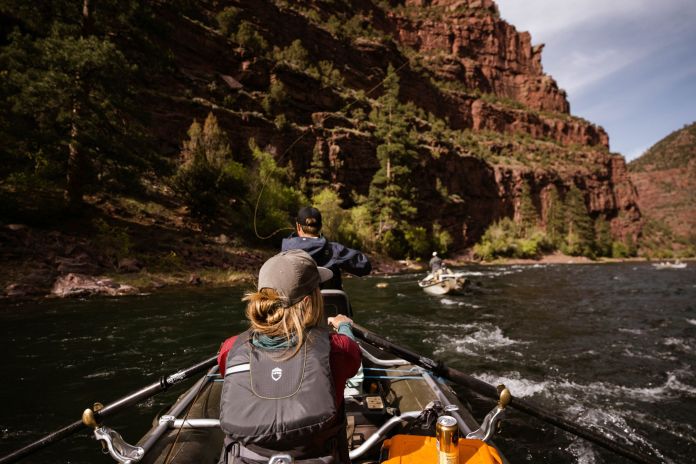
In this Rundown, we’ll look at the newest release from Idaho-based fishing and whitewater vessel company, NRS, to bring you an all-encompassing look at their latest release: The “Slipstream” Fishing Raft.
Background:
If you’re floating down any river West of the Mississippi, on any given warm and sunny day, there’s a good chance you’ll be seeing an NRS raft making its way down current as well. These iconic watercrafts have been a staple to the angling community, as well as the white water community for decades now.
Based out of Moscow, Idaho; NRS or NorthWest River Supplies, has been manufacturing watercrafts and other river-sport necessities (such as apparel, Life jackets, technical gear, and much more), since 1972. In 2014, following NRS founder, Bill Parks’ retirement, the company became 100% employee-owned. This is a rarity in our modern, fast-paced economy, and is an approach that sets NRS apart from any other river-product manufacturer out there.
Over the course of the last few years, NRS has heard an increased amount of demand from the angling community for more fishing-focused products and has taken the feedback in stride. With the release of everything from fishing apparel and outerwear, to new fishing-conscious PFDs and Kyaks, NRS has been dumping time, money, and resources into meeting the needs of the rapidly expanding conventional, and fly fishing communities.
It’s a culmination of these efforts which have led to the birth of what we’re talking about today; the NRS Slipstream Fishing Raft. Or as we see it, A fishing raft like no other.
What’s New:Â
When it comes to the Slipstream Fishing Raft, there are a ton of new features that have been put in to accommodate angling needs. Below, we’ll highlight which ones we think are most notable, and why:
(From NRS): “Slipstream rafts feature a streamlined design with deliberately placed d-rings, handles, and valves to reduce weight and eliminate catch points.”
One of the most annoying things that anglers experience when fishing out of a raft (or any boat/ vessel/ scenario), is line getting caught on things. Anyone who has ever fly-fished understands that fly-line was designed by the devil, and serves the sole purpose of getting wrapped around, tangled in, or caught up on anything that it can – including itself. With older raft models, things like casting platforms, protruding frames, and D-rings are the most common culprits when it comes to eating fly line. This is not only super frustrating to deal with when fishing, but can also severely damage your fly line. Which, we all know is pretty expensive.
The beauty of the Slipstream is that it was made with that issue in mind, and eliminated as many rings, valves, and other hazards for your line to get caught around. Most notably, the casting platforms.
“4” drop-stitch floor provides a super stable platform, eliminating the need for casting platforms. Insert is protected inside a zippered PVC pocket.”
Speaking of the loss of casting platforms, we believe the drop-stitch floor is the key element that sets this raft apart from the rest…
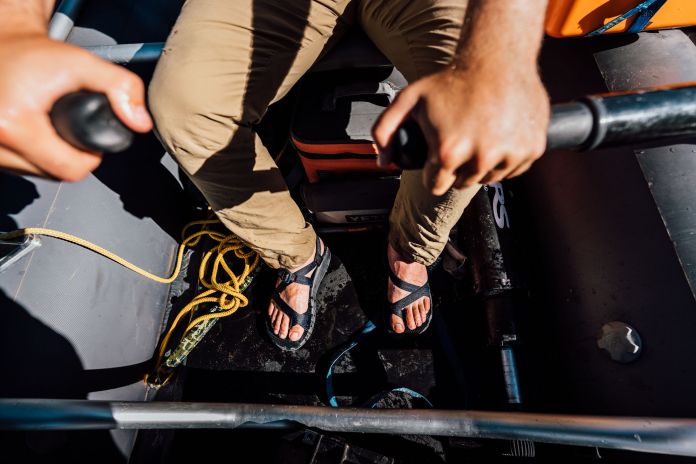
With this new design, gone are the days of dancing around/balancing on elevated plastic floors while trying to fish. The new, 4″ drop-stitch floor runs level from the front of the boat to the back, providing a single, sturdy floor for all anglers and the rower to share. This doesn’t only greatly improve the front and rear angler’s experience, but also provides a sturdy and flat floor for gear storage, such as coolers, fly boxes, dry boxes, and whatever else you want on your boat.
Additionally, the floor is lined with an EVA foam pad which provides great traction, even when wet. It also features an additional valve, located conveniently underneath the rower’s seat, which can be inflated or deflated independently from the rest of the raft, at any time.
“[Includes] Fishing Rod Holder to stow (2) 9′ rods”
One extra item that is provided in the Deluxe package, which we think is definitely worth mentioning, is the aluminum rod holder which can be attached to either side of the frame. We know from first-hand experience, the easiest place to break a rod, is in a crowded raft. In the chaos of fishing, or even just entering and exiting the raft, a slight misstep can result in $1000+ down the drain, or at least an inconvenient Saturday spent mailing your precious fly rod back to the manufacturer for repair. Neither option is very fun – but it’s something we’re all super familiar with.
This rod holder is made to line the outside of the frame, and conveniently stores your party’s fly rods in a way they’re easily accessible, and also out of harm’s way.
“The frame includes an internally routed anchor system that’s controlled from the rower’s seat…”
The last insanely cool feature we want to make sure to talk about is the new Slipstream Fishing Raft’s internal anchor system. With almost every other fishing raft, the anchor rope lines the side of the raft and is exposed. This can lead to the rear angler getting tangled with the anchor rope, things getting caught in it, and unnecessary weathering from exposure to the elements.
With the Slipstream fishing raft, however, the anchor rope runs from the sidebar beside the rower’s seat, through the actual raft frame, and out of the frame in the back to the anchor. This creates just one more element of streamlined engineering that keeps unnecessary obstacles out of the way of the raft’s users.
Tech Specs:
Here is the full tech spec sheet from the NRS website.
(Note: these are the specs for the Slipstream 139 Raft, which is the raft shown in the photos within this article. For other models, please reference the “specs” noted on the NRS Slipstream 120’s Page, or the NRS Slipstream 96’s Page. These specs are also for the “Deluxe package”, see website for more details).
In the Spring of 2021, we were privileged enough to receive one of the first prototypes of the NRS Slipstream Fishing Raftto test out on our home waters. Since then, this raft has been dragged over rocks, sent through white water, bounced off of trees, caught by hundreds of hooks, left out in the sun, rain, and snow – and has yet to give us a single reason not to love it.
It’s important when reviewing a product to point out the shortcomings as well as what we like, but we’ve had a lot of difficulty doing so. This raft is an amazing size for running medium to large rivers but is versatile enough to be used on small rivers, and even stillwater. With its streamlined construction and drop-stitch floor, our angling experience has been greatly enhanced, and we’ve spent so much more time fishing, and so much less time trying to untangle the line.
All this being said, we are even baffled by the price. You can buy the raft’s “Deluxe Package”, which features all the contents above, for all under $6k. In our opinion, that’s pretty unbelievable.
We don’t want to give away too much more, here. But, stay tuned for our Full Gear Review on the NRS Slipstream Fishing Raft which will be coming soon.
An interview with NRS Fishing Manager: Mike Dolmage
In our final portion of “The Rundown” we had a chance to ask NRS Fishing Manager, and someone who has been working on the slipstream since it was just words on paper: Mike Dolmage. Here’s what he had to say about his experience in the Slipstream’s design process:
Flylords: Who are you and what is your position at NRS?
Mike: I’m the NRS Fishing Category Manager and Hardgoods Product Manager. I’ve been a passionate fly angler for over 30 years, living life in search of the next cast. Fall and winter seasons you’ll find me swinging Pacific Northwest waters for steelhead and in search the rest of the year for new adventures on the fly. When not on the water, I’m involved with the preservation and conservation of our waters and resources as anglers.
Mike: My role was creating the vision for a complete NRS Fishing raft package. I conducted extensive research to identify the key features that anglers and rowers demand on a  fishing watercraft. We were focused on providing ultimate stealth fishing watercrafts for the adventure angler seeking remote fishing areas off the beaten path, and on keeping the angler focused on fishing without concerns of stability, line snags, or whitewater performance. Based upon the feedback we created conceptual CAD for the fishing raft package, and collaborated with our frame shop to make the Slipstream series of fishing rafts a reality. The Slipstream series of fishing rafts were successfully launched in 2022, and the Slipstream 120 won the 2022 IFTD Best Of Show Boat/Personal Watercraft. I’ve continued to travel all over North America and introduce the adventure possibilities of the Slipstreams.
Flylords: From start to finish, where did the Slipstream see the biggest challenges?Â
Mike: The biggest challenge of the Slipstreams has been navigating the supply chain hurdles that continue to impact manufacturers and factories since Covid. Keeping up with the demand has been an awesome and difficult task at the same time. We work tirelessly to keep Slipstreams rolling out to customers.
Flylords: What was the initial thought process behind the Slipstream? What role was it made to fit?
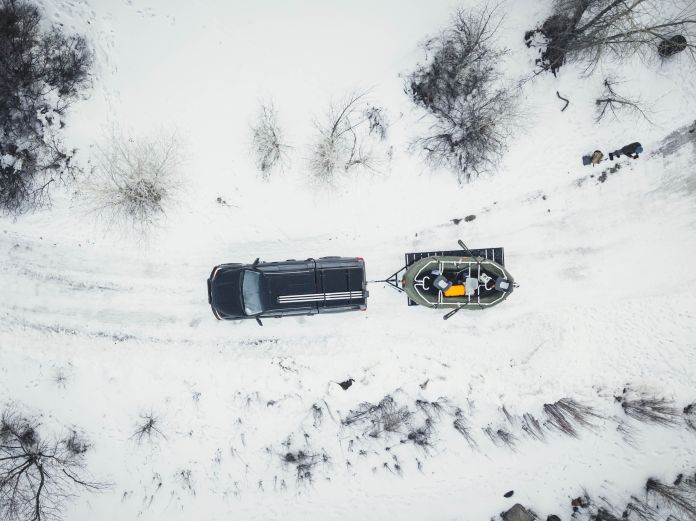
Mike: The initial thought process behind the Slipstreams was to utilize NRS’s 50-year whitewater river heritage, and provide watercrafts that allow anglers to explore waters they haven’t considered before. We keep the adventure angler at the core of our product inspiration empowering them to take any journey the imagination can think of. The Slipstreams were designed to handle any type of water, and lightweight enough to transport/launch without a trailer or boat ramp.
Flylords: What kind of angler would you say each Slipstream model is built for?
Mike: The Slipstream 139 – designed for big water multi-day adventures or single-day outings with maximum cargo space and room for two anglers and a rower.
Slipstream 120 – designed for ultimate water versatility on multi-day or single-day journeys that require whitewater or tight skinny stream stealth performance with a rower and up to two anglers.
Slipstream 96 – designed to pack the most performance and transportability into a watercraft for a rower and angler. The Slipstream 96 is lightweight and easy enough to transport rooftop or in the bed of a pickup.
Flylords: What are some of your personal favorite features of the Slipstream?
Mike: The internal anchor system running through the raft framework and out the center of the stern provides an anchor system without any exposed rope.
The drop-stitch floor with EVA texture provides a rock-solid lightweight platform for standing without the risk of slipping.
The Deluxe Slipstream packages offer a dual rod holder that allows the angler to keep extra rods rigged up for changing conditions on the water.
Flylords: How do you think the design of the slipstream will affect the way that NRS and other raft manufacturers will design their rafts moving forward?
Mike: The Slipstreams set the bar for future fishing watercrafts to be ultra-transportable but still capable of whitewater environments. We’ve transported Slipstreams for fishing adventures in anything from vehicles to helicopters and planes. The Slipstreams are an example of empowering anglers to reimagine a new horizon for adventures.
Thank you for checking out this installment of: “The Rundown”. Stay tuned for more activations surrounding the latest and greatest from your favorite Brands in the fly fishing space.
Thank you to NRS for working with us on this project, which has been years in the making. To learn more about the Slipstream Fishing Raft, you can find it HERE. Also, be sure to follow NRS on Instagram to keep up with the newest advancements from our friends in the Gem State.
This article was published as part of a paid campaign between Flylords LLC and Northwestern River Supply Co. All opinions presented in this article are genuine and solely reflect the opinions of Flylords LLC.Â
First revealed at the 2023 Denver Fly Fishing Show, this special edition Ross Reel is the talk of the Front Range. Benefitting Trout Unlimited’s work on the Poudre River, we’re sure this might be one of the most sought-after new trout reels out there this spring!
Ross Reels is proud to partner with Trout Unlimited in an effort to restore native trout species throughout the U.S. As part of the Native Series, Ross Reels and Trout Unlimited strive to bring awareness and funding to the projects that support the revitalization of native trout species by releasing beautiful limited-edition reels with designs inspired by the fish they seek to save.
About the Special Edition Ross Colorado “Greenback Cutthroat”
The Greenback Cutthroat Reel is a special edition Colorado 2/3 reel.
With only 495 of these special edition reels available, each one will include a number of 1 to 495, as well as “Greenback†on the reel foot.
A novel, all-metal external clicker accentuates the back of the reel – complete with a hand-painted greenback cutthroat clicker plate, emphasizing the inspiration for this limited edition.
Unidirectional click-pawl drag with a crisp, audible sound
With each purchase, a donation will be made to Colorado Trout Unlimited and the Poudre Headwaters Project. Learn more about the project on our Native Series page.