Home Blog Page 40

Fly Fishing Slovenia: The Hidden Gem

Slovenia, wow. I wouldn’t know where to start.

Good friend and fellow angler Greg Lysak contacted me during the last week of February, early last year. I was in the Seychelles at the time, halfway through the Farquhar season – somewhat cut off from the outside world and everything happening. Unfortunately, Russia had invaded Ukraine, and my annual summer guiding plans on the Ponoi river were less likely to materialize.

Greg, who is from France but living in Luxembourg, was planning a big fishing trip and was very keen for me to join him for a couple of months (we usually spend at least a good few weeks together in the Seychelles each year). It was one of those opportunities that I could not turn down. We had planned to head out to Slovenia for about three weeks and then move on to another destination, but boy, we needed to be corrected.

We spent two full months in Slovenia, during the hottest summer Europe has seen for a long time. Fishing conditions could have been better, especially during the last few weeks. Unfortunately, there was very little rain during that period, and due to the extreme heat, river levels had dropped to the lowest they had been in years. Regardless, we had a vehicle; our imaginations, and luckily time was on our side for once. There were endless amounts of possibilities at our fingertips. I’d say we took full advantage of that.

With respect to the rivers, we were very central, and access to the famous Soča and Idrijca rivers was easy and headache free. The home base was at the beautiful family-owned lodge Villa Noblesa in the small town of Most na Soči. We were treated to incredible food and hospitality from Rok Gasparin and his remarkable family and extensive amounts of local knowledge regarding fishing, rivers, surrounding areas, and wildlife. The trip indeed would not have been the same without them.

Slovenia is a very popular summer destination – how could it not be? It is relatively cheap, has the most beautiful scenery, and has gorgeous crystal-clear rivers. Tourists of all shapes and sizes flock up on the river banks, so weekends tend to be very busy. Kayakers, fishermen, swimmers, sunbathers, I could go on and on. Most days, we had the place to ourselves during the weeks, but on the weekends, we found ourselves exploring new areas and fishing the less accessible rivers, which proved to be very enjoyable.

We spent the first couple weeks’ catching fish,’ if you know what I mean. Without venturing too far from the lodge, we kept ourselves very busy, concentrating our efforts in and around the Tolmin area, mainly on the Soca and the Tolminka rivers. It got my confidence up. We also caught some good-sized rainbows and a couple of marble trout. They were not short in numbers either. Fly selection and fishing techniques did not seem to be of utter importance. We caught fish on dries, nymphs, streamers – fishing with an indicator, sight fishing, Czech nymphing; you name it. So as long as your fly was getting good attention, you could see the fish feeding; you had a chance! Remember that each area/river has guidelines for what you can and can’t use.

SOÄŒA River

The Soča river was everything I thought it would be and more. When you open up your search engine and type in “Fly fishing in Slovenia,” and click images, most of the photographs that come up are courtesy of the Soča, crystal, crystal clear water surrounded by the most picturesque mountains and forests. It is spectacular regardless of the fishing and takes the most responsibility for Slovenia’s popularity as a fly fishing and summer holiday destination.

The fishing speaks for itself. The most amazing thing I realized about the Soča was that the fishing could be as straightforward or technical as you made it. You can imagine that with my ongoing saltwater/salmon guiding career, I was out of my comfort zone regarding trout fishing. Despite that, I found myself capable of keeping the rod bent throughout the day, with lots of room for error. The river was full of fish, and there were spots and fish for anglers of all ages and skill levels, making it an exceptional place.

The gorge area between Trnovo ob Soči and Kobarid was, without a doubt, my most enjoyable fishing on the Soča. It’s a full-day commitment; you head out with your backpacks full of water, and all the gear, flies, etc., for the day. Ensure you have a good pair of boots because you’ll be on your feet for most of the day, off the beaten track, hiking over giant boulders and rocks and crossing tricky river sections. It’s a beautiful experience, but not for the faint-hearted. In retrospect, the difficult access is the best part. You’re away from the road, and there are few trails, so chances of seeing another person, let alone another fisherman, are meager. The fish do not see flies often, so it is pretty epic when you find them. It’s a great place to catch some decent-sized marble trout; it seemed as if they were starving!

IDRIJCA River

The Idrijca river that’s where things got interesting. From what I could gather before the trip, it was the place to be if we had a good chance at catching some good-sized marbles – the reason why most people travel to fish in Slovenia. The number of rainbows was significantly less than most of the other rivers I gathered, but regular shots at marble trout and hybrids (marble x brown) were inevitable. I got a severe wake-up call during the first couple of fishing sessions.

The lower part of the river from Stopnik down towards the Soca was tough with the lack of rain and little water movement. It was full of algae, and the fish we found were glued to the bottom and not feeding. We spent most of our time on the upper part, closer to Idrica and the trophy zones. Water temperatures were cooler, there was less algae and more water movement, and we found more fish actively feeding.

Finding the fish wasn’t necessarily an issue, but the approach and presentation had to be perfect to get a positive reaction in these conditions. It was very tricky and took a lot of time and patience for me to get used to. It was far from impossible, though. We found ourselves going out there to focus on catching one good fish for the day instead of heading out on the Soča and catching ten fish between us in one pool. Some days we blanked; others, we had 6, 7, or 8 fish between us. That’s the beauty of it all.

SAVINJA River

We spent two days on the Savinja river, roughly two and a half hour’s drive west of Most na Soci. The place initially came up over a couple of beers with Slovenian guide Blaz Klancnik at the lodge for giant rainbows and browns. We were sold and had to check it out. After a three AM start and a long drive in the dark on some of the most questionable roads I have ever been on (big statement coming from someone who grew up in Zimbabwe), we were on the water, and immediately it was clear that the place had big fish and there was a lot of them too. One thing that it did not mean was that it was going to be easy.

Fish were spooky, very selective, and not moving far for the fly. It was challenging initially, you had to be spot-on with just about everything. At the end of the day, we caught a couple of really good fish, but neither Greg nor I were happy with our performance. Straight back to the drawing board, we punched another day on the Savinja into the calendar and, in between our normal fishing days, started to prepare ourselves for the next trip.

After about a week, we made our way out there again. Weather-wise, conditions were similar to our last visit, but some substantial rain in our absence had given the water a bit more color and volume, which made a big difference. We had an incredible session, landing several giant rainbows, mostly on small streamers, and a couple sight fishing with nymphs. It was epic, and in hindsight, we did not get to explore the river as much as I would have liked. I will be back at some point.

UNICA River

If you speak to anyone who knows about grayling fishing in Slovenia, the river Unica will usually be brought up. A chalk stream, famous for its fantastic mayfly hatches, big grayling, and brown trout – another river we spent a good few days on. The Unica is unique compared to the other rivers we have fished. It is said to be 80% grayling and 20% browns, which we were very keen to see for ourselves.

We had caught a decent number of graylings on the Idrijca and Soča, but they were not so numerous and usually quite challenging to catch once we had found them. The Unica was a completely different movie. Upon arrival, it was apparent at the sheer amount of grayling there was. Due to the low water levels, the river was relatively shallow, and the fish were heavily concentrated in certain spots. We had an incredible few days out there, catching some fantastic grayling on dry flies and some great shots at good-sized browns.

It almost felt like we were fishing for a completely different fish. They were much less spooky and not fussy regarding fly selection. I even caught one on a streamer while casting at a big brown – it was ridiculous. Anyone interested in catching grayling in Slovenia would be silly not to spend at least a day or two there.

MOST NA SOÄŒI Lake

We went through some scorching hot weather in the second half of our trip. Fishing on most of the rivers had slowed right down, and due to the extreme temperatures, there were a lot more people spending most of their day enjoying the cooler temperatures that the rivers in Slovenia offers. Finding some peace was extremely difficult, even during the week. The fish themselves didn’t seem to mind at all, swimmers and kayakers are something they have gotten used to over the years, but it wasn’t quite the experience we were after. We were on the hunt for a plan B.

Bôstjan Jakopič, a local fly fishing guide, and friend of Gregs, contacted us and offered to take us out on the Lake in Most na Soči for a day. The lake formed by the hydro plant on the Soča river is one of the principal natural adornments of the little town, and although artificial, it is of the same unique colors as the mysterious Soča. To the community, it bestows an atmosphere of tranquility and offers plenty of recreation opportunities. Whilst it is no secret to guides and seasoned fishermen, people overlook the lake purely because of the style of fishing. To many die-hard trout anglers, waving around a 7wt setup with a giant streamer attached is undoubtedly considered a sin. I won’t lie; I was very, very excited!

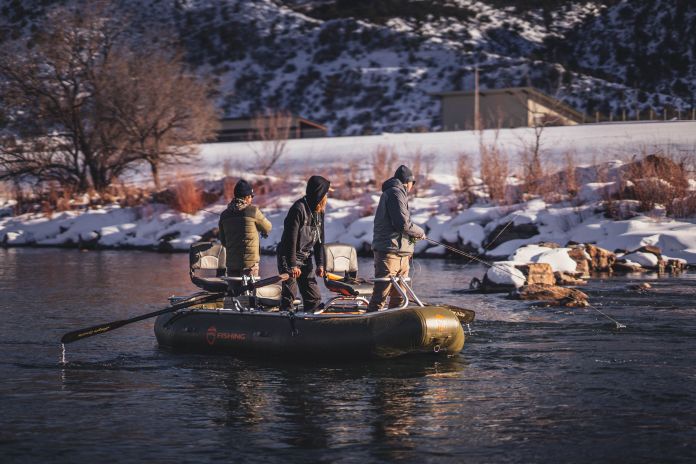
We met Bôstjan down at his boat on the lake. The boat was nothing special – similar to a small Jon boat, with a battery-powered bass motor on the back and a set of oars. It surprisingly had more than enough space for the 3 of us. We used the electric motor to get to where we needed to be and set ourselves up for a long drift. Bôstjan in the center of the boat on the oars, Greg and I at the front and back of the boat, respectively – it worked well.

Much to my surprise, the water was so clean that we spent the whole day sight casting to cruising rainbows and the occasional marble trout. Most fish were aggressive, moving far for the fly and competing to see who would take it. It was an epic experience, and if you spend enough time figuring it out, there is a serious chance of catching a monster marble trout.

To say the least, Slovenia blew my mind. Two months may sound like a long time, but I cannot wait for another chance to get out there. Despite all the fishing and exploration, there are still so many aspects of this country and its fishery that I am yet to experience. Slovenia is headache-free; whether you are an avid fly fisherman or not, it is just one of those destinations you will have to try to visit at some stage.

Angler story from Cullan Ashby. When Cullan isn’t traveling and chasing fish all over the world, find him guiding in the Seychelles with Alphonse Fishing Company and beyond. Be sure to follow him on Instagram @cullanashby.

Check out the articles below:

The Streams of Slovenia

Fishing Breakdown: Arctic Grayling Fishing in Colorado

Reel of the Week: Drift Boat Tip for Targeting Big Fish on the Bank

A note from Joe Rotter @redsflyshop:

For some, sitting in a drift boat or raft might be harder in some situations compared to standing. Check out what Joe has to say about sitting and targeting this particular fish in the brush.

“The Yakima is one of the most demanding rivers in the west due to the high swift flows under the brush. These trout practically share habitat with squirrels! Sometimes when other anglers on the water see one of my guests sitting down, the assumption is that my guests are lazy or have simply given up. Quite the opposite. What I’ve found over the years is that sitting down and getting low allows you to make these impossible casts deep into the canopy.”

Reel of the Week from Joe Rotter, Joe is a guide at Red’s Fly Shop, a destination travel host, and has a great YouTube page sharing some of his tips & tricks. Be sure to follow @redsflyshop on Instagram!

Check out the articles below:

Fishing Tips: Fly Fishing for Large Mouth Bass

Fishing Tips: How To Fish A Dry Fly Upstream VS Downstream

OnWater App Releases New Brand Video “The Little Things”

onWater, the fishing/mapping app designed to help anglers be more confident on the water, has just released their new video, “The Little Things,” highlighting the elements of fishing that drive us crazy – and why we love them.

(From the onWater team). The mission of this piece is to bring to light the things we don’t often talk about from the typical perspective of your average angler. It’s all about the painful inevitabilities of fishing, and how we adapt to them. More importantly: how we learn to love them.

This is the basis of this feature, really. While the app can make sure you don’t miss your take-out or accidentally wander onto private property, it can’t make the fish bite. There isn’t an app that exists (that we know of), that can make sure you don’t forget your fly box on the kitchen table in the morning dash out the door, or stop you from filling your waders in an unexpected hole.

But who’s to say these problems need to be solved? The elements that make the adventure an adventure are the unknown, and oftentimes, the unfortunate. Whether it’s broken tippet or broken hearts, there’s no escaping the hiccups that become the memories that keep us up at night. Luckily, for the things we CAN solve, there’s the onWater app.

The onWater app is designed to help anglers get on the water, and be confident while doing so. By offering a plethora of features such as offline maps, highlighting points of interest (such as boat ramps and parking areas), providing real-time water data, and much more, onWater aims to offer anglers the tools they need to succeed without taking away from the fishing experience. By having the essential information right at your fingertips, onWater’s goal is to be the app that’s designed to make you have to spend LESS time on your phone – so you can be more present on the water.

To download and start your free trial today with the onWater App, click HERE.

Behind the Brand: onWater Fishing App

Everything You Need to Know about Stillwater Fly Fishing

Arcade Belts and Marshwear Clothing Announce New Belt Collaboration

0

Original Maker of Performance Stretch Belts and Lowcountry Lifestyle Brand Collaborate on Seasonal Collection Inspired by the Easy Living of the South and Good Times Spent Outside…

Via Arcade Belts: 

(Out of OLYMPIC VALLEY, Calif. and CHARLESTON, S.C. – May 22, 2023)

Arcade Belts, a brand hard-wired to innovate was founded on the belief that belts could be designed and made better, to last longer, and be more comfortable – and Marsh Wear, a Lowcountry fishing apparel company designing products for the pursuit of good times on and off the water, today announce a new collaboration released just in time for enjoying warmer days and long hours outside with good people.

The Arcade and Marsh Wear collaboration is rooted in real friendships and shared stories from time together chasing fish on western waters and Lowcountry tides. At the end of the day it’s simple: Arcade and Marsh Wear, two performance-driven, innovative, free-thinking brands, share a common passion and love for the outdoors and the people finding their place in it. 

The one-of-a-kind, seasonal collection delivers four unique belt styles inspired by adventures on the water. The down-to-earth tones of each belt are paired with detailed designs highlighting life in the Lowcountry. The Cowabunga belt brings together a jumping tarpon and a dancing longboarder, with pops of light pink, yellow, and blue. Crabby Mermaid features a stitched patch of a mermaid in pursuit of good times, on a light blue background. Leafy Camo is a staple with its subtle pattern and light beige colorway. Ride The Tide is a clean, classic light charcoal belt with fresh details, a camo tarpon patch and a traditional camo belt loop keeper.

Each belt features Arcade’s new A2 buckle, a next-generation belt that features an all new buckle design contoured to fit the body and rest in a natural position. Its intuitive tapered design increases the ease of fitting into and through belt loops, while the 3-piece buckle provides secure hold and durability. 

Arcade Belts Features and Benefits:

  • Performance Stretch: Performance webbing – made with REPREVE® recycled yarn – firmly stretches and moves with your body
  • Easy On & Off: New tapered buckle design feeds easily through belt loops, tail end first
  • Travel-Friendly Design: Metal-free, durable buckle makes travel security easy
  • Contoured Fit: Buckle closely mirrors the curve of your form to rest in a natural position
  • Lifetime Guarantee: Built to last with high-quality performance-grade components tested in the field and in the lab. 

About Arcade: 

Arcade was founded on the belief that belts could be designed to function better, last longer, and be more comfortable. Developed from the ground up with materials that are built to go everywhere and anywhere, each Arcade belt provides a custom fit, sturdy hold, and the right amount of flexibility to move with you. Love for our planet and the adventurous people on it is the spark that lights our fuse. We celebrate and protect the places and communities that are the fabric of an active, fun, and healthy life. Arcade is proud to partner with and support the High Fives Foundation, Boys & Girls Clubs of America, Protect Our Winters, Save the Waves Coalition, and Big City Mountaineers. Learn more HERE.

About Marsh Wear:

Marsh Wear Clothing was founded in 2010 for those in pursuit of good times outdoors. Back then fresh ideas and all that made the brand special were fueled by pluff mud, waving fiddlers, and tailing redfish. And while the breadth of our pursuits, and in turn our product line, have grown since then, it’s that same feeling of being out there in the thick of it that fuels all that we do. Our home, here in Charleston, SC, has inspired us in more ways than one. Hard lessons learned on falling tides and knee-deep in sticky pluff mud have taught us that the best things come when earned and you get out what you put in. These same truths influence the clothes we create for your adventures. Learn more, HERE.

The Ultimate Fly Fishing Gift Guide


Mental Health and Fly Fishing

As a mental health therapist, my number one recommendation to clients is to go for a walk outside for at least 30 minutes per day. I even take some of my clients for walks during our sessions. I do this because studies show a myriad of associated health benefits. Outdoor movement in its many forms improves sleep, builds immunity through the absorption of vitamin D, and promotes heart health. Additionally, documented mental health benefits include decreased depression symptoms due to endorphins and regulated breathing, reduction of the stress hormone cortisol, implementation of positive beliefs through bilateral movement, improved self-esteem, and generation of creativity and motivation.

Like walking, fly fishing taps into the benefits of being active outside and then some. Perhaps the most tangible benefits of fly fishing include cultivating a sense of community, benefiting from self-care, and enhancing a sense of personal identity. 

A Need for Connection 

Many adults struggle with loneliness. After years of socialization ingrained through schooling and extracurricular activities, many people are suddenly at a loss when they enter the working world. Propelled by a need for financial security, they become more and more detached from life purpose and human connection. 

Fly fishing creates an opportunity to find like-minded friends and provides a setting to spend time together with a dedicated focus. Though fishing is often a quiet experience it sets a pace that lends itself to meaningful dialogue and fun times between friends. The setting and atmosphere of the outdoors also creates a venue for people to cope with their mental health difficulties. 

What Fly Fishing Does for Our Mental Health 

While fly fishing, people that struggle with social anxiety, depression, and addiction are able to connect with others by working towards a common external goal. Interactions in the outdoors are less likely to be muddied by social divisions. Instead, interactions center upon mindfulness, observation, and appreciation for one’s natural surroundings. Similarly, the river can be a safe space for people in recovery from drug and alcohol addiction.

Nature offers a social gathering place without substances and an activity to find peace and happiness outside of addiction. Depression symptoms can also be eased through fly fishing. Newfound purpose from this hobby can propel someone who experiences depression into movement and action, both of which are contra-indicative of depression. 

Veterans and Trauma Survivors 

Notably, fly fishing is also a haven for veterans, first responders, and others who have undergone trauma. Along with the previously discussed benefits, fly fishing can re-establish a sense of their identity that may have been lost during service, disruptive experiences, or other life changes. Veterans find themselves once again in a “uniform” (waders and fishing attire) with intense focus on a task, but this time in the safe setting of nature.

Those who engage in fly-fishing share that they become enraptured with the rhythm and cadence of their casts, the imitation of bug life, the flow of the river itself, and the pursuit of remarkable aquatic life. The water inspires a sense of peace in individuals who have experienced violence as fly-fishing strategies and naturalistic observations absorb them and demand uninterrupted concentration.

The Magic of Fly Fishing

New skills bolster a person’s self-worth and capability. The most pivotal moment in a person’s fly-fishing journey is when “I can’t” becomes “I can and I will.” This empowering change translates from fly fishing to other realms of life. The experience of catching a trout on a hand-tied fly in a lively river with your own strategies and determination is life altering. I have witnessed this type of empowerment transform people into better partners, family members, and friends. The experience and accomplishment of fly fishing permeates our senses and shows us that outcomes are not predetermined — that growth in any capacity is attainable. 

It’s not as simple as picking up a fly rod and catching your first fish on your first cast. It takes time, investment, and patience. Over time, you will become enmeshed in a tight-knit community interconnected by shared experiences, humorous missteps, and in-group lingo such as “hog” and “skunked.” Before you know it, you are communicating in what could be seen by non-anglers as a different language. In this way, “angler” becomes a part of how you define yourself. It also fundamentally changes the lens through which you perceive the natural world. A whole new set of adventures is unlocked — saltwater, freshwater, stillwater, the list goes on. The variety of experiences may differ from stream to lake and from redfish to sockeye, but the enthralling rhythm of fly fishing and the passion of the community remains the same.

Reaching Out for Help 

Fly fishing is healing, but some difficulties in our lives require professional help. Remember when you first started fishing, more than likely, you needed help from a mentor or even someone online. In the same way, taking care of your mental health is a learned skill. And don’t you want to become an expert in that as well? 

If you are looking for a place to start, visit psychologytoday.com to find a therapist in your area that matches your needs. If you are in need of immediate assistance simply dial 988. Help is available for you. 

Article and photos by Melissa Ceren the “The Fly Flinging Therapist“. Melissa is a Mental Health Counselor LPCC and Fly Fishing Guide based in Colorado. Give her a follow on Instagram at @big_mac_fishing.

In Search of My Five Weight

Dry Fly or Die: A Youth Mental Health Story


Fishing Tips: Fly Fishing for Large Mouth Bass

If you haven’t tried fly fishing for large mouth bass, you are certainly missing out on a great opportunity. Whether you are looking for a more accessible way to hit the water, trying to find an alternative during spring runoff, or  looking to tick off a new species, you need to check out this video. Thank you to Red’s Fly Shop for keeping the tips coming!


Angler Story of the Week: The Batfish

A note from Cullan Ashby:

“Platax orbicularis or more commonly known as the Batfish.

One of the more weird and wonderful fish you are due to bump into on the flats of the Seychelles outer atolls.

They are certainly not your average species to target on the fly. The Batfish you find out on the flats are primarily feeding on green algae glued to the bottom and most days the fishing involves a lot more casting than catching.

They do tend to show a more predatory side given the right conditions and every now and again you can get one to react to a small bonefish fly. They are stunning fish, hard fighters and prove for an incredible photo!”

Angler Story of the Week from Cullan Ashby, find him on Instagram @cullanashby. Additional photos from the Alphonse Fishing Company.

Check out the articles below:

Photo Essay: The Fish of Providence Atoll

How to Tie: The Semper

Video of the Week: Catching a Grand Slam on Foot with Dorsal Outdoors

In this Week’s Video of the Week, we catch up with the crew from Dorsal Outdoors and their guide Nick Denbow in their newest video from their DIY trip down to the Yucatan Peninsula. “Catching a grand slam in fly fishing is important to many anglers because it represents a pinnacle of achievement and a demonstration of mastery over a challenging and rewarding pursuit. It means getting a bonefish, tarpon, and permit in one day.” As the crew explores the peninsula they target Tarpon in lagoons and then head out to the flats to chase Bonefish and Permit. So sit down and enjoy as Ben not only gets 1 shot at a Grand Slam but 2 in 2 days!

Dorsal Outdoors is a channel devoted to seriously pursuing the best in fishing and hunting… while not taking ourselves too seriously.” Make sure to follow along with their adventures HERE.

Post Grand Slam Feeling Courtesy: Dorsal Outdoors

Check out these rad articles as well!

Video of the Week: Project Isuzu with Blue Line Co.

Video of the Week: Unicorn of Fly Fishing with Brooksy

Video of the Week: “The Best Float Trip Ever”

America’s Fish: The Exciting Fish in Almost Everyone’s Backyard

If you had to pick a single fish species to label “America’s Fish” I think you would be hard-pressed to find a better candidate than the striped bass. Geographically, these fish can be found on both coasts (although they’re introduced in the Pacific), deep in inland lakes and tailwater systems, and in just about every major large river watershed in the country. Hell, there are even stripers in Texas. Wherever they swim, these fish have disciples, anglers who obsess over tracking their movement, preferred bait, and attitudes. But stripers don’t require that level of obsession to fool or even pursue. If you do a quick Google Search you’re likely to find that you’re closer to feeling the familiar thump and run of a bass taking a fly than you think – and all it takes to get in on the action is a fly rod, a clouser minnow and a few hours after work.

Capt. Zak punching line into the surf.

To take our understanding of these fish to the next level, we joined Sage Ambassador Capt. Zak Robinson on one of his favorite “guide’s-day-off” activities, chasing striped bass on foot along the Maine coast. During our adventure, we clamored over huge glacial rocks, dipped our wading boots in sand and mud flats, sipped a few choice beverages, and even fooled a bass or two to cap it all off.

This article is meant to do two things, tell you why you should add chasing stripers on the fly to your hitlist, and give you a great jumping-off point to chase these incredible fish in your own backyard.

All it takes to get in on the action is a fly rod, a clouser minnow, and a few hours after work.

Why Fish for Striped Bass

For Capt. Zak, striped bass offers an easy-to-access fishery where he can grab his Sage SALT R8 10WT, some fishing pals, a handful of flies, and be on the water in no time. In the water, everything is calm, there’s no stress from the day lingering, just the promise of an incoming tide and pushing fish. It’s a chance to take time for himself, something that’s hard to prioritize in the frenetic five-month season where he’s balancing guiding, family, and running his own contracting business.

Zak got into guiding at first to get friends on fish and to explore the vast flats of Maine’s Great Bay from the poling platform on his skiff. Since then, his goals on the water have shifted from focusing on catching big fish to showing folks the importance of these fish to Maine’s marine ecosystems and bringing anglers an opportunity to relax and immerse themselves in a new world and mindset.

Zak’s season (like many guides in the Northeast) is a quick burn taking full advantage of the bass on the move through Zak’s home water, Maine’s Great Bay. During this window, Zak is running to and fro between guiding and work, it’s during this time that finding time for himself in his own backyard is most rewarding.

There’s a beautiful contradiction in striper fishing where anglers can find inner peace while fishing through the harsh conditions the Maine Coast can throw at you during the summer.  The intimate action of fishing off the rocks, the adrenaline rush of hooking fish in the midst of pounding surf, and the fight of these powerful fish all make for a truly unforgettable experience. And contrary to what you might think, it’s a way to find calm in the chaos. No matter how rough the conditions, Zak always comes back from a fishing outing with a smile on his face, and weight off of his shoulders. Something that everyone should aim to accomplish no matter where they’re throwing a line. 

Where to Find Striped Bass

To have success fly fishing for striped bass in Maine, it’s important to know where to find them. One key is to find the bait, as the striped bass will typically follow the food. Rocky coastlines, jetties, inlets and river mouths, and mud or sand flats are all good spots to look for these fish and we pretty much ran the gamut with Zak, to get a full taste of what fishing each zone would be like. 

Find the Bait, Find the Fish

This is the first phase of any search for striped bass. As predatory fish, stripers base a large portion of their movement decisions on the availability of food. As you’re exploring, don’t just look for the fish you’re chasing, look to the water to show you what’s around whether it’s crabs, shrimp, or baitfish. Wherever you find the highest concentration of these, you’ll likely find hungry fish pursuing them wherever the tide will allow.

Rocky Shores & Jetties

Rocky coastlines can be particularly productive, as they offer plenty of structure for the bass to hold and feed. Jetties are also great spots to look at, as they offer a break in the current and can attract large schools of baitfish. Here, bass often hold tight against the rocks where they can push bait into the wash and feed aggressively. This makes for some exciting fishing, as you’ll need to cast your fly accurately and quickly strip to entice a strike.

Inlets/River Mouths

A textbook inlet where bass ride the tide to the warm back bays where their favorite forage species thrive.

While we were game planning our day with Capt. Zak, he called out the importance of inlets and river mouths to striped bass feeding strategies. These structures create a bottleneck of sorts, where water only has one way in and one way out. The bass takes advantage of this on either end of the tide, taking up ambush positions to easily feed on bait getting washed through the bottleneck with the tide.

When you’re approaching these zones, think of reading the water as you would for trout. Find the easiest places for a fish to hold where they’ll have to spend the least amount of energy while maximizing the availability of protein. This is where you’ll likely find feeding fish eager to slurp up any fly that twitches past.

Mud/Sand Flats

These zones are where Capt. Zak thrives. Flats fishing for striped bass is a relatively new strategy that’s come to light in the past decade or so. This isn’t to say that folks haven’t been targeting stripers in shallow water, they have for at least the last century, but what’s taken this strategy to the next level has been the availability of well-designed skiffs that can get skinny. With the influx of these boats and anglers observing fish behavior on them from above, new tactics arose that apply to fishing on foot and from a boat.

On the flats, bass are taking advantage of the skinny water to evade predators like seals and sharks, while getting uninterrupted access to the rich bait factory of warm shallow water. When you’re fishing here, look for pinch points in the muddy channels that form the arteries of the tide, bass will ride these puppies as long as they can before peeling off to forage for snacks. It’s not uncommon to find bass patrolling these flats like a bonefish might, tailing on crabs and darting after baitfish as they spook from the holes in the substrate.

Coastal Striped Bass Gear Essentials

Zak will use a variety of rods from the SALT R8 8WT-10WT.

When it comes to gear for coastal striped bass fishing, there are a few key items that you’ll need to have.

Wading Gear

First and foremost, you’ll need good wading gear to stay safe and comfortable while fishing on foot. This includes a stripping basket to manage your line, an inflatable PFD for safety, studded boots for traction, a wading belt to keep water out, and waders to stay dry.

Rod & Reel

Zak’s 10wt SALT R8 paired with the Sage ENFORCER REEL

In terms of rods and reels, Zak is using a Sage SALT R8 rod in an 8-10WT is an excellent choice, as it offers plenty of power and accuracy for casting into the wind and bringing in big fish quickly. A Sage ENFORCER reel is a perfect pairing, as it offers a smooth drag, great stopping power, and plenty of line capacity for fish eager on reaching the horizon or the deepest water they can find.

Line & Leader

Fly Line

In terms of fly lines, we like to keep things simple in the saltwater. For a typical day chasing bass from shore, an intermediate line will be the best all-around line for fooling these fish. Of course, if you’re fishing deep drop-offs, you may want to consider a sinking line to get your flies into the zone, but for the most part, you can easily get away with intermediate to come tight to fish.

Leader and Tippet

If you hate squinting at 6x tippet while trying to tie on a #16 dry fly in the dark, you’ll find the terminal tackle required for bass a little easier on the eyes. Generally Capt. Zak recommends starting with a 20 lb fluorocarbon leader and then some tippet ranging from 10 lb-20 lb depending on water clarity and how the fish respond to casts. The heavier leader helps turn over bulky or heavy flies and the light tippet gets them in front of a fish without spooking it away from its feeding zone.

Striped Bass Flies

Luckily for anglers everywhere, stripers aren’t the most picky fish in the sea. Generally, they’ll take advantage of any available meal that they find. For our time on the water in Maine, clousers, crab & shrimp flies and deceivers were all on the menu depending on what we observed going on under the water. If you’re looking for more insight into striped bass flies and collections of our favorites, click here. 

When to Fish for Striped Bass – Tides, Season, Time-of-Day

Timing is everything when it comes to fly fishing for striped bass along the Maine coast. One important consideration is the tide, as moving water can often be your friend. Striped bass will often be more active and feeding during tidal changes, so it’s a good idea to plan your fishing around these times. What’s nice about this factor is the convenience of picking your fishing window and just enjoying a few hours out on the water when fishing is prime. “Fish smarter, not harder” is a mantra where the striped bass is concerned. 

In terms of season, the best time to target striped bass in Maine is from May through September. During this time, water temperatures are warmer and the fish are more active, making them more likely to take a fly. Finally, the time of day is less important than the tide, as long as you’re safe and the tide is moving, you’ll likely find fish. 

In Conclusion…

Just get out there. Bass is a simple fish and doesn’t require much to be a fulfilling species to pursue on the fly. You can chase them in a whole host of strategies, and we highly recommend you try them all to find which brings you the most success, and the most relaxation. For some, that may be found in the rhythmic casting found while swinging current seams, or for others it can be found slowly walking across the flats, stalking fish in silence as they tail on a flat. It’s in these moments that the angler becomes a part of the natural world flowing past their waders, when a sense of calm washes over you, only to be broken by the thump and run of a striper ripping line out of your stripping basket. 

Fly fishing for striped bass along the coast of Maine is an exciting and rewarding experience that any angler can enjoy. By understanding where to find striped bass, what gear to use, and when to fish, you can increase your chances of success and have a great time on the water. With a Sage SALT R8 in hand, you’ll be well-equipped to handle the challenges of coastal striped bass fishing.

Big thank you to Sage and Captain Zak Robinson for having us along for this shore fishing adventure, we’ll be back up on the coast chasing “America’s Fish” as soon as we can!

Gear Review: The NRS Slipstream 139 Fishing Raft

A few months ago, we released an All-encompassing look at the New NRS Slipstream Raft, as part of our Flylords “Rundown Series”. In this feature, we covered some background on the product, some specs, and an interview with Mike Dolmage – this Fishing Category Manager at NRS (As well as the fella’ in the Slipstream assembly video, for those who have already purchased a raft for themselves). Alongside those components, we also briefly summarized our experience with the raft thus far. In this Gear Review, we’ll be expanding on that experiential element, highlighting key takeaways from almost 2 years in the bow, stern, and rower’s seat of the NRS Slipstream 139 Fishing Raft.

rigging in the slipstream 139

Before We Get Started…

When it comes to rafts, there are few brands that are more established in the outdoor space than Northwest River Supplies (NRS). For over 50 years, NRS has been producing high-quality rafts for all outdoor pursuits involving getting on the water, ranging from white water rafting to kayaking and paddle boarding. However, when it came to fishing, NRS’ fishing packages the offering was slightly limited. The NRS Otter line was the first title offering that was uniquely catered to fishing applications but wasn’t really much more than your standard white water raft with a bow and stern standing platform attached to either end of the frame.

old nrs raft
What people generally associate with a fishing raft: clunky and underdesigned for what an angler needs…

This being said, and in the probable sentiments from your buddy from Bozeman, MT: It really doesn’t matter which raft you’re fishing from – just as long as you’re out fishing. And while we agree with those words of wisdom, as well as acknowledge the Otter is a great raft overall and certainly serves its purpose, its design left just a little bit to be desired from an angler’s perspective. Luckily, it seems like we weren’t alone in our way of thinking. Because, while we were rolling down the river getting our lines tangled up in casting platforms, the NRS development team was hard at work on something big.

In 2021, NRS introduced our team to one of the first-ever finalized prototypes of the “Slipstream Fishing Raft“, where we had ample opportunity to try out all of the new features of the raft, while inadvertently slamming it into a rock or two along the way. After fielding plenty of our team’s feedback, it was in 2022 when NRS announced the release of their newest fishing raft: “The Slipstream Fishing Raft” to the public – and the world of fishing rafts was never the same.

the slipstream entering the water

Initial Impressions:

While buying a new raft straight from the factory isn’t in everyone’s realm of budgetary possibilities, an advantage of doing so is the opportunity to assemble the raft directly out of the box. This creates a level of familiarity with the boat and its many components that really allows the user to better understand that the product is a complex summation of simple machines working in conjunction with one another, as opposed to just… well, a “raft”.

features of the slipstream

Something we noticed immediately after dissecting the 5 or so heavy cardboard boxes that had previously decorated our office doorstep, was how easy NRS made it to assemble this raft (Note: in this gear review, we will be highlighting the NRS Slipstream 139 Deluxe Package. Experiences with other packages may vary). Within each package, there were several varying portions of aluminum tubing, which would quickly be constructed into one singular frame, as well as the necessary hardware, a field-repair kit, and an assembly manual. Alongside these items, the deluxe package included an anchor line, a pair of Cataract SSG Oars, Cataract Cuttthorat Blades, a fishing rod holder, and some clamp-on cup holders.

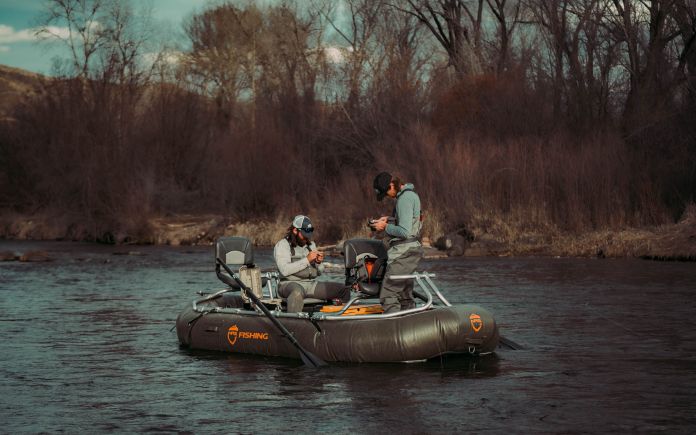
In a separate box, was the neatly folded raft. While we had been briefed on one of the most essential modifications of the slipstream itself, seeing the raft come to life after being fully inflated (with a car battery and an electric pump), was what really got us giddy to get this boat wet. Sitting there in its space-gray glory (we have since swapped the original prototype out for a forest green model with the blaze-orange “NRS Fishing Logo”), was the shiny new raft, boasting the brand new 4″ drops-stitch floor, which we will cover in greater detail in the interview below.

Assembling the rest of the raft came with relative ease; and with helpful instructions provided, took no longer than an hour or two. Once the entire Slipstream was completely assembled, it was time to slide ‘er onto the trailer and get the first float of many, officially in the books…

birds eye view of nrs slipstream 139

Field Testing: The NRS Slipstream 139 Fishing Raft

Fast forward from that assembly 2 years ago, and we’ve since assembled 2 more Slipstreams, sent well over a hundred floats, caught quite a few fish, and crashed into an innumerable amount of river debris along the way. All things considered, here’s the summation of our experiences with the NRS Slipstream 139 Fishing Raft.

set up on the slipstream 139 raft looking for flies

While reading this review, You’ll find the consistent mention of the fact that this raft’s name wasn’t given to it without careful consideration. In NRS’ effort to further tailor their new boat to meet the needs of anglers (fly-anglers in particular), the slipstream was, and is, intended to present a “streamlined” improvement to the raft-fishing experience. Each element that differentiates the Slipstream from its predecessors has been incorporated in order to minimalize/ reduce/ eliminate almost anything on the raft that could get in someone’s way during a day of fishing.

Most of us who have ever spent any time on a raft are all too familiar with the feeling of hauling out a 30 YD+ cast, only to have all forward momentum completely halted due to our fly line having become wrapped, or otherwise tangled, around a casting platform, hip lock, or D-ring. While this infuriating occurrence is ultimately impossible to solve completely, the NRS team has taken almost any scenario you can think up and engineered the layout of the Slipstream to avoid it. The first and most important adjustment that came to fruition from this focus, would be the new floor.

slipstream 139 floor

The NRS Slipstream 139, and other Slipstream Models, feature a 4″ drop-stitch floor (as mentioned earlier) that not only completely eliminates the need for casting/standing platforms, but puts every member of the raft on the same plane for a much better-shared experience. The floor stretches from the stern to bow, and is inflated just like the rest of the boat through an independent valve, which is easily concealable with a built-in velcro flap. It’s lined with an EVA foam pad which doubles as an excellent traction device for rowers and anglers, as well as provides an extra layer of protection against wear and tear.

In our experience, incorporating this solid floor is something that all fishing rafts will be expected to have included moving forward. Casting platforms are fine when there isn’t something more sturdy to stand on… but, they’re easily susceptible to breaking, as well as becoming misaligned and extremely slippery when introduced to water… which, when you’re floating on any river, is a pretty common occurrence. Not to mention, getting fly-line, leader/tippet, or any other multitude of things that can make fly-fishing miserable, caught around a casting platform is a sure-fire way to guarantee you’re going to be on your hands and knees digging it out for the next couple minutes or so – that’s crucial fishing time down the bailer!

sending a cast off into the distance from the slipstream 139

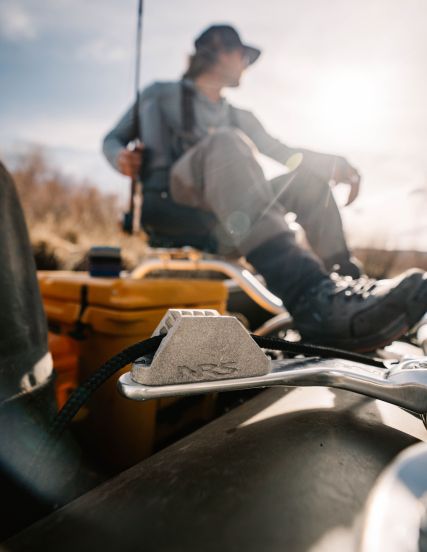
Moving along with the streamlining of the Slipstream, another key element that deserves to be highlighted is the new internal anchor system. Traditional anchor systems within fishing rafts usually feature a rope running from the rower’s seat, along the frame, and over a wheel or channel where it connects to the anchor (and oftentimes an additional pulley). This isn’t a bad design by any means, really. However, plenty of times that few feet of anchor rope just acts as yet another point of strangulation when it comes to the perspective of the angler in the stern of the boat. Put plainly: exposed rope is just another thing to tangle on or trip over…

The Slipstream seeks to solve this issue by simply (*drum roll*) moving the anchor rope to the inside of the frame. It seems like a simple solution, but it’s a lot like modern art… “You could’ve done it, but you didn’t”. The anchor is fed through the tubular frame and out of an extended segment of the stern, where it can be run like any other anchor system. The rope is stabilized by two wheels which are positioned on the entrance to the frame at the rower’s seat, and at the edge of the frame extended from the stern.

pulling up the anchor through the slipstream internal anchor system

Overall, this system is heaven-sent. On the days when the boat is packed to the brim and busy ever, the last thing the rower and rear-angler want to have to worry about is a rope attached to a heavyweight shooting through the boat, or being compressed by someone’s loose gear. However, one negative element of this design is that the stabilizing wheels are plastic, and if screwed in too tight, or fall out of position, they can seize and make it nearly impossible to pull the anchor up. We’ve since resolved this issue on our boat with some meticulous positioning of the wheels, as well as a generous WD-40 application every now and then.

On top of the other added features, the Slipstream is constructed with a very “edge-phobic” approach. Bolts and couplers are placed in strategic, out-of-the-way locations, and the front of the frame actually wraps up the bow and transforms into the hip bars. This design is in place of the awkward extra bar and bolts that many other fishing-focused rafts rely on. So, instead of having an actual post to get line wrapped around and caught on, the line lays smooth on the frame itself. Sure, we still get our line wrapped around the hip bars every now and then, but getting untangled is about 10x easier with the new design.

nrs anchor system

So, we’ve talked about some of the cool features, but overall, how does the NRS Slipstream row? Again, as previously noted, we are focusing on the Slipstream 139, which is the largest available model and the vessel that our team most commonly occupies.

The Slipstream, like the Otter, is constructed with a diminishing tube design. This factor, in short, allows it to cut through waves and slack water much more efficiently than its wide-hipped counterparts. Additionally, due to its minimalist frame and lack of platforms, the boat is extremely lightweight, allowing for quick movements in very skinny water. All too often, we’ve been crashing down a river as the sign lights up the water, making it very distinguishable to tell rocks from riffles until the last second. With the NRS Slipstream’s design, it’s much easier to make those super last-minute adjustments and cut around rocks and downed trees with ease.

front facing view of the slipstream 139

Additionally, the Slipstream floats relatively high in the water column. So, on those winter/early spring floats when the flows are down but the desire to chuck some meat is high, you and your party can make it down pretty much any river with a current, and spend a relatively small portion of your time getting out of the boat and pushing over rocks.

One disclaimer we will make is that due to its lightweight nature, the boat IS more susceptible to being pushed around by the wind. So, on those extra windy days, we usually pack an extra cooler full of ice and try to load the boat down a little more.

How well does the NRS Slipstream 139 Fishing Raft hold 3 people? In professional terms: “Pretty damn well”. Due to the built-in floor, the entire bottom of the raft is pretty much up for grabs when it comes to storing people and gear. Instead of combatting, what often feels like the floor of a bouncy house, the crew of the Slipstream can pretty much position themselves and their gear wherever they want in the boat.

crowding the boat

Additionally, NRS has designed their boats to be extremely modular and adjustable. All elements of the internal frame can be moved forward and backward as needed and with relative ease. As long as you’ve got a socket wrench handy, the boat can be customized to fit the rower’s needs at a moment’s notice.

All teams come in different shapes and sizes – especially our own. So, the ability to make sure everyone is comfortable for long days in the pouring rain and/or hot sun is a pretty essential element we appreciate in a raft. Additionally, while we won’t recommend it for a long day of float fishing, the boat can also pack a 4th person in pretty easily, as well. No, it’s not the same level of roominess that a larger raft can offer and may require a forfeiture of some gear and comfort, but for those days when you don’t want to leave anyone behind, there is certainly space to make everyone happy.

NRS Slipstream 139 Fishing Raft Final Review: 

fish with a fly in its mouth next to the slipstream 139

Size: 

3 stars

Maneuverability: 

4 star rating

Weight: 

3 stars

Durability: 

4 star rating

Functionality:

4 star rating

Modularity: 

3 stars

Cost: 

5 star rating

Ease of Assembly: 

3 stars

Conclusion:

When it comes to our concluded review of the NRS Slipstream 139 Fishing Raft, I’ll start with this: In the many gear reviews we have put together over here at Flylords, there hasn’t really been one that we’ve spent more time testing than the Slipstream 139. Since 2021, we’ve brought this boat down nearly every floatable river in our immediate area, and dozens more throughout the state and outside of it. We have also had the opportunity to test out a plethora of other fishing vessels, such as the NRS Otter, in order to better develop the grounds for exactly what we were comparing the Slipstream to. With those factors considered, here are our final thoughts…

fishing from the side of the boat

The NRS Slipstream 139 is a necessary step forward within the sport of fly fishing in general. The level of thought that NRS clearly put into the design of the raft is very evident, and overall titillating to see from a fly angler’s perspective. It’s no secret that the sport of fly-fishing is a niche within the outdoor industry, and not necessarily a commanding one at that. So, it’s always nice to be reminded we, as fly-fishing consumers, are being seen and heard by larger companies focused primarily outside of the fishing community. It seems that with the slipstream, NRS letting us know they will be making a greater push into the fly fishing space. We’re excited to see what comes next.

The Slipstream is a great raft for beginners and pros, alike. Because it’s easy to control, and overall pretty durable, you can enjoy a relatively stress-free float with a rookie in the rower’s seat. If you are the rookie in question, the size of the Slipstream is another added bonus, as the prospect of rowing it seems far less daunting than when approaching other rafts.

Side profile of the NRS Slipstream 139

In terms of, “Do WE think you should purchase an NRS Slipstream, or not”, here’s what we can offer. For the money ($5,995 for the 139 Deluxe Package), you’re really not going to find anything better on the current market. This boat, coming with everything besides the anchor and a trailer, is everything you need in order to get on the water – and have a damn fine time while doing it. While no boat is perfect, and there are still some kinks being worked out by the folks over at NRS, the Slipstream is undoubtedly going to offer the most bang for your buck when put it up against any other fishing raft. Our team certainly looks forward to many more years of long days spent sending rapids and chasing big streamer blow-ups on our Slipstream.

Click HERE to learn more about the  NRS Slipstream 139

nrs slipstream 139 fishing raft

The Rundown: An All Encompassing Look at the New NRS Slipstream Raft

Everything You Need to Know About Float Fishing

onWater & NRS Announce New Strategic Partnership