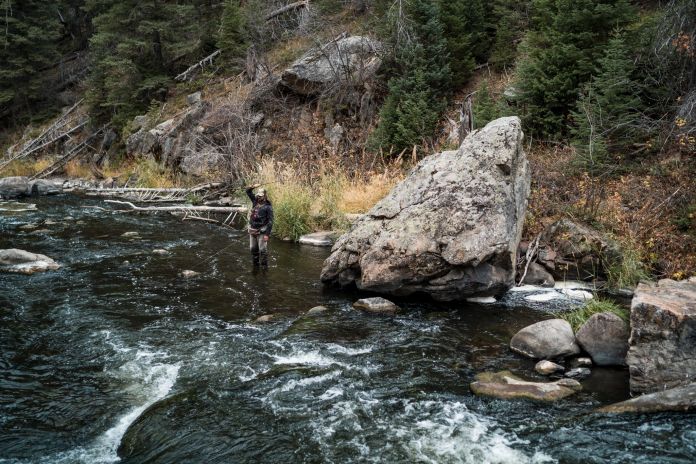
Another mining project’s ugly head is looming over a hallowed piece of wild trout and salmon water, this time in the lower 48 on Idaho’s South Fork of the Salmon River. According to Idaho Rivers United, “Midas Gold’s proposed project would destroy over 20% of critical habitat for Chinook and Bull Trout in the project area. 75% of the project disturbance would occur on public land.”
Help us stand up for Idaho’s wild salmonids and public lands and contact policymakers about the terrible detriment the proposed Midas Gold mining project would be to Idaho and the entire Salmon River drainage.
“Located in the headwaters of the South Fork of the Salmon, the proposed Stibnite Mine project slated to become one of the largest gold mines in the nation. Midas Gold Corporation – a Canadian mining company – has pitched the project as an opportunity for restoration, claiming that more mining can clean up historical mining impacts.
The science shows otherwise.
Midas Gold intends to nearly triple the footprint of the historic mine area, using three open-pit mines and cyanide leaching to extract gold and antimony in the headwaters of one of Idaho’s most iconic waterways: The Salmon River.
The Draft Environmental Impact Statement (DEIS), released on August 13, 2020, demonstrates that even with their proposed restoration work, the project will result in a net loss of habitat for Endangered Species Act listed Chinook Salmon and Bull Trout. Over 100 million tons of contaminated mining tailings would fill Meadow Creek valley behind a 450ft dam, destroying pristine Chinook and Bull Trout habitat. Many modern mining projects have accidental spills due from tailing dam failures or operational issues, placing everything downstream at risk.”
To learn more and take action, check out these resources:
Closed borders and empty river beats made the 2020 Norwegian Atlantic Salmon season one that local anglers will not forget for years to come, especially Ahed El-Najar. The 2020 fishing season brought a lot of changes to anglers around the globe, the lucky echelon of destination anglers that are usually headed to far-flung regions of the world were forced to stay home, giving local anglers unrivaled access to waters that are usually reserved or booked years – sometimes decades in advance.
In Norway, most fishing regions require buying a fishing license and the costs of those can vary based on the rivers you’re looking to fish. For most salmon rivers, you’ll also be issued a specific beat section of the river that your license gives you access to. Not all beats on the rivers are created equal and drawing the prime beats can be a challenge in normal years. However, with COVID holding back the usual groups of traveling anglers, Norwegian anglers like Ahed took the opportunity to dip their toes into serious salmon fishing on uncrowded waters.
Making the most of his COVID fun-employment, Ahed hit the road north from Oslo with some of the country’s finest Salmon beats in his sights. After 45 total days on the water, Ahed had accomplished some incredible angling feats, including breaking the record for a fly-caught Sea Trout and landing a massive 20kg Atlantic Salmon amongst dozens of other catches. If you were looking for inspiration to take full advantage of the work-from-home life, let us introduce you to Ahed, and the incredible waters of Scandinavia.
After seeing more than a few incredible fish Ahed brought to hand, and the images he captured, we caught up with him to ask a few questions about his season and the wild fish he encountered this season. Check out the interview and photo essay below!
Flylords: What was the most difficult aspect of salmon fishing to learn for you?
Ahed: The most difficult aspect of salmon fishing, hmmm. Learning to cast with two hand rods was certainly advantageous in windy conditions, and of course, being able to make long-distance casts in some of the larger rivers. Being able to read the water was also a challenge starting out, but my experience as a trout angler helped quite a bit. We always do our best to read the water before we step foot in it or even make a cast. But for the most part, I think that hard work and perseverance are the biggest factors required to find your fish. Sometimes it can take kilometers of wading and days of fishing before you come tight to a Norwegian trophy. If you focus on those two aspects, you will definitely be rewarded!
“This was the biggest sea trout recorded and measured on a fly rod in Norway.”
Flylords: Would this be considered a trophy Norwegian sea trout?
Ahed: This was the biggest sea trout recorded and measured on a fly rod in Norway. A lot claim bigger but no one recorded it, it is the standing Norwegian record in fishing and hunting site. The story behind this fish is even wilder. When my partner hooked the fish, we initially thought it was a big salmon as it tore up and downstream. It put on quite the show as I worked with my buddy to get the fish to the bank. As soon as I realized that the beast attached to his line wasn’t a salmon, but the largest sea trout I’ve ever seen in a river, I knew I couldn’t tell him what the fish was for fear of psyching my partner out. Once we got it to hand, the shouts of joy, relief, and awe could be heard for kilometers up the river.
Flylords: How has COVID affected fishing pressure and access in Norway?
Ahed:COVID has had positive and negative impacts on fishing pressure and access in Norway this year. For normal guys like me and my partner, it was a blessing. In a normal season, we would probably not have access to the best beats/rivers because they usually are booked out years in advance, but this year those beats/rivers were available. The pressure has certainly been lighter since the usual out-of-country anglers weren’t traveling here. The sad part of the situation was for the river owners who really had a bad business year, but so did we all. I lost my job from March to August and that’s what spurred me to make something positive out of it and go fly fishing. With no tourists running about this year, I decided to go all-in for this year’s salmon season and got really great results. Now I don’t expect to have the same season next year but I will definitely fish for salmon the coming years, as well.
Flylords: What are the best times to come salmon fish in Norway?
Ahed: If you have the ability to time it right, early season and late season is when the fishing is prime. Our fish enter the rivers angry and chromed-up on their upstream mission, but in the middle of the season they mellow out, biding their time until their spawn. Just before that, the action turns on again as the fish get territorial and aggressive.Â
Early season is always a safe bet because the fish have not been in the system long, and haven’t experienced many anglers or flies, so you have a good chance of landing big ones. During our midseason, most of the small salmon and grilse come in. Then late in the season, the large breeding salmon start getting angry and colored up, that’s usually your second, and last window to land a trophy.
“This was the biggest sea trout recorded and measured on a fly rod in Norway.”Ahed with a colored up male Atlantic SalmonA slice of early-season Norwegian chrome. Photo by @SwitchProductionsTools of the tradeImportant riverside safety inspections by our favorite furry river guardian.
Ahed El-Najar is a traveling angler and photographer from Norway. When he’s not exploring his Scandinavian homeland, you can find him journeying south of the equator to New Zealand and the warm tropical flats. Check him out on Instagram: @AhedsFly!
For years I’ve heard stories about people catching Salmon in the northeastern United States. I knew that Atlantic salmon were native to that area, but I had some confusion over why I was seeing photos of Steelhead, Cohos, and the mighty King Salmon. After a bit of research, I found that the Great Lakes hold a variety of trout and salmon species that run up the tributaries of the lakes during different times of the year— allowing anglers the opportunity to target massive lake fish in small water situations.
After getting my bearings straight, I planned to travel to the Douglaston Salmon Run in Oswego County, New York. If I timed it right, I would be fishing during the peak of the King Salmon run, and I would have an opportunity to fight (and hopefully land) the biggest freshwater fish I’ve ever caught on the fly!
Arriving in Pulaski, New York, I knew that I had to be timing it right. Everywhere I looked I saw trucks zooming around with fly fishing decals, store signs displaying messages like “Welcome Anglers!†and the air of the town was filled with opportunity.
Getting down to the river, you soon realize that this is not the average river fishing experience most people are used to. Depending on the area you are fishing in, people are standing shoulder to shoulder as they swing their flies over the promising-looking pools. While this may not be the serene/wild experience you’re searching for, these crowds are part of the experience. The conversations, the banter, the net assists, and all the weird occurrences that happen in between create a level of comradery amongst anglers huddled around this common resource.
As the fish make their way up the river they rest in select pools for a short period of time before continuing on their journey upstream. These pools offer up the best opportunity to drift a flashy fly in front of a fish and trigger an aggressive response.
Even though fish are seen everywhere, getting them to eat the fly is another story. Since they are in the process of swimming upstream to spawn, they aren’t really concerned with eating. Most of the hookups happen when the fish aggressively swipes at the fly out of annoyance. As you can imagine, this situation can lead to a lot of foul hooking and disgruntled anglers. But, when the opportunity arises and the fish eats your fly, strap yourself in because you’re about to go for a ride!
When you first hook into a King Salmon, you’re never quite sure what’s going to happen. Each one fights a little differently depending on the size and how long it’s been swimming up the river. Sometimes the fish will shoot off in a sporadic sprint up and down the river, sometimes you’ll have a fish that gets acrobatic, and other times it will just sit there like you just hooked a cinder block. Any way you cut it, this fish will require every bit of your 8wt’s strength, your forearm’s ability to flex for an absurd amount of time, and the mental fortitude to fight this fish strategically to the net.
When the fish finally makes it to the net you have a moment to rest before engaging those biceps and holding up the biggest freshwater fish of your life. The sheer size of this beast along with its kyped toothy grin is enough to remind you of why this fish was on your bucket list in the first place.
Fall is here and that means the trout spawn is in full effect along the east coast and throughout many areas in the US. As anglers, it is important to be mindful of the spawn to protect the future generation of species that inhabit our local waterways. While the trout are busy, it can be a good time to target other species such as smallmouth bass. These territorial streamer eaters will put up a great fight on a fly rod and provide a great fix for trout anglers during the off-season. Like any species, smallmouth can be a tough nut to crack at first. In this tips and tricks video of the week, Mad River Outfitters breaks down essential flies for smallmouth bass fishing.
Essential Flies for Smallmouth Bass:
Surface Flies:
Double Barrel Popper
Boogle Bug Bullet and Popper
Whitlock’s Hair Frog
The Swimming Frog
Subsurface Flies:
The Bend Back Streamer
The Hollow Fly Streamer
The Murdich Minnow Streamer
Kelly Galloup’s Bang Tail Streamer
The Crayfish
The Swimmy Jimmy
All of these flies are great options for smallmouth bass fishing in your local freshwater creeks. The subsurface flies are best fished with sink-tip or intermediate fly lines in order to get the flies down in the water column. Again, if smallmouth are a new species for you, there will be a learning curve. Remember to keep practicing and improving your techniques and you will find the bass. Tight Lines!
Fall is prime time for streamer fishing particularly in areas where spawning brown and brook trout are prevalent. If you’re new to streamer fishing and don’t have a sink tip line or prefer fishing floating lines for the ability to throw dries, streamers, and nymph rigs all on the same setup, sinking polyleaders are a great piece of tackle to help get streamers down in the water column. Sinking leaders (names vary brand: Versileader, SONAR Leaders, and Polyleaders) give anglers an abundance of options when pursuing trout, steelhead, and other species. Rather than carrying a spare rod rigged for streamers or even a spare spool with a sinking line, polyleaders allow anglers to effectively fish streamers with a floating fly line in a moment’s notice for less than $15.
What are sinking polyleaders?
Polyleaders are weighted leaders typically made with a dense sinking core and coated in PVC, perfect for getting streamers and wet flies down fast. These weighted leaders replace any nylon or fluorocarbon leader that you would typically use for dry fly fishing or nymphing. Polyleaders often come with a welded loop for an easy loop to loop connection with your floating fly line. You can simply tie on ~24 inches of 10-12lb fluorocarbon tippet directly to the tapered end of a polyleader (or to a tippet ring) for an effective streamer rig. Scientific Anglers, Airflo, and Rio all make a variety of polyleaders in different lengths and sink rates to help get your streamer(s) into the zone.
Sinking polyleaders and weighted streamers are great for fishing with a floating fly line.
Typical trout polyleaders will come in lengths of 5-12 feet. I find the longer 10-12 foot leaders more difficult to cast but many anglers find them more useful in larger rivers and streams or for trout spey applications. I would recommend getting a few different lengths to find what works best for you. There’s no guarantee of more fish but you’ll be sure to place your flies in better positions with the help of a weighted leader which will inevitably lead to more hookups.
Rio Versileaders
Versileaders are Rio’s version of sinking polyleaders.
Rio’s Trout Versileaders come in lengths of 7ft and 12ft and in 5 different sink rates, measured in inches per second (IPS). 1.5ips the slowest sinking rate offered by Rio is great for small streams and suspending flies higher in the water column. As the IPS rating increases, the more dense the leader will be, helping get streamers down faster. For fast water and scenarios where you need to get flies deep, opt for the densest 7ips sinking leader. Rio offers their Trout Versileaders with convenient color coded loops in the following sink rates to accommodate a variety of fishing scenarios: 1.5ips (clear loop), 3ips (green loop), 4ips (red loop), 5ips (blue loop), and 7ips (black loop).Â
The SONAR Leader series from Scientific Anglers was designed to help get flies down to fish with a floating line. Available in 7’ and 10’ lengths there’s a leader for nearly all streamer scenarios encountered by anglers. The profiles offered include Float, Hover, Intermediate, Sink 3, and Sink 6. These lines come in two weights, 35 grams in the 7’ lengths, and 50 grams in the 10’ lengths but have varied densities and sink rates to achieve the perfect depth and presentation. Like most other sinking leaders, the Scientific Anglers SONAR Leaders work great on single-handed rods but can be applied in trout spey scenarios too.Â
Unlike many other fly line and leader manufacturers, Airflo makes all of their products PVC-free (and has since 1984). Not only does this reduce their environmental impact, but it also leads to a more durable product that won’t deteriorate upon contact with sunscreen and Deet. The Airflo Polyleaders come in a variety of lengths and sink rates for different species from salmon to pike to bonefish but we’ll focus on the Airflo Light Trout Polyleaders in this article. Like other manufacturers, Airflo offers its sinking polyleaders in a variety of densities to help get your flies to the correct depth. Options are Float, Hover, Intermediate, Slow Sink, Fast Sink, Super Fast Sink, and Extra Super Fast Sink. Each Airflo Light Trout Polyleader is labeled with a corresponding sink rate in IPS and it’s pretty self-explanatory as to the purpose each leader serves.Â
Find Your Leader
Sinking polyleaders and Versileaders are a great way to get into streamer fishing and also allow you to maximize the applications of your floating line. If you’re seeking a dedicated streamer set up, a full sinking line is probably the way to go but if you’re looking for versatility in a floating line that you may already have, polyleaders are the answer. Try out a few different lengths and densities to find the optimal setup for your rod and local waters.
Article by Evan Garda, he is on the Content Team here at Fly Lords. He can be found chasing trout throughout the west with his trusty fly rod. Check out his adventures at @evangarda.
In collaboration with Colorado Tourism and their “Care for Colorado†initiative, we set out to explore some of the most well known and widely admired tailwaters of the great state of Colorado. While on this adventure, we met with local fly shops and guides to have them show us exactly what makes their home waters so special, and more importantly, why they’re worth exploring and protecting. Along the way, we explored local restaurants, activities, and places to rest and relax to create a complete guide for exploring these iconic tailwaters.
For our Final River, we headed North to Steamboat, Colorado to visit a popular landing spot for anglers around the country, The Yampa River.
Note, while the Yampa is considered a freestone river, we will be focusing on the tailwater section below Stagecoach Reservoir.
The Yampa River flows 250 miles through Northwestern Colorado. Rising in the Rocky Mountains, it is a tributary of the Green River and a major part of the Colorado River system. The Yampa is one of the few free-flowing rivers in the western United States, with only a few small dams and diversions.
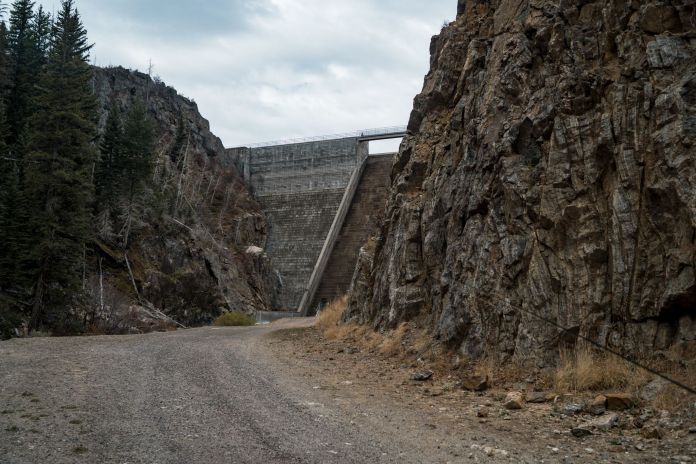
The Stagecoach Reservoir, which feeds into the Tailwater section of the Yampa, serves for irrigation, municipal water supply, and flood control, and it also supports a hydroelectric power station. It was first proposed in 1983, and was completed on August 12, 1989, after just 37 days of construction. The dam and reservoir are owned and operated by the Upper Yampa Water Conservancy District
Today, the Yampa serves as a diverse fishery, attracting a plethora of anglers looking to float, wade, and otherwise observe the beautiful scenery that surrounds the waters.
Fishing the Yampa River
Fly Shops on the Yampa River:
If you’re looking for a place to stop in and pick up a few bugs, you don’t have to look much further than downtown Steamboat Springs. If you head down Lincoln ave, you’ll find The Bucking Rainbow, stocked with shirts, hats, and a diverse collection of custom made knives. Walk just a few more minutes down the street and you’ll also find Straightline Outdoor Sports, which has any hunting or fishing equipment you may need. However, if you bop over to 5th street, you’ll find your way to Steamboat Fly Fisher, an all-encompassing fly-fishing outfitter only steps away from the Yampa Headwaters.
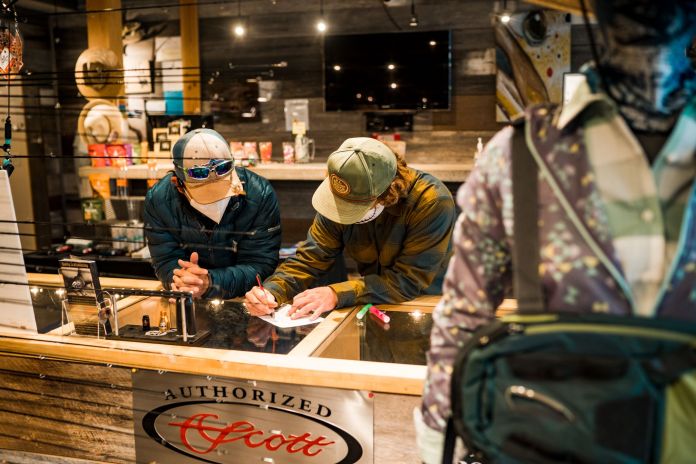
On our trip, we masked up and headed into Steamboat Fly Fisher, to meet with our guide, Robbie Tesar. Robbie, along with his wife Alice Tesar, is a local guide, as well as a teacher at the Steamboat Mountain School. They have been guiding for Steamboat Fly Fisher for around 5 years now, and have developed a natural love for the river, and all the unique aspects that it offers outdoor enthusuists.
Flies to use on the Yampa River
Much like most of the tailwaters we’ve explored, the fly variation tends to be skewed towards small nymphs and shrimp. Anything from freshwater scuds to baetis and caddis larva can be found populating the rocks and weeds of the river.
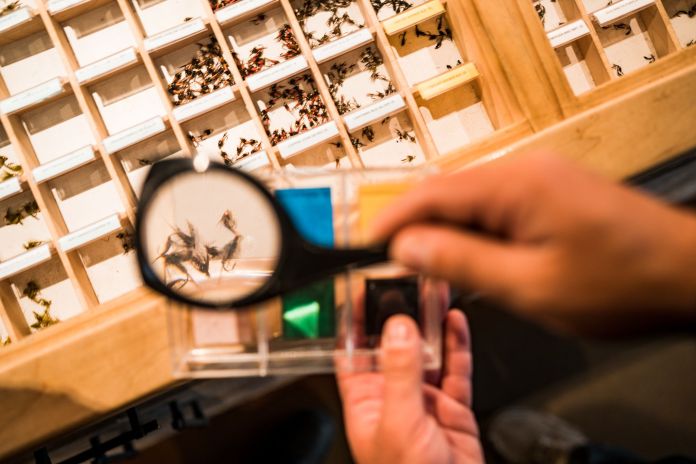
For the best success, we recommend green, black, or red midge patterns; as well as PMD’s, BWO’s, or baetis imitations. Scuds are also an incredibly effective pattern and can be fished in many different colors. some specific patterns we recommend are: pheasant tails, garbage scuds, zebra midges, rs2’s, or flashback baetis nymphs.
If you’re dying to toss something a little bigger, or are just sick of staring at bobbers as they lackadaisically float down the current, small streamers such as sculpin and leach patterns can also be effective. In the summertime, small pockets hidden behind protective natural structures can hold large fish that more than likely to strike at a well presented dry fly. Caddis, Tricos, Mayflies, and the occasional drake imitations can be extremely effective in these areas, especially in the warmer months of late spring and early summer.
Fishing the Yampa River
Before even rigging your rod, be sure to check out the rules and regulations for fishing the Yampa. These are available HERE.
The Yampa Tailwater is one of the more beautiful tailwaters that we’ve covered on this trip. Surrounded by a canyonous landscape, immaculate views, and curated trout habitat, this section of the river is coveted by anglers from around the country. However, it is because of these views that this section sees a high amount of foot traffic and fishing pressure year-round. Be sure to keep reading on how you can be a respectful visitor to the river, and best enjoy your time there.
The Yampa Tailwater is home to a varying species of trout. The waters are mainly populated by resident browns and rainbows, but the occasional cutthroat and cutbow can be found within the mix. These fish can vary in size, with some of them growing to impressive sizes. It’s because of the strict catch and release regulations, as well as an abundance of food, that these fish are able to maintain their healthy size and numbers.
As you move downstream of the dam, the river offers a diverse array of fishing opportunities. Due to the river’s curated nature, an angler can pick and choose which style of fishing they’d like to employ (depending on the crowds). In faster deeper pockets, dead drifting leeches and small streamers can prove to be an effective way to entice a large predatory trout. Along those same guidelines, nymphing with heavy flies and split-shot can prove to be equally, if not more advantageous in larger to medium flows.
The river offers a plethora of drops, riffles, and pockets to be fished with any style of rig. However, a general rule of thumb is that as you get further from the heavy discharge of the dam, changing to smaller and smaller flies is a good call. Also, remember that as you change your flies, it’s equally as important to change tippet. These fish see lots of pressure on a daily basis, so throwing flies on the end of heavy tippet is a sure-fire way to turn off the fish from eating. Generally, especially in the colder months of the year, 5-6x tippet should be your go-to.
The best times of year to fish the Yampa are obviously going to be the warmer months from late spring to summer. However, because of the regulated flows, the fishing is on at all times of the year. To plan around the optimal flows, you can check out the hydrometrics HERE.
As mentioned before, and put in the simplest terms: The Yampa is a crowded river. So. let’s take a second to talk about river etiquette. As much as we want to think so, the river belongs to no-one: it’s public land. That being said, we all need to do our part to take care of it as if it was our own back yard, because for many people: it is. The two main factors to take into consideration when fishing the river, is co-angler cooperation, and environmental respect.
There is rarely, if ever, a scenario where you can fish this section without running into someone. So, have a conversation. Discuss where they are going to be fishing, and make a plan to avoid each other in order to achieve the best results on the day. It’s important to remember: If you see traffic, you are traffic.
Next, pay respect to the land. The tailwater of the Yampa is very curated in an effort to mitigate bank erosion and restore plant health, and in return, river health. You’ll notice there are very clearly marked trails. By sticking to those trails, you can avoid leaving any sort of an unnecessary footprint behind, and in-turn, leave the river in the same shape you found it for the next angler to come along.
Things to do Around the Yampa River
Check out the Local Conservation groups: Freinds of the Yampa – A key aspect of our guides to these tailwaters is to take the time to highlight local conservation efforts. As eco-tourism and angling pressure increases in areas such as the Yampa watershed, it’s more important now than ever to seek out ways to give back to the fisheries that we love and enjoy. Whether you’re a local looking to get involved in your community, or someone passing through and looking for an opportunity to leave behind a positive impact, there are always ways you can become a part of the movement to make a difference.
The Friends of the Yampa is a non-profit organization dedicated to raising awareness around conservation issues facing the watershed. Through educational programs (such as the YARP effort), fundraising efforts, and cleanup + restoration efforts, Friends of the Yampa has a long list of programs that anyone can get involved with. Check out their current projects HERE.
Additional Activities:
Strawberry Park Hotsprings– Sit back and soak in the enriching healing energy of these naturally formed geothermal Hotsprings. Get out of the cold and into these mineral springs with a year-round average temperature of 104 degrees. You can also enjoy a massage in one of the beautiful private massage huts or a watsu therapy in a private pool.
Hike Fish Creek Falls Trail – Fish Creek Falls Trail is a 4.7 mile heavily trafficked out and back trail located near Steamboat Springs, Colorado that features a waterfall and is rated as difficult. The trail offers a number of activity options and is best used from May until September. Dogs are also able to use this trail but must be kept on leash. (Alltrails)
Tread of Pioneers Museum– The Tread of Pioneers Museum features a 1908 Queen Anne-style Victorian home with turn-of-the-century furnishings. On display are various ranching, mining and pioneer life artifacts from Routt County, a comprehensive History of Skiing exhibit, as well as a Native American arts display.
Hike Thunderhead Trail– Thunderhead Hiking Trail is a 6.6 mile moderately trafficked out and back trail located near Steamboat Springs, Colorado that features a great forest setting and is rated as difficult. The trail is primarily used for hiking and is best used from June until October. During summer the Steamboat Ski Resort is open to hiking. Thunderhead Trail is a popular route that takes hikers up to Thunderhead Lodge. There are more trails on the mountain if you wish to extend your hike. (Alltrails)
Check out the Jace Romick Art Gallery – A creative eye for the West; Jace Romick Gallery is a true western art gallery located in the heart of Steamboat Springs, CO.
Skiing – For more information on the iconic skiing in Steamboat, CLICK HERE.
Food By The Yampa River
Yampa Sandwich Co. – After a fruitful day on the river, we headed into Steamboat to gorge ourselves on some eloquently crafted sandwiches. In a flurry of turkey and cranberry sauce, our thanksgiving inspired sub had somehow vanished before our eyes. All were left with was a full belly and a few crumbs to reassure that this decadent creation had in fact existed at some point. If it’s not clear, our review for Yampa sandwich co. is an easy two thumbs up. In conclusion, from the outside, it may not look like much, but it’s the perfect spot to stop and refill the tank after a great day spent with friends and fish alike.
Salt & Lime – While in Steamboat, we also had the chance to pop into a modern-mexican style restaurant, Salt & Lime. There, we enjoyed some a roller coaster of flavors and spices all wrapped in between some corn tortillas. If you’re a tequila fan, this is a must-stop destination, as their extensive marg menu is sure to kick off the night with a bang.
Freshies Restaurant – Freshies offers all the traditional favorites, specialty options, and more. We proudly partner with local farms from Colorado and the Yampa Valley to bring you the best produce, poultry, dairy, meats, and breads.
Table 79 – If a classy night for top-notch food and drinks is what you’re looking for, look no further than Table 79 Foodbar. With an extensive beer, wine, and cocktail menu, it’s the perfect place to celebrate a day well spent.
Laundry Restaurant – Laundry fills a popular dining niche in Steamboat Springs. Specializing in smoking and curing of natural foods, diners enjoy Laundry’s shared plate concept with a refreshingly creative menu that utilizes seasonally and locally grown products
Places to Stay by the Yampa River
Whether you’re spending a night or a week in Steamboat, here are some great places to recharge in preparation for a day on the water.
Rabbit Ears Motel – Upon entry of the town, it’ll be hard to miss the Iconic Rabbit Ears Motel located in downtown Steamboat Springs. This is a perfect choice for comfortable, affordable, friendly lodging right in the center of downtown. This place offers incredible proximity to all that Steamboat Springs has to offer. We are right in the center of it all. From the moment you come down Rabbit Ears Pass into the Yampa Valley and see our famous historic neon sign with the lit-up Rabbit Ears, your getaway begins. Just look for the neon bunny.
Additional Lodging:
Steamboat Mountain Lodge – Winter, summer, spring, or fall, Steamboat Springs, Colorado is your year-round destination spot.  Gather your fly-rod, skis/ snowboards, bikes, cameras, and your spirit of adventure! It’s time to start planning your getaway.  The warm, friendly atmosphere of the Steamboat Mountain Lodge is sure to fit in with your vacation to Steamboat Springs.
The Steamboat Grand– Surround yourself in casual elegance and enjoy all of the amenities that The Steamboat Grand has to offer. Featuring 328 beautifully appointed hotel rooms, condominiums, penthouses, and other lodging located at the base of the Steamboat Ski area, the Grand has everything you need for an amazing vacation.
Sheraton Steamboat Resort Villas – Create an unforgettable adventure at Sheraton Steamboat Resort Villas. This premium vacation ownership resort welcomes you with refined rental accommodations, elevated dining options, and a prime location in the heart of the Steamboat Base Area right next to the Christie Peak Express. From ski-in ski-out access during the winter to golf, hiking and biking in the summer, this resort puts some of the best attractions and activities that Steamboat Springs has to offer at your doorstep.
Camping: Dry Lake Campground – Dry Lake Campground is located 8 miles northeast of Steamboat Springs, Colorado on the Buffalo Pass Road. This small campground is surrounded by Aspen, Spruce, and Fir trees and is in a good location to access some great hiking and biking, one the roadway and the Spring Creek Trail.
Additional Info
If you’re looking for additional info, or just want to learn more about exploring the state and the opportunities it has to offer, check out the official Colorado Tourism Page HERE.
Thank you to Colorado Tourism for this incredible opportunity to explore our backyard. Thank you for following along with Tailwater Tails, and tips on exploring Colorado’s famous Tailwaters. This has been an incredible opportunity to explore some incredible bodies of water, and learn about and share what we can do to keep them great. Also, thank you to Steamboat Fly Fisher, and our guide Robbie Tesar for helping us navigate and learn more about your home waters.
We have all heard the rumors: “18 inch cutthroat up thereâ€, “super spooky fishâ€, “the biggest I have ever seenâ€, and while not all of them may be true, every rumor starts from somewhere. So, where are these fish, and how do you catch them?Â
Let’s start with what I am sure you’ve been dying to know…are there really big fish in high alpine lakes and streams? Short answer, yes. Throughout Colorado, cutthroat and brook trout often frequent the cool waters of the high alpine country. Where they are found, however, they are habitually challenging to catch.
What:
Cutthroat and brook trout ranging from 4 inches to 20 inches in size. These fish are wild as can be, and have some of the most extraordinary colors you will find anywhere. Cutthroats are characterized by their distinct red coloration at the gills, and in the high country, their bodies are frequently tan in color. Brook trout are often smaller in size than cutthroat trout, but will fight just as hard. These fish will likely have a red/orange color on the lower part of their bodies and tails, as well as small pink spots along the upper section of their torso.
A cutthroat trout caught in a small alpine stream. Photo credit: John Duncan
When:
Both species of trout thrive in the cold waters that can be found at high altitudes, and because of this, the timing of your fishing expedition is crucial. In Colorado, the best time to head up to the high country is between the months of June and October. The temperatures in these months are comfortable for both you and for the fish. In general, high alpine lake fishing is often best in the morning and evening, when calm conditions are conducive to rising fish. It is important to remember that every location is a little bit different, and there is no hard and fast rule. If you see bugs over the water, or fish rising, don’t be afraid to go throw a fly around.Â
Stream fishing tends to be more consistent all day, but warmer water temperature and hatches positively contribute to fish activity. Consequently, dry fly fishing is often better in the afternoon.Â
 Where:
Throughout Colorado there are hundreds of alpine lakes and streams. When you are planning your fishing day(s) I would suggest going to talk to the local fly shop first. The
people working there can give you a general idea of where to go, and where the fishing has been best. If there is not a fly shop near your destination, don’t be afraid to look up the location on the internet, and identify lakes and streams between 9,000 and 12,500 feet. You may have to hike into your fishing location. When doing so, always bring the proper equipment (sun screen, water, plenty of food, etc.), and tell someone where you are planning to go in case of emergency. Always pack it out so that we can keep the backcountry clean for years to come.Â
An alpine lake located at 11,700′ above sea level.
How:
Flies:
Effective high country flies are unique from what you may normally have in your fly box. You will want to bring an assortment of beetles and ants in various sizes, shapes, and colors. These flies work wonders on both still and moving water. In addition to this, I would recommend bringing grasshoppers, chubby chernobyls and stimulators in sizes 12, 14, and 16 in assorted colors. On the lakes there are often small midge hatches. Having an assortment of Griffith’s Gnats and single midges is very important (sizes 16-22). Mayflies and Caddis are a favorite among the wild cutthroats and brookies that inhabit these waters, and appear intermittently throughout the season. Once again, it is beneficial to have a variety of sizes (14-22), colors (dark, light, and everything in between), and styles.Â
Rods:Â Â Â Â Â
The Scott G Series Photo credit: Telluride Angler
As a rule of thumb, when you are fishing backcountry streams, you will usually be using a lighter, shorter rod in order to navigate your fly line in tight spaces and control a light.
leader. Two, three, and four weight rods are the best for the job. My personal favorite rod to fish in little known creeks is the Scott G Series 883-4. This eight foot, eight inch, three weight fly rod casts with precision that is unmatched within the industry, and has the ability to make subtle presentations. It is a medium action rod that is spectacular in hand, and will take your breath away as you lay out cast after cast.
As far as the best fly rod to fish in high-alpine lakes, I would 100 percent recommend the new Scott Centric 904-4. All nine feet of this fly rod enable you to control your fly line in a
The Scott Centric Photo credit: Telluride Angler
way that will give you a precise, gentle cast, while also enabling longer casts in windy conditions. It is a fast action fly rod that is perfect for lakes, regardless of wind, weather, or other negatively contributing factors. Alternatively, any four or five weight rod will do.
Reels:Â
On the topic of reels, the single most important thing to take into consideration is how the reel feels on your fly rod. On the Scott G Series 883-4, the Ross San Miguel 3/4 is a great way to go. It balances out the rod, and the rod will feel
The Ross San Miguel Photo credit: Ross Reels
stunning in hand. On the Scott Centric 904-4, the Hatch Finatic 3 Plus is an ideal match. Plus, you can order it custom black with red engraving to match your rod.Â
If you have any questions about rod/reel pairings, give your local fly shop a call and they will help you out to ensure that you have the best set up possible.
Fly lines:
Similar to reels, the most important thing is that your fly line corresponds with the weight and style of your rod. For example, on the Scott G Series 883-4, I would put a Scientific Anglers Mastery Trout WF3F for the best possible casting and overall fishing experience.Â
A fan favorite out here in Colorado, the size 8 hopper.
Having the correct strength leader and tippet is very important for fly presentation and playing fish. On lakes, a leader between 10 and 13 feet will help with gentle presentations, whereas on creeks, a shorter leader will help you to fish in tighter quarters. In general, the size of your fly corresponds with the strength of your leader. For example, if you are fishing a size 8 grasshopper, 4x would be appropriate, whereas, with a size 20 ant, you would want to use 6x or 7x. Sight-fishing is often possible in both lakes and creeks, so make sure to fish with your eyes before you fish with your rod.Â
The next time you head into the high country, take these tips with you, and I hope that the fishing is as spectacular as the scenery.Â
In collaboration with Colorado Tourism and their “Care for Colorado†initiative, we set out to explore some of the most well known and widely admired tailwaters of the great state of Colorado. While on this adventure, we met with local fly shops and guides to have them show us exactly what makes their home waters so special, and more importantly, why they’re worth exploring and protecting. Along the way, we explored local restaurants, activities, and places to rest and relax to create a complete guide for exploring these iconic tailwaters.
For our third destination, we headed to a truly unique tailwater that’s made quite a name for itself in the town it flows through. Join us as we explore The Blue River.
The Blue River is a tributary of the Colorado River and is approximately 65 miles long. It rises in southern Summit County, on the western side of the continental divide in the Ten Mile Range, near Quandary Peak. It flows north past Blue River and Breckenridge, then through the Dillon Reservoir near Dillon. The west portal for the “Roberts Tunnel” is at the base of Dillon Reservoir. The Roberts Tunnel is a trans-basin diversion, built by Denver Water in 1962, that diverts water under the Continental Divide from the Colorado River basin into the South Platte River Basin. The east portal is approximately one mile upstream of Grants, Colorado.
North of Dillon the river flows north-northwest along the eastern slope of the Gore Range and joins the Colorado River at Kremmling. The Green Mountain Dam, which finished construction in 1942, is 13 miles upstream from Kremmling, and forms the Green Mountain Reservoir, providing hydroelectric power and diversionary water for irrigation, as part of the Colorado-Big Thompson Project.
The tailwater we’ll be focusing on today is the stretch between the Dillon Reservoir, and the Green Mountain Reservoir, which is also referred to as the middle Blue.
Fishing the Blue River
Fly Shops on the Blue River
For grabbing gear and bugs, the fly-shops you’ll find a few shops to check out. If you’re around the town of Frisco, you can make your way into Trouts fly-shop. Then, if you make your way North, you’ll find The Colorado angler, and Cutthroat Anglers, which are located almost directly on the River.
For our trip, we stopped into Cutthroat Anglers and met with Shop Owner, Ben Mccormick, as well as local guidesMatt Weiler, and Harlan Kimball. There, we loaded up on flies and headed out to explore what the Blue River had to offer.
Owner Ben Mccormick
Flies to use on the Blue River
When you’re thinking flies: think small. Much like the other tailwaters we’ve explored, the cold water released from the dam limits the growth of the resident insect population. A general rule of thumb is, the closer you are to the dam, the smaller you want your flies to be.
For your smaller bugs, the usual RS2’s, Pheasant tails, and Mysis shrimp are never a bad way to go. For the best success, look to carry around a few variations of each, all around size .22’s -.20’s. As you head north, you can start to break out somewhat larger flies. Zebra midges, BWO’s, and other Baetis patterns are never a bad call, but feel free to get creative and toss a rainbow warrior every now and then. These flies can range around size .20 – .16’s.
The Blue River also possesses some fast and deep water. If the clouds are out and the flows are up, tossing a streamer is also a viable option. Something imitating a minnow, leach, or even a small trout is a great way to hook into one of those legendary Blue River monsters.
Fishing the Blue River
Before you fish the Blue, make sure to thoroughly read through the rules and regulations of the river, to make sure you’re doing everything possible to keep the river healthy, and yourself out of trouble. The Blue River Regulations can be found HERE (page: 13).
The Blue River is known as a river that makes you work for fish, however, once you get into them, their size and beauty make every fruitless drift worth it. The types of fish you’ll be looking for in the Blue River are mostly Rainbow Trout and some Brown Trout. There are also some Brook trout that are fed into the Blue by feeder streams, their presence is more abundant the further north you go. The river is comprised of about a 70:30 ratio of Rainbow to Brown trout, but many of the browns that live in these waters possess a notoriously beautiful red tail that will quickly identify them as Blue River trout.
The river is made up of a mix of stocked and wild trout. With an abundance of private properties on the river, the stocked trout presence holds strong against the resident trout population. Most stocking occurs on private water, and in the town of Silverthorne. Because of this, as you move away from town, your chances of encountering wild fish increases.
Again, much like most tailwaters, the Blue River is fishable year-round. However, the best fishing can oftentimes be found around the early summer months when the dam releases water. The reason for this is due to an increase in discharge, which not only blows insect life off of the banks and down the river, but the water temperature rises, providing a more stable environment for insects to reproduce and populate the waterways. For discharge data and gauge height, reference the charts found HERE.
Fishing accessibility on the Blue River is abundant and varies as you move up and down the tailwater. Most of the time, you can park within 100 yards of the river and walk down from the designated pull-offs to fish. However, there are also opportunities to walk for fish, depending on how far away from town and the road you care to get. If you choose to hike in, make sure to take note of any posted regulations or private property lines, as residents keep a watchful eye out for trespassers.
The Blue offers a diverse array of water to fish. Along small riffles you can find trout hanging out eating small nymphs that are swept down into their feeding lanes. However, you will also find an abundance of deep runs where big fish can stay hunkered down waiting for a snack to come their way. In these big runs, persistence is key as these trout (the wild ones especially), are fished to on the daily, and are on the lookout for any suspicious behavior. It’s recommended that you stick with 6x to 4x tippet (at the very largest), especially when fishing big holes that are close to the road.
One of the most important things to remember about fishing on the Blue River, is the fishingetiquette. The Blue River is an extremely popular spot amongst anglers, and while we’re all entitled to enjoy a day on the water, it’s important to remember that it’s just as much our job to respect each other, as it is to respect the water. When fishing the Blue, avoid crowds. If someone is fishing a hole, the best practice is to just stay clear of that spot.
A helpful tip is that if you run into someone on the river, have a conversation and make a plan. Ask if they’re moving up or down, and coordinate so that you can stay out of each other’s ways. Not only will both parties be happier in the end, but you’re much more likely to land a more fish.Â
On our time on the River, our guides worked up the river, traveling to a few different spots to find unpopulated water. We floated tiny baetis patterns in tandem underneath bobbers. While the day started off a bit slow, as we continued to work away from the road, our fishing heated up as well; yielding some truly stunning fish, and some incredible views.
Things to do Around the Blue RiverÂ
If you’re looking to spend some time off the water, there are plenty of things to do and check out in the towns of Silverthorne, Frisco, and Breckenridge.
Check-in with the Local Conservation Efforts – As ecotourism increases and the number of anglers on the water grows, it’s important to remember that we’re as responsible for the areas we visit, as we are for the areas we call home. While it’s not exactly what many would consider a vacation day activity, finding out about local conservation and restoration initiatives is one of the most enriching activities you can engage in when visiting a new place. With the practice of leaving a place better than you found it, you can feel great knowing that you’ve left a positive impact on an environment so that it will be accessible for many generations to come.
Tanner and Erika in Cutthroat Anglers
During our visit in Silverthorne, we had the chance to sit down with local Trout Unlimited chapter-representative Tanner Banks, as well as the Executive Director of the Blue River WaterShed Group, Erika Donaghy. Tanner and Erika are both working towards finding solutions in order to protect and preserve the Blue River watershed, so that not only will it continue to support a thriving trout population, but because it is an integral piece of the local ecosystem, and is the lifeblood of the surrounding area as a whole.
During this time, they explained to us the issues facing the health of the river such as mine runoff, improper handling of hydropower, single-use plastic pollution, and unfortunately, unethical angling. However, they also walked us through the many conservation actions being taken to fight these issues such as river clean-ups, and mine-waste-management initiatives. To learn more about how you can do your part, check out any of these initiatives below:
Hike the Sallie Barber Mine Trail– The Sallie Barber Mine Trail is a 2.8 mile heavily trafficked out and back trail located near Breckenridge, Colorado that features beautiful wildflowers and is good for all skill levels. The trail offers a number of activity options and is best used from February until October. Dogs and horses are also able to use this trail. (AllTrails).
Check out the Blue River Trail– Blue River Trail is a 3.8 mile moderately trafficked out and back trail located near Silverthorne, Colorado that features a river and is rated as moderate. The trail is primarily used for walking, trail running, and road biking and is best used from July until September. Dogs are also able to use this trail but must be kept on leash. (Alltrails)
Hike the Buffalo Mountain Trail – Buffalo Mountain Trail is a 7.4 mile heavily trafficked out and back trail located near Silverthorne, Colorado that offers the chance to see wildlife and is rated as difficult. The trail offers a number of activity options and is best used from April until September. Dogs are also able to use this trail but must be kept on leash. (AllTrails)
Snowmobile or ATV Mountain Tour – For breathtaking views, terrain from mild to wild, and some of the best views of Colorado’s majestic mountains, contact High Country Tours for an experience you won’t soon forget.
Breckenridge Ghost Tours– Skip the typical walking tours for a ghostly exploration of Breckenridge and—unlike most travelers—see a stranger side to this historic mining town. During this interactive tour, explore haunted buildings you might otherwise have overlooked, hunt down spirit energies with the tools conveniently provided, and listen to your private guide tell spooky stories you wouldn’t otherwise hear.
Food By the Blue River
Whether you’re looking to grab a drink, or enjoy a culinary adventure, there is no shortage of stops to treat your pallet.
Angry James Brewing Co. – On our visit, we had the chance to stop by Angry James Brewery, and try some of their incredible in-house creations. With a mouthwatering variety of IPA’s, and a stout that ruins the reputation of all other stouts, this place is sure to quench your thirst. Not in the mood for a brew? That’s fine, because Angry James’ in house kitchen also has a delicious variety of creative takes on classic bar favorites. We recommend the Jalapeno pretzels, although be warned, once you’ve had a taste, there’s no going back.
Crepes A La Carte – For those who aren’t looking to stay in one spot long, Crepes A La Carte is a popular spot for various sweet, savory & build-your-own crepes with a small outdoor seating area.
Aurum Food and Wine– For a good and propper wining and dining experience, Aurum Food and Wine offers a luxury culinary experience without the rediculous price tag and is a great spot to shake off the dirt of a day well spent.
Mountain Flying Fish – Who said you can’t find good sushi in the mountains? With chefs with Japanese Master chef Tetsuo-san behind the blade, enjoy the pursuit of better living over locally harvested short grain rice. If you’re fixing to eat some fish, ignore the river and head to the mountains.
The Argentos Empanadas & More – The Argentos Empanadas & More is a casual restaurant in Silverthorne offering customers breakfast, brunch, lunch, and dinner. Come in and experience our comfort food or sample our signature confections in a cozy atmosphere. Call us to learn about catering options, takeout, or our vegetarian choices.
Places to Stay by the Blue River
Hampton Inn & Suites – While traveling, we spent the night in this Hampton Inn & Sweets, which was only a 3 minute drive from the fly-shop. This hotel provided clean and comfortably sized rooms, frinedly staff, and a satisfying breakfast. Sometimes: basic is best.
The Dillon Inn – The Dillon Inn is centrally located in Summit County, and is located right at the mouth of the Blue River Tailwater. You can ride the free shuttle that is offered by Summit County to Keystone, Frisco, Breckenridge and Copper Mountain to explore the outdoors with fishing, rafting, hiking, biking, skiing, tubing and much more.
Ramada Frisco – Located in Frisco, Ramada Frisco is in the mountains and convenient to Frisco Historic Park and Museum and Frisco Nordic Center. This hotel is within close proximity of Frisco Adventure Park and Lily Pad Lake Trailhead.
Lodge by the Blue– Alpine skiing was introduced to Breckenridge, Colorado in 1960. A few insightful sportsman recognized an unprecedented opportunity to develop three acres of pristine land, where the Blue River teamed with trout and flowed right through it, into the perfect paradise for fly fishermen and skiers alike. Today, their vision is being restored at the base of the magnificent Mount Quandary, as Lodge by The Blue delivers an impeccable lodge experience for the adventurer in you, where hints of the nostalgic 60s blend seamlessly with the modern comforts of condominium vacations.
Apres Chalet – This charming three-bedroom home on French Street, Breckenridge sits in the heart of Breckenridge’s historic district. Located just two blocks from Main Street, you can feel like you are a part of the community by staying close to all that Breckenridge has to offer – including shops, galleries, restaurants and pubs.
Additional Info
We would like to take the time to remind you to practice proper social distancing regulations and to always wear a mask in public places. As we enjoy what this beautiful state has to offer, it’s crucial to remember that we’re all just visiting, and as visitors, it’s our job to work to preserve and respect these incredible places. To find out more on conservation initiatives, and ways you can make your time in the area more meaningful, feel free to check out ways to get involved HERE.
If you’re looking for additional info, or just want to learn more about exploring the state and the opportunities it has to offer, check out the official Colorado Tourism Page HERE.
Thank you to Colorado Tourism for this incredible opportunity to explore our backyard. Stay Tuned for more installments of Tailwater Tails, and tips on exploring on Colorado’s famous Tailwaters. Also, thank you to Cutthroat Anglers, and our guides Ben Mccormick, Matt Weiler, and Harlan Kimball for helping us navigate, and learn more about your home waters.
A bus, 4 dudes, a pallet of beer, and the open road what could go wrong? This week we follow up with WildFly‘s second installment of the Short Bus Diaries. It all starts out in Salt Lake where the boys (Scotty Finnanger,Bryant Patterson, & “Hobo Steve“) meet up with BlueLineCO’s Adam Hudson to see the new and improved Short Bus. From Salt Lake, the boys hop on the bus and take off on the road north, to the land of Cold Beer, Big Fish, and Big Sky.
In Volume 1 the boys visited Eastern Idaho to try and catch the Famous Snake River Salmon Fly Hatch. In Volume 2 they start the adventure outside Glacier Park targeting Cutthroat and Bull trout. So sit down and enjoy some unbelievable videography, amazing fish, and even better scenery and camaraderie.
Make sure to follow along on there next adventure: @Shortbusdiaries
For this installment of “Organization of the Month,” we are highlighting Casting For Recovery. Breast cancer is the most common form of cancer among women worldwide and claims hundreds of thousands of lives annually. In 2020 alone, estimates expect 276,480 new cases of breast cancer in women in the United States. October is National Breast Cancer Awareness Month, and we wanted to learn more about this amazing group that provides therapeutic outdoor retreats to women with breast cancer at no cost. Follow along as we ask Casting for Recovery some questions!
Flylords: What spurred Casting for Recovery?
CfR: Casting for Recovery (CfR), a national 501(c)(3) was founded in 1996 in Manchester, Vermont, by a group of women we call the “founding sisters,†which included a breast reconstruction surgeon and a professional fly fisher. Our founders experienced the healing power of nature through fly fishing and thought that connection would benefit women with breast cancer. Almost 25 years later, what started with one retreat has now grown to 55 retreats nationwide, run by an army of over 1800 volunteers and a hard working full-time national staff of ten. Casting for Recovery’s innovative program focuses on improving quality of life for women with breast cancer and has garnered endorsements from medical and psychosocial experts nationwide. The retreats are open to women of any age, in any stage of breast cancer treatment and recovery, at no cost to the participants.
Flylords: Breast cancer is one of the most common forms of cancer. I’d even venture to say everyone reading this has a friend or loved one diagnosed with breast cancer. How does breast cancer affect women in American—and the world?
CfR: Women have a 1 in 8 chance of being diagnosed with breast cancer at some point during their lifetime. In the United States, 250K women are diagnosed every year and 2.3 million are living with breast cancer. Research shows that many women with breast cancer experience enough significant symptoms to be also diagnosed with PTSD. We all know these women or will know them… Breast cancer impacts us all, our mothers, sisters, wives, partners and pals!
Flylords:Â So, how can fly fishing help those going through recovery?
CfR: Casting for Recovery provides women with breast cancer the opportunity to find inspiration, discover a renewed energy for life and experience healing connections with other women and nature + learn something new, fly fishing! CfR’s healing program is unique! For women who have had surgery or radiation as part of their breast cancer treatment, the gentle motion of fly casting can be good physical therapy for increasing mobility in the arm and upper body. Couple that with the emotional benefits of connecting with nature, and you’ve got powerful medicine. Our retreats are unconventional and described by many women as life-changing.
Flylords: Tell us about a Casting for Recovery hosted retreat?
CfR: The two-and-a-half day retreats are 100% free for participants. Retreats incorporate fly fishing instruction and emotional support, ending with a half day of guided catch-and-release fly fishing. Our program is committed to ethnic, socioeconomic and cultural diversity. Participants range in age from 23 to 90+! Casting for Recovery is open to women in all stages of breast cancer treatment and recovery.Â
Flylords: How many women have benefited from a CfR retreat?
CfR: Casting for Recovery has served over 10,000 women! It’s a big number but, there is still so much more work to do. Next year is our 25th anniversary, and we hope to serve at least 10,000 more women over the next quarter century!
Flylords: If you can, would you share a testimonial or story from a retreat that speaks to CfR’s mission?
CfR: “As a young and urban woman, I wasn’t sure I’d enjoy fly fishing but as it turned out, it was the rare thing that got my mind off of the whole cancer journey. I was able to live in the moment and enjoy it. Reconnecting with nature also helped me find some peace. I was touched by the fact that all the staff and volunteers seemed genuinely interested in making sure I had a great time. I’m so thankful for CfR!†– Participant Testimonial
Flylords: How has COVID-19 affected Casting for Recovery? Are there any upcoming retreats or projects?
CfR: Casting for Recovery made the difficult decision to cancel the 2020 retreat season due to the COVID-19 pandemic. The safety of the women we serve, and our volunteers, is our top priority. This was not easy, we know so many women with breast cancer were looking forward to and needed the hope of something normal and fun that our retreats would have offered them. The CfR team is looking forward to supporting women with breast cancer in new ways this year as we pivot our programming.
We will update the 2021 schedule as information becomes available, and applications will open in fall 2020.Â
Flylords: How important are volunteers for CfR? How can Flylords’ readers learn more?
CfR: Our volunteers are essential to the program! Casting for Recovery relies on the support of more than 1,800 dedicated people nationwide, including medical and psychosocial professionals, fly fishing instructors and past participants that donate their time and talent to help impact the lives of women with breast cancer. Learn more HERE.
Flylords: Similarly, how can fly fishermen and women help support CfR’s mission?
CfR: We are beyond grateful for the support of the fly fishing community and industry. If someone is interested in volunteering their time and talent please check out our website HERE to see all the volunteer opportunities available and apply. Follow us on social media, like and share our posts, it helps us spread the word, reaching more women with breast cancer. If you are able donations are always welcome, no amount is too big or too small. Donate HERE.Â