In conjunction with Trout Unlimited’s Science Week, the cold water conservation group has released two short films highlighting their efforts across the nation. From Lahontan Cutthroat to Alaskan Steelhead, both of these films will leave you inspired to take action and help to preserve our nation’s cold-water resources.
Twelve-thousand years ago, there was a lake – Lake Lahontan – that covered more than 8,500 square miles of the Great Basin. Most of the rivers and lakes there today were at some point tributaries to this giant lake, or wholly covered by it. What does that mean for a species that’s been in the Great Basin for more than 10 million years in one form or another?
At nearly 17 million acres, the Tongass National Forest in Southeast Alaska is the country’s largest national forest. The Tongass includes more than 15,700 miles of clean, undammed streams and 4,100 lakes and ponds that provide optimal spawning and rearing conditions for the region’s abundant wild steelhead and salmon. Watch @troutunlimited latest film Anadromous Waters to find out more about the work being done to protect its steelhead.
For many of us in the Great Lakes region, autumn is prime time to start targeting the migratory species of the big lakes. There are various options of salmonids to target, like the Coho and Chinook Salmon in my previous article. In some areas, Atlantic salmon are making a great comeback and is an amazing species to target on the fly, and there are also large runs of lake run brown trout that get to epic proportions. In this unique area of the world, it is the steelhead that reigns supreme. This species has a reputation for being the ultimate fish to pursue on the fly. Just about every fly shop in the area has built their clientele based on the runs of steelhead from October through to May, and if you fortunate enough to have a summer run of steel, you may be able to target them 7 months out of the year.
The author with a chrome fall run Great Lakes Steelhead
Just about every creek, ditch, or river that flows into the Great Lakes has some sort of run of Steelhead. Getting there when it’s “on†or in the peak is the key to get them in their prime. The fall run of fish is definitely a completely different animal than the spring run fish. They are bigger, meaner, and faster than their spring running cousins, which calls for different tactics and gear to get them in as fast as possible so they can continue their migration to their spawning grounds. Fall run chromers enter the tributaries the fall and spend the winters waiting to spawn in the early spring when the water is in the right conditions. This is why they are so big, they are eating machines and aim to put on extra weight, knowing they are in for some hard times ahead in the creeks they were born in.
The best time to target them is after a rain, however, each river has different traits that make them unique, each has different flows and clarity at various times. The key is to know a few rivers well and get the timing right to intercept the migration.
Finding the Right River Conditions
While some creeks clear right after rain, some take days to able to get more than 3 inches of visibility. Having multiple creeks in your back pocket is key so you can fish them all at various stages of the runoff. When the creek is muddy, we refer to it as “blown out†or “brown cow.†It looks like coffee with four creamers in it. When creeks are in this at this time it is not impossible to catch them, it just harder, and for the most part fish are on the move. When the water starts to drop it makes fishing more favorable and more consistent as the fish hold in the pools, runs, and pocket water. The fish are in a holding pattern waiting for more rain to keep pushing upstream close to their spawning grounds or where they know it safe. My favorite time to fish is when the visibility is approx. 1-2 ft, with the water appearing greenish in color, lovingly referred to as “steely green.†Typically when the water looks like this, the fish can’t see you, but can see your fly.
Fall Run Steelhead Flies
In the fall, steelhead can be a smidge more difficult to catch and certain flies excel at a certain time during the run. When they first enter the river, usually a week or so, the key is to have eggs, eggs, and more eggs flies. It is really hard for them to resist an egg fly when spawning salmon are in the system. The colors and size of the egg fly are determined usually by water clarity and flow, anywhere from a 14 mm chartreuse to a 6 mm cream or opaque in color. If the two-handed rod is your game, flies that match the watercolor is a good place to start. The discussion of a dark fly on a dark day or a bright fly on a bright day comes up every time on the water. Depending on who you ask, or how many people you ask, you will almost always get a different answer. Although it is hard to beat a purple bodied, chartreuse egg-sucking leech on the swing.
Fly selection varies from system to system and how you want to fish, which might be the best aspect of Steelhead, you can catch them any way you want to. Swinging, drifitng indicators, bottom bouncing, tightlining, two hands or one, it doesn’t matter, all will work with the right tactics and each offers its own unique alure.
Fall Run Steelhead Tactics
The most popular tactic is more than likely the indicator rig and it makes sense as it’s less complicated and makes fishing easier on crowded waters – an unfortunate reality of steelhead on the Great Lakes. In some areas, most people on the water are all center pining and it would be rare to find another fly person all day. So, when setting up your rig it makes sense to do the same. It is float fishing but with a fly rod and without the hassle of reeling in your line after every cast, just mend here and there while you enjoy your coffee. It is the most productive way to fish, suspending your egg flies under a float just off the bottom waiting for the take. The key is to get your weighting system just right.
After the main run of fish is in the system for a while they tend to take on more trout-like characteristics and you can change your approach. It is difficult to see the center pinners hammering fish all day beside you while you are swing flies, it’s hard to compete with the fresh roe they are using. The closes match is a well-tied yarn fly or the controversial bead, both of which are weightless and are a great match in these conditions.
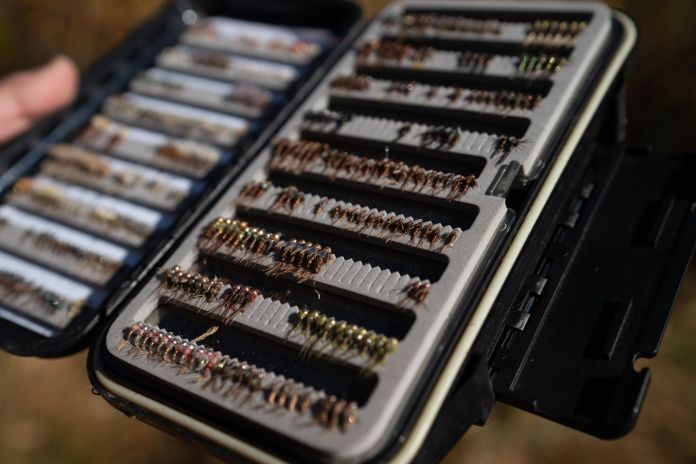
Steelhead eat egg patterns all season long, so it pays to have various colors and sizes in your bag. A dirty water box and a clear water box helps to keep it organized. Different areas or rivers have more of one type of insect over another, however, if you are just starting, there are some tried and true patterns that you need to have in your box:
Gold Ribbed Hare’s Ear Nymphs in Olive
Zonker Streamers in Natural and Black. Sizes 8 through 14.
Stoneflies in Black, Brown and Tan. Sizes 6 to 16.
Copper Johns
Pheasant Tails
Prince Nymphs. Sizes 10 to 16.
There are so many more patterns, however this is a good starting point, tie up in natural colors and a few in bright colors, like chartreuse and purple. To get the best of both worlds tie on two flies where legal and fish an egg-nymph combo and let the fish decide what they want, if all the fish eat your egg, then switch to two eggs and vice versa.
Swinging Tactics
In higher flows a change of tactics is required, this is where a swung fly, either single hand or the Spey/Switch rod comes in handy, especially in bad weather conditions. It gives you the ability to cover more water while hoping to intersept a fish or two. The choice to swing a fly is a way of life so to speak, it can be very productive on large rivers or when you need to cover water fast but effectively. Some days it can be a struggle, however “the tug is the drug†as they say, and it could not be truer. It is an amazing feeling when you get hit on the swing, it’s like being electrocuted by your wall socket as the fish takes off downstream.
Early season steelhead is a great time to get on the water, the fishing’s great, the people are still warm and friendly, and the scenery is gorgeous as leaves begin to turn. If the fish aren’t plentiful at least you are outside, and the camaraderie and colors make up for it. The more time you spend on the creeks, the more chance you will be there when it happens, instead of the usual “should have been here yesterdayâ€. When it happens, you will know, fish will be everywhere and you have the time of your life and it will seem like whatever you through at them they will eat it, nothing can stop you, that is the reason people keep coming back.
In a recent article for the Seattle Times, Lynda Mapes details the resurgence of wild Chinook Salmon in the Elwha River after the river was finally undammed in 2014. Since that record-setting dam removal project, wild steelhead have worked their way upstream and a surging population of wild Chinook salmon are reestablishing their traditional runs as well, with a record number of 7,600 salmon making a return in 2019, the highest return since the eighties. The Elwha’s story is a conservationist’s dream, and proof that rewilding of impounded waters is possible if you just give the fish a chance.
In the phenomenal article, the author goes on to explain the difficulties the first runs of salmon faced after the first Chinook blasted past the site of the highest dam.
In collaboration with Colorado Tourism and their “Care for Colorado” initiative, we set out to explore some of the most well known and widely admired tailwaters of the great state of Colorado. While on this adventure, we met with local fly shops and guides to have them show us exactly what makes their home waters so special, and more importantly, why they’re worth exploring and protecting. Along the way, we explored local restaurants, activities, and places to rest and relax to create a complete guide for exploring these iconic tailwaters.
For our second destination, we stopped to check out one of the most popular tailwater for those looking to take a trip into the mountains: The Taylor River.
Note: For this guide, we will only be paying attention to the water below Taylor Park Reservoir
In 1878 a small mining settlement named Tin cup was formed in response to the discovery of Gold in the area of, what is now the Taylor Park reservoir, in 1859. A man by the name of Jim Taylor, who the Park and River are now named after, was one of the first to strike gold in the area. Miners would transport ore down through Taylor River Canyon to Gunnison where it would be loaded onto trains and shipped off. In 1881, Almont Colorado, a popular pinpoint for anglers fishing the Taylor Tailwaters, was founded.
In 1935, US Representative Edward Taylor, a Glenwood Springs resident, helped pass a Congressional bill that authorized the aptly named, Taylor Reservoir and dam. The dam Finished construction in 1937.
Today, the Taylor River is a hot spot for anglers looking to take a trip to the mountains. With waters flowing in from the Elk Mountains, through the Taylor Reservoir, and into the Tailwater of the Taylor, which has risen to fame as a local and international favorite trout fishery amongst adventurous anglers and nature enthusiasts alike.
Fishing the Taylor River
Fly Shops on the Taylor River:
If you’re planning on starting your trip near Almont, which is right above the confluence of the Taylor and the East River (conjoining to create the Gunnison), you can stop into Almont Anglers or Three Rivers Resorts and Outfitting to grab a few flies. However, if you’re coming in from Highway 135, there’s a good chance you’ll be passing through Crested Butte. If this is the case, you can stop by either Crested Butte Anglers or Dragonfly Anglers.
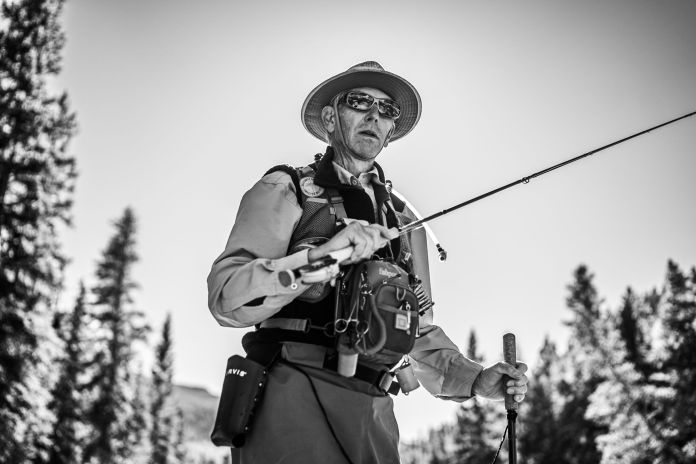
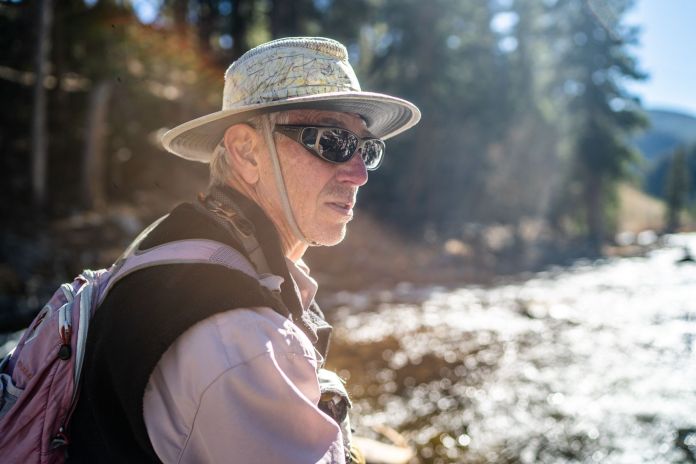
On our Tailwater Tour, we made our way into Crested Butte to stop into Dragonfly Anglers. There, we met our guide Jim Garrison, who has been guiding for Dragonfly for over 27 years. After grabbing a bagel from Butte Bagels, we made our way into the shop where Jim guided us over what flies we’d need for the day.
The man. The myth. The legend.
Flies to use on the Taylor River:
Depending on the time of year, subsurface fishing is usually going to be your best bet. However, in the late spring and early summer, the Taylor’s peak fishing season, you can expect some pretty responsive top-water action. For this time, we’d recommend tying on a Caddis, Grey or Green Drake, an Adams, a Trico variation, or a Blue Dun imitation. Anywhere from a size .14 to a size .20 fly can yield effective results, but the best way to judge what to use is to observe whatever hatch is going on around the river.
When it comes to the colder months of late Fall, Winter, and early spring, the fishing tends to slow down a bit. During these times, your classic tailwater flies will become extremely effective. These include small midges and baetis variations such as size .18 to .22 pheasant tails, RS2’s, zebra midges, and copper johns. Another fly that is extremely popular on the Taylor is the Mysis shrimp, which is a small freshwater crustacean that is generally abundant in Tailwaters around the state.
Also, during the early months of fall, streamer fishing becomes a pleasantly productive option. Small sculpin and leach imitations make incredibly enticing snacks to fish stocking up for the winter.
Below the reservoir, you can find some truly remarkable fishing that shows why the Taylor is such a popular river amongst fly-anglers. As you work your way down-stream from the Taylor Park Dam, you’ll make your way past the crowds that assemble around the catch and release section (325 Yards from the dam). In these sections, you can find some healthy rainbow and brown trout lurking in the depths
Parking is generally accessible, as you can find a number of pull-offs on the side of the road. When surveying for a good fishing spot, take into account a few factors: Refuge, Water Level, and Crowds. One of the great things about the Taylor River is the amount of natural debris that has collected in the river. Large boulders that have fallen from canyon walls and into the river to create a natural refuge for big trout looking to escape the current.
The current is the next factor to look for, or more importantly, the gauge height and the flow rates. Hydrometrics can be accessed HERE and make a great indicator as to how successful your day of fishing will be/ which type of flies you’ll most likely be using.
Finally, when scanning the side of the river for a put in, take the crowds into consideration. If you see a parking area with 2 or more cars parked already, it’s best to just move on to the next spot. Most anglers know that crowds are never conducive to good fishing. If you’re hammering water all day, not only will the fishing slow down for you, but it diminishes for all parties concerned. This can even prove to affect the health of the river in the long run.
When is the fishing best on the Taylor River? As mentioned before, the late spring and early summer often times yields excellent results, and fun to be had by all as the dry fly bight becomes abundant. However, the Taylor, much like any other tailwater, remains a solid fishery year-round. In the late Fall, streamers and nymphs are a plentiful food source for trout, and once winter rolls in, tiny nymphs and technical rigs are an angler’s go-to for success.
Something to take into consideration when fishing any river in the fall and spring is to MIND THE REDDS. What’s a Redd: A Redd is a spawning nest made by a fish, especially a salmon or trout. These spawning beds are where fish go to release and fertilize eggs to bring create the next generation of trout that will populate the wild waters of the river. Often-times, when fish are on their reds they will become extremely territorial, making them easy prey to unethical angling. However, these fish need to save their energy for spawn, and when caught on their redd, are much more likely to die, and or, destroy their nest. This can be detrimental to a river’s ability to sustain a wild fish population.
How to identify a redd:Â They’re hard to miss. Redds are smooth, oval-shaped patches of gravel in a riverbed, usually constructed with lighter colored rocks than the surrounding area. On top of said gravel beds, you can usually find big trout protecting their eggs. In-terms of proper approaches to these areas, it’s best to avoid them entirely. During the spawning seasons (Late fall for Brown Trout and Early Spring for Rainbow Trout), it’s important to keep your eyes down and scanning for these nests as to not accidentally walk over them. For more information on Redds, check out this article HERE.
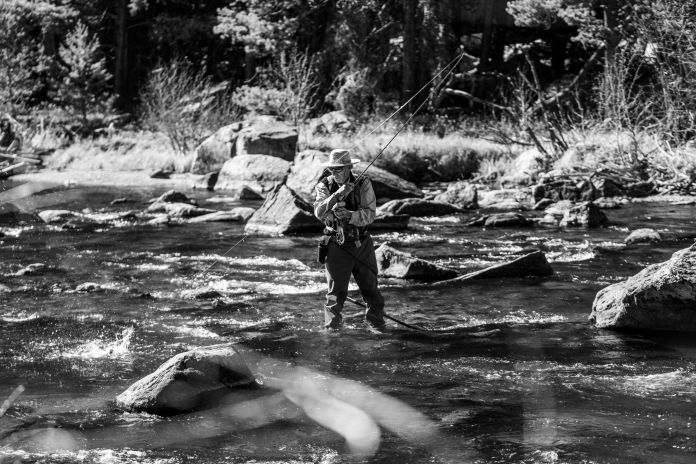
In our experience fishing with our guide Jim, he favored the approach of tight line nymphing, as it allowed him to quickly work fast-flowing seams in an effective manner. With the use of heavily weighted flies, a little bit of split shot, and no dependence on a bobber, Jim was able to pull trout after trout out from behind boulders and pockets of smooth water. No matter what you think of the technique, 27 years of experience doesn’t lie.
Places to Visit Around the Taylor River:
Whether you’re off a good day of fishing, or if fishing just isn’t your thing in general. Here are a few places to check out around the river.
Drive-up Keblar Pass – If you follow Highway 12 out of CB, you’ll find yourself making your way up beautiful Keblar Pass. This mountainside drive is one of the most scenic passes in the area and offers a variety of beautiful views along the trip. If you’re an animal lover, there are also plenty of horse ranches, cattle farms, free-range sheep, and wild turkeys to be encountered along the drive. The pass includes plenty of pull-offs to safely check out the one of a kind views, and snap a few pictures that you’ll be sure to cherish forever.
Visit Historic Tin Cup - The town of Tin Cup, which was established in 1879 as a mining town after lodge deposits were located in the general area, is an incredible piece of history that is still explorable today. Now considered a ghost town, Tin Cup is now mostly a tourist attraction for those looking to take a peek into the fascinating past of the Colorado Gold Rush. In Tin Cup, you can find a general store, a church, and the Tin Cup Pass which connects Almont to Nathrop. For this pass, we recommend a high clearance vehicle. For this, Jeep rentals are easily accessible.
Crested Butte Mountain Heritage Museum– Located in the middle of town, this museum offers a quick and enjoyable walk through of Crested Butte’s rich history. From its founding, to mountain conservation efforts, to the fascinating ski and biking culture that has defined the town; there is a plethora of fascinating history to absorb and appreciate through the museum’s interactive models and historic relics.
Hike Copper Creek Trail– For a fun and semi-challenging hike, you can hike up Copper Creek trail. There are two trailheads, one of which being a lower parking lot which is easily accessible, the second being the upper parking lot which is accessible with a high clearance vehicle. The hike is about 12 miles round trip and offers explorers breathtaking views of waterfalls, wildflowers, and (if you’re quiet enough) some incredible wildlife. Crested Butte Skiing – If you’re visiting in the cold months of winter, the fishing may be a little slower, but the skiing will be on fire. For more info on skiing CLICK HERE
Food by the Taylor River
If you’re looking for fun and unique places to grab a bite, the town of Crested Butte will not disappoint. With more options than you can shake a fly-rod at, there is something here that everyone can enjoy.
Brick Oven Pizzaria and Pub – We had a chance to stop by the Brick Oven Pizzeria and Pub to refuel after a successful day on the water. With an extensive beer menu, and dishes that call into question the standards of a Mainstreet pizzeria, we were left not only satisfied but jubilated by our experience. For a personal recommendation, try the flavorful roller coaster that’s the honey salmon platter. (Thank us later)
Montanya Distillers – Inside or outside, upstairs or downstairs, rum or…well, rum: this place has it all. With a wide selection of mind-blowing in house distilled rum-infused cocktails, Montanya Distillers is the perfect spot for a quick happy hour, or a culinary experience. Their food menu offers just as wide a variety as their drink menu, offering delicious options. However, when it comes to these dishes, their ramen remains king. Grab a hearty bowl of noodles that could feed a village (but we know you’re just going to eat the whole thing…we can’t blame you), and slurp down one of the many protein-based options Montanya offers. You certainly won’t regret it.
The last Steep – This burger joint is an excellent option for anyone looking to fill their stomach with some exceptionally crafted bar food. Burgers, wraps, and sandwiches alike, you really can’t go wrong as you jam out to what’s most likely some most welcomed Grateful Dead in the background.
Teocalli Tamale – If you’re looking for some quick fuel that’ll leave you satisfied for hours to come, stop into Teocalli Tamale. Established in CB for over 20 years, this burrito stand delivers a simplistic, yet satisfying, local feel to your run of the mill Texmex cuisine. Sherpa Cafe – For those in the mood for something to shake up their usual run of burgers and beers, the Sherpa cafe is a delicious escape from the norm with authentic Himalayan inspired dishes.
Places to Stay by the Taylor River
From those who care to “Rough it” to those who seek out exquisite ski-town-luxury, there is something for everyone around the Taylor river.
Eleven Experience: Taylor River Lodge – Located directly on the Taylor River itself, the Taylor River Lodge by Eleven Experience is an angler’s dream brought to life. Including private queen cabins, the main cabin with a kitchen and bar, a bathhouse, and a hundred other amenities we don’t even have the energy to list; Taylor River Lodge is the pinnacle of relaxation and luxury. Check out the lodge spotlight we did with them last year below.
Elevation Hotel and Spa– For a nice place to stay with everything you could need + some added amenities, Elevation is a delightful place to spend a night or two. Located at the base of the mountains in CB, this ski-in and ski-out resort will certainly have you jonesing to strap in and head out for a rip. Affordably priced, the hotel offers a spa and its own restaurant. However, it’s still only a 10-minute drive from the main part of town.
The Old Town Inn– For a refreshingly classic “mountain town inn” feel, check out Crested Butte’s Old Town Inn. With 33 rooms to choose from, the inn is located within walking distance from the town park, and right across the way from historic downtown.
Almont Resort – Established and family-owned since 1893, the Almont resort is located on the East River, which meets with the Taylor to form the Gunnison. With a built in restaurant, bar, and entertainment room, these 20 cabins are spitting distance from the river, and offer a great place to get away for a few days.</li>
Camping – Resorts and hotels not your thing? Lucky for you, there are a number of great campsites located around Almont which offer a great place to set up a tent. Whether your goal is to save some money and spend a night in the great outdoors, or just be first to the water, you can check out a list of the best campsites HERE.
Additional Info
We would like to take the time to remind you to practice proper social distancing regulations and to always wear a mask in public places. As we enjoy what this beautiful state has to offer, it’s crucial to remember that we’re all just visiting, and as visitors, it’s our job to work to preserve and respect these incredible places. To find out more on conservation initiatives, and ways you can make your time in the area more meaningful, feel free to check out ways to get involved HERE.
If you’re looking for additional info, or just want to learn more about the state and the opportunities it has to offer, check out the official Colorado Tourism Page HERE.
Thank you to Colorado Tourism for this incredible opportunity to explore our backyard. Stay Tuned for more installments of Tailwater Tails, and tips on exploring on Colorado’s famous Tailwaters. Also, thank you to Dragonfly Anglers, and our guide Jim Garrison for helping us navigate, and learn more about your home waters.
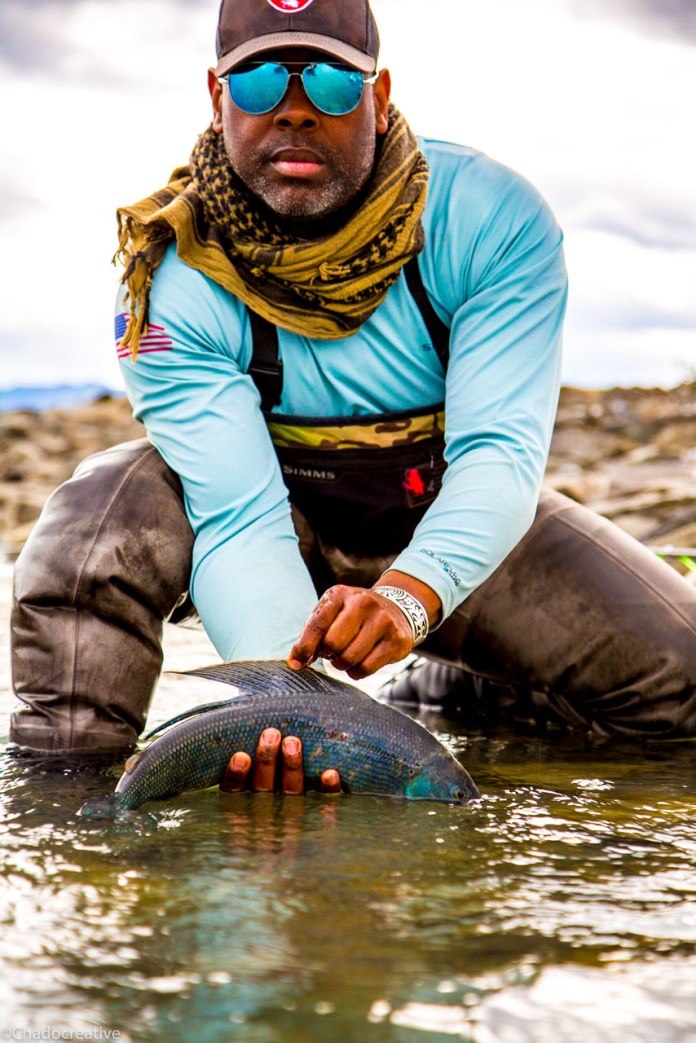
After a three-year hiatus, Flylords sat down with Chad Brown. He is a U.S. Navy veteran, founder of Soul River, Inc., a photographer, a conservationist, and, most recently, an emerging leader in advocating for greater inclusivity in outdoor spaces. In addition to updating us on Soul River’s growth since 2017, Chad filled us in on how fly fishing has influenced his photography career. Additionally, he shared with us the feedback he has received since his article “Thoughts on the Killing of George Floyd” was picked up by Hatch magazine in June. Check out his comments and photography below!
Photo Courtesy of Chad Brown
Could you provide us with some background on yourself and Soul River, Inc.?
I’m the president and founder of Soul River Inc., which is a nonprofit organization based in Portland, Oregon. The mission of the organization is to merge inner-city kids, focusing more or less on youth of color and diverse backgrounds, with disabled combat veterans on our public, fresh waters. We do these outings, for which we actually coined the name “deployments.”Â
We call them deployments because we identify places that are environmentally under threat and step in with an environmental justice mindset. We pair ourselves with conservation groups that are doing the good work of advocating for and protecting our public lands, wild spaces, and fresh waters. Through that collaboration, we build a curriculum [for each deployment]. Each curriculum is formed into a field guide [for the deployment location] and is based on awareness, advocacy, and the issues that are happening. That curriculum is passed on to the veterans, and the veterans use that curriculum to help engage our youth. Our ultimate goal at the end of the day is raising our youth from an urban to an outdoor mindset, bringing them into a leadership type of mindset, engaging with them, and fostering them into advocacy. We try to give them a sneak preview from a recreation standpoint, but we actually like to grow them into leaders and leaders for tomorrow. That’s really what it’s all about.
Photo Courtesy of Chad Brown
We then move from our deployment into congressional spaces. And when we go into these congressional spaces, veterans that have fostered these youth from our public lands and fresh waters have also given them a confidence platform that helped build them into young professionals and teach them how to advocate for our fresh waters and our wildlife in front of senators and congressmen. At the same time, this gives them an opportunity to connect the dots of career paths. So it’s not just about recreation and going fly fishing, but it’s also about getting to see that they, too, can play a strong, active role in a professional career that helps foster, support, and protect our wildlife and our public lands, and [they can] take on environmental justice issues.Â
I founded this organization based on my personal background. I’m a Navy veteran who served in the second phase of Desert Storm, and also Operation: Restore Hope in Somalia. I deal with mental illness, which is the PTSD that comes into play. At one point it took a big, huge chunk of my life, and took me into a downward spiral that left me homeless and dealing with my demons. Finding fly fishing from a friend is what brought me back into society. And so fly fishing played a big role in my life, and still does today. I use it as a tool of bringing communities together and forming relationships between youth and veterans, and that is how I founded Soul River Inc.Â
I have a professional background in art direction and creative direction—that’s what I went to school for—and am a photographer as well. It definitely plays a role in running a nonprofit. I live very comfortably within the creative-professional space between an art director and a photographer. I cut my teeth in New York and LA, working in and out of agencies, and I’ve done a lot of work over in Hong Kong fostering and building brands and launching new brands in Asia.Â
Photo Courtesy of Chad Brown
How has Soul River grown and developed since our last interview with you in 2017?
The organization has definitely gotten more publicity and unlocked more supporting funders, which is awesome, and it has a staff now. A lot of our youth are now youth leaders and a lot of them have graduated from Soul River, Inc. and gone on to study at places like Cornell and Florida A&M. One graduate is interning for NOAA (National Oceanic and Atmospheric Administration), and another, her name is Karen, just landed an internship with Senator Ron Wyden (Oregon). So I think the growth of our youth leaders has been some really awesome change.
I am very grateful and thankful for many supporters out there, whether it’s brand companies, outdoor companies, fly fishing [companies], or independent funders. The organization has definitely been welcomed and nurtured by many folks with big hearts. I hope that continues moving forward. And we’re always in need of support and working for the growth of our organization, so donations are always welcomed, small or large. You can always go to the website and make a donation.
Photo Courtesy of Chad Brown
Also, when we put together our deployments, they take us to many different types of really off-the-grid destinations. And so being able to connect with people who can’t support us financially, but may have insight on areas that we go to, that’s also golden. It allows us to tap into their network or extract information about the area to help us be able to make our deployments as safe as possible. Being able to know people on the ground that can help navigate us, or point us in the right direction [is important]. From food to help getting to trailheads or whatever the case is, more information that we are able to attain the better off we are in making our deployment successful.Â
We’re always looking for volunteers, and the type of volunteers we look for are people who have backgrounds working with youth, especially at-risk kids and youth of color—that would be great. People who come with an education background and people who have science backgrounds also help. And then also, through those volunteers, we are always looking for conservation groups that are looking to open up their advocacy work and make that available for youth and veterans to step into those spaces to help elevate the work that they’re doing.Â
Soul River, Inc. now has a field educator. Her name is Marianna and she is constantly working on deployment curriculums. She is also always looking for opportunities for internships with conservation groups or other people who are willing to open up the doors for young people to step in and learn, whether by shadowing a biologist, a fishing guide, etc. She is always looking for opportunities for our Soul River, Inc. youth leaders who are looking into college.
Photo Courtesy of Chad Brown
If you know about any opportunities that Soul River, Inc.’s youth could participate in, you can reach out to Marianna at fieldeducator@soulriverincrunswild.org
How has Fly Fishing impacted your photography career?
Fly fishing has given me a vehicle to mobilize youth and veterans through my organization. It’s given the seeds to help build the curriculum for going into our wild spaces, marching hard toward environmental justice and bringing veterans and young people into leadership. Through a lot of relationships and connections being on the water and on public lands, I have connected with indigenous communities and new partners. Where my photography steps in is that fly fishing has given me access to telling and capturing more rich stories from unheard voices on public lands, meaning our indigenous people.
Photo Courtesy of Chad Brown
So it’s really interesting because my interest, when I get behind the camera, used to be very commercial. But what really makes me pick up my camera now is being able to step intimately into indigenous populations, and being able to use my platform as an exhibition to help elevate their voices and help elevate the issues that are happening on their lands. Doing this in an exhibition form becomes an educational experience where we strategically position exhibitions beyond the conservation world and back into urban communities and mainstream communities to help engage and educate new folks and build their awareness on what’s happening on these public lands and fresh waters.
It recruits new people into a conservation space, saying, “Now that I learned, walking through this exhibition, about indigenous people and what’s happening, how can I help and what can I do to support?” And so that creates a stronger army from a conservation standpoint and from a political standpoint. When you want to pass a bill or when you want to collect signatures, now you’ve just opened up that awareness of new thoughts and new people that come in. Your army is stronger now.
Photo Courtesy of Chad Brown
This all spins from a creative angle of taking what’s there and shooting it in a story format, then bringing it into an exhibition. People can’t travel to point B, but if you bring [an exhibition] to their community—into their urban world—they can go learn. And they can see [the exhibition] and say, “You know what, I want to be part of that now.â€Â
So fly fishing has definitely brought me into really awesome wild spaces. I mean, the sport of fly fishing, it tends to always sit in the beautiful outdoors and the lands of awe. But around those lands of awe, there are constant environmental injustices happening where only us anglers and our hunters and indigenous people know about it. Fly fishing has taken me on these journeys to spaces that are delicate and seeded me into indigenous communities. Yes, we’re recreating on the land, but [indigenous communities] subsist 100% from the land, so it opens up many other doors where I can tell that story through my lens.
What do you hope people experience when viewing your exhibitions?Â
It all starts in how you shoot and how you execute that will dictate [the viewer’s] experience. When you walk into my exhibition, the way I shoot my images starts off the beginning of your experience. I shoot, especially when I’m trying to hold and capture a story and capture the intimacy, really going with the “larger than life†feel. I love to allow lighting to help engage and tell my story, so using lighting is a big thing. There’s a thing that’s called—some people call it different things—but I call it a bending light. I use light in a way that captures the “larger than life†feel, but also the intimacy of the tone and the trauma, or the dramatic feeling that you become engulfed while looking at the image.Â
Photo Courtesy of Chad Brown
My goal at the beginning [of the exhibition] is approaching my subject with a “larger than life†style, allowing the artificial and the studio lighting to come into play. My exhibition pieces are large—they average anywhere between seven to ten feet tall. They’re wall-type pieces that are specifically and strategically large format to engulf you into their world. And to allow you, just for a minute, to be engaged as intimately as possible. When you come to that image, and you look at it, you become engulfed in the surroundings of the piece that you’re looking at. So it’s this opportunity to step into the world—literally step into the world—and feel it.Â
Do you have any current or upcoming exhibitions?
COVID has definitely put a cease on my exhibitions. But I had one that was going, which was the Vashraii K’oo Arctic National Wildlife Refuge Exhibition. That work is an exhibition that has been traveling around the United States. I’m working on a new exhibition with a conservation group called Pacific Rivers that will probably start shooting next month. It’s really unique. Pacific Rivers wants to raise awareness of our wild sanctuaries and raise money to help protect them. And so I started thinking, “How can we tell a story about wild sanctuaries?” At the same time, there has to be a vein to educate people about what a wild sanctuary is, especially beyond our conservation world.
Photo Courtesy of Chad Brown
So I thought of this idea where I said, “Okay, let’s identify five sanctuaries that you want to elevate and help protect, and share this to the public. Once we identify the five sanctuaries, I want to find five women. Each woman is going to represent shape, color, and size. And what we’ll do is have each woman step into each sanctuary, and I will shoot that woman. I’m going to hire a body paint artist, and have them paint half of each woman’s body from her feet, all the way through her waistline, of that environment, where she blends into that sanctuary. She becomes mother nature of that sanctuary, so the name of the exhibition will be Mother.”Â
I can’t wait to start shooting because it’s going to be really gorgeous—really beautiful. I’m going to shoot these women larger than life, half their body is going to be colored and painted by a really awesome body paint artist. It’s going to be really very tastefully done and very magical. It opens itself to really interesting narratives to help engage the public from a storytelling standpoint, but it also educates them how delicate and how special our sanctuaries are.
To check out his Vahraii K’oo Arctic National Wildlife Refuge Exhibition, click here.
Photo Courtesy of Chad Brown
Recently you have contributed to the conversation regarding inclusivity in outdoor spaces—what has that experience been like for you?
I’ve been speaking to a lot of these different issues, and it definitely comes from my experience with the article that I put out—it’s thoughts about George Floyd. What was impressive and inspiring was thatHatch Magazine actually picked it up. It kind of threw me off guard because I just didn’t think a magazine like that would actually pick it up, but it did. It actually went viral—a little bit over 200,000 views. It was literally all over and beyond the conservation world. I mean, literally, across the United States. And from that Keen Footwear picked this article up and repurposed it, and that went over 100,000 views. After that Columbia Sportswear picked it up, and then Peak Design picked it up. It just went completely viral.
Basically, I called the entire outdoor industry on systemic racism—that’s what that article speaks to. And so what you’ve been seeing—all the podcasts and all the invites—[the article] is what started that. And what I’m speaking to is not just systemic racism toward people of color in the outdoors, but this also started to span into women being unsafe in the outdoors by themselves. And at the same time [the article was spreading], I was getting emails—I still get emails and Instagram messages—from women. I get emails from Indian people. I get emails from Hispanic people. It’s really interesting. Most feedback was positive—many people showed support.
That article and all the work I’ve been doing has actually brought a lot of people into the light in talking about their fear of being by themselves in the outdoors. It’s something that no one speaks about and they don’t share. It’s been going on and going on—it’s not a new thing, I just brought this into the light.Â
And so when people were saying this doesn’t exist—racism doesn’t exist out there—that’s a bunch of crap. Because what happened is that, no joke, if you go to something like the post at Hatch, I would guarantee you will see so much hate coming from the outdoor community, speaking ugliness to me. My life has been threatened many times. I’ve received so many negative, ignorant, hateful texts. It’s ugly, and it’s all coming from the outdoor community. So when people say it doesn’t exist, I was like, “Well, all I had to do was sit and wait, and you see people start to come out of the outdoors and speak this ugliness.†They’re just revealing themselves. The article revealed it. It allowed people to come out in support, but also allowed a lot of the hate of folks to come out and show itself. And, truly, that speaks to the fear of me, it speaks to the fear of women, it speaks to fear of indigenous people.Â
Photo Courtesy of Chad Brown
Imagine being outdoors and seeing that person who sent that bad text. That person, whey they pick up their rod and waders to go fly fish, or pick up their weapon and go hunting, or go out for a trail run, brings their mindset. When that mindset of racism, ignorance, or bigotry is carried onto public lands, people of color, women, and LGBTQ communities don’t feel comfortable roaming wild spaces freely and safely. The last thing you want to come across is someone who has it in for you because they have a problem with you being a woman or with your skin color.
The problem on public lands and our fresh waters is that there are hubs of a mentality of ownership that seems to be ingrained. I have had people yell “get off my land,†“this is my hole,†and “get off my river†to me and call me racial slurs while on public rivers. I have been shot at on two of those occasions. In that situation, this is my reality: I’m black. If a shot rings out in the outdoors and I draw my weapon to defend myself, it’s my word against that person, if that person is still alive. How does that look? Should I take a stand and defend myself or not? Is justice going to be on my side? No, I’m going to have to face some time even though I was defending myself. I either go to jail or I go six feet under.
This ownership mentality speaks in a superiority voice that establishes boundaries of discomfort to people of color, women, etc. It makes others feel uncomfortable and not wanted, especially when it comes to folks who are just now seeing how wonderful nature is for the first time. The reality of the ownership mentality is that it is nothing but bullying with hate and power and it lends itself to systemic racism.
The outdoors should be a place of refuge where we should all be able to roam free without concerns and we should feel safe, but a lot of us don’t due to the fact that we live amongst ignorance, bigotry, and racism in some of the people we encounter in the outdoors. That is our lens and that is our life.Â
I am trying to bring this discomfort into an open space. This is real and this affects so many people. There are thousands of folks with fear in the outdoors, but do not speak to the fear because they carry shame and most folks will put them down quickly and not listen. Our biggest problem is that we are quick to judge and make others feel less-than, unsafe, or uncomfortable. If we learn to listen and learn, we will learn to understand one another and learn from one another.
Photo Courtesy of Chad Brown
To read Chad’s article that has raised this conversation, click here.
He has also shared a few sources for those looking to listen and participate more deeply:
A leaning oil tanker off the coast of Trinidad and Tobago is raising concerns of local fishermen and environmental groups. The Venezuelan oil tanker, Nabarima has been moored off of the South American nation’s coast for 20 months following the tightening of US sanctions on Venezuela.
Local watchdog group Fishermen and Friends of the Sea say the vessel contains 55 million gallons (1.3 million barrels) of crude oil and that entire cargo is at risk of spilling as the vessel threatens to capsize after spending over a year a half moored.
According to the Miami Herald, Trinidadian authorities are visiting the ship today to inspect the damaged vessel and to assess the next steps forward to prevent an ecological disaster 5 times the size of the Exxon Valdez.
The ship is in the Gulf of Paria, between Venezuela and Trinidad and Tobago.
For more information as the story develops, follow @ffos_global on Instagram!
In collaboration with Colorado Tourism and their “Care for Colorado” initiative, we set out to explore some of the most well known and widely admired tailwaters of the great state of Colorado. While on this adventure, we met with local fly shops and guides to have them show us exactly what makes their home waters so special, and more importantly, why they’re worth exploring and protecting. Along the way, we explored local restaurants, activities, and places to rest and relax to create a complete guide for exploring these iconic tailwaters. The Frying Pan RiverÂ
For our first destination, we stopped to check out one of the most famous tailwaters in not only Colorado, but the United States: The Frying Pan River.
The Frying Pan valley was home to Native American hunting parties, miners, railroaders, ranchers, and recreationists since it was first explored in 1880. The origin of the “Frying Pan” name is uncertain, but the most colorful story is that of a group of prospectors who fled hostile Utes only to run into another encampment, whereupon one prospector remarked that they had come “out of the frying pan and into the fire.” However, another legend of similar nature describes the name originating from the story of a similar run in between a native tribe and a group of trappers. The wounded trapper sent a party out to find help, and to mark their location, placed a frying pan in a tree as a marker. Regardless of which tale is true, this river definitely possesses a mystical ora to it.
Today, the Fryingpan River is a renowned Gold Medal trout fishery whose designation stretches 14 miles from Ruedi Dam, which was constructed in 1968, to its confluence with the Roaring Fork River in the town of Basalt. While the trout used to bost a mix of native cutthroat trout, as well as a mix of invasive Brook Trout, the water now belongs to mostly Brown and Rainbow trout, with the occasional Cutthroat making a welcomed appearance.
We had the chance to stop into Taylor Creek Fly Shop and meet up with guide Shannon Outingbefore heading out on the river. Shannon has been a guide at Taylor Creek for 6 years now, and never ceases to find a few trout hidden in the complexed ecosystem the frying pan offers. While in the shop, she walked us through their extensive selection of flies, and with the aid of some ‘specimen references’, we found a few that looked like they’d do the job.
Flies to Use on the Frying Pan River:
Depending on the time of year, the flies and methods you’ll want to employ will vary. Since we were fishing in the middle of October with moderately low flows, we chose to nymph under an indicator. Some flies that proved to be effective were of the small midge and Baetis variation. Some patterns to consider would be some sparkle baetis variations, rs2’s, pheasant tails, or a gold ribbed hare’s ear all-around sizes 16-22. Also, remember to keep that line weighted so those flies can get down into the appropriate feeding zones.
Nymphing can be a productive fishing method pretty much all year-round on the Frying Pan, but it proves especially lethal in the colder months of late fall into spring. That being said, once the weather warms and bugs start to hatch, nothing beats the dry fly bight. In the months of June through September, one can’t go wrong throwing caddis, drake, and stimulator imitations for an exhilarating top-water bight.
Fishing the Frying Pan River:
First and foremost, the Frying Pan River is marked as a Gold Medal trout fishery. To achieve gold medal status, the waters are defined as being able to produce 60 pounds of trout per acre, and at least twelve 14″ or larger trout per acre. To make sure these waters are able to remain Gold Medal status, take some time before you fish to read over the Frying Pan Fishing Regulations, which can be found HERE.
The Frying Pan River is an extremely popular spot for anglers around the country, and is fishable year-round. An important thing to note is that the scenic appeal has also attracted a fair share of affluence to establish property lines along the river. This being said, it’s important to take notice of established private property on and around the river and respect those areas. Luckily, the waters of the Pan are vast, and there is no shortage of public access points. Always remember, fishing public land is a group effort, so always make sure to pack out all your trash (this includes used tippet).
The beauty of the Frying Pan, and many other tailwaters like it, is the diversity of water. In deep pools, you can fish long, slow-sink nymph rigs, or even smaller streamers such as minnows or leach patterns. Faster riffles are more welcoming to the use of weighted nymph rigs, set to quickly survey mossy bottoms. Then of course, there is an abundance of pocket water where a well placed dry fly is sure to be made a quick meal.
In our experience with Shannon, we moved up and down the river, primarily focusing on deep runs. Even as the chill of the mid-months of fall encroached the river, a rig composed of several baetis variations proved fruitful, and our efforts were rewarded with absolutely gorgeous Frying Pan Brown Trout.
For best results when fishing the Pan, feel free to check the discharge rates and gauge height. Considering tailwaters are all located downstream of hydraulic structures, in this case, a dam, it’s important to take into account what kind of state the river is in and plan accordingly. This information can be found HERE.
Places to Visit Around the Frying Pan River:
Whether you’re off a good day of fishing, or if fishing just isn’t your thing in general. Here are a few places to check out along the river.
Located right at the entrance of Downtown Basalt, The Roaring Fork Conservancy exists to serve residents and visitors throughout the Roaring Fork Valley through school and community-based Watershed Education programs and Watershed Science and Policy Projects including regional watershed planning, water resource policy initiatives, stream management, and restoration. If you’re looking to learn more about the factors that affect the waters that we as anglers cherish, be sure to check out some of the programs offered by the Conservancy.
On our tailwater tour, we were able to stop in and catch up with Christina Medved and Megan Dean to learn more about our local waters, and the issues that affect them. While there, we were able to get a glimpse at some of their amazing research, as well as try out their augmented reality sand table to monitor changing hydrology and geology in real-time.
The augmented reality display changes based on differentiation in detected Kinetic energy. Pretty neat…
Additional stops:
Woody Creek Distillers – A praised Basalt distillery recognized for their use of local Colorado ingredients. A great place to raise a glass.
Aspen Shooting– A great place to practice your skills on the range. Located right next to the Frying Pan River, this is a great place to enjoy the beautiful mountain scenery and fresh air in the Aspen valley, while perfecting your target shooting skills
Day Hike/ Camping: Thomas Lake Trail – The Thomas Lake trail is an excellent day hike for those looking to get in some moderately challenging walking to a beautiful lake. Once at the Lake, you can choose to camp out at some of the designated camp spots, or if you’re looking for a real challenge, continue all the way to the peak of the iconic Mt. Sopris. Also, if you’re interested in being a part of what makes these trails so special, check out the Care for Colorado Volunteerism opportunities to find ways to make your visit even more enriching.
Check out Reudi Reservoir – While we were focused mainly on the tailwaters of the frying pan, above the dam is the Reudi Reservoir, which is a beautiful body of water that holds endless possibilities. If you’re a fan of sailing, water skiing, or simply camping; be sure to take a beautiful drive up the Frying Pan Road and check out the Reservoir.
Food By the Frying Pan River:
The town of Downtown Basalt is a thriving hub of culinary delights. No matter what you’re in the mood for, there is surely a covid-conscious place to leave you feeling safe and satisfied.
One of many delicious options at the Tipsy Trout. Image courtesy of Giftly
The Tipsy Trout – After a day of fishing the Pan, we stopped into the Tipsy Trout, which is a great lunch spot adjacent to the Frying Pan River, and Taylor Creek Fly Shop. If you’re looking for a relaxing environment to enjoy a cold Coors and a chicken sandwich that’ll blow your mind, the Tipsy Trout is your place. If you stumble in around 3 pm or later, there’s a good chance you’ll be able to catch an interesting story or two from a local fly-fishing guide wrapping up a hard day’s work.
Free Range Kitchen and Wine Bar – If you’re looking for an upscale spot for a date night or a last hoorah in Downtown Basalt, this is your place. With margaritas that’ll add the perfect amount of flavor to an evening, Free Range is a great destination to close out an amazing time spent with good folks.
Capital Creek Brewing – If you’re looking for a local beer experience, check out Capital Creek Brewing. With an exciting menu that’s always evolving, this brewery is a great place to grab lunch, or spend an evening enjoying locally sourced beer with friends. (If you go there, try the Green Drake IPA, it’s a favorite of ours).
The Brick Pony – If you’re looking for a fun place to kick back and enjoy a drink on a Friday night; the Brick Pony is your spot. Being within spitting distance of Frying Pan Road, you can jump off the water and be consuming a plate of nachos the size of a small horse within 20 minutes.
K’Gen Asian Cuisine – When it comes to Asian food, it can be hard to miss. However, not only does K’gen deliver some surprisingly incredible sushi, but it’s at a pretty impressively low price. For a fun dinner spot that fits the budget, this is an easy decision that’s got something for everyone.
Places to Stay by the Frying Pan River
Whether you’re looking for a rustic log cabin feel, or an aspen-inspired hotel, when it comes to lodging by the Pan there’s something for everyone.
Taylor Creek Cabins – While prepping to meet up with Shannon, we had the chance to stay in one of the cabins of Taylor Creek Cabins. Located right on the river, this is an amazing spot to hang out before a day on the river, including some included private water, or exploring the beautiful area surrounding Basalt. With a wood-fired stove to heat the cozy little cabin, you can really feel like you’re escaping the confines of modern society, all while being 10 minutes from downtown Basalt.
Behind the Scenes: Hanging out by the fire checking out the shots of the day
Additional lodging:
The Frying Pan River Lodge – With a Riverside location, this lodge offers an affordable place to stay that’s within walking distance of any restaurant in downtown Basalt.
Basalt Mountain Inn – If you’re looking for something a little more updated, Basalt Mountain Inn offers a fun modern atmosphere for those who are looking to explore the Pan and the Roaring Fork Valley.
Lodge at Rivers Edge– If you’re looking for a place that still gives off that remote cabin feel, but delivers a little more luxury than the average riverside accommodations, you’re looking for the lodge at River’s Edge. Remodeled in 2018, this lodge offers an upscale stay directly above Basalt.
Feel free to CHECK HERE for additional hotels and accommodations
Additional Info:
We would like to take the time to remind you to practice proper social distancing regulations and to always wear a mask in public places. As we enjoy what this beautiful state has to offer, it’s crucial to remember that we’re all just visiting, and as visitors, it’s our job to work to preserve and respect these incredible places. To find out more on conservation initiatives, and ways you can make your time in the area more meaningful, feel free to check out ways to get involved HERE.
Cheers to good friends and great places
If you’re looking for additional info, or just want to learn more about the state and the opportunities it has to offer, check out the official Colorado Tourism Page HERE.
Thank you to Colorado Tourism for this incredible opportunity to explore our backyard. Stay Tuned for more installments of Tailwater Tails, and tips on exploring on Colorado’s famous Tailwaters. Also, thank you to the Roaring Fork Conservancy, Taylor Creek Cabins, and Taylor Creek Fly Shop, and our good friend Shannon for your aid in helping this project come to life.
Concerned beachgoers in Wareham, Massachusetts were shocked when they saw a fin slowing waving its way through the chop last week. Was it a shark? An injured whale? The concerned public had no way of knowing, so they did what they could, and called 911.
What resulted was one of the funnier responses we’ve seen a local Department of Natural Resources issue:
SUNFISH IN BROAD COVE
10/12/2020 12:50PM
We are aware of a sunfish in Broad Cove. We have checked on it, and it is…
“We are aware of a sunfish in Broad Cove. We have checked on it, and it is doing normal sunfish activities. It’s swimming. It is not stranded or suffering. The sunfish is FINE.
Don’t be jealous just because it’s not swimming weather anymore!
PLEASE STOP CALLING THE POLICE DEPARTMENT ABOUT THIS SUNFISH!!”
Ocean Sunfish are no strangers to the Massachusetts coast. They feed all summer in the warm waters of Cape Cod bay fattening up before the colder water temperatures of fall and winter drive them back out to deeper waters offshore.
Quick Ocean Sunfish Facts:
They can weigh over a ton, reaching upwards of 2,200 lbs
While most of us are still in the peak of fall, winter is upon us as the temps drop and frost begins to roll in. With winter comes a different mindset and requires specific techniques to catch those persnickety trout. Due to the colder temps, anglers are required to take extra precautions to optimize your time and experience on the water. Keeping that in mind, trout also need to be taken care of in the winter. If temps are too cold, trout can be affected drastically if removed from the water for long periods of time. Its okay to get those “hero shots” but be mindful to the life of the trout while doing so. In this tips and tricks video of the week, Cam with Steem Outdoors walks us through proven tips when fishing for trout in the winter months.
Winter Fly Fishing Tips and Tricks:
Fish at the warmest part of the day. Water and weather are too cold in the early morning and trout tend to be sluggish. Warmer temps will trigger activity in trout making for more success on the water.
Trout tend to have a much lower metabolism in the winter months. They will lay low in the deep pockets moving very little to feed to conserve as much energy as possible. Therefore, fish the deep slow moving pockets of water and avoid the fast riffles.
There are very few hatches in the winter time but if there are, it is usually the midge hatch. Dry fly activity is slim to none unlike the warm summer months. Therefore, resort to nymphing and streamer fishing during the winter months.
Downsize your tippet. Try to resort to lighter tippet in the winter time such as 6x, 5x, or 4x. Fluorocarbon tippet is great for nymphing because it will sink faster. Lighter tippet is more stealthy in the winter months.
Water is typically much clearer in the winter and fish are skittish therefore, be stealthy with your approaches.
Cold water and frigid temps are capable of creating ice in your guides. This can create issues for anglers and can also lead to guides and fly lines breaking or splitting. There are a few tips to prevent this but one quick tip is to dip and shake your rod in the water to remove the ice. Loon Outdoors makes ice off paste that can be applied to your guides before your trip. This will also prevent your guides from icing up.
Fly fishing in the winter months can be very rewarding but can also be difficult at times. Use these tips and you will have more success in frigid conditions. Now bundle up, grab the rods, and hit the water! Tight lines!
Australia is home to some amazing flats fishing, particularly in the northern part of the country. My wife and I had been living on the road for almost two years fly fishing our way all over the place and ticking off many of the things on our fishing bucket list.
At the top of that list was catching a permit on the flats. We’d had seen permit at a couple of places on our trek north but hadn’t had any good shots. It is widely known here in Australia that to find the best permit fishing, for the big badass flats dwelling Anaks, you have to drive to Weipa near the tip of Cape York. That’s pretty much as far north as you can go in Australia. Trouble was that our large blue van/house “Kevin†was definitely not suited to getting us there.
We decided to take a calculated risk, and 15 horrifically bumpy, dusty hours later, we found ourselves cruising the flats, fly rod in hand looking for glowing yellow tails, and mooning silver flashes.
Not only can you catch a big permit in Weipa, but these beasts will also rise to a floating crab like a big brown trout in a river.
Since we did not have a chance to stock up on tying materials before our spur of the moment trip, I fashioned some floating crabs from an old pair of gifted flip flops that had been taking up room in our van for sometime before we headed up the coast to the permit flats.
I’m not quite sure how to properly explain the sight of that bouncy water with yellow tails poking out and swirling about moving down the flats, but when that big awkward shaped head and gazing eye came completely out of the water to suck down that old flip flop crab, all the thoughts of that endless bumpy dusty road disappeared as quickly as the line went tight and the backing disappeared from the reel.
This is not an uncommon occurrence either, these fish just love to feed off the top. We’ve been in Weipa for over a month now and have enjoyed some of the best flats fishing imaginable, it was absolutely worth the logistical nightmare to get here. The fishing here is a fly anglers dream.
We have a full cast to land clip on our YouTube channel below:
Article and photos from Lubin Pfeiffer, be sure to check him out on Instagram at @thefullscale_fishingadventures and check out his Youtube Channel here.


 Steelhead eat egg patterns all season long, so it pays to have various colors and sizes in your bag. A dirty water box and a clear water box helps to keep it organized. Different areas or rivers have more of one type of insect over another, however, if you are just starting, there are some tried and true patterns that you need to have in your box:
 Early season steelhead is a great time to get on the water, the fishing’s great, the people are still warm and friendly, and the scenery is gorgeous as leaves begin to turn. If the fish aren’t plentiful at least you are outside, and the camaraderie and colors make up for it. The more time you spend on the creeks, the more chance you will be there when it happens, instead of the usual “should have been here yesterdayâ€. When it happens, you will know, fish will be everywhere and you have the time of your life and it will seem like whatever you through at them they will eat it, nothing can stop you, that is the reason people keep coming back.