After spotting this fish in a deep hole, I tried my chance with a heavy nymph in order to present my flies right in front of the fish. Sure enough, the fish ate the flies and the fight was on.
After one of the most epic fights with 2 crazy jumps, this fish brought me to my backing.
Putting pressure on him in order to keep the few remaining meters of the backing, the middle section of my rod dislocated. I finally succeeded to land this absolute beauty of a rainbow trout.
This beast weighed 36 pounds in the net, the net weighed 2 pounds, a final weight of 34 pounds!!
It’s that time of the year again, cool mornings, vibrant leaves, and variable weather. While we are enjoying the colder weather and the spectacular fishing, the brown trout are hard at work spawning. It is important that we avoid these fish and their spawning beds called redds. Unlike some other fish species like bass, it is unethical for an angler to fish to a spawning trout. So how should you approach fall trout fishing and how do you identify a spawning nest or redd?
A trout nest or redd, Photo Credit: Seattle Public Utilities
You may recall the article we covered The “Mind The Redd” Movement, which also is a great interview article regarding spawning awareness.
When do Brown Trout Spawn?
While rainbow and cutthroat trout spawn between the months of February and May, brown trout and brook trout spawn in the fall months, between September and December. The temperatures in these months create the perfect river conditions (water temperatures between 42 and 48 degrees, approximately) for these fish to mate and begin creating their offspring.
Female fish find a place in the stream that is relatively shallow, with a gravel bottom. Usually, she chooses an area near or below tributaries; occasionally, she will choose a spot in the tributary. She then begins the process of clearing the area of sediment, silt, etc. to create the perfect nest, or redd, for her eggs. In order for the eggs to hatch successfully, the redd needs to be protected from strong currents, debris, and most importantly, needs to have a sufficient oxygen supply.
Meanwhile, the males are busy competing with other trout for a female that suits his needs. They use their teeth and their recently developed kypes(the distal tip that forms along the lower jaw), to aggressively fend off the other males. At this point, his brilliant colors are on full display.
A beautiful brown trout caught in the cool waters of southern Colorado.
Once two fish have paired up, the male defends the redd ceaselessly and will fight off other fish that come near. The female, or hen, will then lay her eggs and the male will fertilize them. She will lay anywhere between 200 and 8,000 eggs depending on her health and size, and the external conditions of the area. Very few of these eggs will live to swim away.Â
After spawning, a trout will, barring any incident, continue to live, and eventually reproduce several more times. That said, the spawning season(s) is the most stressful and physically demanding period of the trouts life, and it is very important that we, as anglers, acknowledge and respect this process.Â
How to Identify a Trout Redd:
A typical trout redd. Photo courtesy of Eric Beacom
Between the months of February and May as well as in September through December, it is important that we are able to identify the redds and avoid them when fishing. This goes not just for the angler, but also for bystanders and dogs.
A redd can be identified as a lighter section of river bottom, typically found in a shallow gravel area. They are typically found in feeder creeks or streams of just below the confluence of these creeks. The redds vary in size, ranging between 50 cm² (20 inches²) to 150 cm² (60 inches²), and where there is one, there are often many more. It is best to observe the redds, maybe watch the fish for several minutes, and move on.Â
Spawning Trout in Lakes:
Similarly, fish also spawn in lakes during the spring and fall. When they are not able to exit the lake into a stream, they will find a gravel area that is in relatively shallow water or against a rock wall and will spawn there. The fish will usually be found in pairs or groups and will be acting lively and interacting with each other. It may appear as if they are energetically eating, but instead, they are spawning or fighting off other males. Likewise, it is unethical to target these trout.    Â
As mentioned before, the best policy during the spawning season is to flat out avoid fishing in the redds. That said, all of the water above and below these areas is fair game. Fishing in the surrounding riffles, pocket water, and deeper sections is generally harmless. During these seasons, be sure to treat fish gently and avoid rough handling. When visiting your local fly shop it can be a great idea to ask if the fish are spawning and where so you can plan to avoid these areas.Â
It is also very important to check the local regulations as many areas have seasonal closures due to spawning fish.
Another way to minimize your impact is to try to keep your boots on the bank or in a boat. While this may be hard for many anglers it can help prevent the trout eggs from being destroyed or dislodged from the redds. Let’s do our part to keep the life cycle going!
By respecting the natural spawning environment of trout and by not targeting these fish, we can help ensure the success of the next generation. Â
For most of us, Fall is giving way to Winter which means skiing and winter fishing. But for others, that means putting the rods back on the rack, putting the boat back in storage, and hunkering down for the winter. So in the midst of these changing seasons sit down and watch as Wild Fly Productions and Blue Line Company road trip and float through the Montana summer. In episode 2 we catch up with the crew where they are getting ready to fish for Cutthroat and Bull Trout in the Montana backcountry. Utilizing the versatility of their raft the crew finds themselves in less fished waters teeming with willing Cutthroat and the ever difficult Bull Trout.
Learning from their past the crew tries to implement everything they’ve learned along the way. From waking up and putting in at first light to approaching the run correctly so they can get the proper swing. The boys are equipped with the knowledge, the location is epic, and the will is there. So check out Wild Fly Productions second installment of The Short Bus Diaries volume 2.
In our latest Gear Review, we had the chance to test out the new Ross Colorado Click and Pawl Reel. Check out what we had to say below.
Ross has always lived up to its mission to inspire adventure pushing premium quality and innovative technology in each reel they produce. An updated approach on an original classic offers a more aesthetically pleasing design with aerodynamic shapes and surfaces.
Upon hearing the hype, we set out to put the 2020 Ross Colorado click and pawl reel to the test. When we think of fly reels, the sophisticated disk drag system comes to mind. The click and pawl system takes a completely different approach using a clicker that ticks against the teeth of a gear placed on the spool. Ross set the bar for click and pawl reels in 2016 with the Colorado LT offering a modern look while containing classic technology. Their drive for innovation has paved the way for the creation of the new and improved Colorado reel. Traveling through the mountains and valleys of the east coast along with the rushing river gorges of the west, we have had endless opportunities to christen this functional piece of art.
Upon Opening:
The Ross Colorado LT stole our hearts as one of the best click and pawl reels on the market. To say that Ross raised the bar with the 2020 version of the Colorado would be an understatement. The reel comes with the traditional Ross Reels neoprene carrying case perfect for keeping the reel safe during travel. This thoroughly updated design brings a visually appealing aesthetic defined by curved, aerodynamic shapes and surfaces. The newly updated clicker gear system accentuates the back side of the reel while capturing local ties with a machined silhouette of the San Juan Mountains. The most noticeable feature upon opening is the classic click and pawl sound.
In the modern age of fly fishing, performance is important but come on, who doesn’t appreciate a slick looking set up? The new Colorado offers a more open spool creating a cleaner look with a large arbor showing off the backing and line. Feel free to get crazy with a customized look that will make all of your buddies jealous out on the water. Take it from the photo above from a local fly shop.
Field Testing:
Performance
Click and Pawl reels have their own place in the fly fishing industry most notably with the traditional anglers of the sport. There is something about that click that really captures the essence of the past and how the sport has evolved over the years. The Ross Colorado holds its own in the click and pawl category with its classic sound along with modern strength and feel. This reel has been put to the test on both the east coast and the western plains and is easily one of the most reliable click and pawl reels on the market. Ross took the original design and added a modern twist to ensure optimum performance no matter the situation. Although this reel does not offer the common disk drag technology, the stopping power of the gear and clicker is nothing to scoff at. Having hooked and landed multiple fish of size, this reel handles anything thrown at it. As mentioned previously, click and pawl reels have their time and place. The 2020 Ross Colorado has left a tremendous impression with us and will be a mainstay in our arsenal.
Durability
Ross is known for making reels out of some of the finest materials for the sole purpose of holding up when put to the test. That mentality has far exceedingly been carried into the 2020 Colorado. This reel features an industry first bushing made of fully machined Vesconite. being made with this incredibly strong material, Ross ensures a lifetime of flawless operation. The semi-caged frame offers unmistakable strength and performance unmatched by its competitors. Let it be said that the bar has been raised with the 2020 Colorado and can easily be trusted in any scenario it is put through.
Overall Specs and Features:
New semi-caged frame creates an unprecedented strength while keeping the package very lightweight.
Vesconite bushing for a uniquely smooth feel.
Unidirectional click pawl drag system.
Crisp, audible sound.
Canvas micarta handle enhance grip when wet.
Large arbor for a fast retrieval and reduced line memory.
Available in sizes 2/3 and 4/5.
Final Review:
Functionality:
Durability:
Price:
Visual Appeal:
Conclusion:
If you are in the market for reel that is different from any other reel that you may own, the Colorado is the one for you. That classic sound will stop anyone in their tracks and the industry leading design can be counted on without any doubts. Every aspect of this reel was carefully analyzed from start to finish and is designed to be fished on small and large bodies of water alike. Whether you’re an old school fly-angler or a novice up and comer, the 2020 Ross Colorado is well suitable for anyone who is willing to put it to the test.
CLICK HERE TO CHECK OUT THE 2020 ROSS COLORADO CLICK AND PAWL FLY REEL.
As I was scrolling through my Instagram feed one day this past summer, I came across something that caught my attention. This was something I’ve never seen before. A saltwater specific click and pawl fly reel? Now that was something I had to learn more about. For those who don’t know, a click and pawl fly reel is a reel with no drag system. Before modern drag systems were invented, fly reels were given “drag†by a gear and a spring-loaded “clickerâ€. Now, I’ve seen modern fly reel companies make click and pawl fly reels before, like the Ross Colorado, or the Abel TR, but those are both geared toward trout. The idea that someone would fish a reel with no drag system, for some of the baddest fish in the ocean amazed me.
Well, the idea wasn’t too crazy after all because a few weeks later, I had a Cubalaya Fair Chase in my hand, and False Albacore were blitzing all around me. It didn’t take long to hook into one of those small tuna, and man, that reel SCREAMS! I ended up breaking the fish off during a blistering run, but that’s all it took to get me hooked. Over the next month or so, I chased more albies, caught plenty of Striped Bass (including my biggest ever), and Bluefish on the Fair Chase. After we worked out some kinks, this reel was amazing, and I couldn’t be more pumped to be a part of its journey!
Over the summer, we found some time to talk with Mike Widdes, the man behind Cubalaya Outfitters about his new reels.
A backwater beast on the Fair Chase
FL: What/Who is Cubalaya Outfitters? Â
Mike: Cubalaya Outfitters is a newly-established manufacturer of technical, outdoor gear with a heavy emphasis on fly fishing. We are a husband and wife team based out of Chicago, Illinois, and started our company with the intention of immersing ourselves in the sporting community we have come to know and love. We have taken a step back, evaluated the greater fly fishing equipment industry, and applied our specific know-how in a meaningful, performance-driven way.  Â
The pull of a Cow Bass
FL: What does Cubalaya mean?
Mike: A Cubalaya is a beach chicken, simply put. Cubalaya are a breed of chicken native to Cuba, easily identified by their long, pronounced tails, aggressively curved beaks, fierce eyes, and vibrant coloring. Cubalaya run rampant in a long-time favorite fishing destination of ours, Key West, and have become so closely aligned with our origin story that it only felt right to immortalize the Cubalaya in positioning it as the face of our brand. Â
FL: What is the story behind the Fair Chase reel?
Mike: The Fair Chase concept came to mind while fishing tarpon with our friend and guide Captain Lenny Leonard in Key West. We hooked into a proper fish and got it to hand, but also managed to lasso the bow eye of the skiff, wrap my fly line around my pliers, and send a pile of knots through the rod guides. After releasing the fish I asked Lenny how this could possibly get any more difficult, and we laughed. But that moment racked around my brain; it was a challenge that I just couldn’t shy away from. In creating the Fair Chase we simply wanted to effectively connect the angler back to the fish once the eat was provoked; this is of course not a new concept, but the Fair Chase represents an analog-style of reel that has seemingly become lost on the world of high-powered, sealed-drag systems, especially in saltwater. We took issue with literally taking a hand out of the fight and watching the reel do all the work. In developing the Fair Chase we aimed to level the playing field, reconnecting the fish to the angler without so significant a mechanical advantage in favor of the angler. Use of the Fair Chase requires finesse from the angler, as well as an understanding of line pressure and rod angle. These reels are built tough and with salt exposure in mind, constructed out of 6061 T6 aluminum and 316 Stainless Steel. The reel has a large palming surface on the spool edge for easy pressure adjusting with your hand, and two winding knobs clear of the palming surface for fine-tuning the pressure with your thumb along the inner edge. The reel foot is offset in order to balance the weight from left to right, and we also designed a double clicker that can be used as a single if desired. An oversized one-way bearing allows the angler to easily switch the reel from left to right hand. In bringing the Fair Chase to fruition we’ve utilized a minimalist, utilitarian design ethos – simplifying and streamlining with durability and continued performance as paramount. As fly fishermen, we inherently love to make our lives difficult, and our rigorous product development effort has been no different.
FL: What sizes does the Fair Chase reel come in?
Mike: The first Fair Chase to come to market is a five-inch diameter, 9-12 wt. While designed with salt in mind, it has proven to be an excellent spey/switch reel and all-around freshwater fishing reel. A downsized, 6-9 wt version will also be available for order following the 9-12wt.
FL: Tell us a bit about your manufacturing process.Â
Mike: Every product we offer is designed and manufactured in-house at Cubalaya Outfitters in Chicago using Haas Automation mills and lathes. We designed our reel from the ground up; the entire process, from CAD/CAM modeling to physical product output, raw bar to finished product, is handled here on-site. Consolidating our efforts under one roof has enabled us to maintain tolerances properly and improve the product from within, rather than having to rely on an unfamiliar outside supplier. The only sourced parts involved in the manufacture of the Fair Chase is the anti-reverse bearing, as well as a few stainless steel screws and our springs.
What is the most badass fish that has been caught on your reel?
Mike: So far we’ve had them on tarpon, sharks, bonefish, and jack crevalle. We’ve reeled-in our shop dog Barley too, and he’s pretty badass. (And of course Striped Bass and Bluefish!)
FL: Other than the Fair Chase reel, what else does Cubalaya Outfitters make?
Mike: Right now we’re full steam ahead on the Fair Chase reel. All hands on deck. As any reel manufacturers will attest, the manufacturing and development process is exhaustive and all-encompassing. On the accessory side of things, we do offer our Palm Thief Guide Belts, machined in-house, and providing more than enough grip to keep your drawers up and waders nice and snug. We also have some exciting technical apparel coming through the pipeline, which will be available for purchase in the very near future.Â
FL: Where can people find your reel and what is next for Cubalaya Outfitters?
What’s next? We will continue designing, manufacturing, and fine-tuning the highest-quality equipment we possibly can. We will continue to listen and learn from the anglers around us, we will continue to push ourselves and our products, and we absolutely, endlessly will continue to look forward to that next time in the water.Â
Last Friday, Andrew Grillos suffered a massive stroke and is currently in the ICU facing a long uphill battle. Andrew is an amazing fly tier (Inventor of the “Hippie Stomper”), angler, and all-around phenomenal guy. Two days ago, on November 10th, a GoFundMe was launched to help support Andrew and his partner, Autumn, during the daunting times they have ahead of them.
In a fashion only possible in the fly fishing and fly tying community, #FliesForAndrew has also kicked off to bolster the fundraising efforts and give Andrew and his family all the support they need. Flies, guided trips, and gear are all being auctioned off my some incredible folks in the fly fishing industry, and if it goes anything like Josh Mills’ previous fundraisers, the results promise to be spectacular.
Join us and donate to Andrew’s GoFundMe, or jump in on any of the amazing items up for auction in the #FliesForAndrew campaign, below!
Last Friday, November 6th, the Government of Belize passed legislation prohibiting the possession and use of gill nets in Belizean waters. The decision will safeguard the livelihoods of the tens of thousands of Belizeans who depend on the health of the Caribbean Sea via fishing and tourism, especially the fly fishing guides, lodges, and outfitters. This is wonderful news for anyone who loves flats fishing as Belize boasts the largest living reef with endless flats where many species like tarpon, permit, and bonefish thrive.
While the big concern of banning the gill nets in Belize would be ruining the livelihood of the gill net fishermen. But the coalition does state how it will provide the former gill net fishermen with “financial and other resources which will help them to adopt alternative fishing practices.”
From the Joint Press Release from the Government of Belize Press Office:
“Belmopan, (6th November 2020).  In a demonstration of commitment to maintain a vibrant and sustainable fishery sector, Dr. Hon. Omar Figueroa, Minister of Fisheries, Forestry, the Environment and Sustainable Development, has signed into law Statutory Instrument No. 158 of 2020 titled Fisheries Resources (Gill net prohibition) Regulations, 2020, banning the use and possession of gill nets in the marine waters of Belize. The area covered by the ban includes all the sea under the jurisdiction of Belize.”
Check out the full press release Banning Gill Nets from Marine Waters in Belize here.
There are no salmon in the Everglades, nor tarpon in Bristol Bay. But, these two watersheds represent some of the greatest fisheries in the world and share this common reality: the high chance of losing them. Neither of these threatened fisheries are new to you. The Everglades is dying due to decades of water mismanagement, a completely avoidable fate. In Alaska, Bristol Bay stands to lose everything to a foreign-owned gold and copper mine that would inevitably expand. Already, we have lost too many wild places to allow these world-class fisheries and incredibly productive ecosystems to go down that path. Everyone in Between, explores that nexus and highlights the necessity of protecting both Bristol Bay, the Everglades, and all wild places.
So, Captains for Clean Water and Trout Unlimited partnered up to highlight the connection between Bristol Bay and South Florida through the eyes of Captain John Landry. Defending these places is at the core of all of us; we are losing too many of them and running out of time to protect the remaining few.
Bristol Bay’s salmon or trout are as much of a ‘bucket list fish’ as South Florida’s tarpon. Both face serious and mounting threats. If we fail to defend and come together for these places, we will lose them for future generations. Entire river systems in Bristol Bay could be forever altered due to a tailings dam failure or barriers to migrating salmonids. Likewise, South Florida’s famous fisheries and biodiversity could be lost unless we start managing the water responsibly.
In addition to the potential of losing these places, both camps are at odds with the US Army Corps of Engineers. The Corps controls Lake Okeechobee’s harmful discharges and exercises authority over the weakened but not dead Pebble project. Both of these fights could be put to bed with a strong and coordinated partnership between sportsmen, Congress, and the current and future administrations.
“History has shown that nobody has the ability to move the needle on the conservation issues facing our public lands and waters like that of the outdoor community. This film is a collaboration by the leaders in the outdoor industry, competitors in the outdoor space standing together as allies, setting an example for the outdoor community and sending a powerful message: The future of wild places like Alaska’s Bristol Bay and Florida‘s Everglades rely on everyone in between getting involved to save them,” said Captains For Clean Water’s Capt. Chris Wittman.
For more on Everyone in Between and the pressing issues facing South Florida and Bristol Bay click HERE! But first, give the film a watch, share with friends, and protect wild places!
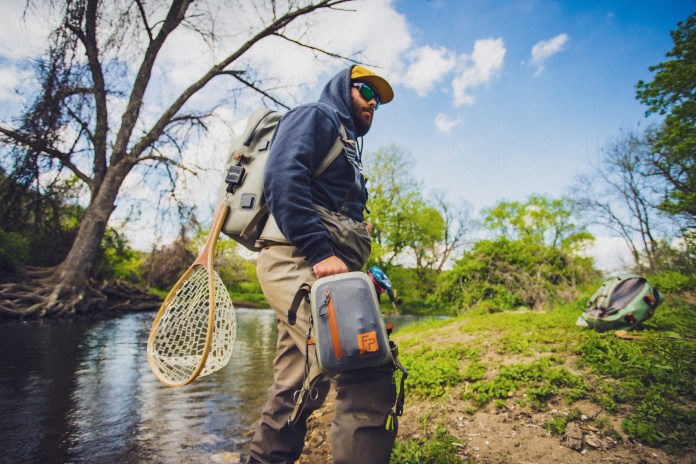
In our latest Gear Review, we had the chance to test out FishPond’s Submersible Backpack and Chest Pack from their Thunderhead gear line. Check out what we had to say below.
As fly-anglers continue to push themselves deeper and deeper into the unknown in pursuit of undiscovered adventure, they depend on gear that can not only keep up with them, but keep their gear safe and functional. With the recently updated Thunderhead Submersible Gear line, Fishpond has set out to create just that.
On hearing this, we decided to grab a Fishpond Submersible Backpack, with an accompanying Submersible Chest Pack, and put them to the test ourselves. The combo accompanied us from the east coast to the west, and from the rivers in our own backyard, all the way to the last frontier. Charged with the task of protecting everything from irreplaceable camera gear to the following day’s lunch, we put the Thunderhead packs through rain, mud, wind, and mud to see just how true to its claims this gear would hold.
Upon Opening:
Upon initial unboxing, we were immediately impressed. The backpack felt sturdy, and the 1680D TPU coated nylon exterior felt more possessed a more rigid structure than any other packs we had experienced. Immediately, it was clear water was going to have to work overtime if it was to have even a chance at penetrating the bag. The chest-pack was one-in-the-same. It felt extremely compact, and presented a low profile look and feel.
What had originally drawn our attention to the 2 packs was their seamless integration into one another. Before even snipping the tags, we had buckled the chest pack into the corresponding receivers on the backpack to see how it felt on the shoulders. The clips snapped together with a clean click and felt firmly in place. With the chest pack resting just over the diaphragm, the pack combo was set firmly in place, comfortably secured around the upper body. The pack combination delivered a tactical feel, allowing access to anything one could need, all with limited encumbrance.
The matching Yucca Green packs were obviously meticulously designed and manufactured. However, while it was nice having them shiny, clean, and beautiful to start; we couldn’t wait to toss them in the mud.
Field Testing:
Performance:
When it comes to the places this back traveled with us, it’s easier to name the places it didn’t for it would be a far shorter list. From Pennsylvania through Delaware, all the way across the state to Colorado, Montana, Wyoming, and even up to the Iliamna River in Alaska: it’s safe to say this rig has been somewhere.
The primary function of the bag, is, of course, to be waterproof. This is why, as we sat bundled in raingear, jet-boating through icy Alaskan rain, we could focus on the mission of catching fish, and not as to whether or not our many thousands of dollars of camera equipment was safe. When fishing, it’s of course always important to consider rain a factor, for it changes fishing conditions, safety factors, and of course the condition of the contents you’re carrying. Luckily, with these two packs, our gear stayed bone dry, even when unexpected downpour, or of course, the accidental river bath (which seems to be a common occurrence after a few river brews) decided to rewrite the fine print of our plans.
The other feature we feel most important to touch on would be the versatility of the pack to pack combo. As mentioned before, the technological compatibility of the whole line allows for one’s full loaded fishing rig to become much more streamlined and easier to travel with. Because the pack, which can hold about 2 Tacky “Catch-all” fly boxes, plus a phone, flotant, nippers, and a few other necessities: can be so easily integrated into the pack, you’re always able to carry as much, or as little, as you feel you need, on a whim. This brings us to our next point.
Capacity and Portability:
With the chest pack holding 5L worth of storage capacity and the backpack holding 28L, you’re looking at around 33L of total storage on your person, not including wader + jacket pockets. Don’t worry, we did the math. With that, you’re easily able to pack along just about whatever you’d need for a day on the water. Whether that’s an extra few fly boxes, a water bottle (please, bring a water bottle…), a camera, or a few extra layers, you’re most likely going to be able to find the room you need. However, because of the pack’s TPU coated shell, once you’re at your carrying capacity, there’s not much room to stretch. You’ll find this to be the case with pretty much every submersible bag.
When it comes to portability, this combo is extremely user conscious. The backpack is has a padded backing built-in, put there to allow the waterproof coating to stay off your back, and allow for added comfort and proper airflow. The packs hip straps are noticeably built out, and will actually provide added support by transferring an appreciatable amount of weight from your back to your hips. This really goes a long way when spending a whole day out, or hiking up to a remote alpine lake. Furthermore, if you’re not looking to lug the backpack all the way up a mountain, the chest pack can be attached to an included lightweight back harness, which includes a D-ring, and a net slot.
The chest pack, when attached sits well balanced on your chest or diaphragm, depending on where you position it. Something to mention with the pack is that you can keep it as loose, or locked into your body as you choose. With the easily adjustable straps, you can tighten it towards your shoulders, giving it a snug and tight feel on your chest. Furthermore, and more importantly, there are two bottom straps on the chest pack that clip into slots on the hip straps of the backpack, allowing for an even more secure connection. This is perfect for moving fast and keeping what’s important to you close.
Final Review:
Waterproofness:Â
Functionality:
Durability:Â
Carrying Capacity:
Portability:
Price:
Visual Appeal:Â
Conclusion:
If you’re looking for an overly-engineered piece of fly fishing gear that’ll be ready for anything you can think to put it through, this pack has got your back (and front). Built out to encompass any fly fishing utilities you can think to throw on it, this pack combo is certainly a testament to Fishpond’s ability to put together some high-end gear. While the price tag isn’t exactly conducive to the budget of the weekend warrior, you can certainly consider this pack an investment, and the last one you’ll need to make for a long time.
Recently, we had the opportunity to sit down and speak with long time fly fishing guide Anna Mattingly, who is currently living and working in Vail, Colorado. Her experiences and time in the industry came to light throughout our conversation, and her words of wisdom for women and young girls will resonate with many.
Flylords: Who is Anna Mattingly? What defines you as a person?
Anna: Anna Mattingly is someone who really enjoys being on the water and being around nature. Fly fishing is definitely my passion and where I love to spend all my time. I also have a business side of me too, where fly fishing is my part-time job, and I have another job in resort group sales and marketing. I am really creative and passionate about that as well.Â
Flylords: Are there any fishing experiences that have helped shape you as a person?
Anna: Yeah, I would say that every time I am on the water I feel like I am learning and growing as a person. I am someone who is always really aware of my surroundings, and I love to learn more about nature. Specifically, I guess I would say that every time you catch a fish, especially the bigger ones, you learn something. I think the reason why I love fly fishing so much is that even when you feel like maybe you’re mastering it, you are still always going to be learning; you are still going to lose fish, you are still going to, you know, get upset at yourself for making a mistake. Or maybe it wasn’t even a mistake, it was just a learning experience as far as it was that fish, that day, that did not take the fly the same way that it always does. I guess just every time I am out there I am constantly learning and growing, I love that about the sport.
Flylords: Has fly fishing been a motivation for travel?Â
Anna: I do travel a lot, for my other job specifically, and then I did just buy my first saltwater rod this year, before COVID, so I haven’t been able to travel and use it. As soon as COVID is over, some places on my bucket list are Florida to catch a tarpon, and I really want to get to the Caribbean and catch a permit. Those are kind of my two bucket list fish right now.
Flylords: What inspired you to start fly fishing in the first place? What about guiding?
Anna:Well I grew up in Oregon, so I grew up doing a lot of spin fishing on the streams there, and then I did a lot of deep-sea fishing off of the coast. So when I moved to the mountains, gosh, I guess that was probably ten years ago, I started fly fishing in Lake Tahoe. I basically started because whenever I would go to the river everyone was fly fishing and so I was really curious about the sport. I kind of felt like I was being judged a little bit showing up with my spin rod, so that encouraged me to learn this new sport that I really hadn’t thought about before. So I literally just went to Cabela’s and just bought the start-up set that is like two hundred dollars; I really taught myself. Then I moved out to Colorado and I felt really landlocked out here because I grew up by the ocean, so I noticed that everyone is on the river, and I really wanted to get a boat. I took my oar certification course, and the guy, Paul, who certified me on that, really pushed me to be a guide because he knew how passionate I was about it. We had been fly fishing together a lot, so he was confident in me. I appreciate that and I am always thankful for him because I was really intimidated to get into guiding because it is such a male dominated sport; I mean there are only two other women fly fishing guides in the Vail Valley.Â
Flylords: How has being a woman impacted your experience in the guiding industry?Â
Anna: You know at first as I said, I was really intimidated to get into being a guide. But what I noticed quickly is that there is definitely a need for women guides out there. Even when I was insecure and I would show up and be like, “Oh my gosh, no one is going to want to go fishing with, like, the girl fly guideâ€, I found it to be actually quite the opposite. A lot of men bring their spouses, their wife, or their daughters on the river, and so having a woman guide can really encourage other women to get into the sport. When they see, oh, this girl does this, and when they have a woman explain to them how to do it, it feels less intimidating for the clients. I really have enjoyed that part of it.Â
I also think that from what I have noticed in my years of being a fly fishing guide, is that men really listen to women on the river. Some of my other friends who are male guides, speak kind of harshly and can be strict with letting people know what they are doing wrong or whatnot; whereas women can be more nurturing, and we can figure out different ways to communicate with people because everyone learns a little bit differently. We can better stay in tune with the people on our boat and what is important to them and really focus on that.
Office Views on the Colorado River. Photo credit: Anna Mattingly
Sometimes with clients, it is not all about fishing. I get a lot of people for the first time. For example, we will do big corporate guide trips, and so these people have never been on the Colorado River before, they have never been on a raft before, and they have never fly fished before, so it is a lot to take in. A lot of times they just really want to enjoy the experience while being out there. My focus is then “let’s catch a fish of two so that you can see what that’s like, and then if you don’t want to fish for the rest of the day, you just want to sit and enjoy the scenery, and look for bald eagles, well that’s okay too.†I think that as women, we can pick up on what someone is looking for in their experience for the day.Â
Flylords: In what ways do you see sexism within the fishing industry as a whole?
Anna:I have been really fortunate because I feel like everyone has been really supportive and respectful of me being out there as a woman and me being a guide, but I definitely feel like in the beginning, I had to prove myself. I felt like there was more pressure to be out there and to be one of the best. I don’t know if that was just me putting that pressure on myself, but I did not feel like I was taken seriously at first, and it has really taken years of experience for guides to warm up to me and get to know me and know my boat. They’ll come up to me, like the other day, and be like “Wow, you guys really crushed it out there, good job.†So I guess I felt like sexism, in my experience, made me feel like you just can’t go out there and be average, if you are going to be a woman guide, you better be one of the best there is.
Flylords: Do you believe that social media plays a positive or negative role in fishing culture? Why?
Anna: I guess social media is kind of a double-edged sword. I think that social media plays a big, exciting role in fly fishing because it helps people get excited about it, and show them what they can do and what they can catch out there. But then I guess sometimes it might come off a little unrealistic because people always post these humongous fish, and in reality, you know, we are catching 13-inch trout on the Colorado on any given day unless you are a really skilled fly fisherman, and then we can fish it differently. It gets people excited about the sport, but sometimes people’s expectations aren’t reality. It is important for the guide to have that conversation at the beginning of the day, something like, “Hey, here’s what we are going to shoot for today, we are each going aim to get one or two fish on the line, and if we get more then that’s fabulous. And maybe we will, maybe it’s going to be a great day, but even on the worst day we can get a fish or two on the line.â€
Flylords: What advice would you give a woman or young girl who is just starting to fly fish?
Anna: I would say don’t get discouraged, it is a really frustrating sport, and it’s that way for everyone who is learning. It doesn’t matter who you are, or how old you are, everyone can do it, and it’s always going to be frustrating at first. There is a lot to learn, and as soon as you think that you have mastered tying your knots or mastered what kind of fly to put on, you suddenly have to figure out where exactly these fish live. There is constantly just something to be learned. I would say just don’t give up, don’t get frustrated, just go out there every day, and enjoy being on the water. If you don’t catch fish every day that’s okay, it’s still a great day.
You can keep up with Anna Mattingly’s adventures by clicking here, and you can book a trip with her by clicking here.


![Fall Fishing Ethics: Don’t Tread on the Redd [Understanding the Brown Trout Spawn]](https://i0.wp.com/theflylords.com/wp-content/uploads/2020/11/Screen-Shot-2020-01-10-at-6.37.09-PM.png?fit=696%2C606&ssl=1 "Fall Fishing Ethics: Don’t Tread on the Redd [Understanding the Brown Trout Spawn]")