This photo was taken in late October of this year during a short trip to Bavaria/Germany to take some shots for catalogs and possible cover stories. My son Leo is ten years now and got his first own fishing rod at the age of four. Since then he accompanies me on fishing trips, but also on my ichthyological fieldwork, so that he has meanwhile gained a good insight into fishing, but also into the ecological correlations at our waters.
Unfortunately, the weather showed its most unfavorable side while we tried to catch an impressive char from a crystal clear mountain lake (Förchensee). The Förchensee is a beautiful alpine lake from which the famous salmonid river Deutsche Traun originates and has a steady flow. Now, late in the season, it is incomparably difficult to outwit one of the shy fish in the lake. Throughout the year the char and trout have already seen all the patterns of flies and nymphs and react immediately by fleeing when they spot an angler from afar.
The bad weather, with heavy rain and gusts of wind, was on our side: due to the unsettled water surface, the fish had a hard time to spot us and we were able to stalk quite close to the fish, even though the conditions were difficult. We could not spot a char, however. After many hours of unsuccessful casting, Leo spotted an unusually large shadow of a fish not far from the shore of the lake. He stalked it carefully and presented a pretty large, flashy sedge as well as the strong wind would allow. The impressive fish, which we hadn’t yet classified as a brown trout at that time, rose in slow motion after the fly and actually took it on the first try. Afterward, everything went very fast: Leo was forced to get into the 34-degree cold water as the fish pulled the line from the reel in seconds and put up a fierce fight on the 3wt rod.
I supported him as best I could with the underwater housing, in which my DSLR was, in my hand. When we could finally land the fish, the joy was great about the fantastic male brown trout.
To my great surprise, the sky cleared up a little bit at the same time, so that I got at least some light for photography. Nevertheless, I was dependent on Iso 1250. This just for the photo geeks among you flyfisher women and men. I used a small amount of flash too, so I could emphasize the outlines of Leo to create a bit more sharpness – or at least the illusion of it.
Leo was brave, froze and shivered all over his body, ice-cold water had run into his waders and he could no longer move his hands. One advantage of the split shot is that it is probably the gentlest version of a fish photograph – as far as the fish is concerned – for the angler the cold can be damn exhausting. After the release of the exceptional fish, I packed Leo into the car as “God created himâ€, turned the ventilation to the warmest setting and the seat heating to “BBQ” so that he was able to enjoy his catch again after half an hour. Many folks did ask about the length of the fish, well I must say I rarely ever measure a fish when I caught it for personal pleasure. So we didn´t measure this one too. It was our intention to release it as quickly as possible without any bigger trouble for the fish.
Article and photo from Frank Steinmann, a freshwater ecologist, and photographer based in Germany, follow along with him at @franksteinmann.
Show me someone who doesn’t love crispy fried fish and I’ll show you someone who doesn’t like fish….period. But not all fried fish are equal. Some recipes call for so much batter that the fish inside is almost an afterthought. Batter is there for two reasons. First—crisp and crunchy are surefire additions to the pleasure of pretty much any food. Second—a successful batter coats the fish so that it gently steams inside its crispy overcoat. This batter that Ned Baldwin, my fishing and writing partner, came up with is super light and super crisp. It calls for regular all-purpose flour, and then rice flour–which is the flour that they use in tempura. Beer has long been used by camp cooks to lighten a batter (something about the bubbles and evaporating alcohol aerate the batter). A splash of vodka (more alcohol) cooks off to make it even lighter. If you don’t have vodka, then gin. And if you don’t have gin, then rum will work fine. If you are moved to make a cocktail while you are at it, I’m not going to tell you no
Serves 4
Salt the fish
Salt the fish to taste and set aside. Do it a few hours before you cook so that the flesh tightens up a bit. Any white-fleshed fish will work with this. I love cod, but redfish, bluefish (the lighter meat), a big walleye, lake trout, or even a Northern if you have the patience to take out the pin bones.
Mix the batter
½        cup white rice flour, plus more for dusting
½        cup all-purpose flour
¼        heaping teaspoon baking powder
¼        teaspoon kosher salt
¼        cup vodka (or gin or rum)
¾        cup lager beer (your brand of choice)
Mix the dry ingredients in a bowl. Add the vodka and beer, then whisk until smooth. Note: if you let the batter sit for a while before you fry up the fish, you may need to more liquid right before you fry. Your goal is a batter that’s a bit thinner than pancake batter so don’t be afraid of adding more beer.
Fry the fish
1½      pounds fish fillet, divided into 8 portions
½        teaspoon kosher salt
The batter
8 Â Â Â Â Â Â Â Â cups canola or grapeseed oil
Heat the oil to 350ºF in a deep fryer. If you don’t have a deep fryer a deep pot, like a cast iron kettle, is what I use. Check the temperature carefully with a thermometer.
Dip the fish in the batter. Using tongs (or very carefully with your fingers) lower the battered pieces of fillet about halfway into the hot oil for about 5 seconds (real one-Mississippi, two-Mississippi seconds). This sets the batter so that when you let go of the whole piece, it doesn’t sink to the bottom or stick to the other pieces. Let go and fry until golden, 2½ to 3 minutes. Using a slotted spoon, remove the fish and drain on a rack or paper towels.
This recipe as well as many more are featured in the cookbook “How To Dress An Egg.†To purchase this cookbook click the link here.
Peter Kaminsky is a long time fly fisherman and author. His Outdoors column appeared in the New York Times for more than 30 years. He was a contributing editor to Field & Stream. Among his fishing books, the classic “The Moon Pulled Up An Acre of Bass.  He is also the author of 17 Cookbooks including 7 Fires with Francis Mallmannn. He fishes New York Harbor a lot.â€
All photos by the talented Will Hereford (@williamherford).
Who needs a back-up reel when you can print your own at home? If you’re looking for a fun project to take on this winter, check out this 3D printed fly reel. As 3D printing becomes more and more popular, we’re sure we’ll see more and more innovation in the space. Printed with plastic filament, the project only cost around $4.50.
According to the folks on the Crazy About Fly Fishing Youtube Channel, the project “came together very nicely and I think it should work well while fishing for trout and even ultra-light saltwater fly fishing. It’s a great little fly reel for the price and I am surprised by the strength of the plastic”
In this week’s segment of Video of the Week, we take a look at Rolf Nylinder’s short film The Expedition Leader presented by Podsol. A story about Rolf and a ragtag group of friends that he has always fished with individually but not together as a group. A scene and feeling all too familiar to us as anglers. The joining of the minds, the transition of individually planned one on one trips into a meeting of the souls and passions. Rolf explains and documents this trip as the so-called mediator or middle man. Markus Lemke became the expedition and group leader early on, then Kristian Matsson soon filled the role of the expedition photographer, and finally, HÃ¥vard Stubö (Jazz and Fly fishing) became the foremost wilderness expert. Rolf watched and observed as his 3 entirely different friends who had heard of each other but not met, bonded over a like passion for fly fishing, field coffee, and dry flies.
So sit down relax and enjoy the Scandinavian countryside, some big fish, and the effortless storytelling and cinematography of Rolf Nylinder. If you like what you see here make sure to follow along here @rolfnylinder.
Make sure to check out these other articles and videos as well!
Brittany Howard, the lead singer of Alabama Shakes, is known for her otherworldly stage presence and iconic vocals. In an interview with CBS This Morning, she shares her incredible life story, how she got started in music, and why these days you’re more than likely to find her somewhere on a river with a fly rod in her hand!
In partnerhsip with Mustad Hooks, we will be hosting a live tie on the @flylords Instagram AND Facebook, with our friend, Svenddiesel. Tune in tonight, November 5th, at 7pm MT/ 9PM EST, for an after hours, live-tie hangout!Â
In preparation for their new Heritage line of fly fishing hooks, we had a chance to sit down with Reid McKinstry and Katie Hale at Mustad to learn more about the brand, their history, and what it takes to be an almost 200-year-old brand in the fishing industry.
Flylords: Who is Mustad?
Reid: Mustad is a very old (we’re actually the second oldest fishing tackle company in the world behind Orvis), historic, fishing tackle manufacturer that’s lasted through the centuries through a constant desire to improve and innovate. We started Mustad as a wire business in 1832 and eventually started building fishing tackle in 1877. Interesting enough, we actually invented the automated hook-bending machines. Now, we’re really pushing new technology in everything that we do: new machinery, new finishes, new points, new kind of everything, to kind of facelift the brand and take it into the next century.
Flylords: Can you give us a brief rundown of Mustad’s history and founding?
Reid: Oh boy. So, the company was founded by Hans Mustad. It was a family-owned company that started in 1832 in Gjøvik, Norway, which is where the head office still is. Originally, it was a wire company where we built all kinds of wire and metal products. One of the original products were zippers for example, so we were a major player in the zipper world for many years. We made all kinds of stuff, from cast-iron waffle pans to consumables like staples and paperclips. Anything that really had to do with wire or metal products, in the founding.
Founder, Hans Mustad
The company was owned in the Mustad family for six generations before it was sold in 2012. For 6 generations we had operations of all over the world, and the biggest division has been the fishing tackle division, as a whole. Both the auto-line company, which caters specifically to commercial fisheries. Since our entry into the fishing-hook industry, we’ve been constantly evolving and trying to continue to develop hooks that are ahead of their time.
Mustad production today
Flylords: How long has Mustad been involved in fly-fishing?
Reid: Fly-fishing has always been a big part of Mustad’s history, so obviously, being a Norwegian company, fly fishing has always been really popular there, and we’ve been active in the fly fishing space developing hooks, techniques, patterns … We even had manufacturing facilities where we tied flies over the years at different points in time.
We actually used to have these display boards that have all these really elaborate flies that are tied by champion fly tyers, some who are Mustad employees or worked for our tying factory. We had them both in Norway and then one in the Philippines that specialized in tying flies at different points in our history.
Flylords: Would you say that’s kind of what sets Mustad apart from the competition?
Reid: One thing, in particular, is that our wire is a slow-drawn process, so we control the consistency really well. Wire kind of has grain in it like wood, so when it’s drawn or stretched, it can kind of crack or have voids put it in, so because we draw our own in that different process, it’s much more consistent so that the wire’s less likely to break or have defects. That’s one of the key things that nobody else does. All the other companies in the business, they all source wire openly on the market, which means it’s a faster-drawn wire. Basically, it’s something that would be made for fences or other textiles, so it’s a high-volume usage kind of item.
The other thing is, because we make our own wire, we make our own wire diameters.
Pretty much every Mustad hook that you would use is built on different wire diameters. So, if you’re using a two, four, and six, those are all built on 3 different wire diameters, whereas most other companies, because they’re sourcing open-source wire, don’t have the availability of as many wires sizes, so they would group usually 2 or 3 sizes together, so a 2 and a 4 are probably built on the same 1.06mm wire, and then the one-aught and two-aught would be built on the next-size wire up. So that’s why it’s not always an apples to apples comparison, because we’re able to be more flexible with our wire.
Old photo of in-house wire production
Flylords: What issue does Mustad aim to address or improve in the fishing hook space?
Reid: So, again, we’re trying to continue to develop new and innovative technologies, as well as staying on the forefront of the shapes and the techniques, because fishing has become very technique-focused. It’s not like it was even 20 years ago, where it was 10 different models of hooks you can kind of go catch anything with any hook, right? Now, the fly fishing patterns have gotten much more complex and, just like the rods, the rest of the industry has elevated itself. There are new lines, there are new materials for rods, reels, all of those pieces. We’re trying to push the envelope, basically, to stay ahead of the trends, find the next big technique that is going to take off.
Flylords: What is Mustad’s vision for the future of the standard of a fly hook?
Reid: If you look at it, in most historic products related to flies, they’re almost all tied on Mustad hooks. If you look back from the mid-’90s and before, all your Clouser Minnows and all of those staple flies, were all built on Mustad hooks.
So, I think the vision now is to look back on that heritage of who we have been and everything that we’ve done, but then put that progressive spin on it now. So, then, be more technology-focused and be more technique-focused. Like I said earlier, we want to be more aggressive on speaking with the fly tiers, more aggressive on understanding the trends, so that we can develop a new hook specifically for that new technique, that new pattern, or make a better mousetrap, for example.
I mean, that’s kind of where we’ve gotten to is, if you want to make something really basic, it’s easy to find the product to do that, but if you want to find that perfect product, you’ve got to design something from scratch or design it specifically for that need and application.
Flylords: So, how is Mustad going about making those changes to fit the ever-changing needs of fly tyers and anglers?
Katie: I would say having more, or even stronger relationships with people in the fly community and working closely from the very concept to get product in the hands of the people that are out there using it. By working and fine-tuning that all the way to the final stages, where then, if people are invested in the product from the beginning, it’s going to be a good product, and then it’s going to work in the regions where they’re fishing it. This way we know who it was developed for, with that end consumer in mind.
Flylords: What are some sustainability efforts Mustad is a part of?Â
Reid: We’re really working to eliminate our plastic consumption. We’re working on a major packaging change that’ll go into effect in 2022, where we’re massively reducing our plastic usage and going to a more sustainable packaging approach across the board: recycled materials, biodegradable materials, things like that. That’s kind of the biggest thing that we’ve worked on.
The boxes that we’ll be using will be an opaque, are actually made with a bioplastic. So, again, one of the things we wanted to do in this space was not green-wash, but actually, be who we say we are. We know it’s very important in the fly fishing community.
So, the packaging is going to be both reusable and made out of a bioplastic, which uses a lot less energy to produce because it’s bioplastic and it will break down faster than normal plastic.
Flylords: So, we’ve been hearing about a new line that Mustad is working on. Can you give us a sneak peek as to what that may look like?
Katie: So, the Heritage fly hook line … like Reid said earlier, it calls back to the fact that Mustad’s been in the fly game for 143-years, at this point. With that, we’re just taking all the technology that we’ve been building on in recent years and applying decades and decades of historical knowledge with the new technology for this program
A hardy crew embodies the hard-working spirit of Mustad today.
Flylords: And what does that new technology look like?
Reid: So, the two big areas of technology that we’re using pretty much across the board on the new range is a new point technology that we’re calling Alphapoint, and Alphapoint tech is an improvement to make what is both the sharpest hook on the market as well as something that’s extremely durable.
The other kind of improvement over the entire range and this is going to be, aesthetically, the thing that people are going to notice right away is the new finish, which we call TitanX. This is actually a nano-coating that bonds to the steel. It’s kind of like a matte gray finish, so it’s a totally different look. Most of our fly hooks were either bronze, black nickel, or duratin, so it was a high chrome black, high chrome tin, or the very old-school brown. What’s so special about the TitanX nano-coating is it will make the hook much smoother, greatly aiding in penetration capability.
Flylords: When do you think we’ll be able to get a peek at some of the new Heritage line?
Reid: Well, while we don’t have an exact date to give yet, May/June 2021 we should have inventory going into the market. But, you can probably expect to see some teasers before then.
Thank you to the Mustad team for taking the time to sit down with us to provide a look way back into the roots of American fly-fishing as we know it. If you’re interested in learning more about Mustad’s products, you can find more information HERE.Â
Kelly Galloup and the Slide Inn are at it again with a big fly tying contest that should keep all you fly tyers busy until spring. After the success of the first contest, launched during the initial COVID outbreak in March, Kelly and his team are doing it again with Kill the Corona Season 2. Submissions are open and any tyers can send their patterns to enter the contest. Check out the categories and prizes for this year’s contest below, and be sure to watch the video above for all the details!
In our latest Gear Review, we had the chance to test out the O’Pros Midwest Mid Length – 18″ Net and Carry All Bag from their latest gear release. Check out what we had to say below.
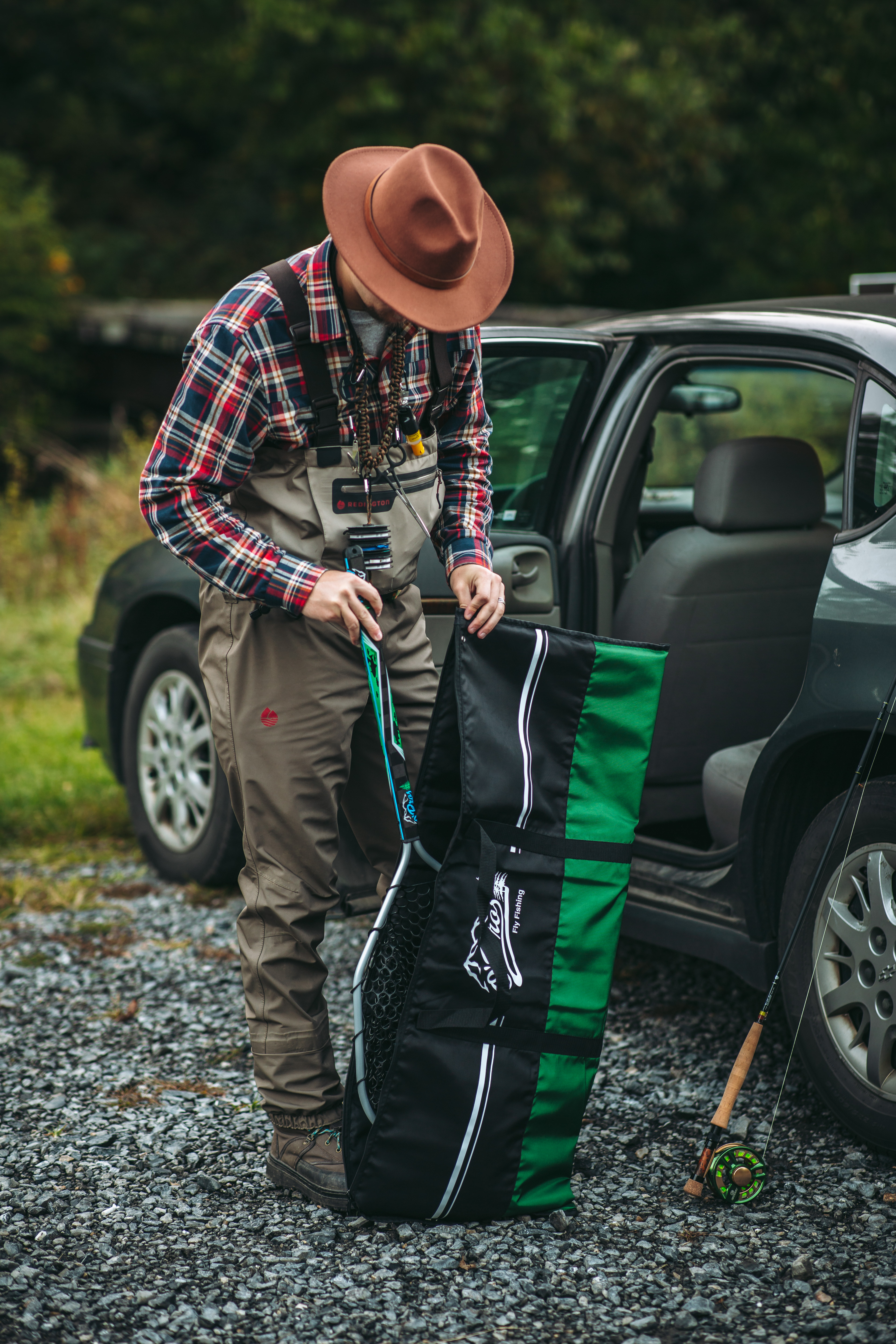
The sport of fly fishing is continually progressing and we are seeing a rise in catch and release fishing tactics. Putting this practice in motion requires a landing net capable of being portable, durable, and fish friendly. After capturing a niche market with the Third Hand Rod Holder, O’Pros has set out to capture the attention of fly-anglers with a new take on an old classic.
Upon hearing this, we decided to try out the Midwest Mid Length – 18″ landing net along with the Carry All Bag to put this unique product to the test. When you think of a landing net, more often than not, your mind goes to the short-handled wooden construction or an elongated boat accessory. The O’Pros brothers took these classic designs and added in their own twist combining their passion for the sport of hockey with fly fishing. From the mountains of the east coast to the plains of the west, we have had plenty of opportunities to put this net to the test.
Upon Opening:
Upon arrival, to say we were impressed would be an understatement. The net was shipped to our doorstep in a reusable shipper which doubles as a custom Carry All Bag, perfect for housing the net as well as multiple rod tubes. This is not only a refreshingly environmentally conscious approach to packaging, but really gives off that hockey duffel bag feel to bring the construction of the net full circle.
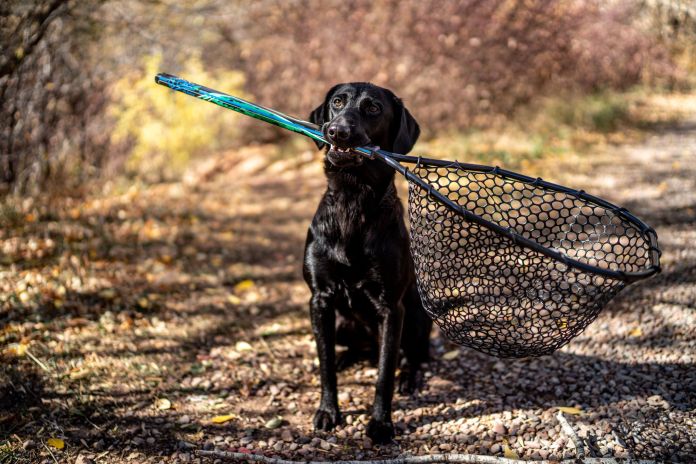
Having a lightweight net on the river possesses a great advantage over clonking around with your boat net, and the Midwest Mid Length landing net provides just that. The carbon fiber/fiberglass composite hockey stick construction of the handle feels great in the hand and is easily portable on the river. Not to mention, the custom measuring graphic definitely comes in handy when feeling the need to brag to your buddies about the size of your recent catch. The hoop has a very solid feel being made of aluminum and is plenty wide enough to house fish of different sizes and weights.
Field Testing:
Performance
A net is an essential tool that we as fly-anglers rely on daily. That being said, gear is meant to be used therefore we need equipment that can withstand the grueling usage of a dedicated fisherman. Upon field testing for a few months throughout Pennsylvania and the reaches of West, we can say that this net passes the test. The aluminum construction of the hoop and carbon fiber composite construction of the handle make for some of the toughest materials in the game and plenty strong enough for any angler using this product. This net has dropped on large rocks as well as been used as a wading stick and has held up quite nicely. O’Pros offers a full lifetime warranty should something tragic happen to your landing net.
Portability
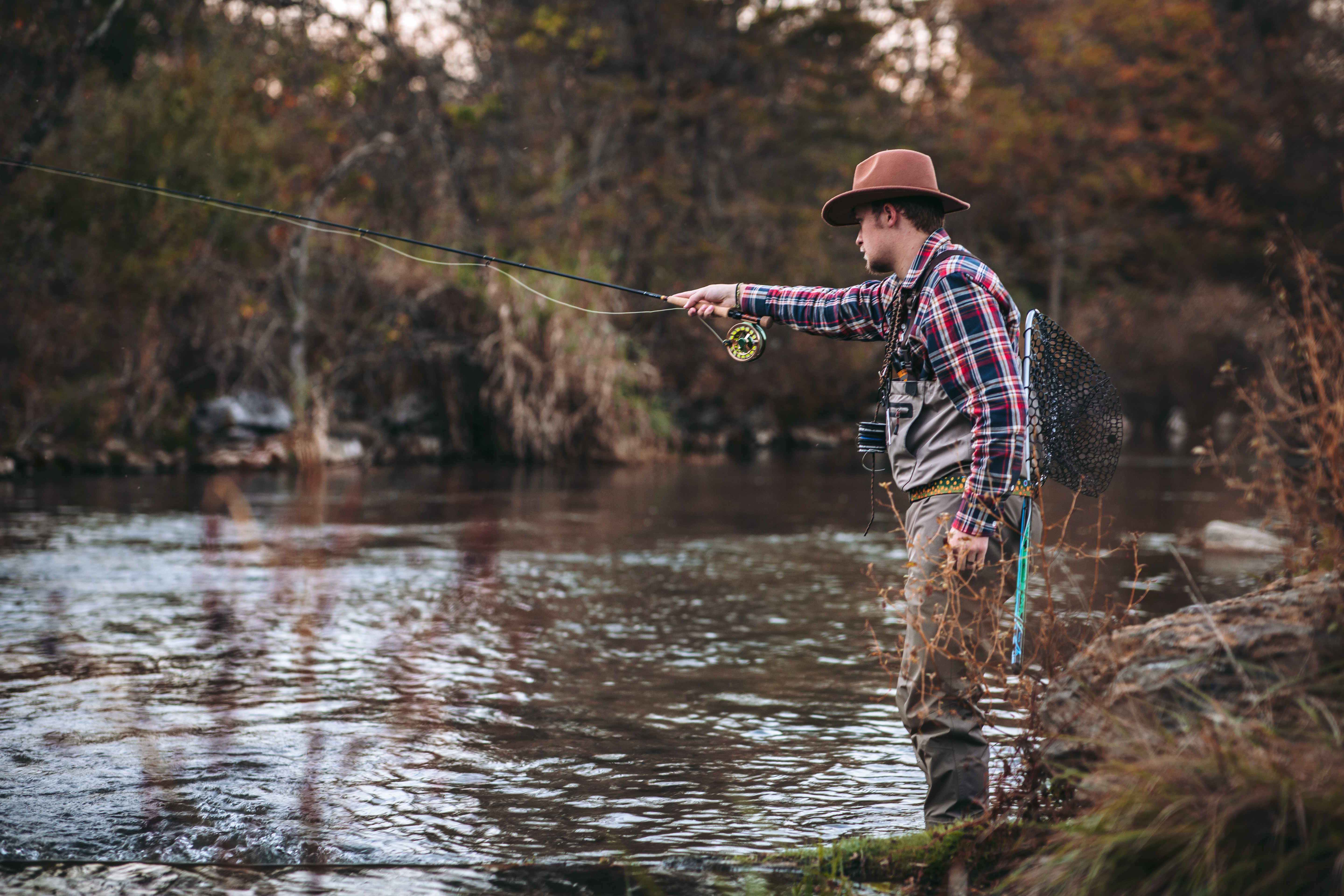
The key feature of this net that stands out is the lightweight feel. Although the 18″ handle may seem daunting to some, the carbon fiber composite construction makes for easy portability. Having the longer handle also provides an advantage for longer reach, as well as decreasing the stress put on the fish being fought. The slim design provides the ability for the net to be easily held in your typical wading belt or your sling/waist pack. Having the Carry All Bag helps tremendously when traversing on a deep trek in the mountains carrying multiple rods and necessary gear for the trip.
Overall Specs:
Hockey stick shaft handle (carbon fiber/fiberglass composite)
Custom graphic with ruler measuring system
Wide aluminum hoop (19″ x 14″) in black or silver
Rubber bag in black or clear
Regular depth (12″) or Deep (18″)
Carry bag included
Lifetime Warranty
Final Review:
 Functionality:
Durability:Â
Portability:
Price:
Visual Appeal:Â
Conclusion:
If you are in the market for a lightweight, innovative, and durable landing net, the O’Pros Midwest Mid-Length landing net has you covered. This innovative twist combining two otherwise unrelated sports creates the perfect bond in the fly fishing world. Considering this is the mid-size net of the trio, there are options for leisure anglers all the way to drift boat experts. Coming in at a lower than average price point for the materials included, this net is sure to provide long-lasting performance and durability while avoiding to break the bank.
CLICK HERETO CHECK OUT THE O’PROS MIDWEST MID LENGTH – 18″ LANDING NET.
Every brown trout between the Glenn Cayon Dam and the mouth of the Paria River on the Colorado just had a bounty put on their head. A $25-$33 bounty per Brown Trout caught, that is. The National Park Service (NPS) calls this practice “Incentivized harvest” and it is part of a multi-year program meant to benefit the native fish species of the Colorado River.
“The incentivized harvest begins on November 11, 2020. For the next 3 to 4 years, eligible anglers will be offered a reward of $25 per Brown Trout over 6 inches in length removed from the Colorado River between Glen Canyon Dam and the mouth of the Paria River. This reward may vary with the seasons or be adjusted annually, but will typically be in the $25-$33 dollar range.
The goal of this pilot program is to determine if an incentivized harvest can help manage and reduce the number of brown trout in the Colorado River between Glen Canyon Dam and the mouth of the Paria River. The initial research into the use of this tool is designed to last three to four years, at which time the program will be evaluated for its effectiveness.”
So if you’ve got a few months to kill this winter, now’s the time to go cash in big on Arizona’s Colorado River Brown Trout and help out the river’s native species!
Just a couple weeks ago, Patagonia released Public Trust on YouTube for all to consume. Public Trust explores America’s public lands, the people that depend on them, the people who cherish them, and the people who want to profit off them. Public lands are so much more than x number of acres; they provide water and food for communities, escapes for others, and they belong to all of us! Corporate greed and big-money politics seek to get rich at the expense of our public lands and wild places, but, thankfully, there are many willing to shine a spotlight on these schemes.
Public Trust tells this story masterfully, and highlights three ongoing public land fights involving The Arctic National Wildlife Refuge, Bears Ear national Monument, and The Boundary Waters Canoe Area. Follow along as we hear from the film’s Producer–Jeremey Hunter Rubingh–who provides some context for the film and a plea to fight for public lands.
Flylords: First off, Jeremy, congratulations on Public Trust! The film highlighted the timely and important message of protecting our wild places. Tell us a little bit about the inspiration of Public Trust.
JHR: Thank you so much. The timeliness of the issue can’t be overstated honestly. Never before have we seen so much on the line in terms of protecting our public lands and policies that ensure we steward our land, water and air for future generations. It feels like it has come to a head in a crucial moment from a political perspective in our nation’s history. And this is frankly in large part what inspired us to make the film. We were seeing rollbacks of environmental policy and removal of protections from public lands like never before as the Trump administration came into office and it felt like a critical time to take stock and try and explain our American public lands system to the public, as well as what may be at risk.Â
 On a personal note, I grew up skiing, backpacking, and fly-fishing in Colorado every chance we had. My family instilled public lands as a part of our identity and life at a very early age. As I grew older and started to work in the conservation realm, public lands were still a place where I spent all my time recreating, but they became so much more. They became landscapes that defined for me what was so great about this country. They are the places that provide the clean water, air, and ecosystem services that we all depend on, whether we are aware of it or not.Â
For David Byars, my partner in making this film, he had moved to Colorado in the last few years from Georgia and was gob-smacked at the scale and access that public lands provided. He came from a place where there were not many federally managed lands and did not really understand how special this really was until he was in it. We both felt that we needed to do something to help communicate to other Americans how incredible this system of public lands really is and the fact that no matter who you are, what background you come from, how much money you have, etc., these are your lands too. Â
Flylords: How long did the Film’s production take? What was the most difficult portion?
JHR: We began our first day shooting in Salt Lake City on December 4th, 2017, the day Trump flew into Utah to announce he was going to attempt to undermine Theodore Roosevelt’s signature conservation legislation, the Antiquities Act of 1906, and slash protections for Bears Ears National Monument and Grand Staircase Escalante. We were in production through 2019 and finally premiered the film in late February this year. So, it’s fair to say this took us about two and a half years to make.Â
I think the most difficult part was focusing our narrative. This topic is so expansive and so complicated that it is quite challenging to distill, even into 96 minutes. Our public lands system involves every state in the union and isn’t just limited to National Parks as many people think. So you literally could have made this film entirely in Ohio, or Maine, or Florida. Literally anywhere there are public lands there are interests looking to divest the public and make money off of them. It was challenging to just focus on certain geographies in order to explain the broader picture. Â
Bears Ear National Monument Protest, courtesy of @jeremycoloradoboy
Flylords: Public Trust highlights The Arctic National Wildlife Refuge, Bears Ear National Monument and the Boundary Waters Canoe Area, specifically, in the film. Why those two issues, and maybe what connects them?Â
JHR: I think these areas help represent the diversity of our public lands system, but also have looming threats to their existence from large corporate extractive interests, most often from companies that aren’t even based in the United States. You could have chosen many other places to tell the same stories, but Utah, Alaska and Minnesota all have very different landscapes yet reveal a similar pattern. There is an interest to divest the American public of these lands to cash in on a resource, more often than not leaving an environmental disaster at the expense of the taxpayer. These are also all areas that the Obama administration chose to protect based off of science and public input, yet the Trump Administration has chosen to try and develop with very little public process.Â
It was important to highlight Utah because Utah is essentially the tip of the spear in a lot of these land transfer movements and fights over protecting these public places. The National Monument designation was a path towards protecting, securing and educating about this incredible place. But it turns out that there is also oil and gas and uranium interests there– interests that were able to draw maps for the Trump administration, which in turn is attempting to give them the access they want.
We highlight the Arctic National Wildlife Refuge and the threats from oil and gas development to the last truly intact arctic ecosystem in the United States, and perhaps the world. This is habitat to our largest remaining population of endangered polar bear, musk ox, migrating birds from all over the world, wolves, bear, caribou and so many other species. The Gwich’in people and other indigenous nations are tied to this landscape since time immemorial.
The Boundary Water Canoe Area is the most visited wilderness in America. It’s a place that I think helps tie understandings of public lands to the middle and eastern half of our country. Despite the overwhelming science and public comment in support of protecting the Boundary Waters, the Trump Administration chose to reverse course and allow a Chilean Mining company to pursue copper-sulfide ore mining permits there.Â
The Arctic National Wildlife Refuge, courtesy of the U.S. Fish and Wildlife Service
Flylords: I think the film speaks a great deal of truth about the ideologies and priorities of certain politicians. Can you touch on how protecting public lands has become a partisan issue?
JHR: It is truly bizarre to me how something as loved and American as our public lands became partisan. And I honestly don’t think it has to be. There is a Republican former state legislator from Minnesota in the film, Craig Shaver, who makes the point that people, republicans and democrats, are in favor of conservation and the environment in overwhelming numbers and that’s why he was in a Republican caucus to make the case to protect public lands. It is some of the strongest polling data out there. Yet when we honestly survey how partisan politics play out on conservation issues, the Republican Party does not look so good. And that is definitely not to say that the Democratic Party is perfect either. But to this day it is still in the GOP party platform to transfer public lands to the state, and thereby private interests. And when we look at the voting records, more often than not Republican candidates are not voting in favor of protecting our environment and our public lands for future generations.Â
I think this has a lot to do with money and private interests’ role in our electoral politics. The campaign cash and PAC money coming from the fossil fuel industry and mining interests in many of these rural states have stolen the narrative and make too much noise for a real discussion to unfold. It is much easier to fan the flames of culture wars and invest in some kind of identity tribalism—i.e. if you don’t have an “R†or a “D†behind your name you are threatening my way of life—than it is to have a real honest discussion. And this is very much what we have seen the largest PACs funded by groups like the Koch brothers do. We have to ask where do their real interests lie? Is it in careful planning and thoughtful public discourse? Is it honestly in making as many jobs as possible? Or is it in as little regulation as possible to maximize profits for those at the very top? Their job is to make as much money as possible. So it’s not hard to see why these corporate interests are invested in electoral politics, regardless of how sophisticated their messaging is. So I think it has become partisan because there is a lot of money invested that is working to tie cultural identity in the rural areas that have the most public lands to a purely economic message that glosses over the realities of extraction economies that boom and bust. In the end I hope that this is an issue that we can take out of the partisan arena and all agree that public lands benefit all of us.Â
Flylords: In just a couple of days, we will conduct an election. Why is this election so important? What is at stake?Â
JHR: I don’t think there has ever been more at stake for the land, water, and air than in this election. We can either vote to cement the many legally questionable and environmentally negligent actions of this current administration into place, or we can vote to make sure there is a continued public and transparent process in our public lands and an opportunity to protect American lands for our kids and future generations. I wish it weren’t so black and white, but the last four years have revealed the direction this administration wants to head.Â
These are simple facts, not some partisan agenda. The Trump administration has removed protections for public lands on over 34 million acres. That’s practically the size of Florida. It is a simple fact that Trump is the only president in U.S. history to have removed more public lands than he protected. Just this week we saw this administration work to undermine the Roadless Rule and open up the Tongass National Forest, otherwise known as “the lungs of North America,†to roadbuilding and logging. If we are to have any chance of tackling climate change we need the Tongass for its carbon sequestration, never mind the incredible wild nature of the last great temperate rainforest on earth. Under this administration, millions of acres have been auctioned off to the fossil fuel industry. This administration is working to undermine the Endangered Species Act, has rolled back the clean power plan, clean water rules under Waters of the United States, methane capture from oil and gas, the blowout preventer rule that would protect us from another Deepwater Horizon spill, fuel economy rules, mercury emissions rules, air pollution rules in national parks and wilderness, rules to monitor and repair oil and gas leaks, taxpayer fairness for coal leasing, rules that required mines to prove they could pay for clean ups… The list literally goes on and on.  Â
The decision makers that Trump has installed in our agencies like the Department of the Interior, Bureau of Land Management, United States Forest Service are all industry lobbyists. These are literally the same people that are making money off of the leasing and development of our public lands. If we continue down this road for another four years, it’s hard to imagine we will have much left of our public lands system with ecological integrity other than a few postage stamps on the map that are national parks—and even those are threatened. If these lands and waters are important to you, there couldn’t be more at stake.Â
Flylords: Thanks, Jeremy! To finish up: if you had to summarize Public Trust’s message into one sentence, what would you say?
JHR:Â American public lands are 640 million acres of the most beautiful land on planet earth that belong to all of us, and they are facing unprecedented threats from extractive industries and the politicians in their pocket.Â
Flylords: There you have it! Now, give Public Trust a watch and then go out and enjoy our public lands!Â
Thanks Jeremy! If you want to keep up with Jeremy, check him out @jeremycoloradoboy!