BOZEMAN, Mont. (December 2020) – Simms Fishing Products announced today a multi-year partnership with the conservation group and non-profit Trout Unlimited (TU). The partnership will focus on TU’s Home Rivers Initiative, a multi-regional program that places full-time TU staff member(s) in a watershed to live and work with, and within the local community in order to bring the full range of TU’s scientific, policy, education, and legal expertise to bear on watershed-scale restoration and protection. Over the next three years, Simms is committed to a quarter-million-dollar investment in the Home Rivers partnership with Trout Unlimited in an effort to protect Montana’s Gallatin River.
“Three cheers to SIMMS for stepping up to help Trout Unlimited protect and recover the river that defines their community. Restoration of the Gallatin and its tributaries will provide high-paying, family-wage jobs in rural communities across Montana. It will also help improve an already great fishery in a state that many consider fishing Mecca,†said Chris Wood, President, and CEO of Trout Unlimited. “We look forward to working with SIMMS and their employees to bring people together to recover the Gallatin.â€
Beginning in January of 2021, SIMMS and TU will launch a dedicated restoration initiative to improve trout populations and fishing opportunities in the Gallatin River. The initial efforts aim to protect instream flows and essential water supplies, restore and reconnect critical fish habitat, and engage local communities in citizen science and angler stewardship programs. Over the next three years, a dedicated Gallatin River Project Manager and Outreach Coordinator will work in tandem with local conservation organizations to design and implement on-the-ground habitat restoration projects in critical tributaries in the Upper and Lower Gallatin River watershed. In addition, this Coordinator will work with partners to improve river access sites, engage local students and SIMMS employees in citizen science projects and volunteer efforts, and work with growing municipalities to restore and protect cold, clean water sources to ensure healthy fisheries for generations to come.
“With this support of TU’s Home Rivers Initiative we are committing to a legacy of stewardship for one of our most important Montana rivers,†stated K. C. Walsh, Executive Chair.  “Suburban development, irrigation demands, and angling pressure will continue to challenge the Gallatin River, and Simms is proud to partner in this effort with TU to drive conservation and restoration efforts.â€
The Trout Unlimited-Simms Gallatin River HRI will capitalize on existing powerful partnerships with the Madison-Gallatin TU Chapter, Montana Fish, Wildlife and Parks, the Gallatin River Task Force, the Gallatin Watershed Council, and Custer-Gallatin National Forest to increase our collective capacity to do effective, watershed-scale conservation work.
“We’re thrilled to join forces with TU and support the Home Rivers Initiative here in the Gallatin Valley,†said Casey Sheahan, CEO. “The Gallatin River gives so much to our local community and is such an important fishery, it feels great to form such a meaningful and impactful long-term partnership with TU to ensure a healthy fishery for years to come.â€
To learn more about the partnership and how to get involved, please visit the donation page here:Â https://gifts.tu.org/gallatinHRI
Last week, a mechanical failure at Dalles Dam resulted in 200 gallons of oil entering the Columbia River. The 200 foot tall Dalles Dam spans the Columbia River nearly 200 miles from the Pacific Ocean. The dam provides hydropower, navigation, recreation, fish passage, irrigation, and flood mitigation for the Pacific Northwest.
According to the U.S. Army Corps of Engineers, a component for a turbine used to assist fish migration broke, leading to possibly 200 gallons of oil entering the river–officials are working on confirming the amount of oil.
“Our goal is to respond swiftly during oil spill responses,†said Dwane Watsek, Operations Division chief. “Our team at The Dalles took immediate actions to remove the unit from service and contain and clean up oil with booms and skimmers,†he said. “The unit will remain out of service and isolated from the river until technicians assess and repair it.â€
“Oil spills from dams must stop. Shockingly, the Army Corps faces no penalties for fouling the Columbia River with toxic oil,†states Lauren Goldberg, Legal and Program Director for Columbia Riverkeeper. “EPA—which has the authority to hold the Corps accountable—has ignored toxic oil pollution from federal dams for decades. It’s time to stop playing politics and protect clean water.â€
The Columbia River dams have been the subject of countless disputes and heavily contributed to the declines in wild steelhead and salmon populations. The volume of spilled oil is significantly less than past spills. Regardless, this event was an unfortunate reminder that accidents happen and can have grave consequences for fish and wildlife.
A little while ago, a killer graphic surfaced: a western themed trout designed by Mike Tabie. The graphic highlighted Guadalupe River Trout Unlimited’s annual Troutfest TX event. After doing some digging, we learned more about Texas’ only TU chapter and partnered up to design a t-shirt that would benefit their efforts. In short, yes, even TU Chapters are bigger in Texas.
Located in Central Texas, the Guadalupe River is the southernmost freshwater trout fishery in the United States–stocked albeit. Regardless, the fact that the Guadalupe River could sustain stocked trout fueled the rise of one of Trout Unlimited’s largest and most active chapters. Guadalupe River Trout Unlimited (GRTU), at 5,500 members strong, has worked with local partners to make the Guadalupe as habitable for trout as possible thanks to a very engaged membership! GRTU works far beyond Texas and works in coldwater conservation throughout the country. For example, GRTU has funded projects on Colorado’s South Platte River, Lake Yellowstone, Talarik Creek and the TU Pebble Mine Opposition Project, and several more.
Packed House at Troutfest TX 2020
The Chapter’s premier event–and the event that caught our attention–is Troutfest TX, a gathering of over 3,000 people interested in fly fishing and preserving cold water fisheries. The annual three day event includes speakers, educational presentations, auctions, prizes, and great food and drink. Past Troutfest TX events have included speakers such as Tom Rosenbauer, Lefty Kreh, and Hilary Hutcheson and  casting instruction from word class instructors. From all accounts Troutfest TX seems like an absolute blast.
Hilary and Lise wth the Rainbow Cowgirl
Unfortunately, Troutfest TX 2021 has been canceled due to COVID, but GRTU is already looking forward to making Troutfest TX 2022 the best event yet! Make sure you check out their website to stay in the loop. Also, you can directly benefit GRTU by picking up one of these killer Flylords x Guadalupe River Trout Unlimited t-shirts!
Q&A with GRTU
Flylords: Texas is known for a lot of things, but wild, coldwater fisheries are not one of them. How has GRTU positioned itself to be a leading chapter in nationwide conservation impacts?Â
GRTU: GRTU was the first TU chapter in the nation to engage financially in the fight against Pebble Mine in Bristol Bay, Alaska. Additionally, GRTU created its own Coldwater Conservation Outreach fund, a matching grant program which helps chapters with limited funding resources for local in stream conservation efforts. Details are available on GRTU.org, but to name a few projects we assisted with: Yellowstone Cutthroat Trout restoration in Yellowstone National Park, Rio Grand Cutthroat habitat improvement and barrier installation on Willow Creek New Mexico, McKittrick Creek – funded field work to investigate the potential of re-introduction of Rio Grande Cutthroat Trout to the Guadalupe Mountains of far west Texas.
Flylords:Â Tell us more about Troutfest TX…I know you all had to make the difficult decision to cancel Troutfest TX 2021, but what are you planning for 2022 and maybe tell us about some past memories?Â
GRTU:Â Troutfest TX began with a family picnic type of vibe in 2010. In 2011 we held the inaugural Troutfest TX, which was a much larger event than the year prior. This year, the board decided to cancel the event out of an abundance of caution for both our attendees and vendors due to COVID, but planning has begun for next year. There may be some changes, as we are always striving to improve. But we expect some of the things that have made TFTX what it is…top speakers, a great banquet, and educational opportunities, will still be part of the mix. Past speakers are a who’s who of fly fishing and conservation, including luminaries like Left Kreh, Flip Pallot, Kirk Deeter, and Hilary Hutcheson.
Flylords:Â As we alluded to earlier, GRTU helped push conservation projects all throughout the country with its Coldwater Outreach Conservation Fund. Can you tell us about a specific project and one on the horizon?Â
GRTU: I’ve already covered some of the projects we helped fund throughout the country. The most recent project was the Willow Creek effort in New Mexico, which was just completed this year. We are in the process of accepting applications for grants for the coming year, and at this writing, we don’t have a specific project identified…but we are actively seeking applications.
The Guadalupe River
Flylords:Â What about the Tomorrow Fund?Â
GRTU: Youth Education has long been a cornerstone of GRTU’s focus. In 2013 we established the GRTU Youth Camp, held over the MLK weekend, to teach kids about conservation, fly casting, fly tying, river ecology, etc..The tomorrow fund is an nation wide extension of that commitment to our youth. At a TU annual business meeting a few years ago, some of our board members attended a Youth Ed presentation, where they learned that the Youth Ed staff members had to raise their own salaries via Go Fund Me efforts. They decided that TU needed to do better for our kids and staffers, so the Tomorrow Fund was born. This is a grant matching fund where GRTU has committed over $100k over 10 years to ensure that our kids have access to quality youth education programs at their local level…and that our staff members can focus more time on curriculum and programs vs fund raising. The program has been highlighted at the TU annual meeting and in TU magazine.
Youth trout tank at Troutfest TX 2020
Flylords:Â Anything else you want to highlight for GRTU?Â
GRTU: As a chapter, we also invest in people.Â
We support programs like Casting for Recovery and Reel Recovery to assist those who are dealing with cancer.Â
We support our wounded warriors and first responders through Trout Unlimited’s Service Partnership.
We are actively working to increase fishing access and participation of undeserved segments of the outdoors community, like women and people of color.Â
While we are the largest TU chapter in the nation, we still need volunteers to donate their time and talents to keep the wheels turning. Nothing gets done without committed volunteers!
For more information and how to get involved click here and be sure to check out these awesome t-shirts–they’ll make a great gift!
Abel has teamed up with Penguin Press and Skylark Bookshop to giveaway a one-of-a-kind Super Series 11/12 in conjunction with the release of Pappyland by Wright Thompson. Pappyland details how Julian Van Winkle III, the caretaker of the most coveted cult Kentucky Bourbon whiskey in the world, fought to protect his family’s heritage and preserve the taste of his forebears, in a world where authenticity, like his product, is in very short supply.
But how do you win the reel deal? Simple, all you need to purchase a copy of the book from Skylark Bookshop, which you can do either by clicking this link or shooting them an email. Once they’ve processed your order, they’ll send you a link to the online event and enter your name into the drawing!
About Pappyland and the Event
“Pappyland is the story of how Julian Van Winkle III, the caretaker of the most coveted cult Kentucky Bourbon whiskey in the world, fought to protect his family’s heritage and preserve the taste of his forebears, in a world where authenticity, like his product, is in very short supply. The New York Times Book Review described it as “a soulful journey that blends together biography, autobiography, philosophy, Kentucky history, the story of bourbon’s origins and an insider’s look at how the Van Winkle whiskey is made and marketed . . . Pappyland moves smoothly through the family lore with the subtle nuances of a well-aged bourbon; it has top notes of stoicism and melancholy and a lingering finish of pride, even when recounting the hard times.†Walter Isaacson said: “In Wright Thompson’s beautifully written and delightful book, Julian Van Winkle’s odyssey to make whiskey in the spirit of his beloved Pappy becomes a story about how we keep faith with the past—with our ancestors and with the legacy of a great craft—and how we move on from it. Pappyland is a beautiful antidote to false sentiment; I cherished it.â€
About the Presenters
Wright Thompson is the author of two New York Times bestsellers, The Cost of These Dreams and, most recently, Pappyland. He is a senior writer for ESPN. He lives in Oxford, Mississippi with his family.
Preston Van Winkle is the fourth generation member of the Van Winkle family to enter into the bourbon business. He is the great-grandson of iconic bourbon maker Julian P. “Pappy” Van Winkle, Sr. and son of the current Old Rip Van Winkle Distillery President, Julian P. Van Winkle, III. He lives in Louisville, KY.
Art Webb, Director of Marketing at Abel Reels, is a veteran of four decades in the advertising agency business and a lifelong fly fisherman. Upon selling his agency in 2017, Art purchased, and for three years ran, Silver Kings — a three-time Emmy Award-winning TV show about fly fishing in the Florida Keys. He now resides with his wife in Montrose, Colorado heading up all things marketing-related for Abel Reels, Ross Reels, and Airflo Fly Lines.
Learn more about the event on Skylark Bookshop’s website, here!
When it comes to trout fishing, there really is no place like Montana. Home to some of the most famous rivers in the world, the fly fishing options in the state are endless. With everything from gin clear high mountain lakes, to tight quartered technical tributaries, Montana offers everything one could want as a trout fisherman. So follow along and see exactly what it is that makes big sky country so darn special.
While Montana is home to several world-renowned trout rivers, there are five rivers in particular that we feel truly encompass Montana trout fishing. The first of the five is the Bitterroot River (pictured above). Nestled just outside of Missoula, Montana, this blue-ribbon trout river flows for 84-miles through the Bitterroot Valley and contains some of the most incredible scenery that MT has to offer. The Root is home to rainbows, browns, brookies, bulls, and last but certainly not least, native westslope cutthroat. While the fishing on the Root is second to none, the views and wildlife are no exception. The Bitterroot Valley inhabits a healthy population of bald eagles, mule dear, and the occasional bugling elk.
Next, we have the Blackfoot River. As one of the most storied rivers in all of Montana, the Blackfoot is the proud birthplace of Norman Mcleans, A River Runs Through it. Although the movie itself was actually shot on the Gallatin, Yellowstone, and Boulder Rivers, Mclean wanted both the book and film to be set just outside of Missoula, and for good reason. This river is teeming with mountain views, Ponderosa pines, and a healthy population of trout. The Blackfoot provides anglers with a very diverse fishing experience. With everything from deep, slow-moving pools to shallow, choppy riffles, many anglers find themselves fishing dries, nymphs, and streamers all within the same day!
When it comes to targeting big, predatory fish, the Missouri River is a must. Boasting an average fish length of 17 inches, you won’t want to leave home without the strong stuff. We highly recommend having a 6-7 weight rod in the boat….let’s just say things can get serious real quick. Flowing for over 2,500 miles, the Mo is the longest river in the United States! While many anglers prefer to fish from a drift boat, there are numerous public access sites for wade fishermen. We highly recommend parking at Sterling Ranch near Craig, MT for ease of access and practical wading. Rental boats are also a great option for out of town anglers looking to cover water quickly.
The Madison River is one of the most revered bodies of water in all of Montana. This 183-mile tributary forms at the heart of Yellowstone National Park and flows several hundred miles north until it eventually merges with the Missouri. The Madison typically fishes best during early summer and all through the fall, but that doesn’t mean you can’t get on ’em any time of the year! However, during the mid-summer months the park is very quick to close fishing due to higher than normal water temps, so plan accordingly. When wading the Madison, it is crucial to do so cautiously. There are several stretches that appear to be shallow but are much deeper than expected. The river is lined with lush, tall grassy banks which make for excellent hopper fishing when the weather allows. Be sure to check the Yellowstone fishing regulations before planning your trip to the Madison!
South Fork of the Flathead River
Finally, we have the south fork of the Flathead River. Flowing for nearly 98-miles, this river serves as the second-largest tributary of the Flathead River and is acclaimed as one of the most pristine rivers in the state of Montana. The river originates in the Bob Marshall Wilderness, and flows north until met by Hungry Horse Reservoir. The Bob is referred to as one of the most remote areas in the lower 48, and we intend to keep it that way. The south fork of the Flathead is home to genetically pure, westslope cutthroat trout. The same ones discovered by Lewis and Clark in the 1800s. Wading access is readily available on the south fork, and is preferred by many that are camping on foot. However, for boat access, anglers typically book trips with local outfitters in which they pack in on horses and float/fish their way out. When visiting the Bob it is crucial to plan ahead. Forgetting the necessities can quite literally be the difference between life and death, so come prepared.
*Note: Bear spray should be kept on hand when visiting any one of these rivers, but especially on the south fork of the Flathead.
Creeks and Streams to Fish in MontanaÂ
While Montana certainly has its fair share of trout rivers, their are still plenty of small water options where productive fishing can be had. Compared to larger rivers, the trout inhabiting smaller streams tend to be smaller in size but are often caught in greater numbers due to their opportunistic feeding habits. Smaller streams are typically sparse with aquatic insects, which make the trout highly alert when it comes to a meal. Below are a couple of small stream options worthy of checking out this fall!
Located deep within the Lolo National Forest, Rock Creek serves as an excellent option for anglers looking to spend their day picking pockets. Rock Creek is a tributary of the Clark Fork River, and flows for 52 miles between the Sapphire and John Long Mountains. Despite its lack in size, Rock Creek holds a whopping 2,000 fish per mile and is half the size of many larger rivers in Montana! This creek has got diversity written all over it. Its waters support a healthy population of brown, brook, rainbow, cutbow, cutthroat, bull trout, and of course whitefish!
Paradise Valley is home to some of the world’s most beautiful spring creeks. Spring creeks are streams that receive a constant flow of water from an underground aquifer that supplies cold water year-round. While there are several hidden gems tucked away in the valley, Depuy Creek has been a personal favorite of Montana anglers for years in the past. While Depuy Creek is considered a small stream, it’s limestone influence produces a rich population of aquatic insects, causing trout to reach abnormally large sizes for a small/medium-sized fishery.
For anglers in search of a more challenging stream, we highly recommend Nelson Creek. Not only is Nelson’s the smallest spring creek in the paradise valley, but it is also the most challenging. The creek predominantly consists of crystal clear flats, presenting a host of challenges when attempting to sneak up on active fish. While long leaders and light tippets are a must on this creek, they only make the fight more interesting when a fish takes your fly!
For the adventurous angler, high alpine lakes are a golden opportunity to escape the crowds and target some truly undisturbed fish. While alpine lakes often require lengthy hikes into the backcountry, it is because of these treks that many opt for easier fishing options. Stillwater fishing can be very tough, but can also be some of the most rewarding and exciting fishing out of the entire year. Whether you’re fishing dries, streamers, or nymphs, seeing a fish eat in crystal clear water is an experience that never gets old. High alpine fishing is all about preparation. Often times it can take the better part of a day just to hike to the lake, so be sure to bring the necessities. There are various ways to fish alpine lakes, with sight fishing typically being the most rewarding. Stalking the banks for cruising fish is a great way to keep the fishing fun and unpredictable. However, stay far off the bank as not to cast a shadow, and spook fish that are on the move. Click here to find some alpine lakes of your own!
Montana Fishing Guides and Outfitters
When visiting Montana, we highly recommend hiring an experienced guide to show you around. While Montana offers plenty of great fishing options, booking a trip with a guide makes for a relaxed and stress-free fishing experience (from the client’s perspective). Below are a couple of awesome outfitters that we highly recommend booking with
On our recent trip to Missoula, we had the pleasure of booking a day-long float with our friends over at Missoula River Lodge. Our guide for the day was Matt Breuer, an Ohio native whose guided in Alaska, Russia, and Argentina! It was a pleasure sharing the boat with Matt for the day. His knowledge of the river was first class, and his sense of humor was even better! We managed to make a pretty decent day out of some less than ideal conditions, proving just how great of a guide Matt really is! We highly recommend booking with Missoula River Lodge next time you’re in the area!
When it comes to five star guiding, no one does it like the folks at Headhunters. Based out of Craig, MT, The guides over at Headhunters Fly Shop specialize in floating the Missouri River. Not only is the Missouri home to some seriously large trout, but it also produces some incredible hatches. Clickhereto book a float with the folks over at Headhunters!
3. Montana Angler
While Montana Angler offers a wide variety of day trips, their Bob Marshall 7 Day Trip is a must. The first two days of the trip typically consist of hiking into the backcountry on horseback. However, the later days are what are considered “float days”, in which you float down the river targeting aggressive westslope cutthroat on dries, or big buck-nasty bull trout on streamers. As if the fishing isn’t enough, your guides will have dinner prepared at the end of each day, ensuring your fishing stories are never told on an empty stomach. Click here to learn more about Montana Angler’s Bob Marshall 7 Day Trip!
Bozeman Fly is a guiding service that prides itself on professionalism, personalization, and experience. Whether you’re a newbie exploring fly fishing for the first time or an experienced angler looking to refine your skills, the folks over at Bozeman Fly have got you covered every step of the way. Bozeman Fly guides specialize in guiding on the Yellowstone and Missouri headwaters. These include the Madison, Gallatin, and Jefferson rivers. Bozeman Fly places a special emphasis on putting the client first, a quality that makes anyones experience that much better. Click here to book your next trip with Bozeman Fly!
The last outfitter on our list is Montana Fishing Outfitters. When it comes to versatility, these guys have it down. They currently have a team of 19 different guides who grew up fishing some pretty unique waters. It’s safe to say that Montana Fishing Outfitters has a guide for everyone. Whether you’re a streamer junkie looking to rip into some big boys, or a dry fly purist looking for some surface action, the folks over at Montana Fishing Outfitters will help you plan a trip of a lifetime!
When exploring new water, having a wide variety of flies in your box is crucial. There’s nothing worse than planning your big Montana trip only to find yourself surrounded by fish and no flies to catch them. However, fear not, below we’ve included a fly guide for each time of the year to ensure you don’t leave home without the necessities.
Fall
Streamers: Sparkle Minnow, Mini-Dungeon, JJ Special, Smoke N Mirrors
Dry Flies: Mohagany Duns, BWO, Trico, October Caddis
Nymphs: Pat’s Rubber Legs, Prince Nymph, Scud, Zebra Midge.
Montana Fishing Regulations
While few things compare to Montana fly fishing, it’s easy to get wrapped up in the excitement that comes with it. It is crucial to always be aware of the do’s and don’ts when it comes to fishing MT waters. Linked below is a guide to the seasons and regulations to follow when visiting Montana. It is imperative to read through these guidelines before booking your trip. Click here to view the seasons/regulations for fishing in Montana
Between the vast mountain peaks and the crystal clear creeks, Montana truly is an outdoorsman’s paradise. Whether you’re planning an upcoming fishing trip with the guys or taking a vacation with the family, Montana has something for everyone!
Article by Flylords content team member, Owen Rossi. Head over to @Nativerelease on Instagram to see more of his work!
The Muskellunge, scientifically known as Esox masquinongy, are known for being ambush predators lurking in freshwater lakes and river systems throughout the East Coast and Midwest regions of the US. These toothy critters are cherished as a trophy for any angler who targets them. Its one thing to catch a muskie on tackle, but to catch one on the fly….a whole different ball game to say the least. It is a common misconception that a muskie bite is strong and forceful due to their size and aggression. Muskie are unique in that 90% of their eats are subtle and feel like your flies have been stripped through a brush pile. In this tips and tricks video of the week, world renowned guide Blane Chocklett breaks down fly fishing for muskie with Brian Flechsig of Mad River Outfitters.
Tips for Catching Muskie on the Fly
Make sure your back cast is tight and presented properly. Having a proper back cast is probably the most important part of the casting process. Keep your loop tight and your momentum moving.
Never bring your rod between ten and two, keep your rod low when fishing for muskie.
It is very important to not lift your rod. Avoid the trout set on muskie because this will likely result in a lost fish.
Keep your rod tip in the water when stripping line. Keeping your rod tip in the water reduces the amount of slack created by the line. Having slack line when muskie fishing is a no no in most cases and so avoiding that at all costs is necessary.
Make long and fast strips of your fly line until you start feeling weight, and don’t stop stripping line.
As strange as it sounds, try not to use the rod at all. If using the rod at all, keep the bend in the butt of the rod.
The fish of 1000 casts lives up to their name as they are not easy targets to land. Countless hours and trips can be spent on the water before you connect, but perseverance is the name of the game with muskie. Whatever you do, just keep casting until it feels like your arm is going to fall off. The reward of hooking and landing one of these beasts will be truly remarkable. If you are in the mood to chase these freshwater predators, take these tips from Blane Chocklett to heart and best of luck on the water!
Many fly anglers begin their journey with hand-me-down gear from a sibling, friend or elder. This equipment often comes with valuable information and is typically enough to get anyone started down the rabbit hole that is fly fishing. With that being said, there’s nothing quite like picking out your own fly rod for the first time. If you’re like me and got into the sport on your own, I hope this guide will help you choose an entry-level fly rod that meets your needs and enhances your passion for fly fishing for years to come.Â
Finding the right entry-level fly rod can enhance your time spent on the water.
Where to begin?
For the sake of simplicity, we’ll compare models available in 9-foot 5-weight configurations, what is commonly accepted as the “do it all†fly rod and ideal for beginners. Some companies like Orvis, and Redington have designed complete “outfits†that contain a fly rod, reel, and fly line. Outfits are perfect for the first time angler that doesn’t want to have to find a fly line and reel to balance a new fly rod. While there is certainly a place for these outfits, the Orvis Encounter outfit was my first set-up, this review will focus on fly rods only. Beginners looking to take a step further into the sport can benefit from a higher quality rod without breaking the bank. These rods can also help flatten the casting learning curve, making your time on the water more enjoyable.
Fly Rods Under $150
Redington
The Redington Classic Trout Rod is the leading option for a trout fly rod under $150. This rod has a moderate action that is great for beginners as it provides added line control over a fast action rod at shorter distances. This will promote a better casting stroke and provide more feedback as you progress as an angler. Equipped with a rosewood reel seat insert, dark clay brown blank, and titanium oxide stripping guides, the Classic Trout has everything you could want in an entry-level fly rod. The Redington Classic Trout Rod will suit the needs of any new angler looking for an all-purpose trout rod without breaking the bank.Â
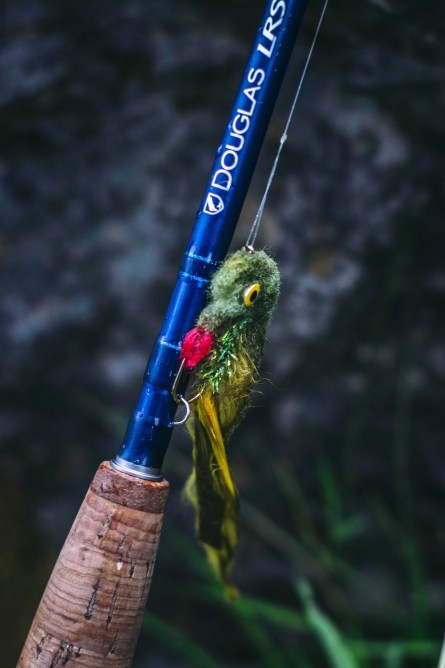
Next up is the Douglas LRS which comes in a variety of weights ranging from 4-10 with an MSRP of $249. There’s a lot of bang for your buck with this fast action rod from the hard chrome snake guides and dual up locking rings on the carbon reel seat. With over 10 length-weight configurations, there’s sure to be an LRS model to meet your fly fishing needs. While Douglas may not be a traditional fly fishing brand, the Douglas LRS provides a lot of value and performance for an entry-level fly rod.
The Orvis Clearwater Fly Rod priced at $198.00 is a phenomenal option for anglers looking to pick up an entry level fly rod that comes backed by a 25 year warranty. The entire line of Clearwater Fly Rods from Orvis are designed in Vermont with purpose built profiles to match a variety of angling scenarios. The 9-foot 5-weight model is perfect for medium to small rivers and can handle nearly any trout fishing task with ease. Fly rods tend to get broken from time to time and the 25 year warranty of the Orvis Clearwater Fly Rodis nothing to shake a stick at, especially at this price point.Â
Redington
The Redington Butter Stick has a classic feel and aesthetic. Photo By: @landen_bailey
The Redington Butter Stick flexes deep into the rod blank which makes fighting fish of all sizes a true pleasure. While slow action-fiberglass rods have largely fallen by the wayside to modern graphite blanks, the Redington Butter Stick is a worthwhile consideration for any beginner angler looking for traditional feel and aesthetics in a fly rod.Â
Fly Rods Under $350
Sage
The Sage Foundation is the highest performing all-around rod on this list, albeit the most expensive at $325. This rod is a backed by a lifetime warranty and the only rod on this list that is made in the USA. This rod has been my personal go-to for over 2 years and is a true workhorse.
The Sage Foundation tackles everything from small streams to large rivers with ease.
While I’ve included it on a list for beginners, the Sage Foundation is sure to meet the needs of more demanding anglers and should be given serious consideration. With the 9-foot 5wt configuration, I’ve been able to throw everything from weighted streamers with polyleaders to small dries with ease. The biggest downside to this rod is the lack of a hook keeper which can be a pain but is far from a deal-breaker. At this price point, you’d be hard-pressed to find a better fly rod.Â
Finding The Right Rod for You
While reading lists and guides is a great way to start your search for an entry-level fly rod, going to your local fly shop to compare a few of these models in person isn’t a bad idea if you have the option. Getting a few different rods in hand and talking to a local expert about the waters you fish will help you choose the best rod for you. The offerings on this list from Sage, Redington, Orvis, and Douglas are sure to meet the needs of any angler looking for an entry-level fly rod that doesn’t break the bank.
Article by Evan Garda, he is on the Content Team here at Fly Lords. He can be found chasing trout throughout the west with his trusty fly rod. Check out his adventures at @evangarda.
Introducing the Staying Afloat Series, where we take an inside look into the lives of many different fly fishing guides, shops, brands, and lodges across the world in hopes of finding out how the COVID is affecting them, what they are doing to help, and how we can do our part to help them. For this feature, guest contributor John Cochran caught up with Dave “Whitey†Evans, owner of the Bulkley River Lodge in Smithers, British Columbia.
Dave “Whitey†Evans standing out front of the Bulkley River Lodge in Smithers BC.
Fall has once again descended on the Rockies and the air hangs cool, wet and thick. For many, Fall is the prized possession of the year. Comes only once a year and holds a value greater than any other days in the year from the outdoor lifestyle point of view. Of course, the anniversaries, birthdays, and holidays are not to be overlooked but there is just something about the Fall that overwhelms those of us who hunt and fish. Or, if you are like my wife, she nearly cries aloud at the sight of the first changing grasses or shrubs on the hillside in late August.
Recently, I was able to connect and discuss with Dave “Whitey†Evans his perspective on how the steelhead guides and lodge owners in northern B.C are doing during these strange times. Dave owns the Bulkley River Lodge in Smithers, BC. This is his 21st year at the lodge and has been guiding for Steelhead specifically on the Bulkley River for over 30 years.
Abel Spey Reel patiently waiting to be put to the test.
How has COVID impacted the Bulkley River Lodge?
With over 99% non-Canadians as clients, they have been forced to not open for the 2020 season. “We kept waiting for the border crossing rules to be lifted and then make a decision, but that day never came†Evans stated.
The Bulkley River Lodge will be very quiet this year with the Canadian borders closed to US tourists.
“The government made the decision for us.â€Â When asked about the reaction from his clients regarding COVID-19, Whitey said, “It has been a real mix of responses. Some are very cautious, and others think the whole thing is a hoax.†After making the decision to not open at all, Dave and his staff reflected additionally on the potential scenarios revolving a partial opening and decided to just let it go. “What if one of the guides got COVID during the season,†Dave said. “That would be the end for us anyway. It’s not like we have extra guides that can just step in and take over. In addition, we are all in very close contact with each other every day. Guests, guides, lodge staff, and the kitchen crewâ€. “We would all have to quarantineâ€.
As for the River?
When I asked what’s happening out there? What are you seeing? Whitey replied, “Not much. I thought I would see an influx of Canadians coming to the river, but it never happenedâ€. He went on to emphasize how influential social media has become on fishing in general. “The fishing has not been the best this season anyway. When people are not posting photos, fewer people will show up.The same is true the other way†Dave said. After our conversation, he decided he was getting ready to winterize his jet boat but then changed his mind decided to go for one more session. Typical and predictable.
A native Bulkley River Steelhead.
Recently, Dave and the crew had a small gathering at the lodge to celebrate Canadian Thanksgiving with the traditional bonfire and heavy cocktails with a few of the guides and staff from the lodge. “It has been just weird up here this year. The lodge is quiet, no lights on, no hustle and bustle. Most of all no people around.â€Â Whitey reflected. “It’s the people in our lives that make the magic places magical. The loss of connection, after running over 30 consecutive seasons is a real thing. Catching a great fish alone is a different experience. Not one that I really enjoy much. It’s just not the sameâ€.
Bulkley River Steelhead Candy.
Dave wanted to give a shout out to his crew and clients and thank them all for the support they have offered during this crazy time. “I’m hoping for a 2021 season, but we will have to see what happens. That is a long way from todayâ€.
Hooked up on the Bulkey River.
Wherever you head this Fall, take a moment to reflect on the special places and surreal surroundings that make up the beautiful places where the creatures we pursue live. Whatever your passion, remember that it is the people, the places, and the pursuit that make the lasting impressions on our souls. Feel the pull and go as hard and as long as you can! You won’t ever regret it.
If you want to get in touch with Dave or you have any questions, feel free to reach out. Contact Information is, Dave “Whitey†Evans, Box 2005, Smithers, BC V0J2N0 whitey@steelheadbc.com and check out the Bulkley River Lodge on Instagram at @bulkleyriverlodge.Â
Article and photos from John Cochran, an outdoor recreation consultant that specializes in the fly fishing industry. For more information about John’s business Outdoor Recreation Strategies be sure to check it out online or get in touch with John at info@outdoorrecreationstrategies.com.
Every winter, in the weeks leading up to the holidays, my thoughts turn to the tributaries of Lake Ontario’s southern and eastern shores, and the steelhead that are filing into them daily. Nearly every year I find myself behind the curve and missing out on the hot bite that comes with fresh fish. But luckily for procrastinators like me, the bite has been rising in a slow crescendo this year as opposed to a rushing tidal wave of fresh fish. The preparation for Great Lakes Steelhead is almost a ritual at this point, an annual excavation of fishing gear tucked away in closets and numerous trips to the local fly shop. Steelhead season on the Great Lakes is here, and this author’s stoke for NY chromers couldn’t be higher!
Make a Game Plan
Great Lakes steelhead are certainly one of the more popular angling targets in the winter. As much as you’d love to have the water to yourself, the likelihood that a fellow angler is fishing your favorite run can run higher than you’d prefer. On our way north, or at the lodge bar, we typically try to identify a quick list of spots we want to hit, that way we’re not left scratching our heads when someone beats us to the honey hole. Having a cursory game plan will not only give you more time on the water, but over the seasons you’ll distill down a list of your favorite, and most productive spots to hit on your next trip!
Clean Your Gear & Patch Your Waders
The last thing you want to happen as you step into the ice-cold rushing water is to feel that telltale ice-cold drip begin to soak your socks. Speaking as someone who has suffered through a below-freezing day on the banks of the salmon river in wet socks and numb feet. I urge you, for the sake of your nerve endings, to triple check your wader seams and get those puppies rock solid for the rough wading and conditions winter on the New York tributaries can show you. If you do, you’ll spend more time fishing, and less time in your car with the blowers on high.
Steelhead and cold, wet weather go together like Jack & Coke. The weather along the shores of Lake Ontario can change at the drop of a hat, meaning that you’re going to want to have plenty of layering options in the back of your fishing mobile. You’re definitely going to want a solid set of base layers, especially for your bottom half as cold water will sap your body heat faster than a steelhead will empty your reel. Next, a solid moisture wicking mid-layer like Patagonia’s R1 will help keep you warm and dry. Top those off with some down and a bulletproof wading jacket, and you’ll stay toasty for as long as you need to put some steelhead in the net!
Picking fly patterns for steelhead truly depends on who you ask, so anglers are committed to swinging streamers, others sucker spawns, and stoneflies. Whichever flies you choose to have at the end of your tippet, the most important thing is to have A LOT of them. If you’re new to the river or just love to fight the bottom like me, you’re going to need to have a deep fly box bench. Plus if flows are low, you’ll likely be using lighter tippet, resulting in more than likely, a lost rig or two.
Whether you’re fishing tributaries controlled by dams, like the Oswego and Salmon Rivers, or smaller un-impounded streams, flows dictate a lot of how steelhead act, and if/when they’ll choose to eat. Depending on who you talk to, some anglers swear by the rising river, and others by the drop, depending on your tactics and wading skills, you may prefer the latter. You don’t want to arrive at your destination river and find a stream that looks like it belongs in Wonka’s Chocolate Factory, or find a trib so low that you have to fish 6X to get the poor steelhead stuck in a deep pocket to take your fly.
Grab Your Crew & Send it!
I know there’s the “I only fish alone” crew out there, but if you ask me, I find that having at least one other fishing buddy along for the ride makes for a way more enjoyable steelheading experience. Not only will you have a dedicated netman, but another person covering water and dialing in what fly patterns and/or colors the fish are keyed in on.
As a kid, I was told, that sea run browns don’t feed when they enter the freshwater from the salt. That sentence was all too common, and it made a huge impact in my, and most other anglers, way to make strategies when targeting the sea runners.
But as a young man, I read a book that changed that perspective. It was not a book about strategy or methods, but mostly about nature and being out there. The book contained a chapter about sea runners on a dry fly in Norway, and from there, there was no way back for me!
Somehow, I forgot about the book and pursued the sea runners more conventional – With a big tube fly in the darkest night.
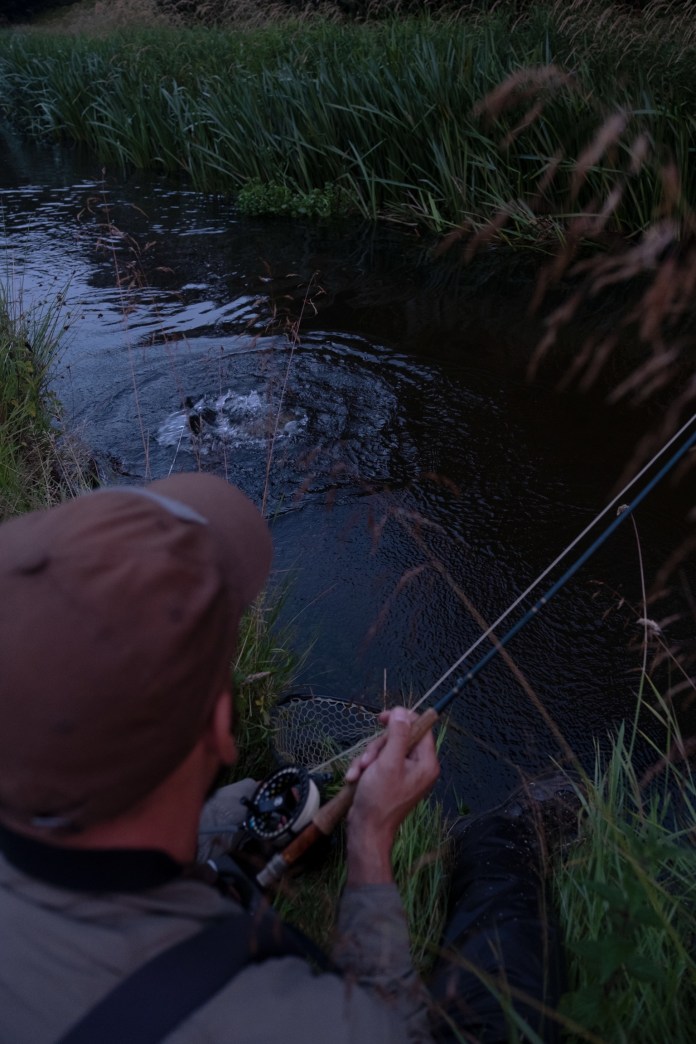
9 years ago I changed that strategy radically, and today my only method is by fishing a dry fly when targeting these sea runners in freshwater.
I find it so exciting, and I’m truly addicted!
The first two years were dedicated to classic dry flies, but for the last seven years, I’ve mainly used patterns containing foam. Mainly due to the float ability.
The tactic, most of the time, is to cast upstream on holding spots – blind fishing. But some days, when the hatch is on, you get the chance of doing traditional imitation fishing.
I vary from dead drift to stripping the fly, and most of the flies are size 8 or even larger.
My favorite weapon of choice is a 9 foot 5 weight, mounted with a short belly line and a 12 feet leader.
I vary between hook flies and tube flies and find no specific difference in the sea runners interest regarding that.
Be aware.. once you have seen a 10 pounder rise to your dry, there’s no way back!
Article by Peter Christensen, a fly fishing guide in Norway. Check out his adventures at @redtag13.


 and Skylark Bookshop to giveaway a one-of-a-kind