Home Blog Page 184

Women on the Water: Mary Alice Hoppe

There is nearly nothing better than having a hard fighting fish hooked up, and Mary Alice Hoppe knows this better than most. From permit to brown trout, she spends her time casting at these fish from Colorado to Belize. In the latest Women on the Water Interview, Mary Alice tells stories of well-deserved fish, her vision for the future of fly fishing, and what went into landing her fish of a lifetime. Check out the full interview below. 

Flylords: Who is Mary Alice Hoppe? 

I am a public servant professionally, have always given back to my local community, and now on a massive scale working for the Colorado Health Department to help mitigate the spread of COVID. I am also an adventurer. I have that switch inside of me that not everybody has, but I have it, and when that switch is on I have to go, there is nothing that can hold me back. The only place that I want to be is in the wilderness. The only reason that I live the life that I live is that I have to have a job, but if I had it my way we would be living in the back of the truck, end of story, with my dogs, and Chris (her boyfriend) and the fly rods. That is who we are, we are adventurers, we love the wilderness. It is so much more than just fishing. It’s the only thing that can clear my head and make me feel like a kid again. I love to take that road we haven’t taken before, go to that river we haven’t fished before, I love it. It is a safe place where I feel the most connected to myself and the most connected to my surroundings.   

black labs
A man’s best friend.
Photo credit: Mary Alice Hoppe

Flylords: When did you begin fly fishing? Who or what inspired you to start?

Actually, Chris! So Chris and I met about nine years ago, as I was just getting out of college. I went to CU Boulder and was just kind of a mess coming out, didn’t really know my way yet. I met Chris, an avid fly fisherman, and he started teaching me. I started learning the ropes and absolutely fell in love like I said. The first trout I caught was on the Yampa, outside of Stagecoach, and I felt like a ten-year-old kid again, and it was awesome. Every tug, every single time, makes me feel alive and free.

brown trout
Fall colors.
Photo credit: Mary Alice Hoppe

Flylords: Tell me one crazy fishing story that stands out in your mind?

I think that would have to be my trophy permit. So we were down in Ascension Bay, and this was a 12 day trip, that’s how crazy we are, 12 days in a row of permit fishing. So we are out there, 10 hours a day on that boat trying to target permit. Chris caught some permit, but I couldn’t get the cast out there, I was just getting really frustrated, it’s so hard to get that double haul and really feel your line.

We found a big school of permit on day ten, in the final hour. I had already been on the bow practicing my cast because the guides had been helping me. I laid out an 80 foot cast, here come the school of permit, they turn, they come at the fly, I saw it eat the fly and I was hooked up with a permit. I was shaking so hard that the entire boat was shaking, the guides were at the back of the boat laughing at me. I just, didn’t think I was capable of doing it because it is so complicated and so difficult, and I am still new to the sport, I have only been fishing for nine years, and when that fish was placed into my hands, I just couldn’t help but cry. It was the most powerful thing that I have ever experienced. I truly felt like it was magic. It was the coolest, the absolute coolest because we probably put in 80 hours before that of just waiting, and waiting, and waiting so that the hard work definitely paid off.   

Mary Alice Hoppe permit
A dream come true.
Photo credit: Mary Alice Hoppe

Flylords: Has fly fishing been a motivation for travel?

Oh for sure, I am a salt junky, I love the salt so much. We spent a lot of time at a small Mayan lodge in Ascension Bay and loved it down there. We then started to discover Belize because we wanted to invest in property, and it is easier for Americans to buy property in Belize. You can own it outright; you don’t have to be a Belizean. Then we got an Airbnb down there and checked it out, just six months later we had The Iguana House. It happened so fast because we love it so much.  

The Iguana House
The beautiful Iguana House located in northern Belize.
Photo credit: Mary Alice Hoppe

Flylords: Do you have any bucket fish or travel destinations?

Yes definitely, so many, as any fly fisherman has. Iceland is up there for the sea-run brown trout, but I think that number one would have to be the Seychelles, just because of the variety of species. I would love to be able to target an Indo-Pacific permit, just something different, something we don’t see in the Atlantic.   

Flylords: Have you witnessed or spent time in a larger female fishing community outside of the United States?

No, I think with salt, I mean every trip I have been on I have been the only woman there. I have always kind of been one of the guys, so it is easier for me. It is always interesting to see how few women really are out there. I think it is for sure changing, and we are seeing that, especially as more female guides are getting out there, and women are feeling more comfortable. But personally, it is usually me and the guys.

bone fish
Photo credit: Mary Alice Hoppe

Flylords: How has being a woman impacted your experience fly fishing and in the industry?

I think it all depends on where you are and who you are around. I have called fly shops asking about fly lines and have been spoken to like I don’t know what I am talking about. That’s never fun, but I don’t take it personally. I think it is just a culture that has been established over years and years of fly fishing, very similar to golf. I have felt it with guides too, especially saltwater guides who underestimate women. I have been put in situations where I can do more, but they are like, “Oh, just have her go target those little baby fish over there”. Sometimes that can be a little offensive, but the only way that I am going to learn is if I try. That has been tough sometimes, but again, I just don’t take it personally because when I am out there I am so connected to my surroundings that all that stuff just kind of rolls off my back. I think my biggest difficulty is being hard on myself. When I can’t get the cast out there it becomes, “What am I doing wrong? How can I become a better fisherman?” and that just takes time. Fly fishing you can learn and learn, and think you know it, and then lose everything, it is just constantly learning new things.            

salt water boat fishing
Photo credit: Mary Alice Hoppe

Flylords: As an industry and sport, what can we do to be more inclusive (race, gender, age, etc.)?

One, I think that things like what you are doing right here, and what we see fly fishing magazines doing, bringing women into the magazines more, is huge. Social networking has just been massive for women in the industry. It is so easy to just get out there and share what you are doing, and I have seen massive growth in that. I am sure that you follow a lot of the same women I do, and I really look up to these women because they have put themselves out there, and especially ones who are guides. I mean, being a guide as a man is incredibly difficult, let alone a woman, so it is very admirable to see that.

bonefish
Belizean bonefish.
Photo credit: Mary Alice Hoppe

For a long portion of my life, my professional career, I worked with at risk youth, inner-city youth, and we actually created a fly fishing program where we would teach them, in the gym at the school, the techniques and everything, and we would take them out fishing. It was just the coolest thing to see foster kids who are going through so much at such a young age and carry so much heaviness around with them, and you put a fly rod in their hand and they are just so happy and they love it. I think that we are seeing more and more of those companies starting to come up, like The Mayfly Project, working with the foster kids. There is another one working with human trafficking and sex trafficking (Fly Fishing Collaborative). More and more people are starting to understand that the more that we can almost look at it like a nonprofit and an outreach program, the more we can teach people skills that they can take with them.

Fish for Change is another great example. Just this past summer, Steve (Brown) and the crew had a group of kids from Denver come up to the mountains. Some of those kids had never even been to the mountains and had lived in Denver their whole life. They then went out on some float trips and all these kids caught fish. Just to see the smiles on their faces. I think it is such an interesting way to give somebody an activity and goal while pulling them into the wilderness. It is really hard for some people to just enter the wilderness if you don’t have any experience. I just hope that more people who feel that they wouldn’t be welcome know that they are.               

Flylords: How can we use social media to create a more positive fly fishing culture for everyone involved?

tarpon
Photo credit: Mary Alice Hoppe

I think just keep sharing. Keep sharing what we love and the more that we can show people how much it can change your life. Hopefully, they will say, “Hey, maybe I want to try that”. We need to make it about more than just catching. I think that people get so nervous. I mean, my brother is the perfect example. My brother and his girlfriend just started picking up fly fishing, and they just hired their first guide. He tied up a nymph rig with weight and with three flies. They were like, “How am I going to cast with three flies?”, but you just have to get out there and keep trying, and understand that it more than just the catching. You are going to get knots, but when you get out there and you are immersed in the wilderness you start to become connected, calm. It is called the three day effect.

There was a book written about a study where they took veterans on a three day float trip into the wilderness. This wasn’t necessarily fly fishing, but they showed a massive decrease in depression, PTSD, anxiety, all of these things simply because they were in the wilderness. So for me, I think that the more people that can just start entering the wilderness, we’ll see that shift. I think that people are nervous to get out there because they just don’t know, so the more that we share and show people that they can do it, hopefully, they say, “Hey yeah, I can”.

black labs fishing
Photo credit: Mary Alice Hoppe

Flylords: What advice would you give someone who is just starting to fly fish?

Stick with it. It is going to frustrate you. You are going to get tangled up. You are going to get knots and lose some fish. So do people who have been fishing for 30 years. It is hard when you are learning because you think that you are doing something wrong, and you’re not, it’s just fishing. And remember, it’s not about catching. It’s so much more.

You can keep up with Mary Alice Hoppe’s adventures by clicking here.

If you are looking to plan a fly fishing adventure down to the Iguana House or to Belize shoot us an email at travel@theflylords.com.

Fly Fishing Belize: 2 Grand Slams in 2 Days [Full Video]

Fly Fishing Belize – The Complete Guide

Father Daughter Fishing Trips are the Best…Especially in Belize!

Lodge Spotlight: Thatch Caye Island Resort, Blue Horizon Belize

Small Business Spotlight: Lid Rig

Welcome to this installment of Flylords’ “Small Business Spotlight” series. When it comes to fly fishing and the outdoor industry as a whole, constant innovation and ingenuity are synonymous with the spirit of sport. New products are constantly being released, many of which don’t really meet any actual needs of anglers. However, every now and then, something comes out of the woodwork that really catches the eye and makes one think, “Wow! Now, this is a game-changer”. In an effort to support the foundation of the industry, Flylords is looking to bring a spotlight to small businesses we believe in. Here, we’ll highlight the up-and-comers in the industry we hope to see in every angler’s loadout one day.

the lid rig

In this installment, we’re using our heads (literally), and checking out the newest ways to carry your nippers. Whether you’ve got a line in the water, or you’re captaining the ship; Lid Rig is the simplest solution to finding an easy place to stash one of your most important tools.

Background:

I remember first seeing Lid Rig pop-up as a trade booth in last year’s first-ever online Fly-Fishing Showcase. I wasn’t exactly sure what the product was all about, but I had a few guesses based on the name. Initially, I was under the impression it was probably some sort-of fly patch that attached to the bill of one’s hat. Interestingly enough, I wasn’t totally wrong (we’ll talk more on that in a moment). After some light combing of the show’s catalog, I found the product pop-up again. It revealed itself to be an alternative nipper set-up that sat fashioned to one’s hat (or wherever else they chose to place it).

The idea seemed fresh. Interesting to say the least. Although I couldn’t necessarily decide as to whether or not I had any interest in embracing the concept myself, it certainly possessed an acre or two of real estate in whatever part of the brain we store fishing gadgets in (for many people including myself, this compartment occupies around 98-99% of the skull).

It wasn’t until a few months later that I finally revisited Lid Rig upon connecting with the founder, Scott Wilday, over a deep dive into industry discourse. I had mentioned that I remembered seeing the nipper system as a partner of the Fly-Fishing Showcase, but I was still unfamiliar with the full functionality behind the idea. Scott took this as a chance for some R&D, and within a few days, there was a clearly marked box labeled “LR” sitting on my kitchen counter.

Findings:

While I was more of a ‘$5 set of Taiwanese nippers hanging from a 3 dollar zinger that I bought from an office supply store” kind of guy, I wasn’t very reluctant to try out something new. Upon removing the nippers from the box, I was immediately impressed. The weight of the product alone indicated a very well put together body.

Image courtesy of Lid Rig

The first thing I noticed was the lack of spring keeping the two blades from each other. Much like the SIMMS pro-nipper ($79.95), the two handles were pushed apart by the inclusion of rare-earth magnets.

The set also came with a base that could be attached to your waders, pack, or as the name would imply; a hat. This was constructed of diamond-coated steel, and doubled as a sharpener for the blades on the nippers. I’d be remiss to fail to mention the bottle opener which was built on to the edge of the base (it’s the little things that count). The rig also came with a lanyard, which could be attached to the nippers and the base to ensure maximum security. However, as I soon noticed, it was not necessary.

By using the force of the magnets, the nippers snapped firmly to the base. Refreshingly enough, while they seemed almost impossible to shake off, once you grabbed for them, the unclipped with ease. There was really no effort involved in attaching them either. You could be pretty arbitrary with your blind return of the nippers post use, and as long as your aim was somewhat close to the base, the snapped on and stayed on effortlessly.

The magnets also served the purpose of holding small flies after changing up your fishing rig. Funny enough, what I wrongfully assumed to be the original function of the product upon first hearing about it, actually became a quite welcomed function of the rig itself. There was no more ripping seems of my hats or trying to force microscopic flies onto a foam patch. It was as simple as: step 1– place fly on head. Step 2– fuggedaboudit.

A few fishing trips passed and I began to use the Lid Rid system more and more until the nippers eventually felt more than at home above my left brow. Finally understanding the appeal of never fumbling for your tool when trying to precisely slice 6x tippet in 35-degree weather, I began to understand why the Lid Rig was made. In keeping your gear tight to your frame, you’re just eliminating one more thing to worry about, especially on a drift boat, or when wandering from your pack that you hiked in with.

To conclude my personal experience, I don’t think anyone is looking to reinvent the wheel here. Whether you put your nippers on your pack, on your head, or you choose to file down your canines, it’s all up to user preference. What’s nice about the Lid Rig is that it offer anglers another choice as to how they want to customize their fishing experience. While they won’t catch you more fish, or help you snag fewer branches, the Lid Rig system always assures you that a quality set of nippers is top-of-mind.

Scott Wilday, founder of Lid Rig was kind enough to put aside some time to answer a few questions about the magnetic nipper system and how he brought his vision to life.

Flylords: What is Lid Rig?

Scott: Lid Rig Ltd. is a new Denver based company that is taking a drastically different approach to one of the most used products in fishing. We think, look, function & probably act differently than everyone else that makes fishing line nippers.

Flylords: Where did the concept idea for Lid Rig come from?

Scott: After exiting a healthcare tech start-up I Co-founded, I was looking to A.) create something tangible & definitely not in healthcare or technology & B.) integrate my passion for flyfishing & business. As luck would have it, one of my brothers had a bachelor weekend around the same time I was looking for my next endeavor. The first day we played mediocre golf & received personalized ball marker hat clips as gifts. The second day we went fishing and the only thing I was able to catch was a tree.

Nobody likes losing flies …. so I found myself halfway up a tree and a few beers deep. Instead of using nippers attached to my pack that I was unable to reach, I ended up using the golf ball marker hat clip to help cut me loose.

Voila! Lid Rig was born from a lame bachelor party gift,  poor fishing skills, and some cold beers. Having an idea is one thing, but evaluating it as a viable business opportunity and the process of bringing it to life is really where the concept was refined.

Flylords: What are some of the multi-use attributes of the product?

Scott: We put countless hours into the design & engineering so that our customers have functional uses both inside & outside of fishing. The creativity we have seen from Lid Rig users is what gets us so excited about what we are doing. Here are a few for you…

  • The diamond-coated clip was designed to sharpen the Lid Rig nipper blades & hooks but we have seen Lid Rigs on hunting trips and in gourmet kitchens because it can also sharpen knives.
  • Many areas of the country have enacted barbless only rules. We have heard from Wildlife Rangers that love to use Lid Rig to file off barbs from anglers hooks while on patrol
  • Despite having a bottle opener built in, we have seen Lid Rig’s used to assist in shotgunning beers.
  • Lots of people just magnetically connect Lid Rig to their trucks or boats so it acts as a rod holder while getting rigged up.
  • Flies just stick & magnetically connect right on the nippers which is great for quick changes but also fly tying desks if you are working on some micro midges.

Flylords: What is it like owning a small business in the fly fishing space? What are some of the struggles that come along with that?

Scott: In today’s crazy world, it has honestly restored my faith in humanity. The fly fishing space is chock-full of humble people that are willing to help and want to see Lid Rig succeed. I’ve had to tell a lot of people that their order is delayed because of covid-19 and not a single person has asked for their money back.

Flylords: What’s next for Lid Rig?

Scott: Welp, the initial response has been ridiculous and we are starting to ship out thousands of Lid Rigs to shops & people that have ordered online at our website starting next week.  Once we get through this initial rush we have some new products and concepts in the works that we would like to bring to market sooner rather than later.

Thank you to Scott Wilday for taking the time to chat with us. If you want to learn more about Lid Rig, or get your hands on your very own pair, you can check them out HERE.

Small Business Spotlight: NOMAD Grills

Small Business Spotlight: GHOSTech Strike Indicators


Video of the Week: Short Bus Diaries Volume 2 Episode 3

In this week’s Video of the Week, we take a look at Wild Fly Productions‘ 3rd installment of the Short Bus Diaries. The boys get in one more float enjoying the scenery and beauty of the Montana Backcountry with a few good friends. While the bull trout fishing may have been anything but stellar and the Cutthroat more than willing the boys head out of the backcountry headed for Craig.

Craiglandia. A mystical place of Drift boats, fishing stories, and the ever famous Missouri River. While the MO can one of the most rewarding fisheries it can also be one of the most difficult. A combination of winds, grass, ice, pressure, or just downright big fish filled with piss and vinegar makes the MO who she is. A large body of water known to beat you down and spit you back up. If there was a crew up to the challenge it would be The Short Bus Diaries crew. So tune in as we catch up with Scottie, Adam, Bryant, and Steve as they explore the wonders of Craig and the magnificent MO.

Image Courtesy: Wild Fly Productions


Check out these other articles as well!

Video of the Week: Short Bus Diaries Volume 2 Episode 2

Video of the Week: River Tigers

Video of the Week: “The Expedition Leader” a Rolf Nylinder Short Film

Fishing Ethics: De-Barbing Hooks

Some of us learn the easy way, others the hard way… But, at some point in your fly fishing journey, everyone discovers the importance of debarbing hooks. 

How to Debarb a Hook?

Debarbing a hook is the simple action of clamping down on the hook and bending the barb so that it no longer juts out. In order to do this, you need a pair of pliers/hemostats that are strong enough to bend the barb of the hook you’re using.  One way you can test whether or not the hook is completely debarbed is by running it over a piece of cloth. If the cloth gets caught on the barb that means the job is not yet done.

Why Debarb?

Depending on the area you are fishing, debarbing your hook can be mandatory. Many fishing areas with tighter regulations will require you to debarb your hooks because it minimizes the negative impact on the fish. Hooks with barbs are more likely to cause harm to the fish because they increase the amount of handling time during the release and they create a larger wound in the fish’s mouth. If you want to improve the chances of a successful catch and release, you should consider debarbing your hooks no matter if it’s mandatory or not.

Brown trout with hook in mouth
Courtesy of Colby Crossland

How Does Debarbing Help Me Personally?

If the health of fish isn’t enough to get you to debarb your hooks, think about the impact it may have on yourself or your fellow anglers. As a fly angler, there is a fairly high probability that you will get hooked by either yourself or another angler at some point in your fly fishing career. When this day comes, you will be glad when it’s a debarbed hook…

Hooked with a fly
Courtesy of Colby Crossland

Will Debarbing Impact My Fishing?

Debarbing your hooks most definitely makes fishing a little more challenging. Without a barb, the hook is more likely to pop out of the fish’s mouth. Because of this, the angler must be more engaged— making sure that the line is tight on the fish throughout the duration of the fight. For many anglers this is a setback that they are willing to endure in order to improve the health of the fish and decrease the chances of hooking themselves or another angler. If you do happen to run into this situation, check out this video of how to remove a barbed hook.

Stay tuned for more installments of “Fishing Etiquette.”

Lawsuit Calls for Restoration Work on Oregon’s North Umpqua River

The North Umpqua River provides fly fishers with unparalleled opportunities to connect with  wild salmon and steelhead. It is truly one of the best fly fishing rivers in the Pacific Northwest. Whereas many of the historic salmon and steelhead rivers of the West Coast are degraded and fragmented, the North Umpqua still provides more than 160 miles of pristine aquatic habitat.

However, this river does not flow freely, and anadromous fish have several barriers to accessing the quality upriver habitat. Roughly seven miles from the main branch of the Umpqua River, Winchester Dam blocks 160 miles of quality fish habitat on the North Umpqua. The dam is decades old and threatens both humans and migrating fish. The state of Oregon classifies the dam as “high hazard” to human life in the event of a failure. For fish, the dam is even worse; the outdated dam has deteriorated, which creates false flows, essentially funneling outmigrating fish into a blender of rusted rebar and concrete. Further, the dam is equipped with a grossly ineffective fish ladder that is harmful to migrating fish.

To make matters worse, the dam serves a very limited purpose. Winchester Dam generates no power and serves no flood control purpose. Rather, it provides slack-water above the dam for the private riparian property owners–and them only–to recreationally boat on the ‘lake’. The property owners for years have mismanaged the dam, including a failed attempt to repair the structure in 2018 which polluted the drinking water for 37,000 people and harmed numerous fish.

That is why a coalition of environmental and fishing groups joined forces to sue the dam’s Water District. The coalition is requesting the District Court Judge order major repairs to the privately-owned dam and require significant improvements to the harmful fish ladder. However, because the dam does not produce any income for the owners, removing the dam would make the most financial sense.

Winchester Dam, courtesy of the Oregon Department of Fish and Wildlife

“Winchester Water Control District’s fish-killing, dangerous, and obsolete dam provides no flood control, hydropower, or water supply function except to back up the river for a private waterski lake. It’s long past time to end the needless harm this dam causes to invaluable natural resources,” said Jim McCarthy, Southern Oregon Program Director for WaterWatch.

This watershed is crucial to the struggling summer and winter steelhead, as well as coho and chinook salmon. Decrepit and non-power generating dams, like this one, left upright are irresponsible and only harm native species. Winchester Dam should come down, or at the least be repaired. For more on this developing story, check out this press release from WaterWatch of Oregon and this Native Fish Society story.

Photos courtesy of Arian Stevens.


BREAKING: U.S. Army Corps of Engineers Say #NoPebbleMine

Flylords Holiday Fly Fishing Gift Guide

Land the Perfect Gift this Holiday Season with Some Fishy, Fine Art

Land the Perfect Gift this Holiday Season with Some Fishy, Fine Art

Happy holidays from Flylords! If you’re looking to wow your fish-loving family and friends this holiday season, we’ve got you covered. We’ve spotlighted seven talented artists this year, whose work transports viewers to their favorite lakes, rivers, and salt flats. Between their 2D and 3D styles, various media, and even functional pieces, you’re sure to find the perfect gift that brings your loved one’s favorite fish to life.

Paul Puckett

Photo Courtesy of paulpuckettart.com

Bio: Paul Puckett is a gifted painter and illustrator based in Charleston. His captivating marine scenes are inspired by the low country and are perfect for salt-water-loving anglers. He also specializes in what he calls “catch and release” paintings, which will capture your loved one’s proudest fishing moments beautifully.

Primary Medium: Watercolor

Where to Buy: You can check out Paul’s work and buy online at his website.

Read More about Paul!

Tim Johnson

Photo courtesy of Tim Johnson

Bio: Utah-based fly designer, guide, and recreational therapist Tim Johnson is also a talented artist who dabbles in all kinds of media, including watercolor, oil paint, and pencil. He’s well known for his “TimmyGrips,” which he crafts by burning fish designs into rod grips. If you’re looking for a unique gift, Tim is your man.

Primary Medium: Oil Paint, Pyrography

Where to Buy: To browse Tim’s existing work, visit his website. Original commission inquiries can be made through the website, or directly to TimJohnsonGallery@gmail.com.

Special Offer for Flylords Readers: Tim has kindly offered a 15% discount on his TimmyGrips to any Flylords reader! You can access your discount in two ways. You can visit the TimmyGrips page on Tim’s website, order a “Timmy Grip Certificate,” and apply the code FLYLORDS at checkout. You can also access this order form, also applying the code FLYLORDS at checkout. For questions or rush orders, please contact Tim directly at TimJohnsonGallery@gmail.com.

Read More about Tim!

Joe Mangiafico

Photo Courtesy of Joe Mangiafico

Bio: Joe Mangiafico is a masterful knife craftsman now located in Bend, Oregon. His designs capture the look of everyone’s favorite trout species and are built to last. His masterpieces are perfect for anglers who want to use an artistic gift doing what they love: fishing!

Primary Medium: Knife Making

Where to Buy: You can check out Joe’s available inventory on Instagram, where he plans to post the knives he has available for the holidays.

Read More about Joe!

Remington Robinson

Photo Courtesy of Remington Robinson

Bio: Remington Robinson, a lifetime fisherman and talented artist based in Boulder, CO, creates art on every scale. From beautiful murals to the tiniest canvases, Remington’s work captures stunning landscapes and creatures in vibrant colors. His work makes a memorable gift for anyone who loves the outdoors.

Primary Medium: Acrylic Paint

Where to Buy: You can make inquiries for commission pieces by messaging Remington on Instagram.

Read More about Remington!

Rachel Lubarski

Photo Courtesy of Rachel Lubarski

Bio: Indiana native Rachel Lubarski creates her pieces straight from the water itself. Her incredibly realistic driftwood sculptures depict her clients’ favorite fish with striking accuracy. These pieces are sure to make any angler’s holiday season and to bring their favorite species to life.

Primary Medium: Driftwood

Where to Buy: To get a feel for Rachel’s art, visit her website. Then, to request a commission, email her directly at rlubarski@gmail.com, or direct message her on Instagram.

Read More about Rachel!

George Hill

Photo Courtesy of George Hill

Bio: Missoula, Montana based painter George Hill specializes in, essentially, fish portraits. His work combines impressionism and realism to create compelling images that draw the viewer in close. Not only is George’s work incredibly beautiful, but his passion for honoring the species he paints are the driving force behind his style. George’s work makes a thoughtful gift for anglers who hold conservation close at heart.

Primary Medium: Acrylic Paint

Where to Buy: You can see George’s fish art at his website, on the “fish series” page. You can then inquire about pricing and custom paintings through the “contact” page, or by emailing info@GeorgeHillArt.com.

Read More about George!

Travis Sylvester

Travis’s Piece “Desert Edge”
Photo Courtesy of Travis Sylvester

Bio: Also based in Utah, Travis Sylvester is an artist whose career has made a big splash in recent years. Working from his home studio, Travis has created stunning graphic designs and colored-pencil drawings of fish species. His colored pencil pieces capture the real-life texture and anatomy of fish with laser-precision, and their vibrant colors stand out in any setting. Travis’s work is simply a must-have for any angler’s art collection.

Primary Medium: Colored Pencil

Where to Buy: You can purchase online and contact Travis by visiting his Etsy Shop or his website

Read more about Travis! 

Look to These Organizations this Giving Tuesday

What a weird and difficult year 2020 has been — COVID, wildfires, politics, the list goes on. 2020 both harmed and benefitted fly fishing. Travel and guiding operations took a serious and substantial hit. But on the other hand, more people sought solace and recreation on the water than in recent years. Additionally, the increase in license sales seen across the country directly impacts conservation efforts.

So, as we near 2020’s final month, there is always much to be thankful for. Admittedly, it is easy to focus on the negatives of this year, but think about the positives and make a tangible impact by contributing to these fine, fly fishing related organizations on Giving Tuesday! These groups do so much for our sport, such as by advocating for conservation or responsible laws, getting more people on the water, and restoring our waterways. This list is by no means inclusive, as there are dozens of exemplary nonprofits that do so much for our sport–many of which we have previously highlighted. In any case, here are several awesome organizations to consider making a tax-deductible contribution to this Giving Tuesday!

Trout Unlimited

Let’s be honest, when folks think of fly fishing, they think of rising trout and beautiful coldwater streams. Trout Unlimited is one of the largest and effective national fishing and conservation organizations. TU works, “to conserve, protect and restore North America’s coldwater fisheries and their watersheds.” Additionally, TU goes to great lengths to recruit the next generation of fly fishers and conservationists, ensuring our sport survives as well as our fisheries. Support Trout Unlimited by clicking this LINK!

Casting for Recovery

Breast cancer affects every one in eight women, and, currently, 2.3 million women are living with this horrible disease. Casting for Recovery provides women with breast cancer the opportunity to find inspiration, discover a renewed energy for life, and experience healing connections with other women and nature through fly fishing. 10,000 women have benefited from the healing experience of a Casting for Recovery retreat. Unfortunately, COVID derailed the retreats planned for 2020, but the folks at Casting for Recovery are hoping to restart operations in 2021! Click HERE to make a donation.

American Saltwater Guides Association

Striped bass, bluefish, fluke, false albacore, these are some of the iconic species that fuel the East Coast’s vibrant recreational fishing community. However, due to complex and often irresponsible management, these fisheries and the connected economies are hurting. The American Saltwater Guides Association is a coalition of “forward-thinking guides, small business owners and like-minded anglers who understand the value of keeping fish in the water.” They advocate for responsible fishery management across all levels of government to preserve the species for generations to come. Also, The Guides Association, at the beginning of COVID, was on the front lines fighting for assistance for the fishing industry and guides financially hurt by the virus. To learn more about the American Saltwater Guides Association and donate, check out their website!

Captains for Clean Water

South Florida is home to some of the most sought after fisheries–the Keys, tarpon, the Everglades, snook, redfish, permit. This region is one of the most diverse fisheries in the country, but it is dying. Years of water mismanagement has blocked nutrient-rich freshwater from reaching the Everglades and the Keys, and the fisheries and ecosystems are feeling the effects. Captains for Clean Water works to restore the natural, southernly flow of water and restore these iconic fisheries to their former glory. To make a tax-deductible donation and help further this great work, click HERE!

Backcountry Hunters & Anglers

Access to public and wild places is one of the many, MANY, amazing opportunities available in the United States of America. However, public lands and waters and our rich outdoor heritage face dynamic threats. “Backcountry Hunters & Anglers seeks to ensure North America’s outdoor heritage of hunting and fishing in a natural setting, through education and work on behalf of wild public lands and waters.” Backcountry Hunters & Anglers strives to “Keep it Public,” and they will fight at all levels of government to protect our public lands and waters. Donate to Backcountry Hunters & Anglers HERE!

Native Fish Society

Fly fishing and native fish are inextricably connected, but throughout the country many native fish species are declining. The fish of the Pacific Northwest serve as a great example. Dozens of species of salmon and steelhead in the Pacific Northwest are listed under the Endangered Species Act, and dozens more are at concerning low levels. This is why Native Fish Society exists: “We envision a Pacific Northwest abundant in wild fish, free-flowing rivers, and thriving local communities.” To help further Native Fish Society’s work for the revival and conservation of wild fish in the Pacific Northwest, donate HERE!

To learn more about these organizations and to discover more that weren’t mentioned, check out our “Organization of the Month” series. No matter, which organization you may or may not decide to donate to, just know that these organizations do great things for our sport and need our support. So, however big or small, your donation will make a huge impact for these organizations and all they do!

6 Must Have Fly Fishing Accessories for Beginners

1

As fisherman, we have all been troubled with a time where we wish we were more prepared while on the water. Whether we forgot our net or our nippers, having the necessities is important for our success. If you are new to the sport of fly fishing, walking into a fly shop may be very intimidating. Seeing walls of gear and tools, you may be asking yourself, do I really need all of this? The truth of the matter is, there are a lot of gimmick items that aren’t 100% necessary but nice to have. In this tips and tricks video of the week, Brian Flechsig of Mad River Outfitters breaks down 6 must have accessories for beginner fly-anglers.

Must Have Accessories for Beginners:

1. Nippers

    • Necessary for cutting tag ends, strands of tippet, and opening up the eyes on hooks.

2. Hemostats

    • Great for holding flies while tying your knot or mashing the barb on your hooks. Also the perfect tool for removing flies from the mouth of fish.

3. Fly Floatant

    • Floatant is a must have tool for fishing dry flies. This viscous fluid or powder coats the fly preventing it from sinking beneath the surface.

4. Split Shot

    • Lead or tin weights that can be added to your tippet to aid in getting your flies down faster.

5. Strike Indicators

    • “The fly fisherman’s bobber.” Strike indicators are just that, cork, foam, or yarn that floats on the surface and are used to detect strikes when nymphing.

6. Polarized Eye Wear

    • Arguably one of the most important pieces of equipment when starting out. Polarized glasses cut the glare out of your vision allowing you to see more clearly in the water. Great when trying to find fish or structure.

As mentioned previously, the fly fishing market is flooded with gear, rods, reels, and tools. To ease that overwhelming feeling, having the essentials is all that is necessary when just starting out. Load up the pack with the gear on this list, grab the rod, and hit the river! Tight Lines!

Jimmy Kimmel’s New 8 Million Dollar Lodge in Idaho

Back in June of 2020, late-night host and comedian Jimmy Kimmel along with fly fishing guide/lodge owner Oliver White purchased the South Fork Lodge for an undisclosed price. We can only guess it was close to 8 million, as the lodge was on the market for 7.95 Million in 2019.

The Eastern Idaho lodge sits alongside the Snake River and boasts eight bedrooms with their own outdoor patios, two private cabins containing five suites, a self-contained four bedroom/2.5 bath river house, four fisherman cabins, and a high-end restaurant replete with outdoor, riverside seating and a grand bar It even has its own in-house fly shop and guide service.

According to The Wall Street Journal, the South Fork Lodge “will incorporate fishing art and books from Kimmel’s personal collection when it opens next spring for the 2021 season.”

20 Celebs that Fly Fish

A Fly Fishers Paradise – The South Fork Lodge for Sale – $7.95 Million


Best Fly Fishing Gloves

0

If you’re like us, there’s not a whole lot that will keep you off the water. From freezing winter temps on your favorite trout streams to cold rainy days chasing steelhead in the Pacific Northwest, warm hands and quality fly fishing gloves are a must.

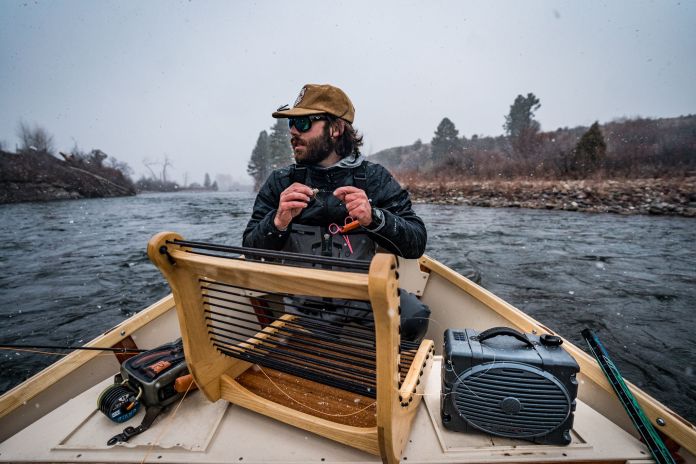
If snow is on the banks, might be time for some gloves.

There are plenty of options on the market to choose from, including half finger, full glove with fold-over “trigger” fingers, to warmer choices like half finger with fold-over mittens. Once you’ve honed in on a style of fly fishing glove, you’ll have a number of material options to consider from fleece to wool to soft-shelled synthetics. We did the work and found some of the best fly fishing gloves the industry has to offer, so you don’t have to. 

Simms Fly Fishing Gloves

No stranger to designing equipment for the toughest conditions, Simms has several offerings in contention for some of the best fly fishing gloves on the market. If you prefer fingerless gloves, like me due to increased dexterity, you’re in luck. Prefer a fold over mitten style? Simms has you covered. 

Simms Headwaters Half Finger Glove $29.95

The Simms Headwaters Half Finger Gloves are made of a high-stretch and wind-resistant Polartec fleece. I have a pair of these that have served me well through some cold Colorado winters in addition to wool gloves (see below). If you often strip streamers in cold weather, these are a great option as the fleece is water repellent and keeps your hands warm even when they’re wet. My biggest complaint with the gloves is that the fleece acts far too much like a fly patch with small flies. If you’re in the market for a pair of lightweight, packable, and most importantly warm gloves, be sure to give the Simms Headwaters Half Finger Gloves a try. While I prefer the half finger style, the Headwater series is also available in a fingerless and foldover mitt.

Simms Wool Half-Finger Glove $29.95

The Simms Wool Half-Finger gloves are unmatched in fit and all day comfort.

Traditionally, anglers have turned to wool clothing and accessories for its insulating properties and natural water resistance. Quite possibly the biggest advantage of wool, and wool gloves, in particular, is that it offers warmth and insulation even after being completely soaked through. Sure there are other wool gloves on the market but the quality and fit of the Simms Wool Half-Finger gloves are unmatched. These low profile gloves are 100% wool, come with rubber gripped palms that are great for casting, rowing, camp chores, and more. 

Simms Guide Windbloc Series $54.95

The Simms Guide Winbloc line of gloves come in a true half finger, fold-over mitt, and fold-over trigger finger styles.

The last fly fishing glove offering from Simms on this list are the Guide Windbloc Series Half Finger Gloves that are made of a four-way stretch fabric and come pre-curved in the natural shape of a hand for increased dexterity. These gloves also come with heat-pack pockets in the wrists to ensure warm hands all day long without affecting your grip and dexterity. Like the Headwaters series, the Simms Guide Windbloc Series gloves also come in a foldover mitt style.

Orvis Fly Fishing Gloves:

Like Simms, Orvis offers several styles of fly fishing gloves in a variety of materials. fingerless, trigger finger and convertible mitts are available in fleece and softshell materials. 

Orvis Fingerless Fleece Gloves $29.95

The Orvis Fingerless Fleece Gloves are made in a four-way stretch fleece.

The Orvis Fingerless Fleece Gloves are made in a four-way stretch fleece to ensure the perfect fit. These gloves also have a synthetic suede palm for enhanced grip. There’s sure to be a good fit for all anglers as these unisex gloves come in unisex sizes small through extra large. Like the fleece offering from Simms, these gloves retain their insulating properties when wet. 

Orvis Pro Insulated Convertible Mittens $79.00

Orvis Pro Insulated Convertible Mitts
The Orvis PRO Insulated Convertible Mitts are the warmest offering on this list.

The last pair of fly fishing gloves in this review is the Orvis PRO Insulated Convertible Mitts that are designed to keep angler’s hands nimble even in the coldest of weather. These gloves are made with the same fabric and insulation found in the Orvis PRO Insulated Hoody for optimal warmth and synthetic suede on the palms for a better grip. There’s also a convertible thumb and folder over mitten with elastic keeper to reduce snagging. I typically prefer a true fingerless glove but fold-over mittens are great for long walks to and from the car and when you need a little extra warmth.

FRDM Gloves:

Another glove to mention that isn’t necessarily a specific “fishing” glove but due to their unique design, the FRDM  gloves are worth a mention for anglers. The FRDM gloves allow users access to their hands or fingers without removing their gloves. Giving you a good amount of dexterity and warmth. The Vigor Liners ($26.99) are a nice lightweight addition to your kit. While the Hybrid Lightweight Glove model ($45.99) is best suited for the everyday angler and it doesn’t break the bank.

Heather rocking the FRDM Hybrid Lightweight Glove

How will you stay warm this winter?

Winter is quickly approaching (and underway in some places) which unfortunately means layering up under waders, hats, gloves, and more. I typically don’t like to fish with gloves until it’s absolutely necessary since they can be cumbersome but Simms and Orvis have taken steps to make fly fishing gloves more manageable. If you plan to spend time on the water this winter, I’d recommend picking up a pair of fingerless gloves for milder days and a pair of foldover mittens for when the weather really turns south. These tried and true options are sure to meet the needs of any angler looking for a quality pair of fly fishing gloves.  

Article by Evan Garda, he is on the Content Team here at Fly Lords. He can be found chasing trout throughout the west with his trusty fly rod. Check out his adventures at @evangarda.

Wading Safely: A Wading Gear Guide [2020]

Winter Fly Fishing Tips: Making the Most Out of Winter Fly Fishing