Home Blog Page 50

Gear Up for Spring Fishing: Tips and Gear Picks

Disclosure: The article may contain affiliate links that may result in a commission at no additional cost to the reader.

Can you feel it??? The weather is warming, the stoneflies have begun to trickle off in many places, and we’ve heard rumors that the blue winged olives are starting to pop. It is almost game time! Time to dust off the rods, finish up tying those last spring patterns, and pick up those last-minute items to ensure success on the water. Below are some items, tips, and tricks that always need a refresh from last year’s trials and tribulations.

Gear Tips for Spring

Replace Your Tippet Annually

I learned from a mentor early in my fly fishing career that the single most important aspect to landing more fish is that last, thin piece of line attached to the fly. Refreshing tippet spools have become a tradition, if not a necessity for me yearly. These spools are hanging from your sling all year long and are constantly exposed to the elements: UV, rain, heat, cold, etc. As the year goes on, the line becomes weathered and possibly brittle. Whether that 6X is truly 6X becomes suspect and it is already thin enough! Replace these yearly to ensure confidence in your game and ensure you land that big one! If you want to get into the classic debate of fluoro vs nylon, see here. I will stay neutral in this debate.

Airflo 5X Fluorocarbon tippet

Refresh Your Indicators

If you are anything like me, I find my indicators stuffed everywhere after the season is over. They are in every pocket of my waders, the floor of my car, and even in my laundry. I’ll admit, I even have watched many float into the sunset (thank god for biodegradable indicators to ease the pain). Yet, they are never where I need them to be when I need them. I always pick up a pack at the beginning of the season! I am partial to airlocks or the new Oro styles but everyone has their favorites! Try them all until you find one you like.

Airlock indicators
Airlock indicators

Refill Your Fly Boxes

Fill up those fly boxes!

This goes without saying; by the end of the year, my boxes are barren. I would love to say it is empty from bruisers breaking me off, but it is more likely due to vegetation above and boulders below. I tie many of my own flies but there are some I simply refuse to tie or just do not have time to. Local fly shops are always my go-to but in a pinch, there are many online stores that suffice. What is nice about this time of year, is that you learn what flies you use most and what flies you do not use. Purge the unused ones and restock the used ones. Check out all the flies here!

Fill up those fly boxes!
Fill up those fly boxes -flyfishfood!

Replenish Your Leaders

AIRFLO TACTICAL MONO TAPERED LEADERS - 9'
AIRFLO TACTICAL MONO TAPERED LEADERS – 9′

Just like tippets, leaders are almost just as important to tippets in landing fish. While these are not as exposed to the elements, leaders are constantly shortened every time the tippet is attached. Eventually, that taper is ruined and that perfect cast just will not unravel right. Refreshing these are having some spares lying around is a necessity in the early season.

Check Your Fly Lines

Airflo Fly line
Airflo SuperFly Universal Taper is a great choice for Spring trout action!

Fly lines are one of those items that I think about replacing every year but seldom do. Until there is a visible rip/cut in the line or they stop floating, I do not replace them. Still, spring is a great time to check for these issues and ensure that your fly line is performing as intended.

Add a New Fly Rod to Your Arsenal

Sage Salt R8
Sage Salt R8

What better reason is there than the start of fishing season to put a new rod in the quiver? Fly Rod companies have been hard at work all year redesigning and creating the best of the best for the year. Check out a few new releases from Sage, Redington, and Hardy, and pick up a new favorite for the upcoming season.

Tips for Spring Fly Fishing

Fish Weather Windows

Spring is all about capitalizing on conditions and fishing smarter not harder. As temperatures continue to fluctuate and shift, pay attention. Many fish and insect species take advantage of these warming periods to hatch or feed, and that is when you want to be on the water. Of course, the old Simms slogan “Forget the Forecast” should be the motto if you just need to get out on the water, but be sure to fish your hardest when the conditions and activity under the water are at their zenith!

Speculate Wildly

With the changing of the seasons comes a sharp change in fish behavior. Across the country, fish are beginning to wake up and start their migration into the spring-holding and feeding waters. This means one thing, all you need to do is get out there and try something new this season whether it’s finally checking out those streams you have pinned on your map, giving a new technique the old college try, or chasing a new species!

Explore New Water

As the rivers rise with spring rains and water temps climb, trout and other freshwater fish will begin waking up and moving into their favorite springtime holding and feeding zones. No longer are they hunkered down in deep, slow pools. Instead, they’re sitting in riffles and ambush points waiting to take full advantage of every feeding opportunity.

Take advantage of the longer daylight hours and check out new stretches of water you may have passed over this winter, and see what the fishing gods have in store!

Looking for new water to explore, check out the OnWater app!

Try New Techniques

One of our favorite spring challenges is to try out a new fishing technique. A major benefit of spring fishing is the bounty of forage options fish have. Some days they may be relentlessly chasing baitfish in the shallows and another sipping mid-day stoneflies in a slow pool. This means you can try a bevy of different techniques and likely end up tight to a thrashing trout. If you’re a nympher, give streamers a try. If you prefer delicate dry fly fishing, bust out a trout spey and skate caddis. You’ll be surprised at what learnings you might take away from the day on the water, and who knows, maybe you’ll find a new obsession!

Chase a New Species

With fish migrations beginning, spring brings with it the opportunity to put a new species in your sights. Spring smallmouth offers hard fights and hours of fun when they’re in the mood, and are a great option if you’re looking to switch things up in the spring. If you live near the East Coast, put striped bass on your hit list and head to the coast with your 8 WT and a box of Clouser’s. Or take up the challenge of spring steelhead as they get moving during their annual migration.

The options are really endless this time of year, and the best thing you can do to take advantage is to…

…Just Get Out There!

Angler Story of the Week: Eight Permit Landed in Five Days

A note from Noah Studdard:

“My best friend Brady Poole, with his first permit. On a fly that I tied myself! 

I couldn’t have drawn it up any better. The show this fish put on for us as he sucked down my fly and Brady’s line came tight, is a memory that will be etched into my brain for the rest of my life.

I’m a fortunate man to have been a part of this special moment, on day two of our trip. Little did we know, this was to be the first of Brady’s 8 permit on the week here at Tarpon Caye. Yes – 8 permit, in 5 days. Therefore leading my group, who ran up a total tally of 25 permit and one grand slam on the week. Like I said… I couldn’t have drawn it up any better!”

Angler Story of the week from Noah Studdard, be sure to check him out on Instagram @noahstuddardfishing and Brady Poole, @bdpoole44. 

Check out the articles below:

The Big Four: A Permit Story

How to Catch Your First Belizean Permit on the Fly

BUFF Releases New Spring-Summer 2023 Collection

As of this morning, BUFF, the industry leader in sustainable head and neckwear, has announced the release of their brand-new 2023 Spring-Summer line, featuring designs from fly-fishing-favorites such as Andrea Larko, and Casey Underwood!

(Via: BUFF) 

SANTA ROSA, California (Mar. 7, 2023) – BUFF®, a world leader in headwear and neckwear
for outdoor enthusiasts, releases its new collection of sustainably made accessories. Designed for a range of spring and summer activities including running, hiking, angling, cycling, athleisure, and more. Earning its B Corporation™ certification early this year, BUFF®’s new collection utilizes more recycled and natural materials than ever before. 90% of the brand’s products are produced locally at the BUFF® factory in Igualada, Barcelona, which is fully powered by renewable energy.

“Bringing our manufacturing back to our birthplace in Barcelona has been a primary goal for the brand and we’re thrilled that in addition to our neckwear, a selection of our performance caps are now being made in-house too,” said David Camps, CEO at BUFF® “This allows us to further reduce our carbon footprint by cutting transport costs, lowering carbon emissions and ensuring the utmost quality-controlled products for our customers.”

Built to endure the elements, these BUFF® products are engineered from sustainable materials such as REPREVE® polyester made from recycled plastic water bottles, recycled polyamide, and 100-percent organic cotton. Key styles for spring and summer 2023 include:

5-Panel Explore Cap & GO Cap

BUFF®’s new 5-panel Explore Cap was made for the explorer who works and plays in both
nature and the city. Recycled ripstop fabric and trims add style to function when paired with an adjustable elastic cord closure, inspired by climbing ropes for a precise fit and all-day comfort. The cap is also made from recycled polyester, featuring a moisture-wicking sweatband and breathable UPF 50 material.

The 5-panel GO Cap is now made locally in Barcelona from the same recycled materials as the Explore Cap. It combines performance and style for a breathable, moisture-wicking cap for the trails to the street.

Speed Cap & Pack Speed Cap

The Speed Cap is an advanced UPF 50 sports cap designed for running and high-output
activities offering a soft yet snug fit. Made from ultralight recycled materials with a dark underbelly to absorb the glare of the sun. MSRP: $32 The Pack Speed Cap is an ultralight and packable version weighing just 30 grams and features a minimalistic design.

Bucket Hats

The new Adventure Bucket Hat has a classic silhouette with technical performance fabric. It
offers protection from the sun and light rain while providing comfort, breathability, and a
convenient self-storage pocket to pack it when not in use. MSRP: $35. The Sun Bucket is a
trend-forward bucket hat with a wider brim, comprehensive sun protection, outdoor detailing and optimal airflow all in a fashion-forward bucket hat. MSRP: $40. Rounding out the bucket collection, the Explore Booney Hat now incorporates recycled materials in a wide-brim drawcord hat with lateral venting.

CoolNet®UV

BUFF®’s fan-favorite CoolNet®UV collection is made from recycled plastic bottles and is
known for its innovative cooling technology, quick-drying fabric, and sweat-wicking properties. The headband line now includes a new Slim Headband in addition to the Wide and Ellipse Headbands, featuring a soft silicone grip hidden on the inside to keep it in place. For neckwear solutions, it is offered in a Coolnet®UV Half that can double as a lightweight neck gaiter or headband, as well as a full-sized and extra-large CoolNet®UV neck gaiter.

Select styles are available with insect shield repellent and reflective hits for visibility.
This season’s CoolNet®UV partner collections include a National Geographic Collection
inspired by endangered species like the Acuminate Bush Viper Snake, Great White Shark, and Cheetah. Land inspiration is drawn from salt deposits on Lake Magadi in Kenya and flowers from southwest Ethiopia. The Protect Our Winters (POW) Collection is designed with
exclusive styles by Rachel Jung, with proceeds from the “Flow of Life” supporting the work of POW.

BUFF®’s CoolNet® UV multifunctional neckwear has become a staple in fisherman’s kits,
delivering UPF 50 sun protection and evaporative cooling properties for days spent on the river.

New this season, BUFF® has partnered with two outdoors-inspired artists, Casey Underwood and Andrea Larko, to create a collection of CoolNet® UV custom neck gaiters inspired by beautiful catches.

Youth Collection

BUFF® has expanded its youth collection for kids ages 8-12 who need ample sun production and durable head and neckwear. The product series includes a youth 5-Panel GO Cap, Pack Trucker Cap, Trucker Cap, Play Booney Hat, and Fun Bucket Hat, as well as CoolNet® UV and CoolNet® UV Insect Shield multifunctional neckwear in several playful colors and patterns.

To view the collection and for more information on BUFF® and its sustainability initiatives, CLICK HERE.

Anglers Driving Change: Chad Brown

Anglers Driving Change: Dr. Ross Boucek – Bonefish & Tarpon Trust


Our Favorite Stories from Female Anglers

2

In honor of International Women’s Day, we want to highlight the incredible women who have contributed to Flylords and are out there on the water pursuing their passion. Here are our favorite pieces from female Flylords Contributors:

Women on the Water Series

Check out the full series, here! 

First Woman in 44 Years to Obtain State and USFS Guide Tags on Pere Marquette River

Meet Ashley, a Michigan-based angler, artist, podcaster, friend, teacher, and the first woman guide to obtain both State and USFS guide tags on the Pere Marquette River in over 40 years. After leaving her corporate job to pursue her passion for fly fishing two years ago, Ashley has already paved the way for women in the industry to step into their power and embrace the journey with a contagiously positive attitude and refreshingly fun perspective on what it means to be an angler and guide.

Read more, here!

Changing Currents: How College Students are Changing Fly Fishing

Camping and fishing in the middle of a rainstorm wouldn’t usually be my idea of fun. But the Montana State Fly Fishing Club doesn’t let anyone rain on their parade. At the beginning of October, the Bozo Trout Bums held their semi-annual Women’s Fly Fishing trip on the Missouri River. This trip was designed to teach beginner anglers the skills they need to be independent and successful on the water. The student’s enthusiasm and love for fly fishing, mentorship, and community were contagious and inspiring. There were dance parties on the river bank, high-fives shared from boat to boat, hoots, and hollers of excitement, and the occasional “What fly are you using?” shouted across the river with an honest answer to follow…

Read more, here!

Women on the Water: Keani Taketa

Keani Taketa is a fly fishing guide out of Missoula, Montana. She believes guiding is a lifelong learning journey and is always looking for opportunities to improve her fishing and guiding skills. She isn’t afraid to ask questions or ask for help; this quality alone has allowed her to progress immensely in her fly fishing career. Flylords had the opportunity to chat with her recently.

Read the interview, here!

10-Year-Old Piper Lands Grand Slam in the Florida Keys

Last summer 10-year-old Piper and her father PJ seemingly pulled off the impossible, Piper caught a Florida Keys Grand Slam at 10 years of age! Piper and her Father won a casting lesson with Nathan Linville from the Mill House Podcast and decided to get a day on the water with Simon Becker after the lesson. From there Piper went on to catch a permit, bonefish, and tarpon in one day, in the Florida Keys! This is not at all an easy task for anyone who has fished down in the Keys, the fish are smart, selective, and stubborn at times. We caught up with Piper to learn more about her day on the water and what went into the success, check out the full interview below.

Read more!

Costa Behind the Guides: Paula Shearer

In this installment of our “Costa Behind the Guides” feature, we’ll be headed Northward to the pinnacle of the Rocky Mountain Range: Calgary, Alberta. There, we’ll be sitting down with our friend, and distinguished fly-fishing guide, Paula Shearer, to talk about all goings-on that has to do with managing one’s own outfitting company, as well as what it takes to control the fishing fate of eager anglers on snowy Canadian mornings.

Read the full interview, here!

Boots on the Ground: Tracy Brown

Boots on the Ground is a Flylords interview series highlighting individuals working locally to protect, restore, and enhance some pretty fishy places. For our third installment, we check in with Tracy Brown, who works for Trout Unlimited (TU) restoring and protecting trout waters as TU’s Northeastern Restoration Coordinator. We caught up with Tracy and her team at a recent tree planting on the banks of the Little Beaver Kill River, to get our hands dirty while building riparian buffers and to learn more about Tracy’s impact and passion for the Northeast’s coldwater resources.

Read the full interview, here!

Women on the Water: Mia Sheppard

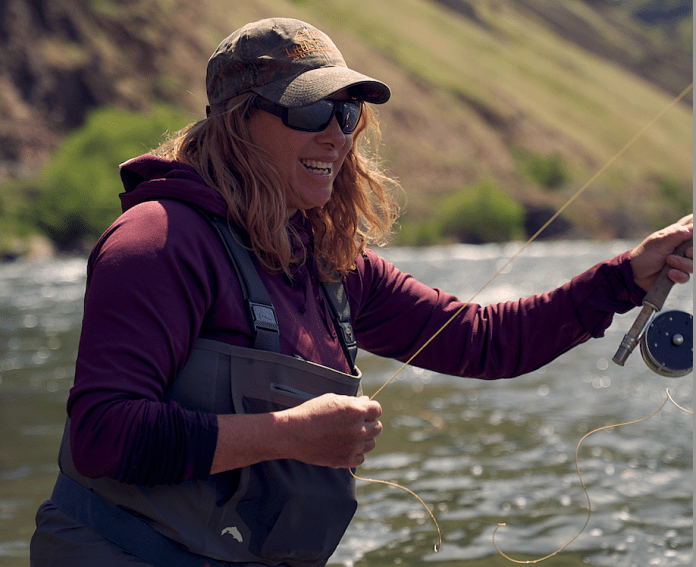
Mia owns and operates an outfitter with her husband Marty, is the mother to a 14-year-old, and is a passionate advocate for her local rivers. We were able to get out on the water with Mia and her 14-year-old daughter Tegan for a memorable day on the Deschutes River. Check out the interview below to learn more about Mia including her experience owning and operating an outfitter, getting her daughter on the water, and some of the advocacy work she does.

Read the full interview, here!

Faces of Fly Fishing: Kayla Lockhart

Kayla Lockhart (@kayla__lockhart) is a name familiar to most fly anglers who pay any ounce of attention to the fly fishing community on Instagram. Her energy is second to none, and she has spent her entire career in the space working to promote inclusiveness, inspire future conservationists and anglers, and bring an element of transparency and optimism to the sometimes dark world of Instagram and fly fishing social media. We’re lucky to call Kayla a good friend, and were ecstatic to sit down with her and add her name to our list of “Faces of Fly Fishing“.

Check out our interview with Kayla, here!

Boots on the Ground: Jessica Strickland

For this Boots on The Ground series, we head to Truckee, California to meet with Jessica Strickland and get involved with a gravel restoration project. Jessica is Trout Unlimited’s California Inland Trout Program Director. Follow along to learn more about Jessica and some of the projects she’s working on.

Read the full interview, here!

Women on the Water: Audrey Wilson

Audrey Wilson, the founder of At First Cast, is a Championship Caster, Leadership Performance Coach, and Fly Fishing Experience Creator. She intertwines her passions for leadership, and fly fishing by providing unparalleled fly fishing experiences, and champion-level programs. Audrey uses her creative vision and passion for Fly Fishing to challenge clients to break through barriers. Among her list of achievements, Audrey is a multiple tournament casting champion and is known as one of the best in the nation. She’s also a certified casting instructor with Fly Fishers International.

Read our full interview with Audrey, here!

Artist Spotlight: Abby Wynia

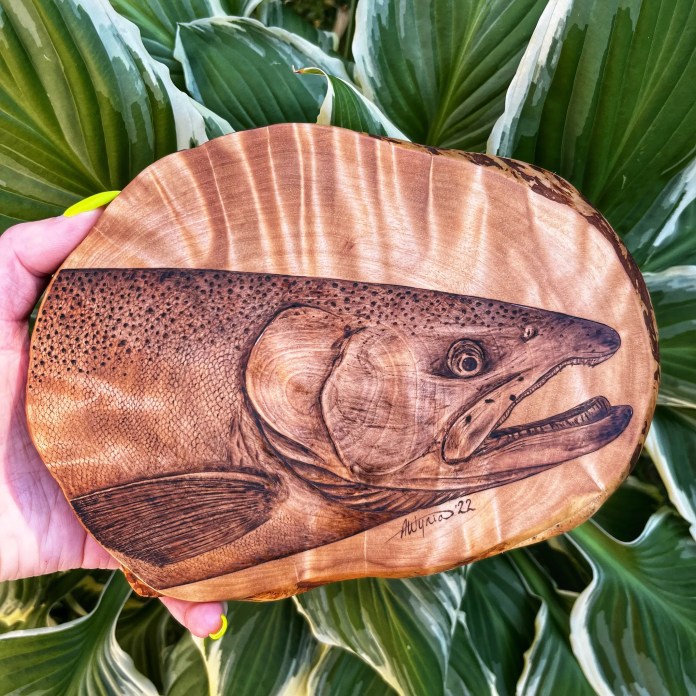
We sat down with artist Abby Wynia, an artist and fish ecologist from Ontario, Canada. Alongside her important scientific work in Canada’s fisheries, Abby creates incredible wood burnings and paintings of the fish species she interacts with. Read below to learn more about Abby’s background in the outdoors, their passion for fish and conservation, and her amazing artwork.

Read our full interview with the artist, here!

Artist Spotlight: Ashley Weber

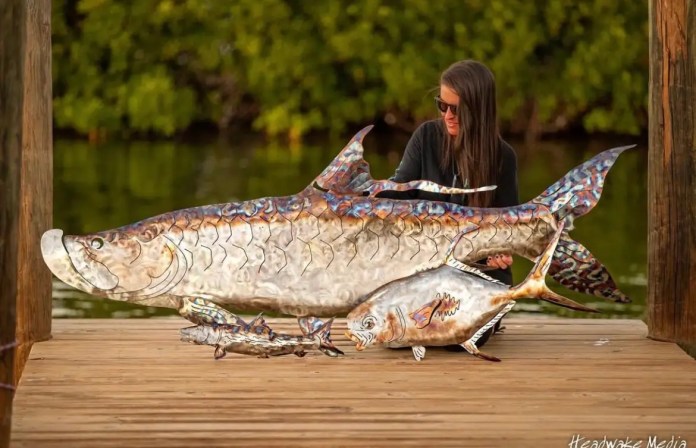
The Flylords met artist and Florida native Ashley Weber. Ashley’s love for marine species and fishing began as she fished the flats along Florida’s Space Coast as a kid. With her hard-earned degree from Ringling College of Art & Design and her talent, Ashley recreates Florida’s marine creatures in stainless steel. Read more about Ashley and her work below.

Read the full interview, here!

Behind the Lens: Phoenix

Phoenix isn’t about some far-off destination or some exotic species. It’s a story that hits a little closer to home. It’s about Katie Fielder Anderson and her love for her daughter Phoenix, her passion for fly fishing, and her willingness to take a leap of faith in order to pursue her passion and inspire her daughter to one day do the same. A mom named Katie Fiedler, a mom of a daughter named Phoenix, a mom whose passion is fly fishing, a mom whose story tells a leap of faith in order to inspire her 4-year-old with a shared passion: Fly Fishing.

Read the full interview with Katie, here!

Behind the Guides with Camille Egdorf McCormick
Meet Camille Egdorf McCormick, a fly fishing guide based currently in Bozeman, Montana.  Camille has mostly guided in Alaska but has hosted trips all over the world. The Flylords team was lucky enough to spend an evening on the water with Camille and her son Deke. It was amazing to watch her balance being an angler and a mother and hear about her fishing career. We are excited to add Camille to our ongoing blog series “Behind the Guides” presented by Costa Sunglasses.

Check out our interview with Camille, here!

Learn How To Fly Fish like The Heroine You Are

When I was learning to fly fish, I mistakenly believed I needed a boyfriend to teach me. I met a boy who owned a raft, knew the very best fishing holes, and was cute enough. He’d do the trick. But just as I was learning to cast and way past falling hopelessly in love, I broke him off so to speak.

I was left with a 6 wt rod, a handful of dry flies, and a burning desire to fish.  Heartbreak aside, I would learn to fly fish gosh-darn-it. I am no damsel in distress! Soon after the breakup, I went to the river only to find I had no idea how to rig up a rod, select a fly or read water– he had always done that for me.

Read the rest of Gloria’s journey here!

Fishing BC: Meadow Lake Tranquility with Paula Shearer

Fishing BC made yet another beautiful video featuring Paula Shearer lake fishing in Caribou Country. Paula stayed at the Meadow Lake Lodge and fished for rainbow trout in this pristine part of British Columbia. Caribou Country is located in the middle of BC and offers lake and river fishing amidst amazing scenery. To learn more about Paula’s trip and her unique loon encounter, check out our interview with her below.

Read the rest of the story, here!

Palometa Stoke!

Palometa or permit have always been high on my fish bucket list and this was my first saltwater fly fishing experience to try to bring that dream to fruition. To say the least I was nervous would be a major understatement. I was terrified.

I not only wanted to prove to myself that I could do this, but I also wanted to do this for all my fellow female anglers, to remind ourselves that ‘we can’.

Read more here!

How I Landed My First DIY Permit – Heather Harkavy

“We were driving down the beach on our way to go “surfing” when I screamed to my friend to slam on the brakes. A school of twenty or more permit had their backs out of the water in the surf feeding in the incoming tide…”

Read more…

Faces of Fly Fishing: Tatum Monod

“Flylords: How long have you been fly fishing for, who got you into the sport?
Tatum: I’ve been fishing since I was six years old. Some of the first memories I have are of my dad putting me in a big plastic container in his drift boat. We would fish all day rain or shine and I loved every minute of it. Long before I learned how to cast my dad would catch a fish and immediately pass me the rod to reel it in. I think that’s what really got me hooked (no pun intended) on fishing…”

Read more…

“Rachel is the head guide for The Hungry Trout up near Lake Placid, a Patagonia ambassador, and has also been a guide in the northeast for over 25 years. She is an incredible artist, angler, friend, and had us laughing the entire trip… Apologies for the language in the article, but Rachel doesn’t hold back, and it’s part of her charm…”

Read more…

“Catch up with Patagonia Ambassador, Kate Crump. Kate is a fly-fishing guide, mentor to fly women, and an all-around great individual. She is also pioneering some incredible things in the Northwest Region of the U.S…”

Read more…

Chasing Steel – Maddie Lewis

“Chasing winter steelhead has presented an entirely different set of challenges than any other fishing I have yet to experience. Once you get used to casting with what feels like a dumbbell on the end of your line, the fishing part itself is easy; cast, mend, repeat…”

Read more…

The Fish of a Thousand Casts – Natalie Ulicny

It wasn’t until a cold morning on an Olympic Peninsula river with my friend and guide, Andy Simon, that it really hit me. I had just hooked and lost another steelhead when he turned to me and said, “Natalie, when you feel that tug you have to stop trout setting and you have to set it like you mean it or they will spit the hook every time…”

Read more…

Path to Steel – Ruth Simms

“Before fly fishing came to me I had heard of the fish Steelhead trout but knew nothing about it except for old fishing tales my dad talked of. Being born and raised in Seattle my favorite fishing used to be the endless species inhabiting Elliot Bay. When I cast my first fly rod that all changed…”

Read more…

So here’s to all of the incredible women out there chasing fish and sharing their love of the sport of fly fishing with the world. Tight lines!

Fishing Tips: Knot Tying

Knot tying is one of the most important skills in becoming a successful angler. Check out this video from Troutbitten for all the knot tying skills you need to know.

Bill Parks, Founder of Northwest River Supplies (NRS) Passes Away

0

The rafting and boating world lost a legend this week with the passing of Bill Parks, the founder of Northwest River Supplies, which you’re probably more familiar with as “NRS”. Bill founded the company in 1972 in Moscow, Idaho working out of his garage in the earliest days of the company. In 2014, Bill took the radical step to set the company up as 100% employee-owned, and those very employees are the ones who will carry on Bill’s legacy serving the outdoor community.

Sadly, Bill passed away from natural causes on March 5th, surrounded by family.

Our thoughts are with the Parks’ and NRS families.

You can read more about Bill’s incredible impact on the outdoor industry in this press release from NRS.

Flavor on the Fly: Yellow Perch Chowder

0

Disclosure: The article may contain affiliate links that may result in a commission at no additional cost to the reader.

Whether you’re on a Chesapeake tributary or a lake out west, chances are you’ve encountered the infamous yellow perch. Wide-spread, delicious, and usually willing to eat a fly or jig, yellows are one of the most sought after and accessible species around. I’d argue most perch fillets end up getting battered, then dropped into hot oil. It’s a tried-and-true method with recipes aplenty, but we’re dropping them into something a little different this go-around. So with that said, let’s trade oil for cream and sit down to a bone-warming bowl of perch chowder.

Habitat & Habits

Yellow perch (Perca flavescens) call home to a wide array of environments. Be it lakes, reservoirs, or coastal rivers, streams, and low salinity estuaries, yellow perch have a way of fitting in wherever they go. Often found in schools, they tend to frequent shoreline areas where submerged aquatic vegetation can provide food (i.e. insect larvae, crustaceans, and small fishes), cover, and spawning habitat. With vibrant hues of bright yellow, nearly-fluorescent orange, and dusky olive green, the mere sight of a yellow perch is sure to brighten up any drab, winter backdrop.

yellow perch, fish, fly fishing
Yellow perch (Perca flavescens) Photo Credit: Kirk Marks (@kirkymarks)

In Chesapeake Country, spawning runs usually take place during February and March when water temperatures hover between 45-55⁰F. Once those conditions are met, freshwater tributaries receive a push of migrating fish gearing up for the spawn. This is when most yellow perch are harvested, both commercially and recreationally. The largest commercial harvest of yellow perch comes from fyke nets, while pound nets, gillnets, and haul seines are generally less popular. The spring spawning runs also present fly anglers with their best chance to land a few neds (‘ned’ is a regional term used to describe large yellow perch) for themselves.

How to Catch Yellow Perch

I know a Clouser minnow will catch damn-near anything, but I tell you what, they sure catch the hell out of yellow perch. My go-to rig consists of an intermediate line, a 3-4ft section of 15-20lb fluorocarbon leader, and a trusty Clouser. You can get away with lighter leader, but in my opinion, there’s no reason to. Yellow perch aren’t leader shy and they live in the same waters as bigger fish, such as chained pickerel and bass. I like to be ready for whatever hand I’m dealt.

chained pickerel, fish, fly fishing, clouser minnow
Chained pickerel by-catch. Photo Credit: Kirk Marks (@kirkymarks)

Processing Yellow Perch

Another nice thing about yellow perch is they’re easy to clean. For this recipe, fillet them just like any other fish. Make an incision behind the gill plate, follow the spine down to the tail, cut the meat away from the center of the fish, and then remove the skin from the fillets. If you notice some small white or red worms in the fillets, don’t be alarmed. In some areas, including the rivers where I harvest my yellow perch, this is fairly common. Although unsightly, they are not dangerous to humans as long as the flesh is cooked thoroughly. If you see some, just use the tip of your fillet knife to remove them from the fillet. Next up, rinse the fillets in cold water and pat them dry with paper towels. You can freeze the fillets for later use or go straight into the recipe from here. If freezing, dry the fillets as much as possible, then vacuum seal.

Until next time, enjoy and good luck out there!

fish chowder, perch, soup, yellow perch
The final product – yellow perch chowder. Photo Credit: Kirk Marks (@kirkymarks)

Yellow Perch Chowder Recipe

Serves: 6-8

Ingredients: 

  • 10 ounces hickory smoked bacon, sliced into matchsticks
  • 4 cups yellow onion, chopped
  • 1 cup celery, chopped
  • 4 cloves garlic, minced
  • 5 cups Yukon Gold potatoes, peeled and medium diced
  • 6 cups fish stock (learn how to make fish stock HERE)
  • 1 bay leaf
  • 5 teaspoon fresh marjoram
  • 2 tablespoon Old Bay Seasoning
  • 4 tablespoons butter (half stick)
  • 2 cups half-and-half
  • 1-1.5 pounds skinless yellow perch fillets, cut in half
  • Freshly cracked black pepper, to taste
  • Salt, to taste
  • Fresh parsley, chopped

Method: 

  1. Brown bacon bits in a stockpot over medium-low heat. Remove bacon bits and place on a paper towel lined plate. Keep bacon grease in pot.
  2. Add onions and celery to the pot. Cook for 8 minutes.
  3. Create an opening in the center of the pot, then add garlic. Cook for 2 minutes.
  4. Add potatoes, fish stock, bay leaf, marjoram, Old Bay, and half of the cooked bacon to the pot. Bring to a boil, reduce to a simmer, and cook until potatoes are nearly fork-tender (about 15-20 minutes).
  5. Add butter and half-and-half to the pot, stir while adding. Bring back up to a simmer.
  6. Add black pepper and salt to taste.
  7. Add yellow perch. Simmer until fillets are opaque and flake easily (about 4-5 minutes).
  8. Serve with freshly chopped parsley, the remaining bacon bits, and a toasted baguette.
  9. Pair with your favorite stout, brown ale, rauchbier, saison, or white wine.
yellow perch, harvest, fish, bright colors
A colorful harvest. Photo Credit: Kirk Marks (@kirkymarks)

Article by Flylords Food Editor Kirk Marks, an angler, photographer, and culinary aficionado based in Kent Island, Maryland. Give him a follow at @kirkymarks. 

Flavor on the Fly: The Ultimate Fish Stock

Flavor on the Fly: Beer Battered Fish & Chips

Flavor on the Fly: Psari Plaki (Greek-Style Snakehead)

Former University of Washington Football Legend Found Dead on Sol Duc River

0

A body identified as Joe Jarzynka was found on the bank of the Sol Duc River, after an apparent accident while fishing from a single-man raft on a weekend fishing trip. Joe was known “as the guy who wouldn’t call for a fair catch on a punt,” per FanNation’s Dan Raley. Jarzynka began his UW career as a walk-on and ended his college career as one of the most popular Huskies players of the 1990s. A look at his Instagram would show any viewer that Joe was an avid angler, even dabbling in fly tying for his own fly-fishing adventures.

Joe’s body was found after local police were notified of the body wearing a tan fishing vest on the riverbank.

According to the Peninsula Daily News,

“Deputies were dispatched about 9:57 a.m. The reporting party said Jarzynka was obviously deceased and was wearing a tan fishing vest.

Deputies responded with medics, and a swift water rescue team was deployed. Later on, they located a single-person pontoon boat stuck in a log jam about a mile from where Jarzynka was located.

Jarzynka reportedly went to Forks to go fishing and brought with him a single-person pontoon boat, according to the Sheriff’s Office, which contacted his family.”

Our thoughts are with the Jarzynka family and the University of Washington community, and we hope that this unfortunate loss reminds everyone to wear proper PFDs when adventuring on the water.

You can read more about the incident, in this article from the Seattle Times.

How to Tie: Bomb-Drop Midge Larva

0

Disclosure: The article may contain affiliate links that may result in a commission at no additional cost to the reader.

In this week’s “How to Tie” video feature, Curtis with Fly Fish Food ties a simple, yet realistic, midge pattern that every angler should have in their fly box this winter, the Bomb-Drop Midge Larva.

Learn About This Fly:

Difficulty: Easy

It may be easier to sit inside during the winter months and tie flies, but getting out for some fresh air will do you wonders. Although winter fishing is often slower and more hostile of an environment, there is something special about having the water to yourself and catching fish with snow on the ground. Dress warm and make sure you know the water you are fishing, as one slip can be very dangerous. Having the right fly selection is also crucial, and the Bomb-Drop Midge Larva is a realistic midge pattern that should be in your winter fly box.

In terms of simplicity, this is as basic as it gets. The body consists of thread, rib, and resin, which allows for the opportunity of consistency for tyers of all levels. A slim profile also gives the Bomb-Drop Midge Larva its name, as it sinks like a rock. Selecting different colors to match your specific water’s midges is recommended for technical fisheries, but this pattern will get the job done regardless.

Fish this pattern under an indicator, European nymphing rig, or in a dry dropper setup. Simplicity in trout fishing often produces, and this pattern is no exception. This is a fly that can be fished year round and in a wide variety of situations. Tie a couple different batches of the Bomb-Drop Midge Larva and you might just never take this pattern off your rig!

Ingredients:

Now you know how to tie the Bomb-Drop Midge Larva!

Video and ingredients courtesy of Fly Fish Food.

Gear Review: YETI LoadOut GoBox 15 and 60 Gear Case

Since its release way back when, the Yeti Loadout GoBox has been a staple item within most angler’s Yeti gear collection. With its customizable storage capabilities and super tough, waterproof design, the GoBox acted as a fantastic boat box, gear storage unit, or just overall “keep important sh*t safe” container for pretty much any situation. That’s why we were thrilled to hear about the Yeti’s decision to release 2 new additions to the GoBox family: the Yeti LoadOut GoBox 15, and the Yeti LoadOut GoBox 60. Naturally, we got our hands on the new models as soon as we could, and have been putting them against the elements since.

yeti go boxes stacked

In this double-header Gear Review, we’ll be highlighting our experiences with the new Yeti LoadOut GoBox 15, as well as the Yeti LoadOut GoBox 60, and diving into what’s new, and what we think so far:

Initial Impressions: 

To provide some background: Most of the Flylords team’s outdoor pursuits revolve around a Yeti LoadOut GoBox in some way or another. Whether it’s hunting, skiing, or fishing, there’s most likely a GoBox stuffed into the bed or back seat of a truck, packed to the brim with all of our essentials. But of course, the pursuit where the GoBox plays the strongest role in all of our lives is fishing.

Gobox 30
The New Yeti LoadOut GoBox 30 at work.

Tippet, leader, flies cups, nippers, pliers, bobbers (or strike indicators for those still on their high horse about the subject), floatant, split shot, lighters, sunglass wipes, trout whistles, regular whistles, fishing licenses, batteries, and more, make up the contents of the tray in the bright orange GoBox that has morphed into the team’s dedicated boat box – and that’s only the top tray…

Underneath the tray, you’ll find anything from med-kits to boat tools to toilet paper. Then in the adjacent main compartment, lives an assortment of fly-boxes ranging from cases of triple articulated streamers and other obnoxious “meat monstrosities”, down to magnetically sealed boxes of rows and rows of carefully crafted dry flies and size .24 midge patterns. Additionally, strapped to the lid of the GoBox, is a zipper-sealed, mesh, triple-compartment, which is usually tasked with the job of holding phones, wallets, and keys – aka: the stuff you can’t afford to leave to chance.

showcasing the 2023 yeti top pocket

This GoBox 30 spends pretty much the entirety of its Spring, Summer, and Fall bouncing around the floor of our raft (or sometimes tied to the frame), suffering a torrent of whatever elements that particular season decides to bring. The life of a GoBox is a tough one, but we’re thankful it’s up to the challenge.

spring fish with hook in its mouth

This all being said, we considered our box pretty much perfect – and we were skeptical upon initially unboxing the 2 new sizes. We were worried it might be a bit of a reverse “Goldilocks” scenario. Except, instead of beds, we were testing boxes. And in our scenario; we’d figured we already found the one that was “just right”.

Luckily, we were wrong. Oh boy, were we wrong.

Field Testing: The Yeti LoadOut GoBox 15

Upon first impression, the new Yeti Loadout GoBox 15 seemed pretty similar to the ammo cans in the basement that my ‘ol man would store all of his fishing gear in. However, upon actually getting familiar with the box, there were a few differences that really started to stand out.

walking with a gobox

The key factor was the sturdiness of the container, itself. In comparison to something you might pick up from an army surplus store, instead of thin plastic or heavy metal, the GoBox 15 was built with the same iconic “defender” material that most Yeti receptacles, such as their coolers, are constructed of. (You know…. that stuff that survives bear attacks, and the tidal barrage of Alaska’s coastline).

Unfortunately, the Yeti LoadOut Gobox 15 doesn’t feature the mesh pocket fastened to the bottom of the lid like the GoBox 30 does, however, it does still have the gear tray. What’s absolutely fantastic about the tray, is that it’s actually the exact same size as the GoBox 30 (and 60) one. This not only means you still have the same amount of tray space as the other GoBox models, but, more importantly: you can actually swap out trays between any other GoBoxes you may already own in accordance with different seasons and conditions. This is probably our favorite feature, as it makes gear transfer from a compact case to the larger GoBoxes pretty seamless.

GoBox Gear Tray

Another improvement that can be found in all the new GoBox models (including the updated 30), is the new Lockdown Latch design. As any Gen 1 GoBox user can attest to, it’s fun and all to slam your fist into your latch system to lock it down, especially to show how big and tough you are to your buddies, but the need to apply such force to seal the GoBox eventually becomes more of a pain that the pageantry is worth. The new Yeti LoadOut GoBox 15’s Lockdown Latch design allows users to lock their box shut with nothing more than a gentle application of pressure. This is super important for quick accessibility, especially when you’re in the captain’s seat, looking down at your next set of rapids.

The next key feature to discuss is the portability factor. Unlike the original GoBox, the Yeti LoadOut GoBox 15 is not only a 3rd of the size but also possesses a carrying handle that can be pushed down to lay flush with the top of the lid. Most of us have experienced the awkward traipse that comes with toting around a fully loaded GoBox 30, but with the GoBox 15, you can carry around all your essentials in one hand, leaving the other one open to carry your gas station burrito.

Additionally, the smaller size makes the Yeti LoadOut GoBox 15 super wieldy within the boat. Something our team has recently discovered is that the box fits PERFECTLY within the seat bars of our NRS Slipstream’s frame, and acts as a super accessible “gear well” for the rower (aka: the acting guide). In terms of convenience, we’d rate that feature an 11/10.

accessing the gobox 15

The last element to touch on would be the durability, and more importantly, the waterproofness of the GoBox 15. There isn’t all too much to say here, besides it completely holds up to the standard of both of its siblings (the 30 and the 60). In summation, once the box is closed… it’s closed. Rain, snow, waves, and (occasionally) beer didn’t seem to stand a chance when efforts were made to infiltrate the box, keeping all of our essential gear in great working order.

YETI LOADOUT GOBOX 15 FINAL REVIEW: 

Construction: 

5 star rating

WaterProofness: 

5 star rating

Portability: 

4 star rating

Storage capacity: 

3 stars

Modularity: 

3 stars

Price: 

4 star rating

Look: 

4 star rating

Field Testing: The Yeti LoadOut GoBox 60

When it comes to first impressions, the only thing that really comes to mind when looking at the new Yeti LoadOut GoBox 60 is: “Why didn’t they think of this sooner?”. If the Yeti LoadOut GoBox 15 is the minimalist’s dream, consider the 60 a prepper’s fantasy.

using the yeti gobox 60

Obviously, what stands out most about the GoBox 60 is its size. Oftentimes, our team has considered bringing a second GoBox onto the boat, just to store that one additional item – be it a raincoat or a few more fly boxes. Now, with the GoBox 60, this is a thought of the past.

The biggest benefit of the GoBox 60 is the modularity aspect. Because of it’s size, this box can really be customized to fit any angler’s need whatsoever. The 60 comes with 2 trays, with the option to insert a 3rd, as well as 2 dividers, organizing the belly of the box into 3 separate compartments. However, these dividers are easily removable and substitutable, allowing the user to optimize their space however they want. Whether you want a massive, single compartment to fit blankets and other hefty items, or want to utilize one large compartment to spread raincoats and outerwear in and keep the other smaller compartment open for emergency supplies or fishing gear, the choice is all yours.

yeti gobox 60 in the boat

The best application we found for this customizable storage space was the latter of the two mentioned above, except, we used the larger compartment as a meat locker, storing multiple streamer boxes, as well as some other smaller insect-shaped offerings (just in case). Then, the leftover single compartment was used for essentials like tools, snacks, a med kit, gloves, as well as of course, an obligatory role of TP.

In terms of the other features built into the GoBox 60, the underlined mesh zipper pockets make their debut, except as you could imagine, much larger than the 30. As we mentioned before, these are fantastic for storing phones, wallets, or other delicate items, but due to the increased width, can also accommodate items such as GPS devices, solar chargers, and other larger tech that needs to remain dry.

yeti GoBox 60

Additionally, like the new Yeti LoadOut GoBox 15 and 30, the GoBox 60 possesses the new lockdown latch. It’s a subtle difference at first, but is a total game changer, especially when the box can be sealed with ease from a minor push from, in our case, the rower’s foot. This minute detail allows for rapid adjustments in a smaller increment of time, keeping the anglers fishing longer, and the rower’s life easier.

netting a fish

When it comes to wieldiness, the Yeti LoadOut GoBox 60 is certainly the least portable out of the 3 sizes. However, this is more so to speak on the ease of transporting the other 2 sizes, and less so on the build of the 60. There was clearly careful consideration put into crafting the GoBox 60, and a neat feature that’s not included on the 30, is that Yeti installed carrying handles onto the side of the box. These handles closely resemble the ones you’d find on an updated Yeti Tundra Cooler, but due to the lower profile of the box itself, there’s a little less “hand-crunch” that occurs than when moving around a Tundra cooler (we’ve all experienced it).

walkinh with a gobox 60
Walking with a Yeti LoadOut GoBox 60 vs. a Yeti Tundra 65 Cooler

Waterproofness and durability are similar story to the other Yeti LoadOut GoBox models. We recommend if you’re going to be keeping the LoadOut GoBox 60, as well as the 30 or the 15, within the boat, tie it down. Whether it’s to the frame or the gunwales, synching down your box is an amazing way to avoid watching helplessly as your gear floats (emphasis on “floats”) down the river after running some big water. Luckily, these boxes make this very easy to do with the built-in AnchorPoint Tie-Down Slots, located on each side of the GoBoxes. Of course, whether or not you decided to do this is entirely up to you, but we feel it’s a better experience for all when running a tight ship.

YETI LOADOUT GOBOX 60 FINAL REVIEW: 

Construction: 

5 star rating

WaterProofness: 

5 star rating

Portability: 

Storage capacity: 

4 star rating

Modularity: 

4 star rating

Price: 

3 stars

Look: 

4 star rating

In Conclusion: 

In summation: Yes, possessing a Yeti LoadOut GoBox is a luxury, not a need. For hundreds of years, American Anglers have gotten along just fine without them. But then again, they did the same without $1k fly rods and fancy boats either.

after catching a fish

That being said, we feel that if you’re looking for some dependable accessories for your fishing rig: be it your boat, raft, or ride, the GoBox should be one of the first items you look to procure. Between the build quality and the ability to optimize how you use the GoBox to such a fine-tuned level, they’re something we’d definitely deem a game changer.


Click HERE to learn more about the NEW Yeti LoadOut GoBox 15

yeti gobox 30

Click HERE to learn more about the NEW Yeti LoadOut GoBox 30 

yeti gobox 60Click HERE to learn more about the NEW Yeti LoadOut GoBox 60


This article was published as part of a paid partnership campaign between Flylords LLC and Northwestern Yeti Coolers, LLC. All opinions presented in this article are genuine and solely reflect the opinions of Flylords LLC. 

YETI® Releases YONDER™, Their Lightest Bottle to Date

YETI Launches – “Year in Preview”