Home Blog Page 201

5 Casting Techniques Every Angler Should Know

The sport of fly fishing is truly and art form where the rod acts as the extension of the arm. One can argue that presentation is the most important aspect of this sport and that all begins with the cast. You’re probably thinking “how hard is it to cast a fly rod?” While the initial back cast is easy to master, its not always the best option for all situations. Therefore it is crucial to be able to present your flies under any circumstance you are faced with. With all things considered, here are 5 casting techniques all anglers should know or learn before your next outing.

The Roll Cast

The Roll Cast is a tried and true casting style and not to mention, one of the more simple approaches. Often times you will find yourself deep in the tree canopy with little to no room for casting. Stress no more! The Roll Cast is designed to improve your ability to cast in tight or close quarters. Having your flies in the water more often than not is key for success, and this cast will give you that security.

How to Execute the Roll Cast:

  1. To begin the Roll Cast, be sure to have your line on the water and your rod tip behind you.
  2. Your hand position should be across to your ear and shoulder, and your rod tip should be turned outward.
  3. Make sure your line is pointing in the direction you want to make your cast.
  4. When loading your cast, make a D-loop with your fly line, pause across from your ear, then flick your hand and thumb forward.
  5. Keep your rod tip at eye level once the cast is executed.

Simple yet highly effective, the Roll Cast has been around for decades and should be in every anglers’ bag of tricks!

Bow and Arrow Cast

Brought to light by the legend Joe Humpfreys, the Bow and Arrow cast turns the impossible into the possible. This technical approach will give you the opportunity to reach pieces of rivers and streams the normal back cast wouldn’t allow. Out of all of the casts on this list, this happens to be a more difficult one to master. This is due to the intricacy and precision that it takes to place your flies where you what them. There are multiple techniques for the bow and arrow cast. One of which would be to hold directly onto your fly. Another would be the “Joe” method, coiling or bunching the fly line into your hand which enables the ability to reach much further in the water column.

How to Execute the Bow and Arrow Cast:

  1. Grab your fly line slightly above the cork grip.
  2. Point your rod tip at your target and pull the line back to your ear creating a nice bend in the rod.
  3. Once you are lined up with your target and have a nice bend in the line, release your grip and your line will jump out towards the target.

While technical, this cast can save you in tight quarter situations and should definitely be added to you arsenal!

Double Haul Cast

Are you a fan of chucking streamers in fresh or salt water? If so, the Double Haul cast is the cast for you! Often times, larger flies can become more difficult when using the typical back cast and this is where the double haul cast can be implemented. Creating that extra tension on your fly line allows you to control your flies as well as shoot them to reach longer distances. The double haul cast is commonly used amoungst saltwater anglers who need to increase the reach of their flies.

How to Execute the Double Haul Cast:

  1. Start by performing your routine fly cast flicking your wrist back and forth.
  2. When flicking your wrist back into your back cast, simply tug downward on your slack line. This will tighten your line and give your rod more bend.
  3. Perform the same motion throughout your forward cast. Flick your wrist forward and simultaneously tug downward on your slack fly line to tighten you line and leader.
  4. Repeat this process until your cast is at the desired distance.

Although the double haul cast can be tricky to learn initially, once mastered you will find yourself in control of those big ole’ streamers and bait fish patterns.

Steeple Cast

Often when fishing tight or small creeks and rivers, the typical back cast is a death wish and this is where the Steeple Cast can come in handy. The steeple cast can be coined as more of a vertical rather than horizontal back cast. The key to the steeple cast is to create a very high trajectory on your back cast and then change 90 degrees to send your fly out to your target.

How to Execute the Steeple Cast:

  1. Start your back cast with a high/steep trajectory. (Almost a 90 degree angle)
  2. Stop your rod tip abruptly around eye level to achieve an effective presentation. (Stopping your rod tip abruptly will lead to delicate presentations)
  3. Lower your rod tip down to allow your fly line to fill out the cast.
  4. Be sure to avoid powering your line or slapping it on the water because this will likely spook weary fish.

While this may not be as effective as the roll cast, it is a great cast to add to your arsenal when pesky obstacles are in the way.

Tuck Cast

The Tuck Cast is a cast common amongst nymph fishermen allowing your nymphs to sink effectively and at rapid rates. By lifting your rod tip at the end of your forward cast, your flies will kick downward causing them to sink to the bottom quickly. Everyone knows the faster your nymphs reach the bottom, the better hook up ratio you will have. The goal with this cast is to make sure your nymphs are hitting the water before your fly line. Often times this cast is popular within the euro nymphing community where weighted flies are predominately used.

How to Execute the Tuck Cast:

  1. Start by making your basic cast up stream.
  2. As you cast up stream, apply a slight lift to the rod tip at the end of your forward cast. (This will allow nymphs to sink faster)
  3. Make sure your nymphs are hitting the water before your fly line.
  4. Avoid an abrupt lift to the rod tip but rather a delicate lift to improve the presentation of your nymphs.

Enjoy fishing with nymphs but have trouble getting your flies down? The tuck cast is the cast for you and will likely yield better results!

The moral of the story is versatility. We are all students of this craft learning each and every time we hit the water. While some casts may be easier than others, having the ability to perform each of these when needed can become very valuable. Keep in mind that these instructions are just the basics, we all have quirks and modifications to our casts that work for us. That is the beauty of this sport! Now that you are prepared with 5 essential casting methods, grab your rod and hit the water!

Pig Farm Ink x F3T: Online Iron Fly

To kick off the Fly Fishing Film Tour going virtual on August 27th, they teamed up with Pig Farm Ink to throw a new Online Iron Fly Challenge.  Similar to the previous challenge in April, there will be a theme.

The theme of this challenge will be GO OUTSIDE.  After you watch the Virtual 2020 F3T go outside and do something fun.  Go fly fishing, hiking, biking, or take their kids outside for a walk around the neighborhood or explore the backyard.  While you’re out having fun, gather materials for 2 flies. 1 fly made of all-natural material (grass, sticks, fur, whatever) and the other from any trash you pick up.

Just like all Pig Farm Ink challenges, it is OPEN TO ALL experience levels.  Even if you have never tied a fly, they want you to participate.  For real, your experience level doesn’t mean JACK.  Jay Johnson and a few other Pig Farmers will be judging all of the flies that are submitted via hashtag #OnlineIronFly on Instagram, and to the Pig Farm Ink Facebook page.

The sponsors for this challenge are the Fly Fishing Film Tour, Costa, Simms, Yeti, and Trout Unlimited.  The due date for all submissions is at Midnight PST on 09/07/2020.  For more details check out the poster below.

Pig Farm Ink x Fly Fishing Film Tour: Online Iron Fly Poster

Poster art by: Dan Nelson

A Great Day for Bristol Bay

Yesterday was a great day for Bristol Bay as the US Army Corp of Engineers announced that the Pebble Mine would not be given a permit under the Clean Water Act. The action comes after a few exciting weeks as celebrities and politicians alike voiced their opposition to the mine’s construction. The mine’s proposal is being sent back to the drawing board, and unless Pebble Mine’s planning team can address the mountain of issues in their Environmental Impact Study, the project is on hold.


View this post on Instagram


A post shared by Save Bristol Bay (@savebristolbay) on

From Save Bristol Bay:

“Today, the Army Corps of Engineers said it found the proposed Pebble mine would cause significant degradation to the Bristol Bay watershed and would not receive a permit under the Clean Water Act.

This is an action that supports everything we’ve been saying: Bristol Bay is too special of a place for a mine that will destroy our hunting and fishing heritage, precious wetlands and wildlife, and robust fish-based American economies. Today’s announcement means that if Pebble wants to move forward, they will need to submit a new project plan and new mitigation plan.

Today, we celebrate. Tomorrow, we come back to ensure that Pebble is gone for good and that Bristol Bay has long term protections for generations to come.”

Save Bristol Bay wasn’t the only organization to voice their elation about the good news, Orvis, Trout Unlimited and other brands in the industry lauded the move.

Check out our coverage of the Bristol Bay saga below:

Breaking News: Trump Administration Expected to, finally, #SayNoToPebbleMine

Pebble Mine Final Environmental Impact Statement: Faulted, Rushed, Still Bad for Salmon

Donald Trump Jr. Voices Opposition of Pebble Mine

Vice President Biden on Bristol Bay: “It is no place for a mine”

Over 250 Outdoor Industry Businesses Sign Letter to President Trump Opposing Pebble Mine

Why We Need To Save Bristol Bay

AFFTA Names Aug. 24 “A Day for Bristol Bay”

How to Tie: The Iron Lotus

0

In this week’s How to Tie Video, Lance Egan from Fly Fish Food is here to show us how to tie the Iron Lotus.

Learn About This Fly:

Difficulty: Novice

“The Iron Lotus. A fly the likes of which the world had never seen before. A fly so revolutionary, so dangerous that it would have catapulted any trout that was stuck with it straight to the top (of the water column). And like many revolutionary ideas, it just scared the sh*t out of the establishment.” – Craig T. Nelson (sort of…)

The iron lotus is a weighted fly that is most commonly used for the European style of nymphing referred to as “Euro-nymphing”, or “Tightlining”. This fly is tied to loosely imitate an attractor mixed with a Baetis nymph swimming in the current. Much like any other frenchie/ surveyor style of fly that is used for tightlining, this flies effectiveness comes from its simplicity and its weight. By utilizing a tungsten bead head, along with a generous helping of lead wrap, this fly is able to plunge down to a fish’s feeding zone within seconds. This is critical when fishing heavy flows, or small pockets of water where you only have about 6 seconds to drift the hole.

When tying this fly, it’s important to account for every part of its construction before even making your first wrap. Account for the size of the lead wrap, and how fat that will drive the thorax down the hook. Also, make sure to focus on creating a smooth taper up the body, otherwise, the threaded ripping will be almost impossible to see. While this isn’t essential to catching fish, it’s always nice to try to hold your flies to a certain standard.

Ingredients:

  • Hook: Hanak H 400 BL Jig Hook – 14
  • Thread: UTC Ultrathread 70 Denier – Olive
  • Bead: Hareline Slotted Tungsten Beads – Gold – 7/64″ (2.8mm)
  • Tail: Whiting Coq De Leon Tailing Packs – Medium Pardo
  • Weight: Lead Wire Spool – .01
  • Abdomen: UTC Ultrathread 70 Denier – Olive
  • Ribbing: 6/0 UNI-Thread Waxed – White
  • Hot Spot: UTC Ultrathread 70 Denier – Red
  • Thorax: Arizona Synthetic Dubbing – Peacock
  • Wing Case: UTC Flashback Tinsel – Black – Large
  • Coating: Loon UV Clear Fly Finish – Flow

Now you know how to tie the Iron Lotus!

Video and ingredients courtesy of Fly Fish Food, and Lance Egan

How to Tie: The Parachute Poly Emerger

How to Tie: The Rainbow Warrior

How to Tie: The Tungsten Surveyor

Costa Behind the Guides: Brandon Cyr

Meet Brandon Cyr, a saltwater fly fishing guide based in the Florida Keys. Born and raised on the saltwater, he is a fourth-generation Florida Key’s native or “conch”. We are excited to add Brandon to our ongoing blog series “Behind the Guides” presented by Costa Sunglasses.
Flylords: Do you remember the first time you picked up a fly rod? What about the first fish you caught on the fly?
Brandon: I can’t remember exactly when I picked up a fly rod, somewhere near the age of 6 or 7. I started with trying to catch baby lemon sharks on the fly, wading with my father at the sandbars. This led me to catching my first bonefish on the fly at 7. I would say that was the moment that ignited my passion for fly fishing, I can remember every detail of that day 20 years later.

Flylords: How old were you when you realized you wanted to be a full-time guide?

Brandon: As crazy as this sounds, I’ve known my entire life. My father was my idol when I was growing up, he would bring me on every charter he could throughout my youth. He gave me childhood experiences I’ll never forget, from grabbing tarpon to leadering billfish. The one memory that stands out above all was when I was 4 years old. I can remember sitting in his lap driving his offshore boat and he was teaching me how to read the compass. Later that day we ended up releasing a white marlin, and I’ll never forget the excitement of his customers and the looks of pure joy on their faces. He looked at me and said, “This is why we do what we do”.  From then on I knew that’s what I wanted, to be able to do something I love and share it with people in a way that brought them joy.

Flylords: How long have you been living in the Keys for?

Brandon: I was born and raised here in Key West and am a 4th generation conch (born in Key West).

Flylords: Largest tarpon a client has landed on the fly?

Brandon: The largest tarpon I’ve ever guided anyone to on fly I estimated around 180lbs. It could have been smaller or bigger but hard to know considering we didn’t take length and girth measurements. I think a lot of people overestimate tarpon weights significantly. Was pretty wild considering we landed the fish relatively quick about 15-20 minute fight. She jumped quite a few times which is unusual for a fish that size, assuming the jumping burned up so much energy we were able to release her quickly.

Flylords: Favorite and least favorite part of living there?

Brandon: My favorite part of living in the Keys is to be so connected to the ocean. I feel like every decision I make every day is in some way related to the ocean and is always calling me back to it.
The only negative I could say about living in the Keys is the cost of living. It’s pretty outrageous and most people down here barely make it by. But with that being said I may never get rich doing what we do, but I wake up excited every day to go to work. How many people get to say that?

Flylords: One piece of advice you can tell someone before booking a day with you?

Brandon: If I had to give one piece of advice to someone before coming to fish the Keys, it would be to practice your casting. I would say the absolute number one reason a customer may not have success is because of casting ability. A double haul cast is essential. A guide can only do so much, they can put you in front of tons of fish all day long but if the fly doesn’t get there, you won’t have success. The Keys is like the Olympics for fly fishing. We have some of the harshest conditions paired with some of the most educated fish on the planet, but that makes the reward mean that much more!

Flylords: Favorite pair of Costas for a day on the water?

Brandon: My go-to pair of Costa’s would be the Sunrise Silver 580 Glass Lens on the Fantail Frames. The Sunrise Silver Lens is perfect for sight casting in low light or even at the peak of the day, allowing the colors of the flats to really “pop” so that even the most camouflaged bonefish will stand out. I like the lightweight of the fantails but mainly the shape of the frame really fits close to face, not allowing any light in the side of the glasses and comprising your vision.

Flylords: Most rewarding thing to happen on a guided trip?

Brandon: By far the most rewarding thing on a trip is watching someone catch their target species. With fly fishing, there is so much work and preparation that goes into every fish caught. It’s truly amazing to watch someone’s face light up and live in that moment with them.
But specifically, the most rewarding thing I’ve ever done as a guide was put my father on his first permit on fly. The man has spent his entire life guiding people to their dream fish and always spent all of his free time taking my brother and me out, that it was amazing to finally be able to return the favor and share that moment with him.

Flylords: The most embarrassing thing to happen on a guided trip?

Brandon: I would say the most embarrassing moment I’ve ever had as a guide was driving all the way to the Marquesas 22 miles West of Key West to get there surrounded by soft rolling tarpon…only to realize I had left my fly box in the truck..OUCH. But, thankfully I was able to run into my brother who is also a guide and he saved the day by giving us some flies.

Flylords: Any advice for aspiring Florida Keys guides?

Brandon: Well, there’s a long list..mainly it is to respect the fishery above all. Learn the water for a few years, and especially the etiquette before even considering taking out a charter. One thing that doesn’t fly in the Keys is the guides who don’t respect the etiquette of the area they’re in.

Flylords: Bucket List Trip?

Brandon: My bucket list trip would probably be the Seychelles! I love to wade flats which is what the Seychelles is all about and it has such a large diversity of species to target.

Flylords: Biggest role model down in the keys?

Brandon:  I couldn’t say that have one role model above all else. I think the Keys has the most hard-working and diversely talented guides in the world. I’m honestly honored to be among so many fellow guides. Their passion and work ethic stand out above most people I’ve ever met in my life. I’m super thankful not to have one mentor but many and that’s what the Keys are all about.
Thank you to Brandon Cyr for the interview, if you want to see more of Brandon be sure to check him out at @brandoncyrkw. Also, thank you to Costa Sunglasses for making this series possible.
Photos were taken by Ian Wilson @ianwilsonn for Flylords.

Costa Behind the Guides: Tom Enderlin

Costa Behind the Guides: Alvin Dedeaux

MeatEater Launches “Bent” Fishing Podcast

1

We’ve been big fans of just about everything the MeatEater crew puts together, especially their podcasts. The latest of which is “Bent”, featuring Joe Cermele and Miles Nolte, together they bring a hilarious hour of fishy content perfectly suited for long drives to and from fishing spots. Both hosts share the fishing stories that usually only come out after a few adult beverages, and hilarity ensues. If you are a fan of Joe’s tenure on Field & Streams “Hook Shots” you’re going to absolutely dig his latest project, Bent. So far there are only 2 episodes, so it won’t take long to get caught up!

From MeatEater.com:

“Fishing can be slow. Podcasts about fishing shouldn’t be. That’s why we created Bent, the unapologetic fishing podcast that moves faster than a tournament bass boat, but doesn’t take itself near as seriously. Hosts Joe Cermele and Miles Nolte welcome anglers of all backgrounds and interests, from hardcore crappie jiggers to dry-fly purists to offshore tuna addicts. Even if you’re just mildly fish curious, this podcast has something for you: regional fishing reports, tackle tips, trash talk, etymology, weekly news, trivia, even suggestions on how to piss off your fishing guide. Come for the soggy cooler sandwiches; stay for the raccoon-eyes tan lines. Part of The MeatEater Podcast Network.”

Stream on Apple Podcasts

Stream on Spotify 

How to Add Distance to your Cast

I’m sure we can all agree when we started fly fishing, we thought the further we cast the better chance we have to catch fish. That is not always the case as accuracy and presentation are much more important. But there are situations where longer casts are necessary. In this tips and tricks video of the week, Pete Kutzer of the Orvis Company demonstrates how to add distance to your casts.

How to Improve your Casting Distance:

  1. Make sure you are executing a “good” cast. Move your rod forward and backward in a fluid motion on a straight path. Think straight back, straight forward.
  2. Be sure not to deviate from your straight path. Any twist in your back cast will be amplified in your longer casts.
  3. Start out with a shorter amount of fly line and begin casting with shorter pauses.
  4. As your fly line length grows, a longer pause is needed to allow for the fly line to load up or create the loop.
  5. Your casting stroke should become longer as the length of your fly line becomes longer.
  6. A key to help with longer casts can be to implement the double haul approach to provide more control and accuracy at longer distances.

The key takeaways here are to remain on a constant forward and backward path with your back cast and forward cast. Also remember to lengthen your cast and allow for more pause as your casting distance increases. Once you have these tactics mastered, long casts will become a piece of cake!

Breaking News: Trump Administration Expected to, finally, #SayNoToPebbleMine

0

Recently, some seriously influential political figures have come out in opposition to Pebble Mine. The list includes, former chief of staff to Vice President Pence, a feature on Tucker Carlson’s nightly show, Donald Trump Jr., and Former Vice President and Presidential Nominee Joe Biden. For months–no, for years–advocates of Bristol Bay’s sustainable economy and resources have begged the Trump administration to rationally exercise its authority to protect this pristine region and #SayNotoPebbleMine.

Well, it looks like that day is coming sooner rather than later. According to Politico’s reporting, which broke the story, “the Trump administration is planning to block the proposed Pebble Mine in Alaska early next week.” Early reports are indicating the administration will reject the U.S. Army Corps of Engineers’ water permits–rather than the EPA veto option, which carries different political implications (think Clean Water Act). Now nothing is official until, well, until it is official. So, we will hold off on the all-out celebration. But all indicators point towards a long-fought and well-earned victory for all Bristol Bay stakeholders.

Courtesy of @flyoutmedia

Trout Unlimited’s Chris Wood had this to say on the breaking news:

“If the Trump administration decides to deny this permit, it is great news for Bristol Bay and the people who depend on it. Pebble Mine would threaten the most important salmon fishery in the world—a fishery that sustains local people, provides high-paying, family-wage jobs for a thriving commercial fishing industry, and inspires America’s hunters and anglers. After years of study, it is clear that Pebble presents unacceptable risks to one of our country’s most remarkable and awe-inspiring landscapes.”

It has been a long, long fight, and I know I am excited to read these stories. I absolutely welcome and am grateful for any interjection by the Trump Administration in rejecting Pebble Mine. However, there are and will continue to be threats to the longevity and health of our fisheries. Whether it be by this administration or another, we must all do our part to protect the resources we hold dear. At this time, I am tentatively thanking the Trump administration for listening to millions of Americans and putting a stop to this mine. It truly is the wrong mine, in the wrong place.

Cover picture courtesy of @flyoutmedia


Patagonia Fly Fishing Releases “It’s All Home Water” Series

Photo Essay: Grizzly Creek Fire

Pebble Mine Final Environmental Impact Statement: Faulted, Rushed, Still Bad for Salmon


An Inside Look at Fly Fish University: A Fully Online Fly Fishing School

We met Jordan Oelrich a few years back on an awesome lake in the Kamloops area of British Columbia. He was an enthusiastic young and extremely knowledgable guide. We had a killer few days on the water learning everything you could imagine about Stillwater fishing. Recently Jordan launched an online platform to help teach young anglers more about the sport of fly fishing. The courses are held on Zoom and are held over a 5 week period. We had a chance to sit down with Jordan to learn more about the program, and what viewers can expect to learn!

38D703AD-034B-47E8-B779-EFDC77B2398F

Tell us about Fly Fish University

Fly Fish University is an online fly fishing school I began designing when the COVID pandemic began. I knew that, like many others, my guiding company was going to take a hit of some sort. I wanted to create something new, something that would allow me to reach a greater scope and ultimately teach more people in the sport of fly fishing. I didn’t know what it was going to look like at first, but I knew I wanted to create something special for people. 

3880CBB9-5683-420D-AE47-B0EDA3DDEC3D

After conducting a multitude of surveys and asking everyone I knew what they wanted to learn more about fly fishing, I started to see a lot of patterns in people’s answers. I started drafting our first program called Fly Fishing Fundamentals Deep Dive. This is a 5-week training that starts on August 27th, and features 5 weeks of live, weekly lessons designed to teach people to not just learn, but master 5 key areas in their fly fishing game (equipment, casting stroke, fly selection, trout behaviour and understanding how to read water).

1E4FC303-440B-4E46-A8B3-48772409EF17

What is the advantage of running the lessons on Zoom?

When we learn something new, 24 hours later we have forgotten (on average) 70 percent of the content. The amazing thing with a platform like Zoom is that I can give a live slideshow or video presentation, answer questions throughout the presentation, and then give people a recording which they can return to as many times as they’d like. We learn so well through repetition, and being able to add that aspect when teaching is what makes platforms like Zoom a great one to have access to.

57590AAB-7245-44A8-9898-BA7D017CBF37

Tell us a little about your background, and why you are so knowledgable about fly fishing in general.

FFBAED98-5310-4CA8-9FA8-9F7B0667E423

I began in the fly fishing industry at 17 years old as a fly shop employee. I was still finishing high school, and while all my friends were off to college and university, I was making a fairly low income but becoming wealthy in my fly fishing knowledge and expertise. Anybody I could learn from, in person or through books, DVD’s, or seminars, I would absorb the information like a sponge. An average year I would spend between 180 and 220 days on the water, the rest were spent doing whatever I could to fund my next trip. I would sleep in my vehicle if it meant being able to make longer trips. Complete obsession.

IMG_0135

I started guiding as an assistant for the shop fishing primarily still waters in British Columbia’s interior, followed by a few years of lodge guiding on moving water. When I found out I was going to be a dad, I started my own guiding company (Interior Fly Fishing Co.) in Kamloops, BC. I’ve been fortunate to fish some amazing destinations in the world, from flats fishing in Central America to Bristol Bay in Alaska. Fly fishing has made my life so amazing, and what makes me happiest is sharing what I can with others who are interested in the sport.

E6F2BE96-5234-43C4-B694-70BDBEB6D331

What can someone expect to learn from the course?

Screen Shot 2020-08-14 at 3.34.13 PM

Fly Fishing Fundamentals Deep Dive will teach absolutely anybody how to have a rock solid foundation of fly fishing skills in 5 weeks. I believe that if you can understand and master five key areas, you can be incredibly successful in fly fishing on a routine basis (not just when fishing is good/easy). The first of these areas is your equipment. I’ve taught and fished with so many people who had many pieces of the puzzle in the right place, but their equipment was seriously holding them back. 

Screen Shot 2020-08-14 at 3.34.43 PMThe second is your casting stroke. Understanding what some common faults, myths, and mistakes are, as well as a simplistic approach to creating a reliable casting stroke, are absolutely imperative. I have some metaphors and mental images that act as reminders for me when I’m in a high pressure situation. It’s easy to have a great casting stroke when there is not a 28″ rainbow cruising the shoal in front of you, or a bus of a brown trout sipping emergers within your reach. Training both the brain and body will create a casting stroke that is reliable under any situation or circumstance. 

Screen Shot 2020-08-14 at 3.33.42 PM

The third is fly selection and basic entomology. Reaching into your fly box and knowing what you’re tying on, but not knowing exactly why you’re tying it on, is just a step above going in with a blindfold on. The fourth and fifth revolve around understanding trout behavior, and being able to read the water. More importantly, being able to read water quickly and be able to make an educated decision.

Screen Shot 2020-08-14 at 3.30.58 PM

This course teaches all of the above, with the final two lessons focusing on Stillwater tactics, followed by moving water tactics. I wanted this to be the course I wish I could’ve given to myself when I started, and to the people, I would row down the river that couldn’t cast their $1,500 setup more than 12 feet. I truly want this to be able to transform people’s fly fishing abilities and allow them a greater sense of confidence on the water. 

Screen Shot 2020-08-14 at 3.30.21 PM

Who is the course made for?

This course is designed for beginner and intermediate anglers. Though it would seem like it’s targeted strictly towards people that are entry-level, I have met a lot of people with years of experience that still struggled from not having a solid foundational skillset. Having a lot of years experience doing something incorrectly does not put you at a great advantage over someone who’s just starting. In short, this course is for anybody that is eager to expand their fly fishing knowledge and skillset. 

F6D2F740-5956-426D-B2D1-1DC992CA85B7

If someone signs up and doesn’t enjoy the first course, are they able to get their money back?

Absolutely. If you get to the end of the first lesson and decide this just simply isn’t for you, I am happy to offer a 110% refund. That isn’t a typo or a gimmick, when I was drafting the outline and content for this course, I really developed a belief that this program will be worth a lot to people. We also offer a 3x payment plan, which allows people instant access at $99. Enrolments close on Sunday, August 23 at midnight PST, and will likely be closed until we run this program again next year.

6538CCAA-141B-4CD5-9C4D-5CEC742B9C5F

If you are interested in learning more about this course, click here!

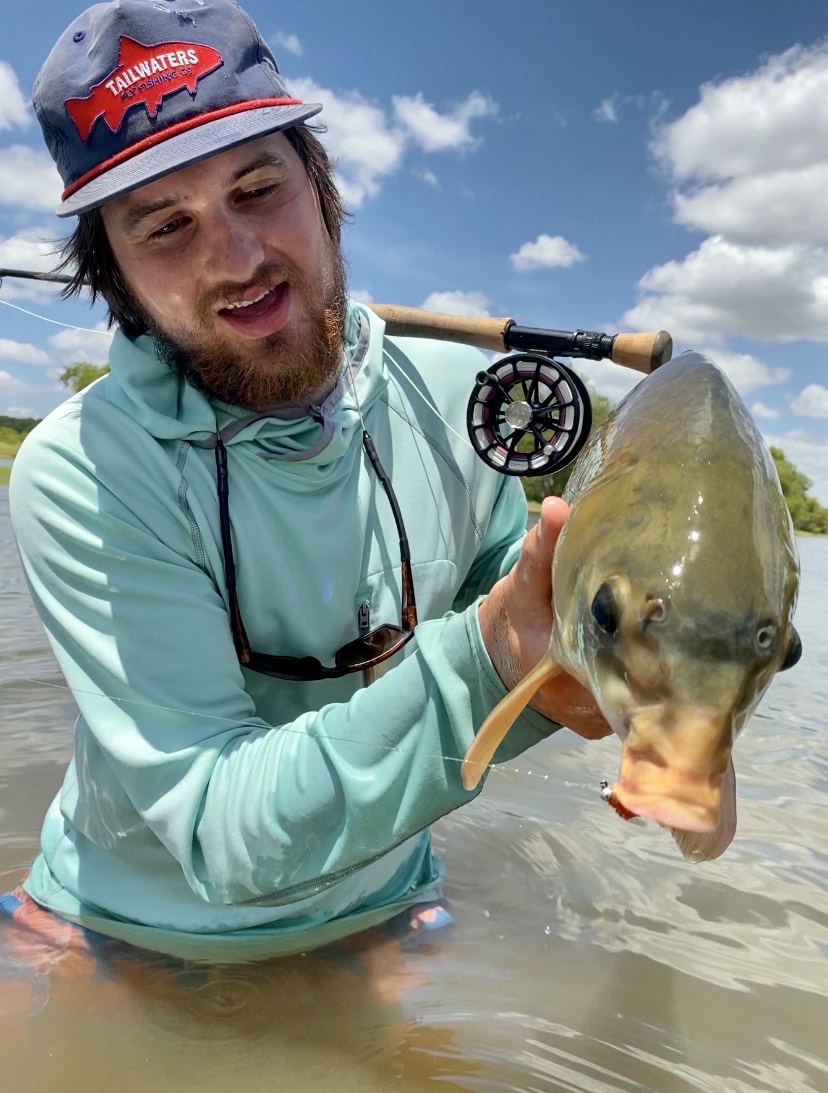
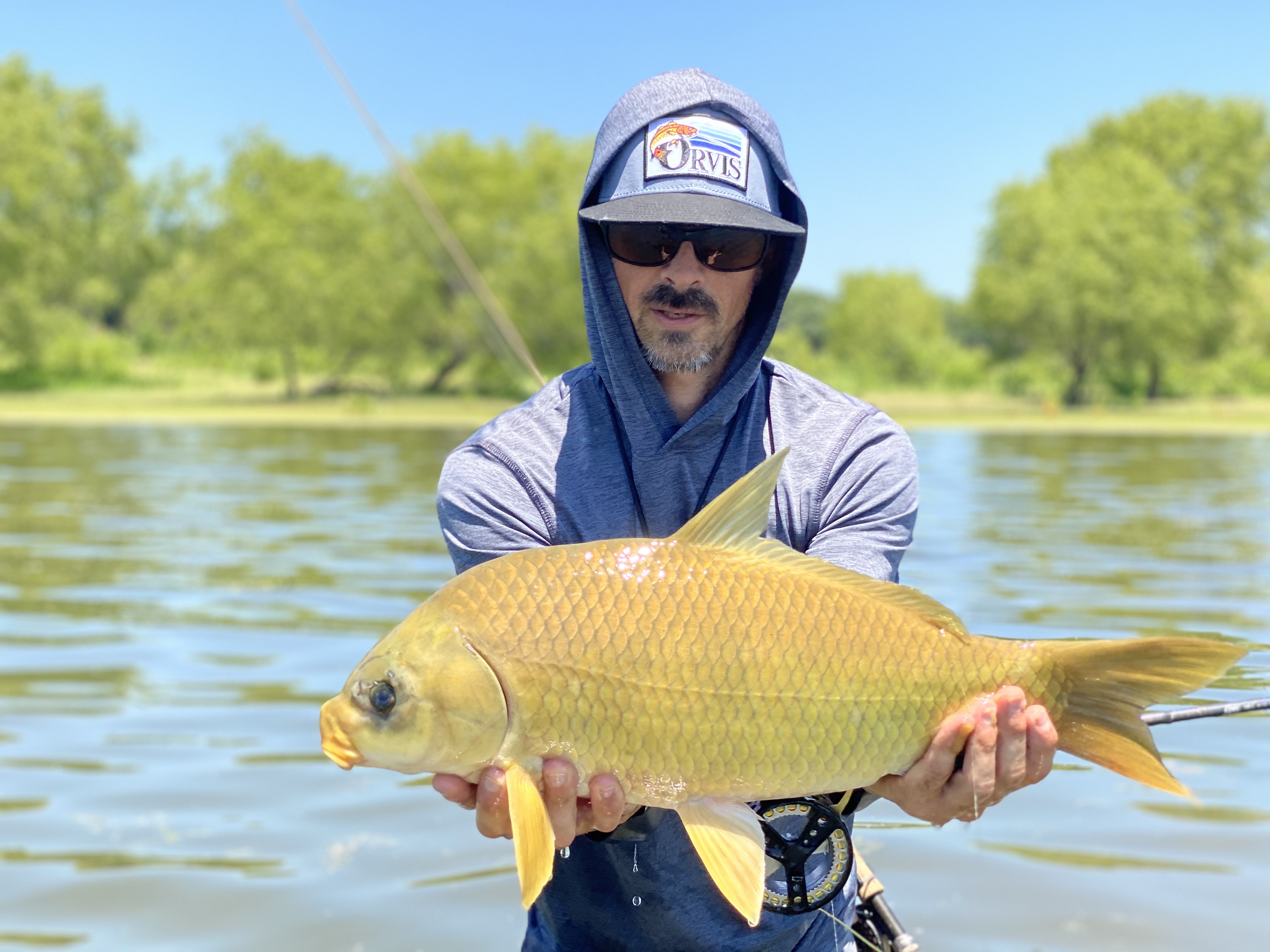
Smallmouth Buffalo on the Fly [And How to Fish for Them]

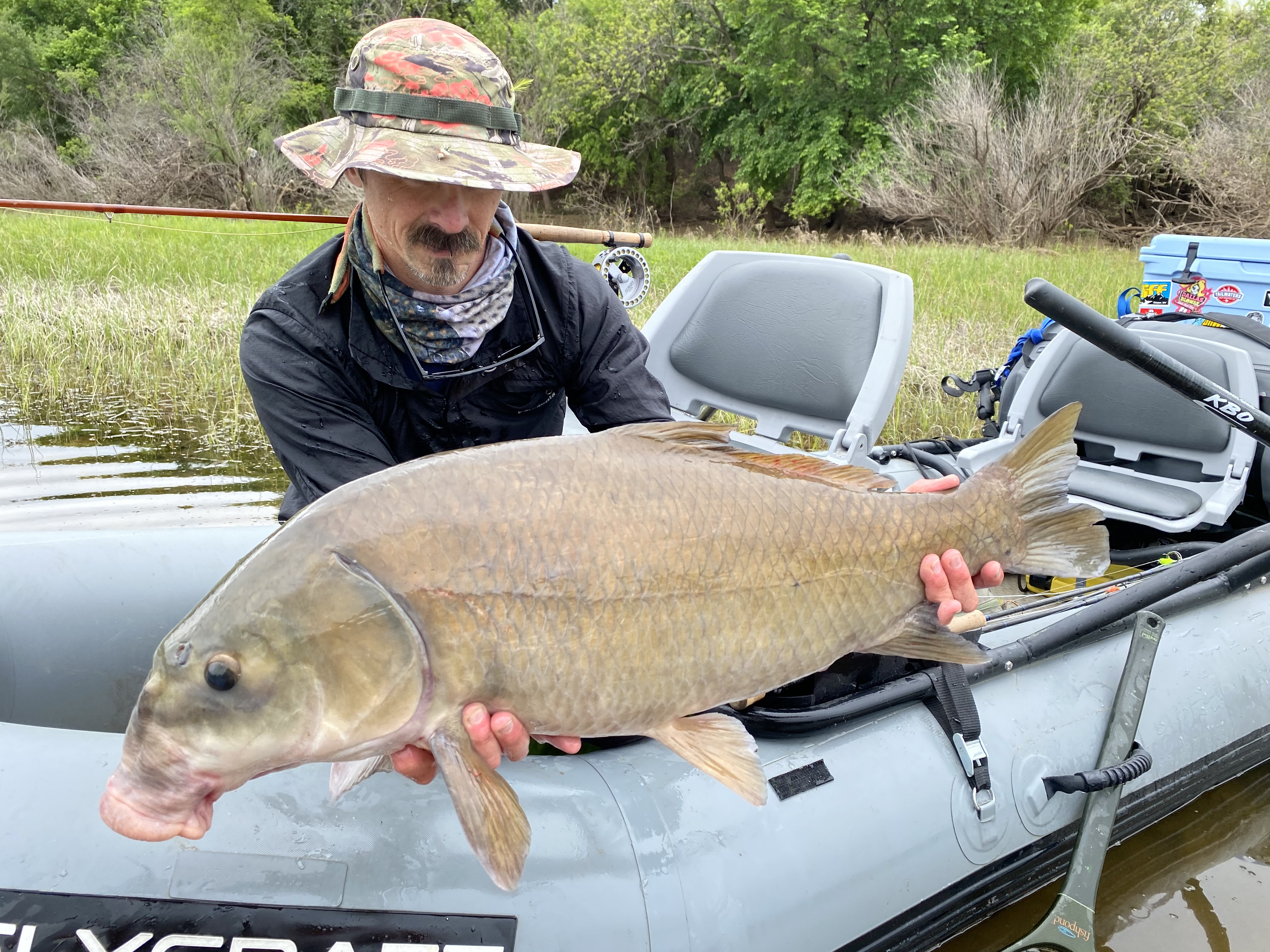
Between the early sunrise frog bite and the schooling stripers at sunset, bass will always be top of mind in the heat of our Texas summers. But with the additional pressure on bass this summer in large part due to COVID-19, a new, less-targeted fish has shot to the top of my list: smallmouth buffalo (Ictiobus bubalus, from the Greek for “bull-fish” and “buffalo”).

What is Smallmouth buffalo?

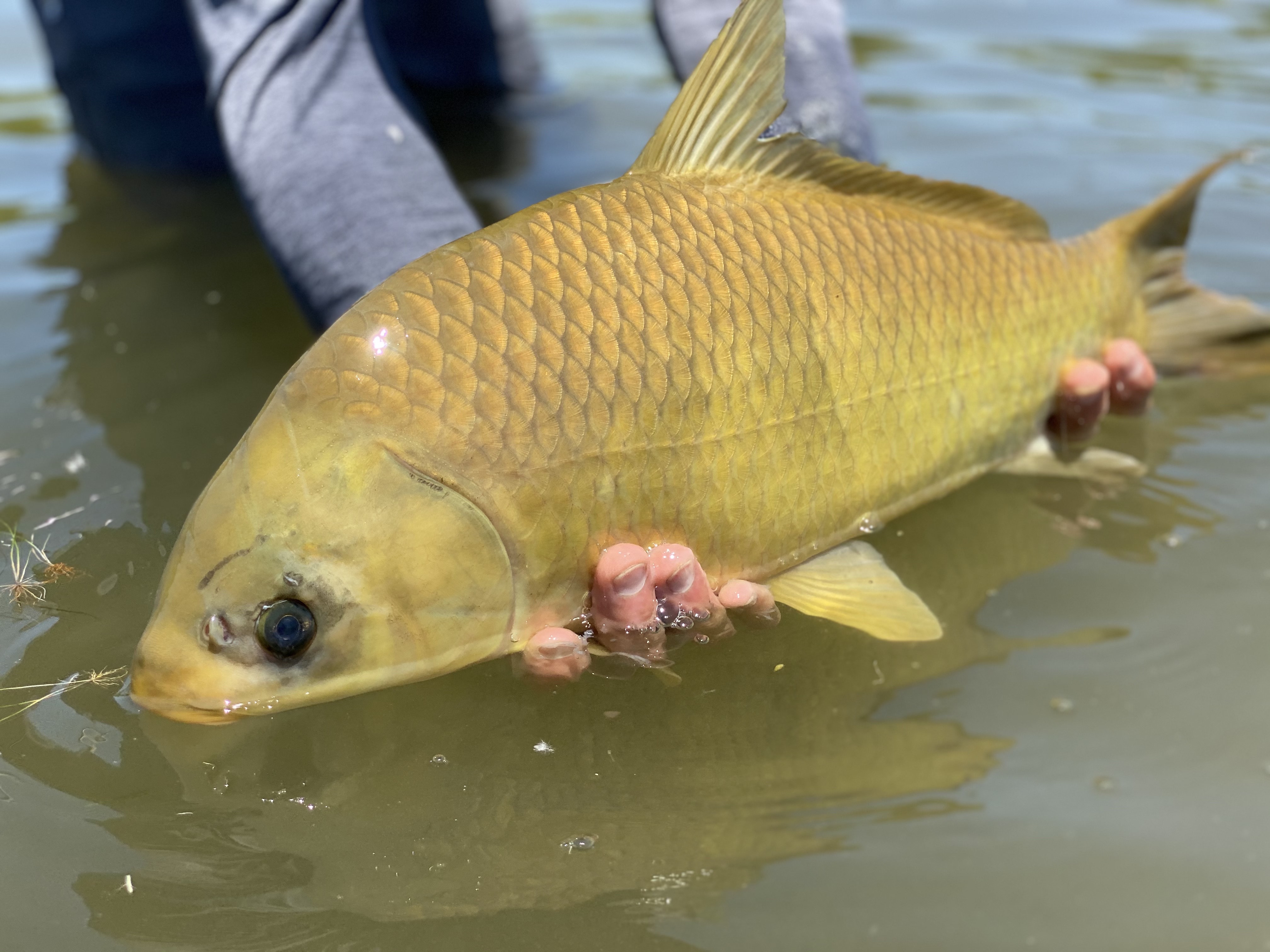
Most consider buffalo to be part of the carp family, but in actuality, this species is in the Catostomidae family of suckerfish. While these giants can be found cruising the flooded banks grouped in with common carp, any die-hard carp angler will tell you that the buffalo is an entirely different game of chess to play. Smallmouth buffalo prefer waters with dense aquatic vegetation and a silty bottom.

Their diet is primarily that of a detritivore, using its ventral sucker mouth to pick up consuming zooplankton, insect larvae, mollusk larvae, and small crustaceans. They are scientifically smarter than bass, have great eye sight, and can be super skittish.

Why target Smallmouth Buffalo?

For reasons I will never understand, most native Texans tend to look down on this species.  But as a wise person once said, “the difference between a flower and a weed is a judgment.” I couldn’t agree more with the comparison of buffalo to other popular game fish. Stalking the flats, locating a buffalo, and having a short window of opportunity to present your fly within its sightline presents a challenge for even the skilled fly angler. And frankly, I don’t care what kind of fish it is, if it has shoulders and is over 10 pounds cruising in less than a foot of water, buck fever kicks in!

Techniques to Catch a Buffalo on the Fly:

These fish will eat flys if presented in the correct way. For me, this has meant laying down the fly as quietly as possible in the path the buffalo is cruising in. Unlike a standard game fish that you can coax into getting a reaction strike, these fish have to be in the right mood to eat. They can be very sociable and are typically found in groups or pods hanging out or tailing in less than a foot of water in the dead heat of the middle of the day. It’s when their nose is pointed down, munching the bottom, that you will have your chance at hooking up.

It’s important that the buffalo see your fly in their sightline. After getting the fly within a 3/4ft distance of its eye sight, it’s not necessary to put much action on the fly – instead, put just enough for the fish to spot it. Sometimes just a little wiggle is all it takes for the buffalo to “b-line” towards it with interest and usually suck it right up.

As far as what flys to use, any carp fly will get the job done but it’s best to have a range of options. If fishing gin-clear water, matching the bottom is best (olive/ brown). If the water is off-colored or stained, I find it crucial to use a loud color (pink/orange/chartreuse). Louder colors also help keep your fly visible in the water, helping you to line up the fly in the buffalo’s path.

Persistence and precision are the recipe for hooking up and landing these special fish. So if you find your typical largemouth spots overrun by new anglers looking for a socially-distanced hobby, I recommend targeting smallmouth buffalo for the challenge of feeding an intelligent beast of a game fish that has been overlooked for far too long.

Buffalo on the fly

Recommended Gear for Smallmouth Buffalo

When the conditions are good, low wind/full sun, we tend to use smaller rods that increase the “fun factor” 5wts and 6wts can definitely make the fight pretty intense! But in most cases, an 8wt with a 9-12ft leader is my go to.

Recommended Flies for Smallmouth Buffalo

Fly selection is 100% dependent on the water clarity, a lot of times the fish won’t see the fly in muddy water, so we like to use really bright flies, pink & chartreuse backstabbers, carp tease, carp crack patterns, carp dusters, and even sometimes bonefish butters work really well.

Article, photos, and video from Jeff Spangler, be sure to check him out on Instagram at @spangfish2. Music in the video from @cutdowntrees. Other anglers and photos from @highfiveangler and @kristian_cole.

World Record Carp in the LA River

Staying Afloat: Tailwaters Fly Fishing

Our Favorite Carp Flies