Home Blog Page 197

Patagonia Premiering Documentary, “Public Trust”, on September 25th

From Patagonia comes “a feature-length documentary about America’s system of public lands and the fight to protect them. Despite support from voters across the political spectrum, our public lands face unprecedented threats from extractive industries and the politicians in their pockets. Part love letter, part political exposé, Public Trust investigates how we arrived at this precarious moment through three heated conflicts—a national monument in the Utah desert, a mine in the Boundary Waters, and oil drilling in the Arctic National Wildlife Refuge—and makes a case for their continued protection.”

You can learn more about the film and its making, here!

Salmon River, NY Experiences Closures Due to Low Water

0

Featured image from Shane Muckey

As anglers arrived to try their hand at landing King and Coho salmon in the Salmon River’s Lower Fly Zone, they were greeted with a sign from the New York DEC stating that the fly fishing only zone would be closed until Oct. 31, to ensure the hatchery hits its quota of recovered Pacific Salmon eggs. Even more recently, in a DEC press release, the state confirmed that the closure would remain in effect “until further notice.”

Map of the Salmon River Lower Fly Zone. (NY DEC)

This isn’t the first time the river has dealt with lower dam outflows, in 2007, 2012, and 2016, the zones were closed for similar reasons, according to Shane Muckey.

To read more about the closure, check out this article from David Figura for NY Upstate!

On the Water with Tessa Shetter

Tessa Shetter is awesome… maybe I’m a little biased because she took me fishing. It’s true that she has a beautiful Instagram with many followers, but don’t let that fool you, Tessa is super down to earth and loves sharing fly fishing with others. A born and raised Alaska Native, she has built a wonderful life fly fishing with her boyfriend Kory.

Flylords: Who is Tessa Shetter?

Tessa: It’s always so hard for me to do an introduction and make it sound exciting! Honestly, I am just a girl who was born and raised in Alaska. I turned 23 in February and graduated from the University of Alaska Anchorage last year with my bachelor’s degree in Marketing. A big part of my life consists of fishing and photography, both passions credited to my wonderful boyfriend Kory.

tessa shetter fly fishing alaska

Flylords: When did you start fly fishing?

Tessa: I started fishing when I was almost three, but only started fly fishing when I was a freshman in high school (2012) when I was about 15.

alaska fly fishing grayling tessa shetter

Flylords: What/who inspires you to get out on the water?

Tessa: It is really hard to pin it down to one thing. Personally, I find it so important to get grounded with nature. Fly fishing just happens to be what pushes me to do that, because it is relaxing and exciting at the same time. The stress of daily life can take a toll on anybody, and especially in Alaska where our summer is so limited. It feels crucial to spend as much time as I can outside (while it’s warm!).

tessa shetter kory robbins rainbow trout alaska

Another thing that’s not so displayed about me is that I am such a homebody. I love to spend time at home and at leisure. Kory, who is in a lot of sense is my polar opposite, is very go-go-go, and can’t get enough of anything outdoors. So in truth, he is really what pushes me to get outdoors and I’m so thankful to have that motivation from him.

Flylords: What is your favorite fish to target?

Tessa: Can I say all of them?? I will take whatever I can get! Dry fly fishing for grayling is always so much fun, but I have really gotten into swinging for big Kenai rainbows and steelhead.

grayling alaska fly fishing

Flylords: Do you have any insane fishing experiences that stand out?

Tessa: Oh gosh, there’s a couple. We have definitely had a few close calls with our raft getting stuck on rocks in whitewater and sucked into log jams. There’s also one memory of Kory walking too far in a deep pool and water almost filling up his waders, while the current was just going fast enough for him not to walk back upstream. So scary!

We also saved a moose calf from drowning under a log jam as well, but was honestly more afraid of momma moose watching our every move!

alaska steelhead

Flylords: You’ve gained quite the following on Instagram, what have your experiences been like?

Tessa: The first company I ever partnered with doesn’t even exist anymore… I was a bit naive. I couldn’t believe any company wanted to work with me! They sent me a shirt (that was too small) and a hat, but there was no real contract. It was a learning experience and after that, I was more cautious in choosing my partnerships.

tessa shetter alaska fly fishing

A couple of years ago I felt I needed to fish for Instagram and it started to get stressful. I didn’t like the direction that was going, I wanted to get back to fishing for the joy of it. Thank goodness I realized that and became more authentic!

Flylords: What do you do for a living outside of fly fishing?

Tessa: The majority of my work is actually real estate photography. I dabble in portrait and wedding photography, along with some social media management.

alaska fly fishing

Flylords: What’s your favorite part of fishing in Alaska?

Tessa: What’s not to love! Sometimes I have to stand back and make sure I am not taking advantage of living in a state with such a vast ecosystem when it comes to wildlife and fisheries. We are stupidly spoiled with opportunities when it comes to fishing. I would say my favorite part of Alaska is the salmon. Although I don’t fish much for salmon, it is so cool to watch, observe, and learn about their lifecycle, while simultaneously using them to my advantage as a tool to track trout behavior and eating schedules. I often forget that the lower 48 and many other parts of our world’s water systems don’t experience salmon as we do. Alaska is truly an amazing place to live and fish!

alaska fly fishing trout

Flylords: How do you like fly fishing during the Alaska winter?

Tessa: Alaska is cold during the winter, and some days I ask myself if it’s worth getting out on the water. Last year it became evident that fly fishing in the frigid cold can be very rewarding, I was lucky enough to get a 30″ rainbow. The coldest temperature I’ve experienced while fishing in the winter is -14, I definitely prefer 20 and above! Once Kory and his brother went fishing in the winter when it was super cold and his brother’s waders got frozen in a seated position. They had to cut him out of the waders so he didn’t get hypothermia… so winter fly fishing has its pros and cons.

alaska fly fishing rainbow trout winter

Flylords: Do you have any bucket list fish?

Tessa: Locally, the only fish I’ve never really targeted (but would like to) are pike and sturgeon. But besides that, and I know this probably sounds silly to a lot of people, I would love to catch a brown trout. I’ve never had the opportunity to fish for them!

Tessa Shetter

Flylords: Do you have fishing books/movies that you love?

Tessa: Obviously A River Runs Through It and The Old Man and The Sea are classics. I love watching Captain Quinn on Youtube along with other fly fishing YouTubers. Captain Quinn is based in Canada and does a lot of steelhead fishing, which I love!

alaska fly fishing steelhead tessa shetter

Flylords: As a photographer do you take more joy in catching the biggest fish or photographing it?

Tessa: Photographing the biggest fish is for sure the best. Luckily Kory is an excellent fisherman so I have endless opportunities to capture his moments with fish, most of them usually being hogs! When we take friends and family fishing, all I care about is them having a good time and getting to experience what I love so much. It is so rewarding to be able to capture those moments on camera. Memories, man!

fly fishing alaska friends

Pre-Orders Now Open for Blane Chocklett’s New Book: “Game Changer”

0

The highly anticipated Game Changer book from Blane Chocklett is almost here and pre-orders have just opened up. We’ve been huge fans of Blane, his innovative fly designs, and his ability to fool seemingly every warm water species out there.

Pre-Order Your Copy, here!

From Flymen Fishing Company:

“‘Blane Chocklett is a fisherman’s fly designer. His sense of what makes a fly work is the absolute best ever, and he has the creativity to fulfill his ideas like I’ve never seen before. Blane’s designs cross over from fresh to saltwater with ease. He works an idea all the way until it’s right— then improves it. And the flies in this book are only the beginning…’ —Bob Popovics, author of Pop Fleyes and Fleye Design

Game Changer flies have completely revolutionized how fly anglers approach pressured and wary fish around the world. Tied on a series of interconnecting spines, these flies can be drawn through the water with a serpentine swimming action or made to glide and jackknife in the water with hard strips—movements that predatory fish find irresistible.

In this book, from one of the most creative and visionary minds in fly tying and fly fishing, author Blane Chocklett shares his tips and techniques for getting maximum movement out of these flies, both at the vise and on the water. In addition to covering popular patterns such as the Finesse Changer and Feather Game Changer, Chocklett traces the evolution of his search for the ultimate pattern, and takes readers along his journey of discovery, by beginning with his Gummy Minnow and ending the book with perhaps the most effective fly ever designed for apex predators, the Hybrid Changer.

  • Step-by-step tying instructions for 20 flies
  • Chapter covering hooks, shanks, brushes, and other critical materials
  • Fishing techniques, including tips on retrieves and casting large flies
  • Close-ups of Chocklett’s favorite patterns
  • Detailed information on building brushes

From the Gummy Minnow to the Game Changer, fly tyer and professional guide Blane Chocklett has been at the fore of progressive fly design and fishing tactics for species ranging from trout to musky for over twenty years. He is an advisor for many top fly fishing and fly tying companies in the industry including Flymen Fishing Company, Temple Fork Outfitters, Yeti Coolers, Costa del Mar Sunglasses, Scientific Anglers, Patagonia, Renzetti, Sightline Provisions, Hareline, and Adipose Boatworks, and he is southeast regional editor for Fly Fisherman magazine.”

Check out our interview with Blane and check him out in our F3T 2020 film, Time, below!

Costa Behind The Guides: Blane Chocklett

2020 F3T Behind the Lens: TIME

Elevate Youth Launches Virtual Fundraiser: #OutdoorsYourWay

0

Elevate Youth is a nonprofit organization operating in the Boston and greater-New England area that uses the outdoors and positive adult mentorship to empower underprivileged kids. EY was born from the realization that so many kids in these communities did not have access to the outdoors and were missing out on all the health benefits and positive life lessons learned from being outside. EY seeks to highlight and correct the severity of this inequity. 

From Elevate Youth:

“We are thrilled to announce Elevate Youth’s first virtual fundraiser: a virtual outdoors challenge.

With Boston Public School’s starting the school year remote, and screen time for youth increasing steadily, Elevate Youth is doubling down on our mission to get more kids outside. Following the success of our Local Parks Program this summer, we are excited to come up with new, creative ways to bring the outdoors into the communities we serve this upcoming fall.

We invite our Elevate Youth family to support us in this mission, and have fun along the way!

Beginning on September 18th, join the Elevate Youth Community in a 10-day virtual event that includes exclusive offers, custom swag bags, a raffle, and a virtual awards ceremony!”

How can you get involved?

STEP 1: REGISTER!

  • To Participate, visit our Registration Page and choose an entrance package. You’ll receive more raffle tickets the more you spend.

  • Tell us where to ship your swag bag!

STEP 2: BECOME A FUNDRAISER! (OPTIONAL)

  • You’ll receive an email, with a link to our Fundraising Page.

  • Fundraise as an individual, or as a team!

  • Prizes will be awarded to top 3 individual and team fundraisers.

  • Limit 10 fundraisers per team.

STEP 3: GET OUTSIDE!

  • From September 18th – September 27th, go get outside!

  • Wear your Elevate Youth T-Shirt, and stay connected with teammates on Instagram and Strava.

  • Stay tuned for special offers and challenges throughout the week.

STEP 4: CELEBRATE!

  • Join us for an exclusive Zoom award ceremony.

  • Recognize top participants, reveal the results of the raffle, and hear from our special guest speaker!

To learn more about the event and for FAQs about fundraising, head to Elevate Youth’s website, here!

Check out our interview with Elevate Youth’s founder, Alec Griswold, below!

COVID & Flats Fishing with Artist David Danforth

Fishing the flats in the Florida Keys tests every angler’s patience and wits about themselves. Any trout angler who has visited the Keys for the first time can probably relate.
David Danforth, my buddy Mitch Bainter, and myself decided to do a little domestic saltwater trip to Marathon, Florida to fish with @kingfisherbackcountrychaters for some bonefish, permit, and tarpon.
We drove from Tampa to the Keys in a Jeep Wrangler, 375 miles in search of getting our saltwater fix on the salty flats.
I hooked into a tarpon for the first time but popped off. I learned that you need to bow to the silver king…
We had many shots at tarpon and permit but they were not wanting to dance with us.
David hooked into a healthy bone, but as always, Cuda’s came out to play.
Any day on the water is a good day. Cheers to the next adventure!
And remember to always mask up!
Photos and words from photographer Christian Graham. Be sure to check out his work on Instagram at @grahamcreative.
Flylords caught up with artist David Danforth to ask him a few questions about how COVID is impacting his business and what he is doing to combat this. 

Flylords: How has COVID impacted your business?

David: Both positively and negatively. The negative is I attend 12 to 15 different events a year all over the United States. Each month my inbox gets flooded with more regretfully canceled emails for fly fishing expos and outdoor events. The positive, even though I have a very unorthodox type of career, our fishing friends and family in the industry have supported us 10 fold more, especially online. It is already challenging enough to make a living off of “fish art” but throw quarterly lockdowns in and it makes it interesting.

Flylords: What have you been doing to adjust your business due to COVID?

David: Complete website overhaul. It looks like we will be online for at least the next year. I don’t see 10k attendee events re-opening soon. The items that I would typically sell at shows, I have been doing monthly flash sales for everyone to purchase online. It’s not as cool seeing each other face to face, having a beer and chatting about our adventures, but it still gives people a great deal on something that will brighten their day every time they walk into their room!

Flylords: Any positives from COVID?

David: Family and friends, we all get so busy and distracted, I used the time to slow down, feel more, take more in, and destroy the back burner list we all keep pushing off. The time with my wife and kids has been awesome and at least for once every person in the world was humbled and put into the same mindset all at once for the first time. The first month when we all were waiting to see how deadly and how viral it would or wouldn’t be, we were all one big unit, united by this situation. Making us all feel like one is a very positive thing. A virus does not care if your filthy rich, poor, purple, green, big, or small when we all have a common enemy, it brings us together.

Flylords: Where have you been fishing lately?

David: A few spots in the Everglades on backroads deep in the swamp, but the Keys are always my go-to. The past few months we have been fishing Marathon, Islamorada in the Keys finding some tarpon, bonefish, and getting denied by permit.

Flylords: Anything else?

David: Take advantage of our overstock sale prices we are offering. Normally our canvas prints range from $200.00 to $400.00. Our most popular sizes are 24×36 and 20×40, they are currently on sale for $155.00. We have hundreds of designs and species to choose from, just shoot me an email relogear@gmail.com or DM to order. Here is a link to the shop: https://www.relogear.com/.
Be sure to follow along with David on Instagram at @reellocal.

5 Tips for Landing Your First Tarpon

Artist Spotlight: Eric Estrada

Frank and Jeanne Moore Could Have Lost Their Home in a Wildfire, But Have What Matters Most

Anyone that has spent some time swinging flies for steelhead in the Pacific Northwest has probably heard the story of Frank and Jeanne Moore. The couple’s hard work and dedication led to the protection of one of the last wild summer steelhead runs in Oregon. The couple’s beloved North Umpqua River Valley lit up in flames on Tuesday morning, as wildfires ravaged across the west.

The Archie Creek Fire prompted an immediate evacuation for Frank and Jeanne who are in their mid-nineties. Leaving their home near Idleyld Park, Frank and Jeanne evacuated to Roseburg.

In an article from The News Review,

“The fate of Frank and Jeanne Moore’s home near Idleyld Park remained unknown Wednesday afternoon. Also uncertain were the fate of his World War II medals and decades of memorabilia, and the state of the steelhead sanctuary along the North Umpqua River that bears their name. Despite all that, the couple, now in their mid-90s and married for 77 years, maintained their characteristic positive outlook on life Wednesday. Frank Moore said they took practically nothing with them, but he’s not too worried about their home or anything in it, because he has his wife Jeanne with him. “I have the treasure with me. That’s my treasure,” he said.”

Check out the full article here.

As of today, the Archie Creek Fire has grown to 116,000 acres with 0% containment. Across Oregon more than 800,000 acres have burned this week, the annual average is around 500,000 acres.

https://vimeo.com/180337430

The West is on Fire

Frank and Jeanne Moore Wild Steelhead Sanctuary Legislation Passed in the Senate

The Senate Overwhelmingly Passes The Natural Resources Management Act

Watch this Osprey Take Out a Trout, Underwater

0

Ospreys are a common site for anglers all over the globe. Some may think that they spook fish and can be a sign of poor fishing, but to me, I think they’re just another angler out on the water looking to grab dinner on the go. If you’ve ever watched them as they hunt, diving headfirst at the water at breakneck speed, you’ve got to wonder what that looks like from a trout’s eye view. Well, now thanks to a video from the Independent, now we can! The video above is pretty much a trout’s worst nightmare and likely the last thing it saw, 8 razor-sharp talons descending from above. From above the surface of the water, it looks a little bit like this:

On the Water with Deschutes Native Guide Matt Mendes

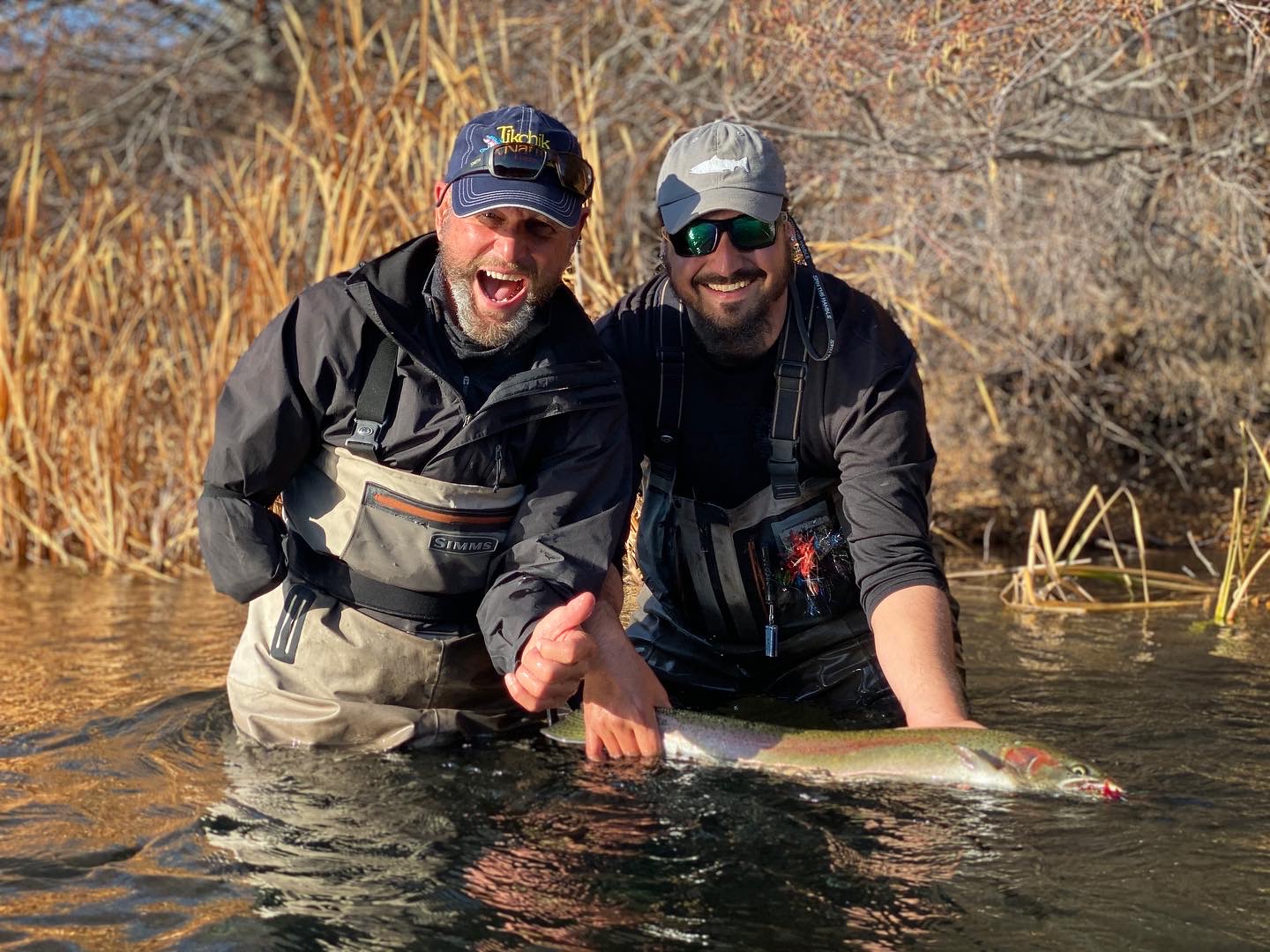
“Feel the revolution, fly fishing for a passion with tribal heritage.” Flylords caught up with Oregon based fly fishing guide Matt Mendes, who is the owner and operator of Spin the Handle, a guide service based along the banks of the Deschutes River on the Warm Springs Indian Reservation. Matt has exclusive access to guide on 22 miles of the Deschutes’s west bank, per an 1855 treaty with the United States government.

MATT MENDES
© Arian Stevens Photography www.arianstevens.com

At a young age, Matt was apprenticed by his grandfather who was the only Indian guide on the Deschutes River. From there Matt was driving shuttles at age 12 and by age 18 he was guiding full time. Nowadays Matt spends over 200 days a year guiding clients on the Deschutes River. After meeting Matt you quickly realize that his passion for fly fishing is much more than just being a guide, he is an active steward in the conservation and preservation of the Deschutes River, Warm Springs Reservation, and wild native fish. We caught up with Matt to learn more about how he got into guiding, what it’s like guiding on the Warm Springs Reservation, and his passion for spey casting to the summer steelhead of the Deschutes River.

© Arian Stevens Photography www.arianstevens.com

Flylords: Who is Matt Mendes? 

Matt: I am the head guide and owner of Spin The Handle on the Warmsprings Indian Reservation in Oregon. We guide fly fishing trips for both trout and steelhead on 22 miles of the private reserve along the Deschutes River.

© Arian Stevens Photography www.arianstevens.com

Flylords: How did you get into guiding and how long have you been doing it?

Matt: My grandfather got me into fly fishing when I was 12 years old. He was the first Indian guide on the Deschutes River and owner of Riverbend Guide Service. He started his company in 1997. I started shuttle driving at 12 years old and slowly started getting familiar with the guide business during that time. By my Sopohmore year in High school, I was guiding every summer and fall for both trout and steelhead until I graduated. I ended up working 11 years with his outfit. He retired in 2016 and I bought him out and started my own company Spin The Handle. We have been in business for a total of 25 years.

An 1855 treaty with the United States government gave the Warm Springs Reservation exclusive access to the river.

Flylords: Can you talk about being a tribal guide and the fishing access and regulations involved with this?

Matt: Being a Tribal fishing guide is a very unique opportunity, being able to fish so much sacred trout and steelhead water that our people have utilized for substantial necessities for many years. It is amazing to be able to share this section with a few select anglers annually. There are many regulations to keep our business operating. There are several committees we meet with every few months to give feedback and report on how the river and riparian terrain is holding up. We do tons of research daily and report back to our tribal Fish and Wildlife Representatives monthly. As guides, we try to persevere the water and land as best we can to keep it as pristine as it has been for hundreds of years. The water along the reservation is very crucial for the life cycle of returning salmon, steelhead, and all aquatic life as a safe sanctuary with limited pressure from anglers. The fish that make it up this far are very special after all they have gone through to get here. We do our best to take care and manage our wild catches and thinning out most of the hatchery steelhead we get to hand.


Matt Mendes Spin the Handle
© Arian Stevens Photography www.arianstevens.com

Flylords: Do you live on the Warm Springs Reservation?

Matt: Our company is located on The Warmsprings Indian Reservation in Oregon. I own a 2.5-acre property above Dry creek where I raise my family and run my business out of.

Summer Steelhead Stoke

Flylords: What does your guiding season look like? 

Matt: Our guide season starts about April 20th and ends December 31st. I fish and guide around 200 days a year.

Deschutes River White Water © Arian Stevens Photography www.arianstevens.com

Flylords: What types of trips do you offer? 

Matt: We offer both drift boat and 4×4 access trips, along 22 miles of private riverfront. What is unique about the Lower Deschutes River is you cannot fish from a boat due to the fishing regulations. So all the fishing is done with your two feet on the ground.

An adult Salmon Fly in the grass. © Arian Stevens Photography www.arianstevens.com

Flylords: What’s all the talk about the Salmon Fly Hatch on the Deschutes River?

Matt: The salmon fly hatch on the reservation is as great as you could imagine big dry fly fishing could get! We have really great days on the water throwing massive drys to huge wild redband trout. Most of these fish don’t see artificial flies but a few weeks a year. You have to experience the chaotic dry fly takes for yourself! All the rumors about how the dry fly fishing on the reservation is so much better are TRUE. It is 5 weeks of the most insane dry fly fishing of the year. It is typically the whole month of May and into June depending on the year. The Caddis hatches through the summer don’t disappoint either!
© Arian Stevens Photography www.arianstevens.com

Flylords: Can you talk about the summer steelhead on the Deschutes River? Have you seen a decline in fish over the years?

Matt: Summer steelhead season is my bread and butter. I cater to about 75% of spey guys from all over the world. We start to swing drylines September 1st up here and fish until the end of December. The steelhead fishing on the reservation with our company is as good as it gets on the Deschutes. We chase steelhead from dawn till dusk never fishing recycled runs. Every single steelhead run that you step into is well-rested and has not seen a fly that day! There is limited pressure and we try not to fish the same runs day after day. 19 years ago we would have enormous days of fish landed. There were days that we would land a dozen fish on average giving our anglers some of the most epic steelhead days on a swung fly you could imagine.

© Arian Stevens Photography www.arianstevens.com

Over the last decade, we have seen a huge decline in the numbers of returning fish starting at the Columbia River. Water temperature, predation, and dams have all have had a part in the returning numbers of wild fish up the Deschutes River. We still have big numbers of fish landed on tight line press stations but nothing like the way the river fished 10 years ago. I limit the number of anglers per day so that everyone has a chance to hook up.

© Arian Stevens Photography www.arianstevens.com

My number is 3 anglers per day right now until things start to take a turn for the better. You can count on 1-5 opportunities a day on average and an occasional banner day here and there were we land big numbers compared to an average day swinging flies on the Deschutes River or anywhere else.

© Arian Stevens Photography www.arianstevens.com

Flylords: Any tips for the aspiring steelhead angler?

Matt: I am a steelheader and I love to instruct others how to swing a spey rod and help them level up their angling abilities. If I had any advice to an angler wanting to swing for steelhead it is to take your time with your casting, relax, and of course be very patient. Your moment will come when your fly swims in front of a fish’s face. Keep stepping and casting with confidence!!

Flylords: Rod, line, tips, and fly for your confidence steelhead setup on the Deschutes?

Matt: I have always run a Winston 13’3 TH and the loudest clicker (spring and pawl no drag reel) I can find. Right now I’m running a Saracione 3 3/4  multiplier on my Tip setup and a Farlex 3 3/4 multiplier on my dryline. I’m also jumping back into longer rods and long belly lines. Ballistic Heads and a 14’0 7/8 MKX Meiser spey rod this season.
© Arian Stevens Photography www.arianstevens.com

Flylords: What is your preferred fly selection on the Deschutes? 

Matt: I have been throwing more classic traditional spey flies in the last several years. Blue Heron Spey Hooks #2 (Steelhead Irons)  and very nice materials. Dry fly fishing with bombers and muddlers have been choice throughout October and November before water temps drop real low.

© Arian Stevens Photography www.arianstevens.com

Flylords: Most memorable moment guiding?

Matt: Every moment I get with my boots in a steelhead run and swinging a tight line is memorable. Life does not get any better for me than swinging Spey in a river somewhere and being in tune with Mother Earth.

The Mighty Deschutes – © Arian Stevens Photography www.arianstevens.com

To get in touch with Matt you can contact him online here and be sure to follow him on Instagram at @deschutesnative.


View this post on Instagram


A post shared by Matt Mendes (@deschutesnative) on

 Photos by Bend, Oregon based photographer Arian Stevens, check out more of his work online here or at @arianstevens.

Understanding Steelhead and How to Fly Fish For Them [An Angler’s Guide]

Behind the Fish: Steelhead/Salmon Biology with Scientist John McMillan


Duckie the Tiger Trout

Another summer day meant another day sitting at home. The seemingly endless self-quarantine had all but brought on cabin fever. Looking to get away, local rivers initially seemed like a good respite. Unfortunately, even with the pandemic, there would still be a mess of others on the water. As many of us know, some anglers can’t social distance to save their own rods while other social distance by jumping in just ahead of you. To get away from crowds and heat in the valley, a high elevation favorite (with tiger trout) came to mind. The forecast called for clouds and a slight breeze but ended up being dead calm and clear skies. Rigging up, I glassed the surface for any signs of feeding. No hatch was visible and turning over rocks yielded no additional clues. A soft hackle was chosen and the search began. Excitement slowly dwindled as minutes walking the bank turned to hours without seeing a single sip.

Feeling frustration set in: I reeled up, reminded myself why I was there, and found a patch of shade. Sitting down, a small, dark shape darted past my legs. I sprang up to see a pair of beady bat eyes staring back at me. He wasn’t thrilled having his spot usurped but was kind enough to pose for a few photos.

Resuming the search, a sandy spot was chosen for the last stand. The trout were holding deeper than anticipated and my mistake was only bringing floating fly line. Hoping to mitigate the issue, the leader was lengthened and a weighted scud tied on.

The cast was made and 30 seconds passed before beginning a slow, hand-twist retrieve. The tenuous stillness was suddenly interrupted by a violent jolt and line popping from my fingers. Sick to my stomach, I scrambled to regain control of the stack of line at my feet. I lifted the rod and quickly walked backwards. To my disbelief, the rod doubled over and more line shot through the guides.

Several nerve-racking runs ensued before I could gain any ground. Each headshake sent vibrations through the line as the tippet rubbed over its teeth. Keeping the rod flexed to the cork, the fish finally came within reach. The scoop was made and a wave of relief passed over as I looked down to see a beautiful, kype-jawed Tiger. A few mug shots were taken and he was released to saunter back to his home. Part of me wanted to keep going, but a bigger part was satiated by finally figuring out what the fish wanted. And although a single fish day, it provided a spot of solace in an otherwise stifling state of the world.

Article and photos from Brandon Evans, a tiger trout crazed angler, check him out on Instagram or check out his group on Facebook All Things Tiger Trout.

What is a Tiger Trout? [And How to Fish for Them]

A Tiger Trout Story