Home Blog Page 97

Riversmith and Derek DeYoung Collaborate on Artist Edition River Quiver

Our friends at Riversmith have just released their first River Quiver artist collaboration featuring patterns from the one and only Derek DeYoung. The special edition car-mounted rod carriers will feature the artist’s Brown Trout Flank pattern and is available in two sizes,  two and four rods.

This is the latest collaboration from DeYoung, and we’ve loved watching his artwork pop up around the industry.

You can discover more details and purchase your RiverQuiver, here!

Patagonia Releases All-New Stealth Vest

Finally, an innovative next step in the world of fly fishing vest designs. Patagonia has just released an all-new addition to their fishing pack line with the new Stealth Pack Vest. The new design features low bulk mesh to keep the angler cool and comfortable even with additional gear hanging on their pack or while wearing a day pack. Check out the press release below from Patagonia to learn more!

From Patagonia:

Fishing vests haven’t really changed since Lee Wulff cobbled the first one together in 1931. And, for more than 90 years they’ve been… fine. So, when we set out to rethink fly fishing’s most fundamental piece of gear, we didn’t want a simple update. We wanted a once-in-a-century transformation. The new Patagonia Stealth Pack Vest incorporates hyper-light, recycled materials with extraordinary carrying capacity, intuitive functionality, and load-lifting suspension technology adopted from our groundbreaking trail running vests for an internally stabilized fit and all-day comfort.

“The Stealth Pack Vest is a huge leap forward for wading anglers,” said Matt Millette, Patagonia Fly Fishing’s Head of Marketing. “For decades, no one’s really given the fishing vest much thought. We’re fortunate to have a trail running division at Patagonia. They have made remarkable advances in load stabilization, internal suspension, and secure carrying capacity. Those advances, combined with our always-evolving recycled materials technology and our ethic of intuitive functionality make this is the most advanced, comfortable, and—most importantly— the most usable vest we’ve ever made.”

Here are the key features and innovations for our Stealth Pack Vest.

Built using our 100% recycled Stealth materials, the Pack Vest is water-resistant, quiet, and body-conforming. Upfront, each side of the vest provides three vertical pockets for everything from jumbo fly boxes to your smallest, most elusive gizmo. There are multiple tool-attachment points, gear docs, and a drop-in floatant pocket. Large, mesh zip pockets are set beneath the vertical pockets. Inside the vest is a hidden rod holder and four additional zippered compartments.

Around the back, the Pack Vest offers both a large and a compact zippered pocket. Inside the larger pocket is a removable waterproof sleeve for items that simply can’t get wet. Beneath those pockets is a roomy, convenient reach-through pocket for quick access.
Accessible from the back reach-through is an easy-pull, locking strap that adjusts the Pack Vest’s suspension system and works with its body-conforming stretch panels. Regardless of how much gear you carry, this system ensures the vest fits athletically, carries effortlessly, and won’t hinder your casting stroke.

Unless you’ve spooked a mama bear and her cubs, you’re not likely to break into a sprint while fly fishing. But with the Stealth Pack Vest, a day spent wading, hiking, and scrambling with all the gear you’ll need will be comfortable, organized, and productive.

Stealth Convertible Vest

For those anglers looking to incorporate a vest with their backpack, we created the Stealth Convertible Vest. The Convertible Vest utilizes the same 100% recycled Stealth materials as the Pack Vest and incorporates similar vertical pockets for load-hauling capacity and intuitive use. The vest front also features a synthetic fly patch, multiple tool-attachment points, gear docs, and a drop-in floatant pocket,

Inside the vest, each side offers two roomy drop-in pockets and multiple lash points. Around the back, a massive, zippered drop-in pocket swallows additional layers, lunch, and that one fly box that just might come in handy, but the secret sauce is the Stealth Convertible Vest’s ability to completely transform itself.

The vest’s front panels are attached via sturdy, easily operated clips at the shoulder and waist. When these panels are released, they can be quickly connected to the D-rings on our Guidewater or Stealth Sling, Pack or Duffel. The packs also connect to virtually any gear with a webbing bar or D-ring, giving you additional carrying capacity and easy-to-use, on-the-water versatility.

Bugs & Beer: Your List of Perfect Pairings for Spring Time Fly Fishing

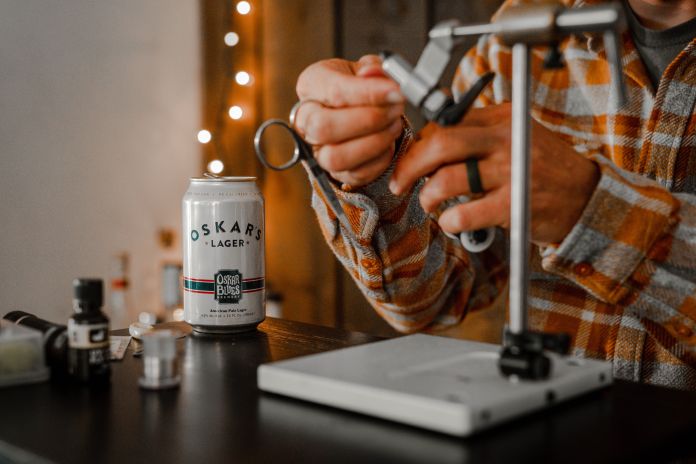
It’s official: Spring has sprung. For plenty of us, that means it’s finally time to emerge from our tying caves and release the mass of bugs that have been meticulously assembled at the bench during the snowy season. For others, it means it’s time to tuck away the winter gloves and chapstick and get to work on replenishing warm-weather inventory. For those of us who wait to load our dishes, file our taxes, and, above all else, prep bugs for warmer months, we’re with you. While anyone can just waltz into their local shop and pluck some fresh flies from their trays, there are few better things than sitting down at the tying vice, cracking open a cold beer, and getting to work on this spring’s synthetic hatch.

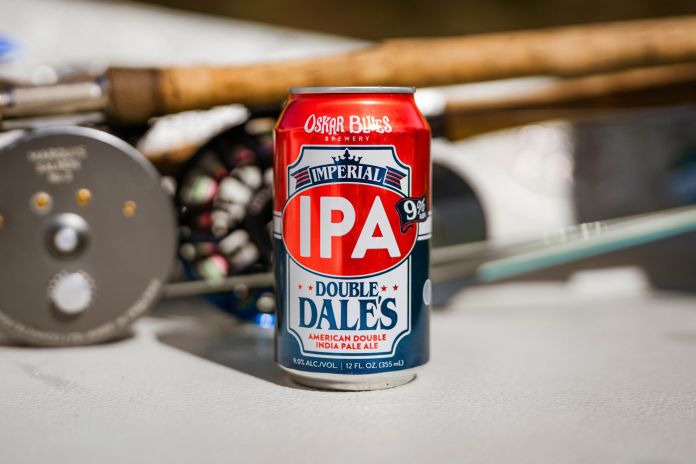
If you’re looking for some inspiration for getting started: you’ve come to the right place. We’ve teamed up with Oskar Blues Brewery to bring you a shortlist of some killer flies to get your bobbin moving in preparation for days spent back on the river. As a bonus, we’ll be pairing each fly with the perfect OB beverage to go along with your tying pursuits. As food critics enjoy finely aged cheese and meats with wine, fly tiers understand the importance of the perfect beer with their bugs. So, allow us to be your “bugs and beer” sommelier as we get ready for beautiful evenings of fishing enhanced by the warm glow of the setting summer sun.

1. Pheasant Tail Frenchie & Dales Pale Ale

tying a pheasant tail fly

Ah yes, the old pheasant tail. Concocted from some of the weathered remnants your grandfather had laying around from his pheasant hunt a decade ago – or from your most recent fly shop run. The Pheasant tail nymph, in its many different forms such as the Frenchie pictured above, is an American classic that has defined nymphing for decades. Similarly, when you think of Oskar Blues, you most likely think of a cold can of “Dales Pale Ale“. This tasty beverage’s heritage pairs brilliantly with the classic feel of pheasant fibers being synched underneath the copper wire. If you’re a fan of the classics, break out your khakis and leather chaps for a perfect pairing of pheasant and DPA.

pheasant tail on a can

Click here for a “How to Tie” Tutorial from the one and only George Daniel.

2. “Something Swingy” – Double Dales Imperial IPA

double dales swing

Did you like our last recommendation? Good; because we’re doubling down with a unique pairing of “Double Dales Imperial IPA“. this beer dares to take something traditional, and bring it up a few kicks. So, we implore the most curious of streamer fiends to try their hand at something new; some big swinging soft hackle flies. While we don’t have a specific fly for this pairing, here’s a list of a few we think you might like:

spey fly

For those still here, tying Spey flies, much like a tall “Double Dale’s”, is a fantastic break from the mundane and can be almost as fun as fishing them. Just remember, if you’re fishing in the high water steelhead enjoy, maybe save the beer for the tying desk. A few of them and you may be ready to invent some flies of your own…

3. Black Beauty Midge – Oskar’s Lager

tying a black beauty midge

It’s the simple choice…and you should be happy with that. Like a classic “Oskar’s Lager“, this pattern is enjoyed by freshwater fish everywhere. Sure there’s nothing super flashy about it, but then again maybe that’s why they like it. The folks at OB seem to have the same thoughts when it comes to beer, and while there’s a handful of razzle-dazzle craft IPA’s to choose from, they know that for many folks, sometimes all one needs is a moment to crack open a refreshing lager and tie up an army of little midges. This pairing is one made with a clearer state of mind in consideration. So go ahead, tie one on (to the hook), and enjoy the slow drift.

midge on a can

Click here for a “How to Tie” Tutorial

4. Yellow Duck Egg – Mama’s Little Yella Pils

mama pils

Sometimes, all you need is a little yella’ in your life. The little yellow duck egg isn’t a pattern you’ll commonly hear of floating around in conversation, however, it’s definitely one the fish will see as it’s floating towards them. All it is, is an Antron yarn egg with an orange bead head added for a little extra character. For this pairing, we recommend OB’s, “Mama’s little Yella’ Pils“. This Bohemian Pilsner is a fantastic match for anyone who likes their flies, or lager’s on the paler side. Now, any “egg dunker” will tell you, they’re not here to make friends, “they’re here to catch fish”. The same goes for this beer. It’s not pretending to be anything fancy, however, this little yellow menace is certainly a deviation from what you’d label typical. So, enjoy something a little out of the ordinary, but can be enjoyed for a while – because if you’re tying eggs, you’ve got boxes to fill…

Here’s a speedy tutorial on this fly:

5. Mayers Mini Leach – Thick Haze

mini leach on the can

If the water’s hazy and you’re feeling lazy, you know what to do: strip some leeches. Like IPAs, leeches are those flies that come in all shapes and sizes, but there are some that just perform on a different level. Mayer’s-Mini-Leech, invented by published tying author and fly-tyer, Landon Mayer, is one of those leeches. Tied with a weighted bead head and a squirrel strip tail, this fly is a fantastic time at the end of your tippet, as well as on the vise. Pairing well with this tie, we have the Oskar Blues “Thick Haze IPA“. This flavor of leech is one of it’s own, so why not pair it with a unique tropical twist of a NE IPA that stands out in the haze.

Click here for a “How to Tie” Tutorial from Landon Mayer himself.

Get Creative:

We have to admit – in the end, it doesn’t really matter what you’re drinking at the bench, so long as you’re having a good time. Whether you go with beer, spirits, juice, or water, just remember: tying is all about getting creative. So, while it’s great to have tutorials to reference, the real value of the tying experience comes from the weird frankenflies that emerge from your time at the vise – and in our opinion, beer helps that process. For those who do like a frothy beverage, head over to the Oskar Blues website and find the beer that’s going to best pair with you’re tying experience.

Always remember to drink responsibly.

How to Tie: The Adachi Clouser

How to Tie: The Tungsten Belly Worm

How to Tie: The Prince Nymph


New Academic Study Finds Relationship Between Florida’s Devastating Red Tides and Human Activities

A recently released academic study validates what many affected Floridians have long suspected: red tides are correlated to and intensified by human activities. Researchers at the University of Florida, Sanibel-Captiva Conservation Foundation, and Sarasota Bay Estuary Program conducted the study, titled Nitrogen-enriched discharges from a highly managed watershed intensify red tide (Karenia brevis) blooms in southwest Florida. 

Highlights of the study include:

  • Anthropogenic forcing (human caused environmental effects is a key component of coastal K. brevis bloom dynamics (the organism in red tides that produces a toxin affecting marine life).

  • Caloosahatchee River discharges (which dumps right into the Fort Myers and Sanibel areas) and nitrogen inputs systematically intensify blooms.

  • Anthropogenic influence extends upstream to Lake Okeechobee and the Kissimmee basin.

  • Nutrient/hydrological management may mitigate bloom intensity and duration.

“This study finally makes the definitive connection between Lake Okeechobee discharges and red tide. The science has been settled for decades on how to alleviate the damaging discharges from Lake Okeechobee. By restoring the Everglades and optimizing Lake operations to flow more water south during the dry season, we can significantly reduce the amount of nitrogen discharged to Florida’s Gulf Coast that fuels red tide blooms that devastate our communities and economy,” Capt. Daniel Andrews, Executive Director of Captains for Clean Water, said.
This study is a huge tool for groups like Captains for Clean Water and others for a couple of reasons. Now they have scientific proof that humans and industrial activities are making these harmful algal blooms more devastating–a fact that many knew for years, but now the science supports it as well. Also, it deflates one of the key arguments from the industries fighting to maintain the status quo.
According to a recent CFCW blog summarizing the study’s findings: “Special interests have often leaned into the fact that red tide is “naturally occurring” to distract the public from the worsening effect of the high-volume, nutrient-laden lake discharges…Think of it like a forest fire. Gasoline might not start the fire, but when you pour thousands of gallons of gas on the blaze, it will fuel the flames, spread the fire, and have a direct impact on the amount of damage incurred.”
Hopefully the good folks in Florida can use this study to improve water management to minimize the harmful discharges, pollutants entering Lake Okeechobee, and prioritize Everglades restoration, because the communities of South Florida depend on clean water and healthy marine ecosystems.

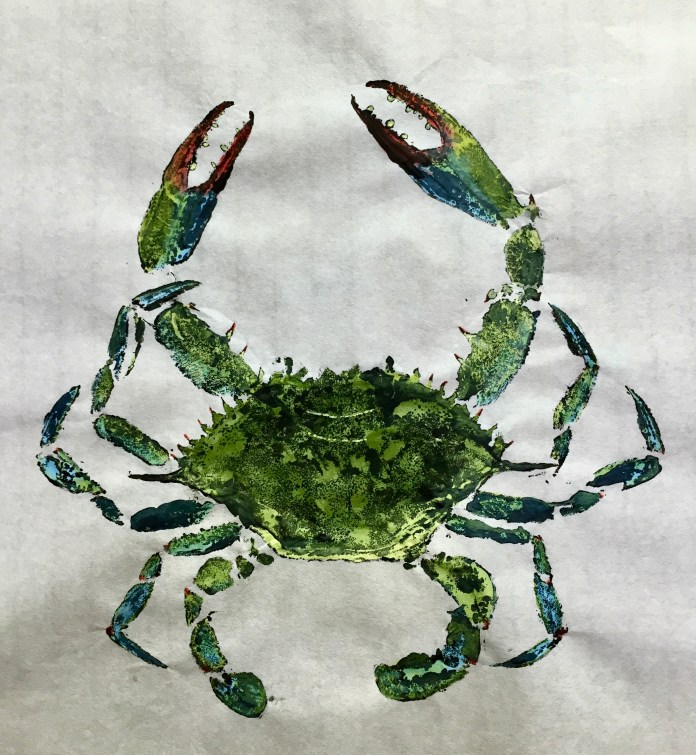
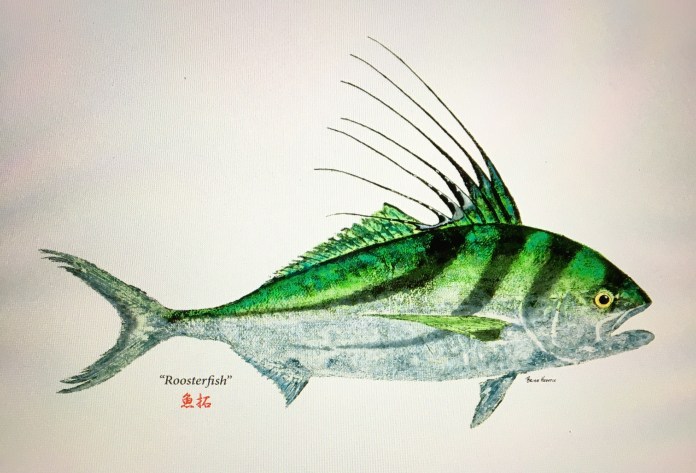
What is Gyotaku Fish Printing?

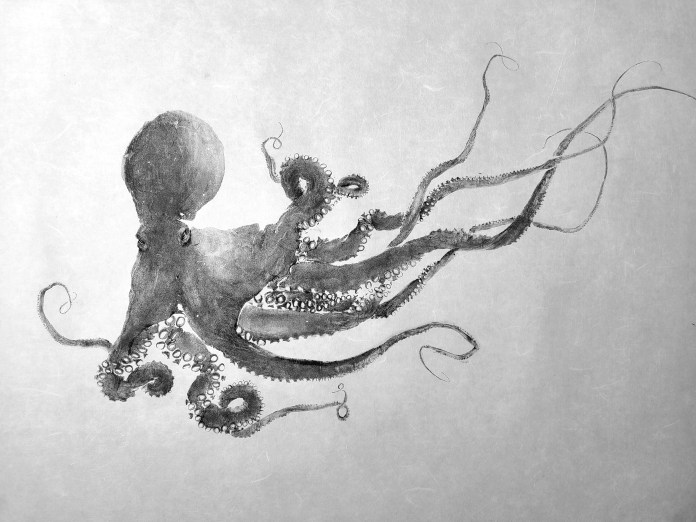
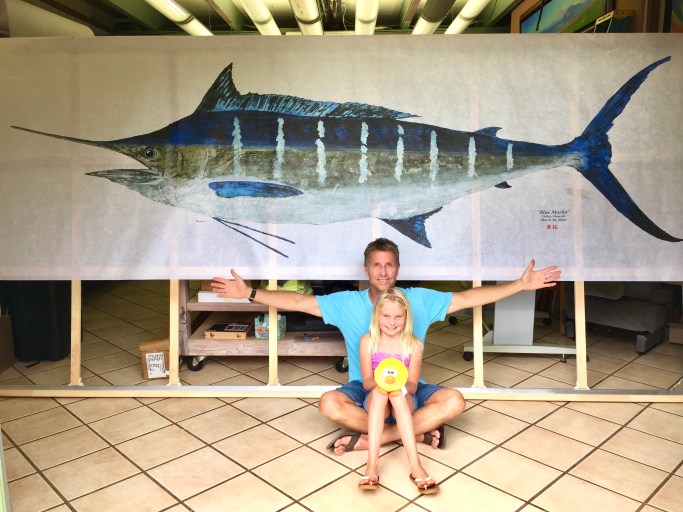
This month we dove into the world of gyotaku fish printing. Historically, Japanese fishermen documented catches by applying ink to a fish’s body, placing paper on top of the fish, and pressing down on the fish to create a printed image of it. Today, artists around the world elevate this printing method into fine art, memorializing once-in-a-lifetime catches as masterpieces. Experienced gyotaku artists Dwight Hwang and Brian Heustis walked us through the printing process, gyotaku’s role in conservation goals, and how they have developed their individual printing styles.

Dwight Hwang

Photo Credit: John Troxell

Dwight Hwang is a gyotaku artist currently based in Southern California. After getting degrees in animation and live action film, Dwight spent seven years living and working as a storyboard artist in Tokyo. Along the way he discovered gyotaku at his local tackle shop.

Flylords: When and how did you first learn about gyotaku?

Dwight: I first saw gyotaku during my many years in Japan at a tackle shop in Tokyo. I was so enamored with it that I took photos and showed my Japanese friends. I didn’t have anyone to teach me, so I poured through hours of Japanese YouTube to learn the basics. After that, it took a great deal of trial and error to finally get an image that looked like a fish instead of a black smear across the paper.

Photo Courtesy of Dwight Hwang

Flylords: What can you tell us about the origins of gyotaku printing?

Dwight: The documented story is that a Daimyo during feudal Japan enjoyed fishing. He would have his catches documented in writing. One day, instead of writing down the fish’s dimensions, the recorder bushed ink onto the fish and rubbed a sheet of paper over the surface of the fish to create the first gyotaku print. Considering how rough they looked, I don’t think [the traditional prints] were considered fine art the way Japanese woodblock prints or Shodo calligraphy were. These days, Japanese gyotaku artists work in color and call their work art gyotaku.

Flylords: How have you developed your style as a gyotaku artist?

Dwight: I fell in love with the black and white gyotaku pieces of old and have restricted myself to using the same sumi ink and handmade kozo paper used centuries ago. It keeps me focused and it also keeps my travel kit light as I only need ink, a roll of paper, and a brush. Over the years, though, only printing fish on its flattest side began to bore me. I wondered if it would be possible to print the same fish at different angles and perspectives to get a more dynamic and natural look. Now, I strive for this effect and find it gratifying when I recreate the image I saw in my head.

Photo Credit: John Troxell

Flylords: What sets gyotaku apart as an art form?

Dwight: It’s a very accessible art form. Someone who is just starting out can get inexpensive ink and paper and experience the process. As simple as it is to turn a fish into an ink stamp, there is so much room for improvement and refinement. I encourage those that want to try gyotaku to focus on perfecting their process rather than trying to make an individual print perfect. Much like a perfect fly cast, it takes time and practice to achieve a perfect print.

Photo Courtesy of Dwight Hwang

For more about Dwight, his work, his partnerships, and his demos, visit his website.

Brian Heustis

Photo Courtesy of Brian Huestis

Brian Heustis lives in Maui and runs his gyotaku art business, Maui Fish Printing, there. Originally from California and Maryland, Brian spent time working as a wind surfing instructor in Aruba before moving to Maui with his wife. After seeing a print in an art gallery, he tried his hand at gyotaku and the rest is history.

Flylords: When did you discover gyotaku?

Photo Courtesy of Brian Huestis

Brian: I learned of gyotaku a decade after moving to Maui in 1992. I saw it in a small gallery in Paia, Maui. I didn’t know the artist’s work was gyotaku, I simply thought he painted fish. Then, one day, the lady working at the gallery told me how the art was actually made. “Take a dead fish, paint on it, put something over it, and rub,” she said. I was totally intrigued and couldn’t believe that was actually how it was done.

I had no formal training in art or fish printing. I just jumped right in and never looked back. [I learned through] trial and error. I simply started and adapted after each print to get what I wanted out of [the next one]. I printed as many fish as I could, and would go to the local Filipino market to buy whole fish just to print.

Photo Courtesy of Brian Huestis

Flylords: What is your process for creating a gyotaku print?

Brian: I get a dead fish, paint on it, lay rice paper over it, and rub. The amount of paint you leave on the fish, the type of fish, the medium you use, and how hard you press all have big effects on the outcome.

Photo Courtesy of Brian Huestis

Flylords: Do you feel a connection to the creatures you print?

Brian: By actually using the fish to make an impression, I feel like I’m picking up its soul on my rice paper. The connection is deep. I love simply looking at a fish’s little nuances—its eye, scale pattern, and fin locations. All fish are incredible and unique.

Photo Courtesy of Brian Huestis

Flylords: What role does gyotaku play in conservation?

Brian: Needing a dead fish to make an original print at first seems counterproductive to helping maintain fisheries and sustainability. I can’t answer for all gyotaku artists, but my way of helping is threefold. First, no fish is wasted. Anglers consume the fish I print or local restaurants sell them. I have come up with a way to print fish right out of the ice chest, and use water-based acrylic paints that simply wash off the fish, which ensures the fish is not compromised. Second, if I print a fish that will not be eaten, I give it to our Aquarium or a local family. Third, I do prints for people who can’t get their fish to me. Over a decade ago I started scanning all my initial prints and finished pieces. This way, if a person caught and released a Striped Marlin in Cabo, I am able to do a custom print for them by getting a quick length estimate and some photos. Now, promoting the catch and release of fish anglers don’t consume is my main focus. It’s a real game-changer.

Photo Courtesy of Brian Huestis

To learn more about Brian, his business, and his work, visit his website.

Beach Redfish: 5 Tips To Catch Redfish From The Surf

My name is Erick Dent and I know how to catch beach redfish. I’m hoping to give a somewhat digestible breakdown of tips, tricks, and shortcuts to having success targeting redfish from the beach. I’ll mostly be referring to the northern gulf coast of Florida just because that’s where I’ve taken the most time to sharpen my craft and where I had the privilege of growing up.

I’ll be walking y’all through the 5 steps to redfish success. But don’t tell anyone. I’ll find you.

Step 1: Identify a good beach to stalk

Where I grew up in the panhandle of Florida it can be easy to find a beach to stalk but there’s a big difference between one with and without fish. Obviously. These beach redfish are often times bulls that have graduated out of intercostal waterways in search of bigger prey or to migrate.

Redfish

That being said, they are usually fairly old, and very smart, so when picking a beach try to find one with the least amount of foot and boat traffic. They usually want to cruise the sandy trough right at the water’s edge in search of turned-up bait. A shallow hunting red can be easily spooked by just one person out for a stroll down the beach so the more deserted, the better.

Step 2: Know the Right Conditions

This is a visual game here folks. Low surf, low wind, high sun, and clear water. I religiously check the weather forecast for a sun/wind and surf report for waves/tide.

Step 3: Have the Correct Gear

Nothing too specific here but there are some blanket pieces of gear that can grease the wheels a bit in any beach fishing situation.

Let’s start with the obvious, rods and reels. I personally never need anything bigger than my glass 8 even on these 40+ inch fish. Granted, I have a fair amount of backing packed on my reel but the shallow water along the beach evens the playing field quite a bit. I usually hit the beach with a glass 7wt for smaller reds or the occasional pompano and a glass 8 for everything else. I think an 8 and a 9 would be fine too just as long as you have two setups so you can be ready for most things you see cruising the beach.

Airflo Flats Universal Taper

For fly lines: I would suggest the Airflo Superflo Ridge 2.0 Flats Universal Taper. I’ve found it loads quickly for those fast shots at cruising beach redfish and is a great do-it-all line for me. If you live somewhere where the wind is more of a factor, I would probably go with the Airflo Superflo Ridge 2.0 Flats Power Taper for a little more oomph.

Bags: Anything waterproof. Yeti, Patagonia, Orvis, and Fishpond all have a few airtight bags. Anything that can withstand a chest-high wave smack or an unexpected rainstorm and keep all your cheese puffs nice and dry on your back.

Clothing: Light white blues and tan clothes to match the sand and sky. Remember, these fish can see you as well as you can see them so you need to blend in.

Sunglasses: With a hat on blocking the sun, the sand reflecting the light below is the second brightest thing you’ve ever seen. In this beachy situation, you need glasses that wrap the shit out of your face and let no light in on the sides. I’d recommend Costa Reefton Pros or Smith Barras for example. Unless anyone can find a polarized welding mask.

Transportation: A fully electric fat tire bike to cover 25 miles of beach efficiently and because I don’t have a wife or kids so I can afford toys right now. Clocks ticking tho. Walking works too. The soft sand is inviting at first but takes its toll after covering any substantial stretch of beach. Builds character.

Misc.: A good knife, microfiber towels, AirPods, your lucky horseshoe, and a maple bacon cronut.

Step 4: Game time

Once you’ve got most of the important boxes checked (Rods, water, conditions) you gotta start familiarizing yourself with the whole process. Don’t expect to go out and catch anything your first time. On half of my trips, I catch nothing. Just the name of the game. You’re at a disadvantage even in the best conditions.

These fish are old. They know more about fishing than you do. The water is clear enough for them to see what kind of knots you’re using. IT’S TOUGH. In my opinion at least. I might not be as good at fly fishing as I thought. Who knows.

Step 5 (Bonus): The Secrets

You’re probably scanning this article for the best flies to use or the best spots to fish. You thought I’d just give that up??? Ya, right nerd. Get out there. Rome wasn’t built in a day. Yes, I’m comparing my redfish knowledge to an ancient Roman civilization.

With learning what works, you also learn what doesn’t work which is arguably just as important. So I encourage you to try and fail or try and get lucky. Either way, you become a better angler and master of your universe.

Good luck, have fun and take care of my bronze scaly friends.

Photos and words from Erick Dent, a content creator and redfish beach enthusiast based in Florida. Give him a follow at @erickdent. 

Be sure to check out Airflo’s full line of Saltwater Lines HERE.

Airflo Redfish Fly Line Review

5 Tips to Help You Catch More Flood Tide Redfish

Fishing Tips: Wading

Taking a swim with your waders on is never a good time. Check out this video from The New Fly Fisher, outlining some of the best tips for wading safely and effectively.

If you don’t have time to check out the full video, here’s the main points:

  • Wear a wading belt!
  • Use polarized sunglasses. It will help you see the structure on the bottom of the river.
  • Have the right boot bottoms for the type of river. In most situations rubber is best.
  • Add studs to the bottom of rubber boots if possible.
  • Wash your waders between fishing different watersheds.
  • Use a wading staff.
  • Keep wading staffs closely to your body.
  • Cross the river in the most shallow area.
  • Angle a bit upstream when you’re wading.
  • Shuffle your feet slowly.
  • Don’t cross your legs!
  • Cross with a buddy. Four legs are better than two.
  • If you fall in, paddle to a shallow place.


Stay tuned for more weekly fishing tips!

Fly Fishing the Trinity Alps

The grandeur of the Sierra without the crowds. Granite peaks shooting to the stars, firs, and pines that dominate the landscape, and one of the largest wilderness areas in all of California. The space to enjoy nature without the sounds of others’ footsteps. Trout in lakes and streams ready to take a fly, not to mention open space HD quality, minus the headache of altitude.

The Trinity Alps, nestled just south of the state of Oregon, yet a five-hour drive from California’s state capital, this enormous piece of wilderness had to be broken up, divided, and named into three colors. Despite the colors of the region, there is a crown jewel. A jewel that your own two feet can take you to. 

The “White,” Trinities as they are called, are the Holy Grail of the three sections. With red and green being the latter. Mount Thompson, settling in at 9,002 feet and her friends nearby tickling that number as well, this section screams exploration. Every trail leading into this environment starts slow within the reach of the dominating conifers, and then suddenly explodes into an uphill scramble of granite to unlock its hidden gems, the alpine lakes. 

There is only one way to get to these gems, and that is with your own two feet. But I won’t be the only one to say that a backpacking trip is paramount for the area. There are always perks when spending the night in the wilderness. Despite its splendid beauty, the trails make you work for these diamonds in the rough.

Simply put, there isn’t one trail that leads or connects you to a chain of lakes. Unlike highway one down the California coast, going from point A to point B, the Trinity Alps’ trail systems are more like the New York City subway network. With the alpine lakes being Grand Central Station, having routes going 360 degrees around it. 

The very first incursion I did into the wilderness was one of the longer of the area. The trailhead is named after a creek, which I followed until arriving at the lake. Needless to say, it is quite hard to get miles done on this trail from the countless fishing opportunities the entire way up. Once the sun really starts to warm up the land, you hear the hoppers going, signaling the warming of the day and the difficulty of the hiking up ahead.   

Once you get to the lake, the hard work, sore calves, and sunburnt foreheads are grateful. With the gasping of breath not from altitude but of sheer alpine beauty, it was difficult to set up the rod while feeding the line through the guides without peering off into the scenery. The trout know they aren’t stars of the show, and because of that, I was unsuccessful at even getting a strike. There was another angler down at the river with no success either. It was late May and the lake still had icebergs floating in it. So perhaps I was there a little too early.

Heading back to the car, the accomplishment of hiking and spending the night was achieved, however, the discouragement of not hooking into anything was in the forefront of my mind. Arriving at the car, I knew I had to return to the wilderness, and with hundreds of lakes and miles to explore, the next trip beckoned the following weekend presenting a weather window too good to pass up.

As with the previous hike and all other trails explored in the region, the trails were nothing but uphill to the lakes. Arriving after sweating through the June sun, I realized that my intended lake wasn’t a solitary one. Often is the case in many of the drainages. I’d arrive at what I thought was my intended lake all to realize that the cascading creek tumbling down the granite and into the lake I was currently at, was obviously holding an abundance of water and another lake to be explored. 

Both held trout in them with which I had great success. Ravenous little brook and rainbow trout no bigger than a ruler, but so fun to catch and amazing with the variety of patterns you can throw to stimulate a strike. Both dry and subaquatic flies were equally as productive. An Elk Hair Caddis was my go-to fly for pretty much the entire summer. Skate it across the lake and count the seconds until a strike. 

I had fish rising to small black gnats. There was success mid day with elk hair and buggers, but the gnats and mosquito patterns take over when the sun angles toward the afternoon. Good fishing with a very distracting background that I missed fish from gazing at granite instead of watching my fly. 

The success of the latest trip into the wilderness helped overcome the grief of the first. With the taste of an appetizer that is the Trinity Alps, I knew the full course meal was upon me and yet another weekend beckoned with a sick day called in to make it even longer. 

Another long approach into the next desired lake on a blue dot filled map to give anyone with a sense of wanderlust anxiety, the late June heat of summer showed itself and early morning hiking became required. As the trails start out in the dense cover of Northern California’s forest, quickly escalating to barren granite and exposed trail in the oven of the summer sun.

Arriving after slogging through a gym workout with the heater on full blast, the backpack was slammed to the ground and the fly rod was immediately rigged for casts beneath the tower of Mount Thompson in a cirque of granite splendor. An incredible distraction trying to watch your dry fly in evening alpine glow. 

Between casts I laid out my sleeping pad and took naps on the cool granite in the summer sun and even took daytime swims to cool down. With it being late June, the realization of two more solid months of exploring dominated my mind, and each weekend I promised to explore to my hearts content until fall presented itself. 

July rolled into summer and with the fourth of the month being a holiday and my birthday coinciding in the same time frame, more time off from work was granted.  Lakes higher in elevation began opening their doors and spectacular alpine scenery, wildflowers, accessibility, and for the fly fisher; rising trout came at any lake I chose.

The geology of the area is incredible. The Trinity Alps are very old, with the rock painting the picture. Granite, red serpentine, and peridotite, dominate the landscape and distract even the most un-educated geology angler to peer out to the stone instead of watching the brook trout strike. 

Off-trail lakes also presented themselves as a challenge to the curious backpacker and angler. Unaware if it was even possible to hike to or if you are following the right drainage up while clasping to boulders and mixed vegetation. Like any other lake accessed by trails, the off-trail reward of an untouched lake was the icing on the much-deserved cake of the hard work laid forth.

Summer was beginning to close its door and August was a month of mixed emotions. Rain began to fall and the mighty steelhead rivers nearby began producing numbers of salmon. While coastal and nearby anglers began frolicking at the main tributaries to land an anadromous fish, the irony for me, was to keep casting into alpine lakes while the weather window remained. Casting into azure pools of water, likely one of many sources of water that flow down to the valleys that the salmon use as highways from the ocean into their spawning grounds. 

With what could be said for each lake I visited or the lakes I have yet to hike, the ultimate goal was never about fishing. It was about solitude. Setting up the tent after a long day’s hike and boiling up a cup of tea, resting and watching a rippled lake at sunset on a cloudless day. Hearing nothing but the sounds of your breath and the birds chirping in the wind. About a deep sleep in the heart of Northern California’s interior, with the number of humans, spotted countable on one hand.

A small rod tube strapped to the side of the pack had little to no effect on the weight of everything else carried. A tent, sleeping bag, pad, book, with all food and water are all there to make the time at this remote landscape pleasant. These are but tools to enable us to get out into wild places and stay longer than just a simple hike out. And that right there has to be the coolest thing about backpacking, with the Trinity Alps and its lakes being in the crosshairs. 

The trails are splendid and in great shape, the weather from late spring to early fall is rarely moist, and the population of humans is of the small-town variety. Whether it’s your first backcountry trip or you’re a seasoned veteran, this wilderness is nothing short of a solitary playground both for the backpacker and for the curious angler. 

Article and photos from Sean Jansen, an avid angler and writer based in Bozeman, Montana. Follow along with his adventures at @jansen_journals.

Running on the Fly

Fishing An 18-Hour Day in Yellowstone National Park

Questions with a Captain: Josh Laferty

Community showers that might have hot water, basic electricity powered by a generator (so don’t forget to fill it), bears that prowl through camp at night, and sleeping in a wood and tarp tent for six months – these are just a few things that ensure that the guides up at Alaska’s Naknek River Camp never have a dull moment.

After spending last summer with this crew we couldn’t help but be impressed by their passion and dedication for what they do… and the sheer insanity. Get to know a little more about the guides that really make Alaska tick.

Flylords: So, tell us, who is Josh Lafferty?

Josh: Well, great question. Probably one of the hardest I’ve ever answered. I have no idea who he is. I really don’t. But I’ve spent my whole life looking for him and he’s there somewhere and he is probably something. 

Flylords: How did you end up in King Salmon, Alaska? 

Josh: Well, on an airplane of course, just like everybody else! That’s the only way to get here. 

Flylords: Why does a typical day look like for you?

Josh: It is so various and all over the map. But at the end of the day every day is a good one and we just try to make the best of it. 

Flylords: How do you prepare for a season in Alaska? 

Josh: Oh you know, pack some bags and buy some shit. Paint some beads. It’s pretty easy actually. It’s a mental and a physical checklist but if you’re comfortable where you’re at it’s easy. 

Flylords: What’s one thing that you wouldn’t hit the water without?

Josh: A good clean pair of panties.  

Flylords: Where do you live in the off-season?

Josh: Babe Mountain, baby.

Flylords: Do you guide anywhere else? 

Josh: Yes. Back at home and various other places sometimes. 

Flylords: How is it different from Alaska? 

Josh: Only in the process. It’s all customer service at the end of the day but there’s a certain feel here and a certain place you have to be into and that’s different than anywhere you’ll ever find yourself in the lower 48. 

Flylords: What occupies your time in the off-season? 

Josh: As little as possible! 

Flylords: What’s your favorite fish to target in your own backyard?

Josh: There’s a certain affinity for what I have at home and what I have abroad I love them both. I can’t tie myself down to one thing, I wouldn’t do it. It’s un-American. 

Flylords: If you were a fly or streamer pattern which would you be?

Josh: I mean, of all the patterns out there, if someone called you a Llama – it’s ever practical, ever useful, ever successful. If you were to ever say ‘Yo man, I gotta have it’ What would you do? Put a llama on! Pink, purple, black, white, olive…ooooh! 

Flylords: What’s your favorite part about being up in Alaska? 

Josh: Easy, my friends. 

Flylords: What do you miss about home?  

Josh: Biscuits and gravy. 

To find out what Josh is up to, follow him on Instagram @captjoshlaferty

Strings and Streams : An Interview with Thomas Rhett

Last year, Chaco and Thomas Rhett teamed up to collaborate on a line of Chacos focused on his connection to the outdoors. The collaboration was a huge success with each of the different patterns selling out almost instantly. 

This year, Chaco and Thomas Rhett have joined forces again to create two new Fly Fishing focused patterns. Even better, each shoe sold benefits our friends at Trout Unlimited! We had the chance to ask Thomas Rhett some questions about what inspired these designs and how these designs were ultimately inspired by his personal exploration and his family. 

Flylords: How did you get into Fly Fishing? What do you love about it? 

Thomas Rhett: The first time I ever went fly fishing was with my wife in New Zealand and we only caught one that day. I didn’t leave bummed, I left fulfilled because I got to spend time with my wife doing something that became a new hobby for us. For me, it’s just about the art. It’s about mastering the craft of learning a river, where fish are sitting, why a fish would sit in a bend rather than a straight path, or why a fish would hide out in the shade rather than in the sunshine. You’re learning an animal’s thought process and there’s just something that connects me to nature in that way.

Chaco and Thomas Rhett

When you’re out there, nothing else really matters except the tempo of your cast, landing your fly in the perfect spot, making that set at the perfect time, bringing it in, admiring this fish, and then, letting it go. When I’m out there, it is downtime when my heart can slow down. It really is just me and my fly rod and the world gets tuned out for a little while. I would encourage anyone that doesn’t have something like that in their life to find something that fills you up in that way. For me, it’s fly fishing.

Thomas Rhett Casting

One of my favorite things in the world is, before you hit the river, going into the local fly shop and talking to the person who has been running it for 50 years. The knowledge these people have and how much joy they’ve been able to pass on to me through their own experiences is what makes the fishing community so cool.

Flylords: Does your time fishing ever inspire your music? 

Thomas Rhett: In many ways, being outside has been probably the single most inspiring thing to me when it comes to my music.

Some of my favorite songs I have ever written were when I was not in music mode at all, taking time off, or being with my kids. All of a sudden, these ideas come to you. Just the same as if you peek around a bend in the river and see some incredible water you would have never expected to be there.

Flylords: What has been your favorite fishing trip? 

TR: I think my favorite trip I’ve ever taken with Lauren (my wife) is when we were in Glacier National Park. We got to fish with Hillary Hutcheson, who is one of the best guides up there. It was about a six-hour float and Lauren and I normally love to just wade because we get to call our own shots and go where we want to go. When you’re on a boat, you’re tied to the boat and you put your trust in this guide. We caught so many fish and then stopped on the bank of this river and Hilary made us like this huckleberry old fashion, but with tequila. Lauren and I grabbed our little Yeti cups, went around the bend, and just sat there. No one was telling us, “Hey, we gotta go.” We got to sit there until we felt like we wanted to go fish again. Something as simple as that moment, just me and her sitting on that bank, staring at the water, sipping huckleberry old-fashioneds is one of the most vivid memories I have of me and my wife fishing.

Flylords: How you have passed down this passion to your kids?

Thomas Rhett: Fishing with my family has to be a generational thing. My granddaddy did it with me, my dad did it with me and now that I’m older and have kids of my own, that’s all that I want to do with them. For me, it is more of a bonding experience with my children and with my wife. I think it’s cool for my kids to see me and my wife do something that we love doing together because one day when they get married, I hope that they and their spouse find that hobby too, whether it’s fishing or whether it’s skiing – whatever it is they like to do. I want them to watch their parents have a blast and laugh over something that they both enjoy.

Chaco and Thomas Rhett Kids

Flylords: How did the Collaboration with Chaco Come to Life? 

Thomas Rhett: Looking back into last year, this whole partnership between me and Chacos kind of began with an Instagram post that I posted of my whole family wearing Chacos. I remember somebody on the Chaco team reaching out and I in a joking way responded, “man, we should do a collaboration”. Whoever it was on the other end of that DM replied, “Yeah, we definitely should”. Next thing you know, we’re on the phone designing the first line which was released last year. It all happened so quickly, almost like a childhood dream was coming true.

When we launched the Boulder collection and it went haywire I had a lot of friends telling me, “All these are sold out”. Now, we’re back here collaborating with two new designs for men’s and women’s, but this time we’re launching a kid’s line as well, which I’m so pumped about. So you can get your whole family in these brand new Chacos.

Flylords: What was the inspiration behind this year’s designs? 

Thomas Rhett: This past summer, we went to visit my wife’s brother out in Montana where he was working as a fly fishing guide. He took us on a few trips, we fished a couple of lakes and rivers. I was kind of consistently catching, small, eight to 10 inch rainbows and maybe one or two browns. Then I look over to the right and my wife is holding up a 26-inch rainbow trout. I still have that picture hanging on my wall from that trip.

The rainbow trout design, looks identical in my opinion, to a beautiful rainbow. Then. our Brook trout design, is a little more pop of color and, a little bit more wild looking. Those two fish to me are the prettiest fish in the world. I thought, how neat it would be to not only look at those beautiful fish in the river, but to then also to see a print of them on my feet.

If you would like to get your hands on a pair of these Thomas Rhett Chacos you can find them HERE. Every pair sold benefits our friends at Trout Unlimited!