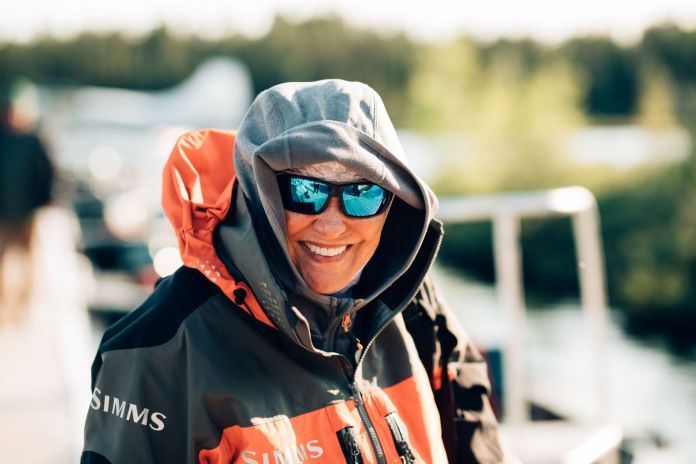
The previous weekend saw lots of typical upstate NY weather. Most anglers heeded the weather and stayed home; however, a few braved the bad weather and still went out.
There were not that many anglers, but those that did fish were able to get into fish. Every week the fishing continues to improve on the river.
This Coming Weekend
If you are fishing this weekend, the challenge will be the sub-zero weather. Snow will taper off by Thursday night into Friday morning, but temperatures are going to drop and make it very cold on Valentine’s Day. Based on the weather forecast with the wind and the cold, it will feel like -25F degrees. Saturday will be a little bit warmer than Friday, and there will be some precipitation on Sunday.
The river is getting close to starting to move into drop back season. I’ve spoken to a few trusted sources, and they say its not there yet but should start soon. That will mean using different techniques and strategies. That is why we have begun to include guide tips on how to fish drop back season. Please see below.
Three Guide Tips For Getting Ready For Steelhead Drop Back Season from @guidewayneo who is a guide that guides on the Salmon River NY and the surrounding areas. Wayne gives us three points on how to be ready for the steelhead drop back season.
1. Dropback steelhead are hangry.
A drop back steelhead is hungrier than two guys using their fish whistle. Steelhead will be searching for baitfish, so striping or swinging streamers will produce like no other time of the year. They also like flashy items that have movement imitating baitfish.
2. Bump up your leader line
Spring normally means big water, and drop backs want to eat, so no need for light leaders.
3. Drop backs will squad up.
If you hook into a drop back in one area. Continue to work that area because drop backs like to stay together.
Due to the weather, there are fewer anglers reporting. However, based on DSR reports and the overall pattern, we can say that the fishing continues to improve. The one or two that have reported to us stated that fish are still silver down in the DSR. If you are looking for fresh fish, give the DSR a chance by getting an afternoon pass. As soon as the sun warms up the area by lunchtime, the fish are getting ready to be active, so an afternoon pass is a great way to give it a try.
Town and Pulaski
The weather kept many anglers from fishing the area. The two anglers who reported over the weekend stated they fished from Black Hole to Lower Ballpark and the only action was at the Long Bridge.
81 to Altmar
The weather kept many anglers from fishing, but once again, the area that we received reports from were the Lower Fly Zone and School House. Additionally, there was a report from the Railroad Tracks. Otherwise, things were quiet from anglers and the river. Additionally, guides are reporting that although water is low, their clients have been happy as the low water is putting the fish in predictable places on the river.
Do you love inspirational fly fishing films that promote women getting out on the water? Then the 50/50 On the Water Film Tour is the show for you. From Argentina to Iceland this film covers women, families, and friends enjoying fly fishing. I was lucky enough to see the Anchorage, AK showing and could not pick a favorite because all the films were incredibly impressive. I thoroughly enjoyed the Icelandic content and mother-daughter relationship of My Mom Vala, which was also featured in a previous F3T. No Excuses was another fun film to see because it featured an Alaskan brand, Fishe Wear, and Alaskan women. The Last Best Man was another great film that highlighted a daughter teaching her father how to fly fish. You will be certain to find at least one or likely more fishing films to love at the 50/50 On the Water tour.Â
The 50/50 On the Water movement was created by Orvis to encourage women in fly fishing. From women’s gear to fly fishing workshops and nonprofit partnerships, the 50/50 On the Water movement is inspiring people to go fishing.
As of right now, there are showings coming up in Massachusetts, Michigan, Arkansas, and Colorado. You do not want to miss out on this amazing film tour!Â
Next up on the Behind the Lens feature of F3T, we had the pleasure to sit down with Jay Siemens from Thrive Visuals to discuss their film Common Thread. Common thread follows angler, mother, and grandmother Mary Pettigrew as she demonstrates her life for all things Pike. Alongside her family, Mary’s trips to Northern Saskatchewan have woven together a web of memories that will not be forgotten. As the next generation of family pick up the fly rod, the common thread amongst them continues to grow stronger. Follow along with the tear-jerking, heart-pounding story that serves to invigorate and inspires future anglers for years to come.
Flylords: How did you get your inspirations for this film?
Jay: Before I made the switch into being a full-time cinematographer I spent my summers guiding at Wollaston Lake Lodge in northern Saskatchewan. This is where I had the chance to meet (and guide) Mary, Barry, and a number of their family members. From the first day I spent with them, I could tell they were a pretty special bunch of people. Fast forward 4 years later, owner of Wollaston Lake Lodge, Mike Lembke, approached me about creating an entry for the Fly Fishing Film Tour. Once the dialogue started with Mike I knew it was time to start doing some research into what could make this a worthy film. While I knew flashy slow-motion topwater eats and grip and grins of 40+ inch pike was important, I knew a good story would trump all of that. Quickly my mind was drawn back to the Pettigrew/Austin family I had guided for many years previous. They were more than just past guests of mine, they were friends and a family that had fly-fishing deeply woven into their lives. This was a story that begged to be shared.
Flylords: What was your goal in telling Mary’s story?
Jay: The goal was to share how fly fishing had become a “common thread†throughout Mary and Barry’s family. From the Southern United States to Northern Canada, fly fishing was something that bonded all generations together in their family and something they could all experience together. Not only does she set an incredible example for women in fly-fishing, but her story and her life is a good one to know.
Flylords: What was it like working so closely with Mary?
Jay: Without a doubt, Mary is one of my favorite people on this earth. I call her my “Wollaston grandma†and she gladly accepts the title. As a filmmaker having subjects that trust you is a key component to a successful film and a painless filming process. I’m not sure Mary and the family knew exactly what they were in for when she agreed to be a part of this project, but they were all an absolute pleasure to work with.
Flylords: Any super-special experiences while filming you care to share?
Jay: There was one specific moment during the shoot where it finally felt like things were coming together. We had Mary’s brother Barry in the boat, teaching his granddaughter Ela how to fly-fish. First spot of the day and Ela spots, casts, and sets the hook on a MONSTER Pike. After a lengthy battle, our guide lifted the 46 inch Northern Pike into the boat. I’m not going to lie I was holding back tears as I’m sure Barry was as well. It was a very special moment and I feel very grateful I happened to be in the boat at that moment with a camera in my hands.
Flylords: What was the most challenging part of filming this piece?
Jay: As a filmmaker/director your role changes project by project. As much as I had a vision of what I wanted this film to be, I knew there were times where I just had to sit back and let the situation unfold. As well, I was filming their vacation. Wollaston Lake Lodge is their family’s happy place and I know how intrusive cameras can be sometimes. Throughout the production, I was very mindful of making sure they were still enjoying their trip and I wasn’t putting them on edge.
Flylords: What kind of camera setup were you using?
Jay:Â The majority of this film was shot with the Sony FS5. It’s such a nice compact camera that is perfect for this sort of ‘run and gun’ documentary-style work. One of the best parts of this camera is the slow-motion. I’m a slow-mo addict and this camera can crank out 240 frames per second, which allows for those Northern Pike eats that seem to freeze in time. For glass used in this film the majority of the time, we were using Sigma ART and Canon EF lenses attached with a Metabones Speedbooster. The aerials were shot on the DJI Mavic 2, such a great compact drone that is ideal for throwing in the backpack and hopping on a floatplane.
Flylords: If you could give a piece of advice to young filmmakers looking to tell a story such as this one?
Jay: Story is EVERYTHING. While I’m a gear nut myself, I keep getting reminded that the story is more important than any drone shot, color grade, or soundtrack… the story is key! If you have a good enough story people will listen, it doesn’t matter if it’s filmed with an iphone8 or a Red Camera.
Flylords: You were a guide at Wollaston lodge before you filmed this piece, how was it revisiting the area no longer as a guide, but as a filmmaker?
Jay: Wollaston Lake Lodge is one of my favorite places on this earth. Being able to come back to the lodge is a highlight of my summer no matter what role I’m in. I still have many friends that I stay in contact with year-round from my “Wollaston Family†so it feels like I’ve never missed a beat. It absolutely made the story easier to tell when I had spent so many days on the water making memories as a fishing guide there.
Flylords: Being a guide in a pikey area, what do you think is so special about targeting these fish?
Jay: There is nothing like rolling into a crystal clear bay in northern Canada, not knowing if it has been weeks or months since someone had last fished it. As you move into the back of the bay you see these “logs†sunning themselves. Once you land a cast anywhere remotely close to these dark shadows in the shallows you’ll see why they are favorited by so many anglers. It’s tough to explain the moment when a charged up Pike turns to your fly, opens it’s mouth and inhales your bunny leech. Sight fishing for aggressive Northern Pike is one of the best experiences in freshwater angling and if you haven’t added it to your bucket list I highly recommend it.
Flylords: What do you hope audiences take away from this film?
Jay: I want to show people it is never to late to learn something new. The fact that Mary could pick up a fly rod at age 60 and become such an accomplished angler is truly a testament to that.
Thank you Jay Siemens for your time and for discussing this incredible project with us. Make sure to go follow Thrive Visuals on Youtube, and check out their website for more incredible storytelling!
Also, follow along with the film tour @flyfishingfilmtour to see where they will be next!
Find out when F3T is in your town, and buy tickets before they sell out!
Guiding for the Future is not about landing the most or biggest fish. G4F is about knowledge, ethics, conservation, and a commitment to stewardship as core responsibilities of a professional guide and outfitter.
The program provides advanced levels of knowledge and skill development for professional fishing guides and aims to inspire dedicated stewardship of aquatic ecosystems while increasing the knowledge and professionalism of guides, outfitters, and the fly fishing industry as a whole.
In 2020, G4F will host a certification course for up to 25 students. The program includes online study at students’ own pace in February and April, followed by a four-day practicum May 10-14 in Emigrant, MT.
The Wild Steelhead Coalition (WSC) is excited to announce that we have secured a major victory for angler access and steelhead conservation by completing the purchase of an eight-acre parcel of land with 2,000 feet of riverfront on the lower Grande Ronde River in Eastern Washington. In the coming months, the WSC will donate this land to the Washington Department of Wildlife (WDFW), which will permanently protect this riverfront property from development and continue to provide public access to this famed summer steelhead river in perpetuity.
This project, which would not have been possible without the support of the Inland Empire Fly Fishing Club of Spokane, the Washington Chapter of the Backcountry Hunters and Anglers, and the Washington State Council of Fly Fishers International, is a testament to what the angling community can accomplish when we work collaboratively on behalf of anglers and wild steelhead. Together, these groups and hundreds of donors across the region raised more than $35,000 for the purchase of this unique property.
We would like to extend a special thanks to the previous landowners Radar and Kay Miller, who for years allowed the public to access their land and fish this prime stretch of steelhead water. When Radar and Kay decided to sell this parcel of land, they were committed to maintaining public access and worked proactively to figure out the best way to permanently conserve this land.
“We all owe a debt of gratitude to Radar and Kay Miller for putting the public good ahead of profit and choosing to sell this land to us, and in turn, the general public,†said WSC board member Josh Mills. “As they had hoped, this land will now be permanently protected for future generations. The Grande Ronde is my home river, and someday soon I plan to take my boys to this piece of water to show them this special place and teach them the value of public lands.â€
The Wild Steelhead Coalition was invited to help secure this land by the Inland Empire Fly Fishing Club of Spokane after the club had been approached by the Millers. The WSC immediately recognized the amazing opportunity, and we committed important initial funding, launched a larger fundraising campaign, created and implemented the property acquisition plan, and negotiated the land donation timeline with WDFW. We thank the Inland Empire Fly Fishing Club for their leadership, financial commitments, and the opportunity to work on this project.
This project was a true collaboration by the fishing community. In addition to Inland Empire’s leadership and support, the Washington Chapter of Backcountry Hunters and Anglers, the Washington State Council of Fly Fishers International, numerous regional fishing clubs, and Sage Fly Fishing played a pivotal role in the fundraising efforts. The dedicated members of the Wild Steelhead Coalition also continued their long history of supporting wild steelhead and the fishing community by generously stepping up to support this project.
Completing the land transfer from WSC to WDFW is scheduled to take a number of months, and during this transition angler access to the river will be maintained through a land-use agreement with WDFW. When this transfer is finalized, WSC will place signage on the property that thanks to the Millers for their commitment to public access and that tells the story of the Grande Ronde’s summer steelhead and the challenges facing wild steelhead throughout the Snake River basin.
A successful collaboration like the purchase and donation of this land on the lower Grande Ronde River speaks to the vast number of people who value wild steelhead rivers and public access to Washington’s irreplaceable wild places. Thanks to this broad coalition of advocates, eight acres of land and nearly 2,000 foot of riverfront on one of the country’s best summer steelhead rivers will now be permanently protected and forever owned by the public.
To learn more about the campaign and location of the parcel on the lower Grande Ronde River, please refer to the WSC’s October post announcing their fundraising effort.
Yesterday, Wild Fish Conservancy, Center for Biological Diversity, Center for Food Safety, and Friends of the Earth filed a lawsuit challenging the recent Washington Department of Fish and Game decision to permit open-net salmon farming in Washington’s Puget Sound. Do you remember the 2017 Cooke Aquaculture net-pen collapse that released 260,000 non-native Atlantic salmon into Puget Sound? Well, this lawsuit challenges Cooke receiving another permit.
Kurt Beardslee, executive director of Wild Fish Conservancy, said: “It’s outrageous that once again the State is leaving the oversight of this industry to the public. After the Cypress net pen collapsed, our research discovered that nearly every fish that escaped was infected with a pathogenic exotic salmon virus that had been undetected by WDFW and unreported by Cooke. Our litigation has won settlements many times larger than the penalties levied by the State, and the State has left it to us and the pens’ neighbors to detect serious problems. Given this history, it is beyond comprehension that WDFW would grant this permit without first completing a comprehensive assessment of its effects on our salmon, our sound, and our killer whales.â€
For more check out Wild Fish Conservancy’s Press Release.
Last month, I was fortunate enough to sit down with Trout Unlimited CEO and President Chris Wood to discuss TU’s highest priorities going into 2020. Over the course of our chat, Chris touched on conservation and membership goals and even highlighted a couple restoration projects. Like any other environmental or outdoor non-profit organization, TU must overcome a myriad of obstacles to achieve their goals. The constant need for financial resources and volunteer hours and short-sighted federal or state Government policies are the primary barriers to achieving these goals. Fortunately, TU is uniquely positioned to overcome these obstacles and facilitate lasting cold water conservation. TU, as Chris puts it, uses “the results and good will generated by the partnerships, relationships, and in many cases, friendships created through our restoration work, and use that to leverage positive policy outcomes.”
Chris Wood with a nice Bristol Bay steelhead
Conservation:
Going into 2020, TU remains focused on restoring and conserving our Nation’s cold-water fisheries. Specifically, Chris highlighted three primary conservation priorities: fighting the Clean Water Act rule changes, protecting Bristol Bay, and working towards removing the four lower Snake River Dams.
If you are familiar with the Clean Water Act, you know it is the strongest federal protection for our waterways. You probably are also somewhat familiar with the recent rule changes to the bedrock environmental law. The Trump administration significantly narrowed the scope of the law, barring thousands of miles of small, headwater streams and millions of acres of wetlands from federal protection. Chris likened these streams that will lose federal protections to, “the capillaries in our bodies. They carry all the nutrients and—if you’re not careful—pollutants downstream into the larger water bodies.†These rule changes threaten so much of what TU stands for and works to prevent.
The Potomac River headwaters project taking a look at the work that Trout Unlimited does across an entire watershed.
Ideally, TU can work to undo these attacks on the Clean Water Act in Congress by advocating for the explicit inclusion of small, intermittent, headwater streams in a Clean Water Act reauthorization bill. But, if that proves politically unfeasible, Chris described the possible legal remedy. “Actually, this is shocking: the Government actually said, ‘it is impossible for us to predict the effects of this change.’ This is basically the Government saying, ‘sue me.’†In the end, Chris was optimistic, because clean water carries with it amazingly broad and bipartisan public support. “99 percent of Americans will never see Bristol Bay, but everybody understands clean water.â€
And while the vast majority of Americans will not be able to experience the raw beauty of Bristol Bay due to a multitude of factors, the possibility of that experience should not be destroyed by a foreign-owned mine. TU remains poised to protect Bristol Bay from Pebble Mine. The mine would be located precisely in the headwaters of two Bristol Bay rivers—the Kvichak and Nushagak. The Kvichak river accounts for an astonishing amount of the entire world’s wild sockeye salmon—60 million fish in a brief two weeks long fishing season. The Nushagak is no different; each year, this river is one of the top three Chinook salmon rivers in the world. This region is too important for the native tribes of Alaska, commercial fishermen, a thriving recreational economy, and the world’s supply of nutrient rich wild salmon to be jeopardized by the scientifically-questioned Pebble Mine.
Bristol Bay sockeye salmon, courtesy of Fly Out Media
Last fall, TU joined a diverse coalition of stakeholders and organizations by suing the EPA over the proposed determination for Pebble Mine. Chris said TU, “is in a holding pattern right now.†The legal system is a slow institution, which in the case of Pebble Mine, is a good thing. Delaying the mine—at this time—is an effective tactic to protect Bristol Bay. Also, on top of these lawsuits, Pebble Mine still does not have all of the necessary water permits, and this permit process has since been delayed. TU is not a litigious organization, but sometimes serious measures are needed to protect what you love—this is that scenario.
TU’s third conservation priority is removing the four lower Snake River dams—Ice Harbor Dam, Lower Monumental Dam, Little Goose Dam, and Lower Granite Dam (order ascending upstream). The recovery of the West’s salmon and steelhead is a significant long-term priority for TU. The removal of these four dams, however, could happen sooner rather than later, and TU believes it would immediately provide habitat improvements for the struggling wild salmon and steelhead of the Columbia River Basin.
The frustrating part of all this work, however, is, “as a country, we have spent $17 billion trying to recover wild Snake River salmon and steelhead.†Yet, salmon and steelhead recovery efforts are showing little promise, despite the hefty price tag. Chris noted that, “these dams provide less than five percent of the region’s hydroelectricity,†and a nonpartisan research group found that removing these four dams, “would result in a two-to three-fold increase in salmon abundance in the Snake River Basin.†After years of dwindling salmon and steelhead stocks, countless man hours, and billions of dollars spent, removing these four outdated and inefficient dams appears to be the only logical option. These fish are the embodiment of healthy watersheds; when watersheds are clean, unobstructed, and flowing, these fish thrive, but without those prerequisites, they falter. In 2020, TU hopes to see continued progress on removing the four lower Snake River dams through both its grassroots and policy influencing reaches.
Noteworthy Projects for 2020:
Obviously, the three identified conservation priorities generally capture most of the national attention, but TU has hundreds of projects that improve local watersheds. For example, the recently unveiled Battenkill Home Rivers Initiative. This famous East Coast river system has suffered from habitat degradation caused by deforestation, nutrient pollution, channel modification, and sedimentation. The Battenkill Home Rivers initiative seeks to restore this historically productive fishery and improve its resiliency. For more information about the Battenkill HRI, including how to become involved as a volunteer, contact Jacob.Fetterman@tu.org or BattenkillHRI@tu.org.
Prior to launching the Battenkill Home Rivers Initiative, Trout Unlimited completed a watershed assessment, which identified many areas that could benefit from habitat enhancement.
Another project Chris highlighted was The Driftless Area Restoration Effort, which encompasses an area of 24,000 square-miles in the Upper Mississippi River Basin (Wisconsin, Minnesota, Illinois, and Iowa). The region’s 600-plus spring-fed creeks, which total nearly 6,000 stream miles, were severely harmed from early European settlement and continued agriculture practices. Erosion and sediment pollution were the primary factors TU sought to remediate. Since its inception in 2006, TU–with much help from partners–has secured hundreds of miles of public stream access, restored 12-18 miles of stream per year, and responsibly managed the millions of dollars of restoration funds. Thanks to this work and funding, streams and anglers alike are enjoying a “10-fold increase in fish production post restoration.” The successes in The Driftless Area proves that restoration efforts–which TU has become so known for–work and are essential for fly fishing and outdoor recreation as a whole.
TU’s restoration work is no small endeavor, but someone has to do the heavy lifting!
Membership Goals:
As a non-profit organization and like countless other conservation organizations, TU endures many roadblocks in the execution of its mission. Whether it be securing necessary funding levels and types of money or maintaining and expanding its membership and volunteer force, TU is not invincible. But that is not always a bad thing, for example it forces TU to remain nimble and adapt.
A public lands rally held at the Colorado state capitol building. (Joshua Duplechian/Trout Unlimited)
TU enjoys, arguably, one of the largest and most active membership bases at over 300,000 strong. However, TU is running into a demographic problem: its members’ average age has shifted from 58 years of age to 62 in the past five years and TU is not as diverse as the collective fly fishing sector. For example, the fly fishing sector is roughly 30 percent women and 20 percent people of color, whereas TU is about seven and two percent, respectively. In order for TU to maintain its influence and position in the conservation space, it must continue to grow and attract these underrepresented demographics. Sure, this would provide tangible benefits—i.e. more member contributions and volunteers—but more importantly, it builds on the inclusiveness of TU and the entire fly fishing community.
“It doesn’t matter if you’re a woman or a man or a person of color or whatever. If you walk into a place and you’re made to feel welcome immediately or if you’re a stranger and someone comes over and greets you and introduces you to a group of people, you’re going to feel welcome and want to come back.†That is Chris Wood’s goal for TU—to become much more welcoming and in turn develop a new stream of genuine and motivated members.
TU also plans to become younger and reinvigorate its membership through its “stream of engagement.†TU’s Headwaters Program is paramount to this. Headwaters involves programs such as Trout in the Classroom and Adopt a Trout for younger students, youth camps and teen summits for older kids, and the Five Rivers Programs for college-aged kids. All of these programs seek to funnel the best and the brightest into TU—and specifically into leadership roles in local chapters.
In the end, TU is a national organization, but it is nothing without its members and volunteers committed to improving their local waters. Chris concluded our chat with, “if you’re not consciously mentoring and training the next generation of conservation stewards, you’re going to lose that generation,†because ultimately, “TU is an organization run by ordinary people who raise their hand, people who want to get outside, who want to get involved.â€
As 2020 really starts to get into the swing of things, TU has, unsurprisingly, hit the ground running as it works toward its goals. We at Flylords look forward to continuing to work with TU and follow its achievements. In closing, I’ll leave you with this quote from Chris: “This is about conservation. If we don’t look more like America and if we aren’t more welcoming of America, we shouldn’t be surprised when a lot of these things we take for granted—like the Clean Water Act and the legacy of Americas’ public lands—are lost.â€
Interested in becoming a TU member? Click this link!
In this week’s How to Tie video feature, Gunnar Brammer is here to show us how to tie the Pheasant Rump Muddler.
Learn About This Fly
Difficulty: Intermediate
This fly is a muddler variation of the well known Pheasant rump deceiver style fly. What sets this fly apart from the deceiver is simply the implementation of the muddler head. Tied to imitate small baitfish such as sculpin or minnow, this fly is simple yet extremely effective in enticing hungry trout feeding on schools of juvenile fish.
When it comes to targeting big fish, this fly would most likely be left on the tying table by uneducated anglers. However, even though it doesn’t utilize clattering beads, or swinging articulated tails, this flies effectiveness lies in its low profile. With the many strands of pheasant feather swinging behind it, this fly comes to life when tossed into the streams current, and effectively emulates a large portion of a big fish’s diet.
As the name indicates, this fly is constructed of feathers found on a pheasant rump, which is a small section of the bird that holds a range of different sized hackle feathers. These can be found in almost any fly shop, if unavailable, rooster hackle can also act as a decent substitute. For new fly tiers, deer hair can oftentimes seem like a daunting task, however, if you’re careful and take your time, great results are never far off.
Ingredients:
Tail: Pheasant Rump
Body: Palmered Pheasant Rump (Long to Short)
Wing: Stacked Pheasant Marabou
Pec Fins: Pheasant Shoulder
Head: Spun Deer Hair
Thread: 0.006″ Mono
Hook: Ahrex sz. 4 Saltwater Streamer
Head: Any epoxy or UV resin available
Now you know how to tie the Pheasant Rump Muddler!
Adam Fisk was enjoying a nice guides’-day-off paddling his kayak in the waters off the Pacific coast of Panama when an estimated 500 lb Black Marlin took his bait. What resulted was a 6-hour kayak-based battle that towed Adam over 15 miles, impressive considering Adam was apparently using 100-lb fluorocarbon for his leader.
The battle reminds us of the Ernest Hemingway classic, The Old Man and the Sea, it’s man-versus-fish in a foot-powered boat. This video had us asking ourselves “Why would anyone attempt this?” but, it’s pretty clear from the angler’s audio that this battle must have been a 6-hour adrenaline ride like no other.
Striped Bass fishing is known for its tough conditions, crowded places, pretty fish, and sometimes intimidating fishermen. Although those stereotypes can be true, they really aren’t that harsh and when you do find some fish, you are in for a treat. If you’re planning to chase Striped Bass in New England next summer, this gear list will help get you started, help refresh your inventory, and hopefully help cure some cabin fever!
Schoolie Striped Bass, Nate Holmes
Rods: For fly rods, look towards a fast action 9wt fly rod. You can get away with a 7-8wt for schoolies (bass under 28 inches), and some people use up to 10-11wts for the 40+ inch cows. A 9wt offers practicality but still has enough backbone to lift the cows. For a medium-priced rod that preforms highly, I would recommend the Scott Tidal.
Tools of the trade, Nate Holmes
Reels: A salt-safe, large arbor fly reel is necessary for all saltwater fly fishing. The large arbor allows much faster line pickup along with more leverage to crank the bad boys! The reel should be able to hold at least 200yds of 20 or 30Lb backing. I would recommend the Ross Evolution R Salt or the Nautilus CCF-X2 as higher-end options.
Lines: For an all-around Striper line, I would recommend a cold water intermediate fly line. The specialty coldwater lines won’t stiffen up in the colder North Atlantic. A lot of Striper fishermen have a strong opinion on whether to use a floating or sinking line, but in reality, different line types are best for different situations. When bass are blitzing on top, a floating line is favorable to keep your fly in the strike zone, but when the cows are hunkered deep and you need to sink a big fly down to them, a full sink line is necessary. An intermediate fly line in just a bit denser than water so it sinks slowly, which makes it the golden mean for Striper lines. Some great lines for Stripers are the Scientific Anglers Sonar Titan Full Intermediate or the Cortland Compact Intermediate.
An Underwater View, Max Holmes
Glasses: Polarized Sunglasses are essential for all fly fishing. They cut down on the glare on the water to make it possible to see what’s going on below the surface. Polarized glasses make sight fishing realistic and very effective. Most brands make polarized lenses ranging from the $10 Walmart variety to the $260 Costas. Like many other things, you get what you pay for, although the cheap ones still work fine, they might just break or fog up easier.
Packs/Bags: A waterproof pack/bag is very useful while Striper fishing. Whether you’re getting tossed around in the surf of keeping your gear on the bottom of a boat, a good waterproof bag will keep your gear, safe, clean, and dry. If you are mainly wading, a backpack would make the most sense but if you will mainly fish from a boat, a gear bag will fit your needs better. My recommendations would be the Fishpond Thunderhead Backpack and the Fishpond Cutbank Gear bag as higher-end options.
Wading the Striper Flats, Max Holmes
Leaders: Leaders can easily become over complicated. You can buy 20 and 16 lb saltwater tapered leaders or just use a straight piece of line from 5 to 9 feet of those weights.
Flies: Reflecting on the many different situations one can find themselves in while Striper fishing, there are many types of flies you could throw at them. When they are blitzing, smaller baitfish and sand eel patterns match the hatch, sand eels rule in the early season, at night a large eel fly can bring out the cows, and when you find yourself on a flat, especially in the Cape Cod area, Stripers will gobble a properly presented crab fly.
Striper Flies, Nate Holmes
The most important thing whenever you are fishing in a new area or even one you have fished before is knowledge. Knowledge of where the fish are, what patterns are producing best, and were to keep out of the crowds can make or break your day. Striped Bass love current, so look for rips, large rocks exposed to current, depth transitions, when estuaries dump out into the ocean on a falling tide, and rocky shorelines or sandy flats where the current is present. While you are looking for these places, keep your eyes out for birds diving at the surface, known as “working birdsâ€.


 Image used by permission from @guidewayneo