Home Blog Page 246

2020 F3T Behind the Lens: TIME

For this installment of Behind the Lens, we sat down with Flylords founder Jared Zissu to discuss his new fly fishing film, Time. The film is told from the perspective of fly fishing legend, Flip Pallot and pays homage to the infamous Lefty Kreh and the life he lived.

Flylords: One of our favorite things about the film was that it mixes fly fishing in with some real life lessons. Was this something you planned before the film, or did it just fall into place throughout the shooting process?

Jared: I think more and more as we evolve and improve as filmmakers in general, we’re searching for stories that are more impactful than just fish porn. And we love fish porn, and there’s definitely a time and place for that. For this project in general, we had the honor of working with some of our absolute idols, like Flip Pallot, in honor of Lefty Kreh, So obviously there needed to be some deeper meaning involved with the stories and characters.

Flylords: Where was the film shot, and what camera gear was used in the process?

Jared: We shot the film in Mims, Florida. It’s Flip Pallot’s hometown, and there are a few rivers there. We shot for three days down at the Indian River. All the interviews were taking place at Flip’s house, which is an incredible place. Beautiful to work in. We shot everything on a RED camera, and all of the drone footage was shot on a DJI Mavic 2. We also decided to rent these cinematic anamorphic lenses. We kind of splurged on them for this project because our cinematographer thought that they would really amplify the shots we were trying to get.

Flylords: We really liked the opening quote at the beginning of the film. What inspired you to use that quote and what does the quote specifically mean to you?

Jared:  There were definitely a few edits, and what was interesting about this piece was that there were so many different people involved from the Fly Fishing Museum and all of their members, to all of our team, and to the Fly Fishing Film Tour. So, there were a lot of voices, especially on those first few laps. We were trying to find a way to introduce the film and that whole quote actually came from our editor, Ben, while he was just messing around. He wrote that quote up himself, and I don’t think he ever expected us to really like it and actually stick it in the film. I think once again, it takes your normal fly fishing film and puts something a little more unique on it when you start with that quote.

Flylords: What inspired you to use Flip Pallot as the main narrator of the story?

Jared: This is an easy one. The guy has got the most cinematic voice in all and beyond fly fishing. That was a no brainer. He was also just so poignant in our interview. Every time he spoke, the room just slowly drew quieter and everyone really wanted to focus on what he was saying.

Flylords: What were some struggles you faced during the filming process?

Jared: I think the first struggle that we encountered was probably trying to get fish in the boat. We had all the talent, we had all the gear, we had the team, we had the story, and getting fish in the boat to pull everything together was definitely a challenge. We got super lucky and out of nowhere got that really nice Bass. That really helped pull the story together because it draws in the audience with a special catch like that. So that was awesome. Another struggle was post editing. Like I said, there were a lot of people involved with lots of opinions, so just having to make decisions and trying to please everybody was tough.

Flylords: What was the overall message you wanted to get across with the film?

Jared: In our very preliminary conversations with Flip, we talked to him and one of the things he said to us was while we were on speakerphone in our production studio really stuck. He said all he had is time, that’s all he has. I remember us all listening to this legendary guy on speakerphone and we were all  26, 27, 28 year-olds, and that was such an impactful quote for us to hear. We’re at the age where time is moving so fast, exactly what Flip said in the video. Time is moving so fast and it’s easy to get carried away with all the little bullshit in life. Hearing that made us think, how can we tell this story about time through fly fishing and then incorporate Lefty who he passed away in 2018, and is the most influential person probably ever in the sport of fly fishing.

Flylords: How did you come up with the idea for the film?

Jared:  We got approached by The American Museum of Fly Fishing, and they asked if we wanted to do a film to engage a younger audience into the sport, and have the film featured in the Fly Fishing Film Tour. They thought that we did a nice job connecting with the younger generation and once that offer was put on the table, we put our heads together and said, who’s the best person in the sport that can connect the museum and history with the younger generation? Flip Pallot definitely came to mind as someone to work with on a project like this.

Flylords: For the younger generation who aren’t as familiar with Flip Pallot or Lefty Kreh, how would you explain to them their role and impact on the sport of fly fishing?

Jared: That’s a good question. There are definitely people who can answer that better than me, but from my perspective, they really embody the whole history of fly fishing. Lefty Kreh Traveled all around the world, teaching so many people about the sport and how to get into the sport. They really were pioneers, and without their influence I don’t know if fly fishing would be the same today.

The interview was done by Flylords Content Intern Owen Rossi, check him out on Instagram at @nativerelease.

Be sure to follow along with @teamflylords, for the behind the scenes look at @flylords adventures.

Also, follow along with the film tour @flyfishingfilmtour to see where they will be next!

Find out when F3T is in your town, and buy tickets before they sell out!

2020 F3T Behind the Lens: Project Rainbow

2020 F3T Behind the Lens: Baja Lines

7 Must Watch Fly Fishing Youtubers

Organization of the Month: Fly Fishing Collaborative

For this installment of “Organization of the Month,” we talked with the folks of Fly Fishing Collaborative (FFC), a nonprofit organization focussed on creating sustainable solutions to poverty and human trafficking through fly fishing. Bucky Buchstaber, FFC’s Executive Director provided us with some great insight into how FFC accomplishes its mission. Follow along for more!

Flylords: Tell us how and why Fly Fishing Collaborative started?

FFC: The Fly Fishing Collaborative (FFC) started with my growing realization that when our passions are only used for ourselves they can become meaningless and tired. As humans we’re not meant just to consume, we’re meant to create beautiful things, to impact others, and to leave a mark on this world. There needs to be a bigger purpose behind all the things that we do, and that’s when it dawned on me – we can use fly fishing to create change. We can simply be who we are, do what we love to do, but do it for to benefit others… not just ourselves. When we live that way, when we live for the good of other, especially those that need help the most, we also thrive as the human being we’re supposed to be. That’s the ethos of the Fly Fishing Collaborative.

Back in 2013, I was wrestling with ways to practically live this idea out in my own life. At that same time some friends of mine learned how to build aquaponics farms. Aquaponincs farms are a closed loop environmentally safe farming system that grows fish and vegetables together in a symbiotic relationship. I knew these farms had the potential to create sustainable resources for people suffering around the world–especially people sold into human trafficking due to a lack of resources. I marveled at the potential for what would happen in the world when resources were present to keep children from being trafficked and enslaved. My wife suggested that we try to fund one of these farms for a safe home in Thialand that we were aware of. That’s when it dawned on me: what if we could mobilize the fly fishing community around this project.  I knew that for this to happen, it would be because of countless people working together. I questioned to myself, “are there people out there willing to contribute a piece of their livelihood to make this happen”?  It turns out there are. So many wonderful people caught the vision and became part of our collaborative community.

Flylords: Just how big is human trafficking in today’s society?

FFC: According to recent UNICEF figures 1.2 million children are trafficked each year globally. This is the fastest growing crime industry in the world generating approximately 10 billion dollars annually. Trafficking occurs in every country and in every socio economic status…but the poor are especially vulnerable.

Flylords: Fly fishing is a powerful force, but how can it help end this horrific problem?

FFC: The Fly Fishing Community can absolutely be a powerful force. I think the first step in making a difference in a global issue as big as human trafficking is to overcome doubt. I think we’re capable of much more than we give ourselves credit for. Our doubts could stem from something we tried once and failed at, or it can come from a troubled childhood (like mine) where insecurity was beat into you. It could stem from rejection or abandonment where insecurity was the only thing that someone left. Whatever the case, I found that we are able to reach far beyond the limitations that are imposed on us, or that we set for ourselves. I think we set boundaries to what we can accomplish far shorter than we need to. I also think society can set boundaries that hold us back from doing what we’re meant to. It might tell us to that there’s only one way we can solve a problem, or it can even teach us to ignore the problem entirely and let the governing authorities handle it. But I know this – when there’s a community with shared passions that unify together around a common goal, it can make a massive difference. That leads to the next step: collaboration. We may not be able to end human trafficking by ourselves but we can become a part of a greater whole that is a growing force of good in the world. The more communities that stand together against this sort of injustice the faster this problem of human trafficking will dissolve.

Flylords: Tell us more about the project side of FFC, specifically the aquaponic farms.

FFC: The money we raise at our fly fishing events, from the sales of our FFC products, and through direct giving is used to build sustainable aquaponics farms that provide a resource to women and children that would otherwise become currency, literally needing to be sold as livelihood in a broken world. Every $15,000 we raise provides an aquaponics farm for an orphanage, safe home or village that has been impacted by poverty and trafficking. Equipped with food, water, and fresh produce they are then able to put their time and resources toward empowering other local leaders to care for additional women and children that would otherwise be sold into slavery.

We also rely heavily on volunteer support on each farm that we build. Each project takes between 8-10 volunteers to find their way to the destinations we go to and help us get the job done. It’s always a life impacting experience for our teams, and We always try to throw a little fly fishing in at the end of each trip. Fly fishing is what links us all together in the first place.

Flylords: How many people has FFC helped shield from human trafficking? (This might be an impossible number, but any similar metrics would be great)

FFC: That’s a great question but difficult to put metrics on. Since we founded we have built 12 farms in 10 countries. Most of our farms are adding to the efficiency of safe homes and orphanages that are caring for women and children rescued from brothels, abuse and extreme poverty. Everything we do is collaborative. Once we locate a safe home or orphanage that is doing great work in their community we come alongside of them and build a farm to empower them with their own sustainable source of food which offsets their food costs and gives them the opportunity to create a revenue source through the sale of fresh fish and produce. Our farms combined are currently feeding nearly 1,000 women and children.

Flylords: Are these aquaponic farms operational yet? If so, can we learn more about some of the locations?

FFC: The farms are operational the moment we leave them in the hands of the leaders we build them for. We spend extensive time at each location training farm managers to care for their new aquaponics system. We’ve built farms in Thailand, Nepal, Uganda, Rwanda, Zimbabwe, Kenya, Mexico City, Peru and Honduras. Choosing and training good farm managers is critical to the ongoing success of an aquaponics farm system. Early on in our development, we had a couple of farms fail due to a lack of understanding about the farm.  We’ve since remedied that by contracting an agricultural and aquaponics specialist to come with us on each build to assist in the training. It’s been going amazingly well.

Bucky Buchstaber, Executive Director of FFC

Flylords: Does FFC have any big developments or projects for 2020?

FFC: Each year we receive more and more requests for farms from organizations and people serving communities around the world. We’re overwhelmed with farm requests for 2020 and are working hard to build up our infrastructure to add to the number of projects we commit to each year. Historically, we’ve built two farms per year, but in 2020 we aim to double that amount. On January 29th we wrapped up a farm for an orphanage in Honduras caring for 32 kids rescued from heinous abuse and poverty. Now we are setting our sights on new projects in Nepal, Thailand, the Dominican Republic, Uganda, Belize, and possibly a second farm in Honduras. It’s only a matter of time and funding, to find out which of these requests we can meet this year.

Flylords: I noticed that FFC has a pretty extensive product line consisting of handmade leather products, custom flies, and FFC apparel. How does the sale of these products further FFC’s mission and projects?

FFC: Our FFC branded fishing accessories, custom flies, and apparel are all fun ways to collaborate with other fly tyers and craftsmen that can use their skills to contribute to the cause. The products also help create awareness about who we are and what we’re doing. Additionally, all profits from the sales of each item go straight to our mission of creating sustainable resources to poverty and trafficking around the world.

Flylords: Can you tell us more about the upcoming fifth annual FFC Banquet?

FFC: Our annual banquet is an incredible event where fly fishermen and outdoor enthusiasts from all over the northwest pack out our event space in Portland, Oregon to take part in a fabulous live and silent auction and to celebrate our accomplishments. It has been the most significant fundraiser so far. It wouldn’t be possible without an incredible network of lodges, fly fishing guides, fly shops, and companies that all contribute wonderful packages to be auctioned off. We’re incredibly grateful for their collaboration.

Flylords: Finally, how can other anglers contribute to and help FFC achieve its mission

FFC: Obviously, financial giving is the first thing that comes to mind. Without the generous giving from people that want to help, we wouldn’t be able to do what we do. Aside from that anglers can help by purchasing our products, volunteering on farm projects, and sharing our work to their friends through social media platforms. The more people we can get involved, the greater impact we can make together. Check out FFC products through this link and info on how to donate here!

Pictures courtesy of Fly Fishing Collaborative and Dylan Furst.

Organization of the Month: Pig Farm Ink

Nonprofit Spotlight: Fish For Change

Early Spring Great Lakes Steelhead Tips

Presented by Visit Oswego NY

Late winter into early spring can be one of the best times of year to get on your big steelhead of the season. Most of the year’s run of fish out of Lake Ontario have pushed into their traditional spawning tributaries, meaning that your odds of coming tight are at the highest they will be until drop-back season kicks in later in spring. We’ve spent a decent amount of time chasing these beautiful fish on the Salmon River in Oswego County, New York. So, we thought we would share some of the best tips we’ve picked up from local guides and hardcore steelhead anglers!

Your Rig

Coming tight to a Salmon River Steelhead

Typically, when we head north to the shores and tributaries of the Great Lakes, we carry 8-9 weight rods, these balance the need to cast heavy rigs and the sensitivity needed to feel the subtle takes steelhead are capable of. We couple our rods with matching reels who have strong, smooth drags, like the Abel Super Series, SDS, or Ross Reels LTX. Smooth drag is important to protect the lighter tippets sometimes needed during low water days. Lastly comes the line, long bellied lines are the way to go if you are chasing steel with a single-handed rod. The taper of these lines helps you turn over heavier indicator rigs and make roll casting a breeze, our favorite of these being Scientific Anglers’ Anadro/Nymph Series of lines.

Depth is Everything

Hooking a fish on the Salmon River is one thing. Landing it is a completely different and fun challenge!

Depending on flows, weather, and water temperatures, steelhead will sit in different places in the river and at different depths. During the colder days and nights of the late winter into early spring, steelhead are focused on conserving energy for the coming spawn. This means they are less likely to move around in the water column and tend to hold at a certain depth. Fish flies above or below that depth, and you will find yourself wondering if steelhead even exist, but once you find that magic combination of weight and presentation depth, your efforts will be handsomely rewarded.

Novelty Pays Dividends

Salmon River Steelhead Snacks

Especially when it comes to fly choice. By February, most steelhead have been in the river for a month or two and seen their fair share of anglers’ attempts to fool them. They’ve had egg sack after egg sack drift past, and by this time of year are relatively educated in the ways of anglers. This means that you have to step up your game. Throw flies that are variations on classic, productive steelhead patterns. Perhaps they’re tied with brighter thread, or have UV materials in them. For instance, one of my most productive steelhead flies is a simple, old Squirmy Worm. I tie mine in about every color available in my local fly shop. Having colors other than your standard pink has paid off big time when the fish have already seen every pink worm in the book.

For all my fly tying readers, this is the time to get creative and tweak your favorite nymph and streamer patterns until you find the variation that gets fish’s attention.

If At First, You Don’t Succeed…

Wading to get into prime position on the Douglaston Salmon Run

…Try and try again. This time of year, steelhead will likely not be moving around in the system, preferring instead to save energy and hold in one hole or run in the river. If you think there are steelhead in the water in front of you, odds are they’re there, but they’re not interested in the fly tied to the end of your fluorocarbon. Before you give up on a hole or run, give it the good old college try. Adjust your weight. Change your float depth. Change flies. Try just about everything in the book until you walk away, because hey, the old adage almost always rings true, “Don’t leave fish to find fish.”

Don’t Give Up Early in the Day

Single hand and double hand rods work well during Steelhead season on the Salmon River

Even if you have a slow morning on the water patience and perseverance, when chasing steelhead, nearly always pays off. During the weather swings of spring, the steelhead bite can turn off and on with seemingly no warning. Seasoned Great Lakes steelheaders will point out that as the warm warms up as the day goes on, it will greatly affect the bite, and they are right. As water temps continue to warm in the spring, more and more nymphs and other favorite steelhead snacks will begin to stir and hatch in the water column, getting steelhead fired up and on the feed. This time of year it pays to plan ahead and block off full days on the water to be productive steelheading, bring along a JetBoil stove, maybe one or 2 of your favorite beverages and plenty of snacks. Once that bite turns on, you’re going to be glad you stayed put and hooked some white-hot steel!

Adjust Tippet to Water Clarity and Speed

Releasing another beautiful Salmon River buck

Often times on the banks of steelhead rivers in the Northeast you hear anglers going back and forth about what flies or baits have been having success, as well as, what tippet size they’re using. This takes us back to the issue of fishing pressure, as the steelhead are in the river, they get smart and become wary of too thick of tippet. Just like their trout cousins, steelhead have great eyesight and depending on the flows, water clarity, and depth will refuse flies if they can see the tippet. So before you head to the water make sure you have a few different size tippet spools with you so you’re ready, no matter the water conditions.

Drop Back Tactics

Swinging flies in one of the iconic holes on the Douglaston Salmon Run

“Drop-Back” is a term for steelhead who have finished spawning and are beginning their migration back to the lake or sea where they’ll spend the summer waiting to return again in the late fall. Once steelhead finish spawning, they end their winter long fast and begin to gorge themselves on anything they can eat on their way downstream back to the lake. They turn into an entirely different fish than what they were pre-spawn. According to Tailwater Lodge guide, Matt Ertzinger, spring is the best time to get steelhead on the swing. This is the time of year when stripping big streamers can create some really exciting fishing.

Staying Warm in Variable Weather

Heavy gloves make for a happy angler on the Douglaston Salmon Run

Spring along the shores of the Great Lakes can be volatile, one day your fishing in 55 degree, sunny weather, the next, you’re looking at 6 inches of fresh snow. Being prepared for long days out in the elements will be key to putting in the time and effort needed to connect with one of these fish. Pack plenty of layers, throw a pair of gloves in your pocket and maybe toss in a handwarmer or 2 for good measure, these will quickly pay off and help you stay out on the water longer. One really handy trick, I picked up from a grizzled old steelheader was to keep a hand towel in my waders. If you’re anything like me, the first thing to get annoyingly cold is my hands, and wet hands are cold hands. Keeping a towel tucked in your waders will help you dry those mitts off after every release!

How to Tie: The Pig Sticker

0

In this week’s How to Tie video feature, Luke Swanson from Livin’ the Dream Guide Service is here to show us how to tie the Pig Sticker big game fly.

Learn About This Fly:

Difficulty: Advanced 

In this week’s video, send our boots through the door of the meat locker in the prospect of something that’ll drive big predatory fish mad. To satisfy the hunger, we are proud to present the Pig Sticker. Dripping in meaty goodness, this triple articulated fly is sure to attract the attention of any pike, musky, bass, or monster trout that it zooms by.

When targeting monsters of the deep, its always best to pay homage to the cliche, “Go big or go home”. In this case, we’re not going big, we’re going yuge. Due to its multi-sectional body, and a long and incumbent build, this fly moves with the grace of a living organism, but the swagger of a delicious meal fit for a king.

If you’re looking to save money by tying your own flies, maybe stick to glazing perdigons in your basement. However, if you’re looking to take on the challenge of putting together a massive specimen of a fly, the Pig Sticker is an excellent challenge. Make sure to tie up a few of these bad boys in an array of colors, because once you finally hook on to that trophy pike, you’ll most likely be needing some replacement stickers.

Ingredients:


Video and Ingredients courtesy of Livin’ the Dream Guide Service

Now you know how to tie the Pig Sticker!

How to Tie: Galloup’s Sex Dungeon

How to Tie: The Tarpon Bunny

How to Tie: The Chubby Chernobyl


Bonefish & Tarpon Trust to Honor Tom Brokaw with Lefty Kreh Award for Lifetime Achievement in Conservation

Featured Image: Marcos Furer / Dorsey Pictures

From Bonefish & Tarpon Trust (BTT):

Miami, FL – Bonefish & Tarpon Trust (BTT) will honor Emmy award-winning television journalist Tom Brokaw with the Lefty Kreh Award for Lifetime Achievement in Conservation at BTT’s 9th Annual NYC Dinner & Awards Ceremony held on April 21, 2020, at The University Club. The Lefty Kreh Award is presented annually to an individual who has demonstrated an enduring commitment to the conservation of bonefish, tarpon and permit—the species, their habitats, and the larger fisheries they comprise.

Blending his passion for angling and conservation, Brokaw narrated the acclaimed fly-fishing series Buccaneers & Bones and co-starred alongside Lefty Kreh, Michael Keaton, Liam Neeson, Huey Lewis, Jimmy Kimmel, Thomas McGuane, Yvon Chouinard, Jim Belushi, and many of the world’s top flats fishing anglers. Buccaneers & Bones celebrates the majesty of flats fishing while showcasing BTT’s efforts to conserve the flats fisheries through science-based approaches. BTT will also present the cast of Buccaneers & Bones with the Curt Gowdy Memorial Media Award, presented to individuals who advance the cause of conservation through media and outreach to others.

Tom Brokaw Fly Fishing
Photo: Marcos Furer / Dorsey Pictures

Brokaw served as the anchor and managing editor of NBC Nightly News for 22 years, during which time he reported on the most historic events of the day. He retired in 2004 and now serves as a special correspondent for NBC News. Among the books, he has authored is The Greatest Generation, a best-seller.

“We are honored to present Tom Brokaw with the Lefty Kreh Award for Lifetime Achievement in Conservation,” said BTT President and CEO Jim McDuffie. “Throughout the course of his celebrated career, Tom has been a tireless advocate for conservation. His role on Buccaneers & Bones was no exception as he helped to raise awareness of the threats facing the flats fishery as well as BTT’s science-based approaches to address them. We thank Tom for all he has done to help advance our conservation mission.”

About Bonefish & Tarpon Trust: Bonefish & Tarpon Trust’s mission is to conserve bonefish, tarpon and permit—the species, their habitats and the larger fisheries they comprise. As a science-based organization, BTT pursues this mission across the southeastern US, Gulf of Mexico, and the Caribbean through research, conservation, education, and advocacy.

Yeti Releases New Coral Collection with Seychelles Video

From Yeti:

The Seychelles is a far-flung mecca patched together with endless stretches of crystal-clear water and healthy sea life. Twice a day, the sky transforms into a bold mixture of orange, yellow, pink, and red to signal the arrival and departure of an adventure-packed day. The new Coral Collection is inspired by these unmatched sunrises and good livin’ on the coast.”

In a beautiful new video narrated by JT Van Zandt, host of Yeti’s Drifting Podcast, Yeti has released their newest color collection of bulletproof drinkware, coolers, and gear. The Yeti crew set out on another adventure to the turquoise waters of Alphonse Fishing Company’s trademark GT atolls. Watch and listen as JT beautifully explains the inspiration behind the new collection’s namesake hue, and witness some incredible GT action!

Check out the entire Yeti Coral Collection, here.

Subscribe to the Yeti Youtube Channel, here.

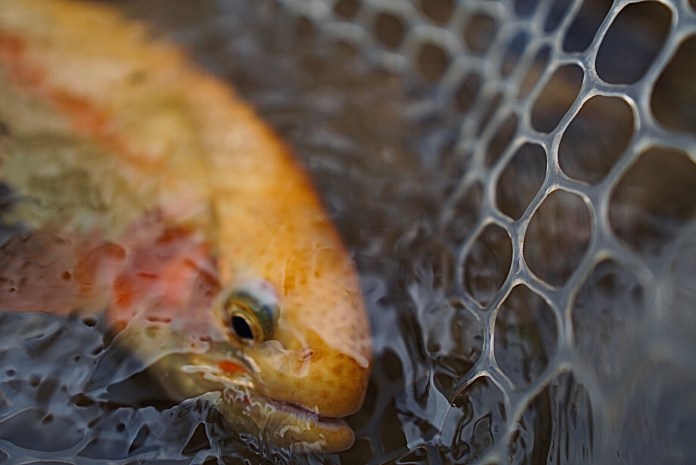
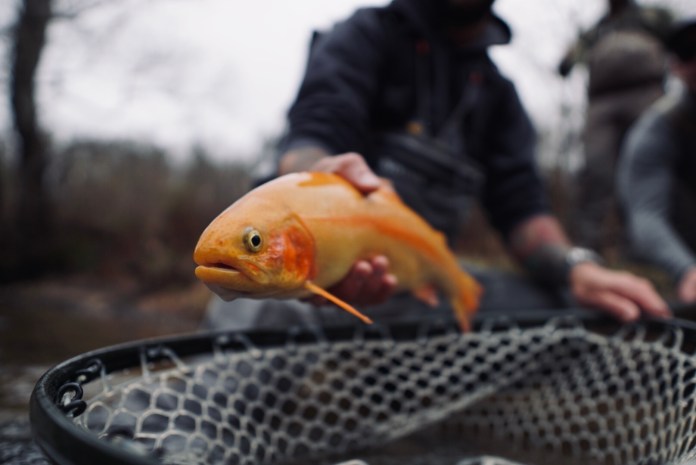
Palomino Trout… the swimming Banana!

The first time I saw a Palomino trout was on a trip to Colorado. Being that I call the Catskills of NY my stomping grounds, Palominos aren’t something I had ever seen besides a few Instagram posts. I was mesmerized by this odd-looking trout but was reduced to just getting a few glances from afar since no one could catch it. My curiosity got the best of me and I started doing some research on the Palomino and how I could catch one.

image courtesy of @erichurst

The Palomino trout or the Oncorhynchus mykiss are the results of Rainbow trout cross-breeding with West Virginia Golden trout (not to be confused with the California native Golden Trout).  It is stated by the Pennsylvania Fish and Boat commissions: “The golden rainbow trout originated from a single rainbow trout that was spawned in the fall of 1954 in West Virginia. The trout’s body color was a chimera of golden and normally pigmented tissue. When this fish was crossed with a normally pigmented rainbow trout, the offspring (what we have come to refer to as palomino rainbow trout) were lighter in color.”

image courtesy of @rherrmannphotog

It is argued that palomino and golden rainbow trout are two different fish in some circles. Some say the palomino is lighter in color than the golden rainbow trout or just not as healthy looking. Depending on where you are in the United States you may hear them also being called “lightning trout.” I have even heard people refer to them as “banana trout.” But no matter the name of or the location, they are all technically just a product of a fish hatchery rainbow trout.

image courtesy of @erichurst

Palomino trout tend to grow very quickly and it is said are stronger than your typical rainbow trout. I have read they Can grow 30 plus inches and as heavy as 13lbs, this being the Pennsylvania state record. From Experience I can say the Palomino I caught fought harder than any rainbow trout in that size range I had ever caught before. Unlike another famous hybrid the tiger trout, palomino trout can reproduce. There isn’t a lot of information on the reproduction of Palomino trout out there as far as them successfully reproducing in the wild. Supposedly the offspring outside of hatcheries tend not to do very well. I’d imagine being highly visible from day one is a bit of an inconvenience.

image courtesy of @odomonthefly

These trout are part of large stocking programs in Pennsylvania, West Virginia, and Maryland. Most of the stockings take place early in the fishing season and most of these bright yellow trout are caught by beginning to mid-summer. Being that they stand out so much in a river or lake, you can imagine they are fished to pretty heavily. I spoke with a guide recently that told me he will have clients see one and spend the entire day trying to catch it. West Virginia stocks palominos pretty heavily. They even have an entire week dedicated to palomino trout stocking, “Gold Rush!” I have read that the fishing pressure down there isn’t as intense as some of the other stockings that happen across the country and you may have a better chance at catching one of these unnaturally beautiful trout.

image courtesy of @rherrmannphotog

Finding and catching a palomino are two different things entirely. Being born a bright yellow they may as well have a target on their back. Being such easy targets these trout learn quickly to be very wary and smarten up fast. I bet these fish see more variations of fly patterns than any other trout on the planet. They can be incredibly picky eaters. I have watched in amazement as palominos reject a fly box worth of flies. Hatchery fish are usually pretty easy to catch when they are fresh from the hatchery, I am sure palominos are the same at first. One would assume anything that looks like a food pellet would do the trick. A mop fly or some other sort of junk fly will probably get the job done the first few days after stocking. My approach to the Palomino I caught a few weeks ago was to throw something I was sure it had never seen before on some 6x fluorocarbon tippet. My hybrid perdigon/copper John worked like a charm!

image courtesy of @odomonthefly

If you are looking to add a Palomino trout to your list you might just wanna start here.

https://commerce.wv.gov/goldrush

https://www.fishandboat.com/Fish/Stocking/TroutStocking/Pages/default.aspx


Article and photos from Landon Brasseur, an avid angler based in upstate New York. He spends most of his time fly fishing the small creeks of the Catskills for trophy trout. Give him a follow on Instagram at @lbrasseur.

How Coronavirus is Impacting Fly Fishing

0

For the past few months, Coronavirus has dominated the global news cycle. The virus, which originated in the city of Wuhan, China, has killed more than 2,600 people, with more than 79,000 infected, according to Al Jazeera. And now, the virus’s effects are being felt by the fishing and fly fishing industries, especially where travel is concerned.

Recently, the Republic of Kiribati, home of the legendary Christmas Island atoll, announced that it will be requiring travelers “‘from countries with ongoing local transmission of novel coronavirus’ – which includes the United States — to spend at least 14 days in a country free of the virus before traveling to Kiribati, and to provide a medical clearance to confirm that they are virus-free,” according to the US Department of State.

This is resulting in major travel delays and headaches for clients and outfitters with planned travel to Christmas Island on the hunt for the island chain’s legendary Bonefish, Giant Trevally and various other tropical Pacific gamefish species. Currently, clients still wishing to travel to the Republic of Kiribati must undergo their quarantine either on the Hawaiian islands or in another country free of the deadly coronavirus.

The Bahamas also issued a travel restriction blocking any non-residents who have visited mainland China within 20 days prior of their arrival to the islands. The Bahamas still remain uninfected by the deadly virus.

For more information regarding traveling the world during this growing viral outbreak, check out this video from the World Health Organization:

What’s in My YETI LoadOut GoBox with Alvin Dedeaux?

0

Alvin Dedeaux is a world-renowned fly fishing guide based in Austin, TX. Alvin’s reputation as one of the best freshwater guides around has permeated throughout Texas. Alvin offers guided trips on his home waters: This wide variety of waters demonstrates his experience as both an angler, and a guide. In this video by Alvin Dedeaux, he goes through his own personal YETI LoadOut GoBox and the guide gear he keeps inside it.

Check out this video and look inside the box of a professional guide at the gear Alvin finds most necessary to have in reach anytime he’s putting a client on big fish.

This film was created by Alvin Dedeaux. Be sure to check out more of their videos on the Gear Patrol YouTube page.

These instructional videos are curated and written by team member Sam McLean (@sam_d_mclean).

Fly Fishing Destination Video of the Week: Alaska Fly Fishing with a Mouse Fly

In this week’s Fly Fishing Destination Video of the Week, Brian O’Keefe from Catch Magazine brings us to the pristine wilderness of the Alaskan Tundra to witness a barrage of breathtaking mouse takes. Throughout the Aniak River, a 95-mile tributary of the Kuskokwim River draining the Kilbuck and Kuskokwim mountains, lurk hungry predators lurk waiting for an unsuspecting morsel to wander across their threshold. If you didn’t have a reason to fish Alaska before witnessing this heart-pounding action, you sure do now.

Tune in every Saturday for a new installment of Fly Fishing Destination Videos and make sure to sign up for our newsletter below in order to keep up with new content published daily.

Video courtesy of Catch Magazine