A few months ago, I saw this grey and black cube hanging behind a guide’s drift boat that sparked my interest. It wasn’t the normal lead anchor I was used to seeing trailing behind the drift boats I see on the rivers here in the Northeast. I asked the guide what kind of anchor he was running and he replied “It’s a Tornado Anchor!” I immediately looked up the company and instantly knew I needed to get in touch. I picked up one up to give it a test on the Flylords Flycraft and immediately noticed a difference.
To be fair, I am relatively new to rowing, with only a handful of years and trips under my drift boating belt. That being said, one of the hardest aspects of rowing for me to master was getting my anchor to stick the first time I dropped it. The anchor I was running before IÂ tended to roll and drag in the current, which resulted in lots of yelling from the bow and frustration as I tried to anchor my boat and net a fish. As soon as I took my Tornado out, I noticed that my anchoring woes were behind me, this thing held my boat with ease and dragging anchor seemed to be a thing of the past thanks to the Tornado‘s innovative rotating design.
“What I needed to figure out was how to more effectively use the weight of an anchor. My traditional pyramid anchor only effectively used one edge to grab. My design idea was to create an anchor with more edges so that the anchor had more opportunity to grab the river bottom. This theory led to an anchor design of a series of stacked plates. The concept is that it would create a ribbed surface and more exposed edges. The anchor evolved quickly with the realization that these stacked plates could also be allowed to rotate independently. This rotation created an anchor that was able to react to its environment and create the maximum amount of drag. The Tornado Anchor was born.” – Keith Webster – Inventor and Owner of Tornado Anchors
Lead-Free Construction
Constructed from rotating steel plates, Tornado Anchor aimed to create an anchor that was a hard-stopper that leaves no trace metals behind, unlike traditional lead anchors. When I spoke with Keith Webster, the inventor of the Tornado anchor, he told me a story about a guide’s reaction to their new anchor. The guide was shocked that his 45 lb Tornado Anchor seemed to be heavier than the lead 45 lb one he was replacing. It turns out, that during the lifetime of that lead anchor, it had shed a few pounds and was nearly 7 lbs lighter than it should have been. This was a result of the soft lead being worn down over years of bouncing over rocks, and that lead was now in the water and streambed.
If you’re eco-conscious, leaving behind any amount of lead in a waterway is too much. Thankfully the Tornado Anchor eliminates that possibility.
Made In USA
Every Tornado Anchor is hand-built in the USA, from powder-coated, galvanized steel designed to be more durable and longer-lasting than any lead anchor on the market.
Reviews:
We spoke with a group of Tornado Anchor early adopters to ask them about their experiences with the game-changing design:
“When first seeing the Tornado Anchor the concept seemed solid, but I was skeptical that it would be enough to matter in real-world situations. Having an anchor with no lead was important enough for me to try it out, and any extra performance would be a bonus. I feel like it does what they say. I’ve yet to have it pin itself in rocks, and it holds my Stealthcraft where I want it, only after everyone on the ramp has a chance to comment on it.”
“The [Tornado Anchor] is just amazing, you know, it performs better than any other anchor I’ve ever used. I guide on the Madison River where it’s extremely quick and it’s extremely shallow. Anchoring is almost impossible because we have a downstream wind all the time, which pushes on your boat along with the current that’s three to five miles an hour, and this anchor is just flat out sticky. It just finds a way to stick in the rocks.
You know, I was kinda skeptical when they first came out, so I ordered one and I was like, ‘Let me just try this before we spend a bunch of money and bring them into the store.’
And, you know, I took it out and rode with it for a few trips in April, and I thought, ‘You know what, there’s something to this thing.’ And, so we put them in the store and all my guides are running them now.”
“The Tornado does exactly what is intended to do… STOP! More edges mean more places to catch the river bottom. I love how it has performed on our northwest rivers where you can have anything from big boulders to gravel, cobblestone, ledge rock, fast currents, and everything in between. It performs well on all!”
We went to the Tekapo Canal on the South Island of New Zealand last week. The fishing was just insane until another COVID-19 lockdown hit, we barely made it back to Auckland. You never know what’s going to happen these days when you are traveling to fly fish.
I was using a Scott Radian 10ft 5wt, paired with the all-new Ross Reels San Miguel 5/6. The fly fishing method of choice was Czech nymphing. The biggest rainbow we caught was 24lb and some others were around 16-20lb. Talk about some big fish on a 5 weight setup! Here are some photos from our trip….
Article and photos from Kiyoshi Nakagawa who hails from Japan but resides in Auckland, New Zealand these days. He is a professional fly fishing guide and photographer. Give him a follow at @nzyoshi.
Fly fishing is unique in that what makes our presentations so life-like is the use of natural materials in the flies we tie. Natural materials offer the ability of variety and ease of use when tying all types of flies. Although synthetic materials can be every bit as effective. Synthetic materials offer a similar look and feel to natural materials although they tend to be harder to work with. These materials are substituted most commonly in streamer or bait fish imitations. In this tips and tricks tutorial, Tim Flagler of Tightline Productions demonstrates the twist and cut method for tapering synthetic tying materials.
How to Manage your Materials:
Make sure you have a good and sharp pair of scissors but be sure to avoid using just the tips.
Twist the fibers with your hand and use the other to push and slightly close the scissors as you work reward. (The twisting helps to evenly taper the fibers throughout the body of the fly.)
Continue this process but do not close the scissors completely.
To finish off the tail portion of the fly, twist the under-body to the top of the fly and continue to trim that way.
For the very tip of the tail, trim the slightest amount of materials at a time.
By trimming and tapering your flies, the presentation will become much more life-like and will likely yield greater results. Now its time to hit the river and catch come fish! Tight lines!
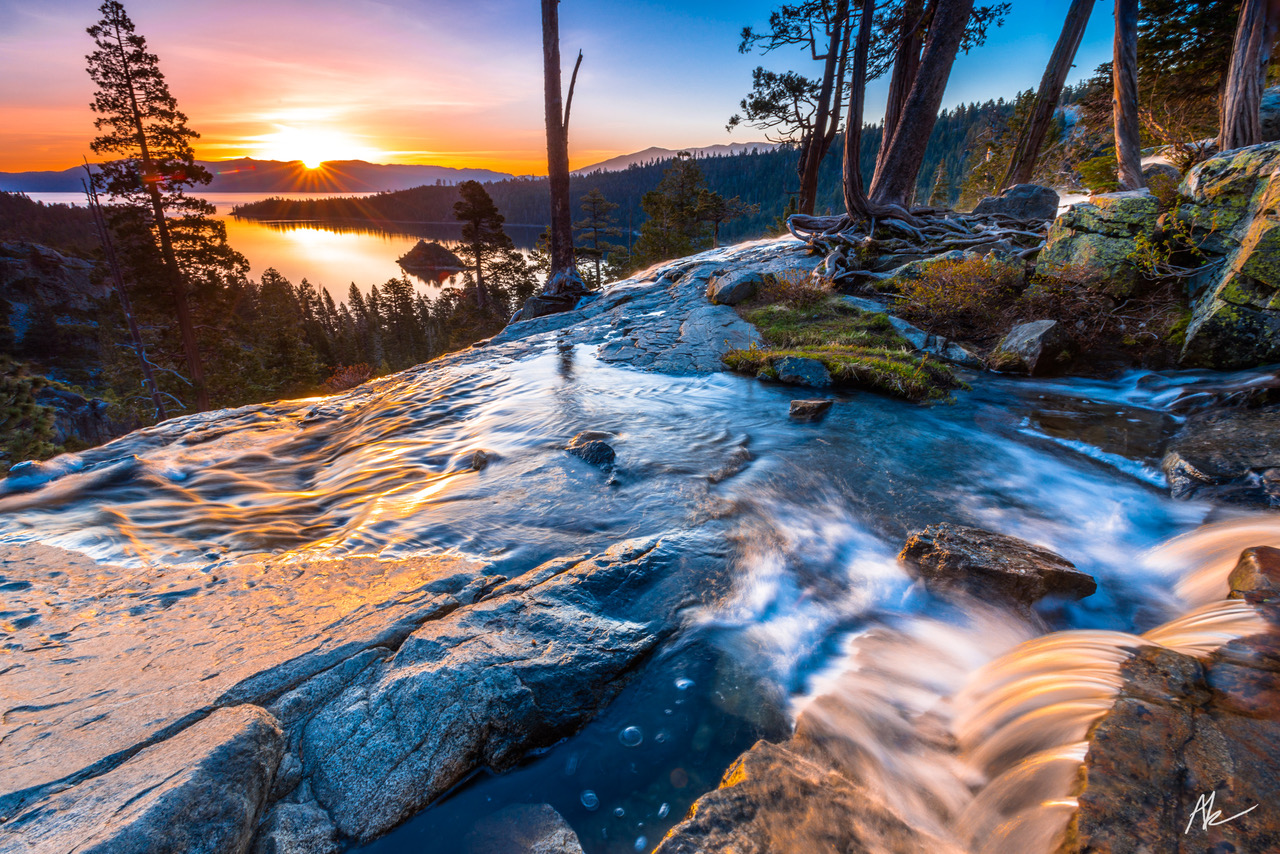
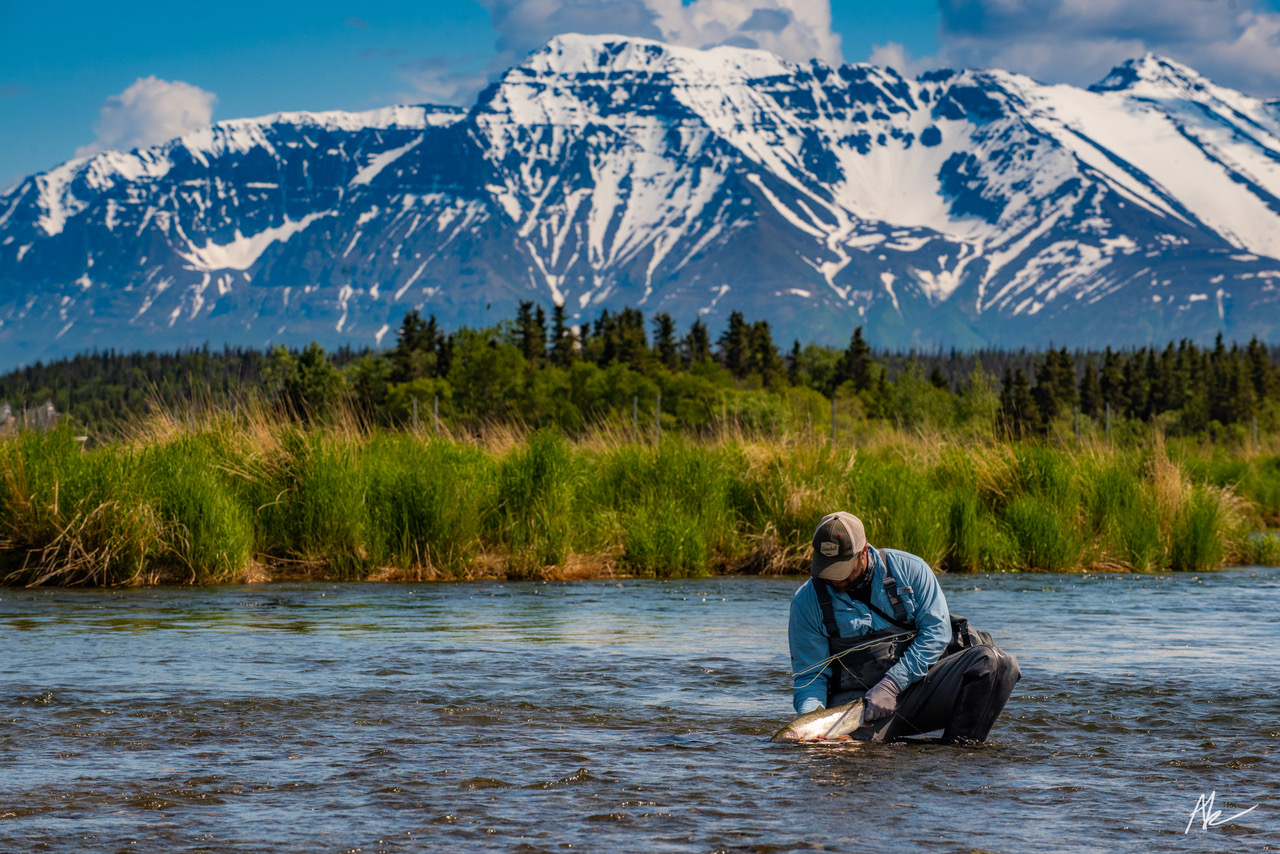
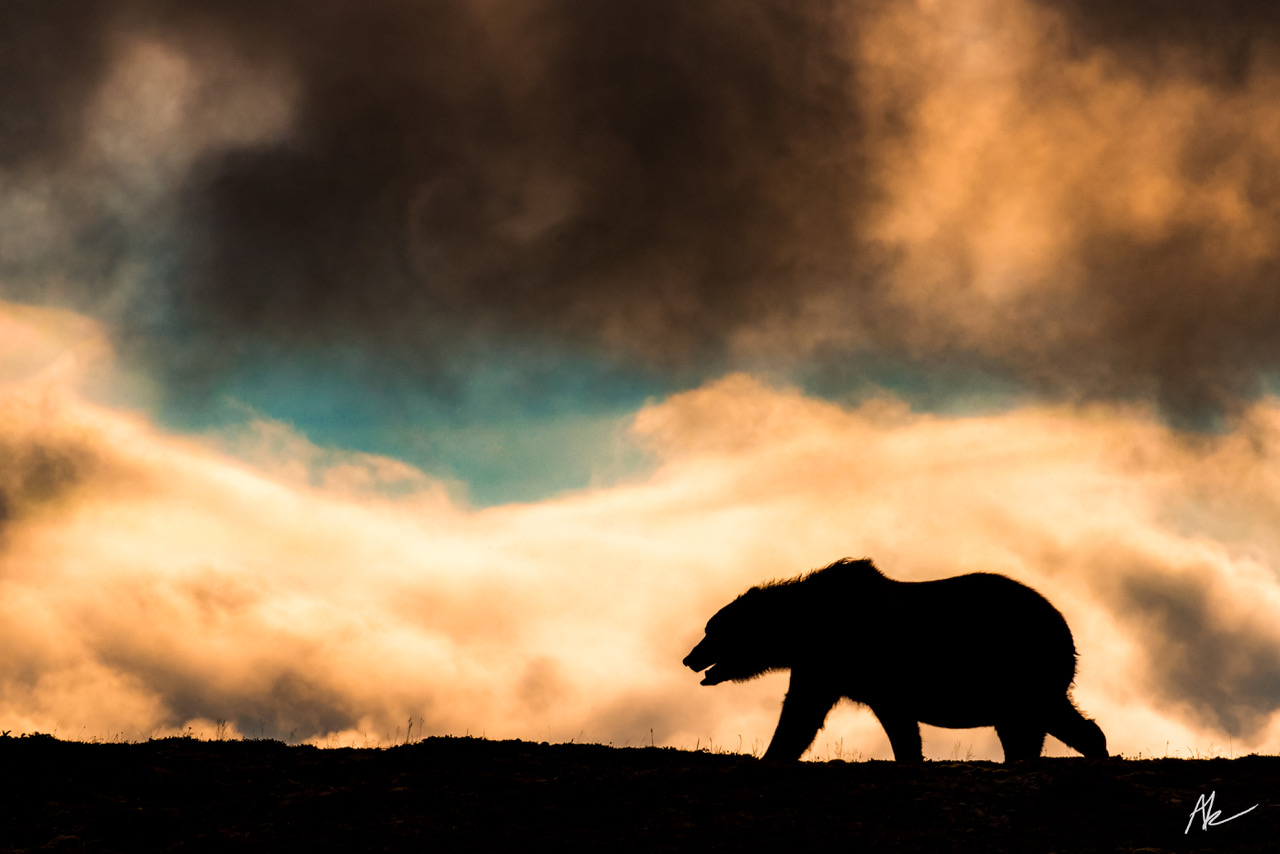
Next up on the Flylords Photographer Spotlight series is Abe Blair. Residing in South Lake Tahoe, California, Abe’s best know for his landscape style photography and “get it right in camera†photos. Where many might think post-editing may take place it rarely does with Abe’s work. Abe is an accomplished fly fishing and raft guide and resident artist at The Eadington Gallery in Tahoe City and South Lake. Check out the full interview below to learn more about Abe and his work.
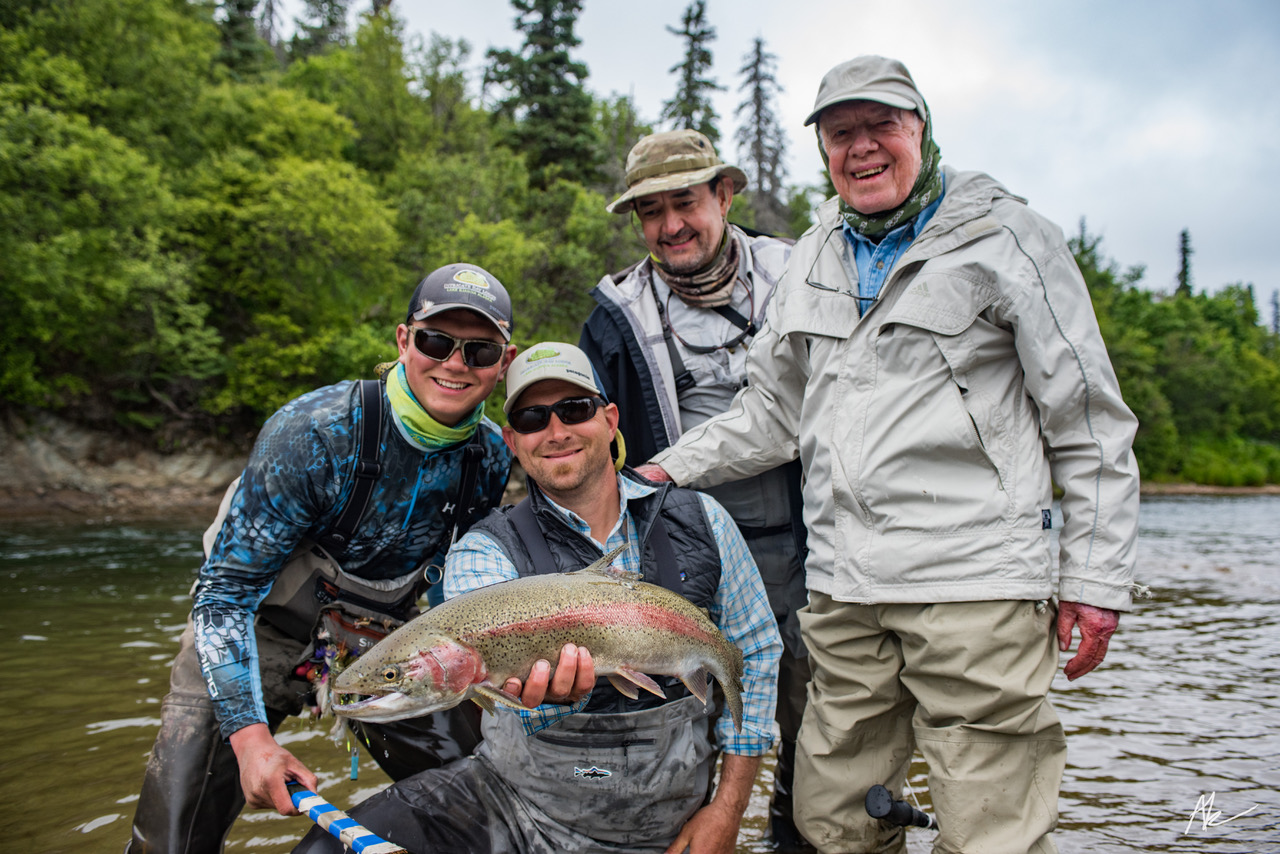
Abe showing off a nice Alaskan rainbow
Flylords: Who is Abe Blair?
Abe: I have been a professional photographer since 2000. I received my first film camera in 1994 and quickly began to take it snowboarding and fly fishing with me. After high school, I dove into the ski and snowboard industry as a photographer. In the summer I worked as a whitewater and fly fishing guide in the small town of Maupin, Oregon on the Deschutes River. I did this for about 12-15 years. Meeting my wife during the latter part of that career we moved to the Lake Tahoe area and I started to pursue fine art landscape photography.
Flylords: How long have you been shooting photos for?
Abe: I have been into photography for almost 30 years and paying the bills through photography for about 20 years.
Flylords: How would you describe your style?
Abe: My landscape photography style is known as in-camera creations that often look like they spent a lot of time in Photoshop, though I do not use it. “Get it right in camera†is my Mantra.
Flylords: What is your go-to camera setup and lens?
Abe: Currently, I shoot with a Nikon D850. For landscape work I usually use my 18mm Zeiss lens, and when on assignment for fly fishing my 24-120mm lens is always mounted to a camera.
Flylords: Favorite place to shoot photos?
Abe: My favorite place to photograph other than my beautiful backyard of Tahoe is in Alaska.
Flylords: Do you remember the first photo you had published?
Abe: The first image I had published was in Transworld Skateboarding back in 1995. Since then I’ve had hundreds of pages printed around the world in ski, snowboard, skateboard, fly fishing and landscape photography magazines.
Flylords: Do you have a photo that is the most meaningful to you?
Abe: This photo of the Space Needle in Seattle, WA circa 1999 is probably my most personal favorite because I think it showed the future of my landscape photography style before I even knew that it would become what I was known for.
Flylords: Any mentors in the photography space?
Abe: Without a doubt, Jeff Mitchum has been my largest influence and mentor in landscape photography, and growing up as a fly fisherman in Oregon Brian O’Keefe was the photographer who influenced and helped me get started in the fly fishing industry.
Flylords: Any advice for an aspiring outdoor photographer?
Abe: The best advice I can give someone about outdoor photography is to always put 110% into everything you do. Have a perfuse amount of patience and put any ego aside. It’s not a very glorious profession like some think but the rewards of travel and meeting super cool people really are amazing!
Flylords: Any advice for shooting in low light settings?
Abe: The advent of low light photography I feel is our generation’s “color film†it was changed the times of day or night that we can photograph. When capturing the Milky Way the exposure is the easy part ISO 6400 f2.8 for 20-30 seconds. The tricky part is knowing where it is in the sky.
Flylords: Favorite place to fly fish?
Abe: My favorite place to fly fish is Alaska and the second is anywhere on a warm salt flat.
Flylords: Have you mixed fly fishing with your professional photo career at all?
Abe: When I was a guide in Oregon I reached out to Brian O’Keefe about submitting to his new magazine Catch. 10 years later I am a staff photographer for Catch and have traveled the world for them and a few booking agencies. I have been very blessed and lucky to be able to make a living with a fly rod in one hand and a camera in the other.
Flylords: Bucket list destination for fishing and photography?
Abe: Last year I checked off both Jurassic Lake and hiking and photographing the Fitz Roy mountains in Argentina/Chile. Next on the list would be spending some time chasing anything with fin and fur in Africa.
The Native Fish Society has been running a Keep ’em Wet or #keepfishwet photo contest. The contest is quite simple to enter, all you have to do is post a #keepfishwet photo on Instagram and tag #keepemwetnfs2020. The contest runs until the end of the month of August. The prize package includes $350.00 worth of Patagonia gear and some more schwag.
This week, our friends at Benchmade knives released, what we believe, to be one of the most unique, fishiest knives to ever appear in the fly-fishing space. The recent launch feature 4 variations to their classic mini Crooked River series, each of which features a different species of fish (Largemouth Bass, Brown Trout, Tarpon, and Steelhead) that comprise a different niche in the fly fishing community. In collaboration with artist, Casey Underwood, each knife encapsulates the spirit of the fish pictured, and the environment from which they’re based.
Flylords First Impressions:
This week, we had a chance to get some of these knives in our hands (before they were cleared off the shelves). If we had one word to describe them, it would be Robust.
The second you pick up one of these knives, you can feel where the hours of meticulous design went in. Each knife is perfectly balanced (as all things should be), and has a sturdy, yet lightweight feel that fits perfectly to the contours of your palm.
The real draw of each knife is Casey’s contributions to the blade and handle. Each blade and guard is beautifully engraved with the designs of each fish, an associate fly, and the ecosystem from which they originate. The contours of the blade perfectly complement each design, delivering an aesthetically stimulating appeal to each knife that commands the attention of the beholder, revealing new details with each passing moment.
We also had the time to chat with Casey about his work on these knives, and his inspiration behind each design…
Flylords: What inspired you to pick these four fish species specifically for this series?
Casey: We knew we were going to start the series with four knives, and we wanted there to be something for everyone. These four species represent a variety of ecosystems and are beloved to millions of anglers. To me, these fish represent a great place to start… Hopefully, these knives are a success and we have the opportunity to expand the species we offer.Â
Flylords: It must feel pretty good to have your work represented on such a badass knife. What does this partnership mean to you?
Casey: I’m pretty particular about the companies I choose to associate myself with, and Benchmade is certainly as quality as it gets, both in terms of who they are and what they make. We share a high standard for aesthetics and have had the same vision for this project from day one. I’m proud of this collaboration and hope it’s only the beginning for this unique series of knives.Â
Flylords: What was the process like developing these designs for such a unique space?
Casey: It’s all about being intentional. I’m extremely passionate about creating artwork that is specific to its purpose. The shape of the blade and the shape of fish, in general, made sense to me; it seemed like a very natural integration. The bolster of the knife offered a fun opportunity to feature the corresponding ecosystem of each species represented. Due to some of the mechanical elements of the knife, I had to intentionally design the fish and ecosystem in a way that no crucial details were covered or cropped. To me, the extra effort will always yield a more successful result.Â
Thank you to Casey for taking the time to talk about this badass collaboration. It didn’t even take 24 hours before all these knives were gone, however, you can still go to Benchmade’s custom knife builder and create your very own, one of a kind Crooked River knife HERE.
As residents around northern Biscayne Bay, Florida began to wake up and take their usual morning stroll along the Bay, they discovered something putrid and alarming: thousands of dead fish rolling in the shallow surf. Immediately, concerned citizens sent images and messages to Miami Waterkeeper, a non-profit dedicated to protecting and conserving the Bay.
“This is it, this is what we’ve been warning about and we’re starting to see fish die. We’ve already seen our seagrass die and this is the big red flashing arrow that we have a problem,†Rachel Silverstein, of Miami Waterkeeper, said. “We are beyond the time to act. Something terrible has already happened, but we need to prevent this from becoming an emergency across even more of the bay.â€
Currently, the exact cause of the fish kill is unknown, but it’s hypothesized that it was caused by some combination of climate change factors and pollution causing an algae bloom.
“@MiamiWaterKeeper needs our eyes on the water. Biscayne Bay is in terrible shape… currently experiencing an unprecedented fish kill in the northern region of the Bay. Every species is affected and showing no signs of letting up. Please follow the Miami Waterkeeper pages on IG and FB for current updates… tag them in any current videos and HELP US SPREAD THE WORD. #SAVEBISCAYNEBAY” – @CaptBennyBlanco
We will continue to monitor the news and update this article as more details emerge.
When I moved to New Zealand about two years ago my first google search for fly fishing led me to the YouTube page #trippinontrout. The dude whose face I saw looking back at me was Alex Waller. “Friends, buddies…pals,†his videos began. The footage of him slayin’ it and catching browns and rainbows was enough to make me plan my weekends around rivers. I had become obsessed again. I knew nothing about fly fishing so I googled, watched his vids on setting up rigs, tying your own leaders, handling fish. I didn’t understand most of it yet, but one has to begin somewhere.
Recently, I traveled to the center of New Zealand’s North Island to take photos of how he fishes the iconic Tongariro River. It suddenly dawned on me why I began being an observer of my own adventures. I had missed the stoke that a climbing, running, and now, a fly fishing buddy brings. Someone who is amped: amped because it’s bloody cold and you are freezing your ass off but despite that, you are still out there, someone who is amped you are pushing your limits physically and mentally, that the nymph rig you set up eventually worked, amped that you got that fish or amped that you missed ten but you are trying again. Amped that you caught a sweet rainbow and even more amped that you released it. Someone who means it when they fist bump you. Someone who is stoked; stoked on their own, who is stoked with you and stoked for you, and stoked to pull a mission into the rivers and mountains whenever they can. My stoke is back thanks to Alex.
I sat down with Alex for what the Kiwi’s call a ‘yarn’.
Photo: Gerhard Uys
Gerhard: Who is Alex Waller?
Alex: I’m nobody. I’m a trout bum. I’m a fly fishing bum. All I want to do is fish.
Photo: Gerhard Uys
Gerhard: Why fly fishing?
Alex: Mmmmm, with fly fishing you make fishing as difficult as you can for yourself. I really like that. And then there’s the sight fishing element which is often there. It’s a challenge. I am originally from the UK. From about the age of six I was catching baitfish. When I was eleven my granddads’ friend took him to a local reservoir to fly fish, and he came back psyched. We went to a local store, bought a rod, and basically figured it out ourselves. We fished small lakes and reservoirs. In those days only the affluent had access to rivers which was mostly on private land. We fished for stocked fish. You’d go to a vending machine with a hand full of coins and buy a ticket to catch four or six fish. When you caught your limit you had to go home or buy another ticket as there was no catch-and-release. You had to kill all the fish. This influenced how I see catch and release in a major way. I have no problem with someone taking fish from rivers where it is sustainable, but there is no justification for taking trout from backcountry rivers in the New Zealand North Island, the ecosystems are just too sensitive. When I was last in the UK the stocked vibe was still huge. You can go to trophy lakes and pay 50 pounds for a trout weighing 15 pounds.
Photo: Gerhard Uys
Gerhard: You moved to New Zealand early 2000’s?
Alex: I didn’t know how to fish a river until 2003 when I tried it in New Zealand. I was a skydiver at that stage and took people for tandem jumps at the Taupo dropzone. A glorified meat wagon! When I caught my first trout in a river I didn’t have a clue what I had done to get the eat. I would go and ask people for advice. But mostly I would just stand back and watch people and see what they did and then go and spend time on the water. I am out on the water a lot now. If I am not guiding I spend a day fishing for myself at least once a week.
Photo: Gerhard Uys
Gerhard: How did you become a full-time guide?
Alex: When I stopped skydiving I realized everything I learned had zero transferable skills into the ‘real’ world. But I was lucky as I owed Matt Pate from the local fly shop Taupo Rod and Tackle money. He would phone me when people needed a guide and that way I could pay off my bills. But what happened is I ended up just spending the money at the shop again! I still owe him money! I am now a full-time guide with winter personal training taking a backseat to guiding. I used to get old blokes from the USA and England and Australia, but it seems with the YouTube channel I am getting more and more younger guys in their late 30’s or early forties who have saved up and want to come fish for a month. The younger guys have a cool energy and vibe.
Gerhard: Is there one fish you won’t forget?
Alex: There is a big King Fish I caught with Paul Mills from “revoflyfish a few years ago (He had started a King Fish tagging program in New Zealand). We had a good day fishing but then I caught a 20kg (44 pound) King Fish.
Photo by Paul Mills @revoflyfish
Gerhard: How did you get started on the Trippin on Trout channel?
Alex: I began in about early 2019 with just a GoPro. I was doing a lot of filming for my buddy Gareth Bailes who runs the channel TrounthuntingNZ. We fished together for like 8 years before he began making videos. I grabbed a camera and filmed for him. I then bought a camera to shoot stills. From the skydiving days, I always enjoyed the editing process, which we did a lot of for clients. I began my channel and put it out there and didn’t think anyone would watch it. I still wonder if people will watch something every time I post a new video.
I use Olympus mirrorless EM5 markII, two GoPros and a drone. I spend most of the time fishing and the GoPro helps as you can fish and all the action is captured. As far as B roll goes I am very lazy. Depending on day and mood it can go from none to a lot. The drone stays in my backpack a lot. I have an external mic on top of the camera and it works for what I do. And then I use a lapel mic indoors.
Gerhard: What keeps you motivated to do videos?
Alex: I enjoy it, the editing process, and the videos. Sometimes it’s a chore. Especially on late nights when you haven’t started and you have to post in a few days but you guided all day and you need to guide the next day, then I’m not motivated. But I made a decision to post once a week so I have to try it.
Photo by Eugene Pawlowski @genefly80
Gerhard: Can you tell us about guiding in Bolivia?
Alex: The fishing was awesome and Bolivia was cool, the best part about guiding there was the friendships I made with the local Tsimane guys. That was the best, those guys are awesome, and I miss them every day. Hahaha, at least in New Zealand there aren’t as many things trying to kill you in the wild. And man, Dorado are badass, they are swimming dinosaurs, they are clever, aggressive, arrogant, explosive, the eats are out of this world, they jump and they are super cool to look at.
Photo: Gerhard Uys
Gerhard: Where should one go fishing in New Zealand?
Alex: You have to make it to the South Island ‘cause it’s epic, but you cannot give the North Island a miss. Taupo in the North is cool because it’s the hub of fly fishing in the North Island. If you are there to fish and haven’t fished in NZ before you have to get a guide, because it’s different fishing here than anywhere else in the world. Don’t try and spread yourself too thin and visit too many places, otherwise, you won’t actually see anything. Go to fewer places and spend as much time there as possible.
Be sure to check out Gerhard Uys on Instagram @lets_hope_the_weather_holds and follow along with Alex on his YouTube channel here.
Flylords got the chance to sit down with Joe Mangiafico, a knife craftsman based in Bend, Oregon. Joe has been hooked on fly fishing since he first picked up a rod while in college, and has a special love for snagging False Albacore at Cape Cod. He combines his knack for design and his love of fly fishing to create fish-inspired designs that seamlessly combine artistry and utility. Check out Joe’s story and fishy handiwork below!
Could you tell us about how you entered the fishing world?
I’ve been fishing really since I was about [a year old]. I grew up in Atlanta, and I would spend summers on Cape Cod, Massachusetts. My grandfather taught me how to spin fish for saltwater fish on the Cape, and that’s what really sparked it off. Even when I was a year old, I was just fascinated with the excitement of it and interacting with pretty big animals.Â
I went to the University of Vermont right after high school, and I started fly fishing at UVM my freshman year for little brook trout and things like that, using dry flies in mountain streams. I had been meaning to get into it, even before college—I was fascinated. I loved the gear and the look of the fly reels and everything. I was like, “That’s so cool.” And, you feel bad just hooking trout on a spin rod.
I’ve been interested in knives my whole life. My dad was an avid knife collector. He always carried this beautiful case pocket knife. I was like, “Wow I want one of those.” Then I was like, “Wait, I can make one eventually.”Â
I actually got into making knives when I was in college. My sophomore year I was working at this place calledShelburne Farms, an inn in Vermont. They harvested and burned all their own firewood. I would see all these beautiful cherry burls that were being burned. I was like, “Man you could make a lot of money off of this [wood] if you made something out of it.” A buddy of mine said, “I’m going to make a knife.” He actually never did, but [I thought], “I want to make a knife.” So I got a bar of steel and a hacksaw and I started making knives in my dorm room. With each knife I made I would get another tool—I would need this tool or that tool—and before I knew my dorm room [became] a knife shop. Fortunately my roommate was very forgiving.
For a long time it was just a hobby for me—not until the past two years did I get into the industry. I work for a knife business—Burnley brand. Last June I signed a royalty contract with a German knife company called Bokerand they are reproducing my brook trout knives in Germany. They’re giving me a royalty which is pretty exciting, but they haven’t launched yet. They’re going to launch this fall. I’ll be in their catalog—it’s a production collaboration, which is a whole other part of the knife industry. Most knife makers, after a certain point, rely on production collaborations as a part of their income.
So that’s another thing that’s fun—I can basically make a prototype and send it to them and if they approve it they’ll make a lot of them.Â
Could you walk us through the process of creating a knife from start to finish?
[It starts with] just drawing an idea over and over and over until you’re satisfied with it. You have to design all the parts to work together as a folding and locking mechanism (this is called folder design, in which the knife maker draws all pieces of the knife on paper to ensure that they will fit together and function properly). It all starts with pen and paper and then when I’m satisfied with the design, I will just cut out the [paper design], spray adhesive to the back of it, [and stick it to] a piece of plastic.
Then I will bandsaw the profile and drill all the holes and make a prototype that I can hold to make sure it feels good. I make about 10 prototypes before I’m satisfied with a model—I adjust hole locations and stuff like that. Once I have a plastic prototype, I can trace it again and again. Once I’m satisfied with the plastic prototype, I get a bar of steel and I dye it blue. Next, I take the profile of the plastic knife, clamp it down, and scribe the profile over and over on the bar of steel. I usually get a 6 X 48 bar of steel and then just go to the bandsaw and make the model.
Definitely the trickiest part of making a knife is grinding the bevel (the angle at the back of the blade, just before the knife handle), and getting it totally even on both sides. That’s what production companies really look for in custom knife makers when they’re seeking out designers for their companies.Â
[Once the steel components are finished, the handles, or scales, go on]. If I’m making a fish-themed knife, before the handles go on I have to do the actual inlays in the handle. The brook trout ones are fun because I map out the blue halos and the brass spots and everything. It’s really just little workshop mosaic in a tiny, little profile. I try to make them trout-shaped a little bit.Â
Then from that point it’s onto sheathing and then logo-ing. For logos I have a graphic designer make stencils for my logo—the “JM” and the antlers—and I use an electrochemical etching machine. With the machine I can stamp on the logo and it electrifies—actually etches the steel away—where the logo is. [I can use the same process] to personalize [clients’] products a little bit, too. I’m working on a set of knives for Abbie Schuster’s new fly shop that have a permit inlay and are sea-foam blue, and [using the using the electrochemical etching machine] I’m going to put “Kismet Outfitters” on them, so that’ll be fun.
What keeps you hooked into knife design—why do you keep doing it?
I wouldn’t consider myself an artist, but I think in any art or craft having a passion that you can influence your craft with it makes it a lot better. The thing that has really kept it exciting and interesting for me is creativity in knife handles and combining the fly fishing industry with the knife industry. There’s so much trout-themed stuff out there, and I said, “Wow I can do a brook trout. How would I do that with a knife handle?” It’s not easy, it’s all inlay mosaic that takes a lot of time. But it’s kept it fun and different, instead of just grinding steel all the time.
[Knife making] also really keeps me sane—honestly sometimes more than fly fishing. When I’m sitting down to make a knife I have control of something and that’s all I have to worry about right now. When I start a knife, I do it in batches. It’s the most efficient way to do it. When I cut out that first blade I’m not going to see that finished product for probably a month or two, so knowing that I always have something to do is nice. It keeps me going, I guess that’s why I still do it, and even before I finish the set I’ve already got plans for another. So I guess I’ve just kept doing it because I like it.
What I really like about the job that I have currently working for Burnley is I can go to work, make things, and I don’t have to worry about supply and demand of materials. I don’t have to [constantly interact with] customers—I’m not that much of a people person. In fact, what I really dislike about my own knife business is selling [because] I don’t like putting a price tag on my work. I’d much rather just gift a knife to a close friend or a family member.Â
When you’re designing a knife for a client, how do you combine the client’s ideas with your own creative process?
Sometimes it’s hard—it’s really hard if they’re not a fishy person. But, over the winter, I did a groomsmen’s set of knives and none of them really fly fished or fished generally. But [the client] said, “I don’t want just a plain knife handle, but I want it to be artsy and look handmade with wood accents and brass accents and that kind of thing.†I took what I used from the brook trout process and made knife handles with amboyna burl inlays with brass accents around them.
I try to ask what colors [a client likes]. Another thing with personalizing the knives is that there are so many ways you can personalize them just by finish of the steel. You can have a dark finish or you can have a highly polished finish.
I also design based on how a knife is going to be used. The tricky thing about making functional art is that it has to function. For example, if you take just a straight sandblasted knife or etch knife into saltwater, it’s going to rust in 20 minutes. Or if you take a wood-handle knife into saltwater, it’s going to warp a little bit and dry out. So it’s about making things that function well and people would like to carry.
I do make what I like to make. I make what I would want to carry into a situation. Design is probably the most fun part about it—designing not just the profile but also how it’s going to look.
What reaction do you hope for when someone receives one of your knives?
My favorite part of it is when people pick up the knife and look closely at it for a while, and they look at the details and imagine how it was done and they’re like, “Wow.” I think attention to detail in customers is my favorite thing—when people recognize how much work it took.Â
Honestly, I also get a lot of ideas from customers being like, “Hey I want a custom knife with this detail.” I’m like, “Oh, how can I add onto that or build onto that?” So, that’s pretty fun, too.
What advice would you give to our readers who want to pick up a creative hobby, but don’t know where to start?
When I started making knives, I ordered a bar of steel and a hacksaw. I wasn’t that handy when I started, and I wasn’t really a tools guy. YouTube has been my best friend over the past eight years on how to do a certain process, grinding bevels, shaping handles, inlays even. My first knife was a terrible knife. It was very ugly. But I said to myself, “I want to do that again because I know I can do better. Now, here I am eight years later, still doing it.
Just get what you need to start. It doesn’t need to be the fanciest equipment because you don’t want to invest in something that you don’t know you’re going to love. I think just getting the ball rolling on it is the best way to do it. [It’s basically the same advice I give to people] who say, “Ah, I’ve been really meaning to get into fly fishing. I just haven’t done it.” Buy a fly rod. Don’t buy the most expensive fly rod. Go to a stream, cast a dry fly, and see how you do!
In the past year, the fly fishing community has become a powerhouse of altruism, banding together to support fishing communities impacted by natural disasters and poverty. #DozenForDorian and #DozenForDownUnder trended raising funds for Bahamians and Australians affected by Hurricane Dorian and the wildfires that ravaged Australia. In his latest fundraising push, #FliesForFarms, Josh Mills, and the Fly Fishing Collaborative are working together with fly tyers and artists to raise $15,000 for the residents of Gales Point, Belize. We had a chance to sit down with Josh to learn more about the impactful campaign and how you can get involved!
Flylords: Tell us a little bit about the people of Gales Point and the projects #FliesForFarms will be supporting?
Josh: Gales Point, BZ is a small community in Central Belize, founded in the 1800s as a refuge for escaped slaves from colonial America. Its population base is shrinking as a lack of opportunity has plagued the residents. It once had a population of around 500 but is now less than 300. In coordination with Fly Fishing Collaborative, we’re seeking to raise $15,000 to assist in rebuilding their community center, install an aquaponics farm, and provide and assist with job training for fishing guides. The Fly Fishing Collaborative has installed many of these farms around the world in places that really need help, and effectively are feeding hundreds of children and community members through the gardens and fish that the aquaponics farms produce. I am honored to help in the effort to provide funding for this amazing goal.
Flylords: This isn’t your first successful fundraising campaign supporting fishing communities around the globe, did you have any idea the concept would take off as it has?
Josh: The first campaign was a revelation to me and everyone involved. It was about the fly fishing and outdoor community rallying around the Bahamas in a critical time. There wasn’t much I had to do but coordinate the amazing response from around the country and internationally. We all have a shared passion for fishing and I believe that in most people’s hearts they want to help and give. Dozen For Dorian and Dozen for DownUnder were just the conduits to do that.
Flylords: How many tyers have gotten involved, what other items are up for auction?
Josh: So far we have around 20 or so pledged offerings in #fliesforfarms, ranging from flies to art, to guided trips. There are another 20 or so coming online soon and I expect that number to grow in the coming weeks.
Flylords: If auctions are still ongoing, where can people bid?
Josh:The auctions are still rolling as long as new items are put up. Past campaigns kept going because the donation train just didn’t slow down! This is primarily an Instagram driven promotion, so the easiest way to find all the offerings is to search #FliesForFarms on Instagram and you will be directed to all that is up for bid.Â