In Chris Dorsey’s latest fly fishing piece for Forbes Magazine, he dives into the economic side of catch-and-release fly fishing, focusing on the Silver Ghost of the Flats, the Bonefish. As fisheries and their economic values are studied more and more, the true value of C&R and each individual bonefish is becoming more and more glaringly obvious.
According to the Forbes piece, “In one Florida study, each bonefish was valued at $3,500 annually or more than $70,000 over the 20-year average lifespan of a bonefish—the worth derived from the median expenditure of visiting bonefish anglers.”
Think about that the next time you’re watching drone footage of a congregating school of 1,000 bones. If the Florida study’s math is correct, that’s roughly $3.5 million worth of fish to the local fishing guides and communities.
The article is well worth a read for any flats angler passionate about conserving flats species for generations to come.
You can read Dorsey’s full article here, and we’ll leave you with this quote, which perfectly describes what happens to anglers when they encounter Bones for the first time:
“When a fly fisherman hooks a bonefish for the first time, he undergoes a transformation, as if some dormant genes are suddenly awakened, perhaps an atavistic memory from a previous life as an osprey. When I hooked my inaugural bonefish, watching it deform my rod and torture my reel, I wanted to put my trout books and art prints in boxes and start anew. Some convert to Catholicism, others become Methodists and a few evolve from trout streams to become flats, fishermen. Once baptized by a bonefish, I never looked upon Montana trout waters quite the same way again.”
As anglers, there always comes a time when we go to grab a piece of tippet only to find that its been wound up into the spool…. This can be one of the most frustrating things to happen when out on the water. If only there was a way to have your tippet always ready and available…? You’re in luck! In this tips and tricks video of the week, Tim Flagler of Tightline Productions demonstrates how to create DIY Tippet Spool Tenders.
How to Create DIY Tippet Spool Tenders
Materials Needed
1/4″ stretch elastic braid.
Clear plastic tubing (available at most hardware stores). 3/16″ outside diameter with an 1/8″ inside diameter works perfectly.
Heat shrink tubing is also necessary for this task.
Step By Step Process
Remove the current tender that comes with each tippet spool.
Measure the circumference of the spool with the 1/4″ elastic braid.
Cut the elastic off square.
Measure the elastic and then cut however many segments you’d like to the same size for multiple tenders.
Cut 1/4″ of heat shrink tubing next. Snipping multiple segments will save you time in the long run.
You can use a lighter but a candle is perfect for keeping both hands free. Take one end of the clear plastic tubing and holding it under the candle flame.
Press the tubing over the tapered end of your bodkin and with a pair of wire cutters, snip the tubing off square to abut 3/4″.
Lightly melt the cut end in the flame to soften the edges.
Plug in and warm up a hot glue gun.
Lay out a segment of elastic and place one of the plastic tube segments on the end of your bodkin.
Apply a small bead of hot glue to the top of the tubing and then secure the elastic to the tubing.
Flip the tubing over and apply a bead of glue to the other side and fold the other end of the elastic to the other side of the tube.
Pick up the folded end of the elastic and slide a heat shrink tube segments over it and slide it to the ends of the elastic.
Very carefully heat only the heat shrink tubing over the flame to shrink the tubing tight.
Allow for the glue to set and then remove the tender from the end of the bodkin.
Run the tippet through the tubing and use permeant marker to mark the size of the tippet.
Now that all of the steps are completed, its time to load up the spools and hit the river! Tight lines!
Introducing the Behind the Fish Series, where we go one-on-one with various different fishery scientists across the world to better understand a specific species of fish or fishery. From the genetic make-up, feeding habits, fishing techniques, native range, to conservation we dive straight in to learn about the facts that matter and what makes these fish so special.
In this feature, we were lucky enough to catch up with Matt Sloat, a fish ecologist who has dedicated his career to studying salmonids across the west. Matt has spent the past decade studying taimen the largest member of the salmonid family. Check out the interview below as we learn more about taimen and the work that Matt and the Wild Salmon Center are doing to better understand this species.
Flylords: Who is Matt Sloat?Â
Matt: I am the Science Director at the Wild Salmon Center, an international conservation organization focused on protecting the healthiest salmon watersheds around the North Pacific Rim. I’m based in Corvallis, Oregon where I’m also a researcher at Oregon State University (OSU) in the Department of Forest Ecosystems and Society.
My work takes me to salmon watersheds in the Russian Far East, Kamchatka, and in North America from Alaska south to the coastal watersheds of Northern California. I also work on Siberian taimen conservation biology in Mongolia. What I do in those places can vary from understanding salmon responses to glacier retreat to quantifying the prey base needed to support giant Siberian taimen. But in general, my research is about understanding “salmon systemsâ€, meaning the physical and biological workings of salmon watersheds and also the systems of management, policy, and governance that shape interactions between salmon and people. At Wild Salmon Center, we use that knowledge to protect and restore habitat, improve salmon management, and support sustainable salmon fisheries. For someone with a lifelong passion for salmon, trout, and rivers, I have a dream job.
Prime Siberian taimen habitat, Tugur River, Russia.
Flylords: How long have you been studying fish and where did the passion come from?
Matt: I started studying fish about 25 years ago, not long after I got deep into fly fishing. My real introduction to river food webs came through learning the life cycles and seasonal progression of mayfly, caddisfly, and stonefly hatches so I could catch more fish. I got my undergraduate degrees in English and Biology at the University of Montana in Missoula, which is a really good school, and was also a great place to be a fly fishing bum at the time. I lived a couple of blocks from a good trout river and I’m sure I spent somewhere around 200 days a year on the water.
I’ve always been passionate about salmon and rivers, though. Until I was eight, my family lived on the Kuskokwim River, a big salmon river in western Alaska. I was raised, more or less, on Kuskokwim kings and moose meat. My dad started taking me sport fishing and subsistence fishing when I was three. Salmon were and always have been an essential part of life.
Waiting for better flying weather in Russia.
Flylords:Â Can you tell us a little bit about the work you have been doing with taimen in Russia and Mongolia?
Matt: In Russia and Mongolia, we have been working with local partners to try and safeguard some of the world’s last best taimen watersheds. Taimen are the world’s largest trout. We’re talking freshwater fish that can live well past 20 years and that grow well over 100 lbs. They are one of the ultimate freshwater apex predators and will eat everything from grayling to ducklings. And they are a great indicator of watershed health. If a watershed has a thriving taimen population, it means that there is a healthy river food web with abundant prey fish and intact habitat.
Unfortunately, taimen are in decline across much of their range due to habitat loss and unsustainable fishing pressure. Harvest of taimen is a big cause of decline. They are attractive targets because they are so large. But they are actually pretty slow growing and don’t reproduce until they are relatively old. As a result, they just can’t handle much harvest pressure. As an apex predator, they also rely on healthy prey populations. Impacts to the prey base will also impact taimen.
So, we are working to raise awareness about taimen conservation, promoting catch-and-release as an alternative to taimen harvest by recreational anglers, and helping others to protect taimen habitat through protected area designation and sound land-use practices and education. We also conduct research on food webs that support taimen and we develop population monitoring tools that help inform decision making and policies that affect taimen watersheds.
Tugur River taimen.
Flylords: What exactly is a taimen for someone who may not be familiar with them?
Matt: Taimen are some of the largest and most ancient members of the trout and salmon family. There are actually five species of taimen, all found in Eurasia.
The most common and widespread species is the Siberian taimen (their Latin name is Hucho taimen). These are the taimen of Mongolia and the Russian Far East that you are most likely to see featured in fly fishing magazines.
There is also the huchen or “Danube salmon†(Hucho hucho) that is native to the Danube River system of Eastern Europe.
Sakhalin taimen, Koppi River, Russia.
Then there is the Sakhalin taimen (Parahucho perryi), which you can see pictured above. They are native to Russia’s Sakhalin Island and a few coastal mainland watersheds like the Koppi River, and also Japan’s Hokkaido Island.
China’s Yangtze River system is home to another taimen species, the Sichuan taimen (Hucho bleekeri).
And finally, there is the Korean taimen (Hucho ishikawae), hopefully still swimming somewhere above the DMZ in the borderlands of North Korea and China. Very little is known about this species.
All of these species are voracious freshwater predators. Sakhalin taimen are the only anadromous taimen species, undergoing seasonal migrations out into the salt, but generally staying nearshore. Siberian taimen make extensive migrations in freshwater, but they are not known to enter saltwater even though they inhabit rivers draining to the Arctic and Pacific Ocean.
Flylords: Where is their range?
Matt: Taimen are native to Eurasia. Their range is expansive, encompassing around one-eighth of the land area of the Earth. Siberian taimen have by far the broadest distribution of all taimen extending across nearly all of northern Russia, Kazakhstan, Mongolia, and parts of China. The other taimen species are much rarer and have smaller ranges. Check out the map below.
Here is a map of taimen distribution, courtesy of the Wild Salmon Center.
Flylords: How big do taimen get?Â
Matt: Taimen get very big. Siberian taimen appear to have achieved the greatest size of any taimen species, although records are a little spotty. There are a couple of historical records of Siberian taimen in excess of 200 pounds caught in fishing nets in Russia, and several records of fish exceeding 175 pounds. There are also historical records of huchen and Sakahlin taimen exceeding 100 pounds. Sadly, there are widespread declines in body size across taimen species. However, Siberian taimen in excess of 100 pounds are definitely still out there in the healthiest remaining taimen watersheds.
Flylords: What do taimen eat?
Matt: Taimen start eating fish very early in life, once they get to be around 3 inches in length. From then on, fish comprise the majority of their diet. They are capable of eating other fish that are nearly half their length, and they seem to especially like grayling. As taimen get larger, they are able to eat a wider variety of prey. In Mongolia, they famously chow on mice and lemmings. In Russia, they’ve been known to eat muskrats and ducklings. There is even a report of a taimen that choked to death trying to eat a small dog! In our work in the Russian Far East, we’ve found that large taimen will eat adult chum salmon returning to rivers on their spawning migrations. In fact, salmon appear to be the primary prey for the largest taimen in some rivers.
The largest taimen eat adult chum salmon whole.
Flylords: Anything unique/cool about taimen?
Matt: There are so many unique/cool things about taimen. One of the coolest is that taimen hunt in packs, which has earned them the name “river wolves.†This is a pretty rare behavior for trout species, which are more commonly territorial feeders.
The biggest taimen can also swallow an adult salmon whole! A Russian guide told me that he had once caught and killed a large taimen (catch-and-release is a relatively new concept in Russia) and in its belly was a female chum salmon still bright and fresh enough that they ate the salmon caviar along with taimen steaks.
The other thing I think is cool about taimen is that you really only find them in amazing places. If you can travel to a taimen watershed, you are likely going to a pretty intact ecosystem with big predators on land and in the river. In Russia, for example, Sakhalin taimen watersheds are also home to Amur tigers, brown bears, Asiatic black bears, wolves, and Blakiston’s fish owls (as the largest owl in the world, it has a wing span up to 6 feet and it eats salmon). Last fall on a trip to Mongolia, we drove by Bactrian camels on the steppe, we saw brown bear tracks on the gravel bars along the river, and we awoke to howling wolves more than once. Taimen are amazing themselves, but for me a big part of their allure is that they perfectly encapsulate all of the wild that surrounds them.
Getting to the river, Mongolia.
Flylords: What are some of the goals of the work you are doing?Â
Matt: The main goal of our taimen work is to help preserve the remaining healthy taimen watersheds in Russia and Mongolia. Siberian taimen are considered vulnerable to range-wide extinction by the International Union for the Conservation of Nature (IUCN) and they are extinct in parts of their historical range in Mongolia. Sakhalin taimen are critically endangered, as are Sichuan taimen. Danube taimen are considered endangered. And the status of Korean taimen is unknown. So as a group of species, taimen are in need of immediate conservation action to help stop them from edging towards extinction.
Navigating the upper Koppi River, Russia.
Currently, the work we are doing at Wild Salmon Center is focused on Siberian taimen in Russia and Mongolia and Sakhalin taimen in Russia. For these species, we provide support to local groups that are fighting for habitat protection, preventing taimen poaching, and we conduct applied conservation science to help track the status of populations. Over the last decade, our partners have succeeded in securing permanent protection for a number of critically important taimen watersheds. Through our research, we are also helping unlock the mysteries of taimen biology. There is still a lot to be learned about taimen reproduction, behavior, and life histories. For example, in Russia we are learning just how much taimen depend on healthy salmon populations for prey. Maintaining healthy taimen populations involves habitat protection and a solid prey base, which in this case means sustainable salmon management. We are taking these lessons to Mongolia to better understand the prey base needed to support those taimen populations, which don’t have salmon to feed on. This research can help managers make better decisions about taimen conservation.
Photo: Guido Rahr.
Flylords:Â Some of the work you do requires catching taimen on the fly, can you walk us through the fly fishing setup you use to catch taimen?
Matt:Â Fly fishing can be the most effective method of catching taimen for research projects in these remote watersheds where there is limited access and infrastructure. For example, in Russia access to healthy taimen watersheds generally requires a lengthy helicopter flight, so gear is limited to the basics, the rivers are big and full of logs, so sampling gear like nets and seines are pretty ineffective. So, we tend to rely on fly fishing to capture taimen.
My typical set up in Russia is a two-handed 13-foot 10-weight, rigged with 30-foot shooting heads ranging from floating to very fast sinking, followed by 50 pound mono running line. I use a large arbor reel with a decent sealed drag. I usually run 30 or 40-pound test Maxima leader. The flies are typically 6 to 10-inch unweighted streamers tied on tubes. Taimen seem to love to eat grayling, so a go-to streamer is one like Guido’s Grayling that matches the gray and yellow of the common grayling species in Russia. But there are conditions where gaudy streamers in black and red, chartreuse, or bright orange are more effective, especially in higher water when water clarity is not ideal. There are also situations where taimen are pretty surface-oriented when I’ll throw a big foam popper in front of the streamer and fish on top.
Guido’s grayling tube fly and a 3/0 siwash hook bent sideways by a 101 lb taimen.
It’s important to emphasize that my setup primarily serves a research goal of trying to get the most fish to the net as quickly as possible so that we are efficient with field data collection and also minimizing impacts on the fish. It is not necessarily fun to cast this setup all week, especially when taimen encounters are few and far between. If I wasn’t fishing for research I might switch it up a little. For example, as I learn more about taimen and taimen fishing, my setup is evolving somewhat to be a little lighter and more surface-oriented, which I’m hoping will be as effective and cause a little less shoulder pain!
Photo: Guido Rahr.
Flylords:Â What is the biggest taimen you have caught?Â
Matt: During a fall 2018 research trip to Russia’s Tugur River, I landed a 101 lb Siberian taimen while fly fishing. On the last day of a week-long trip, I was fishing out of a johnboat in an area where several shallow river braids came together and deepened into maybe an eight-foot trough– a perfect ambush spot for a predator. The water had been higher than normal and we had struggled to find fish all week. But finally, the water had dropped into shape. I was fishing a 6-inch Guido’s Grayling streamer (that Guido Rahr tied that morning and generously gave to me for good luck). I was stripping the fly when it just stopped like I had hooked a log. And then the log started moving, then head shakes, then a surface explosion that let us know we had a serious fish. Twenty minutes of near chaos ensued until we netted the fish and realized we had a truly exceptional taimen.
Photo: Guido Rahr.
Because this was part of a research effort, we discovered from subsequent analysis of scale samples, that the fish is male, was 32 years old when it was captured, and it had been feeding primarily on salmon. Encountering taimen this big is a sign of a very healthy ecosystem- a testament to the pristine habitat conditions and healthy salmon runs of the Tugur.
Photo: Guido Rahr.
Flylords: It looks like National Geographic has named you a “National Geographic Explorer,†can you talk a little bit about how this has supported some of the work you have been doing?
Matt: In 2018, National Geographic really boosted our efforts for taimen research and conservation in the Russian Far East with a multi-year Explorers grant. Their support has helped move the needle on our work with local partners to secure watershed protected areas in Siberian and Sakhalin taimen strongholds. It has also helped raise awareness about the conservation threats facing taimen across their range. Given their massive profile, we hope that this is the beginning of sustained engagement with National Geographic in our efforts to help safeguard a future for these amazing fish.
Flylords: Have you had any scary encounters with wildlife, people, etc when you have been on assignment? What are some of the challenges of traveling to these remote places?
Matt: We work in remote salmon watersheds that also support tigers, wolves, mountain lions, and bears. It’s an adventure for sure. Often there are planes, helicopters, jet boats. We always prepare carefully and use a healthy dose of caution anytime we’re in wild country. I’ve been an arms-length from brown bears in Alaska (much too close!), but thankfully I have never had a bad encounter with wildlife.
Heading out in a MI-8 helicopter for a Russian taimen expedition.
The main challenge of this kind of remote work is to remain flexible and roll with the punches. We get weathered in at times when flying is just not an option, or extracted earlier than expected when the weather is deteriorating. Research trips we plan ahead for months are called off when rivers blow out. It can be frustrating. You’ve waited for this big trip, you’re on the last leg of travel but the weather’s falling apart– it’s tempting to push the margins. But a lot of accidents happen when you are in a rush or trying to push the conditions too much– flying in marginal weather, for example. There are so many elements beyond your control, you have to carefully manage the risks that you can control by making good judgments.
Taimen Country.
Flylords:Â Does the future look good for taimen? Will our children and grandchildren be able to encounter these fish?Â
Matt: I believe there is a strong future for taimen, but not without sustained conservation efforts. Humans present the biggest threat to taimen, through harvest, impacts on their prey, and habitat degradation. It is no coincidence that the healthiest taimen strongholds tend to be very remote and difficult for people to access. Proactive watershed protection in these places can provide some much-needed limits on potentially harmful resource extraction and will help safeguard taimen for future generations. The hope for taimen in more accessible watersheds depends on applied science and education and the support of local communities.
Sloat’s first Mongolian taimen with Tulga Tumenjargal, Mongolia River Outfitters.
Our research and that of others help us understand what makes healthy taimen populations tick. It provides the foundation for responsible decision making by identifying types of development that pose the greatest risk for taimen and those that are less likely to have an impact on taimen. Grassroots education in local communities is also a key component for growing the next generation of taimen advocates. At the end of the day, local communities also need to see that healthy taimen rivers have value, that taimen are worth more in the river than if they are harvested. This means providing incentives for conservation, like those provided by conservation-oriented angling programs. We are fortunate to work with many dedicated and effective Russian and Mongolian conservation partners. They inspire me to believe that my kids and grandkids will also have the opportunity to encounter these amazing fish.
Ovoo prayer flags in the land of steppe and sky.
Flylords:Â What can we as anglers do to support the taimen and the work that you are doing?
Matt: I think there is a very important role for anglers in taimen conservation. Since taimen are not a commercially harvested species, having other economic incentives to support taimen conservation is critical. Catch-and-release fly fishing is a great form of ecotourism that can bring resources to rural communities and demonstrate the very tangible value of healthy taimen rivers. Anglers can book a trip with one of the outfitters that gives a portion of the trip fee towards taimen conservation. Anglers can also donate directly to organizations like Wild Salmon Center that have a proven track record of effective taimen conservation efforts.
Sloat’s first Mongolian taimen with Tulga Tumenjargal, Mongolia River Outfitters.
Flylords:Â Can just anyone book a destination fly fishing trip to catch a taimen on the fly?
Matt: Yes, there are outfitters in Russia and Mongolia that offer guided fly fishing for Siberian taimen. Several of them, like Konin Lodge on Russia’s Tugur River, are deeply engaged in protecting taimen. It is always a good idea to do your research and go with a reputable outfitter. A trip to Mongolia may be the most accessible Siberian taimen trip for most western anglers. We work closely with Mongolia River Outfitters and Fish Mongolia to integrate taimen conservation and science into their fly fishing trips. These groups and others have been working in Mongolia for decades to protect healthy taimen watersheds and they offer a world-class angling and cultural experience.
Thank you Matt for taking the time to educate us about Taimen and your experiences with them. To follow along with Matt, check him out on Instagram at @wildsalmonscience and be sure to check out all the awesome work the Wild Salmon Center is doing here: https://www.wildsalmoncenter.org/.
Backcountry Hunters & Anglers was founded in 2004 to to preserve North America’s outdoor heritage of hunting and fishing in a natural setting, through education and work on behalf of wild public lands and waters. Our public lands face constant threats from development, political pressure, privatization, and climate change. The work that Backcountry Hunters & Anglers does in the halls of Congress and in local chapters across North America, provides a voice for all wild places, fish and wildlife, and our outdoor heritage. Â
Flylords: Let’s hear how Backcountry Hunters & Anglers (BHA) started!
BHA:Â In 2004, eight hunters gathered around a campfire in Oregon saw the critical need for a conservation organization dedicated to protecting the public lands and waters that are the heart of our North American hunting and fishing heritage. BHA started with the hard work of volunteers, growing into the 40,000-plus member organization that it is today. That grassroot ethic continues to ground BHA and is embodied in the work of our chapters.
Flylords:Â What are the guiding principles at Backcountry Hunters & Anglers; what are you guys working towards?
BHA: We seek to preserve and expand outdoor opportunities for public land hunters and anglers across North America. In practice, that mission runs the gamut from fighting the sale of public lands to advocating for fish and wildlife habitat conservation and recruiting the next generation of sportsmen and women. Our hunting and fishing heritage is deep and diverse; the work we do to sustain that heritage reflects that. Accordingly, we’re far more than “keep public lands in public hands,†even if that is a guiding objective in our work.
Flylords:Â Large, intact wilderness areas are increasingly rare. How important are these areas for wildlife, sportsmen, and healthy ecosystems alike?
BHA: Intact wilderness is a precious commodity. The backcountry hunting and angling experiences on which our members rely frequently take place in wilderness areas, yet these areas only make up 5 percent of the lands in the United States. These lands are the core of our way of life. Yet, they face increased pressure from a growing population and ecological threats. Public lands antagonists like the American Lands Council like to contend how difficult it is for the average hunter to access backcountry areas, but that couldn’t be farther from the truth. Anyone with good boots can have a once in a life-time backcountry experience in North America, and we need to keep it that way. We also need to consider that these areas effectively create big bulls and bucks, foster vital spawning habitat for fish species, and reduce human-wildlife conflict. The value of wilderness extends far beyond the immediate experiences it provides.
Flylords: The outdoor recreation economy is a driving economic force—to the tune of $887 billion in consumer spending. However, this sustainable economy is dependent on vast outdoor places and clean air, lands, and water. How significant is this economy, but at the same time is it insulated for the long term?
BHA: The outdoor recreation economy is growing quickly, and that growth will only increase as more and more people look to our public lands for solace, health and a source of wild harvested food. Thankfully, outdoor businesses, including our great roster of corporate partners at BHA, recognize the foundational role that public lands and waters play in this economy and are stepping up to use their voices. Together, we’re working on behalf of not just hunters and anglers but also those livelihoods depend on the outdoor recreation economy.
Flylords:Â Backcountry Hunters & Anglers is based out of Montana, but you all work country-wide, right?
BHA: BHA is headquartered in Missoula, Montana, but our work spans the continent. While our history began in the western United States, we now have chapters in 48 states, two Canadian provinces, one Canadian territory and the District of Columbia, and our members live all over the world. We engage with issues across both the United States and Canada in local councils, state and provincial legislatures and the federal government. Our chapters are the heart and soul of BHA, and they are responsible for the boots-on-the-ground projects that help improve and sustain our public lands and waters. Whether it’s cleanup projects, habitat restoration initiatives, or hunter recruitment events, our chapters make BHA’s voice resonate across North America.
That voice is critical when we engage with issues in threatened landscapes like the Boundary Waters or Bristol Bay. All conservation is local, but having local hunters and anglers step up to describe what they stand to lose when an irresponsibly developed mine is proposed in their backyards is what makes us effective at the national level.
Flylords: Let’s touch on some fishing-specific issues. What is Backcountry Hunters & Anglers doing to preserve, protect, and improve fishing across the country? And what are some pressing threats?
BHA: While we’re a hook and bullet organization, folks tend to focus on the bullet. The fact is, fishing and public water access are BHA priorities, and we’re committed to standing up for aquatic ecosystems and stream access.
For more than a decade, Backcountry Hunters & Anglers has been working alongside Alaskans, indigenous communities and more than 1 million American hunters, anglers, and businesses to oppose development of the Pebble Mine. We brought thousands of voices to bear this year asking Congress, the EPA, and the White House to protect the Bristol Bay watershed and the angling communities that surround it. While we were heartened recently to see the Trump administration pause the permitting process for the mine, our work will continue until one of the most valuable and productive fisheries in North America is safe from this threat.
Likewise, conserving the Boundary Waters ecosystem and preventing development of a massive sulfide-ore copper mine has been a central focus of our work in recent years. Together with partners like Sportsmen for the Boundary Waters, we’ve engaged with businesses, lawmakers and state and federal agencies to ensure that this valuable Midwestern fishery continues to provide world-class angling opportunities and wilderness experiences for generations to come.
Flylords:Â This summer has witnessed some major successes for public lands and conservation. Care to tell us about some of these victories?
BHA:Â The passage of the Great American Outdoors Act in July marked the most significant conservation win in decades. Permanent reauthorization and full funding for the Land and Water Conservation Fund have been two key priorities for the conservation community since the fund was established in 1964. We achieved the former late last year with the passage of the John D. Dingell, Jr. Conservation, Recreation and Management Act, and we saw the latter become reality this summer with the Great American Outdoors Act, which passed with stunning bipartisan support in the House and Senate before being signed by the President.
The Land and Water Conservation Fund is our nation’s most successful and longstanding public access funding program. Here in Montana, LWCF has funded just about every fishing access site in the state. Across the country, LWCF has funded public lands, parks and projects in every U.S. county. Ensuring its full and dedicated funding at $900 million annually is an incredible win for hunters, anglers and anyone who enjoys public lands.
The Great American Outdoors Act proved that public lands and waters are a reliable font of bipartisan unity. We’d like to see that momentum continue with conservation priorities like the Recovering America’s Wildlife Act, Blackfoot Clearwater Stewardship Act and Boundary Waters Wilderness Protection and Pollution Prevention Act.
Flylords:Â Happy Public Lands Month! Tell us about what this means to Backcountry Hunters & Anglers and some of the ongoing projects/events.
BHA: We’ve had a busy Public Lands Month so far in 2020! Together with our chapters, we’ve launched our 2nd Annual Public Land Pack Out, where BHA members clean up our public lands with organized trash pick-ups, all while raising awareness of the importance of clean, healthy wildlife habitat. With our corporate partner C.C. Filson, we’re rolling out an online series of seminars, Filson Skills Nights, where participants can gain valuable information from hunting and fishing experts. We’ve also launched our annual Public Lands and Waters Photo Contest, held a screening of our Public Land Owner Film Fest, and are partnering with Patagonia for a showing of their new film Public Trust, which is narrated by journalist Hal Herring, host of our podcast, BHA’s Podcast & Blast.
Flylords: After we finish celebrating our public lands, the country has an intense presidential election to responsibly carry out. I understand Backcountry Hunters & Anglers is a nonpartisan group and has restrictions with direct electioneering activities but tell us about your “VOTE PUBLIC LANDS AND WATERS†campaign.
BHA:Vote Public Lands and Waters highlights the importance of our shared landscapes and helps hunters and anglers make informed decisions at the ballot box. BHA is founded on bipartisan unity, and our annual membership survey shows that our ranks are incredibly diverse in terms of political affiliation. As a 501c3 organization, we do not endorse candidates for public office, nor do we take positions on individual races. Vote Public Lands and Waters is about helping sportsmen and women ask the right questions of their candidates when it comes to hunting and fishing opportunities, public lands and conservation – and it sends the candidates themselves a crucial message: We hunt, and we fish, and we vote public lands and waters!
Flylords: How can our readers get involved with Backcountry Hunters & Anglers? Also, I wear my “Vote Public Lands and Waters†shirt all the time—where can people find one? Anything else you want to add?
Earlier this week, the Environmental Investigation Agency released physical, video evidence of the corrupt scheme that is Pebble Mine. These tapes prove what Bristol Bay advocates have been saying all along, expansion is inevitable and would further destroy Bristol Bay. Further, the tapes highlight the true intentions of the executives at Pebble Limited Partnership and Northern Dynasty Minerals, the companies backing Pebble Mine.
“It makes expansion much easier,” said Pebble Limited Partnership CEO Tom Collier, despite him testifying to Congress that there would be no expansion. This is corruption at its simplest form. And this is the threat to Bristol Bay, the world’s largest Sockeye salmon fishery, 14,000 jobs including commercial fishermen, and dozens of native tribes. To make matters more serious, these executives taunted their clout with several of Alaska’s elected officials, including Governor Dunleavy. The rest of the tapes can be viewed here.
“Tom Collier is a fall guy for a project that is fundamentally flawed and has essentially been a flimflam operation from the very beginning. From the beginning, it has been an exercise in obfuscation,” said Trout Unlimited President Chris Wood.
The House of Representatives Transportation and Infrastructure Committee responded to the tapes.
Those recordings, if verified, would suggest Mr. Collier misled our Committee last fall when he testified about the #PebbleMine. Whether he is CEO or not, making false statements to Congress is very serious and will be addressed accordingly. https://t.co/yZe4MqvaYm
— Committee on Transportation and Infrastructure (@TransportDems) September 23, 2020
Nelli Williams, Alaska director of Trout Unlimited had this to say: “Every single Alaskan should be livid. These interviews demonstrate in no uncertain terms that the Pebble Partnership and Northern Dynasty Minerals have been dishonest about their true intentions. The companies put forward a fictitious proposal to the Army Corps of Engineers. Their statements contradict their own permit application, falsely representing their project, and therefore call into question the validity of the entire application and the credibility of its review. Mr. Collier’s resignation does nothing to change any of this. We are calling for an immediate rejection of PLP’s permit application because it is fraudulent. A full investigation by Congress is absolutely necessary – Alaskans and Americans deserve to know the truth. The process has been undermined by the actions of a foreign-owned company and that needs to be called out.â€
The fight to protect Bristol Bay and its sustainable ecosystem is not over–despite ominous, open ended tweets by President Trump. The fights to protect in-tact ecosystems like Bristol Bay, Bears Ear National Monument, Tongass National Forest, Boundary Waters Canoe Area, and the Everglades will persist–and they must–as long as men like Collier seek to undercut environmental laws for their personal gain.
To take action to ask Members of Congress to investigate Northern Dynasty Minerals’ misleading and fraudulent statements on the Pebble mine proposal, and urge the Army Corps to deny the permit proposal that threatens the Bristol Bay region of Alaska click here.
Earlier this year, IF4 announced their amateur film awards, titled “The Stimmies”. This week they announced the winner of the 1st Stimmie, “The Art of Fly Fishing” a film from one of our favorite filmmakers, Bluff Line Media.
“Brooke Belohlavek is an artist and educator in a small town, Wyoming, who found a love for fly fishing one day after an ascent atop Grand Teton. Before long, her newfound passion made its way to her canvas. Today Brooke paints trout for folks all over the country who want to enjoy a beautiful reminder of their fly-fishing experiences. Last summer, we joined Brooke to fish and film some high-country creeks and rivers that are close to her heart for ‘The Art of Fly Fishing'”
“We give a heartfelt congratulations to Andrew, Brooke, and BluffLINE Media for winning the first-ever Stimmie Award,†said IF4 producer John Van Vleet. “And we wanted to thank each and every filmmaker who entered, the IF4 sponsors, and of course everyone who watched all the films and voted for their favorite.â€
McNeese will receive a prize pack from the IF4 sponsors, including Patagonia, Orvis, Airflo, Echo, Watermaster, Fly Fusion, and Fly Fishers International, along with automatic entry for the film into the 2021 IF4. Additionally, the IF4 would like to remind filmmakers everywhere that the official deadline for submitting to the 2021 Festival is October 2, 2020. All those interested in submitting can do so at filmfreeway.com/TheInternationalFlyFishingFilmFestival
In this week’s segment of Video of the Week, we check back in on Wild Fly Productions graduation trip to Idaho. In the first video of the series, we watched Wild Fly, Scotty, and Sam sling big bugs on the South Fork of the Snake. In this episode, we catch up with both Scotty’s on their mission for big Cutthroat, a few beers, some carp, and maybe a comet will make an appearance as well. So sit back and enjoy some amazing videography, some unreal fish, and carp on the dry fly?
No joke there actually is carp eating dry flies, fishing under a comet, and some truly unreal cutthroat caught. If you arent already, be sure to follow Wild Fly Productions on Instagram so you can follow him along on these spectacular adventures!
Despite no IFTD happening this year, brands are still debuting their new gear and apparel for the coming year. SA just announced their new lines and tippet for 2021 and we’re excited to see what’s in store!
From Scientific Anglers:
Through our 75 plus year history, Scientific Anglers (SA) has been the industry leader in fly line innovation, technology, and construction. From making the first coated fly lines to the feature-loaded lines of today, we have brought an always-growing list of “firsts†to fly fishers worldwide.
SA products are the culmination of design, research, and extensive testing. No outfit is complete without leader and tippet. For 2021, our ongoing search to find the best materials possible led us to Absolute Supreme Fluorocarbon tippet material and a great new storage accessory, the Switch Tippet Holder.
The Creek Trout fly line and improved Warm and Cold Redfish lines reflect SA’s philosophy to create the best products to fill a specific need. These lines are the perfect blend of design and technology, making days on the water as enjoyable and productive as possible.
Assembling a fly-fishing outfit is all about connections- backing-to-line, line-to-leader, leader-to-tippet, tippet-to-fly. All of these need to be made properly and as strong as possible, with the tippet to fly being the final (and weakest) link in this process. Scientific Anglers continues to source and provide the best tippet materials that can be found anywhere. The new Absolute Supreme Fluorocarbon is the latest example of this. Designed for the most demanding situations, Absolute Supreme Fluorocarbon tippet provides the perfect blend of knot strength, suppleness, and abrasion resistance.
With a two-layer, 100% fluorocarbon formulation, knot strength is increased over 33% and tensile strength by 8%, making this the best fluorocarbon on the market for super-stealthy presentations and maximum strength per diameter. Absolute Supreme Fluorocarbon is available sizes 7X to 0X and from 8 lb. to 20 lb. on 30m spools featuring SA’s patented built-in cutter.
Managing spools of tippet material is an on-going struggle for all fly anglers. There are plenty of tippet holders on the market, the problem is most just don’t work very well. They are hard to open or load. They are vertical when they need to horizontal, or horizontal when they need to be vertical.  Tension adjustment is difficult. Worst yet a fully-loaded holder may just “disappear†off your pack or vest after a trek through brush to your favorite spot.
Scientific Anglers Switch Tippet Holder is made to simplify tippet storage. The light and strong, powder-coated aluminum frame is available in 4 colors and holds up to 8 tippet spools. You can color-code and pre-load holders for specific needs or different tippet materials.  A strong stainless-steel loading latch is easy to open but closes uber-securely after stacking tippet spools on the frame. Easy-sliding rubber washers easily adjust the tension on the tippet spools.
Small creek trout anglers are a breed all their own. They will brave clouds of mosquitoes and black flies, slosh through swamps and alder thickets, all in search of a 12-inch “trophyâ€. These intrepid explorers finally have a line designed specifically for their unique requirements. The Amplitude Creek Trout line combines all aspects of Scientific Anglers industry-leading technology into a line for the small-stream angler.
This versatile, short-head taper is designed to deliver the fly accurately at short to medium range in the tightest spaces. An extended rear taper gives extra mending and line control on the water.  The Creek Trout line will turn over weighted nymphs and streamers but delivers dries gently with a long leader.
The AST Plus additive provides superior shooting ability and increased durability. Built a full line size heavy for quick-loading, the Creek Trout line has all the features found in every SA Amplitude Smooth line. Available in sizes WF2F to WF6F.
Redfish have the widest distribution of any of our inshore saltwater species and are tolerant of a broad range of water temperatures. Scientific Anglers has a long history of making lines for this popular sportfish. The new Amplitude Smooth Redfish lines take things up another level of performance. They are designed to satisfy the needs of redfish anglers everywhere, no matter where or when they fish.
You will find both warm and cold formulations to maximize performance in both summer and winter conditions. No more wet-spaghetti running lines in a Texas heatwave or coiled springs during a Louisiana cold front.  The redfish angler can select the best line for the conditions without having to compromise. This means fewer tangles, better casts, and more shots at fish.
The quick-loading, short head is a half-weight heavy. Combined with a reduced front taper, SA’s Amplitude Smooth Redfish lines turn over large flies in the most challenging conditions.  Add in AST Plus for exceptional shooting and increased durability and you’ll find SA’s Warm and Cold Smooth Amplitude Redfish lines get you in-game no matter the situation. If redfish are your target, SA gives you the best lines to fish. Available in WF6F to WF9F in Warm and WF8F to WF10F in Cold.
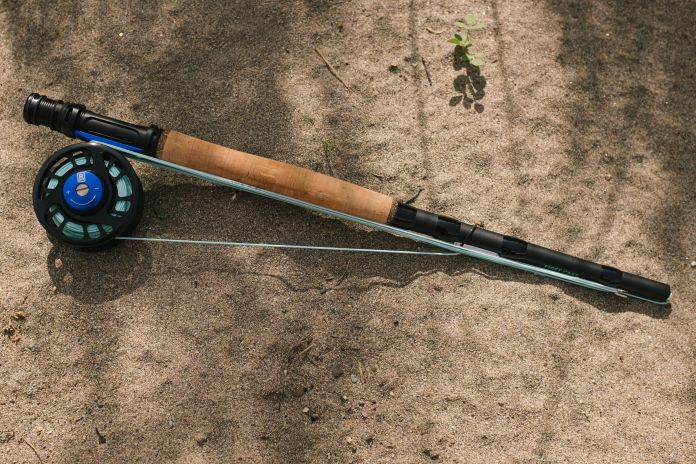
With the popularity of Fly-Fishing on the rise, new product releases have been the corollary. Whether they’re changing the world of fishing on the fly, or simply gift-shop-gimmicks, there is no doubt that this is a time for innovation (or, perhaps mutation) in our beloved sport. It was under this thinking, that our ears naturally perked up at the word of a new kind of fly-rod. In our efforts to explore anything and everything fly-fishing, we decided to take a look at what was being pitched as a “The go-anywhere, always rigged, telescoping fly rod“. Here, you can find our thoughts on the REYR Gear First Cast Travel Rod.
We reached out to Derek Roedel, founder of REYR Gear to try to get our hands on the rod. Upon initial unboxing, we had to admit, we were impressed with the size. The rod came neatly packed down in a neoprene case no longer than 17″. The rod itself felt solid, and to our surprise was already reeled and rigged. This satisfied our immediate reluctance in comparing the rod to a Tenkara, as it resembled a normal fly-rod except with a unique telescoping aspect.
After the initial unboxing, we took the rod outside for some initial casting tests. After flicking the telescoping rod out like a toy lightsaber (which we were later informed was NOT the proper method), we inspected the rod in its entirety. The guideless aspect fo the rod was a bit unsettling at first, but could be written off as a necessity considering the functionality of the rod. It was about 2x thicker than a normal fly rod (as the base had to house the rest of the rod), but felt pretty sturdy overall. We gave it a few good flyless “driveway casts” and then packed it back up.
The thicker nature of it definitely compromised some of the action a normal fly-rod operated with, however, it wasn’t a deal-breaker. We were able to pack the rod back down in under a minute, which was definitely impressive. However, upon a few more times unpacking and repacking the rod, we noticed the line had a tendency to get stuck in the release bay. However, we agreed that this could most likely be avoided with some additional attention to care.
Getting on the Water:
That weekend, we arrived at an undisclosed lake located at around 10k ft. in elevation. The rod had been easily packed into one of our daypacks and was easily retrievable. The lake, once housing a plethora of Brook trout, was now overrun by Rainbow’s that had been most likely stocked many years ago. Within our first sighting of a cruising fish, we had the rod rigged and ready within minutes.
With a beaded micro leech on the end of some 6x tippet, we flung casts towards the middle of the pond. When actually casting with distance as a focus, we were slightly underwhelmed with the performance of the rod. What we were able to deduce was that the friction of the guideless set-up influenced the line’s ability to shoot even with a healthy double haul. That being said, we were still able to get around 30 feet of line out comfortably, which was more than enough for the three of us to all hook up on a few fish each.
Don’t go throwing out your Sage anytime soon. The REYR Gear Rod doesn’t pack the same feel or power like any premium rods on the market. However, if you’re looking for a fun rod to pack for hikes, prolonged travel, or just a day on the golf-course: this rod is a neat tool to bring along. It’s easy to pack away, carry, and rig, and offers a fun new way to get on the water. In the end, if you’re willing to spend the money and are looking for a good gift for someone new to the fly-fishing scene, or someone just looking for a novel camping accessory, we recommend the REYR Gear First Cast Travel Rod.
We sent over a few questions to Derek Roedel, CFO (Chief Fly Officer) of REYR Gear to learn a little more about the product.
What is the REYR Collapsible fly rod?
Derek: This rod is a blend of both the tenkara and traditional rod styles to create something totally unique (or rare) in the outdoor world today. The rod is meant to find the right balance of capability along with setup and storage ease to help get people fishing everywhere. The rod is internally lined (no guides on the outside) and collapses down to 17-19″ depending on the model. When the rod is collapsed you can leave the fly tied on in the hook keeper so that you can set up in about 30 seconds from case to cast.
What is the main purpose of a piece of gear like this?
Derek: The main purpose is to have a rod always ready for action and to take literally anywhere. It fits in small backpacks with the fly tied on. It fits in desk drawers, it fits in a bike bags, or it hangs off your hip for that extra rod at the river. Many customers are finding that they are also fishing in more places than they would normally try due to those saved few minutes of setup – do you drive past a fishy looking pond on the way to work that you have always passed up? Well, this rod helps take that inhibition away and get your fishing.
What were some of the hurdles you’ve had to jump in designing a collapsible fly rod?
Derek: The collapsing and internal line design had many hurdles to development. The number one thing being is that it is just so different than other rods that this needed to be designed as a system to work together. The line and the rod contact each other so much that we really had to dive into the resin and layup of the rod along with custom lines to help make it work as best we can. The system works well now and performance is just like the blend of the styles it takes from. It casts further than tenkara, not as far as traditional – but you can fight fish with a proper reel and store this rod with the fly tied on in a normal backpack. The biggest hurdle now is convincing people to open their minds to this new idea!
Flylords got to know Boulder, CO based artist Remington Robinson. Remington is a passionate fly fisherman who grew up casting for bass in Ohio’s lakes and rivers, deep-sea fishing in the Bahamas, and chasing Pike in upstate New York. He uses his wealth of artistic talent to create paintings of all sizes, from massive murals to minuscule, plein-air masterpieces. Check out Remington’s thoughts and creations below!
Photo Courtesy of Remington Robinson
Could you tell us about how fishing and art found their way into your life?
I’m from Northeast Ohio and I grew up around fishing. I used to fish off of docks with a little spin-casting rod and then got into spin fishing for bass on the local lakes and rivers in Ohio. When I was really young, before my granddad passed away, we used to go down to the Bahamas on a trip with my mom’s side of the family every year. [My grandad] had a big fishing boat that we would take out and get up close to grouper and different types of snapper. My dad’s side of my family also has a place in upstate New York, and we still go up there to this day. My great-great grandfather bought an Island on upper Saranac Lake way back in the early 1900s, and all the families that have grown and branched off [from his children] all have the island as a timeshare.
Photo Courtesy of Remington Robinson
I’ve been making art for as long as I can remember. My dad, who passed away a few years ago, was an architect, and I used to go to his office when I was a kid and mess around with the colored pencils and all the little drafting templates. I started learning how to construct things from the ground up with craftsmanship and drawing. And then just like any other kid, I did art class in school and took to it because I already had that background of going to my dad’s office. [Since then,] I’ve just been taking [my art career] one step at a time, focusing more on art the more I grew up, and now we’re here today and I live in Boulder, Colorado making art full time.
Photo Courtesy of Remington Robinson
Walk us through your process for creating a new piece.
First I have to come up with an idea of what I want to do because I’m making art—I could literally make anything I want, even stuff that doesn’t exist. A lot of people have a tough time nailing down what they even want to [paint]. I like nature and have been around nature my whole life. Fishing is included in that, of course. My biggest inspiration just comes from nature itself—understanding the laws of nature and seeing how they work and how everything’s put together. [I also get ideas from] other painters and seeing what they’re making, and am inspired by Monet.Â
Photo Courtesy of Remington Robinson
[Starting the painting involves] coming up with the composition and dividing it up into the main shapes so that everything fits together correctly. From there I add a little bit of detail by drawing, and then go in with the main colors of the paint, blocking in the main colors with a bigger brush and then filling in the details with a smaller brush. It’s kinda simple—there are ways to break it down to make it simple so that it’s not so overwhelming.
Photo Courtesy of Remington Robinson
How would you compare learning to paint and learning to fly fish?
[With both] you just have to start small. You can’t eat an elephant all in one bite—you gotta work your way up. It’s really tempting to want to just accomplish everything all at once, but of course that’s not possible—you have to start from the beginning and work your way up. You’re not going to go out and catch the fish of a lifetime right away. First, you have to start casting and get your line in the water. With painting and fishing, you have to make the choice to put yourself out there. I think a lot of people have a tough time putting themselves out there because they’re doing something else that they need to do—everybody has bills to pay.Â
Photo Courtesy of Remington Robinson
With art and with fishing, it’s not about whether you have the time [to learn] or not, it’s whether you make the time. I had other jobs and was making art on the side and for a while, and said “I don’t have the time to start getting my foot in the door and start being a full-time artist.†But then I realized I was watching Netflix at night and going out with friends, and that stuff has its place, but it’s also possible to take some of that time to begin pursuing something else that you want to do. [Once I realized that], I approached a friend of mine who was doing murals and asked if we could do a mural together—I put my line in the water. He ended up asking me if I wanted to work with him on a few things here and there, that slowly ramped up, and then I was able to quit my other job in order to paint full time.Â
Photo Courtesy of Remington Robinson
Another connection between the two skills is preparation. I do a lot of murals and people end up seeing the end product, just like they see the end product of the fish when you catch it. But they didn’t see all the prep that went into it. [Working on a mural] I talk to the client, figure out the design, do a mock up on the wall, and order the paint. The same goes for fishing—nobody sees you getting up at 3:00AM and setting up all the rigs beforehand, making sure the raft is at the appropriate pressure, making sure your waders are there, but you wouldn’t catch anything without the work that happens behind the scenes.Â
How did you come up with your miniature plein air paintings?
I took a class in college on plein air painting (painting on location outside). I really loved it, but didn’t get into it right then. Later I worked in an art store and I saw all these big, quality plein air painting kits, and thought “I don’t want to carry all that stuff out to a place.†About four years ago I was in Salida, Colorado, and I stopped at a storefront that belongs to Joshua Been. It’s a storefront and studio location, and when I wandered in I saw that he had these really cool, compact, plein air painting kits for sale. I immediately bought one and then started going out and painting. It’s a really good excuse to be outside, and there’s a takeaway—an actual artifact—from [being outdoors], which is always nice.
Photo Courtesy of Remington Robinson
Later on a girl sent me a direct message on Instagram and was like, “Hey, my friends saw you painting!†I looked at her account, and she was one of these people who paints in the Altoid containers. I started painting a little bit smaller when I saw that, and then I ended up meeting with her for a little painting session. I asked her if she minded if I tried out the Altoid tin painting style and she was like, “I don’t own it. I just saw somebody else doing it!†After that I didn’t do it for a while, but for some reason, right when my dad died, I switched over to doing those tiny paintings. I was like, “you know what, I’m just going to start doing that because it looks like a fun thing to do!â€Â
Photo Courtesy of Remington Robinson
They’re oil paintings, and what I’m painting on is a small wood panel. I velcro them into the lid and then put the pallet of paint in. The paints will stay good for a month or two—they’ll dry on the outside, but there’s still good paint on the inside if you poke it with the end of the paintbrush and peel back what’s dry. I usually set those up ahead of time and it’s a good way to travel and be able to paint.Â
Do you paint exclusively with oil paints?
I actually [paint in] a lot of mediums. The Altoid container paintings are all always oil, but I [use other materials, too]. When I first started painting, I got into acrylic paints and I still [paint with those] occasionally. When I do murals, it’s usually a combination of acrylic paint and sometimes spray paint, too. I was just down in Mexico and I did a lot of gouache paintings—gouache is basically opaque watercolor, and it’s a fun medium that I just got into.Â
Photo Courtesy of Remington Robinson
What motivates you to continue creating?
I think [painting] is my healthy addiction. It’s fulfilling for my inner self and my innermost self. I feel like you have your inner self, which is the base part of your personality, and then your innermost self is who you are on the inside when there’s nobody around and everything is totally quiet—you just have your own thoughts and there’s no ego attached. On both of those levels [painting] is fulfilling [for me].Â
Photo Courtesy of Remington Robinson
What are some of your most memorable fishing experiences?
I’ve got tons of fun fishing stories from my adult life, but this one is from when I was a little kid. I was at my grandparents’ townhouse in Great Harbor Key, Bahamas, and maybe four or five years old. All the adults were out fishing, and I was there with my mom, but she was upstairs. I was down on the dock below the townhouse and wanted to fish, but I didn’t really know what I was doing yet. I found a rod that had a hook on it already and tossed it in with a bit of shrimp. Small fish came and picked away all the shrimp, so I was just fishing with a bare hook. This Barracuda comes up and eats it right on the surface of the water, and when it took the hook it immediately started splashing around. My mom heard the splashing and thought I had fallen off the dock. She came running down and saw that I had this Barracuda on. It was almost the same size as I was, and she helped bring the fish in and then took a picture of me.Â
Photo Courtesy of Remington Robinson
Another time, at the end of 2016, my dad took me on a trip to Aruba and he paid for a deep sea charter and for us to go out and bone fish. We didn’t catch a single thing, but right near our hotel, there was this random, man-made inlet. It was lined with reeds, and when I walked over to it one day I saw all these Tarpon. I got my rod and I was able to land a few small Tarpon that were between four-and-a-half and five feet long. It’s just funny because my dad spent probably $500 or $600 on us being able to go out deep-sea fishing and then, just outside the hotel, for free, we caught the biggest fish of the whole trip. If you keep your eyes open you can always find little things like that.
According to Remington, “more fish-related art is always welcome.†Additionally, Remington and his mural partner, Jason Graves, are interested in doing more fish-related murals. To reach out regarding any fish-related artwork requests, send an instagram direct message to Remington, or email your inquiry to: remrobinson@gmail.com
 Finally, Remington encourages everyone to follow and support Rep Your Water on Instagram.
To see more of Remington’s work you can check out his instagram and website, or visit Rocky Mountain Anglers in Boulder, CO to see his brown trout mural, completed in 2018.
Photo Courtesy of Remington Robinson
To see how the mural came to life, check out this video!




 For more than a decade, Backcountry Hunters & Anglers has been working alongside Alaskans, indigenous communities and more than 1 million American hunters, anglers, and businesses to oppose development of the Pebble Mine. We brought thousands of voices to bear this year asking Congress, the EPA, and the White House to protect the Bristol Bay watershed and the angling communities that surround it. While we were heartened recently to see the Trump administration pause the permitting process for the mine, our work will continue until one of the most valuable and productive fisheries in North America is safe from this threat.