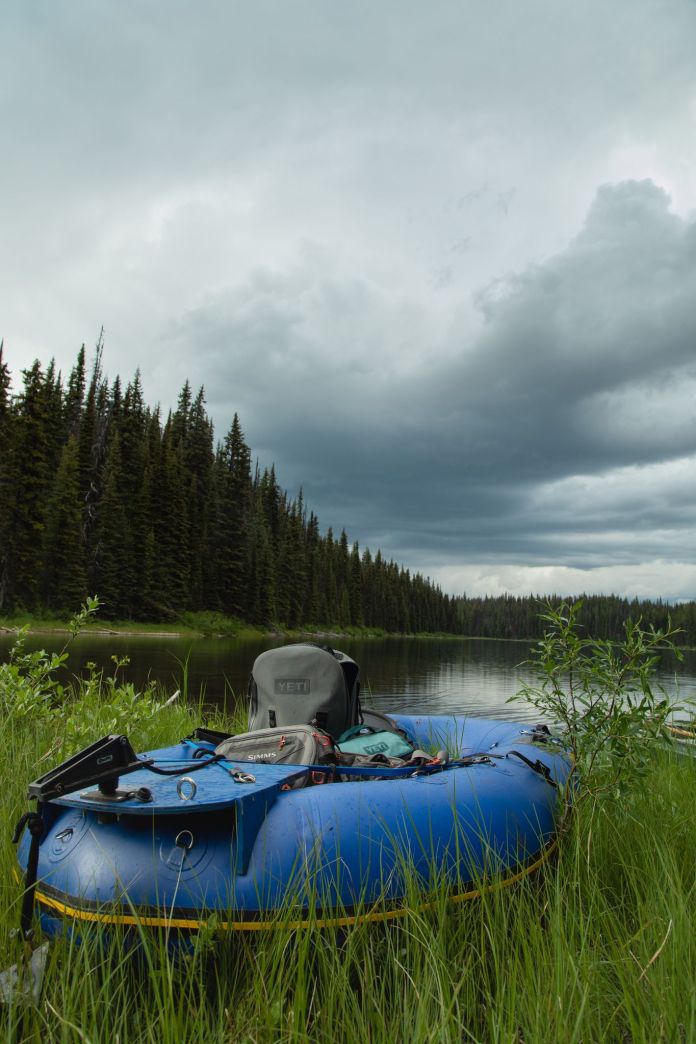
Happy Earth Day everyone! Today we take a day out of the year to focus on Planet Earth and reflect on how we can endeavor to conserve and protect the valuable resources we have the privilege of enjoying. So, we have gathered some of our favorite conservation stories highlighting people, brands, and organizations doing great work in the field of environmental conservation!
Happy Earth Day! On this day, it’s important to acknowledge all that our planet, in its healthy form, makes possible. Whether it’s casting to that rising brown trout, watching acres of blitzing stripers, or just seeing wildlife in its natural state, a healthy and functioning planet provides so much–not to mention, you know, providing the basic functions that make our lives possible. Yet, through our many human activities, we have harmed our planet and the ecosystems that we enjoy so much. Climate change, pollution, overfishing, and habitat destruction are just some of the many examples that show how human activity significantly harms our planet. But even amid these examples of our degrading planet, it is important to celebrate the beauty and life our planet provides in order to restore and conserve it for future generations.
Granted, the scale at which Earth is changing can be daunting and seem only reversible at the highest levels of government or through international efforts. Individually, however, you can do a lot to lessen some of the negative impacts affecting the planet: you can kick plastic, minimize your carbon footprint, get involved in local restoration efforts, buy local, or support environmentally-responsible initiatives and policies–just to name a few. Additionally, you can also support these fly fishing related companies that are doing great work when it comes to restoring and conserving our planet!
Costa Del Mar is an absolute staple in the realm of fly fishing and larger fishing industry. Costa continues to support initiatives that improve our planet and its natural resources. Through its numerous environmental campaigns–such as Untangle Our Oceans, OCEARCH, Kick Plastic, Bio-Based Resin, and restoring the Florida Everglades–Costa exemplifies corporate responsibility and does its part to give back to the ecosystems that drive much of its business. Costa also works to conserve and restore the planet by using recycled and less CO2 intensive materials to produce their sunglasses. The environmental awareness that Costa produces, along with their emphasis on environmentally-conscious business practices, makes them a great role model within the outdoor industry.
Patagonia has been a constant and powerful voice for environmental activism and corporate responsibility. Patagonia’s 1% for the Planet program, which devotes 1% of Patagonia’s sales for the preservation and restoration of the natural environment, has donated more than $89 million to grassroots environmental projects. Another foundation of Patagonia’s corporate model is reducing their impact on the planet, such as by using recycled materials in its products. Also, Patagonia shares its environmentally conscious beliefs and spreads significant awareness through its award-winning films like Damnation (2014) and Artifishal (2019), both of which speak to the beauty and wild, natural species that free-flowing rivers bring, and Public Trust (2020).
Fishpond is based out of Denver and is the first fly fishing company to become a certified B Corporation, ensuring high standards of corporate environmental responsibility. “From climate change, endangered species, and environmental protection for the special places threatened, we must use the Fishpond brand as a force for good.” An example of Fishpond’s unmatched devotion to improving the planet is their Cyclepond fabric, which is made from recycled commercial fishing nets and used in many Fishpond products. In addition, Fishpond is a founding partner of Science on the Fly, an organization that “harnesses the enthusiasm, geographic reach, and conservation ethic of the fly fishing community to strategically increase the number of rivers globally that are subjects of long-term studies of water quality and watershed health.”
Simms produces just about everything you could possibly wear for a day fly fishing. In addition, Simms supports dozens of organizations that directly improve your fishing and the planet such as Trout Unlimited, Captains for Clean Water, American Saltwater Guides Association, and Bonefish & Tarpon Trust. The Montana company has also been particularly engaged in restoring its backyard river, the Gallatin River outside of Bozeman. Simms recently partnered up with Trout Unlimited, “to restore and protect cold, clean water sources to ensure healthy fisheries for generations to come,” in the watershed.
RepYourWater is a unique apparel company focused on bringing quality gear to anglers and outdoorsman and women. RepYourWater places conservation high atop its list of corporate goals by donating 3% of all sales to its conservation partners, which include: various Trout Unlimited chapters, Bonefish and Tarpon Trust, Wild Steelhead Coalition, Backcountry Hunters and Anglers, and Sportsmen for the Boundary Waters. to name a few. As of January 2021, RepYourWater has donated more than $295,000 to its conservation partners. If you haven’t heard of RepYourWater, check out their Fish.Explore.Conserve collection and, hopefully, support their conservation partners!
Airflo manufactures fly fishing lines through process that is better for the planet. Airflo’s fly lines are 100% PVC free and use polyurethane, which is significantly better for the environment than PVC. For example, dangerous chemicals and toxins can leach from PVC, and the material has a short lifespan and is not efficiently recycled. Airflo has a winning strategy for their lines: better for fishing and better for the planet.
The threats facing our planet are substantial and increasing. The growing demand for rare metals will require mining, climate change continues to disrupt our planet’s ecological functions, and waterways are still fractured and polluted. Fish populations are incredibly susceptible to these effects: increasing temperatures or changing water chemistry can make a stream inhabitable to native species; dams have contributed to the precipitous global decline of anadromous salmon and steelhead; by 2050 ocean plastic will outweigh all the ocean’s fish; and marine resources will be strained to feed an ever-growing population. The good news is that, today, it is easier than ever to understand the threats and discover collaborative and innovative solutions to those challenges. Connecting with local organizations, contacting your elected officials, and being an environmentally conscious consumer are just a few of the ways that you can help–and they do in fact make a difference. So, today on Earth Day, think about how you can make a difference to help the planet and your local ecosystems.
Boat ramps are common areas visited by people of all different experience levels whether it be guides, newbies, or weekend warriors. We teamed up with The Qualified Captain to come up with a list of 9 rules that will help improve everyone’s boat ramp experience.
1) Prepare Your Gear in the Staging Area
The area directly in front of the boat ramp is valuable real estate. If your vehicle is in this area, you should either be launching or trailering the boat. All other parts of the process should occur in the staging area off to the side. Actions like inflating rafts, rigging up rods, arranging your cooler, attaching the anchor, etc., can all be completed before moving the boat into the ramp area (or even done at home before hitting the road).
2) Practice Backing Up a Trailer Before You Get to the Ramp
It is always a good idea to be confident with backing in a trailer before you actually get to a boat ramp. Under the pressure of a crowded boat ramp, you (and everyone else at the ramp) will be thankful that you took the time to practice before bringing your talent to the boat ramp. Go to an empty parking lot and practice. Take a day off during the week while the boat ramp is empty, and practice. This practice will go a long way!
If you are struggling with launching the boat, please ask for help. Other anglers would rather help out and clear the way instead of watching you fumble back and forth a hundred times.
When accessing a boat ramp, turn off your headlights. It’s alright to have them on while you’re backing up, but once you have the boat in place, turn those headlights off. This helps other people accessing the boat ramp at the same time because headlights reflect in other drivers’ rear view mirrors. Be considerate and turn your lights off for other drivers.
4) Be Quick
When you’re ready to launch the boat, make it snappy. Boat ramps aren’t always crowded, but when they are, there will be a line of people waiting for your spot. Have a plan to get in and out quickly.
One way to speed up the process is to have a friend with you. With two people, one person can stay with the boat and the other person can drive the vehicle. This drastically speeds up the process.
Some boat ramps are wide enough to allow for multiple boats to launch at once. If this is the case, make sure you leave enough room for other boats to access the ramp at the same time. This is where practicing will come in clutch… Having your boat alongside the dock, rather than launching in the middle of the ramp will make it way easier to get the boat off the trailer and to the dock. Most importantly, after the boat is launched, don’t be the person that takes up two parking spots.
6) Recognize Lines
Some people might be staging their boats, while others might be waiting in line to launch. It’s up to you to recognize who is ahead of you in line and respect the fact that they got there first. Always access the scene before making a move… Don’t be shy, just ask.
Boat ramps become especially tricky when they’re crowded. One way to avoid the pressures of a crowded boat ramp is to utilize them during off-hours. Chances are, your experience will be a lot more relaxing on a weekday afternoon than a Saturday morning.Â
8) Use Your Parking Brake
We’ve all seen the nightmare videos… Don’t be the next victim. You should always be using the parking brake on when stopped on the ramp. This is especially important on low tides.
If you boil these rules down, you find that boat ramp etiquette is all about being courteous to others. We are all stoked to be getting out on the water. Let’s work together to make it an enjoyable experience
Thanks to the folks at The Qualified Captain for helping us put this list together. For more information about their company check out their website.Â
Stay tuned for more installations of Fishing Etiquette!
In this week’s “How to Tie†video feature, Fly Fish Food gives us a great tutorial on how to tie the Jig Streamer Sculpin.
Learn About This Fly:
Difficulty: Intermediate
The Sculpin, a main stay in most anglers boxes due to its continued reliability and versatility in just about every water body. Sculpins are benthic fish that dwell at the bottom of water bodies. They are very common in spring creeks and rivers but also find a place in freestones, tailwaters, and lakes alike. That being said, trout and other fish species love munching on them which is why they are highly recommended for your fly box.
If you are familiar with jig style hooks, you know that they ride hook point up and are accompanied by a heavy tungsten slotted bead. As mentioned previously, sculpins live in the depths of water bodies and so a jig hook is a no-brainer. The benefit of this rig is the fact that it will get down fast and “swim” with the current when jigged.
Throw this fly on a euro-rig as the point fly and you might be surprised what could take place. Euro-style jig streamers are becoming more and more popular because they are simply deadly. Fish will eat this fly and because of that it should have a special place in your fly box.
You can never be too careful in the Montana backcountry…
Last Thursday, April 15, veteran backcountry Yellowstone guide Charles W. Mock IV of West Yellowstone, was mauled by a mature, male Grizzly bear that authorities believe was defending a food source Mr. Mock got too close to while he was fishing. Charles Mock was fishing near the Baker’s Hole campground in an area about three miles north of West Yellowstone, Montana and he was carrying bear spray along with his fishing rod.
After the bear ran off after the initial attack, the victim managed to call 911, and authorities arrived on the scene to rescue him. He was taken to the hospital where he passed away after complications after his emergency surgeries.
Later on, authorities returned to the site of the attack to investigate, and we again charged by the same bear multiple times before having to shoot the aggressive grizzly.
According to the National Park Service: “Since 1979, Yellowstone has hosted over 118 million visits. During this time, 44 people were injured by grizzly bears in the park.â€
Next up on the 2021 F3T Behind the Lens… Tetiaroa. A film about one of the most beautiful fly fishing destinations you could imagine. This promised land of giant GT’s, big bonefish, and pristine flats is enough of a reason to add this place to your bucket list, or to inspire you to pick up your rod and hit your local stream. To get an inside look at this story we sat down with two of the people that made this project possible, cinematographer Kane Chenoweth, and the Aussie Fly Fisher himself, JoshHutchins.
Flylords: What is uniquely special about Tetiaroa?
Josh: Before starting this project, I had heard stories about a place in French Polynesia. An island with amazing natural beauty, interesting history, and massive Giant Trevally (GT) and Bonefish. Among the long list of things that makes Tetiaroa unique is the fact that these fish have little to no fishing pressure. If I had to guess, I would say that these fish see very few anglers each year. With this being the case, anglers have an opportunity to catch some of the biggest GT’s and Bones you can imagine… and they aren’t afraid to eat.
Flylords: What was your favorite part about filming this piece?
Kane: I think my favorite part about filming this piece was the unknown… We just finished a monster project called “Downunder,†which actually just won a Gold in the Australian Cinematographers Society Awards. Coming off this project, I wasn’t really sure what to expect with “Tetiaroa†when planning the story/structure of the film (besides the fact I’d be filming monster Bonefish). The story came together fairly organically which is always nice! Lastly, I feel lucky that Josh gave me the opportunity to capture this vision on an island owned by the Brando family. This is an extremely special flats fishery and it’s a project I won’t forget for a long time!Â
Flylords: What was the most challenging part of filming this piece?
Josh: Anytime we bring a collection of camera gear into a saltwater destination, it’s challenging. We are trying to catch fish, get the shots, and protect the gear throughout the process. Additionally, when the weather doesn’t cooperate, it can make things especially difficult. For this trip we had less than a week to shoot on the island, and we only had one full day of sun. With the cards we were dealt, the pressure was on to catch fish and get the shots.
Flylords: What kind of camera setup were you using?
Flylords: What is your favorite species to target in Tetiaroa?
Josh: It’s hard to stray away from GT fishing. I say this often, but GT fishing is like a knife fight in a phone booth. Everything happens in close quarters, and each move has to be perfect if you want to land that fish. It’s the fight that keeps me coming back for more.
Flylords: What is your favorite species to shoot with on camera?
Kane: Any fish that’s sight fished is a great fish to capture (which was about 95% of the fish in the film). I can’t go past a thumper GT though. They’re the bad boys of the flats, and just look extremely tough on camera.
Courtesy of Josh Hutchins
Flylords: What do you hope audiences take away from this film?
Josh: While Tetiaroa may be a far destination for most people to travel, I hope that this film acts as inspiration for people to get out fishing wherever they can. It doesn’t have to be fishing for GT’s in French Polynesia. It can be adventuring in your local stream, estuary, pond, or whatever is available for you.Â
Flylords: What is the biggest threat to the future of Tetiaroa?
Josh: The film highlights the incredible biodiversity of Tetiaroa and how much the local community cares about the conservation of this place. But, the looming concern for this island isn’t what’s happening on the island, it’s climate change. As Frank Murphy (Executive Director of the Tetiaroa Society) says in the film, Tetiaroa acts as a “canary in the coal mine†because the island is incredibly vulnerable. No matter how pristine this island may be, a future filled with rising sea levels, coral bleaching, increasing ocean temperatures, and intensifying hurricanes, presents a grim possible future for Tetiaroa and other similar islands.
Flylords: What can we expect next from Kane Chenoweth?
Kane: I recently finished up filming a project with Josh on the Wessel Islands off the coast of the Northern Territory, Australia. I’m currently in the middle of the edit at the moment, and I’m extremely excited to share it! We still have a few changes we are making to the extended public release of “Downunder,†so that might be coming out soon. Whilst writing this, I’m actually on a flight for the next project with Josh. This time in the Cocos Keeling Islands. This one should be fun, and hopefully a hero piece for my year. Heaps to be excited about, and can’t wait to see what else the year brings!
Flylords: Any hints about what viewers can expect from the Aussie Fly Fisher next?Â
Josh: We aren’t slowing down anytime soon! For the time being, we’ve got a bunch of places that we’ll be exploring and documenting around Australia. There is such a wide range of fishing opportunities in this area that remain relatively unknown to most of the world, and we’re excited to experience those places and document them. Stay tuned for some exciting Aussie Fly Fisher content to come!
Northern pikeminnows in the Columbia River have a bounty on their heads and a target on their backs. The Northern Pikeminnow Sport Reward Fishery was set up to mitigate the drastic impact pikeminnows have on the eggs and smolts of the migratory steelhead and salmon that call the river system home during their spawn. You can learn more about the program at PikeMinnow.org.
From the Bonneville Power Administration, Oregon Fish, and Wildlife & Washington Fish and Wildlife:
PORTLAND, Ore. – Registered anglers fishing near the Tri-Cities, Washington, can fish and turn in northern pikeminnow beginning April 19 as part of an early opening trial of the 2021 Northern Pikeminnow Sport Reward Fishery.
The early season opener is only available to anglers registered at the Columbia Point registration station near Richland, Washington, fishing within program boundaries above McNary Dam. The regular northern pikeminnow sport reward program begins May 1.
As in previous years, the program pays registered anglers $5 to $8 for each pikeminnow that is at least nine inches long. The more fish an angler catches, the more each pikeminnow is worth. And some fish have an even bigger payout. State fish and wildlife biologists have released specially tagged northern pikeminnow into the Columbia and Snake rivers, each worth $500.
Northern pikeminnow are voracious eaters, consuming millions of young salmon and steelhead each year. Since 1990, anglers paid through the program have removed nearly 5 million pikeminnow from the Columbia and Snake rivers. The program is funded by the Bonneville Power Administration and administered by the Pacific States Marine Fisheries Commission in cooperation with the Washington and Oregon departments of fish and wildlife. It has reduced predation from pikeminnow on young salmon and steelhead by approximately 40% since it began.
If the early opener proves productive, additional stations may be considered for early opening in 2022, said Eric Winther, project lead with the Washington Department of Fish and Wildlife.
“Historically, large numbers of northern pikeminnow congregate near the mouth of the Yakima River early in the year,†said Winther. “We believe this early opener may provide anglers with some great harvests before those fish disperse from the area later in the season.â€
Winther noted there have been several changes to station locations and operating hours for the 2021 season.
In addition to the 18 full-time stations that operate during the five-month season, six new satellite stations will offer anglers additional pikeminnow harvest opportunities in areas with good fishing during short windows of time. These satellite stations will open at different times throughout the season. Interested anglers are encouraged to get the most up-to-date information on the program website, www.pikeminnow.org, before heading out.
Details on how to register for the program and applicable state fishing regulations are also available on the program website. Anglers will find resources on the site to help boost their fishing game, including maps, how-to videos, and free fishing clinics.
For more information about the 2021 Northern Pikeminnow Sport Reward Fishery visit www.pikeminnow.org, or call 800-858-9015.
Fly fishing in itself is a complex sport. If you are new to the sport, you may have been overwhelmed by the shear amount of gear that you supposedly “need.” Or maybe you were overwhelmed with all of the intricacies that tend to come with fly fishing. Trust me, you are not alone. That is the beauty of fly fishing. It is complex but once you fall into a rhythm, it is so rewarding and you won’t want to put the rod down. That being said, it is nice to find some extra tips that will make your time on the water more enjoyable. In this tips and tricks video of the week, Seth from Dark Waters Fly Shop breaks down 5 easy fly fishing hacks in under 3 minutes.
5 Fly Fishing Hacks
1. DIY Fly Line Perfection Loop
Often times welded fly line loops can create issues and often end up cracking. To combat this, simply cut off the welded loop and replace it with a 3 inch piece of 30 pound monofilament. Attach the mono to the fly line using a Blood Knot and then tie a simple perfection loop on the other end of the mono. Now you will have a reliable loop to loop connection between your fly line and leaders.
2. Threading your Fly Line Through Your Eyelets
Often times threading your fly line through the eyelets of your rod can be a hassle. Luckily we have the answer. Simply fold your fly line over itself and the feed that through the guides. If you accidently let go of the fly line, the doubled loop will catch in the eyelet preventing if from falling out.
3. Avoid Reeling your Fly Line Past your Guides for Rod Storage
We have all been there, reeling your fly line into your guides can create issues trying to get it back out. For this hack, simply hook your fly on your third guide from the handle and then loop your leader around the back of your reel. There you have it, simple rod storage and your fly line will always stay out of your guides.
4. Creating Sink Tip Extensions on the Fly
Depending on where you are fishing, river depths can vary drastically. If you are fishing streamers and just aren’t getting the depth that you desire, we have the answer. Take a pack of Airflo Sink Tip Poly Leaders with you on the water and attach with a loop to loop connection to your fly line and you are set.
5. An Easy Bow and Arrow Cast
The great Joe Humphreys made the Bow and Arrow cast famous but he does it a tad differently than most think you should. The common misconception is that you are supposed to hold the fly when performing this cast. Not the case, simply strip out a desired length of fly line and hold the fly line while the flies hang freely. Pull back and let it fly! Your flies will reach your target and you will avoid a hook in the hand.
There you have it, 5 fly fishing hacks that will cut your time in half and make your trips more enjoyable on the river.
For more tips and tricks, check out the Dark Waters Fly Shop YouTube Channel by clicking here.
Fishing BC made yet another beautiful video featuring Paula Shearer lake fishing in Caribou Country. Paula stayed at the Meadow Lake Lodge and fished for rainbow trout in this pristine part of British Columbia. Caribou Country is located in the middle of BC and offers lake and river fishing amidst amazing scenery. To learn more about Paula’s trip and her unique loon encounter, check out our interview with her below.
Flylords: What part of British Columbia were you in for this trip?
Paula: I was in Caribou Country for my Fishing BC adventure. It was so fun to be there because I grew up fishing in that area. My dad and uncles would take me out to the lakes and we would fish all day. When I was 8 my dad taught me the basics of fly fishing and by the time I was 12, I would go to the lakes on my own and fish! Being back in Caribou Country was super enjoyable, and I made some great memories.
Flylords: What was your favorite part of the adventure at Meadow Lake Lodge?
Paula: I love the idea of going to a place that is so secluded. The lodge and lakes offered that and it was wonderful. As much as I enjoy being with people, it is also so nice to be alone. The cabins at Meadow Lake Lodge were also really nice. I liked the rustic feel but with the amenities of modern times. It was honestly just great to unplug and be out in the woods for a few days.
Flylords: How does stillwater fishing compare to river/creek fishing?
Paula: Stillwater and river fishing are two very different genres of fishing. They each have different entomology and features. Reading river water and figuring out where to fish in a lake is totally different! Lake topography is so unique, and I enjoyed learning more about still water fishing while in Caribou Country.
Flylords: Did you enjoy changing up your routine from creek/river fishing to lake fishing?
Paula: I have a lot of experience fishing rivers, so it was fun to get back into some lake fishing. I love the aspect of learning and stillwater fishing has lots of knowledge to offer. The bugs, fish, water, almost everything was so different and I really enjoyed that! The seclusion that the lakes offer is also so nice. I loved being able to learn so much in the very area that I began fly fishing back when I was a kid.
Flylords: Did you learn anything new during your trip to Meadow Lake?
Paula: Learning about the lakes themselves was super cool. The entomology aspect and matching the hatch was fun as always. It was much different from my normal river fishing routine, from the variety of bugs to the presentation. The behavior of fish were different as well and it was a welcome challenge to find the best ways to catch the rainbows.
Flylords: Did you encounter any wildlife while at the lakes?
Paula: Yes!! Let me start off by saying we tried our hardest to release the rainbow trout away from the loon… but the loon was quick. It would circle around the watermaster raft like a shark after we got a fish in the net. The loon must have figured out that fish were somehow coming up to the surface with people floating with poles in the lake! We saved some fish from the loon but one time it snatched a little trout up and took it to its babies. Right before our eyes, we witnessed true nature as an eagle screeched and grabbed the fish from the loon and babies. It was a pretty wild experience that I won’t be forgetting anytime soon!
Flylords: You fished in multiple lakes in Caribou Country, did you find certain lakes to be more rewarding than others?
Paula: The lakes that were a further hike held the larger fish, but the closer lakes held more, smaller fish. We heard stories about some nice-sized trout in a lake a few kilometers further than the others and we had to check it out. It was no easy task getting there though. I carried my watermaster and gear on my back (about 65 lbs) and it was a workout! Although I did not catch any trophy fish, I still got some beautiful rainbows and it felt amazing to have a whole lake to myself.
Flylords: What makes fishing in British Columbia so special?
Paula: There are so many aspects of fishing in British Columbia and it really makes for a neverending mix of fishing fun. Each part of BC offers different fish and I love the learning experience it provides. I’ve gone steelhead fishing in the northwest, cutthroat fishing in the east, lake fishing in the middle, and it never gets old! I think of British Columbia as my backyard. Although I live in Alberta now, I grew up in the woods and waters of BC and much of my extended family still lives there. I always enjoy fishing for a variety of fish in British Columbia and am so grateful to get out on the water in such a beautiful place.
Spring marks the time of the year when dry fly fishing purists begin to rejoice. Summer floats may not be far off but there’s plenty of good dry fly fishing to be had before runoff takes full effect. Baetis and caddis are becoming more active and deserve some attention over the next few weeks as temperatures rise. Below are 5 pieces of dry fly fishing gear that will enhance your time on the water pursuing trout.
G Loomis NRX+ LP
Precision and line control are a must when presenting dry flies to discerning trout. The G Loomis NRX+ LP is a medium action rod designed to flex deep into the blank and capable forming tight loops in the short-medium casting range. While it’s designed for dry fly fishing specialists, the G Loomis NRX+ LP is also able to throw larger flies when called up. This rod is available in line weights 3-6 and is beautifully handcrafted in Woodland, Washington with a custom aluminium reel seat with amboyna hardwood insert. This trout rod will serve any serious dry fly angler for years to come.Â
Loon Aquel Gel Floatant
Not all fly floatants are made equal. Loon Aquel premium gel floatant is my go to for dry fly fishing year round. Some floatants that I’ve used can separate with time and solidify during colder months. Loon Aquel is easy to apply regardless of the temperature, environmentally friendly, and is a great all around floatant for dry fly fishing. While there are some more specialized floatants on the market for CDC and other tying materials, Loon Aquel remains my go-to for everything from small dries to large hoppers.Â
Airflo Superflo Tactical Taper
Having a fly line designed for delicate presentations can be the difference between spooking or landing a fish. The Airflo Superflo Tactical Taper is a weight-forward floating line designed for delicately presenting smaller flies. This line features a long front taper that helps delicately turn over dries while still providing maximum control in technical situations.
The Airflo Superflo Tactical Taper is available in line weights 2-6 and pairs well with all rods of all actions. I have been fishing this line on my 3WT Scott F Series glass rod and it’s an absolute pleasure to cast on small streams for spooky fish.Â
Airflo Polyleader+ Trout Floating Leader
Presentation. Dry fly fishing is all about delivering your fly close to your target in a delicate and natural manner. Airflo’s Polyleader+ Trout line of floating polyleaders have unique taper profiles designed to help with superior energy transfer resulting in more accurate casts. These leaders are coated in a super supple polyurethane coating for improved turnover and durability. The Polyleader “Plus” leaders also come with a factory installed tippet ring which helps to further extend the life of the leader. Adding 3-8’ of your desired tippet to the Airflo Polyleader+ Trout will have you delivering dry flies to tight pockets with ease.Â
The Airflo Polyleader+ Trout are available in 6 ½’ and 8 ½’ options and I have found the shorter version to be particularly useful in small stream scenarios where the casting room is limited. Like all Airflo polyleaders, the floating Airflo Polyleader+ Trout leaders have color coded welded loops for easy identification. Be sure to try both lengths in different scenarios and you won’t be disappointed.
Flylords Sunshirt
It’s important to stay protected from the sun while you’re out on the water. If you’ve been looking for a hooded sunshirt to protect you on warm spring and summer outings, look no further than the Flylords Sunshirt.
This shirt features SPF30 protection without any external chemical treatments. Made with our friends at Recover, each garment is 100% recycled out of plastic bottles. This shirt is the perfect companion for spring and summer dry fly fishing.
No More Nymphing
If you’re like me and ready to set your nymph rods aside to take advantage of spring’s best dry fly fishing, the gear above will suit you well. Presentation is key and while there’s no substitute for proper dry fly fishing techniques and methods, this gear will certainly help you along the way.Â
Article by Evan Garda, he is on the Content Team here at Fly Lords. He can be found chasing trout throughout the west with his trusty fly rod. Check out his adventures at @evangarda.