“Home Waters” is meant to be a companion piece to the acclaimed novela, “A River Runs Through It” by Norman Maclean. John Maclean, Norman’s son grew up following his father on many fly fishing adventures, and in his book, he explores his own relationship with the waters his father was haunted by, fly fishing and his own relationship with his father.
In a recent feature on FieldAndStream.com, John shared an excerpt from his book and goes on to describe the inspiration behind it in an interview with the publication.
An angler’s favorite playlist is a tool that can sometimes be considered just as important as their rod and flies. Whether you’re a surly guide who depends on some rock and roll to roll out of bed for that 7 AM float trip, or the Van Gogh behind the vice whose art is inspired by the soothing toons of the grateful dead; your music powers your engine.
With this in mind, we sat down with our friends at Turtlebox Audio to put together 4 custom Spotify playlists inspired by the anglers and genres that have inspired us. Now, we’re proud to present these Angler Albums for the listening pleasure of everyone. Whether you’re getting pumped on the drive to the river, or need some accompaniment to the sound of a hissing reel with a billfish on the other end – kick back, crack a cold one, and enjoy.
Playlists:
Angler Ablums: Fast Grass and Other Appalachian Melodies
Some of best for those with the Bluegrass condition. New, old, or completely irrelevant – if it’s got twang, we’re here for it. Perfect for getting pumped before a day on the water, or relaxing by the fire commemerating a job well done.
Angler Albums: Crackling With Energy – Our Favorites from the Grateful Dead
We sifted through our immense collection of our picks for some of our favorite performances from the Grateful Dead (and Jerry Garcia’s solo work) to bring you a Dead beat playlist that’s crackling with energy! Think we’re biased to pre-80’s? Us too!
Angler Albums: Cowboy Tunes and the Best of Classic Country
A throwback to the folks who started it all. From Hank to Towns, this playlist is for those who prefer their mash sour and their songs full of sorrow.
Angler Albums: Your Dad’s Rock and Roll – Classic Rock and Songs of the Times
This isn’t your dad’s rock and roll – oh wait, yeah it is! Some of the most iconic rock and roll (and music in general) came from this generations juke boxes. We aim to cherish that. For those who still have a pair of bell bottom jeans tucked away in their closet, here’s to you.
Did we miss your anthem? Let us know! We will be opening a 5th “Community” playlist to sum up the music of the people. Check out the Community playlist HERE to add your favorite jams to share with all.
Thank you to Turtlebox Audio for making this project possible. Music’s best heard when it’s played loud and proud. Check out where you can get your very own Turtlebox Speaker HERE. (Please enjoy courtiously).
G. Loomis Rod Company Has just announced the release of the all-new NRX+ Swim Fly Rod. As another addition to the premium NRX+ rod family, this rod was designed to swing big flies and wrangle massive freshwater fish.
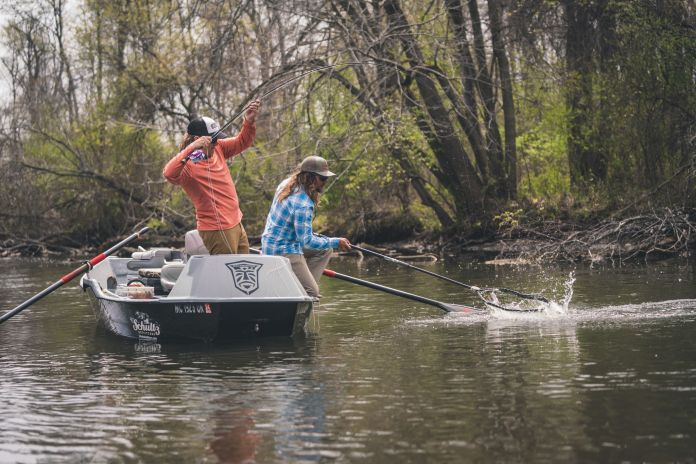
A few months, we had the chance to take our team to Michigan, where we met with G. Loomis Pro, Mike Schultz of Schultz Outfitters to test out the new rod on some less than forgiving bass water. HERE, we were able to capture our experience to create a promotional short video for the rods release. Make sure to check it out, as well as the brand new NRX+ SF rod, as they won’t be in stock for long.
Behind the Scenes with the Flylords team shooting the G. Loomis “NRX+ SF” Video.
“With enticing baitfish motion, multi-point articulated “swim flies” are now an essential pattern in every serious bass angler’s box. This massive innovation in streamer fishing has inspired an entirely new paradigm in rod design, one that can deliver long, heavy flies on hyper-accurate casts and properly animate those flies on the retrieve. To meet the unique needs of swim fly anglers, G. Loomis unveils the NRX+ SF: An intricately designed rod with a quick-loading action for punching flies into tricky cover while transmitting every twitch, bump, and slide directly to the fly for precise swimming action on the strip.
“The swim fly technique was born by taking the lures that conventional anglers were using for big bass in moving water, and then translating those lures into flies at the vice,” notes Michigan swim fly aficionado, outfitter and fly shop owner Mike “Schultzy” Schultz. “The result is a long, heavy, articulated fly that quite literally swims through the water and drives bass crazy – as long as anglers can deliver it where those fish hide and impart the right action. The new NRX+ SF rod does precisely that: It provides fly casters with the best tool available to become better swim fly anglers.”
G. Loomis engineered the NRX+ SF with Dynamic Recovery Technology, a blend of several premium technologies that creates an exceptional rod. The Mega Modulus+ graphite matrix and GL8 resin system, combined with the industry’s most advanced compound taper construction process, creates crisp actions with smooth, rapid recovery. The key to achieving these performance characteristics is a reimagining of G. Loomis’ proprietary Multi-Taper Design technology to yield lightness, strength, and action.
“Dynamic Recovery Technology enables everything that we want the NRX+ SF rod to do,” asserts Steve Rejeff, G. Loomis Director of Engineering. “It makes the rod strong and stiff enough to easily manage a heavy fly and subsurface line and deliver that fly into tight spaces bordered by rocks and trees. At the same time, the GL8 resin and Mega Modulus+ high-performance graphite matrix make the NRX+ SF surprisingly light, reducing angler fatigue over a long day of repetitive casts.”
“The tip section of the NRX+ SF is particularly powerful for the line rating,” notes Rejeff, “with the tip almost two line sizes more powerful than a typical rod of the same rating. This adjustment makes it easier for the angler to manage a weight-forward fly line and a heavy Game Changer fly, which constitutes a significant load to lift from the water. Dynamic Recovery Technology in the NRX+ SF facilitates every aspect of delivering swim flies.”
Each NRX+ SF rod measures 8’8″ – just a touch shorter than the typical 9′ length — and for good reason. “An 8’8″ rod is the perfect length for delivering swim flies on typical 25 to 50-foot casts, providing directional control, accuracy, quickness, and particularly lightness,” continues Rejeff. “Quite simply, it is a shorter lever, which makes it easier to lift and cast a heavy fly and line, accurately and repetitively, without getting tired.”
“G. Loomis designed the NRX+ SF rods specifically for the way that we fish swim flies,” Schultzy affirms. “The 8’8″ length is much more accurate than the traditional 9-foot rod. They cast at distance and up tight and are perfect for animating the fly in the water.”
Refinements continue down the entire length of each NRX+ SF rod. Anglers will find a hybrid guide train with Recoil snake guides and Titanium SiC stripper guides. A full wells, AAA grade cork grip provides comfort and control while chasing big bass. The custom aluminum reel seat with fighting butt provides leverage over hard-fighting trophies. G. Loomis handcrafts each NRX+ SF rod in Woodland, Washington.Â
The NRX+ SF is available in two line weights to maximize its versatility. Schultzy recommends the 7-weight (NRX+ 788-4) to cast smaller swim flies from 3 to 5 inches long and the 8-weight (NRX+ 888-4) for delivering larger offerings.
“The NRX+ SF series is an absolute pleasure to fish and is one of the very few rods I’ve ever held that can make anyone a better angler,” continues Schultzy. “I can put this rod in the hands of a novice who struggles to cast 30 feet, and then I can hand it to a rock star, and both will be able to cast better and manage a swim fly more expertly than they could before. The NRX+ SF is the ultimate rod for swim fly anglers.”
Be sure to check out the new G. Loomis Swim Fly HERE, and stay posted for more exciting news from G. Loomis and the Flylords Team.
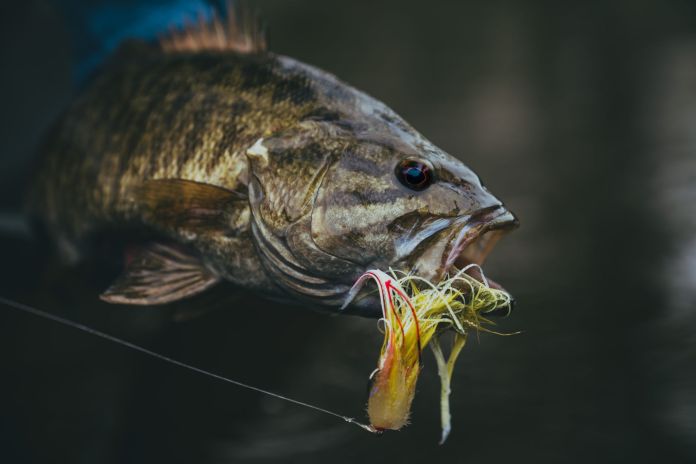
We’ve wanted to fish for smallmouth in the Ozarks for a long time, but it’s always been just out of the way to make it happen. So, when we got the call from Simms to head there for a photo shoot, we were ecstatic. We were going to be fishing mainly for trout (during the Simms shoot) but after we wrapped that up, we planned to have a few days to target smallmouth for ourselves.
With the smallmouth tingles running through our bodies, we booked flights and arrangements to get there. Things were arranged nicely and we had plans to shoot a video while we were there. We wanted to use this video to announce where we are going for our upcoming Short Bus Diaries trip, this summer. We planned to shoot some BTS footage of the photoshoot and then film a few days of fishing on our own, afterward.
Fast forward to a week out from our trip and sure enough, the weather took a turn for the worst. The spring weather in the south can be unpredictable and sure enough, an inland monsoon was scheduled to hit the day our smallmouth filming would start. We made some backup plans but had our fingers crossed that the weather would make a turn in our favor. Thankfully, we were gonna be with the crew from Simms who would have us covered if a monsoon were to hit.
Because the Ozarks are not near any major airports, Scottie and I flew into Huntsville, Alabama (where Bryant & I are from) to pick up a raft. Rental car and rental boat logistics were complicated, in the Ozarks, so we opted to take a little 7-hour road trip from Alabama to Missouri. We stayed in some neat cabins on the North Fork of the White in Southern Missouri with plans to head into Arkansas once the shoot wrapped up.
We quickly found out that the North Fork of the White is immensely pretty but all but baron of fish. Come to learn a massive flood in 2017 ruined the fishing for a variety of reasons. We also heard, from locals, a dam downstream had been taken out years ago allowing Stripers to access the upper regions of the river. A variety of these factors had all contributed to a fish kill/pushing fish out of the North Fork of the White. It was unfortunate that the fishing was so slow, but we are looking forward to going back once it has recovered.
It was the last day of fishing with Simms and we were headed to chase smallies the next day. A quick weather check proved that the inland monsoon was going to hit the next day. We had our fingers crossed that the weather was going to break or that the forecast was wrong. It wasn’t. Shout out to whoever makes the forecast for that area because they were spot on. We had scouted some big-name rivers and some other spots ourselves that we were planning to fish in the Ozarks but after checking the forecasts we realized there was no way we were going to be fishing there.
The forecast for North AL/Southern TN was looking enticing. The monsoon was going to wear itself out between the Ozarks and the foothills of the Appalachians leaving us with a little bit of rain and more importantly, clear rivers. We were sad to miss the opportunity at Ozark smallies but we’ll be back. We headed back for AL.
We’ve been targeting smallies on flies in AL since the 1990s, so we were pretty confident in our ability to find fish back home. A cooler than usual spring had delayed the Smallmouth moving up the rivers and into the summer holding spots, that they would normally be in by that time.
It took us a while to figure out where the fish were, but when we found them, it was on. We found that the fish were fish holding in deeper water as opposed to up in the faster current. This is typical from smallmouth, during the late winter/early spring months but not what we expected. Nonetheless, thanks to some red beers and a few new R&D patterns, we managed to have 2 solid days of fishing.
We had a few of our BlueLine Flies R&D patterns, the most important being a new crawfish designed off an idea provided by Bryant. This new craw pattern, named the Tickle Monster, proved to be one of the best flies of the trip. We also had another R&D pattern that passed its exams that we dubbed the Conjuror. After many hours behind the vice–working on new patterns–it’s always rewarding to see them fish the way you hoped. Although no pattern is perfect, we took some notes away from this trip on what worked and what we can improve on with our new line of flies coming out later this year. Both will be released soon on BlueLineFlies.com.
Overall it was a successful trip, we caught some fish and got to see a new river in Missouri. Ozark smallmouth…We’re coming for you…We just have to figure out when.
For this installment of “Organization of the Month,” we chatted with Keep Fish Wet and dove into the topic of fish handling. Keep Fish Wet promotes the use of science-based best practices to catch, handle, and release fish. Follow along to learn more about the organization and ways to lessen your impact of catching and releasing fish.
Flylords: Tell us a little about how Keep Fish Wet came to be?
Keep Fish Wet: We started as just an Instagram account and hashtag (#keepemwet) trying to create more awareness about fish handling, especially because of immense frustration with seeing photos on social media of fish that were handled in ways that would likely cause them to die, but hashtagged ‘catch-and-release’. As our presence and grassroots movement grew, we created more resources for anglers about why science-based best practices for capturing and handing fish are important for the future of recreational fisheries. To help build capacity and continue to grow, we formed Keep Fish Wet as a 501c3 nonprofit in 2019. Grounding all our best practices in science has always been the foundation of what we do and convey to the angling community. Likewise, we strongly believe that information about best practices should be free and readily available, which is why we are not a membership-based organization and our Advoate program is free to join.
Flylords: Tell us about the larger Keep Fish Wet movement.
Keep Fish Wet: Some of our most treasured recreational fisheries are threatened and in decline — think steelhead, tarpon, stripers, and wild salmon. We believe that, as anglers, we need to do all we can to increase the resiliency of our fisheries, especially for native or vulnerable populations and in the face of impacts such as climate change.
Our mission is to help anglers create better outcomes for each fish they release. By providing educational resources about science-based best practices, we advocate for anglers to make small adjustments in the ways they catch, handle, and release fish so that more survive and are healthier after release. By using science-based best practices you have an opportunity to practice conservation every time you catch a fish.
Flylords: I guess it goes without saying, but your overriding principle is to keep fish wet–are there any other principles?
Keep Fish Wet: While Keep Fish Wet is the name of the nonprofit, we advocate for using science-based best practices for fish that you catch-and-release. It’s not only about keeping fish wet, although our name is indeed a very important best practice that anglers should take to heart (since fish don’t breathe out of water). We have three principles that are supported by a series of tips that help anglers put conservation into action with each fish they release. The three main principles encompass what anglers can do immediately after release that make the greatest difference in the survival and health of fish. They are also the aspects of angling most within an angler’s control. They are:
Minimize Air Exposure
Eliminate Contact with Dry Surfaces
Reduce Handling Time
Flylords: Why is keeping fish wet so important?
Keep Fish Wet: Fish need oxygen just like us, but they get it as dissolved oxygen from the water. Taking a fish out of the water is essentially forcing it to ‘hold its breath’. When this is done right after a fish has been exercising on the end of your fishing line it can be especially detrimental. Holding a fish out of the water prevents recovery and can lead to death if done for too long. Even short durations of air exposure (as little as 10-20 seconds for some species) can harm fish.
Flylords: Are there certain fish species where it is more important to keep fish wet?
Keep Fish Wet: Yes, some species are more sensitive to air exposure than others. Similarly, air exposure makes some species more vulnerable to predation after release, whether it a shark eating a bonefish, or osprey eating a trout. For species or populations that are threatened, like steelhead, it’s especially important to use best practices because each fish is much more valuable to the overall health of the population.
Flylords: With social media and smartphones, it seems like everyone wants to get that perfect shot, but many don’t understand the harm they may do to the fish from prolonged air exposure. Do you have any tips for anglers who want to memorialize a catch?
Keep Fish Wet:Â Of course, having an underwater housing for your camera or phone is the ultimate way to get awesome photos and keep fish wet. But even without one, you can still take fish friendly photos. If you can keep the total amount of air exposure to less than 10 seconds you can get a great photo and release a healthy fish. The easiest thing to do is to keep the fish in the water until you are ready to take the photo, then have the person holding the camera tell you when to lift the fish for the photo (and always take several quick ones). When you lift the fish, hold your breath because when you need to breathe the fish probably does too. The fish should be dripping in the photo, and held over the water in the event it is dropped (better back into the water than onto rocks, the deck of a boat, etc). You can also use creative camera angles and not even take the fish out of the water for that photo.
The KFW team preparing a striped bass for an accelerometer experiment. Picture from @ClinchyCreative
Flylords: Without science, fishery management measures or practices have no teeth. Tell us about the science behind proficient fish handling.
Keep Fish Wet: The practice of catch-and-release predates the science on it. While it’s not difficult to understand that releasing some fish means more fish available to catch the next day, in the last several decades fisheries scientists have begun to examine the impact of how those fish are caught and handled, and what that means for their welfare once they swim away. In general, the more than 400 studies to date show that the fate of fish after release is primarily determined by angler behavior and that when anglers make small changes in the way they catch and handle fish (i.e., use best practices), more fish survive and are healthier. While there are also a lot of anecdotal best practices floating around, it’s only the ones that have scientifically tested that we can definitively say make a difference, hence our firm stand about Keep Fish Wet being rooted in science. “My fish swam away so it must be fine†is not a valid assessment of health.
Flylords: Keep Fish Wet is just launching a project on striped bass along the east coast. Can you tell us more about it?
Keep Fish Wet: Striped bass are one of the most sought-after recreational species along the eastern seaboard and their population is in decline. In collaboration with Soul Fly Outfitters and Confluence Collective, we are just launching a project called Stripers in Our Hands about science-based best practices for catch-and-release specific to stripers. We will have content all summer long – look for it on social media.
Flylords: How can our readers get involved or learn more about Keep Fish Wet?
Keep Fish Wet: The easiest way to get involved is to become an Advocate. It’s free and all you need to do is pledge to use best practices for the fish you release.
If you are able to, making a donation is always appreciated. Every drop counts as we work to help anglers create better outcomes for each fish they release.
One of the redeemable qualities about striped bass is that, when they are plentiful, these fish are incredibly accessible. We fish for them on foot in downtown Boston, from quiet beaches in Rhode Island, in the brackish water of the Chesapeake Bay, and by boat all the way from North Carolina to Maine. In fact, data from 2017 shows that almost 18 million angler fishing trips were taken in pursuit of stripers. That impressive number represents 9% of the total angler fishing trips taken across the entire country (NOAA – Source).
If you’re a striped bass angler, you likely know that the population is in trouble. Striper populations are currently at a 25 year low and the age structure is out of whack. If our fisheries managers at the Atlantic States Marine Fisheries Commission (ASMFC) don’t correct the trajectory, we all stand to lose this iconic resource. ASMFC is in the midst of trying to adjust their own mismanagement of the striped bass stock and rebuild the population through a new plan. Anglers aren’t particularly confident in ASMFC, and with good reason, the commission’s track record is less than stellar. I share this context to simply set the stage. I’ll halt right there and shift gears. This is not an article of doom and gloom but rather, one of hope, and a reminder that:
STRIPED BASS ARE IN OUR HANDS
This year, the angling community will have millions and millions of chances to care for this species. Anglers pursue striped bass in myriad ways with a number of goals in mind: some hope to feed their families, some go fishing to simply catch and release, and some to make money in the commercial fishery. Regardless of how you access and utilize the fishery, it is your right to legally operate within the regulations that your state defines.
Whether you catch-and-release or catch-and-keep, commercially or recreationally, releasing fish is something that all anglers do. We are all united by the perfect moments of getting a striped bass to hand, regardless of our ambition and regardless if that fish goes to the cooler or back to the ocean.
According to the most recent Striped Bass Stock Assessment released in 2019, the number of stripers that unintentionally die from catch-and-release angling actually exceeds the number of bass that are recreationally harvested. To simply break that down, recreational anglers kill more fish by catching and releasing them than by actually intentionally killing them for food. That fact might come as a surprise to many but ASMFC estimates that 9% of the fish that are caught and released throughout the striped bass season die. These stripers that die from catch-and-release might be a fish gill hooked in Maine’s cold June water, or a gut hooked striper in New Jersey during the fall migration, or a Maryland bass that just couldn’t survive a summer release in a low oxygen environment or even a bass that was simply held out of water longer than it could handle after a strenuous fight.
When we slow down and think about each encounter during the season, it becomes clear that careful handling during every single interaction is not only vital to that individual fish’s survival but to the entire future of the striped bass population. An encounter with a 14†schoolie and its safe release potentially solidifies a future 40†warrior bass that crushes menhaden, eats surface plugs, lives for live mackerel, slurps chunk baits, and inhales a well-placed fly. ASMFC’s most recent stock assessment estimated that approximately 3.4 million striped bass died from the practice of catch-and-release, the direct result of our handling and angling practices. That’s an enormous number and one that we have control of through our individual behaviors. Yes, we are individual anglers but together we are the users and stewards of this resource and have an enormous impact.
Keep Fish Wet is an organization focused on helping recreational anglers improve the outcome for each fish they release. They do this by taking the best available science on how fish respond to capture and handling and translate the research into simple techniques that anglers can use to ensure that released fish survive and are healthy. When doing the math, Sascha Clark Danylchuk, Executive Director of Keep Fish Wet, reminds us that if we decrease release mortality by just one percent (something that is very doable using best practices), then over 250,000 more stripers would remain in the fishery. Those fish that have been given the best chance at survival will live on to support recovering stocks and be caught again another day. Whether you fish from a center console, the beach, a rocky shoreline, a skiff, or a downtown piece of city concrete, these principles will help to make sure that your catch is released safely.
Minimize Air Exposure. 10 seconds or less is best.
Eliminate Contact with Dry Surfaces. Wet your hands before touching fish and avoid bringing them into boats.
Reduce Handling Time. Release fish quickly and only revive fish that cannot swim on their own.
We have high hopes that ASMFC sets the management plan for striped bass on a course to rapid recovery, but in the meantime let’s take this fishery in our own hands and safeguard that each fish we release swims off strong and healthy because:
STRIPED BASS ARE IN OUR HANDS
Expanded Best Practices for Catch-and-Release:
Below are the best practices you can use to create better outcomes for each striped bass you release.
Best Practice Principles: The actions that will make the most difference to the survival and health of the striped bass you put back – whether because of regulations or voluntarily. Regardless, we all catch-and-release.
Minimize Air Exposure. 10 seconds or less is best.
Eliminate Contact with Dry Surfaces. Wet your hands before touching fish and avoid bringing them into boats.
Reduce Handling Time. Release fish quickly and only revive fish that cannot swim on their own.
Best Practice Tips: Actions that help you employ the Principles
Use barbless hooks
Limit your use of lip grippers, and when doing so keep the fish in the water
Always hold fish with two hands and never hang fish vertically in the air
Photograph fish in or just over the water
If you are fishing from a boat with high gunnels, reach down to meet the fish or use a long handled net.
If you have to bring the fish into the boat, be prepared to make it quick.
Have a hook removal tool at the ready, and get that fish back into the water quickly and gently.
We’ve been huge fans of Drew Wilson’s creative mind since he first popped up on our radar through his artwork and tattoo work. But, his latest piece has really taken things to a new level. Drew just finished up an insane brown trout patterned Great White Shark mount for Golden Fly Shop in Colorado, and this thing has to be seen to be believed. Check out the video below to see the one-of-a-kind piece come together!
We’re already planning on stopping by Golden Fly Shop to check out this beauty, and we’re assuming she’ll be hanging right over the shop’s famous streamer meat locker!
In this week’s, Video of the Week we take a look back at Hooke’s short film “The Journey” featuring JP Tessier, Fred Campbell, & Emilie Bjorkman. Follow along as the team travels in and around the Swedish Lapland trying to complete the Swedish Grand Slam. Throughout the journey, JP contemplates what fishing means to him and his life. JP States, “Fishing is a lot more than just catching fish, it’s a good opportunity to learn about yourself, those who you consider your friends, and just learn how to have a positive impact on the future.” So grab a seat and enjoy as the crew explores the beautiful Swedish Lapland in search of the Swedish Grand Slam.
Check out Hooke’s website for more Stories and Videos: Hooke.ca
Last month we spoke with Remus Stanescu, a leather craftsman based in Perosa Argentina, Piedmont, Italy. He and his wife Catalina started Stanescu Leathercraft in 2013. When they aren’t fishing with their two daughters, Remus and Catalina cut, dye, carve, and stitch leather products for fly anglers across the globe. They specialize in rod and reel cases, fly boxes, tippet holders, and more. According to Remus, the couple “can do anything in leather,” and welcomes custom orders. Read more about their handiwork and passion for fishing below!
A Family Business
The Stanescus’ business has roots in family tradition. In a small town in Transylvania, Romania, Remus’s grandmother discovered a passion for fishing in the 1940s. “At that time it was considered a shame to fish because only the poorest, who had nothing to eat, went fishing,” Remus said. Defying the social attitudes of her time, Remus’s grandmother taught her family how to fish, building up what Remus calls a family “clan” of fishermen. “The fishing they practiced with my grandmother was very basic, but it was enough to put the seed of passion in their minds,” Remus said.
Photo Courtesy of Remus Stanescu – from left to right: Remus’s uncle, brother, and father.
In the 1960s, the family started spin fishing. “In Romania at that time the information regarding modern fishing was almost non-existent, which is why I am still amazed by the jump my father and uncles made from bait fishing to spin fishing,” he said. Remus’s father got a spinning rod and reel from East Germany and “mercilessly exploited” the gear during fishing season. In the offseason he “completely disassembled each reel, washed the parts in gas, greased them and reassembled them so they were ready for the next season,” Remus said. “At that time, spinning was seen as an eccentricity by other fishermen who used live bait. To make the circus even bigger, [my father and uncles] sometimes went fishing dressed in suits and ties to highlight how elegant the spin fishing was compared to fishing with worms,” Remus said.
Photo Courtesy of Remus Stanescu
Remus grew up in this clan, fishing with handmade lures on the Somes River near its origin (at the confluence of the Somesul Mare and Somesul Mic Rivers). “The Somes is a hilly river, and our favorite fish were predators such as pike, catfish, chub, and asp,” Remus said, “I fed my childhood with the fishing adventures of my father, my uncles, and their friends. Camping on the river bank and listening to stories about deep waters, great pikes, and fishermen having heart attacks after losing great fish shaped my mind.”
Photo Courtesy of Remus Stanescu
Catalina’s family’s history of leather working is the other key component of Stanescu Leathercraft. Also born in Romania, at the Black Sea shore, Catalina “lived in a family of leatherworkers and spent her childhood in her father’s workshop—in the smell of leather and glue,” Remus said. The pair “met in a bar one summer morning when [Catalina] was drinking her coffee, and [Remus] was trying to end the night,” Remus said, “I am not allowed to reveal more—we were so young!”
Photo Courtesy of Remus StanescuPhoto Courtesy of Remus Stanescu
“My dream has always been to make a living doing something fishing related,” Remus said. After Remus’s brother showed him leather products related to fly fishing, Remus and Catalina started their business. “Stanescu Leathercraft represents what a person has that is most precious. For me, it is the memories of my days and nights spent fishing with my family, and for my wife it is the time she spent as a child in her father’s leather shop,” he said.
Photo Courtesy of Remus Stanescu
Tuscan Leather, Hand Crafted Products
The couple uses Tuscan leather for all of its products. “Tuscan-tanned leather is famous all over the world for its quality. Tuscany is an area with a great tradition and dozens of tanneries that traditionally tan the leather,” Remus said. According to Remus, tanneries treat leather either chemically (with lime, for example), or traditionally with organic materials like oak bark. The traditional tanning method preserves the leather’s fibers, which allow the leather to stretch and mold into shape without breaking.
Photo Courtesy of Remus Stanescu
Additionally, the Stanescus use only full grain leather. Remus explained that companies split leather before creating products. This creates two types of leather. The first is full grain—this was the outside layer of the animal’s skin, and is the highest quality leather because it retains the fibers that allow it to stretch without cracking or tearing. The second type is called “split”—this was the inside layer of the animal’s skin and it has no fibers that allow it to stretch. “That is why a belt [made from split] feels like an iron ring on a barrel—it has no fibers to stretch and after a few beers you feel it around you,” Remus said. According to Remus, the term “genuine leather” describes products made from split. The term signals that the product is the lowest possible quality of real leather.
Photo Courtesy of Remus Stanescu
With their leather in hand, Remus and Catalina hand cut, dye, carve, and sew each product to order. “I use very few templates—that way I force myself to redo the calculations for each element every time I make something, and can get new ideas to improve the product or my technique.” While Remus can carve nearly anything into leather, he is especially fond of carving fish:
“The idea of carving fish came to me from childhood. I was fascinated by dried pike heads that were mounted on wooden stands and displayed as trophies in those days. The first item I created was a wallet with a pike head. I believe that when you are not fishing you need something that reminds you of your greatest passion, and a wallet is always with you, except when you are in the water,” Remus said.
Photos Courtesy of Remus StanescuPhotos Courtesy of Remus StanescuPhoto Courtesy of Remus Stanescu
The most important part of Remus’s and Catalina’s process is hand-sewing. “No machine can sew like hand sewing. It provides a precious look, and we use two needles to hand stitch, so the stitching does not unweave itself if a single thread is cut accidentally,” Remus said.
Photo Courtesy of Remus Stanescu
A Leather-Bound Legacy
For Remus, Stanescu leather products have value beyond the dollar. “I chose leather because, in my opinion, it is the most noble material. I have heard someone in the field say that leather is the only remains of a living creature, and by working it we have the chance to give the creature a second life through a valuable and long-lasting item that will have its own story,” Remus said.
For the Stanescus, their clients play a vital role in each item’s story. “Our clients are spread from South Africa to Norway, Alaska, and Tasmania,” Remus said, “I have no words to express how satisfying it is to receive messages about how pleased they are with an item. They have the most important role in creating a good leather item—by using it, they give the leather patina and uniqueness, creating a strong bond between the product and its owner, which can last two or three lifetimes.”
Photo Courtesy of Remus Stanescu
To learn more about Stanescu Leathercraft, you can visit Remus’s and Catalina’s website, or see how Remus creates leather fly boxes and carves salmon heads and mayflies, respectively, into his products.
Alaska is called the last frontier for a reason. Vast mountain ranges, frozen, tundra, and huge river systems cover the largest state in the United States. With so much water covering the state, it’s no surprise that fly fishing in Alaska is insane. From trout to salmon any angler will be in love with the variety of fishing to be had in Alaska. This article is the ultimate fly fish Alaska piece and we hope you check it out before planning your Alaskan adventure.
Glossary:
Best Places to Fish in Alaska
Alaska Fishing Regulations
Alaskan Fishing Guides and Outfitters
Alaska Fish Species on the Fly
Seasons in Alaska
Best Places to Fish in Alaska
Kenai River
Very popular amongst Alaskan anglers, the Kenai River is a bustling fishery full of rainbow trout, silver salmon, sockeye salmon, and dolly varden. Summertime on the Kenai is very busy because many people are subsistence salmon fishing. The best way to experience trout fishing on this crystalline blue river is with a guide. Last summer I had an incredible experience with Jason, a well-known Kenai guide, and my family and I caught more trout than we could count.
Kasilof River
Located on the southern part of Alaska’s Kenai Peninsula, the Kasilof is only 11 miles away from the Kenai River. It is quite different from the Kenai though. The Kasilof is more protected and no motorized boats are allowed, as with any fishery be sure to check local regulations for other rules. Steelhead make the Kasilof popular in the spring and fall, and anglers brave the cold to catch them. Rainbow trout, dolly varden, sockeye salmon, and king salmon also come through the Kasilof.
Picture Credits: ADF&G
Russian River
Another Kenai Peninsula river, the Russian is insanely popular during sockeye runs and I recommend going in August and early September to avoid the July crowds. Although it is mainly known for sockeye, the Russian is a great trout fishery and a smaller river that is walkable. The Russian can be accessed via the Russian River Campground or the ferry (during certain times). Where the Russian and Kenai meet is a great fishing spot that rainbow trout are often caught at, it is a bit of a hike from the campground, but can be rewarding! An important facet of the Russian is that there are often multiple bears in the area, so much so that it is illegal to have your backpack/rod/gear more than a few feet away from you. It is recommended to bring bear spray or a gun and to be aware of your surroundings on this beautiful Alaskan river.
Quartz Creek
Known amongst Alaskans as a great dolly varden fishing location, Quartz Creek offers terrific views and a unique fishing experience. Dollys are only found in Northern areas such as Russia, Canada, Korea, Japan, and Alaska. Quartz Creek can give you the opportunity to catch these beautiful fish while fishing in crystal clear water. Quartz also offers some great views of spawning salmon, but it is illegal to fish for salmon year-round. Because Quartz Creek is a smaller creek, it is easily walkable.
Lake Creek
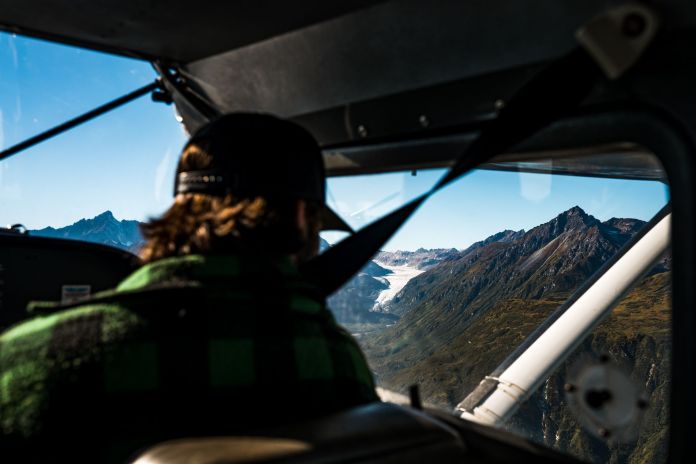
If you can get out to Lake Creek in the fall, you won’t be disappointed. The rainbow trout are golden and enamoring. If you hit this remote river at the right time, you can catch a rainbow cast after cast. It is also home to all 5 pacific salmon species and arctic grayling. I have experienced the beauty of Lake Creek, but also the scary flux in water level. Lake Creek is very rain-dependent and the water level can change quickly overnight, so it is wise to go with a guide. The only way to get to this remote creek is via bush plane or jet boat.
American Creek
Located in Katmai National Park near Bristol Bay, this creek is filled with rainbow trout and arctic char. Only accessible by airplane, the pristine nature of the Katmai National Park will amaze you. American Creek is known as an amazing dry fly fishery because of its low and crystal clear waters. Katmai is also known for a large population of brown bears, and even if fishing is slow you will be astounded by the beauty of this Alaskan National Park.
Yukon River
Right through the middle of Alaska runs the Yukon River, and beneath its waters live some humongous northern pike. The length, width, and speed of the Yukon make it a perfect pike habitat. The tarpon of the north, sheefish, are also found in this remote river. Sheefish are only found in the Northern parts of the world and can grow to be over 60 pounds. If you want a chance to catch a trophy pike or sheefish, it is recommended to go with a guide because of the extremely remote nature of the Yukon.
Picture Credits: ADF&G
Naknek River
One of the most famed rivers in western Alaska, the Naknek is known for gigantic rainbow trout. This Bristol Bay river is remote and full of fish that are eager to bring your rod tip down. Late June and July offer salmon fishing at the Naknek, then August and early September bring the huge rainbows and dollys.
Kvichak River
Western Alaska is home to some of the largest rainbow trout in Alaska, and 30″ rainbow are common in the Kvichak. As soon as the salmon start dropping their eggs, this river becomes insane and the rainbows become huge. Although western Alaska is a pricey place, fishing there is world-class. The only way to access this fishery is by floatplane, which is an experience in and of itself.
Willow Creek
One of the most popular creeks in southcentral Alaska, Willow Creek is located on the Parks Highway and is only a two-hour drive from Anchorage. When the salmon are running this creek offers some insane rainbow fishing. Grab your 5wt or 6wt fly rod and stop by a local fly shop before hitting this beautiful Alaskan creek. When fishing along the Parks Highway it is highly suggested to bring bear spray or a gun, and bug spray because of bears and mosquitos.
Denali Highway
Arctic grayling are found in almost every stream along the Denali Highway. It is a bumpy road, I have driven it before in a minivan and made it, but 4 wheel drive is recommended! Once on the highway, the views are amazing, you are surrounded by mountains, raw nature, and epic dry fly action. The Denali highway is awesome for beginning to experienced fly fishers because of the huge grayling population, many grayling will eat a dry fly multiple times!
Minto Flats
A unique Alaskan fishery, the Minto Flats is 35 miles west of Fairbanks. The Flats is a wetland area with a large population of northern pike. The only way to access the Minto Flats is by boat or floatplane. If you are able to get in with a local guide you will experience some crazy topwater and streamer action. Pike are vicious creatures and they will smack just about anything.
Situk River
A dream steelhead river, the Situk is located in southeast Alaska. It is the largest steelhead fishery in Alaska and it is common to catch 30″+ steelhead. To get to the Situk, you can fly into Yakutat and drive/hire a guide to take you to the river. If you get the opportunity to go to the Situk in the spring or fall be prepared for some terrific steelhead fishing.
Picture Credits: ADF&G
Alaska Fishing Regulations
Alaska’s vast range of fisheries comes with many regulations. Depending on where you choose to fish, the rules will vary. To fish anywhere in Alaska you will need a fishing license, which can be purchased online here. Before you head out on the water check out the Alaska Department of Fish & Game website for in-depth regulations.
Alaskan Fishing Guides and Outfitters
Three River’s Fly & Tackle
This is the place to stop if you are fishing anywhere along the Parks highway. Three River’s Fly & Tackle is in Wasilla and the owners, Mike & AJ, along with their employees are very informed of what’s happening up north. Three River’s sells a variety of flies and gear, and they also make rods. If you’re rod tip breaks while in Alaska, head to three rivers for an affordable fix.
Mountain View Sports
Located in South Anchorage, this fly shop has a very knowledgeable staff and a wide selection of flies and beads. They also sell high-quality clothing to keep you warm and dry during your Alaska adventure. If you’re staying in the Anchorage area during your trip we suggest checking out Mountain View Sports.
Mossy’s Fly Shop
Also located in Anchorage, Mossy’s offers a variety of fly fishing gear. They specialize in spey/Skagit gear and have a great rod selection. If you’re in the mood to chat fishing, there’s almost always a few guys hanging out next to the coffee pot or tying flies in this Alaskan fly shop.
Alaska Troutfitters
If you are fishing on the Kenai Peninsula, this is the fly shop to go to. Troutfitters always knows what is happening with trout and salmon on the Kenai River. They have the beads, flies, and gear to make your trip wonderful. Troutfitters also offers guided float trips on the Kenai River as well as lodging. This fly shop is only open during the summer and it is located in Cooper Landing.
Alaska Fly Fishing Goods
A one-stop-shop for all your Alaska fly fishing needs, Alaska Fly Fishing Goods is located in Juneau, but also has an online shop. Their website is also very informative, with in-depth information about fishing throughout the last frontier. They want you to have the best time you possibly can in Alaska, and with over twenty years in the business, Alaska Fly Fishing Goods knows what it takes!
Alaska Fish Species on the Fly
A variety of fish reside in the creeks, rivers, and lakes of Alaska. In a state of 663,300 miles, there are countless opportunities to catch salmon, trout, pike, char, and more. The last frontier is unique because almost all freshwater fishing revolves around the salmon. Trout fishing becomes amazing when salmon are dropping their eggs, and plastic beads pegged on your line above a hook are commonly used. Once the salmon are done spawning, they begin to decay and die as part of their lifecycle. Trout eat the rotting salmon flesh, and flesh flies work great for catching the fat fall trout. Alaska will impress you with its beautiful fisheries, but make sure you check the regulations before you go. In many locations, salmon fishing is illegal during certain times of the year.
Coho Salmon
Also known as the silver salmon, the coho is one of the most feisty salmon species. They are caught in the fall and are famous for putting up a fight. Pink streamers, Dalai lamas, and topwater poppers work great for catching silver salmon. It is recommended to use an 8wt at the smallest because of the aggressive fight that coho’s put up.
Picture Credits: Patrick Perry
Sockeye Salmon
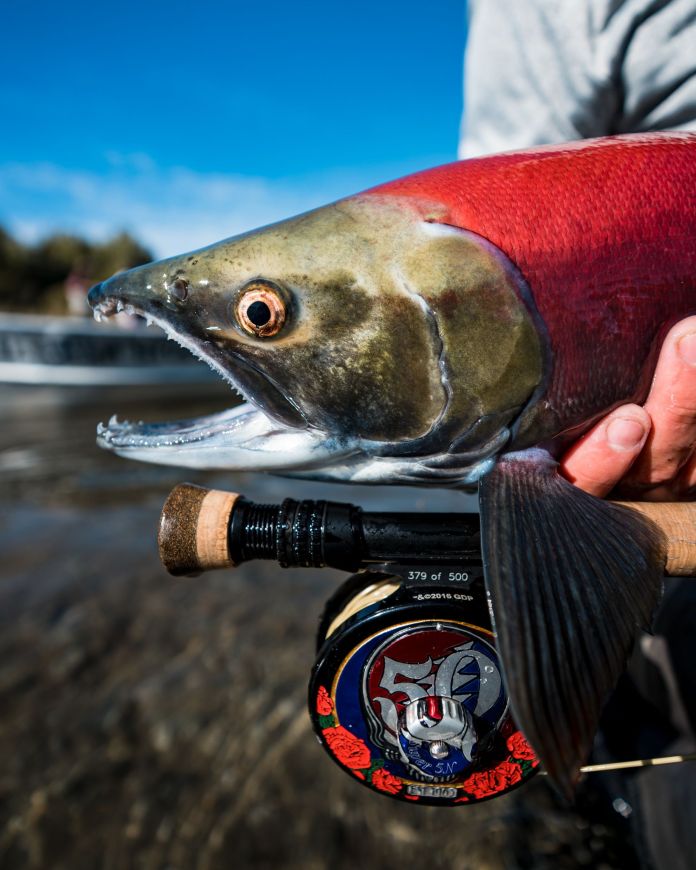
One of the most famous Alaskan salmon, people fly in from around the world to catch the “red” salmon. Sockeyes are known as red salmon because of their bright red colors while spawning. If you are catching red salmon to eat them, only keep them if they are silver, otherwise, they will not taste good and it is unethical to keep spawning fish. Because of their popularity as a food and from tourism, sockeye salmon are the most economically important species of salmon in Alaska.
Chum Salmon
This salmon is uniquely known because of its Tiger stripes and sharp teeth. Chums are also known as dog salmon because of their canine-like teeth. Chums are the most widely distributed salmon in Alaska, ranging from the Kenai Peninsula to the Yukon River.
Chinook Salmon
Being the largest salmonoid, chinook salmon fishing in Alaska is unsurprisingly world-class. Because of their size, chinooks are also known as king salmon. It is not unusual for king salmon to weigh over thirty pounds! These huge fish put up insane fights and are known to eat large articulated streamers, closer minnows, and egg patterns. Fun fact, the chinook salmon is Alaska’s state fish.
Pink Salmon
Alaska’s smallest salmon is the pink salmon, they only get to be around 25 inches long. Pink salmon are also known as humpies due to the large hump that forms on spawning males. While these salmon are no trophy fish, they are still fun and easy to catch. Similar to their name, pink salmon love pink streamers and pink flies.
Rainbow Trout
Alaska is many fly fishers dream trout fishery because of the quantity and quality of rainbow trout. These colorful trout are famous for their energetic fights and aggressive head shakes. Rainbow trout in Alaska have been caught over thirty inches, and some of them have similar-sized girths! The abundance of rainbows in Alaska impresses almost every fly fisher.
Steelhead
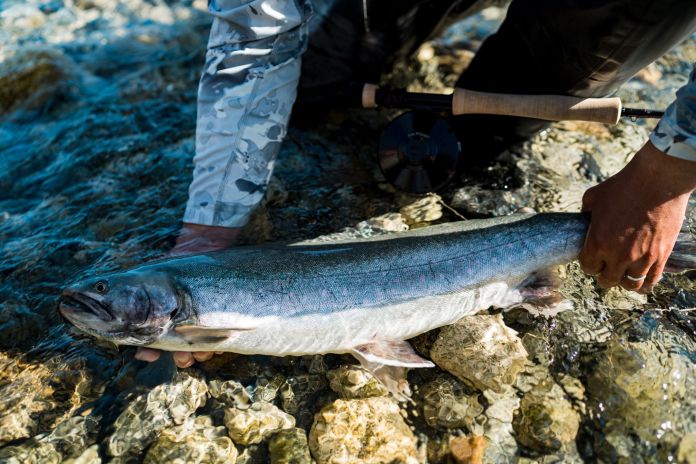
Steelhead are rainbow trout that migrate to the ocean when they are young and come back to the river they were born in when they are mature. Although some rainbow trout and steelhead look similar, steelhead can be distinguished by their more washed-out coloring, spots above their lateral line, and slenderer but larger size. Fishing for steelhead occurs in the early spring and late fall.
Picture Credits: Tessa Shetter & Kory Robbins
Arctic Char
A fish unique to arctic and subpolar regions, arctic char are an alluring fish for anglers visiting Alaska and Alaskans alike. Although char are salmonoids, they have very distinguishing spots that make them look quite different from other salmonoids. Arctic char also have a colorful spawning color of bright orange and yellow. These beautiful fish can grow to be over thirty inches.
Photo Credits: Oliver Ancans
Dolly Varden
Arctic char and dolly varden are very similar salmonoids and are easily mistakable for one another. Smaller char and dollys are especially similar-looking but are distinguishable by their smaller spots, slightly forked tail, and larger kype in spawning males.
Arctic Grayling
Scattered throughout all of Alaska, arctic grayling are beautiful freshwater fish that enjoy the cold and clear streams of the north. They are the most abundant freshwater fish in Alaska. Grayling are well known for their sail-like dorsal fin and silver, grey, blue, and black colors. Dry fly fishing for grayling is quite popular and they will happily eat mosquitos, parachute adams, and mayflies.
Sheefish
Whitefish are commonly regarded as scrap fish, but the sheefish is not your average whitefish. It is the largest of the whitefish family and known as the “tarpon of the north”. They are also called Inconnu by Alaskans. Sheefish are found in northern rivers, often silty and glacial ones in particular. Finding these large fish is no easy task though, sheefish can migrate over 1000 miles in a single summer.
Photo Credits: Nate Holmes
Northern Pike
Ferocious and invasive, the northern pike wastes no time in attacking its prey. Fishing for pike is a fun and adrenaline-inducing experience. They have very sharp teeth, so it is recommended to use a wire leader and to hold pike right above their gills so you don’t get bitten. Check out our article on “Tips for Catching Northern Pike” for some more Alaska pike knowledge.
Seasons in Alaska
Spring
The long Alaskan winter is over and the fish are hungry. Sculpins, nymphs, and leeches do great in the spring for rainbow trout. Be attentive to regulations during this time period because rainbows are spawning and therefore illegal to fish in certain parts of Alaska. Pike fishing is also quite great, large streamers and topwater flies such as poppers work well. Once the lakes open up, fishing for trout, grayling, and char can be productive when using leeches, nymphs, and minnows.
Summer
Fly fishing during summertime in Alaska is a surreal experience, you can literally fish all night. In the land of the midnight sun, it seems as though the sun doesn’t set in the middle of summer. This allows for long days of fishing for Alaskan rainbow trout, grayling, dollies, pike, and more. Although summer fishing in Alaska is epic, be prepared for the mosquitos and bears by bringing bug spray, bear spray, and/or a gun.
Fall
August and September bring some of the best fishing for Rainbow trout, they are gorging themselves on salmon eggs and flesh. Rainbows are fat as ever during fall in Alaska, and bead fishing is insane. For more information on Alaskan fall fishing check out our article “Your Complete Guide to Fall Fishing for Rainbow Trout”. Fall in Alaska is known as some of the best fishing, but it comes with cold and wet weather. You need to wear the right gear to stay warm and dry while catching fat rainbows!
Winter
The grind is real in the winter… it is freezing out but there are still fish to be caught. The Kenai River is a local favorite for winter fishing in southcentral Alaska. Not many people brave the cold to catch the big rainbows that live in the frigid water, but those that do can get lucky. Thirty-inch bows are found in winter on the Kenai River, and twenty to twenty-six-inch bows are common. I would recommend summer fishing before you dive into the complications of winter fishing though. It is often icy, and roads and boat ramps can be quite dangerous.
Experience Alaska to the fullest
Fishing in Alaska is an amazing experience and no matter where you end up going, you will have a story to come back with. If you happen to get chased by a bear or have an eagle grab your fish right out of the water, let us know. We hope this article will help you have a successful and amazing trip fly fishing in Alaska. Check out the articles below for more Alaskan tips and stories!




![Ozark Roadtrip from Wild Fly Productions [Behind the Scenes]](https://i0.wp.com/theflylords.com/wp-content/uploads/2021/06/Screen-Shot-2021-06-01-at-10.18.33-AM.png?fit=696%2C390&ssl=1 "Ozark Roadtrip from Wild Fly Productions [Behind the Scenes]")