Home Blog Page 307

New Congressional Bill Introduced Specifically Aimed at Fish Habitat Conservation

0

The National Fish Habitat Partnership’s (NFHP) mission “is to protect, restore and enhance the nation’s fish and aquatic communities through partnerships that foster fish habitat conservation and improve the quality of life for the American people.” To date, the partnership has completed over 840 projects touching waterways in all 50 states.

With the help of bill sponsors from both sides of the aisle in the House and Senate, the “National Fish Habitat Conservation Through Partnerships Act” has been introduced in both houses of Congress. We will update this article as the bill advances.

From the National Fish Habitat Partnership:

“The recreational fishing industry and conservation partners of the National Fish Habitat Partnership, applaud the sponsors of the National Fish Habitat Conservation Through Partnerships Act, as the bill was introduced in both the House and the Senate (S.754) this week.  This legislation aims to codify the National Fish Habitat Partnership, whose mission is to protect, restore and enhance the nation’s fish and aquatic communities through partnerships that foster fish habitat conservation and improve the quality of life for the American people.  Rep. Rob Wittman (R-VA) and Rep. Marc Veasey (D-TX) in the House, and Senator Mike Crapo (R-ID) and Senator Benjamin Cardin (D-MD) introduced these bipartisan bills on March 12, 2019.

‘We appreciate both the House and Senate sponsors of these bills that are critical to codify the National Fish Habitat Action Plan,’ said Ed Schriever, Director of the Idaho Department of Fish & Game and Chair of the National Fish Habitat Board. ‘This legislation is critical to keep the National Fish Habitat Partnership, which was established in 2006, moving forward and will ensure that needed funding goes to support on-the-ground conservation projects of our partnerships across the U.S.’

The introduction of this legislation is the culmination of efforts of partners including, Trout Unlimited, the American Sportfishing Association, the Theodore Roosevelt Conservation Partnership and the Association of Fish and Wildlife Agencies among others to sustain support for the conservation projects being implemented by our Fish Habitat Partnerships across the United States.”

Colorado’s 2018 Snowpack Was over 160% from Annual Average

Much like many of the western states, Colorado’s snowpack is up over the annual average and there is still more snow to come. So exactly does this mean for the fishing and fisheries?

Photo: Shannon Outing

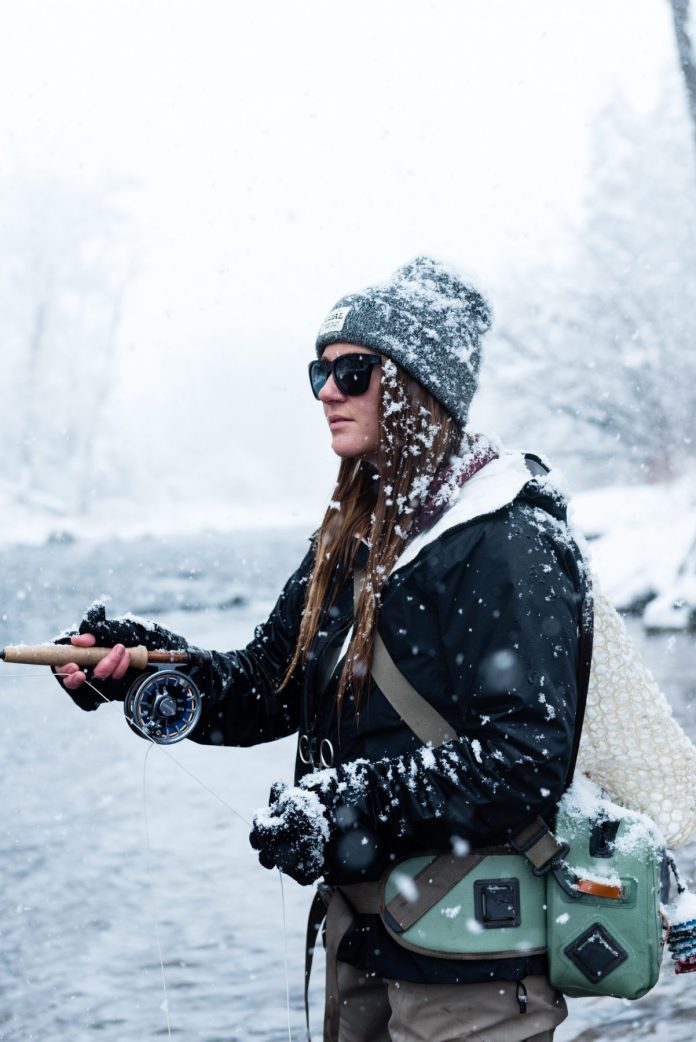
2018 broke a lot of hearts. Like a high school crush turned angsty pop punk song subject; the 2018 Colorado trout season left us bruised, disenchanted, and thirsty. With an abysmal snowpack, followed by a summer plagued with fires, flash floods, and fish kills; we were ready to bury the memory of this bizarre year.

Photo: Kara Lewis

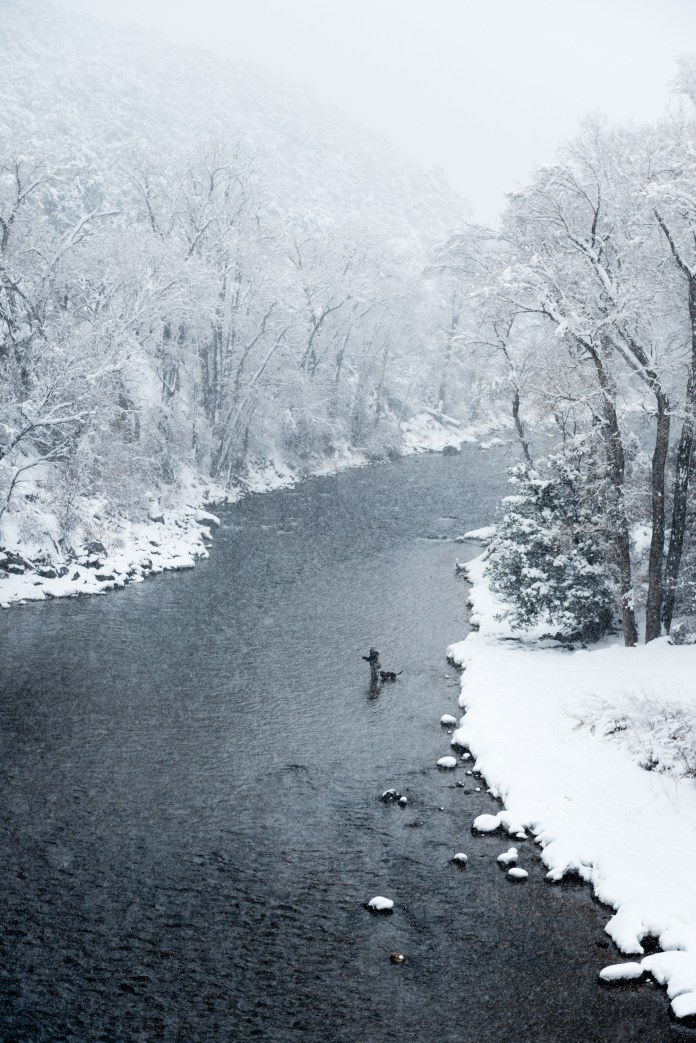
Our expectations in tatters for the 2019 season, we still kept a secret candle of hope lit for better snow. And then, the unrelenting forces of nature took to work and produced something extraordinary. Our expectations have since been obliterated in the wildest possible way: this is one of the best snowpacks in recent memory.

Photo: Kara Lewis

As I write this, we are sliding off the tail end of March and the mountains of Southern Colorado are still getting crushed with snowstorms. Precipitation will continue on through the weekend, as will the spring storms into May.

Photo: Shannon Outing

For those with a statistical mind, we are currently sitting at 160% of average snowpack…or almost 300% of last year’s dry winter and we aren’t even done yet.

So what does this mean for spring fishing in Colorado?  Well, first of all, we can expect a large runoff with some massive peak flows. How quick runoff comes and goes really depends on how fast the heat of summer rolls in. Even then, we still have lot of snow in the high country to get down the mountain.

Photo: Shannon Outing

We are expecting big water to last a  while, potentially most of the summer. This is pretty incredible as Colorado could use a good long float season. Throwing big dries from a boat through the majority of the summer months is a far cry from last’s year’s heart-wrenching events.

Photo: Kara Lewis

Hopefully, you are busy at the vise right now, cranking out some big trout snacks. You are going to need them.

Words from Andy McKinley of the Duranglers Fly Shop based in South-Western Colorado. You can get in touch with Andy at andy@duranglers.com.

Photos from Kara Lewis and Shannon Outing.


Check out these Winter Fishing Articles:

https://theflylords.com/2019/03/10/streamers-in-the-snow-presented-by-ross-and-abel-reels/

https://theflylords.com/2019/01/14/winter-fly-fishing-tips-making-the-most-out-of-winter-fly-fishing/

https://theflylords.com/2018/12/23/landon-mayers-5-winter-trout-fishing-secrets/

Video of the Week: Black Fly Eyes 2018 Reel

https://vimeo.com/325479158

Our latest video of the week comes from one of our favorite creators in the industry. Want to see a quick summary from all of the adventures that Black Fly Eyes took on in 2018? Then you’ll definitely want to check out this video.

Whether it’s fishing for GTs or hunting for moose, Black Fly Eyes got it all done last year, and we are lucky that they were able to document it all for our viewing pleasure. If you liked this stoke reel, be sure to check out some of their individual films as well.

To keep up with what they’ll do in 2019, be sure to check them out on Vimeo.

The video of the week is selected and written by FlyLords team member Conner Grimes.

https://theflylords.com/2019/03/13/video-of-the-week-notes-from-the-road/

https://theflylords.com/2019/01/10/video-of-the-week-anthony/

https://theflylords.com/2018/06/29/the-wild-cosmoledo-gt-capital-of-the-world/

Anglers Guide to Air Travel by Huge Fly Fisherman

Got any big trips lined up?  If so, you’ve probably been having an internal dialogue and struggle about what gear you are going to pack and how you are going to bring it all on an airplane.  It is a battle as old as the airline industry itself, and it can be a tricky one to wage. There is more than one way to pull it off, but below are some suggestions to at least point you in a hassle-free direction.

1. Check rules and regulations:  Different airlines have different rules, as well as different airports and countries.  Potential contraband include pliers/cutters, large hooks, and even reels. The rules are often vague and depend on the interpretation of the person that you happen to encounter.  A polite manner and a smile can help in a sticky situation. If you have doubt about the rules and regs, maybe leave the $200 pliers at home and grab the needle nose pair from the junk drawer in your kitchen.  You won’t feel so bad when they get confiscated in Havana.

2. Bring more than one rod, always. ALWAYS. Things happen. Rods break all the time, and it helps to plan for it.  I have at least one backup rod at all times; whether it’s in the truck, boat, backpack, or luggage.  This practice has saved me many times. And, if there is another person in your party that breaks their only rod, you’ll have a significant advantage in the ensuing gear negotiations.

3. Streamline and consolidate your gear. Purchase a multiple-rod tube. Carrying bundles of rod tubes, or 2-piece rod tubes, is a pain.  While they are a great (or annoying) conversation starter in the airport, if you want to be more low-key and evoke hushed and awe-inspired whispers from onlookers, then the multi-rod tube is the way to go.  There are products available that incorporate rod and tackle storage together, but in my opinion they are too big and just complicate things. For me, the multi-rod tube is the way to go.

4. Consider if you need to bring any tackle at all.  Is someone taking you fishing? If so, there is a good chance that they have all the gear you need.  Sure, you still need to pack your sunnies and no-chafe underwear, but you might not need to bring rods, reels, leaders, flies, and all of that other junk that you bought specifically for your trip.  Are you reluctant to use someone else’s rod? Get over it. You’re not that good of a caster for it to make a difference. Or if you are that good of a caster then you should be just fine with whatever limp noodle you find in your guide’s boat.  Not sure if the guide’s reels are left or right-hand retrieve? It shouldn’t matter. Good anglers can reel, and even cast, with both hands. Did you tie some flies that you want to use? Fine, bring them. But your guide will probably tie on one of theirs instead.  And you’ll only need a handful of flies, not your entire yellow box with custom artwork. You can go bonefishing in the Bahamas for a week with 4 flies.

5. To make your trip more enjoyable, make up an alternative identity and engage your fellow travelers.  Toting fishing rods through an airport results in conversation 100% of the time. Who have you always wanted to be?  A Swedish porn star? A Rabbi from Borneo? An Australian gnome wrangler? You can be all of these things and more. The flight attendant, bartender, or guy in the next bathroom stall will have no idea that it’s all made up. Be careful, though, if you meet an actual huge fly fisherman they will instantly see through your ruse because fly fishing is serious stuff. No tomfoolery allowed.

Article and video from Ben Sittig. Be sure to check out his YouTube Channel Huge Fly Fishermen for the latest in fly fishing humor or give him a follow at @carelessethiopian


https://theflylords.com/2019/02/06/7-best-cars-for-fly-fishing/

https://theflylords.com/2019/01/25/this-guy-missed-30-permit-in-one-day/

https://theflylords.com/2019/03/20/f3t-behind-the-lens-hank-pattersons-around-the-world-globe/

Fishing BC: Cariboo Rivers with Eric Jackson

We had the opportunity to sit down with pro snowboarder and avid steelhead fisherman, Eric Jackson. Last fall, he traded in his steelhead rod and targeted trout with Fishing BC in the beautiful waters of Quesnel Lake. It’s the largest freshwater fjord in the world, and its tributaries come into their own during the fall season. A bounty of Sockeye salmon makes their way upstream to spawn in the numerous creeks and rivers that empty into the lake, with large numbers of rainbow trout and char in close pursuit. Both rainbow trout and bull trout wait patiently behind the spawning salmon, capitalizing on the eggs that tumble down the river’s gravel bottom.

Flylords: Being a steelhead fanatic, how did it feel targeting trout? 

Eric: I grew up trout fishing, but I’ve been pretty obsessed with steelhead fishing for the last eight years. I haven’t done much trout fishing, but I was pretty excited to go back into it. Kind of like going back to where the roots worked through you know?

It actually worked out really well because I was on my annual pilgrimage steelhead trip up north and it’s right in the middle from Bellingham where I live and up north in B.C. Kind of decompressing from the most epic steelhead trip of all time.

Flylords: What was it like going from swinging heavy lines and two-handed rods, to using a one-handed rod?

Eric: The best thing about this steelhead trip was that we weren’t swinging heavy lines. It’s definitely a different style of fishing obviously, single-handed, overhand casting and what not. It was cool though because we weren’t fishing eggs or indicators under eggs. We were fishing flesh patterns, which is a similar technique. You cast it out there, strip it back, then let it swing across and strip back again. It was a lot more fun than just putting an egg underneath a bobber and setting your hook.

Flylords: Tell us about the lodge you stayed at.

FlAdykBw.jpg

Eric: I didn’t know what to expect. I knew literally nothing about the trip… It was like, be at this lodge at this time and we’ll go from there… I did the omega drive and just showed up. It was dark too so I had no idea where I was. I just woke up and we were at the Northern Lights Lodge.

The owner is such a legend too. He’s older, but the fishiest dude ever. Pretty dry and crusty sense of humor. We’re on this beautiful lake and he’s like, “alright, we’re going to take this boat in this direction, then an hour boat ride to the northeast side, then we’re going to get on another boat, and then we’re going to go up this river.” It was such an epic adventure.Flylords: What was it like seeing all those Sockeye in the river?

Eric: I guess I’ve never really seen the Sockeye migration that thick in my life. It was pretty incredible, the first thing I said was, “Man, this is like some National Geographic stuff right here. This is crazy.” This year was a record sockeye return… You couldn’t even spot trout because there were so many sockeyes.

There’s so much food in the lake because of all the eggs and all the flesh going down that there’s really no reason for the trout to push up into the rivers because one, there was no room for them because there was so many sockeyes, and two, there was so much food just coming down anyway.

Flylords: Was it easy to target other species within the Sockeye?

Eric: No, the sockeyes made it extremely difficult. The first fishery that we went to, the guide talked about how it was some of the worst fishing he’s seen in a long time. Basically, there was no room for the trout to swim, because it’s so thick with Sockeye. Thousands and thousands of Sockeyes, I’ve never seen anything like that.

We got like three trout the first day, which was not normal for that fishery. The next day we started fishing these little tributaries that flow right into the lake and we stood on the shore and casted into the lake.

Flylords: Give us a run-through on what the wildlife was like in this area.

Eric: Where we were, you feel very far out. You feel very disconnected from everything, you know? You’re deep, man. There’re eagles flying everywhere feeding on the salmon. We saw lots of grizzly bears, some moose, and it felt very raw out there and very exposed; however, it was beautiful.

The bears weren’t too concerned with us though. They were pretty satisfied with the food that they had. Then to see that whole fish migration, the food chain, and ecosystem was incredible.

Flylords: As a steelhead fisherman, does a trip like this open your eyes to maybe spending more time on different fisheries, besides steelhead?

Eric: I’m never going to love trout fishing as much as I love steelhead fishing, but it’s funny that you forget how an eighteen-inch rainbow fights on a five-weight rod. It’s definitely more fun than people think and that’s exactly what Matt was talking about. He was like, “Man, people just get so blinded by steelhead fishing.” For me, there’s nothing better than steelhead fishing, but it did make me want to trout fish more, for sure.

The thing about trout fishing is that it’s hard. Trout are so picky… You gotta match the hatch and be technical. Steelhead are so easy. You got a pocketful of a couple flies, 15lb maxima, pliers with snippets on it, and you’re good to go. Cast a thousand times and maybe you’ll catch one.

Flylords: Do you bring your banjo everywhere you go and why?

Eric: Yeah, that banjo rarely stays at home. Sometimes it’s annoying when you’re traveling to Europe or Japan, but I love music. It’s a really nice way to kind of disconnect from all the noise that inevitably comes with life. It’s really nice to just kind of lose yourself in music. It’s funny too, because I will get these crazy jolts of inspiration and I’ll be writing songs and be super into it. Then there’s other times where I’m just not that into it and I’m not really playing that much.

Flylords: What was it like working with Koreski up there?

Eric: I obviously know who Jeremy is through his work, mutual friends, and know he is an incredible photographer and fly fisherman. However, I never had the opportunity to work with him until this trip. We got along right away including the rest of the crew. We were all friends, just giving each other shit. I was like pretty into the Smirnoff Icing game. It’s kind of a college thing, but I didn’t even go to college, or high school for that matter haha.

Koreski and I still stay in touch too. I was blown away with some of the photos that he got. The crazy thing is, I was trying to get him to fish, because he’s a great angler. I’ve caught so many fish and felt bad! He’s like, “Nope, I’m working.” So, he has this really strong work ethic.

1D184159.jpg

This article is presented by Fishing BC. Visit http://fishingbc.com for more fishing destination ideas.

Accommodation and Guiding Provided by:

Pictures courtesy of Jeremy Koreski.

New Website Plugin Makes Getting a Fishing License a Breeze

0

Recreational Boating and Fishing Foundation has developed and released an amazing plug-in for websites that makes it incredibly easy to see what sort of fishing licenses you need to fish in all 50 states. The plug-in is already assisting visitors to the US Fish and Wildlife website and the US Forestry Service fishing page.

Essentially the plug-in allows users to select regions on a map and select the state they are looking for information on. The plug-in then redirects them to the proper state website to purchase a fishing license, register their boat or find more information on the fishery.

This tool is an awesome next step in making it easier for more people to get out fishing and explore.

Source: TakeMeFishing.org.

Lake Trout Impact on Yellowstone Lake Heavier Than Previously Thought

2

Since the introduction of Lake Trout into Yellowstone Lake, the invasive species has dominated the food chain. Lake trout are predatory and have since laid waste to many native species.

In the latest edition of the scientific journal, Science Advances, it was found the introduction of lake trout to Yellowstone Lake is having even broader environmental impacts than previously believed, impacting everything down to a microscopic level. According to the study “Zooplankton, cutthroat trout, river otters, osprey, bald eagles, bears and, likely, elk are among the creatures whose numbers, diet and behavior have been altered as a result of the presence of the invasive fish.”

“Our study illustrates the potential impact of a single, invasive predatory species on otherwise pristine ecosystems,” the researchers wrote, providing further support for Yellowstone National Park’s efforts to suppress the lake trout population in Yellowstone Lake.”

Anglers who catch Lake Trout in Yellowstone Lake are encouraged to kill any Lake Trout caught in the lake to aid in efforts to suppress their population and pressure on the overall ecosystem.

Authors of the article: Lusha Tronstad, a research scientist with the Wyoming Natural Diversity Database at the University of Wyoming; National Park Service scientists Todd Koel, Jeffrey Arnold, Kerry Gunther, Doug Smith and Patrick White; and John Syslo of the Montana Cooperative Fishery Research Unit at Montana State University.

Source: University of Wyoming.

Photo courtesy of Andrew Engel, @TheFlyDudes on Instagram.

F3T 2019 Behind the Lens: Keith Rose-Innes’ “Alphlexo”

Next up on the Behind the Lens feature of F3T we sat down with legendary guide, fly-tyer and lodge manager, Keith Rose-Innes. This film is all about the fly that changed the game when fishing for Indo-Pacific Permit. Developed by a handful of anglers across the world, this pattern gets its name and its notoriety from the Alphonse Fishing Lodge located in the Seychelles Islands. We are proud to share the story of Aphlexo Crab fly pattern along with Keith. 

Flylords: When did permit become an obsession for you?

Keith: “I can tell you it’s a long history with the permit. I’ve been guiding in Seychelles for 24 years. And the whole time you’re there, you’re arguing you see them, but you never really had the skill or the fly patterns to successfully target them every time.

I never liked that, there comes a sort of point in your life where you juggle the reality of whether you’re going to catch [the Permit] or not. At that time, the patterns we had couldn’t guarantee a Permit would have a look.  

These fish were the fish of like five hundred to a thousand casts. Your confidence changes when you get the reaction that you do with the Aphlexo from a Permit, you know that when you cast that fly out at a Permit and he sees it, he’s either gonna refuse it or have a go at it, and that’s the beauty about it. Whereas in the old days, there was a lot of…well, the fish wouldn’t even react to it, it would just like swim around it or that kind of thing.

It became a love-hate relationship, must have been seventeen, eighteen years or so, all of that, the frustration of how do you get it right, never thinking, it’s never gonna be the right kind of pattern to fool these fish.

And then we started getting the reactions that we did with the Aphlexo, you see the reactions to the fly, and we thought, ‘Oh my god! We definitely have something and we can refine it quite a bit…'”

Flylords: When you were developing the Aphlexo, was there one trip you went out with a prototype and it just happened? Or was, you know, a couple seasons worth of trial and error?

Keith: We started using them for triggerfish at the end of one of the seasons and then, as the season ended I stayed for a trip which we had planned. We went with the patterns we had and the current wasn’t too keen to fish in. We had some early Aphlexo prototypes but they almost felt as though they weren’t refined enough so we went back and I kept a whole bunch in my box. So I waited until the following season, we had a film crew with us and I went out and got two Indo-Pacific Permit literally back-to-back.

Early the next morning, I came back and I had four flies left and I gave one of the flies to a guest, it was his birthday. He went out, hooked something, broke it off. I gave another to a guide, and the other fly to the kid I caught the fish with. He went out and got a Permit the same day. Almost like that, everybody started catching a permit on the Aphlexo.

Flylords: How many versions of the Aphlexo are in use today?

Keith: So now we got kind of like four or five different patterns with varying leg sizes, colors, hook sizes.  We have to match the flies to the crabs we have around here.

There are times of year here that the crabs are carrying eggs on their front side. So we’ll dub in a little bit of body in there. Or sometimes we would put, say a piece of fake nail or whatever underneath with a little orange hotspot to simulate carrying eggs. We put a little dubbing in them as well with a little orange face, almost like a strike indicator, make it easy for the angler to see.

There are all these little tricks which we use, but the beauty about the Aphlexo is that anybody can take this fly and pass it in front of a Permit or triggerfish or many other species. and you have a very good chance that fish going to have a look at it.

Flylords: We’ve heard the action of the fly is something special, what’s the best way to fish the Aphlexo?

Keith: We’ve learned it was the way you strip the fly. It’s not as much twitching the fly as we used to think in the past. It’s more of a long steady strip because you know the fish is coming on to the fly and you know you’ve just got to wait a little bit between your strips. So if you feel a tug it means you’ve missed the fish already. It’s almost like keeping it long and steady, making sure you’ve always got contact with the fly.

Flylords: What about the mesh body makes this pattern so special?

Keith: Before, you know, we never really had a fly sink, but now with the mesh body it sinks quite nicely and you get the fly down to the fish and they’ll eat that fly and in quite a bit of water. 

Flylords: What is the next evolution of the Aphlexo?

Keith: The [current] fly is completely first rate. It’s evolved and now they’re tying a micro flexo which is smaller and much skinnier, and they’re having beautiful success with it.

Flylords: Did you get to use any of them when you were down filming “Glorious Bastards” in Australia?

Keith: So it was quite interesting, we thought a few people would be best and the guys out there suggest we fish like a big Merkin fly, which we did, and Christian used a lot of the new patterns but I wasn’t convinced. I was confident in the Aphlexos and I started using them and it was instantaneous. I mean they were eating it and eventually everybody was just fishing Aphlexos. All of the Indo-Pacific Permit during the trip were caught on them. 90% of the blue bastards were caught on Aphlexos as well. So it’s incredible that you can be confident fishing them anywhere.

So everyone knows about it and we’ve seen a lot of people fishing different places but we just wanted to let everyone know that there is a pattern out there which can be evolved to an extent that will suit your fishing needs.

Flylords: In the trailer, we noticed the Thomas and Thomas Sextant out. What’s the experience like throwing bamboo for bigger saltwater fish and Permit?

Keith: About a year ago they gave me a set of Sextants to fish. They’re obviously a lot slower, but you know when you hook a fish it’s an incredible experience, especially when you’re fishing with a 12 weight. You feel almost as if you’re more in touch with the fish. I suppose you could compare to almost like a glass rod. Since getting the rods, I’ve caught white marlin, sailfish, GT’s all on the 12-weight.

I’ve caught milkfish on my 10 weight. I’ve caught Indo-Pacific Permit on my 9 weight and 10 weight. I love it and actually, I’m standing here now and I’m guiding and I’ve got my 12 in the boat.

Flylords: What’s one piece of advice that you have for any angler looking to check and Indo-Pacific Permit off their bucket list?

Keith: The most important thing about Pacific Permit is that if you want to catch one you must be dedicated to it. Pick the right destination, number one. Obviously, your tides will play a role. When you’re booking a trip you need to make sure they’re booking you on the right tide types. There are destinations which are better for Indo-Pacific Permit than others. So it’s about going to the right destination and then when you get out there, the most important thing is to just be confident. You’ve got the fly and you know it works just be confident, don’t be nervous, just keep your rod down, and keep stripping. It’s a numbers game but eventually, you’re going to get one that’s going to eat.

Flylords: What’s up next for you in 2019?

Keith: In 2019, I’ve got a fishing Cameroon, for Nile Perch. I’m going to look at the new lodge out there. And then I’m fortunate enough to come back here after that and may head out with a good friend of mine. Then we’re heading to Bhutan, we’re fishing some of the waters Ollie’s just fished. Except we do it with a helicopter, and there’s just two of us fishing. That’s a real treat for me. Those two trips are the ones I’m looking forward to. That’s on my bucket list and a few fish I’ve never caught so I’m extremely excited about it.

Many thanks to Keith Rose-Innes for sharing with us. Check out his adventures to Cameroon on his Instagram, here!

Also, follow along with the film tour @flyfishingfilmtour to see where they will be next!

Find out when F3T is in your town, and buy tickets before they sell out!

This interview was conducted by Flylords team member, Collin Terchanik.

5 Tips for Landing Your First Tarpon

The emotion of sheer adrenaline that follows hooking a Tarpon on the fly is unparalleled by anything in fly fishing. It is no wonder they are one of the world’s most sought-after saltwater gamefish, with shiny scales the size of a grapefruit and dramatic aerial displays. Tarpon fishing is also far from a walk in the park, your mental approach plays as big of a part as any in the equation.

TIP 1: Just Breathe.

This is first on the list, as being in control of your nerves is the foundation for successful saltwater fly fishing. When the window of opportunity strikes without warning, as it often does chasing Tarpon, you must be able to react (or not) to the situation at hand. A great exercise is to focus solely on your breath before you make a cast. If you’re lucky, there is a time buffer between when your guide will see the fish and when you have a logical shot to take. Use this time to relax your mind and body, and your chances of making a well-executed cast are drastically improved.

TIP 2: DON’T LIFT THE ROD!

For a trout fisherman it can be a difficult urge to fight, but lifting the rod when the fish eats the fly can be detrimental in making a proper hook set. Keeping the rod low and strip-setting with the fly line will drive the hook in with the pressure it needs to penetrate their bony mouths.

TIP 3: Study the Fishery Beforehand

What is the primary feed where you’re fishing? Will you be fishing brackish, off-coloured water in which the flies must hold a large profile and push water? Will you be fishing primarily juvenile or giant, migratory Tarpon? Preparing for your trip is not something to be taken lightly. Talk to people who have invested time in the fishery, or consider booking a trip through a booking agent.

TIP 4: Clear Your Line at all Costs

When a Tarpon eats boat-side, the angler is often left with a heap of line on the ground and a beast on the other end of it that is now in full control. There are few things more deflating than watching the line wrap around the reel seat and feeling the leader break your class tippet, if you have a friend in the skiff it never hurts to ask for help with ensuring the line clears smoothly.

TIP 5: Choose the Right Leader

Leaders for Tarpon fishing are often not very long, but ensuring you are using heavy or light enough material for the situation is imperative. Tarpon leaders consist of a butt section, a class section, and bite tippet. The class tippet is lighter in diameter than both the butt and the bite tippet, providing a breakable link in the leader should it be needed. A few factors that come into play when building a leader such as the size of fish, water clarity and angling pressure. Lighter bite tippets constructed of fluorocarbon can be effective in periods of high sun, flat water, or fish that receive ample amounts of pressure. I use Scientific Anglers tippet material to make my tarpon leaders, you can check out their full line here. 

Lastly, have fun with it! Tarpon fishing is difficult, but the rewards always outweigh the effort when the line comes tight. There will be days when not one fish seems to want to commit, and days where you just flat out cannot find the fish. Regardless, find as much time to bask in the opportunity to chase this magnificent gamefish. Tarpon fishing is electric, humbling, and downright addicting. 

Hooked Up on Tarponville Lodge in Costa Rica
This article was written by Jordan Oelrich, guide and owner of  Interior Fly Fishing Company. If you have always wanted to chase Tarpon with a fly rod but never knew where to get started, Interior Fly Fishing Company has one space remaining on a hosted trip to Tarponville Fishing Lodge in Costa Rica this April. For more information on this final space, contact Jordan at info@interiorflyfishingco.com or call (250) 463-2266

F3T 2019 Behind the Lens: Hank Patterson’s “Around the World Globe”

For this edition of “Behind the Lens”, we had the chance to sit down with the legendary Hank Patterson and talk with him about his latest film in the Fly Fishing Film Tour.

Flylords: Tell us a little bit about yourself.

Hank Patterson: Well, what is there to know? World’s greatest fly fishing guide. Incredibly humble. Probably the most humble person you will ever meet. I’m just a person that likes to get outside and take people fishing, and then sort of leave them to their own devices. In other words, I’m not like other guides; I’m not a river butler. I’m not going to get out there and tie your fly on, give you a sandwich and open your beer and carry your shit. You’re going to do all that stuff yourself. If you get out there and you do it wrong, I’ll point it out. Other than that, I’m just going to probably drink a beer and take a nap. Get out there and do it yourself. All right? Then tip me. You know, I remember when my dad taught me how to swim: he took me down to the deep end of the pool and he just threw me in. I started crying and whatnot, and he was like, “You think that’s bad? Wait until they put water in it.” Right? That’s sort of how you teach people: you throw them into the deep end with no water.

Flylords: How many beers were consumed in the making of this film?

Hank: Oh, man. Not as many as in past films, I’ll have to admit. We did the Montana Adventure, and we went through 65 cases of beer. It shows in the cinematography. Now, in this particular film, I don’t think between … I don’t know, there’s probably about 14 or 15 people running around through the Black Hills. I can’t imagine that we put away more than 48 cases of beer, which is an embarrassment. Although, there were a couple of days we had whiskey, and whiskey, for those of you who don’t know, it is condensed beer. It’s like you can put like 15 beers into one little tiny case, and that’s all whiskey is, right? It tastes like garbage, but the nice thing is, you can throw back one swig and it’s like an entire beer. So probably about seven or eight bottles of whiskey and about 48 cases of beer over the four days.

Flylords: Is that more or less than the amount of fish caught?

Hank: Oh, that’s way more than the amount of fish caught. Gauging a good fishing trip should never be based on the number of fish you catch; it should never be based on how big the fish were that you caught. Gauging a good trip is, how many beers did you go through, and how many new friends did you make, and how many times did you urinate in public? You answer those questions, right? If all those numbers are high, “Oh, man. I made like 15 new friends,” bam, you had a hell of a trip. “Oh, man, we drank 48 or 50 cases of beer.” Okay, you definitely had a good trip. Well, half the trip was good, and half the trip was, “Oh, hell. I feel like shit.” Right? Then the whole urinating in public thing, if you’re urinating in public, you’re in a state of mind where you don’t care about anything. Like, “I don’t care, I’m not worried about anything. I’m urinating in public.” It’s my favorite thing camping: peeing outside. That’s my gauge on how to tell if I’ve had a good fishing trip.

Flylords: Tell us a little bit about the Black Hills FlyFishers.

Hank: Oh, God. These people. Look, in all honesty, I had exactly zero interest in going and fishing in the Black Hills. I had probably even less interest in hanging out with anybody that would choose to live in the Black Hills of South Dakota, because if you’re living in the South Hills of Black Dakota, all I thought to myself was, “What are you running from in life? Why are you hiding out?” When I went, I was a little bit, “What the hell? I can’t believe I have to do this.” However, here’s what I can say in all honesty, these are guys and women who care so deeply about the resources that they have at their disposal. Anybody that is conservation-minded, anybody that respects the resources that they are provided to fish in, meaning the rivers and the lakes and the fish, and all those things … you won’t find a group of people with more respect for the resources. You also won’t find a group of people more willing to welcome you into their community, to take you out fishing, to show you their rivers, their streams, their lakes, their homes. They’re just great people. I can’t say enough about what a good time I had, and the fact that I feel like I’ve made lifelong friends.

Flylords: What was your favorite and least favorite thing about South Dakota?

Hank: Whew. Favorite is absolutely people. Truly. They’re just really good, down to earth people that give a shit. There’s a line in the movie: “We give a shit about the resources,” and like I said, people that care are the best people in the world. People that step outside of what is good for them and look at what is good for everybody else. You can’t find better people. Absolutely top of the list, the people.

Probably my least favorite thing about South Dakota is their unwillingness to tell the rest of the world about Mount Rushmore. The fact that they’re keeping that thing a secret and that they won’t advertise it, and they won’t tell anybody about this Mount Rushmore thing, I just feel like they’re being a little bit selfish there.

Flylords: How much of the budget was lost in a bet during the making of this film?

Hank: Well, okay. $1400 was lost in a bet. But far more was gained. While it is true that I may have lost some money in a bet, I more than made up for it in the fact that, in the process of losing the money, I discovered that South Dakota is one hell of a great place to go fly fishing. Holy shit. That was a great quote right there. Hopefully, we’re recording that. That was sweet.

Flylords: What’s next for Hank Patterson?

Hank: Man, I don’t know. I literally don’t know. What a shitty answer that is. Well, you know, hopefully I’ll get to go out and do a lot more fishing in 2019 than I got to do in 2018. Hopefully I’ll have the opportunity to make a few more videos this year, and hopefully in the process of doing that I won’t completely wear out my welcome.

Also, follow along with the film tour @flyfishingfilmtour to see where they will be next!

Find out when F3T is in your town, and buy tickets before they sell out!

This interview was conducted by Fly Lords team member Conner Grimes.


Check out these other F3T Behind the Lens Features: