Home Blog Page 299

Photographer Spotlight: Chandler Rogers

We sat down with mid-western photographer, Chandler Rogers. A vagabond from Utah that has some insane handles with a camera and fly rod. For over 5 years he’s been in the media industry getting killer shots of crazy fish and hunting excursions. 

Flylords: Who is Chandler Rogers?

Chandler: I am just your average guy who loves to spend as much time as I can in the mountains with family and friends. I also love to explore new places to find some different views and fish.

Flylords: Who or what influences your work most?

Chandler: Oh man, there are so many amazing talents in the fishing/outdoor industry that I look up to and there are probably too many to list. The guys over at Rockhouse Motion put together some amazing work and it has pushed me to learn new things. I would also have to say that the local crews, InTents Media and the Captured crew have been a big influence on me as well.

Flylords: What is your go-to fly for big trout?
Chandler: I know its probably a super basic answer, but I love fishing my streamers for big fish. I am super stubborn and pretty much use this streamer 90% of the time in various colors and sizes.
Flylords: Do you have a favorite photo you’ve taken? 

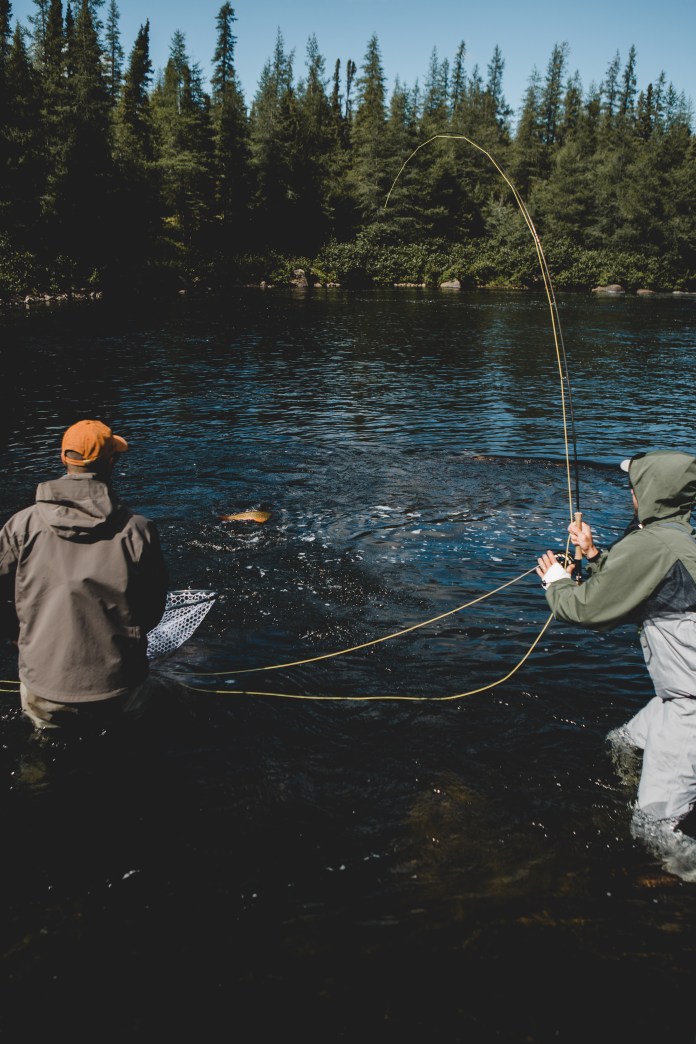
Chandler: To me, photos are mostly just memories saved in time, so I don’t know if this is the best photo I have ever taken, but it is one of my favorite memories. My wife is the person I fish with the most and this is a moment in time I will always remember.

Flylords: When was the first time you picked up a fly rod?
Chandler: Not as early as most people, but I was a junior in high school and a friend invited me on a trip to fish the Green River in Utah. I am thankful for the patience of that guide because I was awful and also cut his fly line when the line got pinched in the seat. After having been a guide now, I definitely know he had a long day…
Flylords: Favorite species to get shots of?
Chandler: Cutthroat for sure! Not only are there a few subspecies that each has its own characteristics, but I see a ton of variations within those subspecies that always makes for a surprise when you look in the net.
Flylords: Other than fishing, what else do you like to take photos of?

Chandler: I recently got a drone and I really like taking landscape photos with that.

Flylords: What is your ideal camera setup?
Chandler: My dream set up would be a Red Monstro with a line up of prime lenses but I don’t have $75,000 for camera gear haha. So I recently made the switch from Canon to Sony and I am loving it and my ideal set up right now would have to be my A7iii and the Tamron 28-75mm. It is a small package that allows me to cover a range of shots.
Flylords: What are the toughest challenges you encounter as a photographer?

Chandler: So I’ve always been pretty secretive about the places I fish and I never wanted to blow up a place on social media by creating a bread trail with pictures that show a lot of the background. This has caused me to not post a lot of pictures or just flat out not to capture the image and choose to soak in the moment. This has hindered me in creating content. I am trying to not be so uptight and capture more great moments and not be so worried about showing where I am at.

Flylords: What makes Utah one of the best fisheries?

Chandler: I think Utah is very unique in that is second driest state but still offers great fishing. Although Utah lacks the large rivers that say Idaho and Montana have, it has tons of creeks and smaller water that hold a surprising amount of large fish. Hunting large fish and sight fishing in small to medium-sized water is probably my favorite style of fishing. There is also a good variety of fish we have here in Utah. You can go from fishing carp and bass to fishing in a clear mountain stream for cutthroat in a matter of minutes.

Flylords: Where is your favorite place to shoot and what is the landscape like?
Chandler: I would have to say the Green River. It has towering red canyon walls, amazing vistas, tons of wildlife. It’s hard to take a bad picture there.
Flylords: Would you rather catch a fish of a lifetime or shoot a photo of someone’s trophy fish?
Chandler: Haha that is a tough question. If it was my wife I would rather take the picture but I am pretty competitive and I would hope that I caught the fish of my life but I would totally be stoked regardless.
Flylords: What fishing destination is on your bucket list?
Chandler: New Zealand is probably on the top of my list. Granted there are a ton of places I would like to go like Christmas Island or Canada for char but it’s hard to beat big fish on dries in small water. Plus I mean the weather in New Zealand is pretty prime.
Be sure to check out Chandler on Instagram and follow his crazy adventures throughout the mid-west @chiefchandler.

——————————————————————————-

Article from Flylords Content Development Lead, Collin Terchanik.

Winston Rods Celebrates 90th Birthday With Special Edition Rod Collection

0

From Winston Rods:

Presenting Winston’s 90th Anniversary Legacy Rods

2019 marks R.L. Winston Rod Company’s 90th Anniversary of building the world’s finest fly rods.  To commemorate this event, Winston is very proud to re-introduce a series of special edition Legacy Rods, which includes four of our most revered models.  Each Legacy Rod demonstrates our tradition of innovation and the famous “Winston Feel,” which have brought anglers back for their next Winston time after time.

The rods are hand-inscribed as special edition models and feature original specifications, including ferrule style, material and action. Our historic Winston Trophy label and unique uplocking nickel silver reel seat complete the definitive look.

Orders for the 90th Anniversary Legacy Rods can be placed through your Authorized Winston Dealer and will only be accepted through July 1, 2019.

Source: Winston Rods

Featured Image from WinstonRods.com.

Rock Paper Fish: One Alaskan Town’s Fight Against a Proposed Mine

From Rock Paper Fish:

“THE STORY

“Rock-Paper-Fish” takes audiences deep into the rainforest of Southeast Alaska where life is inseparable from the age-old rhythms of the Chilkat River. Every year, all five species of salmon return to the Chilkat, drawing the world’s largest gathering of bald eagles, insatiable grizzly bears, and fascinated tourists. The salmon also define life for two communities: The ancient Tlingit village of Klukwan, and a scrappy commercial fishing town, Haines.

Meanwhile, a modern-day gold rush is underway in the mountains above the headwaters of the Chilkat. Helicopters fly between cliff-side drill pads as Constantine Metal Resources races to explore the potential of a hard-rock mine. Downstream in Haines and Klukwan, some locals are eager for a mining boom, while others fear that the risks to the Chilkat Watershed far outweigh short-term economic benefits. The prospect of a mine has deeply divided the communities, and left them struggling to keep pace with the agenda of multinational corporations. “Rock-Paper-Fish” offers a vivid look into the lives of Alaskans grappling with questions as immense as the place they call home.

Due to the threat of industrial mining, the Chilkat has been named one of “America’s 10 Most Endangered Rivers of 2019” by the nonprofit American Rivers.”

CREDITS

A Film by Colin Arisman & Connor Gallagher

Produced by Wild Confluence Media & Nomad Island

Supported by Patagonia, Peak Design & Southeast Alaska Conservation Council

MOTHER’S DAY MACARONI HATCH

May 7th is a perfect day for fishing the lower Madison. With a late start and a belly full of Mama Macs, I check out the water: it looks good, a bit off color, a little high and fast, but alright. At the first glimpse of the storm of bugs in the air, we hurry to get the boat in the water. It’s an overcast day and the big, dark March browns look huge against the grey sky. A few decent sized stone flies flutter around, blue wing olives are aplenty, midges crowd the banks, and the famed Mother’s Day Caddis begin to make an appearance. I start out fishing with a double nymph rig, a midge emerger and a loop emerger. The loop emerger is money on this river. Jeremy, on the oars, ties them with a different material for the loop than what they use in the shop and they are one of those indispensable flies that I can’t get enough of.

Photo: Nick Costas

Unfortunately, I am a Hail Mary dry fly fisher. I see a few decent heads rise, and the nymph rig is out and the dries are on. After seeing about seven good rises I tie on a big mayfly to mimic the March brown with a blue wing trailing behind it. It feels good to throw a dry fly rig, to watch it drift, to wait in anticipation for that big take; it’s the first time this year I’ve fished dries and I’m failing to contain my excitement. When I see a fish come up and check out the blue wing olive, I breathe out and set the hook. A nice rainbow torpedoes through the water and into the air, showing off its spring colors bright, flashy, and feisty. My level of stoke is through the roof—this is why I fish. As I’m keeping my line tight and about to reach for the net I hear ‘Holy F***’ from the oars. (I mean I know this is a nice fish, but it isn’t that nice). I look up across the water just in time to see a semi cruising way too fast through the California Corner, in the wrong lane, heading straight for the river.

Photo: Nick Costas

For those who are not familiar with the area, the California Corner is the first super sharp turn in the Madison River Canyon that requires you to slow down to 35 mph after cruising around 70 mph all the way from Four Corners. There are three rumble strips that warn you it’s coming, a few yellow signs that also lets you know ‘hey, there is a big turn coming up, you might want to slow down,’ and if you still aren’t going slow enough a flashing sign that reads SLOW DOWN (asshole). And still, people take this turn way too fast, hence the snarky local naming of the ‘California Corner.’

Photo: Nick Costas

In my moment of panic, I lose the battle with the bow on the end of my line and don’t care much—I think I’m about to watch someone die. The semi (in the lane of oncoming traffic) blasts into the first of the cement retaining wall. They fold like dominos and bounce right back up like those creepy clown punching bags. I’m not breathing. The side of the trailer catches a cement pillar that didn’t quite bounce back and rips the side of the truck open as easily as you pull the top off a can of beans. The truck screeches and screams in defiance. The innards of the trailer gush out like a wound, brown boxes scatter over the highway, down the bank and plop into the river. The driver manages to stop the truck and get it off the road at the nearest pullout. We give him a thumbs up and ask if he is okay from the boat. A string of swearwords and flapping arms through a broken window assures us he is fine; his priorities clearly lie in the costly mistake he just made. I dial 911 in vain, I know I don’t have service. Instead, our concerns shift to the brown boxes bobbing down the river.

Photo: Nick Costas

‘We have to get them’ I tell Jeremy, my dog Shooter in the back has his ears pinned to his head. ‘What?! Screw the boxes, everyone else is fishing.’ There were a few people on the other bank fishing, but we were the only boat on the water, a rare occurrence for the Madison. If we didn’t do something, who else would? As we took a moment and really let the destruction around us sink in, Jeremy turned the boat around and rowed harder than I have ever seen, downstream. We get to the first box and I reach over the side to grab it, the weight is impressive and I brace myself against the edge of the boat to get it in. As I slop a soggy, water-laden cardboard box onto the bow, I read ‘Enriched Macaroni Product’ stamped in green on the top.

Our Driftboat and the “Enriched Macaroni Product”

We anchor up in the shallow water below the flock of alien brown ducks bobbing along and await our bounty of gluten. The boat fills up fast and soon we have to pile them up on shore, these things are surprisingly heavy, there’s no way we can finish the float with them in this tiny boat. We grab as many boxes and bags as we can, even a pallet comes rolling down; we spent about two hours out of breath, staked out in the riffles, getting what we can to shore. The flow of macaroni slows and Jeremy decides to fish a hole below the boat and hooks into a nice fish on the previously mentioned loop emerger. We give up the macaroni mission and head downriver, we’re soaked and tired. Luckily, we run into a crew of BLM employees while re-rigging a bit further down. They thank us for grabbing what we could and we let them know where we piled the pasta.

Shooter the Dog and The Macaroni Boxes

Picturing this situation is pretty humorous, but we were reasonably angry to be hauling soggy boxes of noodles to the shore instead of hooking up with fish. Furthermore, it was a mindless task with plenty of time to wonder: what if the contents of the truck had been different? What if the truck was transporting a toxic substance? What if the fix wasn’t as easy as pulling soaked cardboard filled with noodles out of the river? Could it have been belly-up fish instead of bobbing boxes?  Our rivers are more than a precious commodity in Montana, they are a way of life. Perhaps it is time we rethink who is allowed to drive on highways next to these rivers if the water is not given the respect deserved. So slow down and enjoy the Mother’s Day Caddis, and if you see some boxes while you’re out there please pull them out of the river so we don’t have to start tying macaroni flies.

Article and story from Maggie Rose Hudlow, a writing student up at MSU. You can get in touch with Maggie at maggierosehudlow@gmail.com or on Instagram at @maggiewyorose

https://theflylords.com/2018/08/05/madison-river-boat-rescue/

https://theflylords.com/2019/05/02/float-fishing-for-beginners-10-tips-for-fly-fishing-from-a-raft-or-drift-boat/

Top 5 Reasons to Fly Fish Utah’s Green River

“Stunning Scenery, jaw-dropping views, moments of wonder, combined with trophy fish that combine for 11 records.  Known as America’s most scenic trophy trout destination, Flaming Gorge and the Green River never disappoint.” Below you will find the Top 5 Reasons to Fly Fish the Green River and Flaming Gorge area. 

Reason 5: “Trout Slam”

Rainbow, Brown, Cutthroat, Lake and Brook Trout are available in the Flaming Gorge area.  Get all five of these Trout/Char species and you have a Super Trout Grand Slam. With a little travel, a Golden Trout is not out of the question. Flaming Gorge Reservoir is known as the best Lake Trout fishery in the lower 48 with 40 plus pounders commonly caught throughout the year. 20 inch Cutthroat can be found in Flaming Gorge and Sheep Creek Lake. Brook Trout are found in a few of the mountain tributaries. The Green holds legendary amounts of Browns and Bows. Catching all five species is possible within a 1 hour drive around the south end of the Gorge. If you’re into more than trout, Flaming Gorge is a fabulous Carp and Smallmouth Bass fishery as well.

Reason 4: “All Year Long”

24/7/365, well maybe not, but almost. I usually settle for about 5 hours in the middle of the winter. In the Summertime, I love night floats and fishing under the Milky Way. The Spring is filled with legendary hatches and the Fall is filled with brilliant colors both above and below. The Green is a tailwater, it’s dam controlled so it can be fished year round. Located in the Uinta Mountain Shadow, the river corridor receives very little rain or snow (about 11 inches per year of precipitation). There isn’t a bad time of year to fish the river. 

Reason 3: “Epic Scenery”

Remember to look up! You gotta miss a few fish due to staring at the scenery. The 1000 foot tall colored walls of Red Canyon are phenomenal. Majestic Ponderosa pines keep watch over the river. Crystal clear water with a hint of emerald completes the perfection. Every turn makes for another postcard shot.

Whether you float the river or take the ‘heel-toe express’ on the Little Hole National Scenic Trail, you’re in for an aesthetic buffet both above and below the surface. Add in a trophy Brown or Rainbow and you have that shot of a lifetime.

Reason 2: “The Streamer Dreamer”

The tug is my drug, but the elixir is the chase.  Watching fish chase down large streamers is my favorite way to probe the depths of the Green. While slamming the banks may be a popular tactic, it is only one of the numerous ways to work a streamer on the Green. Any fish under 10 inches is food and with the average Brown Trout checking in over 16 inches the odds of finding meat eaters are good.

Sculpin, young trout, and whitefish are all temptations Browns and Bows can’t resist. Strip, drift, swing, or jigging are all effective tactics. From 1 foot to 30 feet deep there are fish that ambush. The streamer diversity is epic and unlimited. The Green has a long streamer season as well. Late July through the beginning of March, the meat eaters are on the prowl.

Reason 1: “The Greatest Dry Fly Fishery in the World”

Sight fishing large trout is an everyday occurrence on the Green. Sometime in late January midges will appear. Hatches so thick, the cluster’s are the size of quarters. Midges transition into the legendary BWO hatch. On calm overcast days, it’s not uncommon to see 50 Blue Wings in every square foot. The most staggering view is when a large portion of the 10,000 fish per mile are all rising at the same time. It’s truly a sight to behold.

Blue Wings overlap with the Cicadas in early to mid-May. While less consistent from year to year in quantity, these terrestrials will bring fish from the depths of the river. Cicadas transition into a crazy triple hatch of Caddis, PMD’s and Yellow Sallies. In late June through mid-July it’s not uncommon to have a morning Caddis hatch, mid-morning PMD hatch, an early afternoon buffet of Sallies, and finished off with another wave of evening Caddis. Terrestrials roam the banks from late April to early November making for perplexing decisions for discriminate trout. Tricos make an appearance in August and fall BWO’s make a return in Mid-September through December. The winter is filled with sporadic small BWO and Midge hatches. When it’s all said and done, an angler can catch fish dry flies every day of the year.

Photos and article by Ryan Kelly, check out Ryan’s feed on Instagram @greenriverflyfisher for the latest in fishy content from the Green River. Be sure to check out http://www.flaminggorgecountry.com/ next time your planning a visit.

https://theflylords.com/2019/05/02/float-fishing-for-beginners-10-tips-for-fly-fishing-from-a-raft-or-drift-boat/

https://theflylords.com/2019/02/23/the-nomadic-angler/

https://theflylords.com/2019/02/20/behind-the-photo-mid-air-dryfly-eat/

Florida Closes Southwestern Coastal Snook, Redfish and Sea Trout Season

On the 11th of May, Florida Fish and Wildlife Conservation Commission (FWC) will shut down all harvest of Redfish, Snook and Sea Trout along its southwestern shores until May 2020. According to The Fishing Wire, “The closure will extend from the Pasco-Hernando county line near Tarpon Springs south (including all waters of Tampa Bay) through Gordon Pass in Collier County, just south of Naples.”

The new regulations will last until May 31, 2020, and were put into place to allow the Snook, Redfish and Sea Trout populations to recover after a plague of Red Tides, winter fish kills and over-harvesting. Red tides have been harming the region between November 2017 and suddenly stopped earlier this year.

But harvest shutdowns are not a new concept, in 2010 the FWC shut down harvesting of Snook after a winter freeze killed many of the species. But after the harvest shutdown ended in 2013, anglers enjoyed some of the best snook fishing in decades.

It saddens us that we have to applaud the shutdown of a fishery due to human-caused detriments on species, but these shutdowns will continue until officials figure out how to properly regulate fisheries to deal with these issues. For instance, Virginia recently had to shut down their trophy Striped Bass season to protect the breeding class of that overharvested species whose future is still under threat. Unfortunately, these closures will continue to occur until a balance is found.

Until then, we here at Flylords urge all of our readers to use catch and release practices whenever you are fishing, to help preserve the amazing species we get to interact with.

Source: TheFishingWire.com.

Images: Dan Zazworsky.

Fly Fishing Basics: How to Set Up Rigs for Nymphs, Streamers, Dries, and Dry-Droppers

1

How to Set Up Basic Fly Fishing Rigs

As better weather sweeps across the country, anglers are rushing to the water to partake in spring fishing. To prepare you for any situation out on the water, here are the essentials for setting up the most basic rigs for nymphs, streamers, dries and dry-droppers.

Nymphs:

Currently, there are two predominant methods of nymphing — with an indicator and euro style (that’s a subject for another time). Regardless of whichever technique you choose, nymphing is all about depth. If you find yourself nymphing, that most likely means that there aren’t bugs hatching on the surface and the fish are deeper in the water column. To catch these fish, you must present the fly in the right section of the water column and nymphing is an effective way to do this.

Indicator rigs

One of the most common mistakes people commit when nymphing is having rigs that are too short . More often than not, the flies trail behind the indicator being dragged at an angle. As a result, the optimal indicator rig will include a rig of 6-8 feet (depending on the depth of your body of water) because you actually want your flies to drift at the appropriate depth.

A typical set up for the rig would include a 9 foot leader (preferably 3X-5X fluorocarbon) with about 12 inches cut off the end. Retying this 12 inch section to the leader creates the perfect spot for split shot above the knot. At the end of that section of tippet you can attach your larger lead fly and then, however many dropper flies your heart desires with a tippet about 1X lighter than your leader size.

Attaching a Dropper

There are typically two ways to approach tying a dropper to the bend or the eye of the lead fly. With both methods, use an improved clinch knot to tie your tippet to your preferred anchor point.

  1. To the eye: some say it offers the fly better action, but it has a tendency to produce line tangles.
  2. To the bend: has “less action” but keeps all elements of your rig orderly and is the common method.
The key to nymphing can be a mere shift in inches, so, take time to dial in your setup.

Streamers:

Streamers are some anglers’ favorite ways to fish and who blames them, watching fish attack big flies is awesome. However, there are a few basic rigging rules that you should follow to ensure you’re fishing the technique effectively.

A lot of people ask if it is necessary to use a sink tip, full sink or intermediate line. While there are many situations that warrant these special lines, to start out, you won’t need anything more than your regular floating line and a modified leader. The two most important pieces of a streamer rig are the size/length of the leader and the knot. When streamer fishing, since you are throwing a fly with more weight, both a stronger and shorter leader (0X-2X, ~7.5ft) are important to ensure that you don’t break off your fly and have more control over the fly while casting.

If you find yourself in a situation where you will need some additional weight to help keep your fly down, add some weight to the leader anywhere from 6 to 8 inches above the fly. This distance makes sure that the weight does not sit so close that it will disrupt the fly’s action, but it’s not too far away so that it sits lower than your fly in the water column.

An additional tip that is perfect for the beginner angler who doesn’t have access to a sinking line is the sinking leader. Sinking leaders, like the Scientific Anglers SONAR leader, are excellent tools — you can turn any floating line into a sink tip and put your fly right where the fish are without hurting your wallet.

The other suggestion, is the type of knot you use. While the clinch knot will work, I’ve seen streamers fly off from the knot slipping or snapping. The non-slip loop knot is an excellent alternative that’s stronger but also allows for more action (especially with non-articulating streamers). The loop knot also gives a streamer with weight on its head some wiggle room that will allow it to sink better as it will adopt a nose down position after each strip.

Dry Flies:

Coveted for its adrenaline inducing rises — both elegant and aggressive — dry fly fishing is a staple for every angler. While there are many purists out there that emphasize you must have every aspect of your set up dialed to a hair, these are the basics that will help you get by just fine.

Your leader is the most important part of dry fly fishing and will allow you to properly present your fly. Typicalling, you will use monofilament leaders on the longer side (9 feet to 12 + feet) that are anywhere from 4X-7X. Leader size is highly dependent on the type of dry fly fishing. For a salmon fly hatch, a thicker leader in the 3X-4X range will be just fine. However, once you get to mountain streams, or head hunting in branches of larger waters you should venture towards 5X-7X.

Equally important for your dry fly fishing setup is, well, actually keeping your fly dry and floating. Floatant and dry shake are essential tools for dry fly fishing and applying them in the proper order is key. People often use dry shake and floatant interchangeably; this can result in terrible dry fly fishing because your fly will most likely be sinking.

Step 1: Apply floatant to your dry dry fly. Never apply floatant to an already wet fly; if you do this, you are trapping moisture in the fly with a waterproof liquid. There is no need to drench your fly in floatant, a little goes a long way.

Step 2: Once you have been slaying fish and see your fly starting to sink then use your dry shake.

Step 3: After your fly can’t take the beating it anymore, move onto a new fly and repeat the process.

Dry-Dropper:

One of the most effective summer and fall time rigs is the dry-dropper, which features a dry fly with a nymph (or even multiple) “dropped” off the lead dry fly. It is an extremely effective rig because it can cover multiple water columns, but many anglers don’t reap its benefits because they don’t allow enough distance between the dry and the dropper. Make sure to measure anywhere from 3-5 feet of tippet to ensure your nymph is in the strike zone.

These basic setups will get you catching fish in no time. And, once you’ve mastered these, moving onto the nuances of each technique will make you an even more effective angler.

Check back every month for a new Fly Fishing Basics Article.

Article and photos from Flylords Media Intern, Matteo Moretti. Give him a follow on Instagram at @moretti.media.


Video of the Week: BIG LAND

For our latest video of the week, we had the chance to catch up with Chase Bartee of Tight Loops Fly and ask him a few questions about their film BIG LAND. You can see the full film HERE.

Fly Lords: How did the idea first come about to go on this trip?

Chase: I think it started the way most crazy ideas do; half jokingly. We’d stumbled on this 15 year old article about a “first ascent” fishing expedition in the area and joked about how we should go there some day. I think we’re reaching the age where we realize that time isn’t stretching out in front of us forever anymore, and just decided to say screw it, why couldn’t we just manifest this dream into reality?

Photo: Aimee Bartee

Fly Lords: Why did you decide to go with a canoe?

Chase: A lot of reasons, but I think the chief one fell in line with the old adage “If it ain’t broke, don’t fix it!” It might be a little lost on most people in the lower 48, but in Canada (and certain parts of the US, Maine and Minnesota come to mind) canoe culture is this whole other thing. First Nations peoples as well as later European fur traders have been crisscrossing the Canadian shield in canoes for centuries. It’s a vessel that was born out of that environment, and there’s this whole magical world around canoe based travel that’s still alive and well up there. It only made sense to do it that way. Didn’t really even feel like a choice to be honest.

Fly Lords: How many days did you all spend out in the wilderness? How many miles of water do you think you covered?

Chase: We spent 13 days in the bush, plus another 7 or 8 in travel. Its a three day process on either end to get within striking distance, and when it comes to flying planes in the north you can pretty much guarantee some weather delays. By the time we were back home in our best it took the better part of a month. As for water It’s a little convoluted, because we crossed our route up and down a couple of times. Anywhere between 20-40 miles most likely.

Photo: Aimee Bartee

Fly Lords: What was your favorite moment of the trip?

Chase: Gosh, there were so many. This might be an obvious one, but I think when we finally found the fish and everyone was hooking up on mice in the middle of the day was something I’ll never forget. There was this crazy tension leading up to that point. We’d all put our lives on serious hold and dumped a ton of money into this trip, which at the end of the day had a sort of open ended promise of fish. We’d guranteed a film to sponsors etc, and when we couldn’t find them, I think everyone started to feel a little desperate. That’s the downside of fly fishing filmmaking, is there’s a lot of expectations. As the team leader/trip organizer I felt that the most probably. I had to spend a lot of time selling everyone on this trip (I don’t want to sound like I twisted anyones arm, but a trip like this is a big ask) and when it started to look like the whole thing was going to be a flop as far as fish were concerned I was really feeling the pressure. When we finally found the fish everyone was screaming and just laughing and high fiving. I don’t think I’ve celebrated catching a fish like that since I was a kid. I can still remember that feeling of immense joy and relief vividly. If I could bottle that and sell it I’d be a rich man.

Photo: Chase Bartee

Fly Lords: What kept you motivated when you weren’t catching fish at first?

Chase: It’s hard for me to answer that, because as I said above I’ve got all this other stuff wrapped up in it as a filmmaker. So in that sense the motivation just comes from a strong work ethic. I’d been working on getting there and getting fish on camera for nearly a year at that point. Not following through wasn’t really an option. But I will say this; the trip was about a lot more than just fish. All 4 of us were there because we have a deep wilderness itch we can never seem to scratch. We were there to live life in simpler terms, and experience something you can’t get anywhere else. Waking up every day knowing you’re a month of travel on foot form the nearest person in every direction was all the motivation we needed. I dream about Labrador almost every night now, and most of those dreams don’t have fish in them.

Fly Lords: What advice would you have to anyone wanting to plan their own trip out to the wilderness?

Chase: Take it seriously. It’s not a day hike at your nearest State Park (though you can find yourself in a lot of trouble even there). If you’re serious about getting into wilderness, real, no joke wilderness, you need to make sure you’re prepared 10 times over. You may watch the film and think that it looks like a lot of fun, but it took a year of intense logistical research and planning, training, a good $15K (filmmaking aside) in gear and travel, and 4 serious global rescue insurance plans. People die every year in remote places because they’ve been reading about them in books or watching videos online and think they can handle themselves. Never underestimate the potential for a dangerous escalation, and plan accordingly because it’s life and death out there. For us, it feels like we’re dying slowly at home if we aren’t taking steps to get out and do things like this, so we do what we have to to make it happen.

Photo: Aimee Bartee

Fly Lords: Do you plan on making it back to Labrador?

Chase: We’ve actually got two more trips lined up for this summer. These are a little more straight forward; we made some friends with lodges during this whole thing and they’ve invited us for some good old fashioned guaranteed great fishing. It will be a welcome reprieve, but we’re already planning a trip back to do a major river “source to sea” in the coming years. We’ve come to really love the days of river travel, and are looking forward that a trip thats more focused on covering ground than finding fish.

Be sure to check out the full film to see all of the epic adventures that Chase and his crew experienced on this trip! You can see the full film HERE.

Interview conducted by Fly Lords team member Conner Grimes.

https://theflylords.com/2019/03/13/video-of-the-week-notes-from-the-road/

https://theflylords.com/2019/03/05/video-of-the-week-goodoo/

https://theflylords.com/2019/02/27/video-of-the-week-summer-haze/

“Is the LA River Safe to Fish?”

In the latest episode of Zac Efron’s Off the Grid Youtube Series, he is joined by Matus Sobolic of @CaliCarpin, and his brother Dylan Efron. The trio then hit the famous LA River on the hunt for urban carp on the fly. The LA River offers an amazing escape from the urban spread of Los Angeles. Follow along as the group fly fishes, skates and explores this unique fishery.

How to Stay Safe Fly Fishing in Bear Country

I’m by no means a bear expert, but I’ve had quite a number of run-ins with bears while working the last 12 summers in the most productive spawning grounds for wild sockeye salmon in Bristol Bay’s watersheds. It is important that anyone enjoying themselves and/or working in remote bear country be mindful that we share the land with some magnificent and powerful creatures that deserve our respect.
It is intimidating roaming around in bear country, but with the right knowledge, equipment, and practices you can enjoy what you do out there with a little more confidence. Below is some tips about staying safe in remote locations with bears that have worked out for our crew.

Guidelines to Help Eliminate Negative Interactions with Bears:

Don’t Suprise Them – The number one way we prevent negative bear interactions is by not surprising them. As we work in loud, brushy streams it can be easy to catch a bear off guard, especially when it’s concentrating on catching its share of salmon. Our number one goal is to try to give the bears as much notification that we’re coming as we can by yelling “HEY BEAR!” about every 30 seconds whether we see one or not. Usually, if there is a bear within 50 yards they get the message and start running away long before we get to them.

Don’t Spread Out – If you’re in a group or even if it’s just you and your buddy, it’s important to not spread out too much when covering ground. Sometimes a bear can get chased off by people in one spot, only to be forced toward other folks in another spot and that can certainly lead to a dangerous situation.

Photo: @flygyde

Bear Spray – It’s a good idea to carry some sort of bear protection when hiking in areas with a lot of bear activity. Everyone in our outfit carries bear spray into the field which has been shown to be an effective means of deterring troublesome bears. The important thing to keep in mind is that it will only be useful if you can get to it, or if a bear happens to bite and puncture it. The point is don’t bury your bear deterrent deep inside of your pack, keep it on your wader belt or on an outside backpack loop where it can be accessed easily and quickly. Also as a side note, never ever take your bear spray aboard any planes for obvious reasons. If you’re flying into areas on small bush planes some pilots can stow them away in cargo areas outside of the cabin which is pretty handy.
Recommended Bear Spray:

Bear Photo

Be Prepared – Working in remote locations it’s really important for us to have the means to address injuries and call for help if problems including bear attacks occur. In the field, we carry a first aid kit, a handheld VHF radio if there are other folks in the area, satellite phone, and PLB. As the saying goes: it’s better to have it and not need it, than to need it and not have it.

Be Mindful – Plain and simple, always be mindful and aware when you’re in bear territory. For the most part, bears don’t want anything to do with people and a lot of negative confrontations can be avoided if we are just respectful. Be loud, give them space and time, and sometimes the best thing to do is to find another route or to go home to avoid confronting a bold bear.

Article and photos from Jason Ching, a research scientist for the Alaska Salmon Program through the University of Washington. You can reach Jason at @jasonching or on his website  www.JasonSChing.com

*Be sure to take action in the fight against Pebble Mine, click here to sign the quick from Save Bristol Bay*

https://theflylords.com/2019/04/03/pebble-mine-update-and-call-to-action/

https://theflylords.com/2018/12/26/spawning-sockeyes/