Home Blog Page 295

Electric Bike “E-bike” and Fly Fishing Trips in Colorado?

Vail Valley Anglers, a fly shop and outfitter located in the High Rockies of Colorado, is offering an “E-Bike and Fly Fish Guided Trip.” The guided trip involves using electric e-bikes to access a variety of different water that may be tougher for other anglers to access. Flylords caught up with one of the “e-bike guides” Eric Phannenstiel to discuss what this trip offering is all about.

Flylords: Where did the idea come from?
Eric: The first I heard about the idea was from our General Manager John Cochran. He tapped me to lead the implementation of the idea since I am an avid cyclist. I have ridden “Ride the Rockies”, a week-long cycling event in Colorado as well as some of the longer single-day ride events that are available in Colorado and New Mexico.

Flylords: What’s the advantage of using a bike?
Eric: There are several. Most notably is that we can access parts of our rivers where parking for motor vehicles is not readily available. In addition, we can be more selective about where we fish since we can view much more of the river from our paths which follow the river system. Also, since we use e-bikes, we can cover a lot of river in a day. Lastly, you get to exercise in a sport that is not typically known for its workout benefits!

Flylords: What types of electric bikes do you use?
Eric: The bikes are from a company named Sondors. When we started the program, there were very few affordable bikes available, but these seemed to fit our needs nicely.

Flylords: How do you transport the fly rods and other gear?
Eric: We have two-piece rod cases that attach to the bike frames with bungee balls and we use spacers between the case and the frame to ensure that the cases don’t interfere with the bikes in any way. On the guide’s bike, we have a set of panniers to stow the guide’s equipment pack and other items that are necessary for the trip. There is also space on top of the guide’s bike rack for a large landing net. We typically go wet wading (wading boots and neoprene socks) since riding a bike in waders and boots is not very practical.

Flylords: Have you had any issue with clients crashing or equipment problems?
Eric: During the test phase of this program we had initially envisioned a trailer behind the guide’s bike to carry all of the necessary gear.  On one of the test drives, a wheel fell off the trailer which led to a catastrophic crash that broke multiple fly rods. It was not pretty… I am not aware of any client crashes. The bikes are very sturdy and are well balanced. They have 4 inch wide tires on them too, which helps with the stability. In fact, I have had a 72 year old man on a guided trip where we were riding on single-track trails. It was awesome!

Flylords: What rivers do you mainly fish?
Eric: We typically fish the Eagle River in the Vail Valley.  It is a freestone river that has a wonderful history of legendary fish during pioneer days, then an unfortunate period where the river was subjected to heavy metals contamination from the mining industry.

The Eagle River is now a very productive, healthy fishery that offers primarily Brown and Rainbow trout, some Cutthroats, and the occasional Brook trout.

Flylords: Do you think this concept will trend amongst other anglers?
Eric: I think that this mode of travel is a great opportunity for our guests to check multiple things off their list of things to do in a single activity. It is a fun way to experience fishing and see parts of our valley from a bike that would otherwise not be practical.

I have been riding my bike and fishing since I was a young boy, but I have yet to see many fishermen doing this yet. Perhaps with the growing popularity of e-bikes, this will allow more fishermen to experience this activity mashup.

Article and interview made possible by Eric Phannenstiel at Vail Valley Anglers, if you are interested in contacting Eric or the fly shop, check them out online at vailvalleyanglers.com.

Photos courtesy of Nolan Dahlberg, Marketing/Media Lead at Vail Valley Anglers. Be sure to check them out on Instagram @vailvalleyanglers.

https://theflylords.com/2017/11/07/new-video-high-altitude-lines/

https://theflylords.com/2018/11/20/the-endless-pursuit-for-solitude/

https://theflylords.com/2017/10/04/of-sticks-and-stones-a-story-of-stream-side-innovation/

Celebrity Spotlight: Garrett Yrigoyen

The Flylords team had the pleasure of catching up with last years Bachelorette winner, Garrett Yrigoyen. After receiving the “First Impression Rose” from Rebecca Kufrin, Garrett was able to win her heart on national TV. Now that the show has been over, they are happily engaged and Garrett is able to spend more time on the water. Being outside seems to be a major stress reliever and allows him to gain more respect for the environment. Read on to find out what he’s been up to and what his future plans hold.

Flylords: How would your fishing buddies describe you rather than the rest of your fans?

Garret: My friends call me GY or G, not Garrett. Some refer to me as a wildcard because they never know what I’m doing. They would say I’m outgoing, love to laugh and joke, and would do anything for any of them.

 Flylords: When did you first pick up a fly rod?

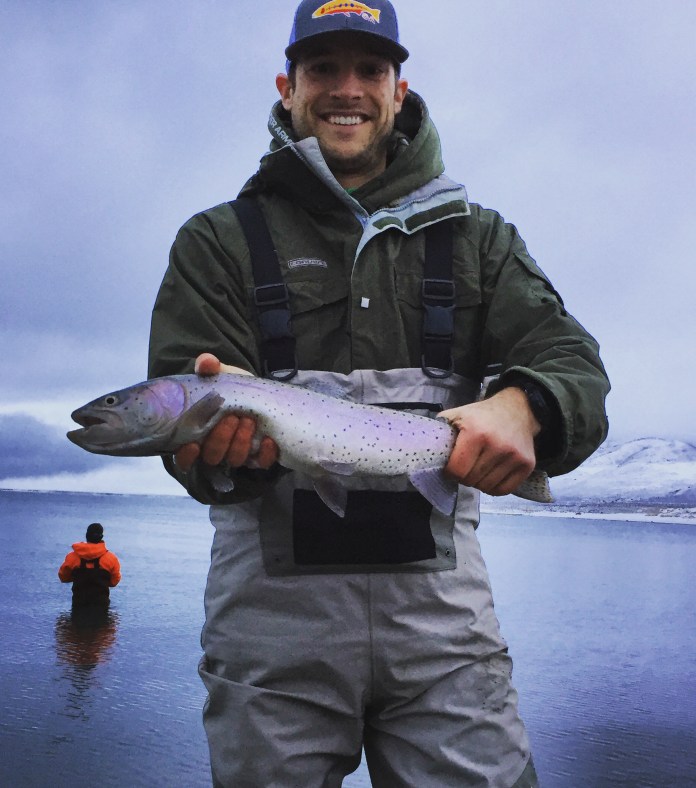
Garret: I first picked up a fly rod in 2015. My friend and college roommate/teammate taught me the basics and got me on my first fish that summer. I began fishing when I was about 3 with conventional tackle.
Flylords: Has anyone ever recognized you on the water?

Garret: I’ve had one person recognize me on the water, it was kind of funny because he said: “oh my God, are you Garrett from the Bachelorette?” 

 Flylords: What does Rebecca think of your nomadic lifestyle?

Garret: Rebecca appreciates my nomadic style because it reminds her of her late father and how I’m different from a lot of people. 
Flylords: Does Rebecca fly fish with you?

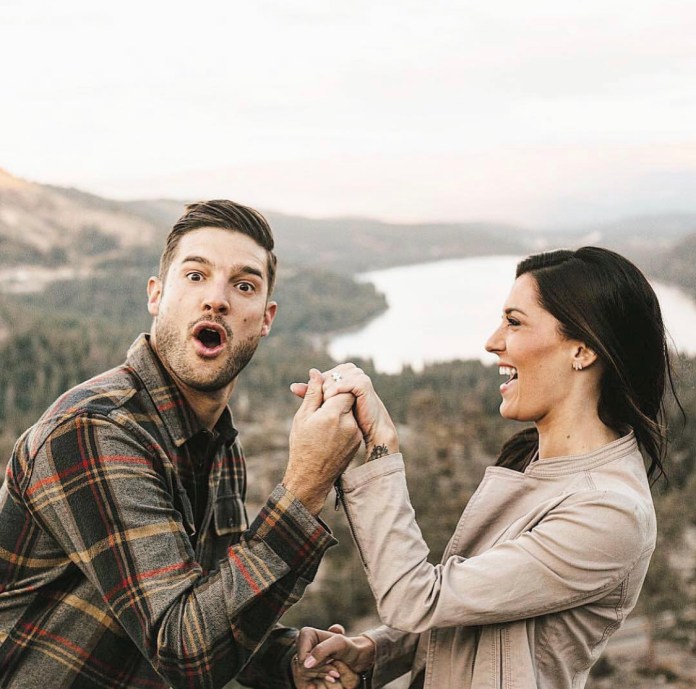
Garret: Rebecca “Becca” has fished with me twice but not with a fly rod, but I attempted to teach her in a pool once.

Flylords: Does she still have that large streamer you gave her from the first impression rose episode?

Garret: She does still have the streamer I gave her from the first impression episode. She keeps it on a duck decoy her dad carved 

 Flylords: When did you get into the fly fishing/hunting industry?

Garret: I just recently started dabbling in the fishing/hunting industry. I would love to a lot more because I feel like it is something I’m passionate about and would like to become a lot more educated and better at both. 
Flylords: What else do you do in your free time to relax? 

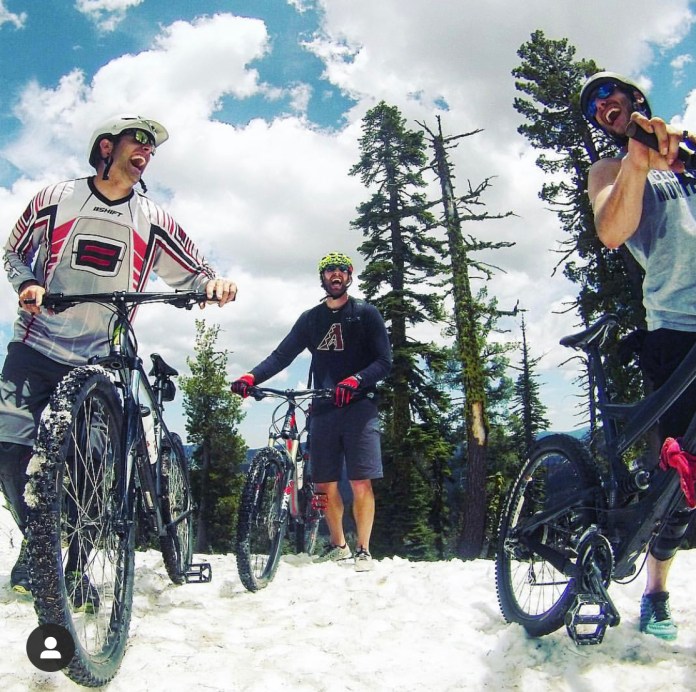
Garret: I honestly hate relaxing. I like being exhausted when I go to bed at night. Relaxing activities for me would be swimming, corn hole, ping pong, billiards, card games, marbles, and cribbage! 
Flylords: Spiked seltzer or beer? Or does it depend on the situation haha..

Garret: It depends on the situation while choosing a spiked seltzer or beer. I’m more of a beer drinker especially after or during fishing, and spiked seltzer if I’m out doing something more strenuous like beach volleyball or Spikeball haha.

Flylords: What are your favorite species to target?

Garret: My favorite species to target are any type of trout. Mostly browns and rainbows.

Flylords: If you could fish anywhere in the world, where would it be and who with?

Garret: I’ve wanted to fly fish in the Pyrenees with my dad & brother for a few years now. We are Basque, the country/region is gorgeous. I know they have a ton of trout in there. There is something that gives me pure enjoyment and excitement every single time I see my dad & brother get on a fish because they are the ones who originally got me into it as a kid, we are essentially best friends and I feel like it’s a reward to see them do well on the water. 

Flylords: Tell us your favorite fishing memory.

Garret: I have many favorite fishing memories but one in particular that makes me still laugh is this…My dad was teaching me and my brother how to read a stream and we had to get to the other side of the bank to fish this hole. The only way across was to walk onto a fallen tree that was just wide enough to get both feet on sideways. The stream was too fast and deep for a 6 & 12 yr old to cross without being swept away. My brother and I questioned it and my dad said “what do you have to be afraid of, here I will show you” he made it about halfway across before he slipped off the log and fell in the stream. He let the current take him down about 50 yards until it calmed down and he made it to the bank. We said, “hey dad, is that how we do it?” Haha. My brother and I made it across without falling in. We have a lot of great stories like that. 

Flylords: Any plans for the future?

Garret: I always plan on fishing in Eastern Nevada with a great friend of mine. But I would love to make it up to Montana, Wyoming, Idaho, and Utah. I can also say that I have been looking into going to Roatán to go fly fishing for permits. 

Interior Department Announces More Public Access on Lower Blackfoot River

Last week, the Interior Department announced plans to purchase THOUSANDS of acres in Montana’s Lower Blackfoot Watershed. To many fly anglers, this stretch of water is famous for being the setting for one of our most famous fly fishing stories, “A River Runs Through It”, by Norman Maclean. The novel, and fly fishing in general, was made famous when Robert Redford made the novella into an amazing film featuring Brad Pitt, which has been credited with aiding in the rise of fly fishing as we know it now.

Fly Fishing Little Blackfoot River

According to a press release from the Interior Department:

“Secretary David Bernhardt said the plan is to work in conjunction with the Nature Conservancy to buy 13,000 acres of private land and eventually open it to anglers, campers, floaters, and others while also keeping forest management projects.

‘From the very beginning of my tenure, public access is a critical component to how we manage lands. Acquiring these lands dramatically increases access to public lands available for recreational activities such as fishing, hiking, hunting, mountain biking, and snowmobiling,’ said Bernhardt.”

Once the acreage is acquired the new lands will be managed by the Bureau of Land Management.

According to an article in The Washington Examiner:

“It plans to use money from Sportsman’s Access funds allocated by Congress from the Land and Water Conservation Fund. It plans to spend $3 million to acquire approximately 4,800 acres of the 13,000 acres later this year.”

We had the pleasure of fishing the Little Blackfoot River in Montana while on location at The Ranch at Paws Up and could not be more excited that more anglers will be able to publically access this amazing trout fishery!

Source: TheWashingtonExaminer.com, United States Department of the Interior.

#PlasticInTheBasket

The hashtag #PlasticInTheBasket came to life on a fishing trip. It had been a good day with a few fish in the bag, but on the way home, the shore became colorful. Red, blue, green, transparent and dirty fragments of plastic were scattered up and down the coast. Comprehending what our beautiful coasts are being subjected to was a terrible realization. As anglers, we wanted to do something, but all we had with us was the stripping basket we used for fishing. It was perfect.

In less than five minutes, the stripping basket was overflowing. It held about two kilos, but hundreds of kilos were left behind on the shore. What else could we do? After a few moments’ thought, we decided to share our frustration on social media. This resulted in the hashtag #PlasticInTheBasket. Shortly afterward, the idea was liked and shared many times. If anglers and the general public want to make a difference, collecting plastic must become as natural as breathing. If you feel up to it, spend five minutes on your way back putting #PlasticInTheBasket whenever you can.

Some organizations are selling recycled wristbands, recycled bottles or recycled bags to keep their organization going. It is great that so many people are supporting organizations and in return, you will help remove plastic from the ocean. I know one organization, where you can buy an item and in return, they will remove 1 kg of plastic in the ocean. What an admirable idea and I did it myself but think about it this way. If you go out and collect a basket, you will easily remove 1 kg of plastic. If you share a photo of this on your social media account and 10 of your friends follow your example, you have helped remove 10 kg of plastic. If their friends do the same, you will have helped remove 100 kg of plastic and so on. Today the hashtag has been used over 1.0000 times, which might equal over 1 ton of plastic being removed from the coastline from the #plasticinthebasket hashtag. I would like to believe that is making a difference.

Traces of human activity are found along coastlines all over the world, and one of them is plastic. The plastic strewn along Danish coastlines. The plastic polluting our environment. The plastic found in our sea trout. You can fight to reduce the amount of plastic we use on every single fishing trip by putting #PlasticInTheBasket.

The coasts of Fyn are some of the most beautiful in Denmark. All around the island, you will find beautiful cliffs sloping down to the water, countless coves winding their way through the landscape and endless beaches with small stony reefs, trees reaching for the sun and teeming wildlife. But down among the stones, you will also find items besides the treasures of nature. Looking closely, you will soon be able to see old bottles, toys, cutlery, cups and all sorts of other things among the stones. Many are made of plastic.

Researchers have determined that between 8 and 10 million tons of plastic are dumped into the sea every year. As a result, more than 90% of all birds have plastic in their stomachs. These numbers are frightening and are rising year by year because the production of plastic is increasing along with the growing world population.

Much of this plastic comes from plastic bottles, disposable plastic such as straws, shopping bags and wrapping film. After a plastic bottle enters the sea, it slowly starts to decompose. However, the worst thing is that the plastic doesn’t disappear. It breaks down into what are commonly referred to as microplastics. Microplastics are almost invisible and are found everywhere in the sea. Most remain in upper layer of water where there is a risk that they will be ingested by birds, prawns and small fish. The small fish are then eaten by bigger fish, which ultimately means that the predators at the top of the food chain accumulate large amounts of plastic. So when we catch a sea trout, there is a great risk that it will contain traces of plastic.

Facts about plastic

  • We dump more than eight million tonnes of plastic into the sea every year
  • More than 90% of all birds have plastic in their stomach
  • There are approximately 5,000,000,000,000,000,000 microplastic particles in the sea
  • A plastic bag has an average service life of about 15 minutes

So do your part and fill your net, stripping basket, bag, whatever you may have with plastic and be sure to tag #PlasticInTheBasket for the world to see and we can begin to cut down on plastic waste resulting in a healthier world!

Follow along with Nikolaj Korsholm on the @plasticinthebasket Instagram profile and be sure to tag #PlasticInTheBasket

Video of the Week: Salmon Fishing in Northern Sweden

For our latest Video of the Week, we travel all the way to Northern Sweden to see what their salmon fishing is all about. Turns out they have some pretty awesome opportunities to catch these fish, and this film documents some of the highlights.

Produced by Swedish filmmakers “Northern Stories”, this film encapsulates some of the highlights of a day out swinging for salmon in Northern Sweden. This was filmed on the day of the season opener, and it looks like they have a lot to look forward to as the season progresses.

This film was created by Northern Stories. Be sure to keep up with some of their other films on YouTube.

The video of the week is selected and written by FlyLords team member Conner Grimes.

https://theflylords.com/2019/05/24/throwback-video-of-the-week-the-devils/

https://theflylords.com/2019/05/16/video-of-the-week-ozarks-on-the-fly/

https://theflylords.com/2019/04/18/video-of-the-week-5-miles-out/

GOLDEN FEVER

In fall of 2018, the Flylords team traveled to Salta Argentina, a small city in the northern mountains of Argentina. On the outskirts of this beautiful city, you can find Alejandro Haro and his team of guides which make up Juramento Fly Fishing.

Their operation focuses on fly fishing trips for Golden Dorado, targeting these fish in two main rivers, the Juramento, and the Rio Dorado. Alejandro pioneered fishing in this area and has spent the majority of his life protecting these fish from poachers and overfishing.

For more info on this operation you can visit juramentoflyfishing.com you can also find more info on protecting these fish at fishsimply.com. Thanks to Patagonia Fly Fishing for support on this project. And to Adorama Camera for helping us have the right gear out in the field.

Director, Jared Zissu, DP: Max Erickson, Edit by Ben Kalbfeld

Be sure to subscribe to our Youtube Channel
And if you are interested in planning a Dorado Fishing trip shoot us an email!
theflylords@gmail.com

https://theflylords.com/2018/07/05/10-tips-for-catching-golden-dorado/

https://theflylords.com/2017/09/04/5-reasons-golden-dorado-should-be-on-your-bucket-list/

Carnival Cruises Gets Fined AGAIN For Dumping Trash at Sea

0

The popular cruise lined was slapped with a $20 million fine when a subsidiary, Princess Cruise Lines “admitted to violating the terms of its probation from a 2017 conviction for improper waste disposal,” according to a Business Insider article.

From Business Insider:

“A court filing submitted on Monday said Carnival released food waste and plastic into the ocean, failed to accurately record waste disposals, created false training records, and secretly examined ships to fix environmental-compliance issues before third-party inspections without reporting its findings to the inspectors.”

Part of the settlement also included provisions requiring Carnival Cruise Lines to “to devote more resources to comply with its probation and improve waste management.”

Source: BusinessInsider.com

Rocky Mountain Road Trip

Colorado’s Rocky Mountains could keep a trout angler occupied for a lifetime.

MikeMcDade_RoaringForkValley3.jpg

That’s what I thought to myself while westbound on Colorado’s Route 24 with my dad and a friend—the sound of rubber turning on the road and the vastness of the Rockies in the distance. I felt restless.

MikeMcDade_HighElevation1

After all, we didn’t have a lifetime to explore Colorado’s Rockies. But we did have enough time. Enough time to cover several hundred miles of exceptional trout country.

MikeMcDade_DreamStream1

Our first stop was at a well-known section of the South Platte River called the Dream Stream. Named for the size of the fish it produces, mostly in the spring and fall months when trout migrate up the river from the reservoir below, this tailwater meanders through a 1,300-acre high desert prairie at 9,000 feet.

BrianFay_DreamStream3 (1)

As our road trip continued west, the mountains we first saw in the distance got bigger and bigger, and the prairies that surrounded us turned to rock. We eventually arrived in the Roaring Fork Valley, home to 42 miles of Gold Medal water. Designated by Colorado Parks and Wildlife, the state’s Gold Medal waters provide better-than-average fishing opportunities for large trout.

MikeMcDade_RoaringForkValley2.jpg

Ready to experience something new, we set out to fish high-elevation lakes and creeks scattered across the Maroon Bells-Snowmass Wilderness. The cold, thin air took our breath away. And so did the scenery. With water as flat as glass and 14,000-foot peaks surrounding us, the only thing nearly as beautiful were the cutthroat and brookies we caught.

BrianFay_HighElevation4 (1)

No one wanted to admit it, but with our flight home scheduled for that evening, we all knew it was time to pack it in.

After all, we didn’t have a lifetime. But we did have the time of our lives.

Photos and story from Mike McDade, check him out on Instagram at @mikemc290.

Featured Fly Tyer: Brita Fordice

Welcome to our new Featured Fly Tyer series where we highlight tyers around the world using their creativity to catch us all more fish! This time we sit down with Brita Fordice (Instagram: @SeaFly907), to chat about why she ties and where her creative patterns and tying talents have brought her.

Flylords: When did you tie your first fly? What pattern was it?

Brita: I tied my first fly at 10, and it was the ugliest version of a Winter’s Hope steelhead fly ever. All I had to teach myself to tie was Deke Meyer’s Advanced Fly Fishing for Steelhead book to go by…. And fast forward 7 years and I made one of the bigger mistakes by getting a tattoo of a Winter’s Hope on my stomach. Let’s just say that they should outlaw all stomach tattoos on women. What started as a #2 became a 2/0 and then went back to like a #1 hook size after my daughter. Now it looks more similar to a colorful bird poop on my stomach.

Photo by: Chris King

Flylords: What was the first fish you caught on your own tie?   

Brita: I caught a 9” Dolly Varden on a woolly bugger in front of our family place on the Stillaguamish River and I felt like the king of the world.   

A Shrimp Game Changer

Flylords: What is your favorite pattern to tie these days?   

Brita: Shrimp. I love them. I can (and do) spend hours looking at photos of both the live versions and flies others have tied to mimic them. There’s something so fun about the materials used for shrimp, and it’s a challenge to find materials that are truly transparent that still mimic the movement needed.   

Flylords: What drew you to the saltwater side of fly tying?  

Brita: The size. Any pattern that doesn’t take up a large portion of my palm bores me.   I am aware that very large fish eat very small flies…. I just don’t get much enjoyment out of tying small nymphs and dries. Saltwater patterns are fun because one pattern can be used in multiple bodies of water in many countries around the world for multiple species.

Flylords: What draws you to fly tying and fly design?  

Brita: It’s always come easy for me and I’ve always loved it. Five+ years ago when Instagram became a thing and I was trying to get my name out as a guide I knew I needed to get attention via the site somehow.… And while other females know they can post pictures of themselves fishing to gain traction, I knew that one day I’d be old and ugly, so I needed to find a way to prove that I am a guide that is worth more than just a person to take you fishing. I decided I would focus on my tying for that, and it has paid off in the end.

Flylords: What is your process while designing and testing a new pattern?   

Brita: I start with the real-life form. I will google search “baitfish” or “shrimp” and find a real-life version of something that I haven’t seen in fly form done well before. I then watch videos of the fish or shrimp in the water on youtube. Then I tie one up. I’ll swim it in my swim tank to confirm it rides right too. There are many times I’ve found that patterns look amazing but don’t follow the “form follows function” rule. So I always swim a fly before I post it or fish it.

Flylords: How does fly tying affect your lifestyle?  

Brita: It has gotten me invited on more fishing trips than I normally would have. Every time I fish Puget Sound on a day I’m not guiding I still get excited and tie up multiple new flies to test on the fish. It becomes the running joke on the boat that ‘“ADHD Brita” is switching out flies again’ because I’ll land a fish, say “that fly works” and switch to another fly to try. So as for affecting my lifestyle, I guess you could say that it has made me get more enjoyment out of watching fish get fooled by my patterns than actually hooking the fish myself. Which is why I love guiding as well, as it allows me to force others to be my sacrificial lambs and land fish on my flies for me. Which I love to see.

Flylords: Do you have any advice for new tyers or anglers looking to pick it up?  

Brita: If you’re thinking of getting into it to save money you picked the wrong hobby. Next, think of what fish species you fish the most and whether you enjoy streamer fishing or dry fly fishing most. Only purchase the materials for streamers or for dries initially. Because the materials don’t always transfer over, and you’ll spend hundreds if you try and do both at once. And most importantly, take a class. This will save you the most money initially.

Flylords: What is your favorite material to tie with?

Brita: I love shrimp eyes. I go through more shrimp eyes than any human should in a given month. I love making my own in fun colors as well.

Flylords: How do you decide what materials to use in each creation?  

Brita: This depends solely on the fly. Many saltwater patterns require materials that shed water quickly to eliminate weight, and others necessitate weight on one side to counteract the fluffiness. It’s a middle school equivalent Physics class with every fly I tie some days…

Flylords: Your mantis shrimp flies are so detailed, how long does it take to tie one of those? 

Brita: That one takes me about 35 minutes to tie and another 20 to color. And I giggle the entire time because they are the most fun flies ever. And they are the most badass creature in the entire universe in my opinion, so the time spent is worth it.

Flylords: What is next for Brita Fordice in 2019?   

Brita: That’s a tough one. I am going to continue to design patterns for RIO Products and tie flies and guide on my days off. Life is good 🙂

Vermont Highest Elevation Pond Gets Stocked By Chairlift

0

High above Smuggler’s Notch, a Vermont Ski resort, lies the highest elevation stocked pond in the state. Recently, that pond was stocked with hundreds of brook trout. However, they encountered a challenge as there wasn’t an easy way to transport the trout up to the mountain. So they used the ski resort’s chairlifts. Each chair helping to carry a load of young trout up to the pond.

Below is Mike Chait’s recounting of the day, who had the pleasure of accompanying the fish on their journey to the top of the mountain:

“Thanks for tuning in! This is Mike Chait filling in for Hugh while we enjoy another beautiful summer at Smugglers’. I’ve got an interesting little story for you today!

During my many years at Smuggs, I’ve had a chance to ride the lift with some interesting folks. There’s a lot you can learn while riding the chair and holding a conversation with a complete stranger. Often I’ve found I have a lot in common with my lift-riding partner.

This past week, I had a different experience than I’m used to. I was thrilled to have the opportunity to ride the chair again, this time in a T-shirt, tagging along with Mountain Operations as they took care of a yearly task. But I didn’t have the chance to talk much on the chair. And there was nobody for me to listen to. No friendly conversation about how long we’ve been coming to Smuggs, no discussion of our favorite trails. Just silence.”

“I was riding up with a bunch of fish. Yeah, like the kind that swim. Brook trout, to be exact. Each year, Smugglers’ Mountain Operations team works together with Vermont’s Dept. of Fish and Wildlife to stock the Sterling Pond with hundreds of little swimmers. It’s quite the adventure for these little fishies!

The truck arrives with our special guests in tow. From there, bag-lined cans are filled with water. Fish are added to their new (temporary) vessel of transport, and a special shot of oxygen is introduced to calm their nerves. Brook trout are notorious for having a fear of heights, so the more we can do to keep them happy, the better chance they’ll have of loving their new home at the top of Sterling Mountain…”

To read more about the Brookies’ journey up the mountain, check out this article on UnofficialNetworks.com!

Source: Unofficial Networks.