In a recent article from the New York Times, writer Jim Robbins shares the grim future of the wild Salmon that use the Columbia River every year for spawning. Once revered for its healthy salmon runs, the populations of salmon are dwindling. In the 1950s, spawning fish numbered in the tens of thousands, but in the most recent count, there were only 1,500 spawning fish in the river system. And it’s not just the salmon who are suffering, countless native fish species in the system are under threat, resulting in many conservationists pushing for dams on the river to be removed to prevent a total loss of these precious fish.
According to Russ Thurow, a fisheries research scientist with the Forest Service’s Rocky Mountain Research Station, “The Columbia River was once the most productive wild Chinook habitat in the world.”
The dwindling salmon numbers are also impacting other species who reside hundreds of miles away. Orca whales, who rely on the annual run of salmon for food, are starving.
According to the NYT piece, “Many experts believe the orcas are starving in large part because of the decline of wild salmon. This year alone, their number has dropped from 76 to 73, alarming conservationists and scientists. Last year, an orca mother carried a dead calf for 17 days on her back. She was presumed to be grieving.”
The easiest way to ensure the future of these salmon, other native species and the Orca whales is to simply remove the 4 lower dams on the Columbia. This would both free up access for fish movement and help to lower the water temperatures, which are thought to be affecting the salmon runs.
For this month’s throwback Video of the Week, we head all the way back to 2006 for one of our favorite retro films. Running Down the Man is an incredible film about the pursuit of roosterfish on the fly.
In this film by Felt Soul Media, you can see anglers chasing down roosterfish on foot from the beaches of Baja California. These fish make you work extremely hard, and can often give you false hope of an eat, turning away at the last second. Check out the trailer above to see some of the action for yourself.
This film was created by Felt Soul Media. If you want to see the full film, they have it for sale as a DVD on their website.
The video of the week is selected and written by Fly Lords team member Conner Grimes (@doublehaulfishing).
“Das Boat” sounds like one of the craziest concepts for a fishing show we have ever heard of. The MeatEater crew boat a 30-year-old boat in Texas and are taking it on the road. The plan: Give 10 anglers one day to modify the craft as they see fit, and take it out on the water for some fishy shenanigans.
Das Boat Episode 6: Frank and Rob Are Back on the Savannah River
“Long river trips can take us deep into some wild places aboard a vessel that will carry far more than the basic necessities. In the season finale of Das Boat, Mustache Rob and Frank are back on the Savannah River in Georgia, headed more than 50 miles downstream into water that neither of them have ever seen before. It’s an exploratory mission, of sorts, though the Savannah is far from wilderness, and Rob and Frank’s journey is more National Lampoon than Heart of Darkness. At the terminus of their trip waits Wade Plantation and some heaping platefuls of southern hospitality. All Rob and Frank have to do is bring some catfish for the table and safely pilot Das Boat downstream.”
Episode 5: Frank Smethurst and Mustache Rob Hit Up the Savannah River in August, Georgia
“In this episode of Das Boat, Frank Smethurst and his old friend Mustache Rob circle back to some of their old favorite stomping grounds on the Savannah River in Augusta, Georgia. They catch some of the many native sport fish in this archetypical southern river and set their sights on the east coast’s most sought after migratory game fish—stripers. Along the way, Das Boat gets a major upgrade, and they discuss the Georgia-South Carolina rivalry, southern roots, Bartram’s Bass, and the intertwined history of Augusta and the Savannah River.”
Episode 4: April Vokey and Oliver Ngy Tackle a Notoriously Complex Bass Fishery in Florida
“Lake Okeechobee—Florida’s inland sea of freshwater, grass, and largemouth bass. This week, Das Boat dives deep into Florida’s watery heart with a Candian and a Californian. The host of our own Anchored podcast, April Vokey, meets up with big bass expert Oliver Ngy and they try to figure out.”
Episode 3: Ryan Callaghan and Ed Anderson Go Looking for Snook and Tarpon
“The boat gets a poling platform for the latest episode of Das Boat from MeatEater. Join Ryan Callaghan and Ed Anderson as they hunt Snook and Tarpon along the coast of Florida!”
Episode 2: Alvin Dedeaux and Jesse Griffiths Target Guadalupe Bass
“Episode 2 features our good friend Alvin Dedeaux and Jesse Griffiths as they kit out Das Boat with accessories and modifications they need to use it to chase the Texas State Fish, the Guadalupe Bass!”
Episode 1: Steve Rinella and JT Van Zandt Chase TX Redfish
The first episode, which premiered today (Aug. 15) features Steve Rinella and JT Van Zandt chasing Redfish along the Texas coast. Recently highlights Costa Guide, Alvin Dedeaux, is also making an appearance in an upcoming episode and we cannot wait to see what unfolds!
It was mid-March and I was sitting at my desk cramming for an economics exam when I received a call from my good friend and co-worker Collin Terchanik. Without haste, he spread out a plan which in short involved the two of us catching a flight to Calgary, and staying with talented photographer Sue Moodie, as well as her husband/ esteemed angler; Kyle Moodie. Sue and Collin previously worked together on a Flylords Photographer spotlight a few months prior, and she had now decided to extend some world-famous Canadian hospitality, offering us the trip of a lifetime. As quickly as the plan was proposed, we had our plane tickets, as well as wide-eyed aspirations of bull trout and vast mountainscapes.
Surrounded by bustling crowds of travelers flowing in all directions, I sat inside the Montreal- Trudeau international airport alone with my phone pressed to my ear. “Conditions are perfect, you guys took a chance with the dates, but it looks like we’re going to have one hell of a week ahead of us,†Kyle assured me as I watched the second hand on my watch tick away the day. With an excited chuckle, I hung up and stuffed my phone back into my pocket. Taking another glance at my watch, I couldn’t help but let a smile crawl across my face… In 4 hours I would be landing in Calgary, Alberta chasing the world-famous bull trout.
Unfortunately, as we would soon learn after landing in Calgary, conditions were NOT perfect. A large storm front would roll in on our arrival and batter the landscape with rain, blowing out the nearby rivers. See, this is not a story of Collin and I landing massive bull trout in front of vast mountainscapes. It’s not about long battles that would have Hemingway turning in his grave. This story is about torrential downpour, broken rods, folded plans, and the best trip of our lives.Â
As the first day on the road rolled along, we saw no fish. After waking up at 4:00 am and driving two hours in order to find a mountain lake, we caught nothing bigger than a few raindrops on our windshield. However, as the day progressed, the fog and clouds began to part. Rays of sunlight extended down from the sky and bathed the Rocky Mountains in warm light as if to display an artist’s masterpiece. Collin and I glanced around in sheer amazement of the territory we had entered and as we sped down the dirt roads that lined the dried riverbeds, it occurred to us that maybe our reward today would be the gift of this scenery…and that was alright.Â
However, about 20 minutes after that Collin hooked onto 2 beautiful cutties to end the day, but that was just a bonus. Â
At 3:30 am the next day, my alarm began to wail. I promptly awoke and rose to look at Collin from across the room. Looking back at me, we nodded our heads and without words sprang out of bed. It was Go-time. Water conditions were still shot on our prospective rivers, however, Kyle and Sue had plan B all lined up. We barreled up the dirt roads yet again, this time climbing in elevation. Once we stopped, Kyle stepped out to prospect the water below, then promptly returned with instruction to rig up and get moving. This landscape was different than what we had experienced prior.
After a steep climb down consisting of many carefully planted steps, the crisp chill of fresh mountain water squeezed our muscles as we entered the river. Kyle positioned Collin and me as he saw fit, and we began fishing a larger pool below a towering waterfall. Soon, I hooked into my first fish. The fish was no larger than 7 inches, but it was the first cutthroat trout I had ever caught. I was ecstatic.Â
As the day went on, the entire crew caught a few more fish. Unfortunately, none of them Bull trout. After exploring many more kilometers of magnificent water, we packed up the truck and headed home. Upon arrival, Kyle called into a local Japanese restaurant and ordered up a large tray of sushi. The rest of the evening was spent filled with laughter and indulgence as we blended soy sauce and lager in our gullets. With my first cuttie in the books, and many more on the way, it would have been impossible to label our day a failure. That night, under the gleaming Canadian starlight, salmon sashimi tasted better than bull trout.Â
Today was a new day. Kyle had managed to get a hold of his friend Kyle (let’s call him KyleGBS for clarity’s sake), who apparently knew some secret bull trout spots. At 6:00 am we rolled up to KyleGBS’s house. Off we went deep into the unknown regions of Alberta, now with fresh intel. Once we finally settled on a location, we rigged up and began scouting the waters ahead. It didn’t take long before we were on a pristine hole full of hungry cutthroat. Back and forth Collin and I were hooking up on gorgeous trout, and with each one released, a new contender emerged.Â
We eventually continued our hike upstream, bringing in the occasional cutty here and there. Then, as we rounded the next river bend, ominous storm clouds began to roll in at about 3:00 pm, and we were a long way from home. We continued our trek for another couple minutes until a bolt of lightning ripped through the sky, quickly followed by an explosion of thunder. A light mist of rain began to fall, and as we stood in the water and weighed our options, we decided to live to fish another day and began our hike back to the car.Â
Another day, no bull trout. However, there was a slight pain in my side, right under my ribs. It wasn’t due to ailment or injury, but actually due to laughing so damn hard with Collin and the Kyle’s. Looking back on the day, there wasn’t a single moment we hadn’t spent without grins plastered across our face. With such a fond collection of memories, we pushed the lack of bullies far from concern.Â
The day started as all previous had. Under the moonlight, the truck was loaded in silence, and before the sun had a chance to peak over the mountains. We were headed south. Over muffled Waylon Jennings, Collin and I exchanged nervous glances as we were propelled into daybreak. There was a silent understanding amongst every passenger, fully knowing that today was make or break for finally finding bull trout.Â
Once we hit the river, it was all business. Kyle brought us over to some violent water feeding into a deep pool, and Sue set up her camera with the discipline of a marine sniper. With ample direction, kyle guided our casts, and we worked the river system up and down. No luck.Â
We packed up and rode out another hour. Yet again, we set up shop by a protected turn in the river and began to toss heavily weighted flies into the sapphire blue water. The cutties were biting, and while we certainly couldn’t complain about the beautiful fish that we were pulling from the river, it’s not what we were after. We were so enthralled in the action, We barely batted an eye when Collin’s new rod split into two pieces. As soon as it happened, he had his spare rigged with his line in the water. The man was on a mission.
After a few more trout we packed up again and headed further south. As we hiked, I looked over at Collin and could see the flame of determination raging in his eyes. After about 30 minutes of wading upstream, we began to cast again. I looked downstream to Collin who was honed into a small stretch of water, and watched him for a few seconds. Suddenly, I saw him lurch his rod to the sky. His tip bent at a 90-degree angle and he started to shout. It was clear…this was no cutty. I began to sprint over to him as the fight persisted. He tugged and pulled, line whizzing out of his reel. He danced around on the river bank, angling himself so that the fish couldn’t shoot downstream. Then, it happened.Â
Suddenly his line went loose. He fell back into the dirt. He snapped his head up and began to look around in a combination of disbelief and dismay. I approached him timidly, wondering what emotions were about to present themselves. He stood up, brushed the gravel off his waders, and brought in his fly. On the end of the hook, was a grey maxillary section…aka, the lip of a bull trout. There was zero denying it, the fish on the end of his line was a bull trout, and due to nothing other than poor fortune, we never got to see it out of water. Collin collected himself and looked at me, he was clearly broken, but certainly not about to show it. Truthfully, I believed he felt more heartbroken to have hurt such a beautiful fish, as opposed to losing it.
The rest of the day was filled with gorgeous landscapes, perfect weather, and lots of cutthroat. Unfortunately, no Bull trout. As we made our way back to the house for the final time that evening, there was a slight essence of disappointment, but there was no silence or mourning. Laughter and loud music filled the cabin as we rolled by acres of yellow flowers and mountain landscapes only found in paintings.
Fishing stories like these usually end with the main characters finally collecting all their whits and making the perfect cast, thus finally enticing the legendary record-breaking trout to take their fly. Then, they are sent barreling home spouting war cries as they celebrate their monumental achievement. But that’s not what this story is about.
No, this fishing story ends with a few new friends sitting down and having a delicious beer, reminiscing on the unparalleled experiences they had together. This fishing story ends with Knowledge gained and friendships made. It ends with the memories collected of side-splitting inside jokes that could never be repeated, of mountainscapes towering in the distance over newly hatched mayflies buzzing off of the water. Of a plethora of beautiful trout caught on techniques never before known. Of connections so strong and genuine, one contemplates the meaning of fly fishing in an all-new fashion. Of the beauty that can be found in taking a deep breath, moving forward, and finding the beauty in plan B.
Flylords would like to thank Sue and Kyle Moodie for their unparalleled hospitality. Without them, we would have never been able to obtain the incredible experiences that we were so lucky to have been a part of, as well as would have not gained such a gorgeous archive of photographs and memories. Please check out Sue’s other work Here.
The Wild Salmon Center is a leading salmon conservation organization, focusing on salmon strongholds in northern California and the Pacific Northwest, up to British Columbia and Alaska and across to Russia and Japan. Through their powerful alliances, the Wild Salmon Center works tirelessly to preserve and enhance wild salmon populations; to date, they have protected over 2.7 million acres of essential salmon habitat. Follow this interview to learn more about what the Wild Salmon Center does!
Flylords: Tell us a little bit about how and why Wild Salmon Center (WSC) started.
WSC: The Wild Salmon Center was founded in 1992 by fly fishermen Pete Soverel and Tom Pero. Former Navy captain Pete Soverel wanted to understand the mysteries of some of the Pacific’s most storied and productive salmon streams, before they were gone. In 1998, Soverel hired Guido Rahr as the organization’s first executive director. Guido was also one of the first western anglers in Kamchatka, and he came to Pete with a vision: a Pacific Rim network of protected salmon rivers, or “strongholds.â€
We’re now the leading group working to protect the strongest wild salmon rivers around the entire North Pacific. We work from northern California and the Pacific Northwest, up to British Columbia and Alaska and across to Russia and Japan. We focus on salmon because they are an iconic and powerful conservation symbol, wild to the core, with an incredible life story. When you protect salmon, you protect a whole watershed and everything in it, including people. The most beautiful and important rivers of the North Pacific all depend on salmon and the nutrients they carry inland from the ocean.
We target salmon strongholds—the richest, strongest salmon rivers in the Pacific—because it’s easier to protect rivers while they are still healthy and thriving.  We build alliances with the most effective local and regional partners working in the North Pacific’s salmon strongholds. We help these groups design and implement winning strategies built on our scientific, political, legal, fundraising and communications expertise.
Flylords: What are some of the ways WSC protects and benefits wild salmon?
WSC: History shows us that protecting a river system before it’s broken is far cheaper and simpler than trying to rebuild it. Over the past two decades we’ve secured millions of acres of stronghold habitat across the North Pacific Rim and improved fish management practices for wild salmon on more than 70 rivers, from the Oregon Coast to the Kamchatka Peninsula in the Russian Far East. We continue to work with local groups in our best stronghold regions, such as Bristol Bay, Alaska, and British Columbia’s Skeena River, to protect these places from ill-conceived development projects that threaten wild salmon. We support education programs to build the next generation of salmon advocates in Alaska and Russia. And we work with policy makers in state capitals and Washington, DC, to ensure that we are managing our lands and waters in a way to ensure we have healthy wild salmon in the future.
Flylords: Speaking of wild salmon, why are they so important to WSC and what makes them so much better than hatchery fish?
WSC: If we want salmon around for our kids and grandkids, we have to protect WILD salmon. They’re a keystone species—meaning these wild, amazing, seagoing creatures literally feed the rivers they return to, dispersing marine nutrients into freshwater food webs and surrounding forests. In southeastern Alaska, spawning salmon contribute up to 25 percent of the nitrogen in the foliage of trees, resulting in tree growth rates nearly three times higher than in areas without salmon spawning. And they are among the most adaptable creatures on the planet.
Flylords: Do you have any metrics that speak towards your almost 30 years of protecting wild salmon?
WSC: Since 2003, we–along with our partners–have achieved formal conservation status for nearly three million acres in Russia and North America, including the 1.2-million-acre Shantar Islands National Park in the Sea of Okhotsk. We’ve helped to stop or shelve two dams proposed on major salmon rivers, and recently supported legislation to halt the Pebble Mine project in Alaska’s Bristol Bay. We’ve also directly launched 13 organizations—from the Coastal Rivers Conservancy in British Columbia to Russia’s Wild Salmon Territory—that build on our vision.
Flylords: What are some of the ‘salmon strongholds’ that you all target? How are they holding up?
WSC: When we look around the North Pacific, there are intact places we just can’t lose: the Smith River in California; Bristol Bay, Alaska; the Skeena and Dean rivers in B.C.; and, the Zhupanova and the Uktholok/Kvachina system in Kamchatka. These watersheds are top priorities and we are doing all we can to keep them whole. We also target regional strongholds in the Lower 48 that are relatively strong, but need some help weathering the impacts and threats spurring from this century. In places like the Oregon Coast, Washington’s Olympic Peninsula, and California’s Klamath-Siskiyou region, we take a mixed approach of protection and restoration: taking out culverts to open up cold water, lobbying for better forest practices, and advocating for better wild fish management.
Flylords: How does WSC use science to direct its campaigns?
WSC: A good example is our work to support coho salmon recovery on the Oregon coast. In 2017, our team led the development of three science-driven strategic action plans to guide our partners in identifying restoration priorities within the Nehalem, Siuslaw, and Elk River watersheds. The work, funded by the National Oceanic and Atmospheric Administration, has so far supported the construction of 28 beaver dam analogs in the Nehalem River, large-scale wood installation in the Siletz River, and floodplain reconnection work on agricultural lands in the Elk River. In August 2019, NOAA funded an expansion of this project to the Upper Rogue, Coos Bay, and Siletz River watersheds.
Flylords: You guys have five ongoing campaigns. Care to tell us about a couple of them?
WSC: Alaska’s Bristol Bay—where Canadian mining interests are threatening to build a massive, toxic open pit mine—is our biggest campaign at the moment, for good reason. But, we’re active across the North Pacific. Take two current campaigns in the state of Washington. One is our fight against a proposed dam on the Upper Chehalis River in Southwestern Washington (which would cost $1 billion and would absolutely have a devastating impact on the Chehalis River’s most threatened salmon populations). Just North, we’re expanding our Cold Water Connection campaign in the Olympic Peninsula, which is home to 50 percent of the state’s non-endangered wild salmon. We have a goal of opening up 150 miles of high-priority streams currently blocked by outdated road culverts. On watersheds like the Hoh, Quillayute, Queets, and Calawah, these culverts—essentially mini-dams—prevent salmon and steelhead from using cold reaches to ride out hot summer months.
Flylords: Pebble Mine and Bristol Bay have been recently getting national news coverage. How dangerous would Pebble Mine actually be for Bristol Bay’s salmon?
WSC: Pebble would wipe out 80 miles of salmon streams and over 3,500 acres of wetlands, just in its first stage. If fully built out, Pebble would be one of the world’s largest open pit mines, with an earthen dam 60-stories-tall that would ultimately hold up to 10 billion tons of toxic tailings and contaminated water—forever. That’s if it doesn’t fail, as 11 similar dams have, catastrophically, in just the past decade. The mine and tailings lake would sit just north of Iliamna Lake, the largest lake in Alaska and one of the most important sockeye salmon nurseries in the world, supporting a $1.5 billion-a-year fishing economy. But Pebble Partnership has spent millions on lobbyists over the last several years to fast-track the mine and curry favor with political appointees, who are now ignoring the scientific assessments and concerns catalogued by their own federal agencies since 2010.
WSC: One of the main ways we’re fighting the Pebble Mine project is through science. Our team helped lead a scientific review of the Army Corps of Engineers environmental impact statement, pointing out the significant gaps in data and poor analysis that leave Bristol Bay highly vulnerable to this mine’s dangers. We’re making sure the mine’s environmental risks become public knowledge. And we’re making sure that members of Congress in DC know about those risks, especially given the Army Corps deeply flawed draft assessment, which U.S. Fish & Wildlife called “so inadequate that it precludes meaningful analysis.†We’re also supporting on-the-ground campaigns with our local partners, to make sure the voices of Alaskans and their allies are heard.
Flylords: It seems like wild salmon face threats in every direction from things like climate change, predation, low water, salmon farms, etc. What are some of the most serious threats to wild salmon?
WSC: In the conservation world we call the primary threats to wild salmon the “Four Hsâ€â€”harvest, hydropower, habitat loss, and hatcheries. We’re focused on the habitat piece: preserving strongholds; fighting new dam construction; removing and rethinking barriers to fish passage, like culverts; cooling rivers and streams; and advancing fish and forest management practices that prioritize the needs of wild salmon. The threats we address all stem from human development and shortsighted forest management practices.
Flylords: While nowhere near historic levels, how are wild salmon doing on America’s Pacific West coast?
WSC: The range for wild Pacific salmon is shrinking, and the same effects of climate change that we feel are starkly real for salmon: this August, Alaska experienced massive salmon die-offs due to record high water temperatures. However, there is hope; salmon are an amazingly resilient species. If we can protect and enhance the cold water habitats they need for spawning and rearing, they have a fighting chance of surviving and thriving in the Lower 48. We are focused on shoring up habitat and ensuring access to cold water on rain-fed systems on the Oregon and Washington coasts, where climate projections give wild salmon a fighting chance.
Flylords: The book Stronghold—which tells the story of WSC’s President and CEO, Guido Rahr—was recently released and reviewed by the New York Times. Care to give our readers a taste of Stronghold?
WSC: Absolutely! Readers can find an excerpt here.
WSC President and CEO, Guido Rahr, courtesy of Brian Kelley
Flylords: How can everyday fly fishermen help WSC and its goals?
WSC: Right now, we need all voices raised to fight against Bristol Bay—by contacting your representatives in Congress to let them know you oppose construction of the world’s largest open pit mine right by the world’s greatest sockeye salmon run. (We can help connect you.) And when you shoot those photos on the river, keep ‘em wet, folks!
For more on the Wild Salmon Center and how you can help, click here!
Thank you, Wild Salmon Center, for taking the time to talk with us and for everything you all do!
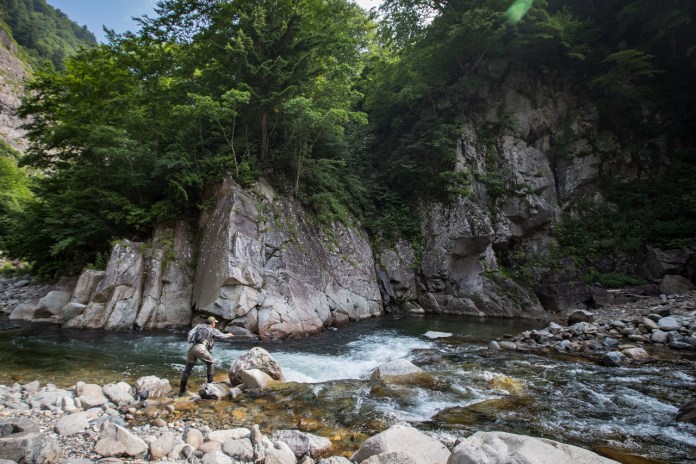
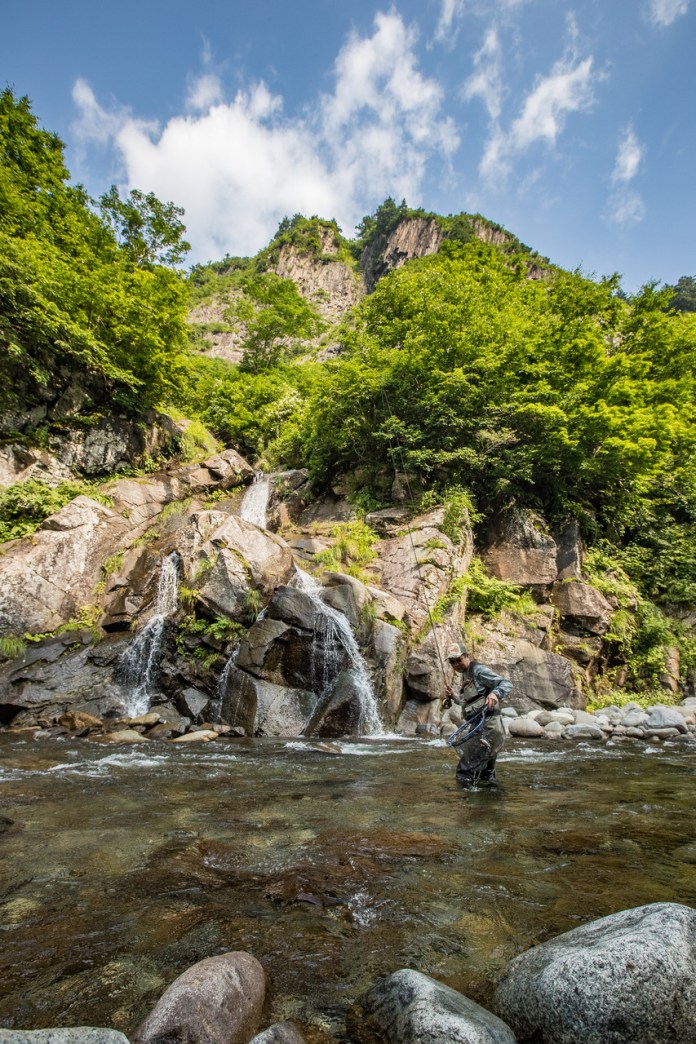
Summer in Japan is hot! With temperatures around 32C-38C (93-100F). The area of where we fish is on a tributary of Lake Ginzan in Niigata Prefecture. It is located on the West coast of Japan’s Honshu Island, bordering the Sea of Japan.
The area has beautiful water, with endless small streams with hungry trout. It is a popular summer destination for many people to get out and enjoy nature. The region is also one of the largest rice production areas in Japan.
We were fishing around 750. above sea level. Not that high but definitely not as warm as at sea level.
It is great to experience new places that we have never been, with no expectations, no pressure from other anglers, just a bunch of fish.
We quickly discovered many small fish (10-18cm) that were there but no signs of larger fish (30cm above). We were searching for larger size fish using a 10 foot 3 weight rod with manic jig head H&C size 10. This setup Which is a good way to search deeper places and faster runs, and we were lucky to find a few good-sized fish around 25cm-31cm! These Japanese Char sure are special.
Kiyoshi Nakagawa is from Japan but resides in Auckland, New Zealand and is a professional fly fishing guide and photographer. Give him a follow at @nzyoshi.
On September 12th, the Trump administration announced its final plan to open Alaska’s Arctic National Wildlife Refuge to oil drilling. The refuge, a 19-million-acre area of wilderness, is home to countless species of precious wildlife and some of the coolest fly fishing experiences Alaska can offer. The proposed drilling area would open up 1.56 million acres of the entire coastal plain to oil drilling.
Those in favor of the drilling argue that the proposed lease will bring revenue to the federal Treasury and bolster the struggling Alaska economy. But from a conservationist’s point of view, the issue is clear. With warming temperatures and the looming effects of climate change, the delicate ecosystem could be forever disrupted as the refuge is home to countless Polar Bears, Caribou, wolves, migratory birds, and lest we forget, amazing char, salmon and trout fishing.
“Unfortunately, this sham environmental impact statement ignores the overwhelming scientific evidence that demonstrates the unprecedented risks to wildlife that would result from drilling in the Coastal Plain,” said Collin O’Mara, president of the National Wildlife Federation, a conservation group. “Alaskans, tribes, and conservationists all agree that this is the wrong approach.”
The plan is expected to be challenged legally by conservationists. We will continue to post updates about this story as they develop.
Surrounded by hundreds of kilometers of shoreline, national parks, and historic sites, the sparkling waters of Sydney Harbour are synonymous with Australia’s most famous city. Alive with ferries, yachts, sailboats, and kayaks, one of the world’s great natural harbors is also a gateway to some incredible fishing opportunities.
Don’t expect to see a line of flats skiffs poling in front of the Sydney Opera house, but if you know where to go, and what tackle to use you can find some fish eager to take an artificial fly!
Our first afternoon in Sydney we met up with local guide Justin Duggin – Justin is one of the most knowledgable guides in the Sydney area, and runs a guide business called Sydney Flyfishing Tours. Justin takes us out for a casual night on the town, and we head back to his place to crash on a couch and inflatable mattress – we like to call this “Balling on a budgetâ€. Lucky for us, Justin is also a seasoned drummer in a local band and shows us a few of the beats he has been working on.
We also meet his bird, Marley.
The next morning, Justin takes us to one of his favorite little coffee spots overlooking a beautiful beach full of surfers. A mesmerizing cliff face sits on the other side of the surf-break as we watch the sun peak over the horizon.
The bags are packed as we steam over to the boat put-in – where Justin is confident we can find some action. The day starts off optimistic, and on our third cast we connect to a legendary Kingfish – probably the most iconic fly caught species in the harbour. After a few minute tussle, the fish breaks off… We were devastated.
As most trips go when you bring out all the camera gear, the fish decide to be stubborn… As any good guide would do, Justin decides to shake things up and take us off-shore. We throw out a sinking line and try to pull some fish off a reef in some deeper water. We found a small blue-fish and a beautiful coral orange dweller on an artificial lure.
We bump over to one of Justin’s favorite offshore spots and from a distance see some birds. A Blitz! A blitz of Australian salmon circling a bait ball on the surface.
This was exactly the type of situation we were looking for. As Justin nosed the boat quietly into the blitz, I sent out a long cast and hooked up after a few strips. The medium-sized Australian salmon put a workout on the 8 weight rod I was throwing. But we got him in the boat, and landed two more after!
We spend the last hour of the day casting in front of the legendary opera house. Opened up a cold beer, and gave cheers to a successful day on the legendary Sydney harbour.
Next stop – Northern Australia, to the Wessel Islands!
Nick Vlahos a.k.a. Sandbar Flies is a Lousiana-born fly designer and commercial tyer. Now famous for his signature pattern, “The Sandbar Crab”, we decided to catch up with Nick to talk Redfish, fly design and where he takes inspiration from when creating new patterns.
Flylords: When did you tie your first fly? What pattern was it?
Nick: I picked up fly fishing in middle school when my family moved to Alpharetta, GA but didn’t pick up fly tying until college at Louisiana State University. I was targeting redfish and speckled trout while in Louisiana and so the first fly I learned how to tie was a Clouser Minnow.Â
Flylords: What was the first fish you caught on your own tie?
Nick: The first fish I caught on my own fly was a speckled trout off my kayak in Destin, Florida. It was sight fished over a grass flat in a foot of water.
Flylords: What is your favorite pattern to tie these days?
Nick: Just depends on the day. Lately, I have really been enjoying tying shark tube flies. I’ve also been tying up a bunch of Mantis/Ghost Shrimp using fake fingernails.Â
Flylords: What draws you to fly tying and fly design?
Nick: Fly tying is challenging! If i’m not being challenged then I’m not learning, if i’m not learning I become bored. There are moments when I’m laying down in bed and an idea pops up in my head. So I’ll get up and go sit at the vise at 2am and tie the fly so I don’t forget when I wake up the next morning. The fact that you the tyer have the ability to manipulate each and every part of the process from the hook size, thread size, weight, color of the fly, movement of the fly, etc… it’s all controlled by what the tyer wants to imitate. When I’m not tying orders I really enjoy going outside of my comfort zone as a tyer and learning new techniques that say freshwater tyers use that saltwater tyers don’t. I can then take those new to me techniques and incorporate them into new designs. Â
Flylords: What is your process while designing and testing a new pattern?
Nick: I first decide whether or not I want the fly to ride hook point up (if fished over grass or oyster shell bottom) or hook point down (deep water or over sand). Next comes the weight of the fly depending on the depth of water and how far out you can spot the fish. For instance, if you are fly fishing for Louisiana redfish in 3 ft of muddy water over an oyster bottom, you might not notice the fish until he is within 10 feet of the boat and cruising along the bottom. You want that fly to sink quickly and hook point up to not snag an oyster and/or dull the hook point.Â
I try to match the size of the fly with the size of the bait in the water. Color of the fly will be based on water clarity or color of the bottom.Â
Flylords: When did you realize that fly tying was a professional aspiration for you?
Nick: I had no idea that it would end up being such a large part of my life. Making a living from something I love to do is something I don’t take for granted. I lost my Mom to brain cancer in October of 2018 and her advice to me was to do what I love. She was a Registered Nurse. Even on her sickest days she would tell me how much she missed her job and would still be working if she was healthy enough. I’ll keep tying as long as it makes me happy.
Flylords: Do you customize any patterns for specific fishing regions?
Nick: Yes indeed. Half of my time is spent in south Louisiana and the other half in Destin, Florida. The Sandbar Mullet and LouisiAnimal are designed for the Gulf Coast especially Louisiana bull redfish. The Marbled Sand Flea is designed for pompano along the Florida Panhandle but has been fished for corbina in southern California all the to Maine for striped bass.
Flylords: Do you have any advice for new tyers or anglers looking to pick it up?
Nick: First step is to buy a good vise. Buy once, cry once. Second step is to buy material for just a couple proven patterns and master them. Consistency is key. Watch youtube videos, attend fly-tying classes. The third step is to catch a fish on a fly you tied. Catching that first fish on a fly I personally tied was an amazing feeling and one I hope all fly fishermen get to experience.Â
Flylords: How do you photograph your flies? What’s your camera setup?
Nick: Mostly just Iphone pics and a mirrorless Sony NEX.Â
Flylords: How many species do you think have been landed on your patterns?
Nick: I wish I knew! The most I’ve personally landed in one day was 14 different species on a November day in Louisiana. The pattern that has caught the most species has to be the Marbled Sand Flea. From Florida Snook to Louisiana Redfish and California Corbina, it’s definitely my most versatile pattern.Â
Flylords: Tell us a little bit about some of the non-traditional materials you use to tie your flies? How did you get inspired to use fake nails as crab shells?
Nick: I wanted a realistic sand flea/mole crab pattern and the use of fake fingernails just seemed like the perfect material to get the job done to create the Hardshell Sand Flea. The fake fingernail can be easily trimmed to size and colored with epoxy or marker. I’ve since incorporated the fake fingernail into the Mantis/Ghost Shrimp pattern. The flexible straws have also been something I’ve been using a lot lately with the Sandbar Shrimp and Hardshell Crawfish patterns.Â
Flylords: Where can people purchase your patterns?
Nick: All of my personal hand-tied flies are available at SandBarFlies.com. A few of my patterns are available commercially through Fulling Mill and are sold at many Orvis stores and other select fly fishing stores across the country.
Flylords: What is next for you in 2019?
Nick: Every fall guides from around the country will travel to Louisiana for bull redfish and that makes up most of my fall and winter orders. Besides that I’ll continue to design more flies and make more step by step tutorials. Besides fly tying I’ll be chasing tarpon, cobia, and pompano on Louisiana sandbars.Â
A world-renowned spring fly, this little dry is one of the best weapons an angler can have in their dry fly boxes when fishing for trout. In this week’s “How to Tie” video feature, Tim Flager from Tightline video returns to show us how to tie the Light Cahill.
Learn About This Fly
The light Cahill was invented by a new york railroad worker named Daniel Cahill back in the 1880s. Needless to say, this simple topwater fly quickly became an icon in the fly fishing community and has held true throughout over a century.
While this fly is known for its strength during the late spring and summer months, it can be effectively fished all the way through September in most areas in the US. This mayfly acts as a refreshing sight to many trout who have been feeding off underwater larvae for the majority of colder months, and who are now looking for a more protein-packed meal.
When tying this fly, a useful tip is to add a light finish of adhesive into the abdomen area in order to maintain the fly’s longevity. Often times, after long months of underwater feeding, trout can become very excited and slam topwater flies with an aggressive take. This fly is perfect for novice fly tiers who are looking to get into dry fly tying, as the ingredients and methods are rather simple, but will install crucial techniques for tying more complicated flies down the road.