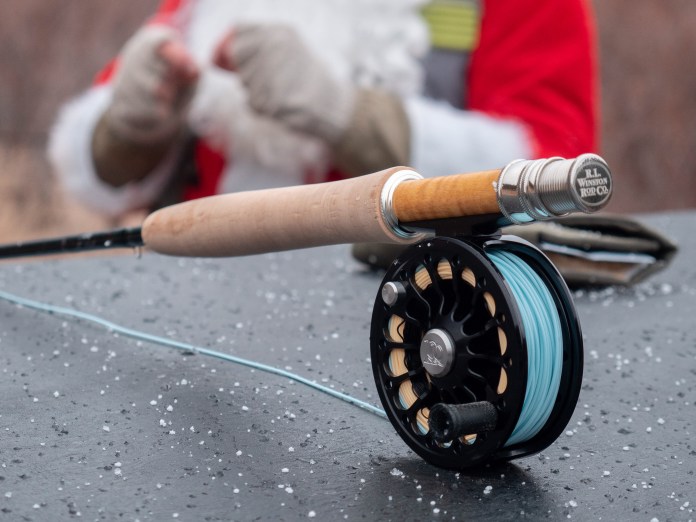
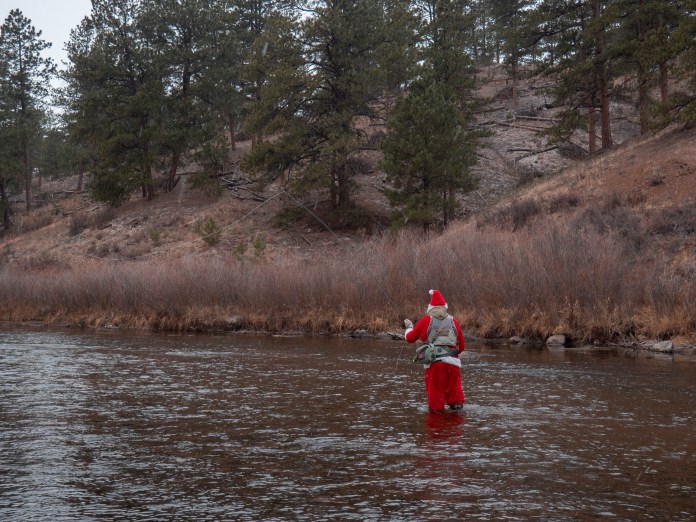
In this short film from the Angler All Fly Shop in Denver, Colorado, Santa Claus decides to pull a grinch move and steal the gifts from under the tree only to rig up the new gear and hit the water.
Santa has ran off with some gifts from under the tree and we’re not happy about it.Santa made a great reel choice with the new San Miguel from Ross ReelsHe couldn’t help himself and had to try out some fresh gear.We are not sure if Santa knows where the fish live.
Earlier in 2019, we wrote about Idaho closing their steelhead season in the Clearwater River Basin due to low broodstock return numbers. In order to meet the spawning needs for this season, Dworshak National Fish Hatchery needs a total of 1300 broodstock fish to return, and as of December 18, 2019, the hatchery has welcomed a total of 864 adult fish. Some Idaho Fish and Game managers are cautiously optimistic that the hatchery will reach its goal.
“We are just excited at this point we have the potential to provide some fishing opportunity for this run,†said Lance Hebdon, anadromous fish manager for the Idaho Department of Fish and Game at Boise, “I’m just a little unsteady about the conservation risk.â€
The state plans to allow anglers to keep one hatchery steelhead per day from the Snake River below Couse Creek, the Clearwater River, and its South and Middle forks. However, anglers will be required to release any steelhead longer than 28 inches, and the North Fork of the Clearwater would remain closed to fishing under the state’s proposed rules.
In this week’s Fly Fishing Destination Video of the Week, Trout Hunting NZ brings us to one of the most beautiful fishing destinations in the world, New Zealand. In this video, we follow three anglers as they boof the Tongariro river and pull out the trout of your dreams as if its nothing. Each angler takes their turn as they lob massive dry flies into the currents of this crystal clear river, quickly to be met by hungry rainbows. After you finish this video (part one of a two-part series), we have little doubt your next move will be to check flight info for a one way trip to New Zealand.
Tune in every Friday for a new installment of Fly Fishing Destination Videos and make sure to sign up for our newsletter below in order to keep up with new content published daily.
For the past several months now, East coast saltwater anglers have become accustomed to bad news regarding how the Federal government manages our favorite fish species. The inadequate management decisions surrounding striped bass have dominated most of the headlines for what seems like a year now. But during this same time, menhaden and bluefish were quietly developing problems of their own.
Menhaden are arguably the most important fish species in our oceans. This forage fish is consumed in mass by important recreational and commercial fish like striped bass, bluefish, and bluefin tuna, as well as sharks, whales, and sea birds. And bluefish, well they are one of the most fun fish in the Northeast: they’ll eat just about anything you throw at ’em and fight like hell–whats not to like? Well for one, most people claim they don’t make good table fare–I am not in this camp. However, despite being pegged as poor table fare, bluefish are overfished.
The Atlantic States Marine Fisheries Commission, last week, adopted new measures for recreational anglers to rebuild and conserve this awesome species. You see, for the past 20 years, each angler could legally keep 15 bluefish, and while many don’t keep 15, many do. And they had every right to, but today the species harvest levels had to be constrained. So, ASMFC adopted new regs for 2020: private recreational anglers can keep three bluefish and the for-hire fishermen can keep five. This is a step in the right direction, and how the fishery management process should look like!
What is going on with menhaden, you might ask. They are not overfished, nor experiencing overfishing. So, what’s all the fuss about? The state of Virginia–through Omega Protein a foreign company that is the only player in the menhaden reduction fishery–failed to implement ASMFC’s regulations for the Chesapeake Bay fishery and voluntarily exceeded their allowable catch limit. Consequently, ASMFC found Virginia out of compliance, which initiated a final decision by Secretary of Commerce Wilbur Ross. Thankfully, and dare I say surprisingly, the Secretary agreed with ASMFC, thus enacting the moratorium.
For more info on both of these decisions, be sure to read some of the background articles our friends at the American Saltwater Guides Association–put simply, they know their *$&#. This is a victory for fish conservation and recreational fishing on the east coast. The Secretary could have easily rejected the non compliance finding and sided with special interests, but the Federal Government listened to biologists and fishermen that voiced their concerns! Let’s hope the government continues this practice–our fisheries may depend on it.
The International Fly Fishing Film Festival features short and feature-length fly fishing films from around the globe highlighting the passion, lifestyle, and culture of fly fishing. Every year they feature some incredible films and we’re excited to share this year’s line up of films with you!
One Fish
“Trying to catch lightning and put it in a bottle,†the film takes an inside look at the fishery, guides, and the prized fish the permit in the small country of Belize. The film features Blue Horizon Belize guides including Lincoln Westly and Marlon Leslie. As well as the talented El Pescador Fishing Lodge guide Junior Acosta and the famous guides from Punta Gorda Scully Garbutt and Victor Jacobs. They share how important the fishery in Belize is to them and how we can protect the fishery for future generations by taking proactive steps to Ban Gill Nets in Belize.
Filmmaker: Damien Nurre and Joel RubyÂ
Particles & Droplets
“In a universe where two realms collide there is something beautiful and mysterious hidden to the untrained eye. We live in a world consisting of particles and solids, whereas they come from a world of droplets and flowing liquid. For us, there’s an adventure waiting each time out, but will we make the effort to enjoy what’s before us? Immerse yourself in this adventure only at IF4â„¢ in 2020!”
“The father-son relationship is a nuanced ecosystem in and of itself. But, life tends to get extra complicated when career and kin collide. In this heartfelt portrait, we look back with Ed and Rex Heiby as they rehash the destruction of their relationship, awkwardly grapple with reconciliation, and joyfully look forward to the passing of the torch. Only at IF4â„¢ in 2020!”
“Follow the boys from InTents Media as they again travel northward to the Northern land of giant brook trout (Salvelinus fontinalis). Watch as they traverse the green landscape while the northern lights (aurora borealis) drip colors into the sides of the beautiful fish. Enjoy the sight of rodent eating monster brook trout exploding on surface flies and follow along with many other exciting fish stories along the way! Only at IF4â„¢ in 2020!”
“Nine Foot Rod is the story of four fly-fishing guides who embark on a fly-fishing trip to Oman in search of large GTs and Indo-Pacific Permit. Running headfirst into a stigma that demonizes their destination, the crew face their fears with honesty and vulnerability; searching for a greater understanding of the region and its people. Raw and emotional, the film speaks of a larger experience, where trepidation and fear are transformed with insight and awareness. On their journey, the guides are reminded of the thread that binds humanity, regardless of race, religion, and class; and come home forever changed and imbued with a greater love of people. Only at IF4â„¢ in 2020!”
“The Bull Run follows Meredith McCord through the dense forests and fast-moving streams of the Rocky Mountains, north of the 49th Parallel, in pursuit of her first bull trout (Salvelinus Confluentus). The Bull Run captures the essence of the wilderness and the adventure of fly fishing at the base of the rugged Rocky Mountains. Only at IF4â„¢ in 2020!”
Filmmaker: Levent Kovacs
Poetry in Motion
“Poetry in Motion highlights the inspirational story of fly chasing guru Maxine McCormick. This story follows Maxine on her journey to becoming a world fly casting champion. Poetry in Motion stresses the importance of fly casting, becoming a better fly caster and how that relates to becoming a better angler. Only at IF4 in 2020!”
“For most anglers, a 30-inch trout is a fish of a lifetime. To catch one that is truly wild and native is even rarer still. However, every fall on the Naknek River in Bristol Bay Alaska, fish like this are caught virtually every day. AK30 explores the suspense, drama, and beauty of chasing these truly wild rainbow trout. Only at IF4 in 2020!”
Let’s just say that wintertime fly fishing is not for everyone, it takes a little more to get motived to go stand in a cold river in below-freezing temperatures. But for the anglers that do get after it here are a 5 Toasty Tips to Stay Warm this Winter on the Water.
Tip 1. Bring a hot coffee or tea in your favorite Yeti Rambler! If you’re adventurous pour some whiskey in there too!
We had the chance to talk with Gilbert Rowley about his epic award winning film, “The Midnight Mission” Check out the interview below, as well as the full film which was just released today!
FlyLords: What gave you the idea to create a film about getting Kohler back out on the water?
Gilbert: When you have a fishing buddy that’s been a part of your fishing adventures for years it’s hard to see them grow out of the sport due to the demands of life. I firmly believe that each of us needs a healthy hobby to keep us motivated in life to make solid decisions. Something to look forward to, something to talk to our buddies about, and something to dream about! For us, that’s been fly fishing for many years and it was time to get him back in the action. I guess what I’m saying is I missed my fishing buddy, and what better way to convince him to come fishing than to tell him we were going to make a night fishing video…. I might have left out the part that the story was going to be mainly about him 😉
FlyLords: Walk us through the difficulty of fishing at night.
Gilbert: Night fishing isn’t a numbers game, and mentally it can be really tough. It’s the middle of the night, there’s often not a lot of action, you’re exhausted mentally and physically, and you just don’t know if there are even fish around! No visual cues whatsoever to convince you whether or not you’re fishing in the right spot, and there are just a lot of unknowns. Because of the difficult nature of night fishing I almost always rely on the help of my great fishing friend Chris Cutler. He has a ton of experience with night fishing and has sharpened his senses to know what’s happening in the dark around water. This guy is a wizard at finding big fish especially at night! I feel fortunate to have him as a friend and the success of the film and our rescue mission is largely due to him.
FlyLords: Walk us through the difficulty of filming at night.
Gilbert: Hands down the hardest part is light and the lack there of. Light is what makes a good shot and when you have zero natural light available you have to get creative. We acquired all the specialized camera equipment necessary and some small lightweight cube lights called Litra Torches. These small portable lights made everything work. Also, by having three guys on each shoot one would run the camera, one would run the lights, and the other would handle the fish, or cast, or whatever it was we were filming at the time. Every shot required a high level of planning, and a lot of effort by the three of us. More creativity went into this shoot than any other I’ve ever been a part of, and it was a real team effort for sure!
FlyLords: What was the most memorable part of the trip?
Gilbert: We had many highlights on this project, some involved fish while others did not, but for me the most memorable part wasn’t so much a highlight but rather a nightmare. After fishing three nights in a row and almost not sleeping in between (hard to sleep in a car during the day) we were utterly exhausted with a long drive back to home ahead of us. We stopped filming early the third night, around midnight or 1 AM. Kohler and I hopped in my car and hit the road. About two hours into our drive I was so tired I couldn’t go any further. It was snowing outside and there were no lights of any kind around. I pulled off the road and decided to take a short nap before continuing. We were both instantly asleep on the side of the road, I behind the steering wheel and Kohler in the passenger seat. After only a few minutes of sleep I had the most terrifying nightmare that I had just ran us off the road and we were both going to die a terrible death! I immediately woke up to the pitch dark, reached out and grabbed the steering wheel while stomping the brake as hard as I could. All while screaming at the top of my lungs like a little child! Kohler!!! Kohler!!! We’re going to die! AHHHHHHH! Or something like that. Imagine how he must have felt being woken up like that! Needless to say that moment is unfortunately ingrained in my memory forever.
FlyLords: Has Kohler continued to get out on the water since the film has been released?
Gilbert: There’s no doubt he’s back in the game! For a while there he was calling me a couple times a week just to tell me how good the fishing was in his neck of the woods. Really made me jealous that I wasn’t getting out as much as him! And I’m also happy to report that just this week we put another day on the calendar to get back out before the end of the year. You know your buddy is back when he’s the one calling to make the fishing arrangements.
FlyLords: What’s next for Capture Adventure Media?
Gilbert: We have some amazing projects for this upcoming year, and for those not familiar with our work we have an adventure series called the Buffet Series on YouTube which we hope to continue next year. These are short fly fishing adventure films that capture the details of what we love most. This next month we will launch the second half of the Buffet Series on our YouTube channel which includes, tarpon and permit from Belize, BC bull trout, and some amazing trout fishing films. We are always on the lookout for fresh inspiring ideas to capture and share with others in the hope that it will help others get outside and enjoy this great world we’ve been given to enjoy!
This interview was conducted by FlyLords team member Conner Grimes (@doublehaulmedia).
One of the most vividly-decorated and least-encountered trout in the water is the tiger trout. As its scientific name, Salmo trutta × Salvelinus fontinalis suggests, the tiger trout is a sterile hybrid between the brook trout (Salvelinus fontinalis) and the brown trout (Salmo trutta). They’re known for having very distinct vermiculation, the same pattern that’s more subtly seen on the backs of brook trout.
Tiger trout are found across much of the country, as they are almost entirely a stocked fish. While they can occasionally occur naturally in areas with brook and brown trout, they aren’t nearly as easy to produce as other hybrids, like cutbows. Brook trout have two more pairs of chromosomes than brown trout, making it much harder for these two species to produce viable offspring in the wild.Â
However, using a method called heat shocking, scientists can quite easily create tiger trout for stocking. They’re stocked for a variety of reasons, from being a sport fishery to controlling other fish populations (tigers are both sterile and piscivorous, so they can control the populations of other species without becoming a problem themselves). They’re found in many of the same types of habitat as other species and are frequently accompanied by other trout species like brooks, browns, and rainbows.
Tiger trout are aggressive, and although they have similar diets to other trout species when they’re small, most switch to a diet of baitfish once they grow larger. Because of this, they can get fairly large. Tigers of two to five pounds are commonly caught, and the record is over 20 pounds.
So how do tiger trout stack up against their parent species, the brook and brown trout? In my opinion, they take more of their looks from brook trout but definitely have a personality closer to that of a brown.
The deep, vivid vermiculation across their sides and back is reminiscent of the brook trout’s patterns. They also sometimes have a duller version of the red belly and fins of a brookie. However, they’re easy to tell apart from a brook trout, as the red generally isn’t as vivid, and they lack the iconic blue halo spots.
The color scheme of tigers is similar to a brown in that they often have a tan background coloration, but their size, aggression, and diet are what really give away their relation to the brown trout.
Luckily for the tiger trout angler, the hardest part of catching tiger trout is actually finding them, since they mostly exist only where they’ve been stocked. Once you’re into them, though, getting them to take a fly isn’t any more complicated than fishing for any other species of trout, and many would argue that they’re easier to catch than other species due to their aggressive nature.
When tiger trout are small, their diet is similar to other trout species, and insects will be on the menu. Most standard nymphs or dry flies work great. Beadhead nymphs, generic dries, and any “match-the-hatch†flies are a go-to.Â
Once they start to put on some size, they can still be caught on typical dries and nymphs, but many start to target larger prey items like baitfish. At this point, it’s time to switch to streamers to match that change.Â
Once again, fishing streamers for tiger trout isn’t rocket science. Don’t fall into the trap of choosing flies that catch anglers instead of fish. Woolly buggers, sculpins, and other large, fishy flies with some action should be enough to trigger a tiger to feed.
Encountering a tiger trout by chance happens, but it’s rare. If your strategy for catching one is to just keep fishing where there are brooks and browns and hoping for the best, you’re fighting a losing battle.
Luckily, because they’re easy to create and stock, it’s often not hard to look to your state’s fish and game agency to find out where they live. And often, because they’re stocked in large batches, if you go to a place that has tiger trout, you’re likely to find many. Many lakes and ponds contain primarily tiger trout.
Tiger trout are a classic example of hybrid vigor or heterosis. In a nutshell, it means the tiger trout is more than the sum of its parts in terms of growth and aggression. If you want to catch large tigers, don’t treat them the same way you’d treat mellower species like the brook or rainbow. Use large, animated flies and give them something to chase!
Although tiger trout are aggressive feeders, this doesn’t change the fact that to catch big ones, you’ll need to be careful about how you approach. The same way you wouldn’t try to walk right up on a large brown trout, you need to be stealthy when targeting big tigers. This includes approaching quietly and from the correct side and casting discreetly and efficiently (especially on stillwater). If you’re fishing subsurface, it may also mean making leader changes, like switching to fluorocarbon.
Last week, Canadian Prime Minister Justin Trudeau released a mandate to his cabinet calling them to “Work with the province of British Columbia and Indigenous communities to create a responsible plan to transition from open net-pen salmon farming in coastal British Columbia waters by 2025 and begin work to introduce Canada’s first-ever Aquaculture Actâ€.
Canada is one of the planet’s only seafood producing nations without modern laws and regulations to govern a “responsible and sustainable aquaculture industryâ€. The country’s current aquaculture regulations come from a 150 year old “Fisheries Act” which doesn’t define aquaculture, or how to regulate it.
In his mandate, Trudeau called his government to: “Implement the recently modernized Fisheries Act, which restores lost protections, prioritizes rebuilding fish populations and incorporates modern safeguards so that fish and fish habitats are protected for future generations and Canada’s fisheries can continue to grow the economy and sustain coastal communities. The sustainability of our ocean resources remains paramount.”
Last Friday, Minister of Digital Government Joyce Murray shared a post on their social media about a meeting with the Pacific Salmon Foundation “moving forward to end open net pen aquaculture in Pacific coastal watersâ€.
The detriment of net-pen farmed salmon in British Columbian waters has been clearly shown in the last few years. Films like Artifishal showed the terrible impact these stationary farms have on wild salmon, and the abuse the farmed fish face during their short lives in captivity. In 2017, a net-pen farm collapsed in the Puget Sound, releasing thousands of sea lice-ridden, sick Atlantic Salmon into Pacific Waters.
This mandate is a positive move toward ending net-pen farming in Canada, and hopefully US regulators will take notice and take similar actions themselves to protect our precious wild Pacific fisheries!
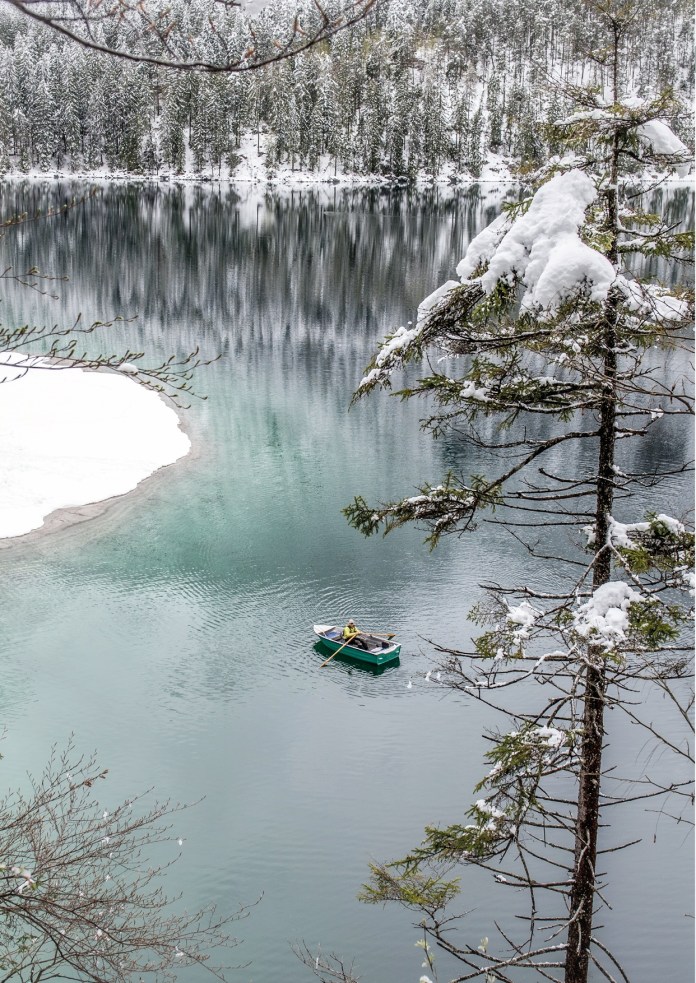
When the weather conditions seem to advise you to stay at home there is always something in my head that tells me to go fishing. Am I not the only one?
We were on the hunt for some alpine char. The fishing was slow but that didn’t stop the scenery from being beautiful. My wife and I love fly fishing, we live in the Dolomites Mountains in the Italian Alps. Come visit us sometime.
Article by Alberto Concini, a fishing guide in the Italian Alps. Photos from his wife @anyflm.
![Santa Claus Goes Fly Fishing [Short Video]](https://i0.wp.com/theflylords.com/wp-content/uploads/2019/12/maxresdefault-11.jpg?fit=696%2C392&ssl=1 "Santa Claus Goes Fly Fishing [Short Video]")



![What is a Tiger Trout? [And How to Fish for Them]](https://i0.wp.com/theflylords.com/wp-content/uploads/2019/11/IMG-0123.jpg?fit=696%2C464&ssl=1 "What is a Tiger Trout? [And How to Fish for Them]")