In this week’s Video of the Week, we catch up with Fred Campbell and the Hooke crew in their newest F4T feature film “Out There”. We’ve all been through quite a lot the last 2 years as a society, Out There speaks on these terms and also why fly fishing is so special. After quarantine Fred embarked on a passionate journey in pursuit of memories with friends across Canada. From Pike to Steelhead Fred follows his passion creating memories for himself and his close friends. Closing out the film Fred states it perfectly; “I know 2020 was a difficult year for everyone. Let’s hope we can all put that behind us. As funny as it is 2020 for me ended up being quite the year. You wanna know why? Because fly fishing is the best remedy Out There.”
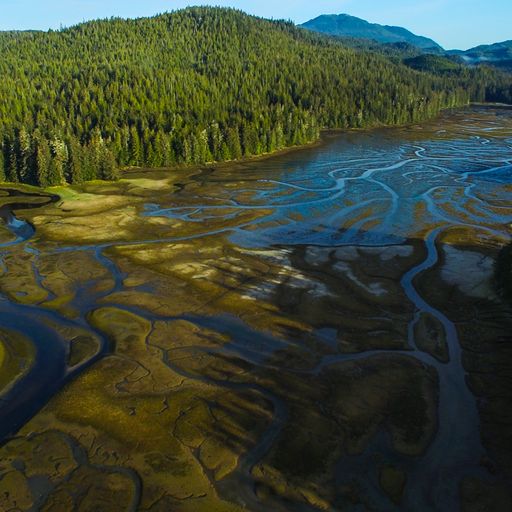
Yesterday, conservationists opposing a proposed mine in the “donut hole” region of the Upper Skagit Watershed announced a huge victory as “Imperial Metals will return to the province of B.C. all of its mining and related rights within a more than 14,000-acre area for a 24 million Canadian dollar ($19.1 million) buyout,” according to the Seattle Times.
The buyout was paid by a consortium of US and Canadian entities including funds from the Canadian Gov’t, various non-profits, and $4.5 million from Washington State Gov. Jay Inslee’s supplemental operating budget, although legislative approval is needed before those funds would be disbursed.
A number of stakeholders in the Skagit Watershed are pleased with the news and for good reason, the Skagit and other PNW systems fisheries have been under threat for quite some time and any progress in favor of preserving the river is a big victory.
“This is an extraordinary conservation success that will benefit current and future generations of Coast Salish People, and we express our gratitude to all our conservation partners who advocated with us to protect our salmon and ecosystem forever,†Swinomish tribal chairman Steve Edwards said in a statement.
“WE DID IT! 🙌 After three years of fighting to stop a pending permit by Imperial Metals Corporation to begin mining in our beloved #Skagit River’s headwaters in British Columbia, we just received word that a settlement to HALT MINING has been reached.
In 2019, Imperial Metals Corporation filed a permit to begin mining in the “donut hole” of the unprotected Canadian headwaters of the Skagit River. Today — after a nearly three-year decision process — the British Columbia government, Imperial Metals, and the Skagit Environmental Endowment Commission (SEEC) announced a signed Memorandum of Agreement (MOA) that stipulates the return of all mining and related rights in the Silver Daisy area of the Canadian Skagit Headwaters held by Imperial Metals back to the Province of British Columbia.
For the last three years, Washington Wid has led and coordinated an international coalition, which in recent months has grown to nearly 300 entities, including Tribes, First Nations, elected officials, local businesses, and conservation, recreation, and wildlife organizations.
Whether you took action through one of our grassroots alerts, made a donation to sustain this three-year initiative, signed onto a comment letter, or shared this issue via social media, we cannot thank you enough for helping #savetheskagit from a mining threat.
Washington Wild will now look to work with the coalition to ensure that the Skagit Headwaters donut hole is permanently protected as British Columbia park land.”
It’s not always roses and butterflies.…but isn’t this exactly what we’re looking for? The extraordinary. The tad bit out of the comfort zone? Isn’t that what makes us feel alive?
Photo: Anne Wangler
8 weeks of solo travel in Iceland. 8 weeks living in my van. Well, let´s say Iceland was an experience.
Photo: Anne Wangler
I’d be lying if I said that the trip was just “awesomeâ€. It wasn’t exactly like what you get to see on Instagram daily. No, travel is a constant up and down, especially when you travel alone. Rain was pounding sideways for weeks. Always being wet, always cold. The moisture in the van turning into ice at night.
Photo: Anne Wangler
But there´s also beauty in it. I like to call it “the beautiful struggleâ€. You learn, you grow every day with every challenge and when waking up to a beautiful sunrise in the middle of nowhere it all feels worth it. It all makes sense again.
Trips like the one to Iceland make you return to yourself, open your senses, help you focus and reassess.
Photo: Anne Wangler
Why Iceland? Well, I wanted to get to know the island since I´ve never been there AND I did want to catch a proper fish. The kind of fish Iceland is known and famous for.
Photo: Anne Wangler
I come from 4wt waters where we mostly catch 30cm browns and occasionally grayling. If you’re lucky and know the water well you might catch a 40-45cm fish but nowadays this is rare and very special. I fish 99% of the time with dry flies.
Photo: @jungleindatrout
The last two years I basically spent both summers fishing my homewaters in the Ore Mountains of Germany. I got injured while skiing and fishing was basically the only thing I could do without a whole lot of pain. So I picked up a rod and similar to everything I do, it’s all or nothing so I went all in and became a little bit of a nerd. I spent almost every day on the river and well…loved it!
Photo: Markus Brown/Osprey Europe
Fishing felt like this little getaway, a break from daily life. It helps me find the balance, it teaches me patience and I´ve found this great connection to nature that I find in skiing too but in a very different way. The two simply move at a different pace and so do I as well.
Photo: Anne Wangler
I felt I was ready and hungry for a new fishing experience. I had big expectations and zero plans. I hopped on the boat from Denmark to Iceland relaxed and knew that I’ll have the next 3 days on the ferry to make somewhat of a plan. Honestly speaking there hasn’t been a real plan at all because I didn’t need one, rather wanted to focus on the here and now and go with the flow, do whatever floats my boat.
Photo: Anne Wangler
The first couple of days were challenging. I found out how difficult and expensive it was to get permits. I then was told to try ring doorbells at the closest farm from the water I wanted to fish. I found it weird at first but this seems to be the way to do it.
Photo: Markus Brown/Osprey Europe
Shortly after arrival, I connected with Maros, (@jungleindatrout) who’s a guide in the Southern part of the island. Originally from Slovakia, he decided to move to Iceland chasing and catching big trout. That’s what he does. That’s what he’s really good at but hey, he’s a good human too. He helped me a lot, gave advice, and much-needed beta.
Photo: Anne Wangler
After it was super dry for weeks it started pouring right when I arrived. So we basically went from no water to a lot of colored water, not what we were hoping for.
Photo: Anne Wangler
I went to Southwest Iceland because I was lucky enough to connect with the local fishing club SFVR whose manager and guides were super helpful and happy to work together.
Photo: Anne Wangler
I got to fish some of their truly magical rivers and for sure some of the most beautiful waters that I’ve ever fished. Such as the river Leirvogsa with its 30km long winding bends, rapids, pools. This river is located just outside the capital Reykjavik. It’s small enough so you can read it but holds incredibly big fish.
Photo: Markus Brown/Osprey Europe
I went there the day before to scout and get to know the river a little. For some reason, I put so much pressure on myself to finally catch THAT fish so I barely could sleep. I woke up, being super nervous just like before a big comp.
“Calm tf down, Anne. It´s just fishing and it´s fun!†I packed up and went down to the pool I liked the most when I walked by it the day before.
Photo: Anne Wangler
I fished for approximately 30 minutes and already got the first strike on a simple black and silver Sunray Shadow and heck, what a strike it was!
After fighting it for about 5 minutes it jumped and showed its full size and beauty. Holy crap, this was the biggest fish that I had ever seen… and hooked. My heart started racing.
Since I was alone I knew that the only chance to land this monster was to make him tired but obviously still wanted to make sure to do it quickly so I could release him as fast as possible.
Photo: Anne Wangler
I fought him for about 20 min and when I thought he was finally tired enough, I reached for his tail. He quickly turned, released himself from the barbless hook, and managed to escape.
Wow. Soooo fricking close! I lost the fish of my life and oh well, it was quite emotional.
A 100cm male salmon, as my friend and guide Arni (@icelandic_troutbum would call it a “fricking crocodileâ€). I couldn’t help it and cried like a baby. I get it that most people won’t understand and that’s okay. But for me at this moment…well, it sucked.
Photo: Markus Brown/Osprey Europe
The last couple of days were been tough, physically as well as mentally. Crazy bad weather for two weeks straight, still I tried really hard, made 10000000 casts, and tried to catch THE fish. Nothing.
It felt like nothing was coming together and despite the shitty weather and conditions, I kept going. At some point, I felt that it was me. I’ve put quite some pressure on myself, and it just did not work out in my favor.
Photo: Markus Brown/Osprey Europe
After the huge one, I fought two more really good fish that morning. The 2nd one jumped and ran like crazy. Beauty of a fish, bright silver! My leader broke.
The 3rd one just took a lot of line and was raging upstream. Then swam into some rocks, my tippet got stuck and the fish broke off.
“Well,f*** that sh**!“
Photo: Anne Wangler
I was tired and sad. These fish were just too big to land by myself I thought.
The same day I finally managed to catch my first two salmon thanks to my friend Arni who joined at night and helped netting.
Photo: Anne Wangler
These two salmon were still babies and nothing compared to what I had experienced that morning but hey- it’s a salmon.
Photo: Anne Wangler
So yeah, bittersweet day…But…at least I must have done something right.
Photo: Anne Wangler
Apart from fishing, this is how I’d sum up the trip to Iceland. I met more sheep than people, got to see the most mind-blowing places, experienced winds so strong you couldn’t open the car door, visited a gazillion gorgeous waterfalls, hiked up to mountain tops that came with stunning views down to the deeply cut fjords.
Photo: Anne Wangler
I fished perfect waters, watched the Northern Lights sitting in a hot spring. I went up Fagradalsfjell, the active volcano, 5 times until I finally got to see the lava flowing. And damn, what a feeling that was! Like having a one on one with nature, feeling the forces, so rough, so pure, so fierce.
Photo: Markus Brown/Osprey Europe
I like giving myself the time and really diving in with what surrounds me. This is where photography comes in for me. It gives me that extra purpose, that reason to push a little harder, experience a little more.
Photo: Anne Wangler
I use fly fishing in a similar way too. Similar but different. It slows me down. It gives you this physical, tangible connection to the water, to nature, that’s unmatched by anything else.
Photo: Anne Wangler
I think by adding these extra pursuits to your exploration of the world, you create a far more compelling and fulfilling connection with the outdoors. It puts you in places you otherwise wouldn’t reach and grants perspectives that could simply slip you by.
Photo: Markus Brown/Osprey Europe
I experienced a place that´s still so wild and vast. The kind of place that makes you feel small and humbled. A place that doesn´t compare to anything that I had ever seen before…
Photo: Markus Brown/Osprey Europe
And the thing is, I more than experienced it, I felt it. The extraordinary and the butterflies, “The beautiful struggleâ€.
Do you fancy yourself a fly fishing writer, or have an essay or piece of writing you’ve been dreaming of having published? The American Museum of Fly Fishing (AMFF) has recently opened up submissions for their annual “Robert Traver Fly-Fishing Writing Award” aimed at recognizing “distinguished original stories or essays that embody the implicit love of fly fishing, respect for the sport, and the natural world in which it takes place.â€
Learn more about how to submit and submission requirements in the press release from AMFF below!
“The John D. Voelker Foundation and the American Museum of Fly Fishing (AMFF) are pleased to announce that submissions are now being accepted for the 2022 Robert Traver Fly-Fishing Writing Award (the Traver Award). The award is named after Robert Traver, pen name for the late John Voelker, author of Trout Madness, Trout Magic, Anatomy of a Fisherman, the 1958 bestseller Anatomy of a Murder, and the historical novel Laughing Whitefish.
The Traver Award, which includes a $2,500 prize, was created in 1994 to encourage and recognize “distinguished original stories or essays that embody the implicit love of fly fishing, respect for the sport, and the natural world in which it takes place.†The Traver stories and essays must demonstrate high literary values in one or more of these three categories:
The joy of fly fishing: personal and philosophic experience
Ecology: knowledge and protection of the natural world
Humor: piscatorial friendships and fun on the water
The 2022 Traver Award will be granted for the winning short work of fiction or nonfiction essay in the English language not previously published commercially in print or digital media. “Short work†means 3,000 words or less. An entry fee of $25 will offset the administrative costs of the award program. Previous Traver Award winners are not eligible.
The deadline for submissions is midnight on May 31, 2022. The submission form and additional instructions can be found on the Voelker Foundation website:Â voelkerfoundation.com.
The Traver Award winner will be notified in the fall of 2022. The winning entry will be published in the Winter or Spring 2023 edition of the American Fly Fisher, the journal of the American Museum of Fly Fishing.
The 2021 Robert Traver Fly-Fishing Writing Award was given to Dr. Joel “Jody†Martin for “Simon’s Daughter,â€Â which is available for reading on the AMFF website. It will also be published in the Spring 2022 edition of the American Fly Fisher.
The 2021 competition drew a field of 75 stories and essays. Entries were judged anonymously resulting in eight finalists. The Traver Award judges also bestowed Honorable Mention recognition on three finalists:
“Pretending to Listen†by Paige Wallace of Portland, Oregon
“Solitude†by Mike Chalmers of Lincoln University, Pennsylvania
“Lower Squall†by Paul Kennebeck of Denver, Colorado
These three stories are also available on AMFF’s website. The other four finalists were:
“Eider in the Silence†by Andrew Harris of Bozeman, Montana
“Fly Fishing with God†by Jody Martin of Thousand Oaks, California
“A Priest and a Promise†by Richard Landerman of Sandy, Utah
“Metamorphosis†by Jim Bale of Salt Lake City, Utah
Since 1994, twenty-two awards have been given. Two anthologies of the Traver Award winners and finalists have been published: In Hemingway’s Meadow (2009) and Love Story of the Trout (2010).
After the cancellation of all of the 2021 Fly Fishing Shows, we were eagerly awaiting this year’s run of shows, however, the first show in the series has been pushed back to April 22-24, 2022 in response to the spike in COVID infections in the country. The decision was made early last week, less than 2 weeks before the event was to take place.
“Fly fishing product manufacturers, exhibitors, small businesses, speakers, fly tiers, casting instructors, seminar leaders and other participants were nearly unanimous in the decision to move the Marlborough Fly Fishing Show dates from Jan. to April,†said Fly Fishing Showrunner Ben Furimsky.
However, the show will go on as the Fly Fishing Show team has confirmed that the January 28-30 show in Edison, NJ will go on as planned!
The Fly Fishing Show team also spoke about their COVID-19 protocols for upcoming shows, saying, “We will follow all national, state, and local health protocols related to COVID-19 at the time of the show. We recommend following all CDC guidelines in terms of mask-wearing and vaccination. We strongly encourage staff and attendees to stay home if they are sick or have any symptoms of COVID-19, and to get tested for COVID-19.”
You can read more about the show cancellation, here!
Check out this video from Bow River Troutfitters for some of the most important fly fishing tips for beginner anglers. Whether you’re a beginner or not, we could all use a reminder.
Don’t rig up your rod until you’ve approached the water.
Wearing waders doesn’t mean that you have to stand in the water. Fish the bank before getting anywhere near the water.
Learn to handle excess line properly.
Set your drag so that the line doesn’t create a “bird’s nest” when you’re pulling line off the reel.
Keep your hooks sharp.
Don’t false cast too much.
When making big casts, have excess line off the reel in order to shoot the line further with fewer false casts.
Much like Pebble Mine and the fight to protect Bristol Bay, the Tongass National Forest is a salmon powerhouse in need of permanent protections. Over the past several years, the Tongass National Forest became a semi-national news story. On October 29, 2020, the U.S. Department of Agriculture, which has jurisdiction over the U.S. Forest Service and National Forests, announced the removal of Roadless Rule protections for 9 million acres of Tongass National Forest. The repeal sparked controversy, as the Tongass is the world’s largest intact temperate rainforest, immense carbon sink, largest national Forest in the United States (17 million acres), and thriving ecosystem. Today, however, United States government is working to reinstate the Roadless Rule protections.
21 years ago, the U.S. Forest Service established the Roadless Rule, which would bar development and logging on nearly 60 million acres of inventoried public lands. Despite significant logging operations decades ago, the Tongass still supports an amazing natural ecosystem. 13 percent of all salmon harvested on the Pacific Rim originate from the Tongass’ 17,000 miles of rivers and streams. Additionally, the Tongass’ habitats support an incredibly diverse ecosystem of wild trout and steelhead, eagles, deer, bears and hundreds of other species.
“The Tongass is one of the last, best places for wild salmon left in North America and a globally significant resource for slowing the impacts of climate change,†said Chris Wood, President and CEO of Trout Unlimited. “Reinstating the roadless rule and prioritizing restoration is an investment in the forest’s most valuable and lasting resources.”
The push for reinstating Roadless Rule protections for the Tongass seeks to prevent old-growth logging operations and road construction from resuming, prioritizing the sustainable use of natural resources. While the Roadless Rule does provide narrow exceptions, the aversion to developing roads and infrastructure in the Tongass is well founded. Once the infrastructure is in place, removing it is nearly impossible and opens the door to further industrial development. The Tongass’ ecosystem, including one of the few remaining salmon and steelhead strongholds, is delicate and benefits more people and when it is protected.
A healthy Tongass fuels vibrant fishing and tourism economies, providing some 26 percent of the jobs in the region. Salmon and trout fishing contribute some $1 billion to the regional economy annually, and tourism to the region also generates more than $1 billion annually. Preserving the Tongass in its natural state, or as close to it, is a smart move economically, and was supported by “more than 95 percent of commenters” during the 2020 Roadless Rule withdrawal.
“The real value of the Tongass is in its abundant fish and wildlife, its cultural resources, and in its beautiful scenery and wild landscapes,†said Austin Williams, Trout Unlimited’s Alaska director of law and policy.
On the other hand, the Tongass’ Roadless Rule does have its share of opposition, including Alaska’s elected politicians. For example, on November 19, 2021, when the U.S. Department of of Agriculture announced it would restore Roadless Rule protections, Alaska Governor Mike Dunleavy criticized the decision. “With today’s news, the federal government in Washington made clear southeast Alaska is going back to the environmental policy of the 1990s,†said Governor Dunleavy. Alaska’s Congressional representatives “have consistently opposed restrictions on logging” in the Tongass, as well. The Tongass has been a controversial, political issue for decades.
So, back to today and the issue at hand–restoring Roadless Rule protections for Tongass National Forest. Back over the summer the Biden White House announced it would begin the process to reinstate Roadless Rule Protections for the Tongass. Several months later, on November 19, 2021, the U.S. Department of Agriculture announced a proposed rule to restore Roadless protections for the Tongass, opening a 60-day public comment period.
That public comment period will close on January 24, 2022 and will influence the final decision–or at least it’s supposed to. Trout Unlimited Alaska, through its American Salmon Forest initiative, is spearheading this effort for the fishing community. The group created a quick and easy portal to comment on the rule change and, hopefully, advocate for the restoration of Roadless Rule protections.
If this comment period is anything like the 2020 comment period for withdrawing Roadless Rule protections, the public will overwhelmingly support Roadless Rule protections for the Tongass. Further, commenters will include a wide range of Alaskan sport and commercial fishermen, native tribes, advocates of sustainable natural resource use, and concerned individuals throughout the country. All these individuals want to see Alaska’s Tongass National Forest and its wildlife and natural productivity preserved for decades to come.
We often get asked, “How do y’all run shuttles on the river?” Here at BlueLine, we get that it’s a source of river life strife. Do you drive 2 cars? That’s no fun. We’ve tried it all, hitchhiking, biking, jogging, etc. Until we came up with the only good option, the Power Wheels. Short of teleportation, it’s the easiest river shuttle out there. Battery-powered, fits in the bed of the truck, easy to drive, and not to mention you look good doing it. Next time you’re out give the BlueLine Power Wheels shuttle a shot and see how it works for you.
Thanks to the genius’ of the guys over at Blue Line Co. you no longer have to worry about your next shuttle. Be sure to follow along here: BlueLine Co. so you don’t miss any of the craziness in the future!
Also, check out these epic articles below, and don’t forget to buy your Fly Fishing Film Tour tickets here: flyfilmtour.com!
In this Video of the Week we catch up with Tanner Smith and Ivan Orsic of Trouts fly fishing on their latest rendition of Rocky Mountain Fall. Faced with a 60 degree clear fall day Tanner and the crew head out to a family friend’s property on the “West Slope” with a mission to target big browns and rainbows on streamers. In an effort to answer the age-old question of fishing streamers on a bluebird day Tanner and Ivan put on a show of epic scenery and even better fish. So grab a beverage, a chair, the vice, or all of those things and enjoy as the Trouts Fly Fishing crew puts on a streamer clinic in “less than ideal streamer weather”.
Trouts Fly Fishing is a premier fly shop based out of Denver and the second shop based in Frisco. From guided trips to instructional videos to repairs they’ve got you covered!
Make sure to check out these epic articles as well and don’t forget to get your tickets for this year’s Fly Fishing Film Tour!
Who says mountain whitefish are just a bycatch when you’re chasing trout in the West? Well Alex Dietz of Bend, OR proved that point when he reeled in this 5 POUND 12 OUNCE whitefish from the Deschutes River. Once he got the fish in, he and his fishing partner figured they might have a state record in their net, so they took the fish to a certified scale for confirmation. The pair of anglers pride themselves on typically being catch and release fishermen, but they made an exception for this particular specimen. Check out the full report of the catch in the Oregon Dept. of Fish and Wildlife post, below!
“NEW STATE, POSSIBLE WORLD RECORD MOUNTAIN WHITEFISH CAUGHT IN DESCHUTES RIVER
Avid Bend catch-and-release fly fisherman almost didn’t keep it
Alex Dietz of Bend was fly fishing with an egg pattern on the Deschutes River outside Warm Springs on Dec. 19, 2021 when he hooked a 5 pound 12 oz, 24-inch long mountain whitefish with a 14 inch girth.
“My fishing buddy Jason Schreiber saw that I had a big fish on and came over to check out what was going on,†Dietz explained. “We took pictures of it and kind of laughed about it for awhile.
I was getting ready to let the fish go when we realized this thing could be a state record.â€
Dietz is almost exclusively a catch and release angler—but he kept this fish, bringing it to Newport Avenue Market in Bend for an official weigh-in on an Oregon Dept of Agriculture scale as required under the record rules.
ODFW certified the fish as the new state record mountain whitefish on Jan. 7, 2022 (beating the previous record, a 4 lb 14 oz mountain whitefish caught at Crane Prairie Reservoir in 1994 by Roger A Massey).
The mountain whitefish might actually be a world record as the current record is a 5 lb 8 oz whitefish taken by Albert Woo in 1995 from Albert’s River near Calgary according to the International Game Fish Association. Dietz is submitting the information to the IFGA to be certified.
Dietz grew up in Bend and has been fishing since he was in high school. He usually targets trout and steelhead and again, releases just about everything he catches. This record fish is being taxidermized for display at his home.
Beating the record is extra special because Dec. 19 was the first time he’d been fishing since he and his wife Andrea welcomed their first child, a baby girl, on Nov. 15, 2021.
“December 19 was the first time I got the green light from my wife to go fishing, so big thanks to her too,†Dietz said.