Bushkill Creek in Tatamy Pennsylvania is facing the effects of inexcusable treatment by Buzzi Unicem, an Italian cement manufacturer. On Friday, June 5, 2020, it was reported that Bushkill Creek in Tatamy Pennsylvania was de-watered again killing thousands of class A wild brown trout. According to Monocacy Trout Unlimited, “this has happened numerous times over the past few years.” A call to action has been initiated in an effort to stop this from ever happening again. The Forks of the Delaware Chapter #482 Trout Unlimited leading the charge to bring this issue to light.
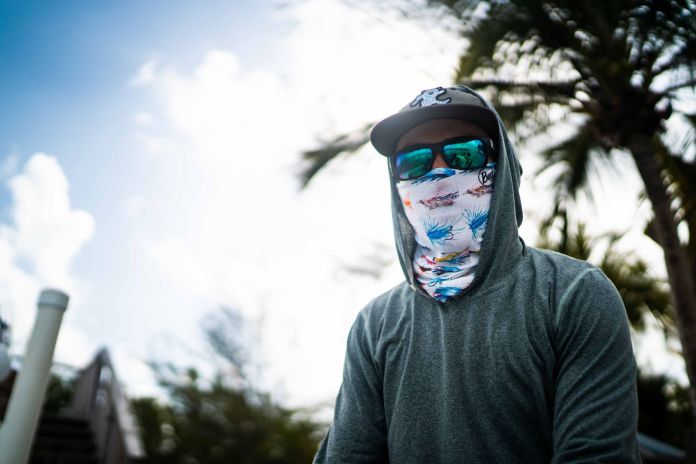
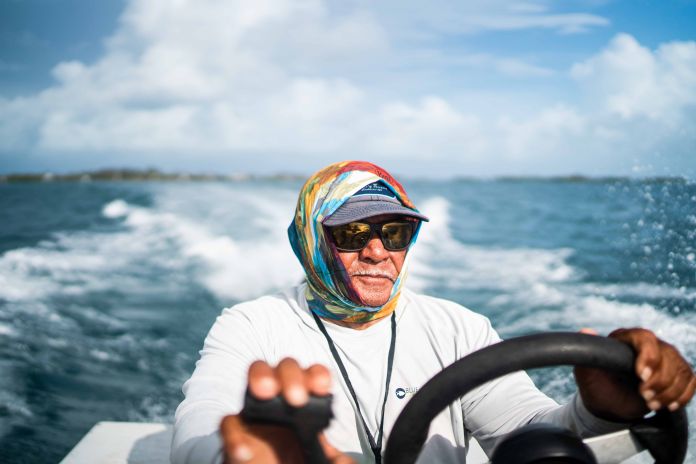
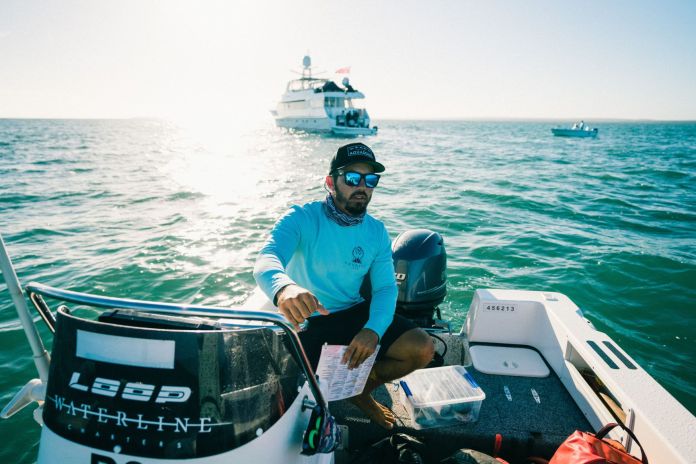
In this installment of Behind the Brand, we had the chance to sit down with the folks at BUFF to discuss the behind the scenes of the number one face/ skin shield company in the USA.
Flylords: Who is BUFF?
BUFF: BUFF® is the originator of the ‘multifunctional headwear’ category, founded in 1991 by Joan Rojas, a Spanish motorcyclist. Charged with a passion for riding in all conditions – dust, wind, cold nor sun could stop him, but he sought to find a better solution to keep his neck and head protected on those cross-country rides. Plucking knowledge of tubular knitting from the family business he created the first BUFF® headwear product. “BUFFâ€, short for bufanda, means scarf in Spanish and this is how the BUFF® the brand came to be. Today, nearly 30 years later BUFF® products are sold in more than 70 countries across the globe with 1,200+ US retailers.
Flylords: What was the inspiration behind the BUFF® brand?
BUFF: Our multifunctional headwear goes by many names we hear today – Neck gaiter, neck scarf, face mask, the list goes on. However, what made the core product of the brand so revolutionary nearly 30 years ago was the seamless, tubular constructions which allowed the product to be worn more than 12 different ways with chafe-free comfort due to lack of seams and pressure points.
Flylords: What do you think sets the BUFF® brand apart from other outdoor UV/ temperature protection brands?
BUFF: BUFF® has one singular focus when it comes to sun protection. To be the best, and to be recommended by leading organizations in dermatology and skin health such as The Skin Cancer Foundation. Partnering with superior manufactures of raw materials such as REPREVE®, Polygiene® and HEIQ combine to make a product category that is hard to compete with. There’s a lot of technology packed into a seemingly basic product. One that stands out is our partnership with REPREVE for our yarn. Each BUFF® Multifunctional Headwear product is made from 2 recycled plastic water bottles! Since 2018 BUFF® has diverted 8 million plastic water bottles from oceans and landfills globally.
Flylords: Are there any charities / non-profit organizations BUFF® is involved in?
BUFF: In the United States, we’re a proud member of the Conservation Alliance, a national sponsor of Casting for Recovery, a business member of Trout Unlimited, and Captains for Clean Water to name a few.
Flylords: What has been one of the greatest successes that has come out of this brand?
BUFF: Clearly the invention of an entirely new category of clothing accessories. Before BUFF® multifunctional headwear people wore traditional scarves or bulky sewn neck gaiters.
Flylords: BUFF has hundreds of unique designs and artist collaborations within the art of the product to choose from, do you have a personal favorite?Â
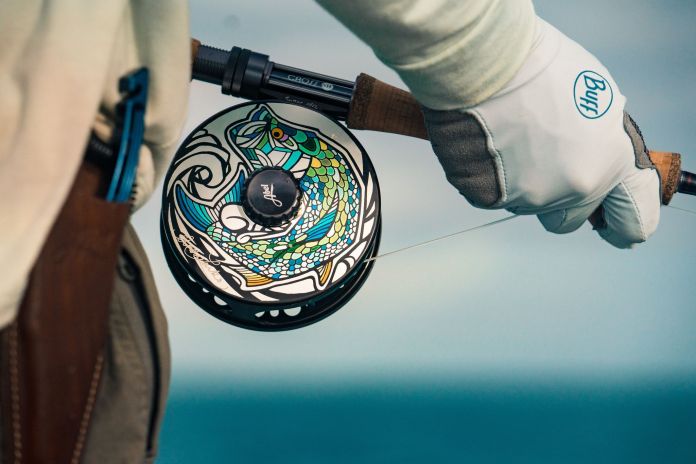
BUFF: It’s hard not to think of BUFF® products as a fly angler and not think of the timeless designs from artist Derek DeYoung. Rainbow Royal and Tarpon Flank come to mind as favorites. We also work with other fishing artists such as Alexandra Nicole, AD Maddox, and Rob McAbee of Bugslinger.
Flylords: What is the greatest attribute a BUFF® brand product contributes to the fishing industry?
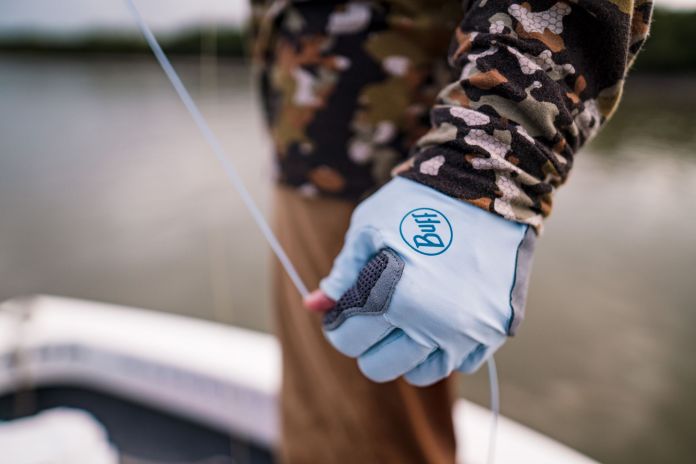
BUFF: BUFF® multifunctional headwear and accessories provide one-time application sun protection for long days on the water. Their lightweight comfort allows anglers to focus on the fishing, not the sunscreen in prone areas of the neck, face, ears, and hands with their gloves.
Flylords:What was one of the biggest challenges BUFF® faced in incorporating itself into the fly-fishing space?
BUFF: We’re a global brand with products ranging from multifunctional headwear, headbands, caps, and hats. However, what made the US market unique to the rest of the globe was the early adoption of anglers in American in the late 90’s and early 2000’s. Anglers such as Tom Rowland and Conway Bowman to name a few were some of the early adopters.
Flylords also had the chance to sit down with legendary guide, podcaster, and head of Saltwater Experience, Tom Rowland who was one of the first fly-fishing adopters of the BUFF brand.
Flylords: Tom, you were one of the first professional fishing guides to ever embrace the BUFF brand, what drew you to them in the first place?
Tom: Well, being a guide in the keys, your main concern is sun protection. At first, I wasn’t too wise. I just wore a shirt and shorts and a baseball cap. Even with sunscreen you’re just getting fried out there, especially when going out 6-7 days in a row. So there was a need for sun protection. There were some guys who just wore bandanas, but that was not only impractical but uncomfortable. I remember at the time Richard Stanczyk was known for just slathering thick zinc oxide on his face, but I was looking to find something different.
Then, one day a client came on the boat with a BUFF. I didn’t know what it was, but I immediately realized that this was the answer. I wore it the whole day and realized that I needed to hang on to it. Luckily, he brought it with the packaging which had a phone number. I called that number and got ahold of Shirley Brunetti (VP and GM at BUFF). I asked her what the product was and their plan for it. She told me it was mainly for cyclist and motor-cycle riders… I asked if she had even thought to sell it to anglers. She didnt really know what a fisherman would want with a product like that. I explained to her the harsh conditions that we as guides in the keys faced every day out in the hot sun. I told her I believed one day, every guide in the keys would be wearing one.
It was slow to take off. Many guides didn’t even care to try it. However, once they did they completely understood. Guides were coming home less sunburned. They could work more days in a row and eventually, due to their improved health, more years in a row.Â
So as more guides started wearing it, clients eventually adjusted. If you’re someone who spends a long amount of time in the sun, you get it. Once we introduced buff to some distribution channels, buff became commonplace amongst the Florida angler community. Anyone that is outside working in Florida has adopted it as an acceptable method of taking care of yourself.
Tom: It’s one of the few things that I would turn the boat around if I forgot it. Anyone that is outside working in Florida has adopted it as an acceptable method of taking care of yourself. Not to mention, getting rid of sunscreen was great. I hated using it. It stings your eyes and gets in your mouth. Plus, there’s no way wearing it every day for years is safe. I was actually curious enough to take my buff to my dermatologist and he told me that it was a more than a safe alternative to sunscreen. It’s a simple product that fills a real need.
Flylords: What were people’s reactions when you first started wearing BUFF® products during your day-to-day excursions? Any funny stories to share?
Tom: I remember people would ask me if I was robbing a bank. I’d often hear remarks like, “There goes Jesse Jamesâ€. Not to mention, getting pulled over by the FWC wasn’t uncommon. You’re out there and your face is covered. They’d ask you what the heck you were doing out there looking so suspicious. However, soon enough, I was handing them out to FWC and saw them wearing them.Â
The funniest thing I can remember was that at one point I had a client with incredibly sensitive skin. He was a real fare skinned guy. This guy would at some point show up in the dark with this thing on his face. I mean he really depended on it. So much so that he cut a hole where his mouth was so that he could eat and drink through it. It was pretty gross, but always gave me a chuckle.Â
Flylords: What would you say is the most important feature BUFF® products provide to anglers and guides?
Tom:First of all, it does what it’s intended to do and provides sun protection. But, the best thing about it is simplicity. Other companies have tried to complicate it and make all these extra features and they’ve ruined it. BUFF has done an amazing job in understanding less is more and kept their design as simple as it can possibly be. They’ve also made strides in improving the functionality of their fabric and its ability to block the sun as well.
Flylords: How have you seen the company grow and evolve as a product category leader?
Tom:As I said, it went from something that wasn’t even a product category to being a household name. Its become a staple for anyone who wants to do this for a while.
Flylords: What are you most proud of as an ambassador of the BUFF® brand?
Tom: Definitely just being able to show this product to the world. It’s always nice to have a good relationship with your sponsors and have an investment, but this product takes care of people. It really helps people maintain themselves in the industry.
Thank you so much to the BUFF team, as well as Captain Tom Rolandfor their time and commitment to the Fly-Fishing industry. If you’re looking to get your hands on any of the many products BUFF offers, click here to browse!
Also, Flylords recently partnered with BUFF to produce their Summer 2020 promo. Check it out!
The Great American Outdoors Act contains important provisions that would permanently fund the Land and Water Conservation Fund and address a debilitating maintenance backlog at public lands. The Senate bill, S. 3422, was introduced by Senator Cory Gardner (R-CO) and now has 58 cosponsors; this bill is expected to be voted on this week. On the other side of Capitol Hill, Congressmen Joe Cunningham (D-SC) and Mike Simpson (R-ID) introduced a companion bill, H.R. 7092, last week. The text for the House bill has not been released at this time. However, Rep. Cunningham’s bill is expected to address the same subjects as the Senate’s Great American Outdoors Act.
Senator Gardner’s bill would establish the “National Parks and Public Land Legacy Restoration Fund,” setting an annual maximum deposit amount of $1.9 billion to restore Federal public lands. The Natural Resources Management Act was signed into law February 2019 and permanently reauthorized LWCF. This bill would build upon that by permanently and fully funding ($900 million annually) of LWCF the law.
With 2020 being an election year, both the House and Senate bills will provide their Sponsor’s with a win for their constituents back home. Both Gardner and Cunningham are particularly vulnerable, and these bills could help them in November.
In any event, however, the successful passage of these bills would be a monumental win for conservation efforts in the United States. Whit Fosburgh, president and CEO of the Theodore Roosevelt Conservation Partnership, said, “This bipartisan bill will improve our trails and recreation sites making it easier for hunters and anglers to access natural resources. It also makes lasting investments in our outdoor recreation economy at a time when we need to get Americans back to work.â€
To let your Congressmen know you support this important legislation, fill out this easy-to-use form provided by TRCP.
While tying flies can be tricky, saltwater flies are a great place to start due to how easy they are to tie. The skills learned from tying saltwater flies transfer over to all types of flies which makes them a great launching point for any angler wishing to get into fly tying. This article will provide you with some versatile, easy to tie flies that every angler should know how to tie. If you are in need of materials, see here!
The Clouser, an easy to tie fly, was developed by innovative fly tier and smallmouth bass guide, Bob Clouser. This fly was originally tied to be a smallmouth bass fly but quickly gained popularity across many different fisheries due to its versatility. Depending on how the Clouser is tied, it can replicate many different baitfish species making it a very productive baitfish imitation. This fly can be used to catch anything from trout to bass and many kinds of saltwater species as well. When fishing for striped bass, this fly is always a great starting point. If I don’t know what fly to choose, I almost always tie on a Clouser. When tied sparsely, this fly can even be a great flats fly.
The Deceiver was created by fly fishing legend Lefty Kreh and was originally meant to be a smelt imitation used for striped bass. Now, the deceiver is tied in many different sizes and colors which has lent to its versatility as a baitfish pattern and made it one the most popular saltwater flies around the world. The saddle hackle used in this fly makes it look and swim in a very realistic way. When tied in bright colors such as chartreuse, this fly can also be used as an attractor pattern.
The Gurgler was originally tied by Jack Gartside which is how it became known as the Gartside Gurgler. This easy to tie topwater fly is a lot of fun to fish due to the vicious takes it evokes. Depending on how it’s stripped, it will behave differently allowing it to be used as both a popper and a slider. This fun topwater pattern is productive in many types of water. Typically shallow water or near banks are great water to try this fly on. Another added advantage of this fly is it can be used across many species such as striped bass, trout, and both small and largemouth bass. A good time to try this fly is when there is low light or cloud coverage.
The seaducer, originally a snook fly tied by Homer Rhodes in the 1940s, is another very popular saltwater fly used everywhere. The seaducer can be tied in various colors, sizes, and shapes to imitate a wide range of baitfish, ocean crustaceans, and even frogs. What makes this fly so different from others on this list is its ability to be fished in very shallow water due to its neutral buoyancy. This means that anglers can make very delicate presentations to spooky fish in very shallow water. Another key attribute of this fly is the way the large pushes water, making its presence known. While this fly can be used on many saltwater species, it is most commonly used for warmer saltwater fish such as tarpon or snook. This fly isn’t particularly hard to tie but it is a good step up from the flies previously mentioned and will help to further your tying skills.
The glass minnow is the simplest, yet one of the most effective flies on the list. This sparsely tied fly is intended to mimic transparent baitfish such as a minnow. Since the glass minnow is a minnow imitation, it proves very effective in areas such as South Florida where there is an abundance of small prey for big fish. Another added benefit of the glass minnow is its ability to imitate juvenile baitfish, making it a useful fly to always have in your box. This fly is extremely versatile, as it can be fished in both shallow and deep water depending on where your school of baitfish or minnows are.
Hugo Harlin is a Swedish fly tyer who has exploded in the fly tying Instagram scene. His creations (as you will see) are as intricate as they are creative. Some tied for fishing and others simply for display, we wanted to hear a little bit more about Hugo’s ties.
Flylords: What was the first fly you tied?
Hugo:The first fly I ever tied was probably a wooly bugger. I remember a tying session with my dad as a 10 or 11-year-old, tying black buggers at first then it quickly derailed with pink tails and yellow chenille bodies. I started tying seriously in early 2015 when I read an article about marabou streamers in a Swedish magazine.
Flylords: What is your favorite pattern to tie?
Hugo:That is a tough question. I’ve really enjoyed tying parachute mayflies in the past, but if I had to give an answer it’s probably my own parachute caddis variant. It’s tied on a curved hook with a biot/pheasant/stripped quill body, a wing of CDC under deer hair and a parachute hackle with a CDC post. I like to tie in pheasant antennae for some extra realism.
Flylords: What is your favorite vise to tie on?
Hugo:I haven’t tried a lot of different vises but my current vice, a Stonfo Transformer, is really solid and pleasant to work with.
Flylords: What is your favorite species of fish to catch on a fly rod?
Hugo:Â Brown trout hands down, there is something special about a landing a spotted slab of gold. A big kyped male with turquoise gill plates is the dream fish for me.
Flylords: Do you have a different process for tying display flies versus flies to be fished?
Hugo:Â Since display flies are just that, creations for display only, I have free reign to put all emphasis on aesthetics and forego durability and function. I think of it as relaxing some of the constraints of traditional fly tying, and exploring where that leads me.
When tying fishing flies I have to balance aesthetics, practical performance, and time required to tie the pattern. This puts a limit on the amount of detail I can pour into a fly, and if tying a dry fly I have to make sure that it actually floats. I also try to add as much durability as I can without compromising the finish, by using superglue under biots and pheasant bodies for example.
Flylords: How do you find inspiration to create these works of art?
Hugo: The fly tying community on Instagram has been instrumental for my development as a fly tyer, there are lots of really talented people out there. Robert Strahl from New Zealand has been the biggest influencer on my style, his use of natural materials and his extremely crisp finish is second to none.
Flylords: Your Origami wings are insane, what was your inspiration to create them?
Hugo: There is a Swedish fly tyer named Peder Wigdell that ties some really nice realistic mayflies. He posted an image of an articulated spent spinner with origami wings a couple of years back, and it piqued my interest since I hadn’t seen that wing style before. I started experimenting and developed my own way of making them.
Flylords: Do you have any other special techniques you use?
Hugo: Other than origami wings, I have developed to my knowledge a new technique that allows me to seamlessly overlap biots to create a body of arbitrary length, I call it “biot stackingâ€. I use it mostly for display flies but it’s applicable on regular flies where a longer biot body is desired, such as on large stimulators.
Flylords: What set up do you use to photograph your flies?
Hugo:Â I use a clip-on macro lens and my phone. For lighting, I use desk lamps with paper towels taped over them to diffuse the light.
Flylords: Do you have any advice for other creative fly tyers?
Hugo: Use thin GSP thread. It allows one to achieve a finish and use techniques that are exceedingly difficult or impossible with regular nylon thread. The thinner the better, I use 30 Denier (18/0) for everything except large streamers and deer hair work. Don’t be afraid to back up and redo a part of a fly, sometimes I spend upwards of an hour on a single origami wing before I achieve a finish I’m happy with.
When it comes to being creative, there is lots of inspiration on Instagram. Save posts that are interesting and keep a list of new ideas and variants of patterns.
Be sure to follow along with Hugo on Instagram at @hugo.harlin.
Adding technology to fishing has long been a topic of contention among anglers, regardless of fly or conventional preference. To many, this sport is analog, a chance to escape the digital and virtual trappings of modern life, and breath in nature like the transcendentalists of yonder year. But, innovation waits for no man, and the inventive team in Orvis’ product development department has laid claim to a patent on a “smart rod” containing sensors that provide casting feedback and recording fishing activity.
Finally, a rod that can tell me exactly how bad my casting is and exactly how many takes I missed while I’m not paying enough attention to my fly on the water.
According to the smart rod’s patent application, what Orvis has in mind is, “A fly rod including sensors and methods of using the same are provided, particularly where the sensors assist the user in casting or in logging data associated with fishing activities.”
As with most patents, the paperwork doesn’t delve into exactly what the sensors will do. But, if we were to wildly speculate, we think it will probably help you improve your cast by tracking motion, track when and where you fish via GPS (like a smart-watch), and perhaps even detect strikes. What isn’t clear is whether this info will be immediately shown to the angler, or will be displayed on your phone after your fishing adventures.
Check out Orvis’ patent, here, and let us know what you think the smart-rod will be capable of in the comments!
Have you ever run into an instance where your normal fly casts just weren’t reaching the areas you were targeting? Or have there been instances where you feel like the more fly line you are casting the harder it is to control? The double haul cast is an effective practice in which all anglers should learn and utilize. When performed correctly, you’ll notice less strain on your casting arm and increased ability to shoot your line to further distances. In this tutorial, Peter Kutzer of Orvis demonstrates a step-by-step breakdown of the famous double haul cast.
Step by Step Breakdown:
Start by performing your routine fly cast flicking your wrist back and forth.
When flicking your wrist back into your back cast, simply tug downward on your slack line. This will tighten your line and give your rod more bend.
Perform the same motion throughout your forward cast. Flick your wrist forward and simultaneously tug downward on your slack fly line to tighten you line and leader.
Repeat this process until your cast is at the desired distance.
With more free time than usual this time of year due to the “Rona Waiting,” I was ready to get out and do some spring fishing on my favorite Montana river. After tying up a few dozen flies I wrangled up a couple of fishing partners that are also in the flyfishing industry, knowing they have been keeping themselves away from the riffraff and not out mingling too much with the townsfolk we set out in separate vehicles to go and spend some time on one of Montana’s Freestone rivers.
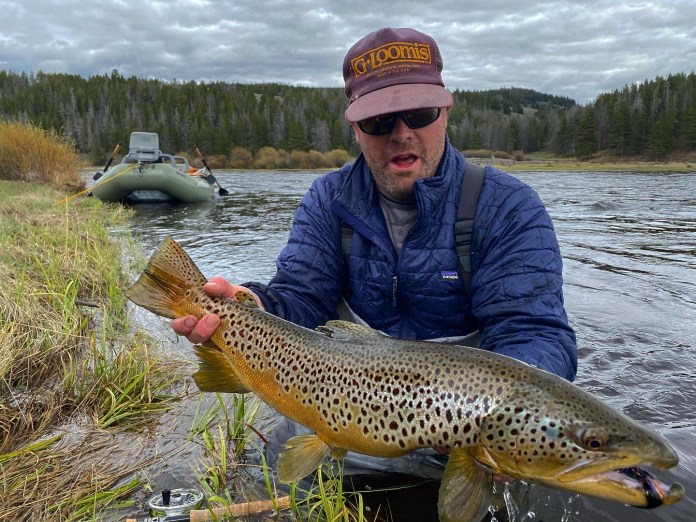
In the last few years, I’ve been so busy guiding on the river I haven’t had much time to fish it myself. Conditions looked good so I knew we had a chance at a Hoagie. Shortly thereafter I finished up the first session of rowing and my good friend Starr (a full-time fishing guide at Kelly Gallops Slide Inn) took over the oars and put me in the box.
I had just tied on a fresh off the vice mini black dragon, which is one of my signature patterns that Umpqua is producing new this year for 2020 and available at your local shops. Using a G. Loomis 7wt Asquith I hit the spots precisely all day without fatigue. The true winner of my setup is the Scientific Anglers Sonar Sinking Line. It isn’t too aggressive and gives the ability for the fly to hover when need be.
Coming into a perfect run with a deep bucket below I made a cast tight to the bank and pulled the string and was instantly locked into the one. Everyone in the boat put forth top-notch effort and assistance and I could’ve asked for a better team to settle this up. My man William Joseph grabbed the net and took care of the business, that’s when I got the shakes and said I’m gonna throw up. Starr pulled us to the bank as I relayed worries of heart attacks and throw-ups, we got out and treated the fish well.
Everyone wants to be the one who lands the beast but there was no negativity and just love from my boys who were with me knowing it was all teamwork. All of us so happy to see a real one.
Article by John Bond (@john__bond), a veteran fly fishing guide based in Montana.
In this week’s Fly Fishing Destination Video, Trippin on Trout takes us back to the meandering rivers of New Zealand’s abundant wilderness in search of monstrous trout and the adventure of a lifetime (part 2).
In this adventure, we get to travel along a guided trip to see the South Island and do a multi-day trip, way out into the wilderness. A four-day mission, that involved helicopters, kayaks, lots and lots of walking, climbing, scrambling, and fishing some of the most spectacular trout water New Zealand has to offer! If you like hard takes, huge brown trout, and a healthy fill of little flightless birds, check out the first part of Trout Hunting in the Wilderness.
Tune in every Saturday for a new installment of Fly Fishing Destination Videos and make sure to sign up for our newsletter below in order to keep up with new content published daily.
Welcome to the Staying Afloat Series, where we take an inside look into the lives of many different fly fishing guides, shops, brands, and lodges across the world in hopes of finding out how the COVID is affecting them, what they are doing to help, and how we can do our part to help them.
Tune into our Instagramtomorrow (6/7/20) at 8:00pm EST for a live takeover and performance from Chuck Ragan!
This week we had the chance to sit down with, fly-fishing guide, musician, and dad; Chuck Ragan to discuss how COVID-19 changed his business and career, and what he did to Stay Afloat.
Flylords: Who is Chuck Ragan?Â
Chuck: Still figuring that out on a day to day basis. What I do know is what I love. I love my family, I love the water and being in boats. Cooking Cajun food, making and smoking meat, tying streamers, I love digging in the dirt, the smell of earth, and eating homegrown food in the yard when we make the time for it. I love the hunt and pursuit of species with fins, feathers, and fur. I work most likely too much but I’m fulfilled by it. I enjoy the hell out of it and know and respect the fact that aside from financial necessity, of course, I need to continue working hard and keeping up momentum for the mind and body otherwise I will certainly start to rust. Work and keeping ultra-busy is also my coping mechanism when things go haywire and out of my control. I write and play music under my own name as well as in a band called Hot Water Music and made a career in the music and touring industry for 25+ yrs. At the end of the day, time with my wife and son is what I live for, and making great memories with people on the water is what I work towards.
Flylords: What got you into the sport of fly-fishing?
Chuck: My brother Paul sent me a shoebox of fur and feathers along with a vise, fly rod and reel back in my mid 20’s I reckon. He and I have always chased fish or hunted for as long as we can remember and have always enjoyed figuring out different ways to pursue species or learning from others but we were never really exposed to fly fishing until 20 or so years ago. When that shoebox showed up, my brother raved about how special it had been catching fish on flies he tied himself. I’ve always admired my brother’s fire for life and the hunt and his passion for fly fishing was infectious but it wasn’t until I had moved to Northern California that I really started appreciating strip setting on fish and feeling line being ripped out of my hand opposed to off a reel.
Flylords: When did you decide you wanted to be a guide?
Chuck: It seems to me it was quite a long time ago and if I really look back it was years ago going on trips or excursions with my family. I’ve always enjoyed taking friends out since I was young. Sometimes I’d be learning from them and sometimes they’d be learning from me. More often than not I believe I’d be taking a friend that either hadn’t ever fished much or wasn’t able to often so I’d end up showing them the ropes. As far as guiding as an actual business and what it has become in my personal and public life now, it was a thought in the back of my head for well over a decade but I wasn’t aware on how to even begin and wasn’t really encouraged to make it happen until about 7yrs ago. Even then it has been a constant build of honing what I do, when, and where I do it. Had the boats, had the gear, was confident in my fisheries just wasn’t sure how the business side of it would all work. When I finally got some encouragement or other guide friends telling me that I wasn’t insane, I hit the ground running with it. Hogan Brown and Cast Hope was a huge part of that as to getting me tuned up to get the right credentials and start putting together my programs.
Flylords: What’s your favorite area to guide in?
Chuck: Most likely our valley rivers. They are just so incredibly unique in the sense that we could be swinging for trout and steelhead in runs and riffles as well as sight fishing flats for giant Striper, carp, or river bass. That or poling around swampy sloughs all in the same body of water.
Flylords: When did you start playing guitar?
Chuck: Had guitars at a super young age but it stayed a toy until I found skateboarding. With skateboarding came punk rock, metal, and other alternative music which was a far stretch from the Cajun, bluegrass, and gospel music I grew up with. It must have been 32 or so years ago that I started playing with the intent to play for the rest of my life.
Flylords: What’s it like to be a full tie musician and guide?
Chuck: It’s busy! Constant planning scheduling and figuring out the plans. Since shows have to be scheduled far in advance and since I already know when and where I need to be guiding, my year gets laid out, planned, and sometimes booked in the year prior. It’s a bit of a pain to be planning over a year in advance but for an independent contractor like myself, it’s about the only job security I get. I begin usually in June/July by laying out all the family days and holiday time we need, to be followed by the moon phases and seasons I need/want to be guiding, and finally look at windows that make sense to either record music, write or play shows.
Flylords: Does fishing ever make its way into your music?
Chuck: Absolutely. Either into the songs themselves or I’ll fish on the road whenever or wherever I tour. Some tours or even destinations are planning with fishing in mind as well. As a guide, it’s my responsibility to know my species well and I take it seriously enough to always try to target the same species I have here in different areas of the country. Book and learn from other Captains and Guides to pick up bits and methods to apply here at home in my own fisheries.
Flylords: How did the COVID situation affect your guiding and music?
Chuck: I get a lot of out of state clients and COVID shut all that down with travel. The bulk of the clients come from the Bay Area or the Valley and many of them are quite older and we’re taking extra precautions so lost some there as well. Some dates rebooked or pushed but so far it seems I lost around 35 dates.
In terms of my musical career, With the travel shut down and especially no large group functions we’ve had around 70 shows cancel or postpone into 2021. Even then it’s uncertain as to when we’ll be able to do anything.
Flylords: Which suffered more, your guiding, or your music?
Chuck: Most likely the music. I was just about to button up the boats and head to Chicago/KC for HWM shows followed by Florida to record my new record. Now with the shows moved and no set plan as to when I’ll record that record, I’m all in on guiding. There’s no telling when everything will open back up in the music/touring industry.
Flylords: What was your trick in staying afloat during the peak of the Corona situation?
Neglected house projects, remodels, spring in the foothills, resetting and restocking gear and tackle, tying flies, and cooking all kept me busy but the main gig was all the solid quality family time I had with my wife and son. We’ve had some great days over the past couple of months towing the Adipose or chasing bass or Striper. My boy loves to be in the boat and is always learning. Gotta say it’s pretty cool to turn around and tell your 4.5yr old to trim the motor up a little as your drifting into a shallow bar and he gets right on it.
Flylords: How are guided trips looking now?
Trips have been booking up more. I went from zero work to non-stop. People are tired of this pandemic. People are anxious to get out and are fired up as can be to simply cast and breathe fresh air not to mention catch fish. Since no shows are happening hardly for the rest of 2020, I’ve opened up more dates and aiming to fill every single day I’m able.
Flylords: Okay, important question. If you could guide any famous musician (other than yourself), who would it be?
Good question… Probably Steve Earle. I played a record store with him years ago in Seattle and we talked fishing. He was kind. When I mentioned I had heard he fly fished, he replied back with a smile saying, “ I haven’t touched a spinning rod in 21 years.
Flylords: What advice would you give to guides and musicians still struggling with the corona situation right now?
Chuck: Hang tough, enjoy the family time or time to restock, tie flies, write songs, clean your boat, maintain trucks and trailers, and any other projects that linger.
Flylords: How can someone book a trip with Chuck Ragan?
Chuck: They may visit the site, choose to book a trip, choose their targeted species, and get on the books!
Thank you toChuck Raganfor taking time out of his very busy schedule to talk with us, make sure to check him out on your favorite music streaming service, and also at his website. Also, thank you to Fat Tire beer for making this series possible!
Tune into our Instagramtomorrow (6/7/20) at 8:00pm EST for a live takeover and performance from Chuck Ragan!