Home Blog Page 131

Costa Presents: The Untangled Collection

Costa’s Newest Launch: The Untangled Collection

Costa Del Mar has always been dedicated to its mission of giving anglers and outdoor enthusiasts alike sunglasses that offer superb performance, while withstanding the toughest adventures. Conservation is constantly on the forefront for Costa. Whether through their Kick Plastic Initiative, IndiFly Foundation, or the partnership with shark research organization OCEARCH, protecting Earth’s natural resources is just as important as producing products themselves.

This new generation of The Untangled Collection is an attestation to Costas commitment of protecting the outdoors. Built from 97% recycled fishing nets, these glasses are crafted from the sport, for the sport. By teaming up with Bureo, the pair are removing the most harmful form of plastic pollution in the ocean while creating a product for anglers alike. This partnership has allowed for further advancement of recycling and molding techniques since the original Untangled Collection of lifestyle frames that hit the market in 2018. Implementing a more durable and functional NetPlus material has allowed for this highly recycled frame construction, supported by a 100% traceable supply chain.

Photo Credit: Costa Del Mar

Inside the Collection

Released in this upgraded collection are Santiago, Pargo, Antille and Caleta. Sporting several different styles and features, the Untangled Collection has a model for everyone. Costa Del Mar has a reputation of trust through its products by the performance they deliver, which can be shown in the craftsmanship and detail in this collection.

Santiago

Photo Credit: Costa Del Mar

Santiago is specifically designed for anglers. Its maximum coverage frame features hooding and side shields, creating incredible sun protection and the ultimate polarized view. Keeper-ready temples and Hydrolite rubber grips allows you to stay focused on fish during rough weather when others have called it a day. High ventilation and every aspect of Santiago create the perfect tool for that slight advantage on the water.

Shop Santiago Sunglasses

Pargo

Photo Credit: Costa Del Mar

Pargo sports a more stylish look than its brother Santiago, combined with the same technical features. The smaller frame is perfect for those who need performance without the angler necessities.

Shop Pargo Sunglasses

Antille

Photo Credit: Costa Del Mar

Antille takes on a youthful style with numerous performance features. In order to minimize light leaks, micro top shields and hooding were introduced. Temple grips and a rubber nose pad to keep the frames locked in were implemented to reduce fogging and keep your eyes locked in, whether its for tailing bonefish or an ice cold cervesa.

Shop Antille Sunglasses

Caleta

Photo Credit: Costa Del Mar

Caleta is the perfect frame for the waterwomen out there changing the outdoors as we know it. Fluid lines and feminine shape provides style and performance that will change how you see adventure.

Shop Caleta Sunglasses

Photo Credit: Costa Del Mar

The Interview

We had the opportunity to speak to Jessica Bryant of Costa Del Mar and learn more about the collection.

Tell us about the Untangled Collection, how long has it been around, what does it mean to the Costa team?

We first launched the Untangled Collection back in 2018 with four lifestyle frames made from 100% recycled nets. It was an amazing moment for the brand because it allowed us to truly show that our longtime commitment to conservation could be integrated into our products. We made strides back in 2016 when Costa converted its entire nylon frame line to our Bio-Resinâ„¢, but nothing compares to the sustainable and tangible supply chain solution NetPlus brings to the table.

The first generation of the Untangled Collection frames grew our tribe, especially out West, but our anglers pushed us for even more performance. They wanted to support the cause too, but they required more coverage. With this new collection, we were able to advance the material, which allowed us to add more coverage/wrap and increase durability. We got the frames on the water before launch for some validation, and the response from our pro and ambassador team was proof enough. This collection meets at the confluence of sustainability and performance. It’s unlike anything else out there!

Photo Credit: Costa Del Mar

How was the idea of recycling fishing nets created? Does Costa have plans for expanding this past solely fishing nets?

Funny enough, this story started on social media. Our VP of Product, John Sánchez, saw that the team at Bureo was making skateboard decks out of recycled fishing nets they sourced themselves, and reached out to learn more about how. Once he realized that the material shared many properties with the nylon used to make sunglasses, the rest was history! Bureo has become our partner in sourcing the nets and helping us to innovate the material to push the boundaries of what we can do with it – this new collection is a testament to that. The Bureo story is an incredible one if you haven’t heard it. What they’ve identified is an issue area that is not only one of the greatest risks to our oceans, but also one that has a supply chain that is scalable and helps support coastal fishing communities and jobs. They have come up with a solution to take in the nets at end of life, clean them (which is hard work!) and then recycle them into high-quality, positive products.

Costa is ALWAYS looking for ways to bring more sustainable solutions into our products. We have several initiatives across the brand that have helped us improve – and will help us keep innovating—but at this time Untangled is still the highest standard we’ve found in making products that not only are good for our planet, but also allow us to create a high-performing and durable product. Since majority of “waste” is generated upstream when making consumer products, the most sustainable thing any brand can do is make a product that lasts – and that’s our team’s golden checkbox when identifying new opportunities.
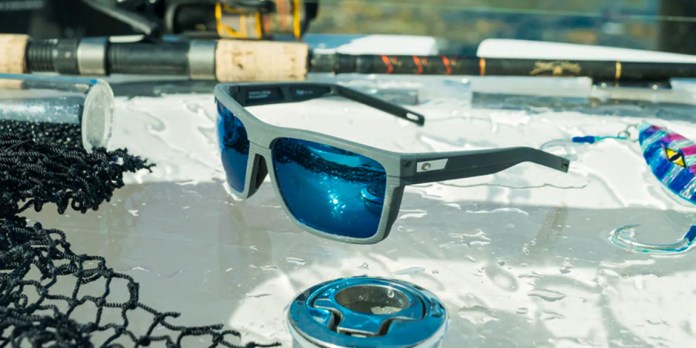
Photo Credit: Costa Del Mar

Will recycling plastics be the future for Costa sunglasses? Would you expect this to become the new normal?

We’ve been integrating recycled and/or recyclable plastics in our products, packaging and marketing materials for quite some time—but our vision is actually larger than that. As a company, we want to reduce single-use plastics overall and inspire others do the same. The way that we’ve felt about ocean plastic pollution hasn’t changed, but our efforts to do something about it have grown. From the start of Kick Plastic in 2015 to making frames from fishing nets today, we believe the best way to protect our oceans and waterways is to “turn off the tap” and keep plastic pollution from ever ending up there in the first place.

The conversation around conservation and sustainability have certainly changed. Communities are coming together like never before—realizing that for us and future generations to keep exploring our waters that we must protect them and make changes. It’s no secret that the next generation is among the most energized to do that, and they’ll keep pushing the brands they love to do the same. It will certainly become the new normal. For Costa, it’ll fuel our team to invest even more of our passion and focus towards making an impact.

Photo Credit: Costa Del Mar

How does the performance of NetPlus material compare to that of traditional frame composition? Is there a difference in performance for the new recyclable, polarized, and color enhancing 580 mineral glass lenses?

NetPlus has evolved continuously ever since Bureo first used it to make a skateboard deck. Alongside of our own R&D, the Bureo team has made improvements to advance the recycling process, achieve incredible purity in material and even offer a new NetPlus material which has started showing up in hat brims across the industry (including Costa’s!). The original NetPlus material we used was 100% fishing nets which allowed us to make a great product but had some limitations in performance, specifically the amount of frame wrap we could achieve. The NetPlus material we’re using in the new line is 97% fishing nets and 3% performance additive, which is how we were able to achieve maximum coverage that will help keep light leak out. These frames are functional and built to perform during long days on the water, and they’re really close to looking like “regular sunglasses” too!

As for the lens? This is actually the same polarized and color-enhanced glass 580® lens you find in all Costa products. All Costa glass lenses are recyclable. We only offer our mineral glass in the Untangled Collection to make sure that the sustainability story is complete.

Photo Credit: Costa Del Mar

Thank you to Jessica and the Costa Team to make this interview happen and their continued support for the outdoors, conservation, and all those that enjoy the resources that bring us together.

Shop for The Untangled Collection here!

Costa Behind the Guides: Jako Lucas

New Poll Shows Majority of Washington Voters Favor Removing Lower Snake Dams

0

A new survey put together by a coalition of environmental groups in Washington State shows that 59% of Washington State voters favor breaching the Lower Snake River dams. The survey was released after Gov. Inslee and Sen. Patty Muray released an alternate plan to the one already proposed by Idaho’s Rep. Mike Simpson.

A multitude of groups including tribal stakeholders, conservationists, and anglers, stand in favor of freeing the snake, and this latest survey once again shows strong public support.

To learn more about the poll and its overall results, check out this article from the Spokane Spokesman-Review!

Airflo Redfish Fly Line Review

I recently went down to the Texas coast to get some R&D time on some new Redfish flies we are designing. I got a chance to use a few of Airflo’s newest saltwater fly delivery options while chasing Redfish on the Texas Coast.

The lines I sampled were the Gulf Redfish Taper, The Bonefish Taper, and the 4 Season Sniper with an Intermediate sink tip.

Airflo’s SuperDri Gulf Redfish Fly Line

The Redfish line had awesome power for turning over heavy crabs or larger Crustaceans. If the fish were not spooky it was my go-to. Often our casts were pretty short, and this line was perfect for dropping a shorter cast right where it needed to be.

Airflo’s SuperDri Bonefish Taper Fly Line

The Bonefish line was a better option for spooky fish. The slightly longer head made it perfect for longer casts with lighter a presentation. I would highly recommend having this as a second line on the boat for those days when the fish aren’t playing nice. This would mean you’re likely throwing a lighter and smaller fly as well, which the bonefish line handled perfectly.

Airflo’s Superdri Sniper 4 Season Fly Line

The 4 Season Sniper was the perfect choice for pairing with a heavier baitfish pattern in deeper water. When fishing the cuts and flats drop-offs this line excelled at getting the fly into the zone. It handled the heavier flies with ease and was easy enough to blind cast with.

If you’re not on the flats due to tide changes, weather, or the fish simply aren’t there that day, this would be my go-to line. The ability to target fish in that deeper water may not be the most glorified way of fishing for Reds but it can save the day.

Overall, I loved the variety of these three fly lines from Airflo. They were just what we needed to get the R&D patterns where they were going. If I had to choose one line it would be the Gulf Redfish but I will have them all on deck when I head out again next time. If you’re in the market for a new saltwater line I highly recommend checking these out.

Article from Adam Hudson of Blue Line Co. Check him out on Instagram at @bluelineco_ and online here.

Photos by Bryant Patterson @brpatt.

Angler Lands Potential Redfish X Black Drum Hybrid

Gear Review: Airflo SuperFlo Universal Taper Fly Line

Montana Anglers and Businesses Call for River Preservation Task Force

0

After one of the hottest summers in recent history, Montana anglers, and businesses that depend on cold water have had enough of the state’s lacking efforts to preserve the Treasure State’s southwestern waters. Last week, a panel of advocates for Montana’s fisheries discussed the summers intensity, and spoke about the need for the state’s action to protect the resource many depend upon for their livelihoods.

“In our area, you can pretty much predict what kind of summer you’re going to have based upon the first two weeks of June. The first two weeks of June, if we get any precipitation or it remains cool, we’ll make it through August,” said Mike Bias, Fishing Outfitters Association of Montana executive director. “Well, the first two weeks of June were wicked hot. Everything was showing that it was going to be a tough year, and then, low and behold, it was.”

To read more about the meeting, and the groups call for action from the state, check out this article from KPAX8!

Source: KPAX8

How to Tie: The Grey Ghost

0

In this week’s “How to Tie” video feature, Kelly Galloup gives us a tutorial on how to tie a classic streamer pattern, the Grey Ghost.

Difficulty: Intermediate

The Grey Ghost is a streamer developed in Maine by the late Carrie G. Stevens. This fly was created to imitate smelt while targeting the big native brook trout that once, and still do in parts, inhabited Maine’s rivers. Although first tied in 1924, anglers imitating smelt swear by this pattern to this day. Some classics never lose their productivity or are replaced by new flies, and the Grey Ghost is a perfect example of one that has stood the test of time.

If looking to tie a dozen in a half hour, this may not be the fly for you. The Grey Ghost is a classic that demands, and deserves, patience on the vise. Selecting feathers of the proper profile and making sure they lay correctly will ensure you get the most out of this streamer pattern. When the smelt are running, big fish will key in on these large meal tickets heavily and it pays to have an arsenal of Grey Ghost’s in your fly box.

This how to tie tutorial is on the longer side, but Kelly Galloup’s video are long for a reason much like Quentin Tarantino movies. Tying the Grey Ghost goes well with your drink of choice and TheSlideInn playing in the background, as it should be a slow methodical process. Classic flies offer both beauty and effectiveness, and the Grey Ghost should undoubtedly accompany any angler targeting fish dialed in on smelt during their spawning runs.

Ingredients:

  • Thread: Black Danville 210 
  • Hook: Daiichi 2220 #2
  • Tag: Large Silver Tinsel
  • Body: Large Silver Tinsel and Red 4 Strand Floss 
  • Belly: White Bucktail
  • Bottom Wing: Peacock Herl
  • Throat: Golden Pheasant Crest
  • Under Wing: Golden Pheasant Crest
  • Wing: Gray Hackle or Saddle Feathers
  • Shoulder: Silver Pheasant
  • Cheek: Jungle Cock Head: Black Thread (Red Band of thread or Red Lacquer)

Eugene, Oregon Police Warn Driver Towing Boat with Sedan

0

This is certainly a post inspired by our friends over at the Qualified Captain!

Last month, police in Eugene, Oregon issued a warning to the person driving this legendary rig. Who knows if the Ford Escort even has the engine capacity to tow that Bayliner. But we certainly applaud whatever backyard engineering went into mounting that tow hitch in the trunk.

According to the police, the driver of the sedan was living in the boat as well.

Photo from KVAL13

Since the warning was issued, the boat has found a more permanent home, moored on the side of a highway where the driver assumingly dumped it.

According to KVAL13, “Attempts to hail the skipper from the side of the road were unsuccessful.”

What’s the strangest rig you’ve ever seen towing a boat on public roads?

You can learn more about the boat and its adventures, in this article from KVAL13!

Sources: KPIC4 // KVAL13

The 5 Best Flies for False Albacore Fly Fishing

It’s officially that time of year. The air is getting cooler, the mobs of tourists are dispersing, and the False Albacore are in thick. If you’ve targeted these speed demons before, you know they need no introduction but for those who aren’t infected with Albie Fever, let me give you the rundown. So, picture the classic fly fishing scene. You probably see someone standing out in the middle of a shallow river, gracefully casting a small dry fly to a delicately rising trout; pretty peaceful, right? Well, for better or worse Albie fishing is just about the polar opposite. Now picture screeching birds, running outboards, crisp wind, and angry, bloodthirsty torpedoes launching themselves out of the water. You definitely don’t have to picture this scene long to get a taste of what the Fever feels like. Not only are False Albacore the living representation of adrenaline, but they are also incredibly smart. It isn’t uncommon to work all day to get a couple of nice shots right into a school of busting Albies, only to bring your fly through the fishy massacre completely untouched. Whether it’s your choice of fly, speed of presentation, or stealthiness of approach, Albies can and will get the best of you. In this article, I’ll go over my 5 favorite flies for False Albacore so you can go out with a little more confidence and maybe even put one of these amazing creatures to hand next time you get out.

Albie Whore
Photo and Fly credit: Casey Allen (Flies are available for purchase on his IG)

Albie Wh*re

The Albie Wh*re is currently my personal favorite Albie fly. I tend to gravitate so small, white flies for our friendly neighborhood speed demons, and the Albie Wh*re fits that profile perfectly. This is kind of a “do it all fly” for many Albie situations. It has had an incredibly versatile profile that imitates anything from silversides to peanut bunker. I love the all-white color in most situations because it can pass as many different kinds of baitfish, and it’s plenty bright so it stands out in the carnage of an Albie blitz. I will also sometimes use a tan and white color when the fish are incredibly picky. At least in my area, the ridiculously picky fish are often feeding on tiny bait, and one of the most common tiny baitfish are tan and white bay anchovies. The tan and white Albie Wh*re “Matches the Hatch” perfectly, and often gets the job done when nothing else will.

Credit: Mike Rice @muddogflies (getemmuddy.com)

DC-12

This fly is probably the least known on this list but is responsible for the most albies in my boat over the past few years. The DC-12 is a great “do-it-all” Albie fly. Like the Albie Wh*re, it imitates a wide range of bait species and is incredibly durable. Having a versatile, bombproof fly (i.e. every fly on this list) is really all you can ask for in an Albie fly, so when you do come across one make sure to stock up.

Stock up on Surf Candies here!

Surf candy

A Surf Candy needs no introduction when it comes to the New England saltwater flies debate. It is a classic in every sense of the term, and it’s essential in any saltwater fly box. The surf candy best imitates sand eels and silversides, so while it might not be as versatile as some other flies on this list, It will still get the job done a lot of the time. When Albies patrol open sandy beaches, they are often feeding on sand eels, so a Surf Candy is a great option.

Buy your Gummy Minnows here!

Gummy minnow

It’s hard to find a fly that looks more like a small baitfish than a Gummy minnow. This innovative fly uses a soft, flexible plastic material to form an incredibly lifelike profile. The Gummy Minnow best imitates peanut bunker and silversides, so it is an immediate go-to for many Albie guys. My favorite part about this fly is its durability. The plastic that makes up the fly is really tough and super stretchy, so you can count on it to last all day. (Just hope Bluefish don’t show up)

Don’t be afraid of the Electic Chicken; Buy your Clousers here!

Clouser minnow

When it comes to Albies, classic patterns like the Clouser Minnow are often overlooked. It is pretty easy to go over the top with uber-realistic action, perfect lifelike baitfish shimmering, and incredibly specific profiles; but most of the time a simple bucktail Clouser will get the job done. They may not be as durable as these other flies that are heavy with epoxy and synthetic fibers, but the Clouser always has and always will produce. 

Those gray Fall days are where it’s at

At the end of the day, the main key to Albie fishing is confidence. All these flies will catch fish, so the best advice I could give would be to pick out one or two that you really like, and stick with those choices most days on the water. If you can really build up your confidence in a pattern or two, you will find it way easier to strike Albie gold. When you fish with confidence, you’ll find better shots, your casts will be nicer, and you will be in control of the moment, which we all know is key no matter what species you are targeting.

8 Everyday Carry Items (EDC) for Fly Anglers

Anglers, and fly anglers in particular, tend to place a lot of focus on gear. Flies, fly boxes, fly rods, nets, packs, vests, the list goes on. We all certainly have our preferences too. Over the years, I have come to rely on my own set of angling gear, however, I have also established a few pieces of non-fishing gear that I consider to be essentials and are a part of my everyday carry while on the water. The following items go in my pack on just about every fishing trip to ensure a comfortable and safe outing.

1. Thermos/Water Bottle

If you’re still using a disposable, plastic water bottle, it’s time to open your eyes. Not only are single use plastics bad for the environment,  but they also limit you to drinking cold water. Insulated metal water bottles provide a number of advantages over single-use and reusable plastic bottles. The ability to effectively carry hot and cold beverages for hours is the number one reason that I rely on my Hydroflask, day in and day out.  I’ve been using a few different Hydroflask bottles in a variety of sizes, primarily the 21oz and 40oz versions,  with no complaints for the past few years.

The 21oz bottle with the standard mouth is my go-to as it conveniently fits in my Fishpond Thunderhead Water Bottle Holder. Best of all, my Hydroflask keeps my coffee hot while fishing tailwaters in single-digit temps throughout the winter and my water nice and cool throughout the summer months. Whatever your preferred bottle is, consider an insulated, vacuum-sealed metal bottle to meet your beverage needs year-round, on and off the water. 

2. Water Filtration

Having a source of purified water is a must for long days on the water whether you walk/wade or float fish. Depending on where you fish, you may find yourself many miles from your vehicle or the next clean water source, a scenario I often encounter.  If you’re a walk/wade angler, hiking and wading for miles can be tiresome, so minimizing the weight you are carrying is even more important. Walter filtration tabs and bottles are a great way to cut down on weight by allowing you to carry less water throughout a day and filter river/stream/lake water as needed, without risking dehydration.

Water filtration comes in many different forms from filtration tabs, to filter straws, and bottles with built-in filters, leaving anglers with plenty of choices. I personally opt for the Sawyer Squeeze Water Filter System due to the large volume that it can filter at any given time and the fact that I carry a reusable water bottle, more on that later. Whatever method you choose, be prepared with clean water is essential for a comfortable day on the water. 

3. Toilet Paper/Wipes

I’ll cut straight to the chase, you don’t want to get caught outdoors without toilet paper when you need it. So be prepared. There’s no substitute for some old-fashioned TP when in need. Pull a few feet of TP off the roll, wrap it around your hand, and store it in a Ziploc bag in your fishing pack or vest.

Morning walks in bear country. Photo: Oliver Sutro.

You never know when it’ll come in handy for a bathroom emergency or even some fire kindling. Packable wipes are a great alternative however some wipes aren’t biodegradable and leaving them in the outdoors is a no-go. If wipes are your preference, consider a bio-degradable option like Combat Wipes. As always, leave no trace principles should be considered when recreating or relieving yourself in the outdoors. 

4. First Aid Kit

Whether you’re backpacking to your favorite blue line, taking a float trip, or heading out in a skiff, being prepared with a simple first aid kit is a no brainer. If you have the misfortune of being hooked by an errant cast or rub your fingers raw from stripping streamers all day, having some  basics like gauze, medical tape, band aids, neosporin, and even duct tape can save the day.

Stashing a spare shoe lace in your first aid kit isn’t a bad idea either, whether you need to make an impromptu sling, rig some gear, or simply blow out a shoelace, having some sort of string, shoelace, or paracord can go a long way. 

5. Pocket Knife

You may have read my post on 7  Pieces of Gear to Enhance Your Camping and Fishing Trips and if so, you know a pocket knife is an absolutely essential EDC item for me.  On or off the water, I always have my trusty pocket knife at the ready. I have been relying on my Chris Reeve Sebenza 25 since 2016 with only minor care/sharpening and it still looks and functions like new.

Essentials. Chris Reeve Small Sebenza 25, Abel Nippers, Zippo Lighter.

Most folding pocket knives will easily stow away in a fishing pack, vest, or boat bag and will surely come in handy for tasks like preparing charcuterie or to filet a fish on whim for a protein packed lunch. Worst case scenario, a pocket knife can be used for survival tasks like self defense or starting a fire with a flint. I prefer folding pocket knives with 3.5”  blades however fixed blade knives are handy too, if space isn’t a concern. There isn’t a day that you’ll find me on the water without my trusted pocket knife and I’d recommend carrying one yourself. 

6. Gear Straps

Fishpond Lariat Gear Straps

Gear straps, in their many forms, have been an unsung hero on my fishing and outdoor adventures. Whether you’re lashing a fly rod tube to a backpack, strapping gear to a raft frame, or using them in place of rope, duct tape, and bungee cords for quick fixes, gear straps are a must have. I have been turning to the shorter 14” Fishpond Lariat Gear Straps for strapping rod tubes to backpacks and my Fishpond Thunderhead Submersible Lumbar Pack for hike-in fishing. These straps are fairly stiff and don’t have a ton of stretch so they admittedly aren’t the most useful for other tasks but are great for fishing applications.

 If you’re looking for a multi-sport strap that can cover your fishing needs but also span into other sports like bike touring and skiing, the Voile Strap are worth some serious consideration. Made in the USA for over 30 years, these straps are equipped with an aluminum buckle and are 20” long, capable of securely locking down just about any gear. Regardless of which brand or style you choose, consider leaving a pair of gear straps tucked away in your fishing pack or vest. 

7. Lighter

Having a lighter on me is something that I consider a must when I’m spending time in the outdoors and leaving one in your fishing gear is a great idea. In addition to whatever lighter I may carry, I also leave a Bic wrapped up in a plastic bag with my emergency TP in my lumbar pack. It’s come in handy for everything from lighting a cigar to lighting my MSR Pocket Rocket 2 camp stove whenever I forget my primary lighter.

While I’m personally an avid fan of Zippos and other refillable lighters, for aesthetic and sustainability reasons, there’s a reason that Bic sells nearly 6 million lighters a year: they’re reliable. While they may not be waterproof and can’t be fully submerged, you don’t have to worry about lighter fluid drying out in a Bic as you would with a Zippo while it sits in your fishing pack or vest for months or years. Riverside fires can be a real game changer throughout the winter months or even be a means of survival should things go really awry and that last thing you’ll want to do is forget a lighter. 

8. Packable Rain Jacket

Simms Flyweight Shell Fishing Jacket

A vast majority of my fishing occurs in the Southern Rocky Mountains where the weather seems to change by the minute. Whether its high winds or a surprise snow storm, being prepared with a reliable rain jacket is a must. I have yet to find a rain jacket material as lightweight, wind, and waterproof as GORE-TEX PACLITE. This ultra flexible fabric is super packable and great for stashing in a pack or vest. Many brands including Simms and Grundéns make lightweight rain jackets in this performance material. 

Simms Flyweight Shell Fishing Jacket

Simms released their Flyweight Shell Fishing Jacket earlier this year which features GORE-TEX PACLITE®.  The Simms Flyweight Shell Fishing Jacket is surely worth some attention if you’re in the market for a packable performance rain jacket.

The Grundéns Charter Gore-Tex Jacket has been my go-to as of late and doesn’t hinder my movements while hiking, biking, or fishing thanks to the flexible GORE-TEX PACLITE material. This jacket has gone just about everywhere that I’ve fished recently from high alpine lakes in Colorado to Hawaii, and layers perfectly with my Patagonia Nano Puff Hoody. 

What will you carry?

Being prepared isn’t a joke. Taking some time to think about the items you are carrying on your next adventure will not only ensure a safe but also a comfortable trip. We’d love to hear what you consider essentials for a day of fishing.

Article by Evan Garda on the Content Team here at Fly Lords. He can be found chasing fish throughout the west with his trusty fly rods. Check out his adventures at @evangarda.

7 Pieces of Gear to Enhance Your Camping and Fishing Trips


Fishing Tips: Carp on The Fly

0

If you’re interested in upping your game in the carp fishing department, this is the video for you. Follow Rick Mikesell as he takes you through a day of carp fishing on the Denver South Platte. These tips will surely lead to more success on your next carp fishing adventure. Thanks to the folks at Trouts Fly Fishing for this informative video.

Oregon Department of Fish and Wildlife to Consider Harvesting Wild Steelhead

This upcoming Friday, October 15th, the Oregon Department of Fish and Wildlife will consider their updated Rogue – South Coast Multi-Species Conservation and Management Plan (RSP). This plan will manage wild steelhead, coho salmon, and cutthroat trout throughout Oregon’s coast from Cape Blanco to the California border. You may remember a similar story earlier this summer, and the outrage and advocacy that followed. ODFW began considering the draft RSP, which included a controversial and irrational measure: to continue the harvest of wild steelhead in many of Oregon’s river systems. Even if you got involved in that public advocacy effort, it’s essential you get involved again to ensure the long term health of these wild steelhead runs.

This all comes amid a summer where much of the Pacific Northwest experienced some of the worst returns of wild steelhead in history. While the Rogue and Oregon’s Southern Coast enjoy relatively strong runs of wild fish and intact rivers, ODFW has minimal scientific understanding to permit harvest. They don’t have any estimates of wild steelhead, nor estimates of harvest rates or total mortality. Additionally, these rivers see large hatchery steelhead releases, which are available for harvest. There is no need or rational basis to allow the harvest of wild steelhead.

During this summer’s scoping period, the public was crystal clear with their preference. “Nearly 90 percent of the comments submitted called for catch-and-release of all wild steelhead in Southern Oregon rivers.” Well, in response to that overwhelming public support for catch-and-release and opposition to wild harvest, ODFW removed the catch-and-release alternative from the plan. So, the option that carried 90 percent support was removed from consideration.


View this post on Instagram


A post shared by Nick Chambers (@pnw_riverrat)

Nick Chambers of Wild Steelheaders United has kept close tabs on this issue and the complexities of the RSP. He wrote on a recent Instagram post, “ODFW has done little to nothing to improve data collection on these populations during this time [since 1986]. Why should we trust them to follow through on (currently unfunded) commitments to collect better biological data?”

If you want to learn more about this issue or how to get involved at the upcoming meeting this Friday, check out Native Fish Society’s action page: Stand up for Wild Fish in Southern Oregon.  You can submit public comment up until tomorrow morning. You can register to speak at the Friday meeting. You can also, sign on to this petition. Every voice and new advocate can help protect Oregon’s wild steelhead.

CLICK HERE FOR THE CALL TO ACTIONÂ