Home Blog Page 119

YETI: A2B – An Anglers Guide to Costa Rica

1

Welcome to our newest travel series, brought to you by YETI. In this series, we will be highlighting some of our favorite fly-fishing destinations around the world and providing you with some essential angler insight to help complete your mission. Just like the new YETI luggage, this guide will aim to help you get from point A to B, but whatever adventure you choose to have in-between is up to you.

In this edition, we’ll be reflecting on a recent trip to the tropical paradise of Costa Rica. We were in awe of the lush and endless expanse of flora and fauna and humbled by the righteousness of an eventual downpour. Our days were spent targeting tarpon and tempemechin as we rafted down pristine waters.

landed tarpon

What to Know Before You Go

According to the U.S. Embassy in Costa Rica, all visitors must complete an online health pass 72 hours prior to arrival. All visitors, ages 2 and up, must also provide a negative COVID-19 viral test taken within 24 hours prior to arrival. If you are un-vaccinated and 18 years or older, Costa Rica requires you to purchase a travel policy that acts as insurance in the chance of contracting COVID-19. If you are fully vaccinated OR unvaccinated and under the age of 18 years old you don’t need to worry about this. Just make sure that your last dose is completed at least two weeks before your arrival date. For more details, click here.

supplies for trip

Most nationalities do not need a special visa to enter Costa Rica. A valid passport is required, and upon entering Costa Rica travelers are granted a 90-day tourist visa. Some countries, however, will require a special visa. Inquire with your Costa Rican outfitter or your local Costa Rican embassy to be sure.

Getting There

Air Travel

There are many direct flights to the capital city of San Jose (SJO), and this is typically the launch for most trips around the country. If your adventures are focused in the North Pacific portion of the country, you could also consider flying into Guanacaste (LIR). 

Travel by air to Costa Rica has become easier over the years, but oftentimes due to the logistics of getting around the country as well as tricky and sometimes poorly marked roads, an overnight in San Jose is often required at the beginning and end of your trip. Renting a car is the best bet to give yourself flexibility for getting off the beaten path, but road travel can be bumpy, foggy, rainy, winding, and sometimes take longer than anticipated. It’s always recommended to leave a little extra time and to only travel during the day. And if you do get lost, chatting with friendly local people and finding yourself in a serendipitous adventure is all part of the joy of traveling to a foreign country.

Preparing for Your Trip 

Packing List

For all of your non-angling needs, here are a few items we suggest packing along for your journey. Needless to say, there’s always more (or less) you can choose to equip yourself with, but that’s all dependant on what kind of traveler you are. Here are a few items we were glad we brought, or more likely, wish we had.

  1. The Right Luggage: YETI’s 2021 Luggage

    Check out the entire YETI Crossroads collection.

YETI’s new luggage line is truly built for the wild. That is built to last a lifetime and practical. From suitcases to backpacks, to carry-ons – this new line is built to withstand anything from the harsh hands of baggage check to the exotic angling destinations of your dreams. With more space than you’ll know what to do with and bulletproof composure, you can kiss the days of travel turmoil goodbye.

2. Sun Protection: Hats, Buff, Sun Shirts, Sunscreen

Being that Costa Rica is near the equator, the sun is also very powerful here – be sure to bring plenty of strong sunscreen. Stay hydrated – Costa Rica is very proud of the fact that tap water can be safely consumed everywhere in the country, from the cities to the most remote reaches. Make sure to pack long-sleeved clothing that will protect you from the sun, apply lots of sunblock, and always have plenty of liquids (water, NOT Cerveza) on hand. Sunburn and dehydration are serious in these parts. 

3. Rain Jacket

The only thing more unrelenting than the Costa Rican sun is the rain. The rainy season rears its head from June until November, with October being the rainiest of all. Jackets can be easily packed away when you don’t need it, and you’ll be thankful you have it when you do. 

4. Waterproof Backpack

The YETI Panga 28 is the ideal waterproof backpack for the on-the-go angler. Check it out HERE.

Don’t compromise your peace of mind when it comes to keeping your gear safe and dry. Whether you’ve got expensive camera gear, or just a change of dry clothes, a waterproof backpack is essential when traveling through uncertain weather.

5. Bug Repellent

Mosquitoes can also be bothersome in certain parts of the country, but a little repellent helps to keep the blood suckers at bay.

Anglers Packing List

If you’re reading this, you’re most likely planning on going fishing. Good for you. Below, we’ve coordinated with some the local guides to put together a list of some saltwater fly fishing essentials you should try to bring as there are no fly shops or sporting goods stores with fly fishing gear.

casting to fish

Info via Release Fly Travel. 

Since there is so much to target with a fly rod, your bag can get pretty heavy pretty quickly if you don’t pack smart. Contacting a local guide service ahead of time is the best bet – they’ll let you know what the best setups will be, and which flies are producing. And many outfitters will have gear available for rent or loan – especially helpful for those who want to catch their first tarpon, billfish, or tuna!

Pacific Ocean Species

If your target is Pacific ocean species, an array of deceivers, streamers, and poppers will cover most species. 8-10 weights and floating and intermediate lines are best from shore, with 10-12 being called upon as you venture further into the deep blue. If you are targeting the very largest of the Pacific species, like marlin and sailfish, be sure to pack an even larger 14-16 weight setup. And as we often joke, all popper colors work for billfish, as long as they are pink.

Lowland River & Stream Species

Lowland river and stream fishing is similar to the US, and one can fish 3-7 weight rods with nymphs, hoppers, and streamers, usually with floating lines. The exception is the fruit-eating machaca. While they will sometimes attack a well-presented hopper, what they are really after are seeds and fruit, and large cork or wood fruit flies that give a nice solid “plook” will draw them to the surface. Rainbow trout can be fished using small 1-3 weight rods with dry flies and nymphs as one would any small mountain stream. Finally, tarpon and snook will eat a variety of deceivers and streamers. Depending on their size, one can use 8-12 weight setups, and a variety of conditions will call for floating, intermediate, and even sink-tip lines.

machaca food

Additional Gear

Not gear, but a critical component to success will be a local guide. Costa Rica has some dangerous critters, and walking along a lowland river may put you in direct contact with a venomous snake, a crocodile, or even a jaguar. For this reason, it’s generally best to not go into certain areas without the support of an experienced guide.

Additional Activities of Interest 

While not everyone may not be a die-hard angler, there is plenty to see and do in Costa Rica. Here are some activities we recommend for the non-angler. 

Feet in the Sand 

Costa Rica has some of the world’s most incredible beaches. Be sure not to miss out by incorporating some beachcombing and R&R into your adventure. It’s also one of the best places in the world to learn how to surf!

Monkey Around 

Roughly 28% of Costa Rica’s national territory is set aside for wildlife. Visiting one of the country’s many national parks will help you immerse in some of the incredible biodiversity that makes this place so special. 

costa rican jungle

Reconnect in Nature 

Yoga and wellness have grown significantly in the past few decades in Costa Rica. Find inner peace in the rainforest as the howler monkeys and toucans serenade the soul. 

Up in the Canopy 

High ropes courses, zip-lines, bungees, hanging bridges, just to name a few… get a thrilling bird’s eye perspective in the treetops as you engage in one of many available adrenaline-packed ecotours. 

Livin’ la Pura Vida

So, what are you waiting for? Get down to the land of “Pura Vida” (Pure Life) and release your inner explorer and rainforest wild-child. Target and catch a dizzying array of tropical fishes, in both the fresh and the salt. Hike through verdant national parks, surrounded by monkeys, sloths, and colorful birds. Relax on the beach, feeling the sand between your toes as you sip an ice-cold cerveza. However, travelers beware – Costa Rica will leave you begging for more. Repeat offenders welcome!

Tom Enderlin owns and operates Release Fly Travel (@releaseflytravel and @flyfishingcostarica), a boutique outfitter and guide service specializing in everything Costa Rica has to offer. Whether you want to book a single-day guided fly fishing trip or a once-in-a-lifetime multi-day eco-adventure combining fishing and non-fishing activities, Tom and his experienced team are the best in the business. If you are heading to Costa Rica, be sure to reach out to these pros – your trip will be that much better because of it!

casting with yeti

Thank you to YETI for making this guide possible. If you’re planning an adventure anywhere, domestic or international, be sure to check out their new luggage line that will ensure you get from A-B without hassle or worry.

YETI: A2B – An Anglers Guide to Southern Belize

YETI: ‘A2B’ – An Anglers Guide to Swedish Lapland


Gear Review: B&W Trailer Hitch

In this Gear Review, we will be taking a look at B&W Hitches Tow and Stow system. If you have ever owned a vehicle with a hitch, and tow regularly, a good hitch can not only improve your towing but also can give you increased safety when you are getting your boat to and from the ramp.

B&W Hitches Close

Click Here to check out the final review stats.

Initial Impressions:

Before the hitch ever hit our front steps, I was already excited to throw it on my truck. If you own a truck or any towing capable vehicle, you might have experienced what I like to call “hitch envy” at one point in time. This sounds ridiculous, but so is anyone that owns a truck or SUV. We are always looking for the next best customization for our rig whether it is a leveling kit, roof rack, new wheel, tires, the list goes on. For me, I just got a new truck and I was not smart enough to pull my old B&W off my previous rig. Needless to say, I was giddy when the package hit my front steps.

B&W Hitches on boat

Upon opening the cardboard box, which was quite heavy, you are met with the shiny new hitch ready for work. The shank and drop of the hitch are powder coated and appear very scratch resistant (for when you back the truck up a little too far and give the trailer a love tap). The three-point ball I selected was clean chrome, polished enough to see your reflection.

As I removed the hitch from out of its packaging, I stopped and grabbed my hitch lock on the way out to my truck. Installation was as easy as you would expect, all it took was lining up the receiver with the hitch and locking it in place with my hitch lock. With the hitch installed and locked in, it was time to hook up the trailer and test the hitch out.

Trailer on B&W Hitches

Click Here to check out the final review stats.

Field Testing:

Once the hitch was on, it is important to make sure that the ball you are using on the hitch will fit your trailer. For my raft trailer, I needed the 2″ ball. Rotating between the three-ball sizes was easy, just pull the cotter pin, and spin until you get to your proper ball size. Next was adjusting the drop of the hitch. This was easy as well, with the removal of two cotter pins you are able to move the hitch up and down to match the height of your trailer.

B&W Hitches Trailer

The ability to move the hitch up and down is a game-changer. This allows you to ensure a level trailer, which is crucial for safely towing your boat to and from the ramp. There are two factors that can affect how level your trailer is, vehicle height, and trailer height. For my own rig, I had to drop the hitch about 5 inches to get everything level. An unintended consequence this had was I was no longer having to lift the trailer to my hitch, instead, I was able to back right into it. Since the trailer was level, it towed significantly better than my previous setup.

B&W Hitches towing up

When it was time to get back from the ramp and the trailer unhooked, I then employed my favorite feature of the hitch, the stowing feature. If you have ever had a hitch on your vehicle your shin has most likely found the hitch when you are walking around your rig in the dark (most likely accompanied by some expletives). With the same process of moving your ball up and down, you can also flip it around under your bumper. Trust me on this, your ankles will thank you. Then when you are ready to tow again, or if you want to be an ass and leave your hitch over a curb, you can flip it back around.

B&W Hitches stow feature
Hitch Stow Feature – Photo from B&W Trailer Hitches

Final Review:

Durability:

5 star rating

Ease of Use:

4 star rating

Versatility:

4 star rating

Looks:

5 star rating

Price:

3 stars (MSRP: $199-$369)

Conclusion:

B&W Hitches together

In conclusion, while a hitch might not be the first thing you think you need for your rig it is definitely a game-changer when it comes to giving you the ease of mind when towing. While it is going to be on the higher side when it comes to price, compared to any other hitch you might find, it is well above in quality of any other product I’ve seen on the market. It is made 100 percent in the USA with a high quality that might outlast your vehicle. Most importantly, you can stow it away and leave the days of slamming your ankles against your hitch in the past.

Click HERE to check out all the B&W Hitches.

B&W Hitches close up shot

Battle of the Boats: Rafts vs. Drift Boats (Which is Better?)

Top 7 Best Vehicles For Fly Fishing


Key West Fishing Community Unites Against Cruise Ships

Key West is a lot of things. While many know it as an open-container tourist town, fishermen and much of the local community know it as one of the most ecologically rich places in the country and a flats fishery that rivals any place on planet Earth. Today, however, those two ends of the spectrum are becoming more and more at odds. A lucrative foreign cruise ship industry is working to maximize its operations in Key West. So, last week, hundreds of concerned stakeholders and dozens of world-renowned fishing guides took to the main channel and docks in Key West to protest the mega cruise ships. However, this issue is not necessarily new, and goes deeper with layers of intentional environmental violations and powerful influence.

Cruise ships have been an everyday issue in Key West for decades. The Key West Chamber of Commerce lobbied to bring mega cruise ships to key west—and continues to do so—claiming it will improve the economy and local businesses. On the other hand, other Key West stakeholders are working to limit the cruise industry in Key West, because of its negative impacts. These mega cruises carry more than 1,300 passengers and, due to their sheer size, cause much more environmental harm than smaller ships.

Just think—bigger the ship, deeper the draft, more severe scars from constructive dredging (caused by the propeller’s propulsion/turbulence), more waste to dump offshore, etc. the list goes on. Simply put, the cruise industry, especially the scaled-up ships, can be quite harmful to coastal and marine environments.

Turbidity—dirty, muddy water that is substantially influenced by the cruise ships—negatively affect coral reefs and all sorts of marine life, threatening the Florida Keys National Marine Sanctuary and other vulnerable habitats. More so, the daily cruise ship traffic leaves chronic water quality issues through the Florida Keys—a violation of the Clean Water Act no less.

For these reasons and more, the community of Key West has waged a two-decade battle against the industry’s biggest ships. In 2013, Key West residents resoundingly defeated a referendum that would have been a key first step for allowing dredging in Key West Harbor to better accommodate the larger ships. 73 percent of Key West residents voted “No.”

Fast forward a few years, and the COVID pandemic disrupts the entire world and global tourism comes to a screeching halt. For Key West, a city that most assumed to rely on global tourism through the cruise industry, an interesting realization occurred.

“Once the cruise ships were banned from Key West, the harbor and its live bottom that makes the harbor such an attractive place for marine life had a chance to heal,” said Captain Andrew Tipler, President of the Lower Keys Guides Association and owner of Last Cast Charters. “You see these ships’ propellers create a tornado of sediment that harms all these bottom-dwelling organisms like sponges, corals, and sea fans. Let’s not forget that this sediment tornado can choke out the flats and sea grass when the tides and winds are right. The sedimentation is a huge issue, and it was really remarkable to see how quickly the Key West ecosystem positively responded to the absence of the mega cruise ships.”

The city life improved. The harbor’s water quality dramatically improved, and marine life returned to harbor and thrived in adjacent habitats. This was all in the absence of the cruise ships.

While COVID inflicted great harm to the community and throughout the country, it allowed Key West to obtain an economic and environmental baseline of what life would look like without the mega cruise ships. Key West residents who knew the damage being inflicted by the cruise industry, now understood that their economy could pivot, and a more sustainable future was possible. The tourism economy would be able to continue even without the mega cruise ships.

So, last year during Florida’s 2020 election, Key West voters saw another series of cruise ship questions on their ballots. The three ballot measures involved banning ships with more than 1,300 passengers from Key West, limiting the daily number of visitors from cruise ships to 1,500 individuals, and giving preference to ships with the best environmental and human-health records.

@Mark Hedden

Safer, Cleaner Ships spearheaded the ballot effort and has strong roots in this fight and Keys West. The grassroots organization is led by Evan Haskell (President), Jolly Benson (Vice President), Arlo Haskell (Treasurer), David Dunn (Secretary), and Will Benson (member at large), and work with a group of 2,500 commercial and recreational fishermen, business owners, and other stakeholders who care about the economic and environmental well-being of Key West.

It’s not too often you get commercial and recreational fishermen to agree on much. So, that should tell you something about how important this issue for the fisheries of the Keys.

The ballot initiatives and the group were not entirely anti-cruise ships either. They were just trying to limit the mega cruise ships that have outsized impacts from docking in Key West. Additionally, the smaller ships are best suited for Key West and have better health and environmental records than the mega ships.

Last year, the Harbor Pilots Association (a group that directly profits from the cruise industry) went to federal and state court to keep the measures off the ballot. Both court systems rejected the Harbor Pilots Association’s challenges. Then, in November of last year, Safer, Cleaner Ships celebrated the approval of all three measures—with supermajorities (60% or greater) also. Once the pandemic eased, Key West would allow a smaller, cleaner cruise ship industry.

However, this past summer, the results of Key West’s election, the clear will of the city’s residents, was rejected. Governor Ron DeSantis canceled the referendums by signing a law, “prohibiting a local ballot initiative or referendum from restricting maritime commerce in the seaports of this state; providing that such a local ballot initiative, referendum, or action adopted therein is prohibited, void, and expressly preempted to the state.”

To make matters even more turbulent, Florida media outlets reported that Governor DeSantis received a $1 million donation to his political action committee from Mark Walsh, a business developer who operates one of the mega cruise ships docks and financed the opposition to the ballot initiatives back in November, 2020. Much of the Key West community was rightfully angry at the Governor, the legislature, and the whole system.

Until recently, however, Key West was free of the cruise ships and their impacts. That temporary relief ended several weeks ago, as ships returned to Key West. Safer, Cleaner Ships organized a demonstration to protest the arrival of the Norwegian Dawn, a 965-foot ship that held 2,134 people. Guides, stakeholders, and concerned citizens gathered near the docking cruise ship to protest the return of the harmful industry and witnessed first hand the massive sediment plumes.

@Mark Hedden

Capt. Will Benson was on his skiff with the water component of the protest, fighting for his water and his home. This issue is personal for him. Like so many other fishing guides, he relies on healthy and abundant natural resources to make a living. The mega cruise ships threaten that, which is why he’s been engaged on the issue since almost the beginning.

Key West has given fly fishing so much over the decades. When most anglers think of big tarpon, they think the Keys and Key West. Few places give you the shallow water, fly fishing or light tackle opportunities that Key West affords. It’d be a shame for these mega, foreign owned ships to continue harming the amazing Key West ecosystem. If the fly fishing community has learned anything over the past couple of years, it’s that when anglers come together, things happen. Head on over to Safer, Cleaner Ships’ website to learn more about this issue and stay tuned for upcoming developments!

Cover picture by @Mark Hedden

Drone shots by Evan Haskell

Tennessee Stocks Thousands of Cutthroat Trout in South Holston River

2

The Holston River in Tennessee just became the latest eastern tailwater to be stocked with cutthroat trout from the Rocky Mountains. Earlier in December, the Tennessee Wildlife Resources Agency (TWRA) stocked 2,550 Snake River cutties that were provided by a partnership with the USFWS.

According to a press release from the TWRA, the trout were stocked “into the upper portion of Fort Patrick Henry Reservoir on the Holston River below Boone Dam.”

“These cutthroats are of the Snake River fine-spotted Cutthroat Trout strain and were provided through a partnership with the U.S. Fish and Wildlife Service,” the TWRA release stated. “The fish were hatched and raised at the Dale Hollow National Fish Hatchery and were recently transferred to the TWRA Flintville Hatchery.”

Earlier this year the TWRA also stocked 3,000 Cutthroat Trout in the Hiwassee River and plan to release more of the fish into the Elk River soon, as well.

To learn more about the stockings, check out this article!

Artist Spotlight: Jorge Martinez

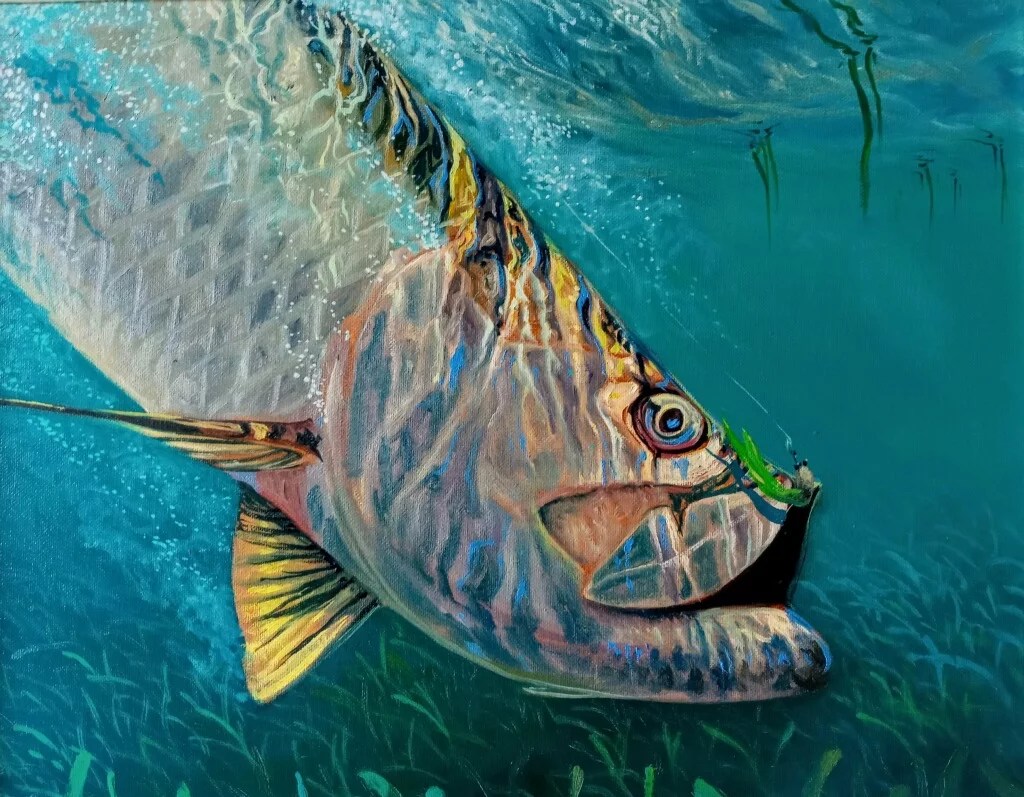
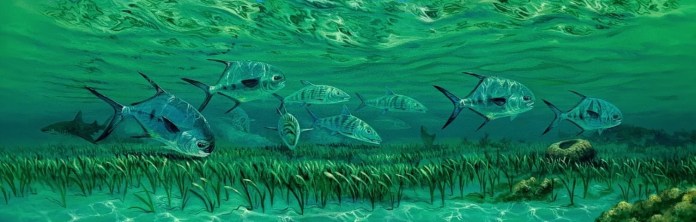
We got the chance to speak with painter and angler Jorge Martinez, a lifetime native of southern Florida. The fish species of Biscayne Bay inspire Jorge’s incredibly realistic oil paintings, which he crafts from memory and without reference photos. Check out more about Jorge’s passions for fly fishing, painting, and preserving southern Florida’s natural treasures below!

Flylords: What role has fishing played in your life?

Jorge: I spent my first years growing up in South Florida, mainly Miami. We would spend our summers going back and forth to the keys in, on, and around the water.  When I was 10 years old my mom and dad moved me to Punta Gorda, Florida where I spent most of my teenage years.  At the time Punta Gorda was a simple, small-town community with lots of open space and access to freshwater lakes and Charlotte Harbor’s shallow water fishery.

When the school bus would take me home from school to my grandparents house my grandma was always ready to go and take me to fish the seawall at Bill Baggs State Park on Key Biscayne. My interest in fishing only continued to grow as I spent my days fishing and exploring these wild places with my friends. Fishing has always been just a getaway for me. There are no rules and no boundaries and it is just you and your interaction with nature. Now my fishing serves as the main inspiration for my art.

Image Courtesy of Jorge Martinez

Flylords: When did your interest in art begin?

Jorge: My interest in art began as a kid. From a young age, I was always drawing what my interests were. I still have some of my own drawings from when I was as young as my son is now.  I always thought I would end up in the art industry, but I could have never imagined I would end up in fine art selling my paintings as a career.

Image Courtesy of Jorge Martinez

Flylords: How does fishing inspire your work?

Jorge: Fishing is one of my greatest passions. Being able to paint these elusive fish is a way to memorialize my short-lived interactions with the fish and bring me back to those moments. Living in South Florida, I have not taken anything for granted. I am a fly angler, but I have access to such a diverse terrain of fishing and I love to explore all of it.  Fishing is as large a part of my life as my art, and I would not have one without the other.  My only hope is that my kids love it as much as I do and I can show them what this great state has to offer.

Image Courtesy of Jorge Martinez

Flylords: What are the steps in your artistic process?

Jorge: I basically come up with an idea, usually inspired by a previous fishing trip, and then use that to formalize what I want to see on the canvas.  As the painting starts to come together I try to remember each and every detail from the fins of the fish to the shadow it casts in the water to the blades of seagrass on the sea bottom. With each memory, those details start to come alive.

Image Courtesy of Jorge Martinez

Flylords: Is there a particular message or theme you try to communicate with your art?

Jorge: Most of my paintings are my take on what happens right before the fish eats the fly.  As an angler what you see is above the water, and my art tries to depict what is happening below.

Image Courtesy of Jorge Martinez

Flylords: What do you hope people experience when they see your work?

Jorge: Just as my art takes me back to a time or moment of my own fishing adventures, I hope other people see my art and experience the same as it relates to their own fishing stories and moments.

Image Courtesy of Jorge Martinez

Flylords: How are you and your community working to preserve your local marine habitats and species?

Jorge: Just recently we put together a collective of local, veteran fishing guides in Biscayne Bay and began a partnership with Biscayne National Park service to exchange information to better protect the park and its resources. Preserving local marine habitat has to be a collaborative effort.

Image Courtesy of Jorge Martinez

Flylords: How can people best support southern Florida’s conservation goals?

Jorge: Understanding what the problem is: the state of Florida has a crisis with polluted freshwater runoff and the way it’s discharged. Keeping our waters clean is essential.

Image Courtesy of Jorge Martinez

Flylords: How can people best support your business?

Jorge: People can keep up with my weekly art projects and fishing on my Instagram, @JMartinez_art, and learn all about me and my pieces on my website www.jmartinezart.com!

In Search of My Five Weight

My eyes slowly peeled open as the reality of how I felt began to develop. A pounding headache, dizziness, dry throat, and regret from yet another night of drinking far too much. The plan was to wake early and hit the river before the masses and get some fishing in the beautiful morning light. But my hangover begged to differ, and the plans slowly deteriorated as I closed my eyes once again to hope and pray that I can sleep away this feeling.

In my hungover state of restless sleep, I tossed and turned hoping that would ease the discomfort, but little did I know it was churning up old memories and feelings of exploration, buried behind the mask of alcoholism. One side rolled over seemed like the route back to the bottle for yet another day of drunken debauchery, where the other side I lay reminded me of what I wanted from my life before alcohol was introduced. A Ying and Yang of life bundled up underneath the covers like a coin toss to your life or a lifetime bet at the roulette table of a casino. Putting all my cards down on one side, I began to see what happens.

I stayed on this particular side for a little longer than expected when I did slowly fade to a twilighted sleep. In this sleep, however, the monetary value of my life swirling away at bars and liquor stores the last ten years added up and my mathematical brain kicked into gear. Realizing that the thousands of dollars I’ve spent on alcohol could have been used to buy gear or those dream trips to far-off destinations bouncing mouse patterns in Alaska or stripping tiny flies for huge trout in Argentina. At that moment, in that instance, I felt the soft breath of some nameless and faceless woman whisper my name in my ear. My eyes shot open and the process of becoming sober began.

I still struggle to explain what happened to myself let alone get the scenario down on paper, but that was what literally happened. It gives me goosebumps when I even think or write about it. After that, I went nine days for the first initial time getting sober in late March. Relapsing by choice, being proud of the fact I didn’t drink that long and wanted to prove I could be a responsible drinker. But that wasn’t the case. The next time I went sober was April 13. A special day as it is the anniversary of the start of my journey on the Pacific Crest Trail in 2015. And until recently, my longest stint in sobriety.

Each relapse in the following year meant binge drinking to make up for the time spent sober. Ranges vary from a week or a few days to 17 days and even a month. But, I couldn’t find it for a lasting amount of time. I did however notice patterns that could help me achieve becoming sober. I began to develop a mindfulness practice in meditation. I began drinking teas and even apple cider vinegar. Green smoothies in the morning and keeping count of my water intake throughout the day. Staying busy and waking up early drove me to be grateful for the days without a hangover.

In the afternoons, however, demons crept in. Where the excitement of the morning faded to a dark depression of staring at the wall later in the day. Living with my parents at 30 and beginning to really beat myself up for my situation and actions, a dark future lay ahead, and drinking always seemed to be the very temporary band-aid for how I felt. I needed a new bandage and my beacon in the storm was simple, just grab my fly rod.

Coming home from work, my spring, summer, and fall seasons were treated with afternoon coffee and casting my original five weight out on the evening hatch the last hour or two before sunset. Listening to the birds chirping and the wind blowing through the trees, each cast offered snowcapped alpine views, flowers swaying with color, and water lapping up against my legs, soothing the soul with each trout brought to hand, one beautiful cast after the next. Replacing any need to stop at the gas station to fill the cooler or heading to happy hour at the local bar or restaurant.

The feeling of netting a trout, large or small, with no one around gave me a feeling no drunk or form of substance could replace. Jolting myself back to the reality and beauty of fly fishing I first discovered 22 years ago. I talked to the eagle flying overhead, had conversations with the leaves swaying in the wind, and always said high to each trout fooled by my fly pattern. My form of an AA meeting or therapy session was tied into place with each Clinch Knot and spent casting out into National Forest lands and Blue Ribbon trout streams. With each relapse, a battle had been lost, but in my heart, I knew a war could be won.

Repetition is of order. If I could repeatedly pour alcohol down my throat for ten years and more, there is no reason I couldn’t grab my five weight and just keep casting like I did as a kid.

I began journaling. Writing about when I fish, everything in the world is irrelevant. The phone isn’t ringing, the emails aren’t being sent, and the nagging of loved ones are nowhere in sight. All that is present is the sound of nature. Out on the river above the highs and lows that alcohol and substances give. Fly fishing alleviates the heavy bricks and darkness of depression and raises me up shooting me to my desired passions and dreams. All I must do is rig up my rod and get casting.

I knew I needed to prioritize this and thus my dream of doing a van life was realized. Being able to wake up and fall asleep near the river sounded like the answer. However, upon searching for my dream rig, the pandemic struck, prices skyrocketed, and Instagram and YouTube may have ruined that dream for anyone with an average income. But the dream stayed alive and my Subaru became my sober chariot.

With summers eve creeping in, the car was packed. Road map by my side and my wanderlust and exploration powering me down the road. The destination? Anywhere my car could take me and anywhere water flowed or held fish.

Fly fishing was my childhood dream, learning from my father at the age of 11, now it may have saved my life. Shortly after I began fishing again, the clarity of my potential fishing life came to realization, and the haze of ten years of not being myself was unveiled. Sparking the idea to hit the road in my 2010 Subaru Forester and explore every body of water I could. Healing with each cast into the thousands of acres of national forest, parks, and waters, gorging myself on Mother Nature therapy and recovering with every minute spent outdoors.

The sleeping platform was easy and cheap to build. The discard dumpster out back of the local department store had all the necessary framing needed to build a space for me to fit into. That along with enough wood to build out a drawer for a stove so I can cook and boil water for the two most important liquids in my life: coffee and tea.

With priorities now set in place for sleeping and cooking, the Yakima rocket box on the roof was stuffed with all appropriate gear: backpack, fly fishing gear, and an air compressor and tow straps. The space underneath my platform has enough room for a small cubby to put clothes and a space adjacent to it for an axe and firewood.

Behind the passenger seat is a 7-gallon water jug. Behind the driver seat is where the dirty clothes hamper along with extra storage for additional fly gear and a space for my laptop. The front seat my, “Go,” pack with my camera, GoPro, bear spray, etc…My waders and wading boots fit anywhere they could, depending on how damp they are or how actively I am using them.

Grabbing my five weight was the start. Rebeginning my life and passion of fly fishing right here in the heart of trout mecca where I work and live in Montana. But since the process of sobriety began, the reach for other weights has also begun. Using the new three weight has inspired me to get back to the alpine environments and backpack to remote lakes and streams devoid of humans. Listening to nature caress all the stresses and cravings that alcohol give.

The thirteen-foot spey no longer is collecting dust and is being used readily with each winter rainstorm bringing steelhead to the Pacific Northwest. Learning patience like all steelheaders but using the power of the redwoods or the evergreens to ease the wait instead of the flask I used to carry. I have even grabbed my ten-weight for a sneaky trip down to Baja to chase roosters cruising the gorgeous crystal-clear waters of the sea. Trips, rods, and experiences never would have happened if my toxicity of alcohol continued.

Am I perfect? Far from it. But each day I get stronger with every cast. I researched rehab, attended Alcoholics Anonymous meetings, and sought therapy, but all led me back to the bottle. Somehow fly fishing and being in nature has led me to where I am today, confident enough to write this and hopefully inspire others to find their path in nature and recovery from whatever may be holding you. All we must do is rig up that fly rod and start casting.

Article and photos from Sean Jansen, an avid angler and writer based in Bozeman, Montana. Follow along with his adventures at @jansen_journals.

Garbage on the Gallatin – Bikepacking and Fly Fishing

Stand Up Paddle Boarding Yellowstone Lake


How to Tie: The Brokeback Crawdaddy

0

In this week’s “How to Tie” video feature, Kelly Galloup ties a crayfish pattern that should be in every anglers box when fishing a watershed with these crustaceans, the Brokeback Crawdaddy.

Difficulty: Hard

In the rivers and streams that both crayfish and trout coexist, these crustaceans become large meal tickets. The Brokeback Crawdaddy is a crayfish imitation that will undoubtedly capture the attention of hungry trout. Crayfish live in many different unique environments, but finding out they inhabit your local stream is like striking gold. Although a difficult fly to tie, taking your time and being patient will ensure you get the most out of your time on the vise.

The profile of the Brokeback Crawdaddy, combined with its movement in the water, make it a deadly pattern for trout. This fly can be tied in olive or tan, both offering different species variations or physical changes with molting. Crayfish become extremely vulnerable during the molting season, and if timed right, the Brokeback Crawdaddy could land you a personal best on the water.

Using larger streamers or flies in small streams is a great way to find quality fish. If moved but not hooked, you will be able to go back to the location and nymph through the run. A smaller food item being presented, once that trout has been found, may be the ticket to getting a strike. The Brokeback Crawdaddy is a holiday gift delivered from Kelly Galloup himself and should be fished on any stream with crayfish.

Ingredients:

Rear Section:
  • Hook: Gamakatsu B10S #4
  • Eyes: Medium Double Pupil Lead Eyes (Yellow/white/black)
  • Antenna: Root Beer/Orange Tipped Hot Tipped Crazy Legs
  • Nose (rostrum): Bleached Deer Hair
  • Claws: Gold Variant Black Barred Rabbit Strips
  • Body: Amber/Olive Arizona Simi Seal
  • Alternate Body: Blend of UV Light Olive and UV Tan Ice Dub
  • Rib: Copper Ultra Wire (Brassie)
  • Hackle: Dark Barred Ginger Rooster Hackle or substitute
  • Carapace (Head): Gold Variant Black Barred Rabbit Strip
  • Connection: AFW Surflon Micro Ultra Wire-19 Strand
  • Cover: Dark Barred Ginger Hackle or Substitute on the larger side
Front Section:
  • Hook: Gamakatsu B10S #4
  • Abdomen (Shell Back): Gold Variant Black Barred Rabbit Strip
  • Body: Amber/Olive Arizona Simi Seal

Now you know how to tie the Brokeback Crawdaddy.

Video and ingredients courtesy of The Slide Inn.

Lodge Spotlight: Rawah Ranch, Colorado

Just south of the Wyoming/ Colorado border sits a ranch, nestled into the aspen groves which populate the Laramie River Valley. Ensconced between miles of meandering creeks, snow-capped mountains, and winding trails lined with blue spruce and sagebrush; there’s a place where time seems to move just a bit slower and the stars shine a bit brighter. Gently kissing the banks of the Laramie River and tucked away from troubles – one will find Rawah Ranch.

rawah ranch sign

Rawah Guest Ranch is a wilderness ranch located in Northern Colorado within the Laramie River Valley. Since its founding in 1948, the Ranch has existed to provide the weary with a place to rest, relax, and take in a natural beauty that the region has to offer. Today, the ranch is recognized as a premier location for fly-fishing, Horseback Riding, Hiking, and many other pursuits of the outdoor enthusiast.

bird's eye view of the ranch

Last August, the Flylords team was lucky enough to visit the ranch to experience all that there was to offer. Over the course of 4 days and 3 nights, our team enjoyed first-rate hospitality as we fished, dined, rode, and explored some of the finest isolated beauty that the state has to offer. Here, we’ll be covering our experience there, as well as highlighting some of the amenities and activities the fine folks at Rawah Guest Ranch have to offer.

Overview:

If you’re coming from the West or East, you’ll have the privilege of driving in through the Poudre Canyon, a breathtaking snapshot of what people dream of when they imagine the Western US. For the folks crossing Wyoming State lines, you’ll be entering down Co Road 103 down onto Laramie River road, which mirrors the snaking Laramie River all the way down to the porch steps of the Ranch, itself.

main lodge

Once you pull in underneath the Rawah sign, you’ll have reached your destination, only to be met with the refreshing gust of the cool, crisp Colorado air and the faint sound of whinnying horses. The property boasts 9 wooden guest cabins, all of which vary in size and functionality. Along with these cabins, you’ll find a game room, a stable, a tack room, employee housing, the fishing cabin, and a few other structures that make up the campus of the Ranch. Once you’ve arrived, you’ll most likely make your way to the main lodge, where the aroma of whiskey, pastries, and finely prepared meals fill the air. Once checked in, the fun begins.

cabin on the ranch

Fly-Fishing:

For most readers here, the main focus will be the fishing opportunity. The Ranch offers a plethora of different waters to fish, all unique in their own way. With a collection of extremely personable and knowledgable guides and any bit of gear you could possibly need, this is a fantastic fishery whether you’re a total novice or a tenured trout wrangler.

hooked up on a fish

Brook Trout Fishing on Small Creeks:

Immediately upon arrival, we were eager to get out on the local streams which we had passed on the way in. Small creeks surrounded by freshly burnt forests encompassed the ranch, and as we paraded one by one down to the creekside, we immediately encountered a circus of small Brook Trout rising up and eagerly gorging themselves on a morning hatch.

fishing for brookies

Dividing into teams of two, we stretched across the creek to each explore a different section of this Brook Trout Meca. As we traversed through tall shoreside grasses and stealthily maneuvered over deadfalls, we relentlessly worked small pockets and riffles, with each cast almost surely met with an eager fish on the end of a small dry fly.

brook trout

As any angler can concur, it’s this type of fishing where it’s about everything besides the fish. While beautiful to look at and fun to hold, with each fish landed, the activity lends itself to be less focused on the act of working for fish, and more towards appreciating the beauty of the world that surrounds the water – and it surely was beautiful.

angelo on a trout

Reservoir Fishing for Grayling:

Grayling, also known in Sweden as: “The Sun Fish”, is a species that make their way onto many anglers’ bucket lists, but can sometimes be difficult to cross off. In the US, we are most commonly familiar with the Arctic Grayling, a spunky member of the Salmonidae family that can be most often found in the rivers of Alaska.

grayling
Grayling are best known for their vibrant dorsal fin…

However, as some anglers may know, within select seasons in the lower 48, Grayling can sometimes be found in states such as Michigan, Montana, and Colorado. At Rawah Ranch, we had the exciting opportunity to target these famous little fish, just a few miles from the Ranch itself.

hooked up on a fish

An afternoon tossing little dry flies such as mayfly imitations, tricos, and emergers is an afternoon well spent. As we worked the perimeter of the reservoir, the name of which I’ll leave omitted, we picked off little grayling as they surfaced to bugs in the sun. For some of the anglers in our party, it was their first Grayling. This proved to be a formidable introduction to the species, especially considering the fish was landed in our own state of CO. If you or someone you know is looking for an entry-level intro to Grayling: talk to the folks at Rawah for sure.

grayling

Fishing the Laramie River for Rainbow and Brown trout: 

Behind the main lodge itself, you can hear the gentle murmur of the Laramie River flowing through the property. Just a few feet from the cabins, you can fish for the Rainbow and Brown Trout that populate the waters of the Ranch.

rainbow trout

After a fantastic steak dinner, we snuck out with ranch guide, Mason to do some fishing on the local waters. Close enough to carry some whiskey with us, walked the river’s edge, picking out pockets and seams under the vibrant glow of the setting Colorado sun. As we waded around the turns of the snaking river, we tossed stimulators, hoppers, small dries, and even some streamers such as sparkle minnows and small sculpin imitations at prospective banks. Crossing back and forth from side to side, we sight fished from atop bridges and bushes, coercing trout to snap at our flies into the last minutes of the evening.

angelo getting ready to fish

This fishery is a fantastic place to go for someone who is new to the sport, or someone looking to not start too far from the cabins. With kids, it’s a fantastic opportunity to introduce them to the sport of fly-fishing, while perhaps learning a thing or two yourself from the resident guides.

small brown trout

High Alpine Fishing For Cutthroat Trout:

Unfortunately, this is not a guided fishing trip that Rawah can offer. However, for the semi-experienced angler and so on, a fantastic fishery that many Coloradans hold dearly isn’t far. Just ask the guides at the ranch, and they can surely point you in the right direction.

cutthroat trout

After an easy hike to the top of the mountain, coming out at less than a mile up, we came upon an incredible high alpine fishery, jam-packed with Cutthroat Trout. Throughout the day, we circumnavigated the lake, attempting to persuade a cruising fish to take a small foam caddis off the surface. Eventually, we located a “honey-hole”, and through the crystal clear water spotted a congregation of fish, all feeding rapaciously on any insect that dared move within their vicinity. Within an hour or two, we had all caught our share of beautiful, red-bellied Cutthroat, and decided to let the fishery rest and to descend and go fill our bellies back at the ranch.

walking on the mountain

High alpine lake fishing for Cutthroat Trout is one of the most coveted angling activities in the West. located less than an hour from the Ranch itself, is a fantastic example of such and requires very minimal effort to reach. Again, we won’t be mentioning the name of the lake or trail in here, so if you’re not familiar with it from the pictures, be sure to ask a Rawah Guide.

dripping trout

Additional Activities:

Horse-Back Riding:

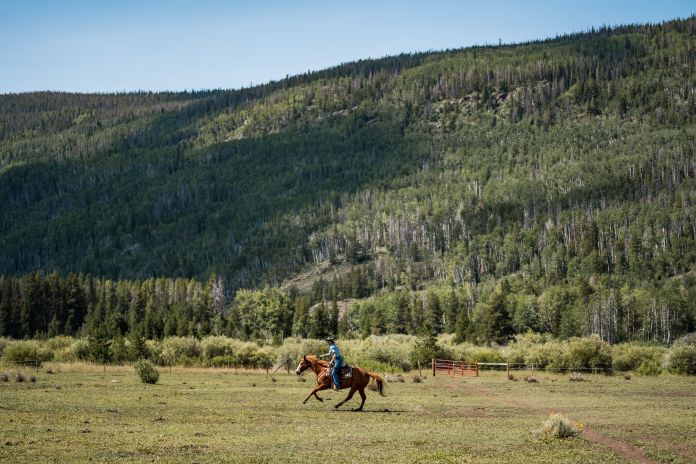
If you listen closely in the morning, you can hear the clomping of galloping horses as the resident Wranglers drive a stampede of hooves back into their corral. This is Rawah’s on-site collection of horses, all with as much personality as those who ride them.

horses running

It’s these horses, that if you’re lucky enough to meet, will bring you through breathtaking forestry, opening up to expanses of sage, aspen, and pine. Whether it’s your first time atop a saddle, or you grew up riding; Rawah Ranch is a horseback rider’s paradise.

horse back riding

On our last day at the Ranch, we had the privilege of saddling up and head out exploring the scenic wilderness on a train of horses. Accompanied by our head guide, Angelo, and led by one of the head ranchers and certified cowgirl, Erin; we were exposed to the true Western horseback experience.

riding in the fields

After an hour of maneuvering trails and convincing ourselves that we deserved to be underneath a buckaroo hat (even though none of us could tell the difference between a pretty palomino from a mule), we pulled over and stopped to fish some of the local water.

angelo fishing off a horse

From there, it was a collection of getting humbled by the wrangler talent present in our company and learning more in an hour than we had collected in 20 years of infrequent riding. When it comes to visiting the Ranch, horseback riding is a must. Young or old, timid or brave, with the help of the Rawah staff you’re sure to leave with an experience that just might change your life.

girl on a horse
Erin Claycomb, Rawah Wrangler, showing off her skills from her barrel racing days…

Clay Shooting: 

Being avid bird hunters ourselves, one of our favorite activities back at Flylords HQ is getting out on a Sunday and whacking some clays for target practice. At Rawah Ranch, we were delighted to learn that they have a shooting range tucked away on the far side of the property. There, we loaded up some shells, two .20 gauges, and hit the dirt path on the Ranch Gator.

whacking a clay

After throwing on some ppe, we hit the range, all brushing up on our shooting and remembering what terrible shots we were. Mason, our former fishing guide, showed us all up with a self tossed two-clay barrage – and we spent the remainder of our time attempting to do the same. shooting 2 clays

A great way to relieve some stress, clay shooting is a really fun opportunity to introduce beginners to the sport of shooting, in a safe and judgment-free environment. When at Rawah, definitely ask if you can schedule a time on the range. Shell inventory permitting, it’s a fantastic way to kill an hour before dinner. Also, while we didn’t participate, the range is also open to sharpen your archery skills.

loading shells

Dinner, Drinks, and Relaxing: 

At Rawah Ranch, guests are treated to 3-meals a day and plenty of food in between. But it’s really dinner that we looked forward to every day. After a long day well spent engaging in whatever activity you choose, there’s nothing better than sitting down to a warm dinner and dessert, prepared by the lodge’s own professional chefs.

food

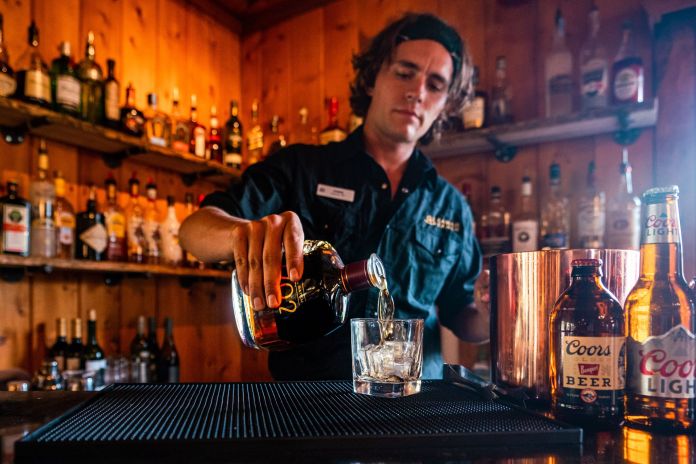
These meals offer a selection to choose from each night, meeting all dietary requirements, while always offering something new. On top of fantastic food, there is an open tended bar full of the finest whiskeys, tequila, beer, and whatever libations you could help yourself to.

poring whiskey

Once everything’s winding down, there’s nothing quite like relaxing by the fire pit, enjoying a drink, and soaking in a pageant of glistening stars decorating the night’s sky. If you’re lucky, there may even be some live music…

live music in the lodge

To see Rawahs Full list of offered activities, CLICK HERE. Or, Check them out on Instagram, HERE.

To visit Rawah Guest Ranch:

lucia and ron

We cannot thank Rawah enough for hosting us on their one-of-a-kind property. We will certainly be heading back as soon as we can.

If you’re looking to learn more about Rawah Guest Ranch or book a stay for this Summer, CLICK HERE. Or, Check them out on Instagram HERE.

Lodge Spotlight: Chile Trout

Lodge Spotlight: Taylor River Lodge, Colorado

Faces of Fly Fishing: René Harrop

René Harrop is a name synonymous with the Henry’s Fork and Idaho fly fishing as a whole. René has spent decades on his home waters, first as a child infatuated with the trout that swam it, and then as a true stakeholder in the fishery via various fly fishing businesses he has been involved with ranging from fly shops to a commercial fly tying business. In addition to that, René has had an immeasurable impact on fly fishing culture at large via his many published articles and books focusing on fly fishing. Earlier this year we had the incredible opportunity to sit down with René while filming for Airflo Fly Lines and decided we needed to dig a little deeper into this living legend of Western fly fishing.

Check out our interview with René, below!

Flylords: You and your wife Bonnie have been designing and tying flies commercially your whole fly fishing career. What was it like starting that business prior to the internet age?

René: Finding a market for our flies was the biggest challenge in the late nineteen sixties when we started our business.

It began as a part-time venture and our customers were the poolhalls and filling stations along the route to Yellowstone. Will Godfrey’s operation was the first specialty shop and guide service on the Henry’s Fork and we began supplying him with flies shortly after that business was established.

In the early nineteen-seventies, our attention shifted from traditional patterns to original designs directed specifically to the Henry’s Fork and its hatches. Eventually, our tying began to gain attention from outside the Yellowstone area, and soon we found ourselves working full time in that trade.

For seventeen years, the Orvis Company purchased all the flies we were willing to provide, although we also maintained other dealers in Idaho and Montana.

By the late nineteen eighties, mass-produced flies from other countries gained dominance in the wholesale picture, and the domestic cottage industry that had occupied that role for decades essentially vanished.

Following the lead of tyers like Al Troth, Jay, and Cathy Buchner, my family found survival in the mail-order business that relied on a printed catalog for retail distribution. However, we also maintained several wholesale accounts as well. Today, we still supply TroutHunter, Silver Creek Outfitters, and Yellowstone Angler with relatively small quantities of original designs at wholesale.

Naturally, the internet brought great advancement in accessing a worldwide market where talented individual craftsmen can distribute their product at prices that allow the professional fly tyer to exist in the twenty-first century.

Photo from René Harrop

Flylords: You’ve been involved in fly fishing writing for decades. How have you seen fly fishing media change during your life?

René: Over the five-plus decades in which I have written for publication, the first three were most comfortable for one who continues to create material with a ballpoint pen on a yellow legal pad. During that period the attention of both the sport and industry was owned by specialty printed publications that began to proliferate in the early 1970s.

As the primary source of information and entertainment, magazines like Fly Fisherman were exerting tremendous influence over attitudes within the fly-fishing community that was not equaled by any other medium.

Sadly, the prime market for writers has not held up under the pressure of high production cost and the diversion of advertising dollars to online publishing.

With nearly eight decades of living now behind, I remain computer resistant in a fast-paced world where attention span is short and patience a somewhat rare commodity.

From the beginning, Bonnie has converted my hand-written text into a suitable form for submission for publication, and her fingerprints are on every story I have ever written. Today, most of my writing is directed toward an audience quite different than in the early years when the flame of professional ambition burned much brighter. Appearing online as regular blogs for several commercial websites, the stories are shorter and more dependent upon photos than in the past. When combined with my own sponsored blog that appears weekly on my Facebook page, I am actually producing more written material than at any other time. And, of course, Bonnie handles all computer duties related to this business.

It is only occasionally that I produce a feature-length article for publication in print. And these are as likely to appear in one of several solid magazines in Japan or Europe as in an American publication.

While magazine opportunity has been substantially pared down in recent years, I believe that a capable writer with a good story can still find a landing place in the glossy pages that still have a place in the society of fly fishing.

“Trout Hunter” is just one of René’s many works in the world of fly fishing print media.

Flylords: Do you prefer writing books, print articles, or blogs more? What do you like about each medium?

René: I have always enjoyed the ability to craft a detailed story that leans toward the natural end of things. I am mostly helpless in the world of technology with respect to its role in the modern picture of fly fishing. My writing almost invariably will reveal a connection to tradition, and that has created a degree of resistance from those who follow a different playbook.

Print articles continue to provide the best format for a deliberately created project that may require 15 to 20 hours to complete. To some extent, they are more permanent than a computer-generated product, but this may be of importance only to the writer.

Books are perhaps most valuable in the role of preserving history. For me, writers of past generations are the wisdom keepers of our sport, and the loss of their contribution would be tragic.

Unfortunately, the words of some of the most talented and knowledgeable individuals I have ever known were not recorded in book form during their lifetime. Therefore, subsequent generations are deprived of sharing the abilities and accomplishments of such notable authorities as Andre’ Puyans, Al Troth, and a host of others that participated in laying the groundwork for the modern age of fly fishing.

I view writing a book as fulfilling an obligation to share with others that which may be too helpful to keep to one’s self. As the beneficiary of guidance and assistance of those who came before, I hope my own books can serve as a form of repayment for the generosity received from those masterful writers of the past.

An international spotlight shines on Yellowstone country, which has been my lifelong homeland. The blogs I provide to brands like Airflo in Europe, Maverick in Japan, and TroutHunter in the U.S. reach readers from around the world and are focused fully on fly fishing. Posted monthly, they provide a window of current happenings on legendary waters both moving and still.

My personal blog is a weekly post that reads more like a journal. Fishing, of course, is the most frequent subject but other aspects of life in this magical country are also included.

In large part, motivation to continue writing comes from the amazing number of individuals that are reached by those words and whom respond with encouraging comments of approval. Over time, I have concluded that we live by the grace of the people, and blogs provide a way of expressing gratitude to those we might not otherwise reach.

Flylords: What fly fishing authors have had lasting influences on your writing? Who inspires you?

René: Though the rate of growth has slowed considerably in recent years, the books in my personal library number in the hundreds. All authors have my respect but a handful have exerted a profound influence in my growth as both a fly fisherman and writer.

From the distant past are names like A.J. McClane and Joe Brooks whose words were delivered in the pages of Field and Stream and Outdoor Life on a monthly basis. Books from those great masters date back to the 1960s and are among the oldest in my collection.

It was near the end of that decade that Ernest Schwiebert entered the picture and like Doug Swisher and Carl Richards, we became acquainted while fishing on the Henry’s Fork before his books made their way into my library.

The words from these impressive men carried great weight due to their authentic knowledge and skill, and the path of learning they inspired is ongoing.

The most inspiring volume in my possession is “The Complete Fly Fisherman”, containing the notes and letters of Theodore Gordon. It was published by the Theodore Gordon Fly Fishers in 1970 and was edited by John McDonald.

Gordon’s connection to the natural world of trout was the most penetrating message to a young angler just beginning to appreciate the traditions established in the late 19th century.

Considered the patron saint of American fly fishing, Theodore Gordon’s legacy lives as a lasting influence in preserving our sport in its purest form. In my opinion, “The Complete Fly Fisherman” should be required reading for anyone holding more than a passive interest in the history of fly fishing.

Photo from René Harrop

Flylords: Where do you go when you need to find inspiration for a piece of writing?

René: Like anyone else living in these rather turbulent times, I can find clearing my head of distracting clutter the most vital aspect of creating a good piece. This problem becomes most prominent in winter when reduced time on the water permits accumulated mental distraction. Fortunately, I am never more than a few minutes from the Henry’s Fork where a few places are always accessible for meditative purposes regardless of the season.

My nearly seven decades of fly-fishing experience expands by at least one hundred days each year. With this resource, subject matter for fishing-related stories is not in short supply.

Additionally, an active, diverse, and largely unrestrained life allows expansion of topics that serve a useful purpose in the continual production of written material when a close-knit family is also included, inspiration for communicative writing is basically constant.

Flylords: Your name and fly patterns have become synonymous with the Henry’s Fork. How did you first become acquainted with the river? When did you know that it would become such a fixture in your life?

René: As home to my native ancestors, Henry’s Fork country has an instinctive connection to my existence. I was born into a fishing family in 1945 and began fly fishing on the Henry’s Fork at age nine. While other great waters nearby are attractive, the Henry’s Fork has held my deepest affection for as long as I can remember.

Our fly tying is largely an extension of our personal fishing and the concepts carry worldwide relevance. In that sense, I was created professionally by the river, and my identity continues to be defined by its influence.

Photo from René Harrop

Flylords: How has the Henry’s Fork changed in your lifetime? The culture of the river? The quality of fishing?

René: Like all other rivers, the Henry’s Fork has been pressured by factors mostly related to human activity. Development upstream from the famed Harriman Ranch has created water quality issues that probably exist as the greatest threat to the fishery.

While still remarkably prolific in terms of its aquatic hatches, the diversity has been noticeably reduced over the past decade or so.

Another concern is a troubling reduction of Rocky Mountain Whitefish and what that might mean to the trout population moving forward. It is puzzling to me that this native species does not receive the attention applied by fishery managers and conservation organizations to the Yellowstone Cutthroat. As an indicator species, the humble whitefish could be viewed as the canary in the mine with respect to the future of the Henry’s Fork and other water where their decline is being observed.

Over time, the unique resilience of the Henry’s Fork has been demonstrated in its ability to sustain a healthy trout population through periods of extreme hardship. As a result, the river has largely escaped the peaks and valleys experienced by other prominent fisheries that have not weathered modern difficulty to the same degree.

The Henry’s Fork culture remains intact and, in fact, has expanded to include a remarkable number of foreign members among its ranks. Many of these regular visitors have become treasured friends and one of the strongest personal impacts of Covid-19 has been the two-year separation from those residing outside the U.S. Among my greatest hopes for 2022 is a grand reunion with those missing faces and the resumption of relationships as important to me as any resident.

Flylords: You’ve seen the West shift dramatically in your lifetime, especially where fly fishing is concerned. What changes for the better have you seen? For the worse?

René: For most of my years of living in the Rocky Mountain west, nearly every visitor who came to fish would return to a home lying elsewhere, but that has changed within the new millennium. In recent times, a sizable percentage of those who visit do not leave. Once sleepy little towns have been converted to bustling population centers that no longer reflect the traditional western lifestyle.

In Bozeman, Montana, for example, growth has occurred at such a rapid pace as to be nearly unrecognizable to one who had not been there since the beginning of the twenty-first century. Elsewhere, farms and ranchland continue to shrink as housing developments consume more and more of the rural landscape.

With COVID-19 came a mass exodus to the western states where a relatively sparse population and outdoor activities provided a safer environment than in heavily congested states where transmission of the virus ran rampant.

Even those who do not stay bring disruption to the free movement once enjoyed by locals unaccustomed to restraint. For example, lines waiting to enter Yellowstone National Park can stretch for nearly a half-mile back into the town of West Yellowstone. With the road choked by heavy tourist traffic inclined to stop for any sighting of wildlife, a drive to fish the Fire Hole River can require as many as two hours despite lying only twenty miles or so inside the park gate.

Like the roads, traffic on our rivers and lakes has become busier to the point of being problematic in some locations and times. With float fishing gaining vast popularity, conflict on popular stretches of water is not unusual as river manners have not evolved at a rate required for overall harmony.

The upside of increased interest in fly fishing has been an enlargement in the fly-fishing industry. More jobs and business prosperity create a stronger economic argument for improved consideration of fish-friendly management of water.

Photo from René Harrop

Flylords: What is one hope you have for the future of fly fishing and American fly fishing culture?

René: Fly fishing and water quality are inextricably connected when the future of the sport is considered. The same applies to streamflow, which in recent years has been perilously impacted by drought.

Survival of living water is fully dependent upon measures applied to the moderation of climate change as well as pollution-related to human activity.

As fly fishers, we cannot stand idly on the sidelines as freshwater fisheries continue to deteriorate. My hope is that an active environmental conscience can be the universal bonding agent for the broad and diverse fly-fishing culture.

René’s signature No Hackle PMD

Flylords: If you could only throw one fly on the Henry’s, what pattern would it be?

René: As a man whose fishing vest typically bears the weight of more than a dozen fly boxes, it would be impossible to select one pattern as a favorite. I do, however, hold a special fondness for a single hatch. Pale Morning Duns are a factor on the Henry’s Fork nearly every day from late May through early September. No other insect event carries more intrigue or offers more intellectual challenge than these complex little mayflies that thrive in the Henry’s Fork and other streams where water purity meets their survival requirements. For a man who has never forsaken a deep connection to the original traditions of American fly fishing, nothing exceeds the stimulation of engaging a PMD hatch on the river that continues to shape me as an angler and a man.

Washington Governor Unveils Nearly $200 Million Plan for Salmon Recovery

0

Last week, Washington State’s Governor Jay Inslee announced a monumental salmon recovery plan. As part of the state’s 2022 legislative priorities, Gov. Inslee outlined a $187 million investment in recovering salmon and steelhead in Washington, 13 of which are federally-listed, and improving habitats. Granted, this outline is just an idea at this point. It will need to go through the state legislature, and the devil will be in the details. However, the Governor’s plan to elevate salmon and steelhead recovery is certainly a welcomed development.

“Healthy salmon populations mean healthy water systems. We are updating our salmon strategy to provide a comprehensive, statewide foundation for salmon recovery,” Gov. Inslee said. “This approach is based on the latest science and tailored to address the stressors in the diverse regions of our state, spelling out the many different actions we must take to protect and restore salmon.”

The $187 million investment will improve Washington’s leadership on the ever-complicated task of restoring salmon and steelhead throughout the PNW. Specifically, the plan will:

In a Medium post, Gov. Inslee provides more context for the above objectives. For example, under “Protecting Habitat,” he brings attention to the Lorraine Loomis Act, which will protect riparian corridors with measurable standards. To implement this legislation and new standards, Washington will need to direct $123 million to fund the projects.

Two other budget-items included in the plan are commercial gillnet fishery buyouts and Skagit River protections. Commercial gillnets have been hot-button topics in the Columbia River Basin for years because they can indiscriminately harm wild and threatened fish. $16.7 million would go towards buying out these commercial gillnet licenses on the Columbia River, to reduce the size of the fishery and its impacts.

Chances are you’ve heard about the Olympic Peninsula’s famed Skagit River. Gov Inslee’s plan would direct $4.5 million towards protecting “the upper reaches of the Skagit River from future development.” Proactive investments in habitat conservation are essential activities for ensuring a future of wild salmon and steelhead. To see the full list of objectives and funding–which include improving fish passage, monitoring and enforcement, reducing pollution entering streams and rivers, and hydropower impacts–check out the full policy brief.

It is worth noting, that more than $7 million would go to hatchery improvements. For much of the PNW, hatcheries afford anglers the majority of their opportunities and support so many communities. However, their impact on wild fish and recovering salmon and steelhead cannot be ignored.

“We are on a mission. Protecting and restoring our salmon is personal to me — it’s a legacy left to us by previous generations and we should do the same for our grandchildren,” Gov. Inslee said. “I’m committed to taking greater steps to ensure their survival. I will work closely with tribal partners and other leaders throughout the state to get the job done. It’s a mission that requires coordination across our government and a comprehensive approach — and my budget and policy priorities reflect that.”

Cover picture by @Ben Matthews